
Storey
LEVEL — dancing in the vertical space (low on the floor, mid at standing height, high in reaches and jumps); changing level to add depth and surprise.
Loading audio…
Press play to listen along. The line being read lights up as you go.
Show full transcript
Loading transcript…

Storey did a simple curling phrase three times — once curled low against the floor, once standing at middle height, once reaching high on the balls of her feet — and each time it seemed to mean something completely different.
"Same phrase," she said. "Three heights. Low felt secret, close to the earth. Middle felt everyday, human. High felt like reaching, like hope." She was a springy little tree-frog-tween who thought in up-and-down the way others think in side-to-side. "Most dancers live at one height — standing, middle, all the time — and never touch the floor or the sky. But the room has a whole vertical world in it. Level is dancing in that world: low on the ground, mid at standing height, high in reaches and jumps. Change your level and you change the whole feeling — and a sudden drop or a sudden rise is one of the most surprising things a body can do, because the audience felt the height change under them."
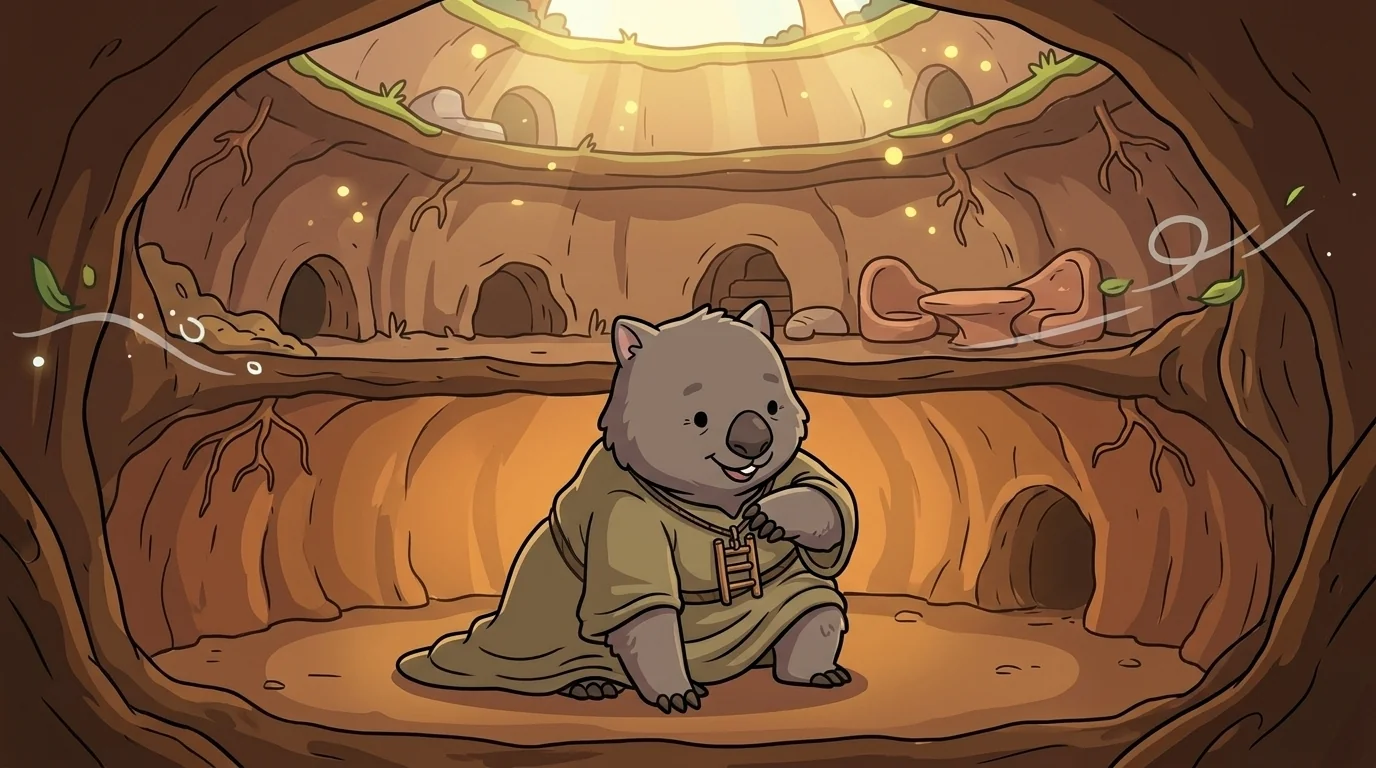
She had grown up in the tall rainforest, where her family were the canopy-to-floor climbers — tree frogs whose whole world was vertical, at home clinging high in the leaves, resting at mid-branch, and pressed low against the cool ground, each height a different life.
"Most creatures live on one floor," her mother taught, dropping from a high leaf to a low one in a single smooth fall. "We live on all of them. High is the far view and the big reach. Middle is the traveling world. Low is the hidden, close world — and the drop between them, the sudden fall or the sudden rise, is where the surprise lives." Young Storey had once danced her whole piece at standing height, proud and upright. "Lovely," her mother said, "and flat. You used one floor of a house with three. The dance got taller the moment you remembered you could go down."
Storey carried it always. And when she watched dancers stay locked at middle height — good movement, no depth — she saw the unused room. "They danced on one level," she'd say, "in a space that had three. The floor and the sky were right there, empty."

When Storey was twelve she came to DanceQuest. Rhythm, the mentor, asked, "What is level?"
Storey answered by sinking low, rising to standing, then reaching high, all on one breath. "That," she said. "Dancing in the vertical space — low on the floor, mid at standing height, high in reaches and jumps. Changing level to add depth and surprise. Most dancers only use the middle. But the room is tall, and every height feels different: low is secret, high is reaching, middle is human. And a sudden change of level — a drop, a rise — is one of the strongest surprises there is, because the whole picture just moved up or down."
Rhythm smiled. "You are appointed."
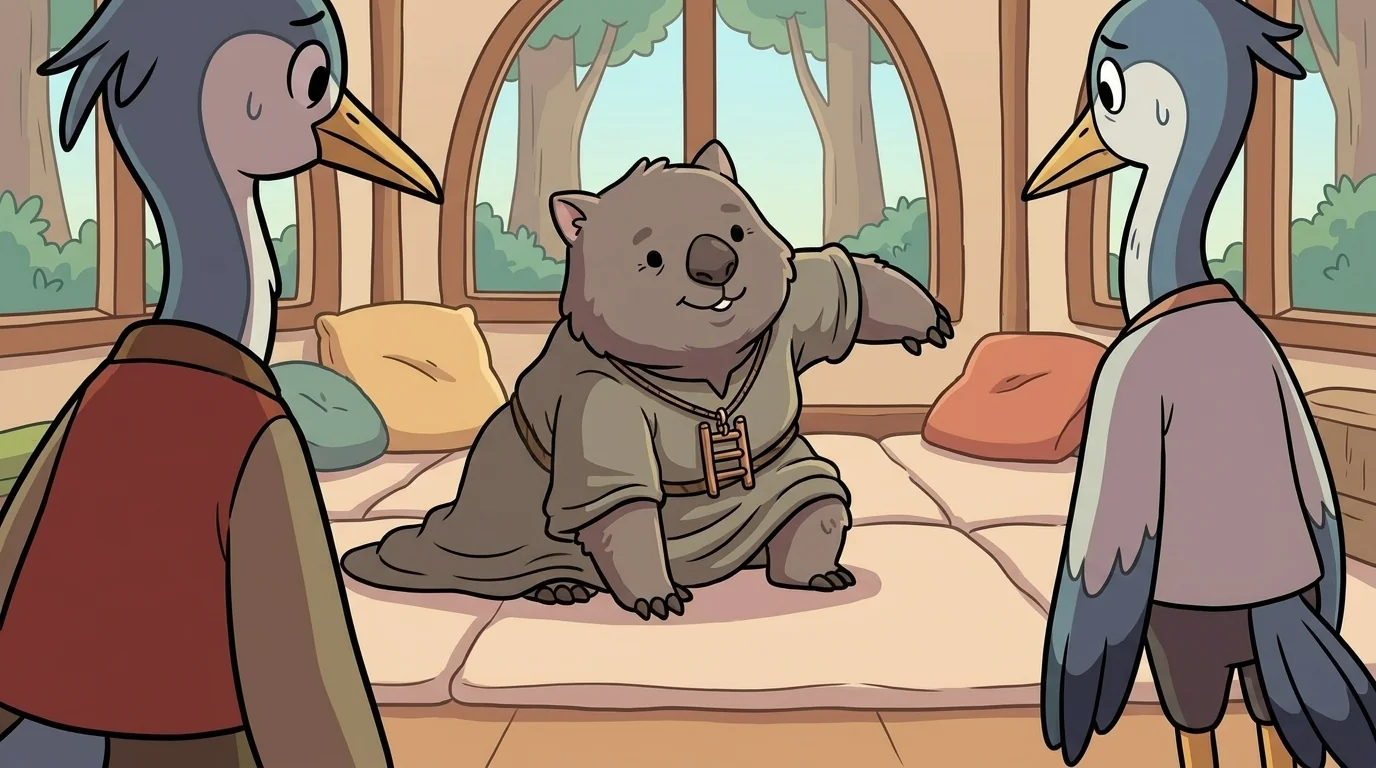
In her studio, Storey teaches the craft of the vertical world.
"Watch one phrase at three heights." She runs a reaching gesture low on the floor, then standing, then leaping — and the same shape reads as searching, then declaring, then soaring. "The steps didn't change. The level did. That's a whole new expression from a height you already owned."
Then she names the moves. There are three worlds, not one — low on the floor, mid at standing, high in reaches and jumps; a dance that lives at all three has depth a middle-only dance never can. Each level has a feeling — low reads as hidden, grounded, or vulnerable; middle reads as human and everyday; high reads as reaching, joyful, or free; choose the level for the feeling you mean. The change is the surprise — a sudden drop to the floor or a sudden rise is one of the strongest moments a body can make, because the audience feels the whole shape shift height. A group can stack levels — some low, some middle, some high at once makes a rich three-story picture from simple shapes. Every body reaches its own high and low — high isn't only a big jump and low isn't only a deep fold; your own reach and your own crouch count fully. "It's not about who jumps highest," she says. "A quiet sink to the floor can be as powerful as a leap. It's about using the whole room's height — and every body has its own low, middle, and high to use."

"But I can't jump very high," a student said once, discouraged.
Storey shook her springy head, kind. "High isn't a contest," she said. "High is your reach — up on your toes, arms lifted, is high. And you know what's just as powerful? Low. Sinking all the way to the floor when everyone expects you to stand. That drop surprises an audience more than any jump. You don't need a big leap to use level. You need the whole height that's already yours — floor to fingertips." She sank low beside the student. "Come down here with me. Feel how different the world is from the floor?"
She rose slowly from low, through middle, to a high reach, feeling the whole vertical room open around her, and a bright, lifting gladness rose through her: the particular joy of a dance that used the floor and the sky, not just the middle, so that every height said its own thing. She didn't say the rest aloud, but she thought it, certain: a dance that stays at one height is a story told in one tone of voice. Use the low and the high — the whole room's worth of up and down — and the same steps suddenly have depth.
The DanceQuest ensemble
Storey is part of DanceQuest's distributed-narrative cast. Each character embodies a different curricular primitive; together they teach the full subject.
-

Pose
Body-awareness + position — listening to your own shape
-

Trail
Space + pathways — the floor-pattern shapes you draw moving through space
-

Phrase
Time + tempo — how movement is organized in musical counts
-

Lift
Energy + effort + dynamics — quality of movement, not aesthetic judgment
-

Glide
Locomotion — the craft of going from here to there with whole attention
-

Flock
Formation — how a group of dancers arranges itself in space (lines, circles, clusters, wedges) and how that shape flows and changes; the group as one moving picture
-
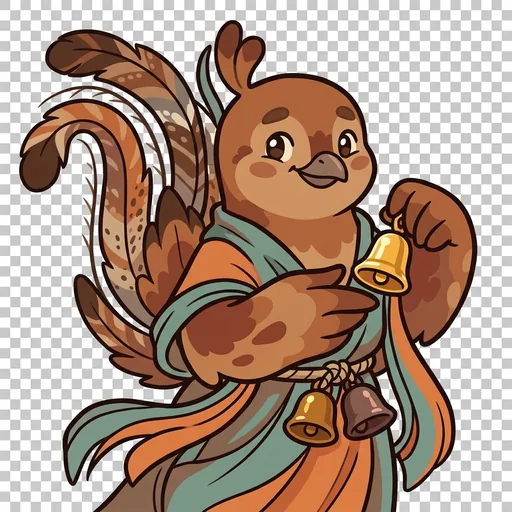
Beckon
Call-and-response — one dancer or group makes a movement and another answers it; a movement conversation built on truly listening before you reply
-

Canon
Unison and canon — unison is everyone moving together as one; canon is the same move staggered one after another, rolling across the group like a wave
-

Bide
Stillness and the hold — the held, alive, motionless moment inside a dance; negative space made of time; a strong chosen pause, not tiredness or absence
-
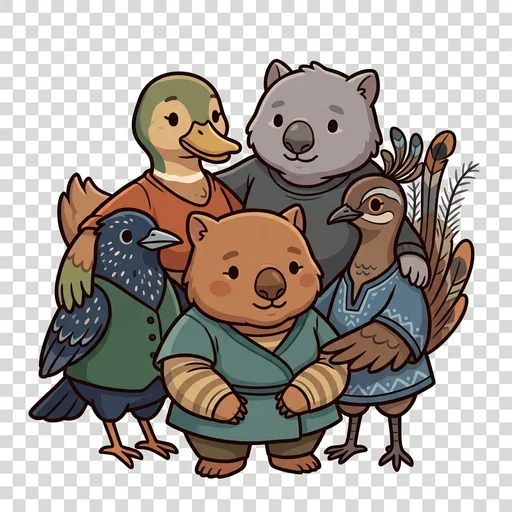
The Company
The whole group dancing as one — how formation, level, call-and-response, unison and canon, and stillness weave together so a group of dancers moves as a single living thing