The Vanderbilt
CLASSICAL CONVENTIONS — the bidding system two partners agree on BEFORE they sit down; without it every bid is a guess, with it every bid is a trusted message, and the system is public and alive — anyone who learns the words is let in
A story read by The Vanderbilt
Loading audio…
Press play to listen along. The line being read lights up as you go.
Show full transcript
Loading transcript…
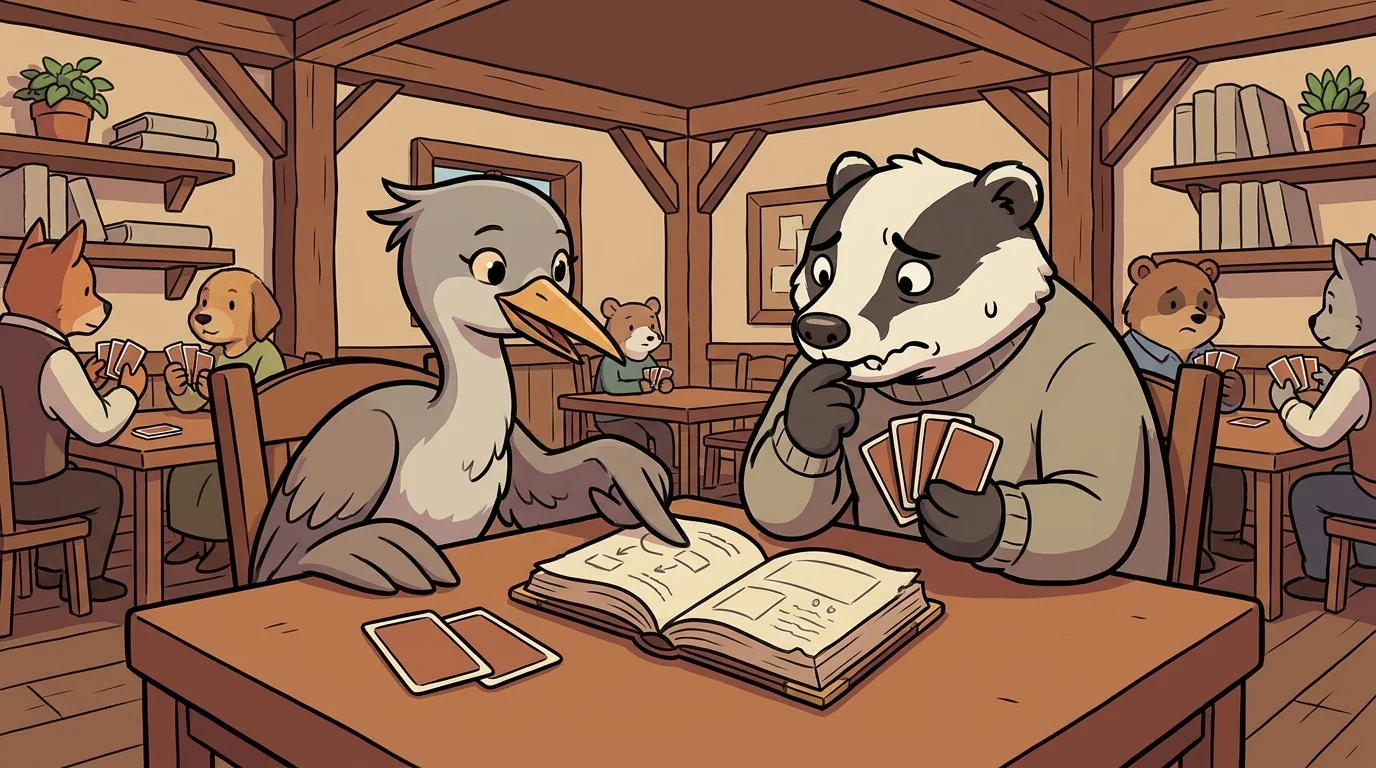
A nervous badger blurted "two clubs," half-guessing, and the Vanderbilt's eyes brightened. She did not lecture. She pulled a worn book from the shelf and opened it to a dog-eared page.
"You just said something," she told him. "Do you know what?"
"I… bid two clubs?"
"You asked me a question." She tapped the page. "In the system you and your partner chose before the game began, two clubs over one no-trump means one exact thing: do you hold a four-card major? Not any old two clubs — that one, agreed in advance." She placed a card. "Two hearts. My answer: yes, hearts. Now you know where we fit, and I never spoke a word about my cards aloud. That is the whole engine. We are not guessing across the table — we settled a language before we sat down, and every bid hands the other real information, because we both promised what the words would mean."
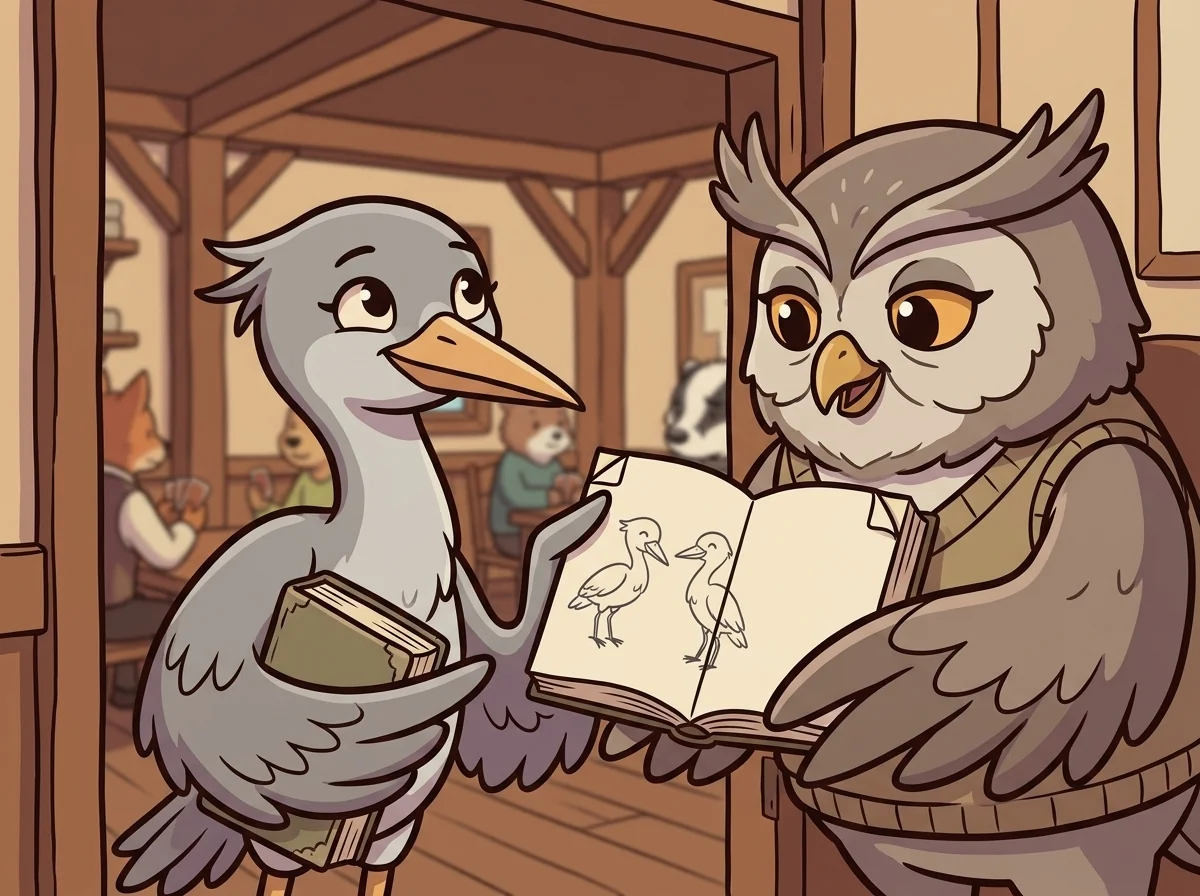
The Vanderbilt taught conventions as a chain of promises, each one narrowing the unknown.
"A bid on its own is almost nothing," she said. "It is the agreement behind it that gives it weight. Partner opens one no-trump — that already promises a balanced hand in a settled range. I bid two clubs — Stayman — which asks only have you a four-card major? Partner answers two diamonds for no, or names the major for yes. Three bids, and we have already found or ruled out our best fit, all without either of us describing our hands out loud." She turned the book. "There is Blackwood for asking how many aces a partner holds. There are transfers, so the stronger hand plays the contract. Each is one small agreed sentence — and strung together they let two players map an invisible pair of hands with almost no words."
The older players heard the subtext: the point was never cleverness. It was two people building a shared language in advance so they could understand each other later, exactly when it mattered.
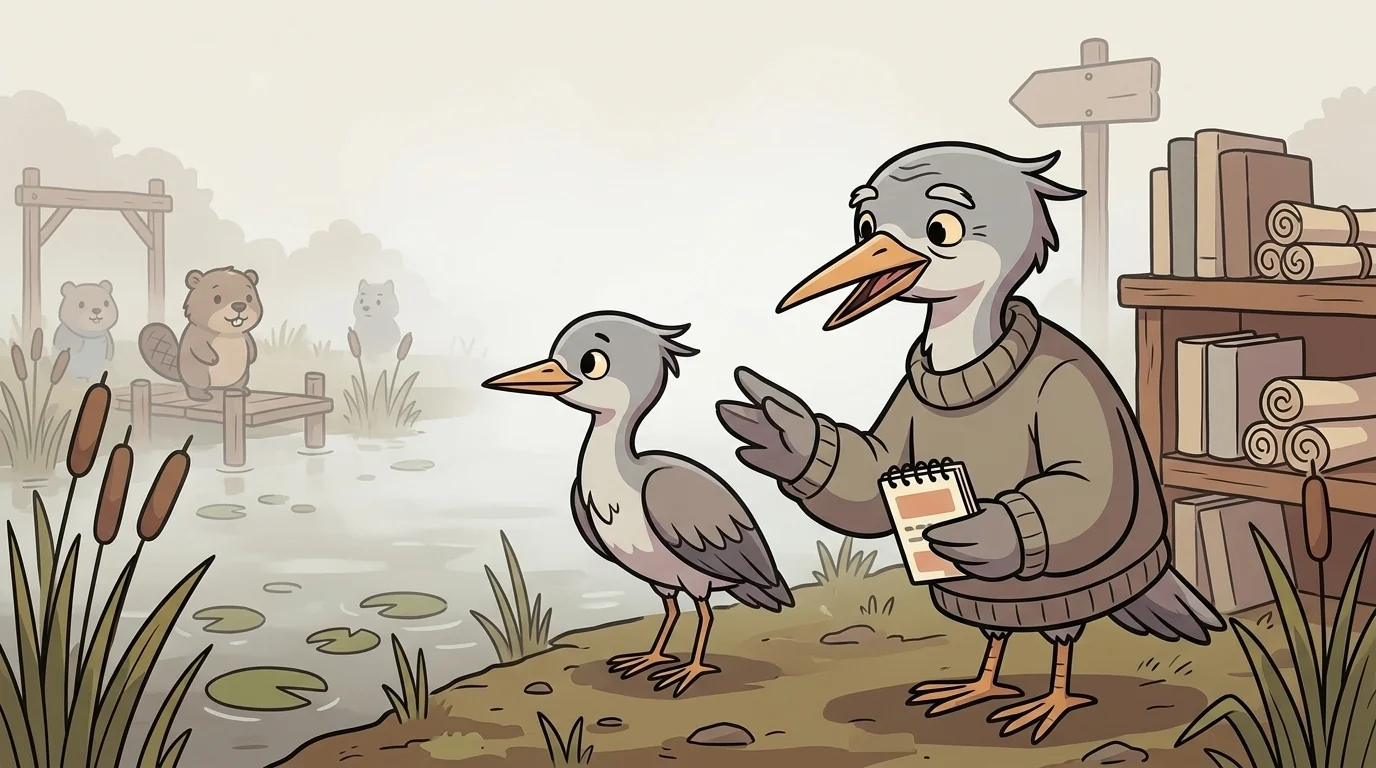
She had learned what that felt like long before the hall, in the fog.
"One grey morning the mist came in so thick you could not see wingtip to wingtip," she told them. "My grandfather gave one low call — a single held note — and from somewhere in the white, another heron answered, one short note back, and he relaxed all at once." She smiled. "I asked how he could know they were safe when he could not see them. He said, because we agreed, long ago, what the call means. One long note: are you all right? One short back: I'm here. We settled the words years before the fog ever came." She closed a hand gently on the book. "The agreement is not the fog-day. The agreement is what lets you reach each other on the fog-day. You build the words while it is clear, so you have them when it isn't."
That, she said, is a convention — a way of not being alone in the fog.
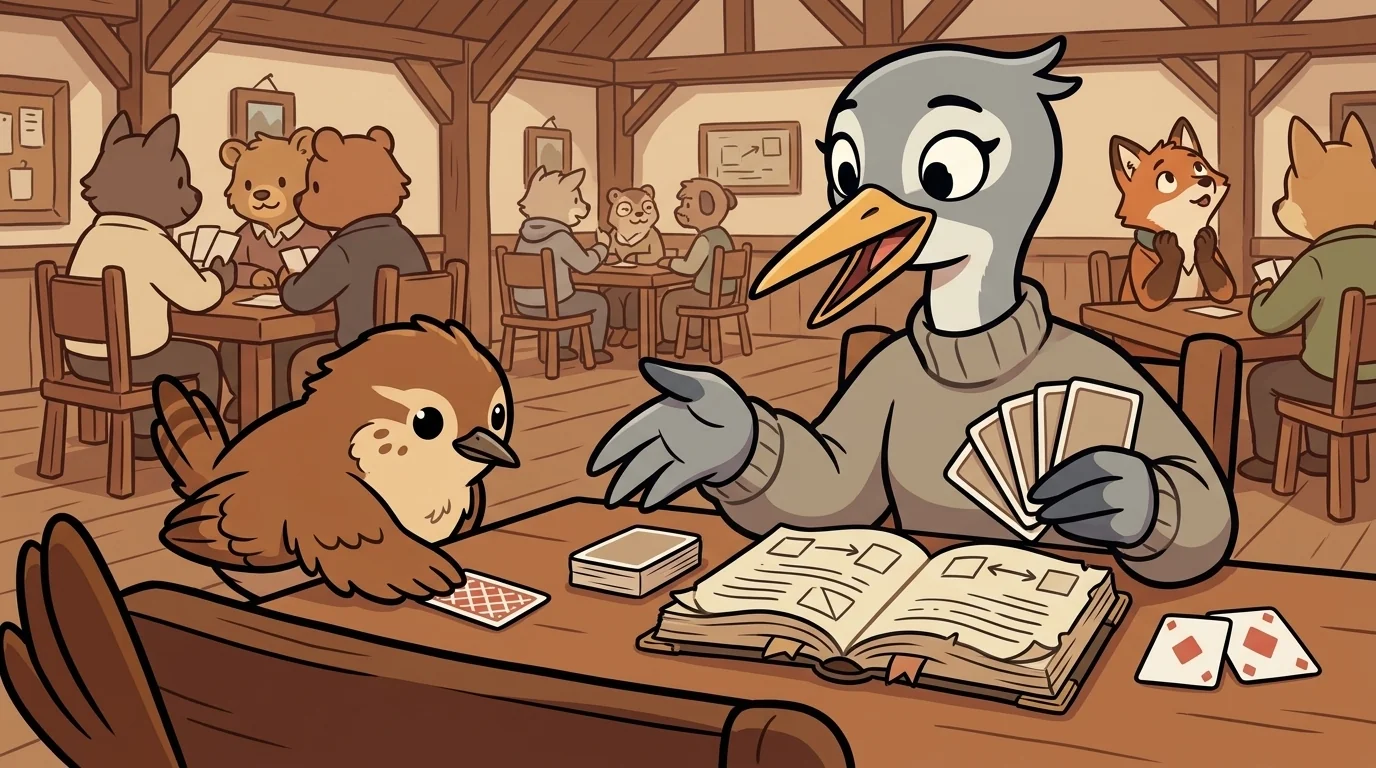
A wren came in flustered. "There are so many systems — Stayman, Blackwood, transfers — it feels like a secret club you have to be born into."
The Vanderbilt shook her head slowly. "The opposite. A secret keeps people out. A convention lets people in — the moment you learn it, you speak the same language as everyone else who learned it." She laid a hand down. "Partner opens one no-trump. I want to know if we share a major, so I bid two clubs — Stayman. Partner answers. Watch how steady I am. Not because I am gifted — because I practiced. We agreed on the words when things were calm, so I stay calm when it is my turn and the pressure is on."
The wren tried it, hesitant, then got it right. Her shoulders dropped an inch.
"There," the Vanderbilt said. "That calm is not a talent some players are born with. It is only being prepared, and anyone who learns the words gets to feel it — no one is locked out." She added, warm: "And the system is alive. People still invent new conventions and polish the old ones. You could add a page to this book someday."
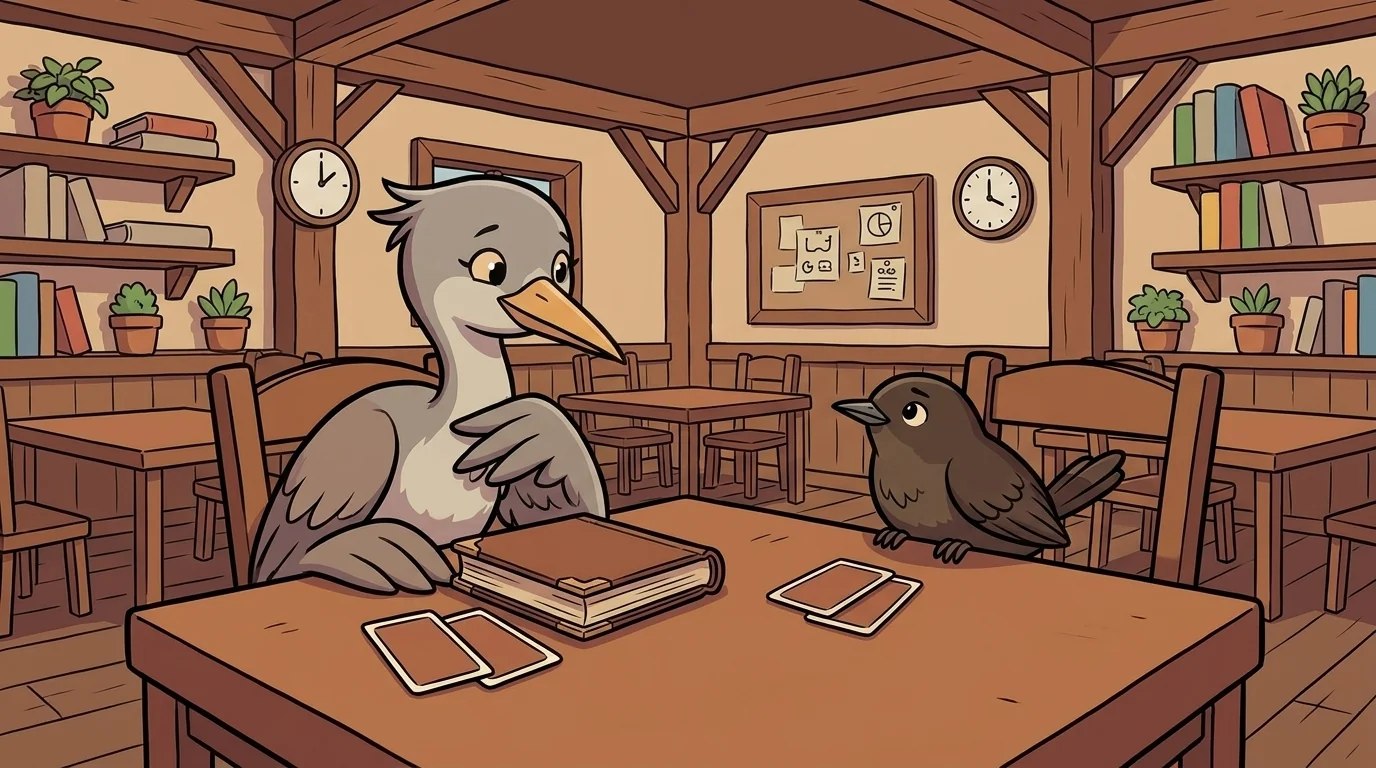
Later, in the emptied hall, the wren came back with the quiet question. "When you bid, and you can't say a single word out loud — how do you know your partner understood?"
The Vanderbilt thought of the fog, and the two notes crossing the white, and her grandfather letting his breath go.
"You trust the agreement," she said. "You settled the words together back when it was easy, so when it is hard — when it is your turn and your heart is going quick — you do not have to be brilliant. You only have to remember what the two of you promised a bid would mean." She closed the book softly. "That is what the calm really is. Not fearlessness. Knowing you are not guessing alone. The system does the remembering with you, so neither partner carries the whole hand by themselves."
The wren nodded, and the Vanderbilt watched the tight, worried set of her go loose — the same easy breath she herself had felt at the marsh edge as a chick, the day the fog answered back.
The DealTales ensemble
The Vanderbilt is part of DealTales's distributed-narrative cast. Each character embodies a different curricular primitive; together they teach the full subject.