Marshal Crane
Count what's gone, know what's left
Loading audio…
Press play to listen along. The line being read lights up as you go.
Show full transcript
Loading transcript…
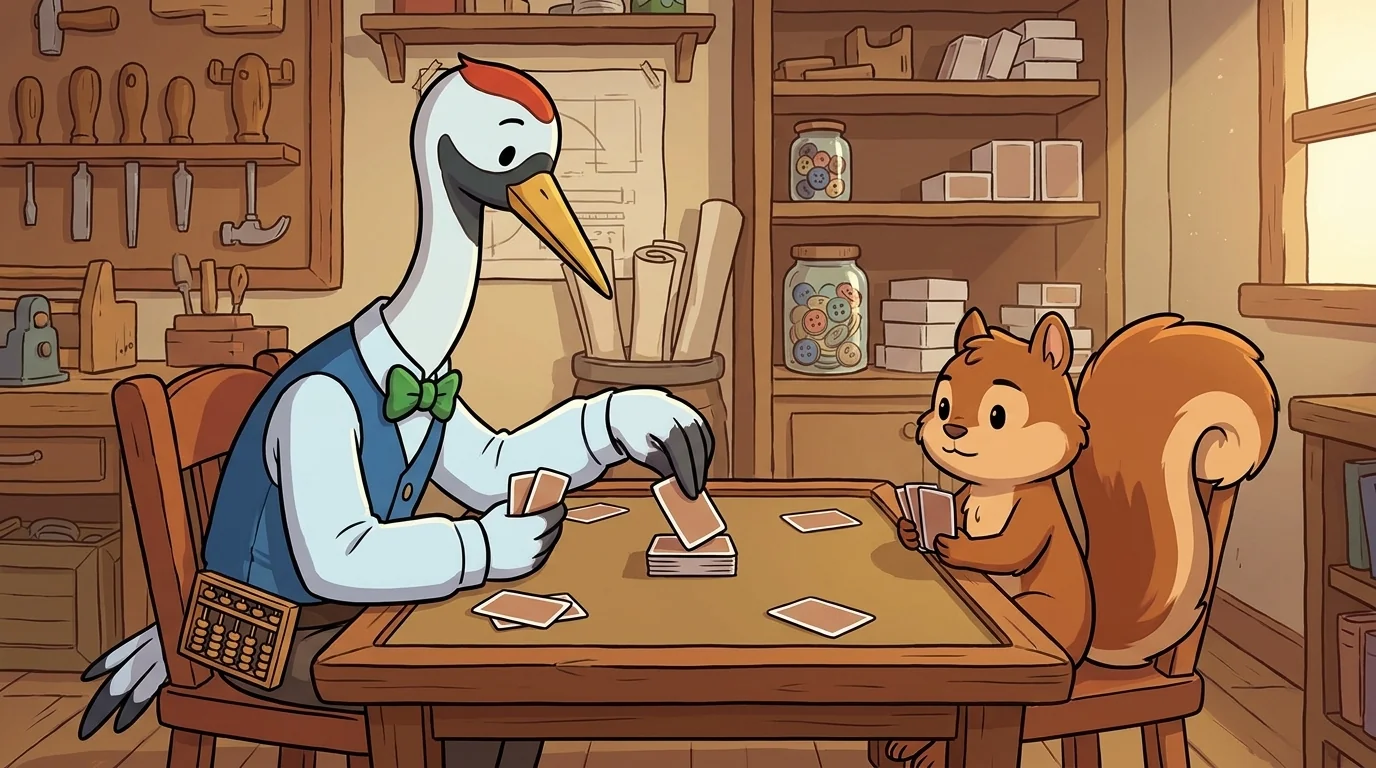
At a quiet corner of the DealTales card hall, a tall crane played a hand that never once surprised him — because he'd counted every card that had gone, and knew, to the exact card, what everyone still held.
Marshal Crane was long-legged and orderly and calm, with a little abacus-charm hung at his belt and a way of nodding softly at each card as it fell, as if checking it off a list. A young squirrel watched him win trick after trick without a flicker of worry. "How are you never surprised?" the squirrel said. "I'm always getting caught out — someone trumps my winner, or a card I forgot about turns up."
"Because I count," Marshal Crane said, nodding at a fallen card. "Every card that's been played, I check off. So I always know exactly what's LEFT — how many of each suit is still out there, and who's likely holding it. Nothing surprises me, because I've been keeping the list the whole way." He touched his abacus-charm. "And there's one danger I clear away FIRST, before anything else: the trumps. See, in a hand with a trump suit, a little trump can 'cut in' and beat my big winners if an opponent runs out of a suit. So the first thing I do is lead trumps, again and again, DRAWING the opponents' trumps out of their hands — counting as they fall — until they have none left. Now none of my winners can be trumped. I've cleared the danger before I relax." He nodded softly. "Count what's gone; know what's left. Draw the enemy's trumps first, so they can't cut in on your winners."
The squirrel blinked. "So you're not lucky — you just... KNOW what's out there, because you counted?"
"Knowing beats luck every time," Marshal Crane said. "A player who guesses gets ambushed. A player who counts is never surprised — she's watched every card go, so she knows precisely what remains. And a player who draws trumps first never gets her winners cut down. Order beats chaos. Counting beats hoping."
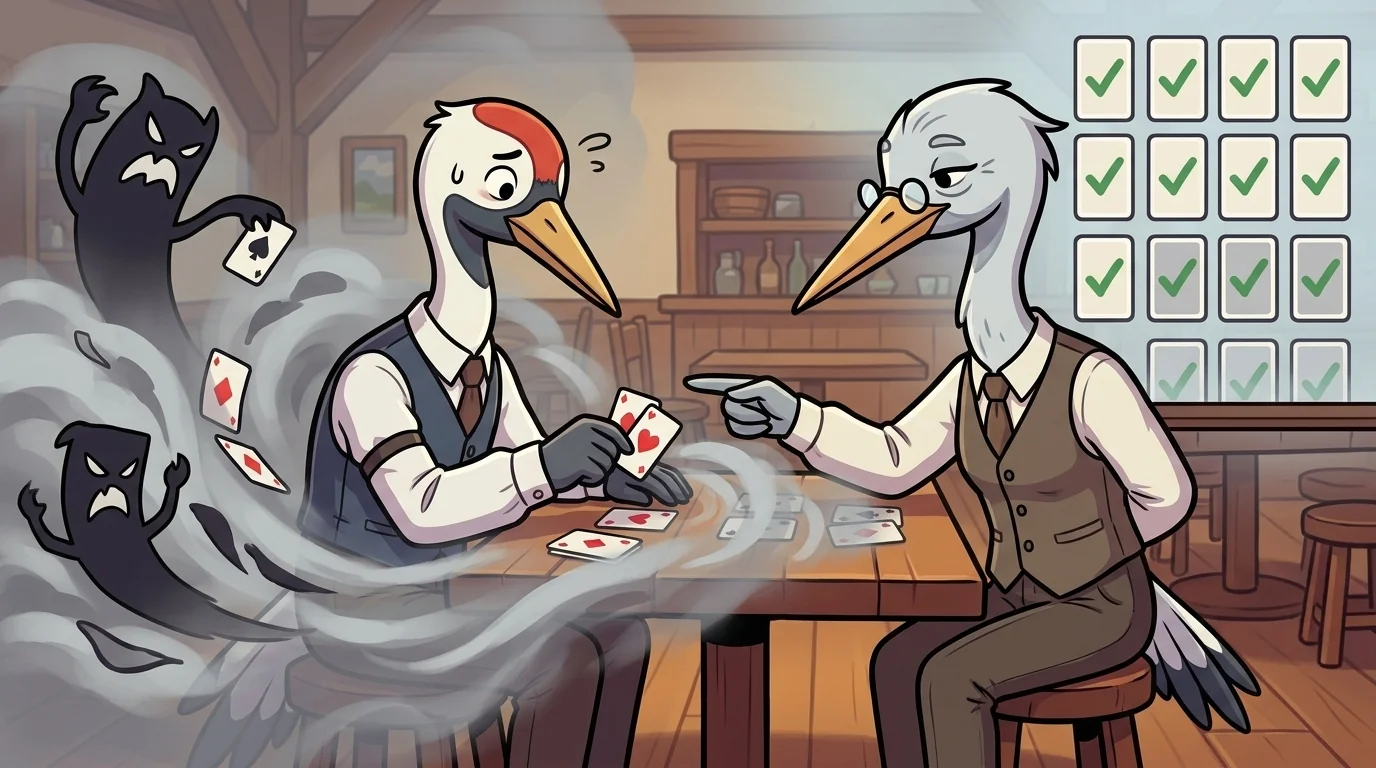
Marshal Crane had once played in a fog.
When he was young, he never kept track of anything. Cards fell, he forgot them; he'd forget which suits were gone, forget how many trumps were still out, and again and again he'd get ambushed — a winner trumped by a card he should have known was there, a suit that broke badly because he hadn't counted. He lost hand after hand to nasty surprises, and hunched down, sure the cards were just cruel to him, that he had rotten luck.
An old heron, calm and exact, folded down beside him. "You don't have bad luck," she said. "You have no COUNT. You let every card fall out of your head the moment it lands, so of course you're always surprised — you're playing blind in a game where everything's on the table if you'd only WATCH." She nodded at a card. "Check each one off as it falls. Keep the running count — what's gone, what's left, how many trumps still out. And clear the trumps FIRST, before you cash your winners, so nothing can cut in. Do that, and the game stops ambushing you. You'll always know what's coming, because you watched it come."
Marshal Crane learned to count — to check off every card and always know what remained, and to draw the trumps before relaxing — and the ambushes simply stopped. The foggy, always-surprised feeling cleared into a steady, in-control calm. He'd never had bad luck. He'd only been playing blind in a game he could have watched.
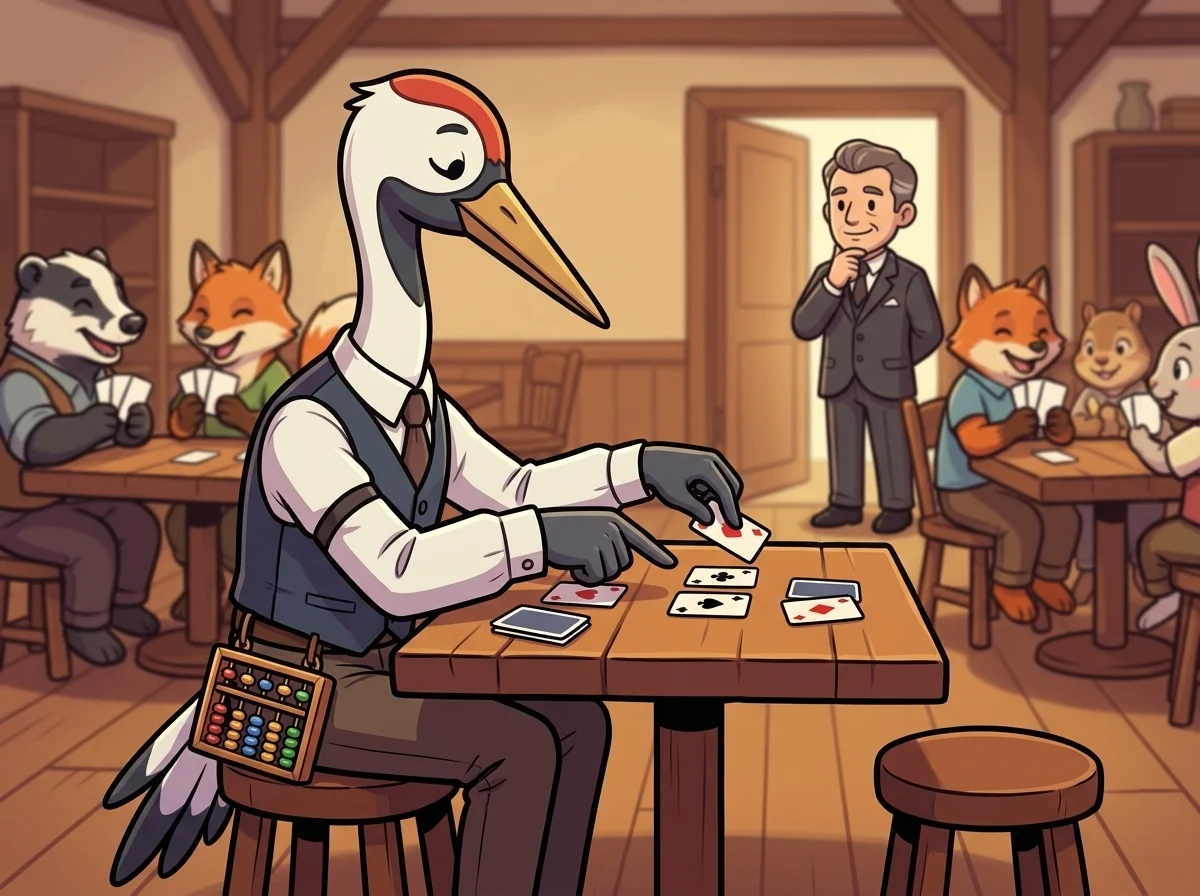
He walked to DealTales at twelve, because a place that studied clever games ought to understand the player who counts.
Vanderbilt, keeper of the classic agreements, met him at the door and asked only one thing. "What does it mean to count a hand?"
Marshal Crane didn't lecture. He played out a hand, softly naming what remained after each trick — "three trumps still out, both hearts gone, she has the last club" — and drew the opponents' trumps before cashing a single winner. He never guessed once, and nothing surprised him.
"You knew every card before it fell," Vanderbilt said.
"I counted them as they went," said Marshal Crane, "so I knew exactly what was left. And I drew the trumps first, so nothing could cut in. Order, not luck."
Vanderbilt nodded slowly, approving. "A counter and a marshaler of trumps," he said. "The hall runs smoother with one. Come in."
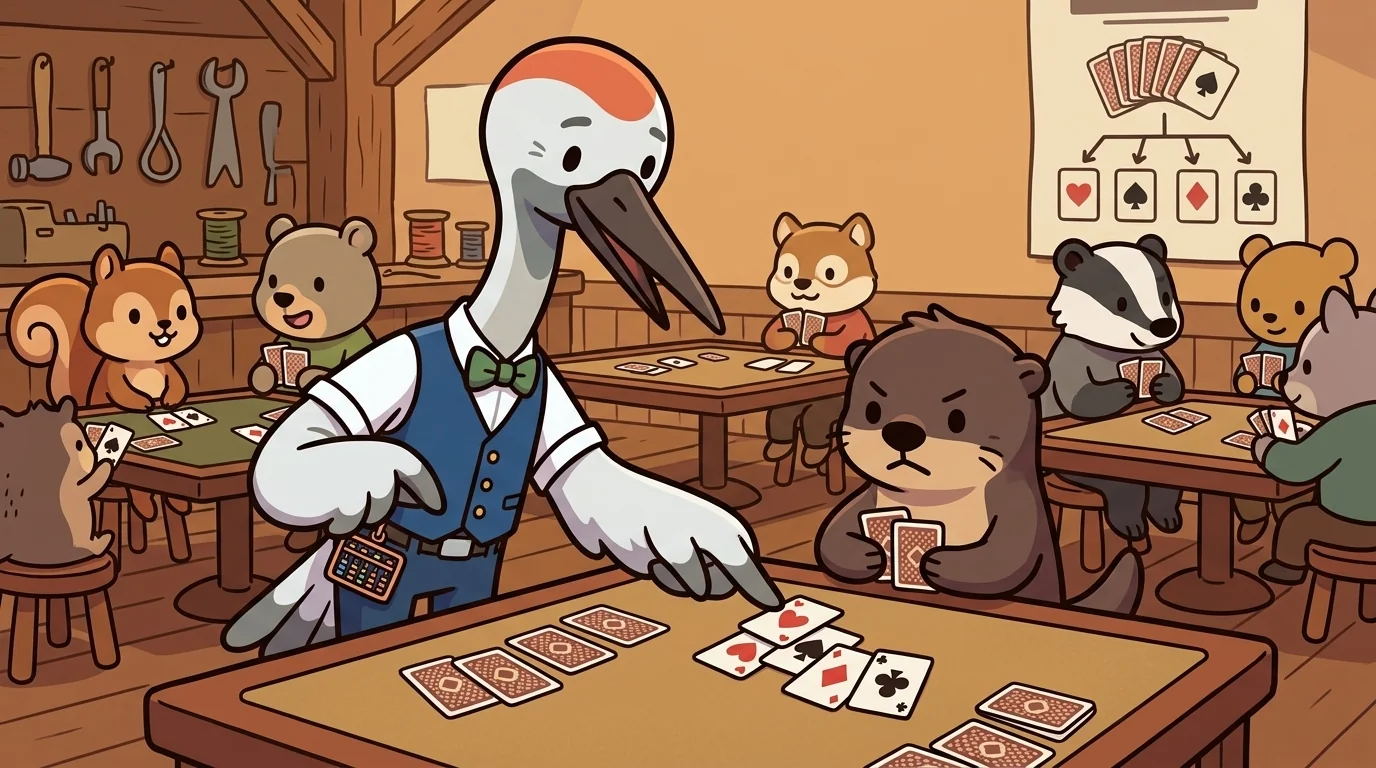
His corner of the hall filled with players who kept getting ambushed — and one afternoon a young otter fumed after a winner got trumped out of nowhere.
"I had this GREAT card," the otter said, "a sure winner, and then someone trumped it with a tiny card! Where did that even come from? It's not fair!"
Marshal Crane knew that ambushed feeling. He'd played in a fog for years.
"It came from a trump you didn't clear," he said gently. "Let's replay it. Did you draw the opponents' trumps before you cashed your winner?" The otter hadn't — he didn't even know how many were out. "That's the whole thing. You cashed your winner while they still had trumps AND had run out of that suit — so a little trump swooped in and cut it down. If you'd drawn their trumps FIRST, counting them out, none of them would've been left to trump you." He replayed it, leading trumps until the opponents had none. "Now cash your winner." The otter did; it sailed through, untrumpable. "Oh," he breathed. "I didn't get unlucky. I just... didn't clear the danger first. And I never counted, so I didn't even know it was there."
"That's it exactly," Marshal Crane said. "Count what's gone so nothing surprises you, and draw the trumps before you relax, so nothing cuts in. Order beats luck. A player who watches is never ambushed."
The otter replayed the hand counting the trumps out first, and won it clean — and his fuming settled into a thoughtful calm.
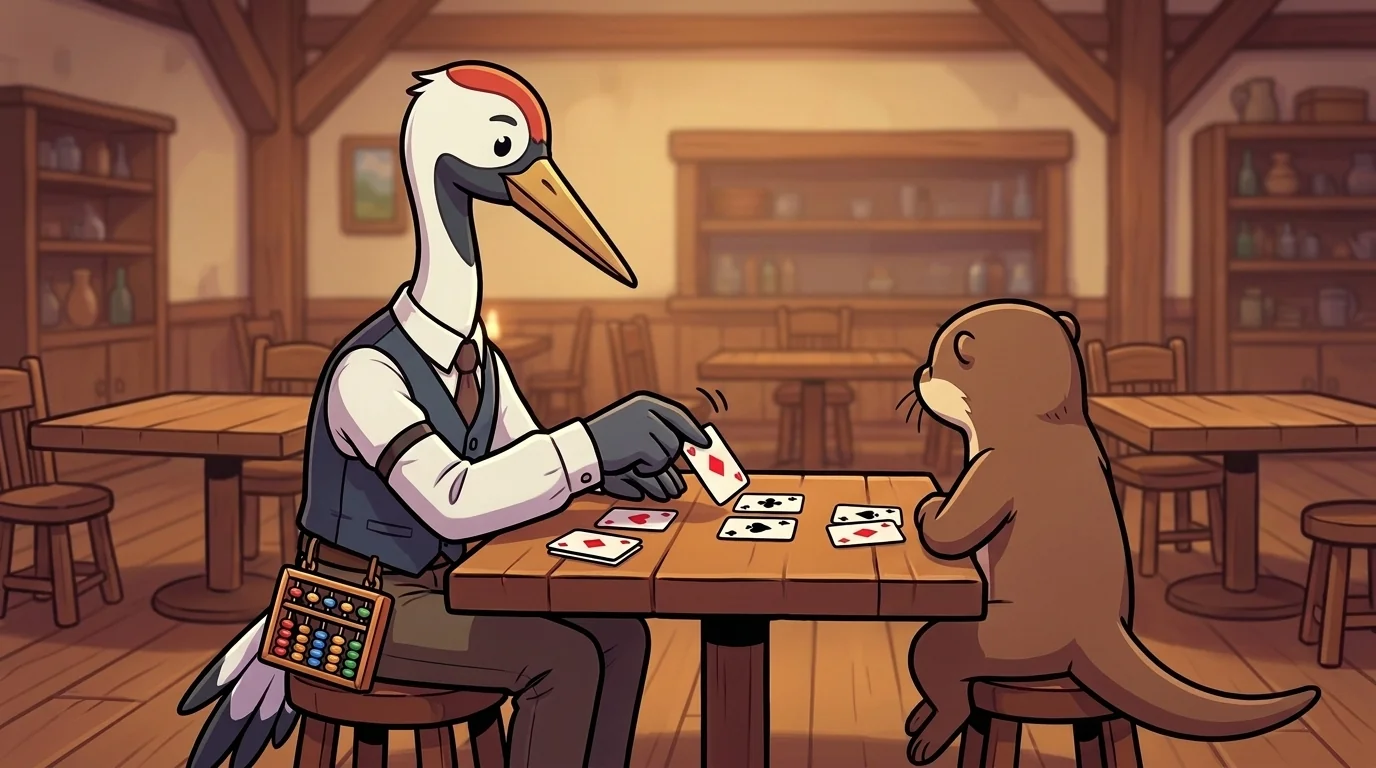
Later, when the hall had emptied out, the otter came back with a quieter question.
"When you count every single card," he said, "and always know what's left — doesn't your head get tired? Isn't it a lot to hold?"
Marshal Crane considered it, tapping his abacus-charm.
"It felt like a lot at first," he admitted, "when I was used to letting it all fall out of my head. Counting seemed like work." He nodded at a tidy, fully-tracked hand. "But somewhere I learned that NOT counting is the tiring part — the constant surprises, the ambushes, the anxious guessing. Once you keep the count, there's a steady, settled calm in it: you always know exactly what's out there, nothing can jump you, and you can clear the trumps and cash your winners in perfect order." He nodded softly at a fallen card. "There's a quiet, in-control feeling in a counted hand — not the jumpy dread of playing blind, but the warm certainty of a player who's watched every card go and knows, to the exact card, what remains. Orderly. Unsurprised. Calm. That's the crane's steadiness: knowing beats hoping, always."
The otter nodded, and Marshal Crane watched the anxious fog go out of him — the same steady certainty that had once, at a table long ago, cleared his own blind guessing into the calm of a player who finally kept the count.
The DealTales ensemble
Marshal Crane is one of the friends in DealTales. Each friend shows you one idea by how they act; meet them all and you have the whole subject.
-

Bram
Reading partners — inferring what cards your partner holds
-

Auntie Audrey
Bidding wisdom — when to commit and when to pass
-

Pointer Owl
High-card points; counting the strength of a hand before you bid, ace four, king three, queen two, jack one
-

Blind Lark
The opening lead; the defender's blind first card that shapes the whole defense
-
Echo Wren
Defensive signals; telling your partner what to do through the order of your cards
-

Sly Finch
The finesse; winning a trick with a lower card by betting on position
-
Doubleton Sisters
Short-suit play — managing two-card holdings
-

Gift Badger
The end play / throw-in; giving an opponent a trick that costs them two
-
Cinch the Boa
The squeeze; forcing an opponent to discard a guard
-

The Vanderbilt
Bridge legend — classical convention and table presence