
Contra
CONTRADICTION / PROOF BY CONTRADICTION — to prove something is true, sometimes the fastest path is to *assume it's false* and follow that assumption honestly until it crashes into an impossibility. If believing the opposite forces something that can't be true, then the opposite is wrong — so the original must be right. Contradiction isn't failure; it's the sound the wrong answer makes when it breaks.
Loading audio…
Press play to listen along. The line being read lights up as you go.
Show full transcript
Loading transcript…
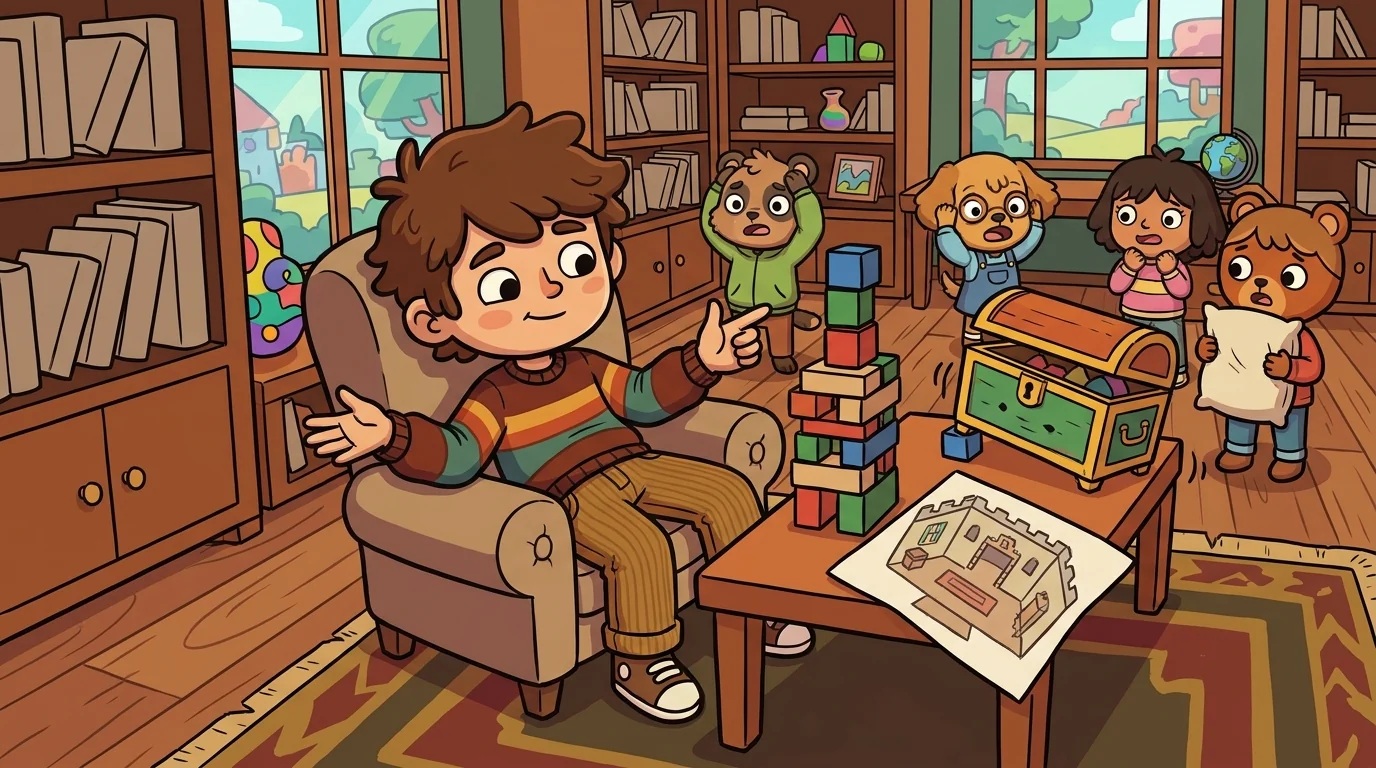
Contra had a favorite word, and the word was suppose.
He didn't yell when he disagreed with you. He didn't cross his arms or roll his eyes. Instead, he smiled, pulled up a wooden stool, and sat down right beside your idea.
"Suppose you're right," he'd say softly, leaning back against the bench.
That was when everyone in the room started to brace themselves. He never argued against a claim directly. He did something far more unsettling: he agreed with it completely. Then he followed it—patiently, step by quiet step—to see where it was headed. More often than not, it marched straight toward a cliff.
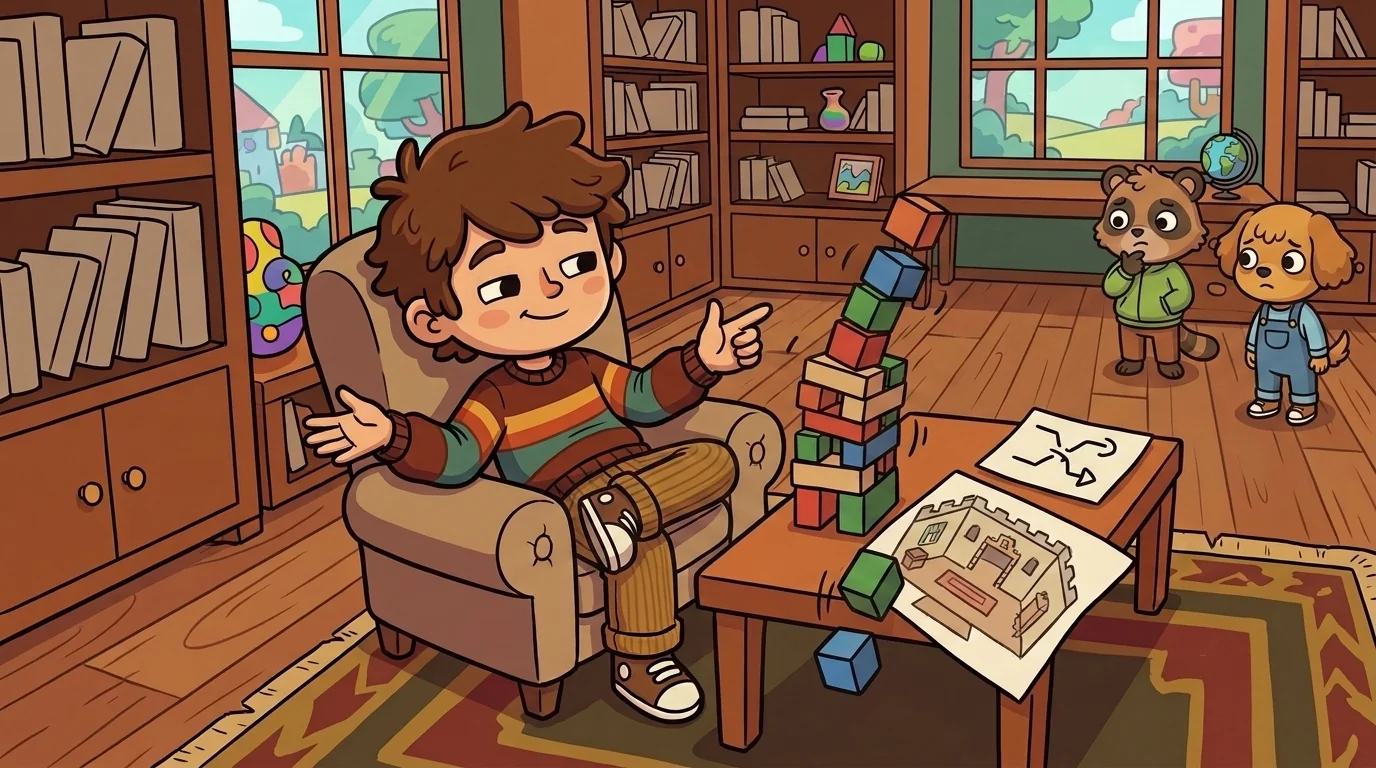
"Suppose you're right that the treasure is in the west room," Contra said one afternoon to a tall apprentice named Reeve. He tapped a brass ruler against his knee. "If it's in the west room, then the guard at the front gate lied to us. But you told us five minutes ago that the guard had no reason to lie. In fact, you swore he was your cousin."
Reeve opened his mouth. He closed it.
Contra spread his hands and let the idea finish collapsing on its own. "I didn't knock it down, Reeve. I just walked it to the edge and let it look over."
When Contra was younger, he had been a stubborn kid who argued about everything. He argued about bedtime. He argued about the heat of his soup. He shouted until his throat felt raw, and usually people just walked away because they were tired.
Then an old teacher taught him the one move that changed him. Instead of shouting you're wrong, try saying let me pretend you're right for a second—then what? And actually mean it.
Follow the other person's idea as if it were true, all the way to the end. Sometimes the idea held up, and Contra learned something real. But sometimes it led somewhere ridiculous—somewhere even the other person could see was impossible. Then Contra didn't have to win the argument. The idea lost all by itself.
"It's the most polite way to disagree ever invented," Contra explained years later, scraping chalk off his knuckles. "You don't call anyone wrong. You just take their idea very, very seriously—more seriously than they did—and walk it forward until it trips over its own feet. If it doesn't trip, it was true. If it does... well, it told on itself."
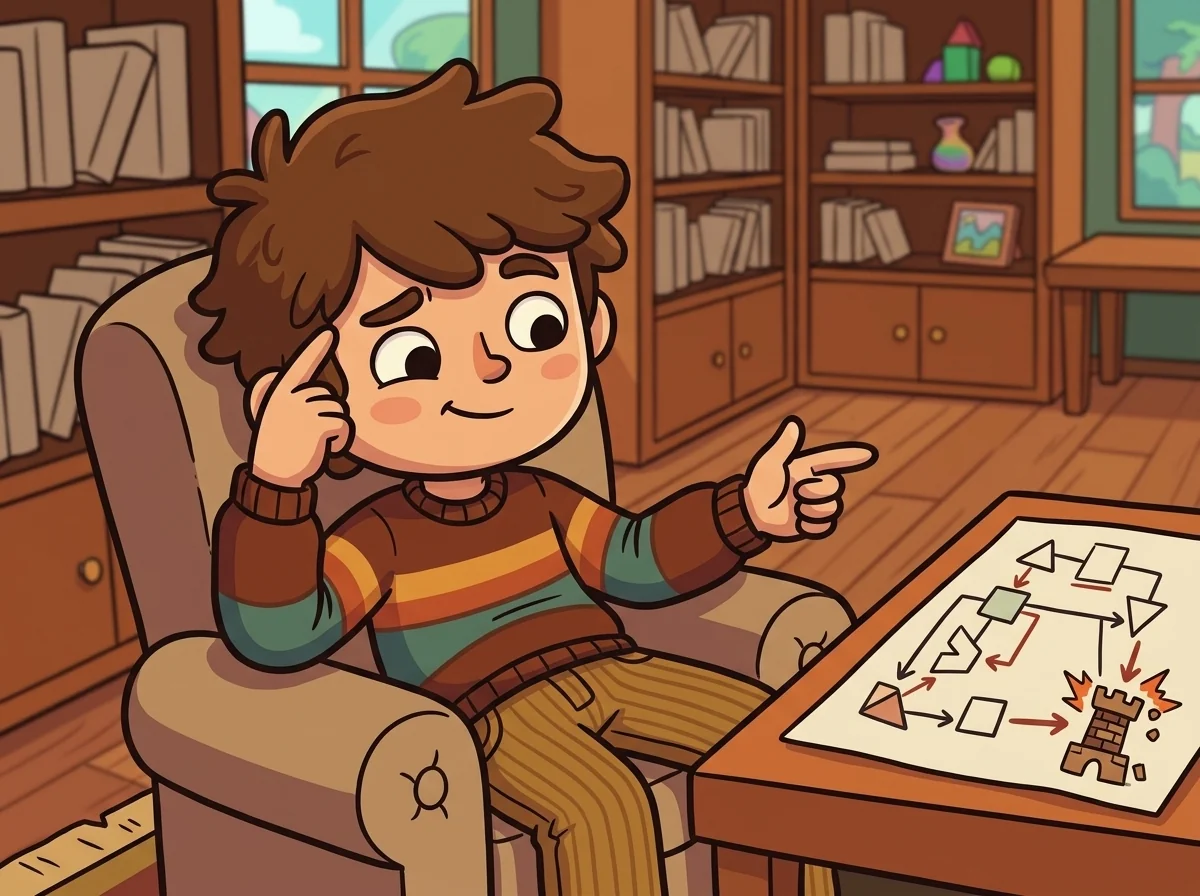
That habit was why he ended up at the DeduceQuest academy. Deducia, the host, had overheard him settle a bitter fight between two market vendors. He hadn't picked a side. He had taken the losing side's argument so seriously that it dismantled itself in public.
On his first morning at the academy, the Headmaster posed a puzzle to the new class. Ten apprentices sat around a long oak table under low wooden rafters.
"Prove that in any group of our students, at least two share the exact same number of friends inside the building," the Headmaster announced.
The other apprentices grabbed their slates. Pencils scraped furiously across slate. One student started counting on his fingers, getting tangled by the second name. Another tried to draw every student in the dormitory with connecting chalk lines.
Contra just smiled.
"Suppose not," Contra said, stepping up to the slate board. "Suppose everyone has a different number of friends."
He wrote out ten numbers in a neat line: 0, 1, 2, 3, 4, 5, 6, 7, 8, 9.
"In a group of ten, that means the friend-counts are all different," he said. "Someone has zero friends, someone has one, all the way up to nine."
He pointed at the number nine. "A student with nine friends is friends with everyone in the room."
Then he pointed at the zero. "But the student with zero friends is friends with nobody."
He turned back to the room, tossing a piece of chalk from hand to hand. "You can't have someone who is friends with everyone in the same room as someone who has zero friends. The two facts smash into each other."
Contra wiped the chalk off his fingers. "So the friend-counts can't all be different. That means at least two must match."
The Headmaster watched him in quiet delight. "You didn't prove it was true by searching," the old man said. "You proved it couldn't be false."
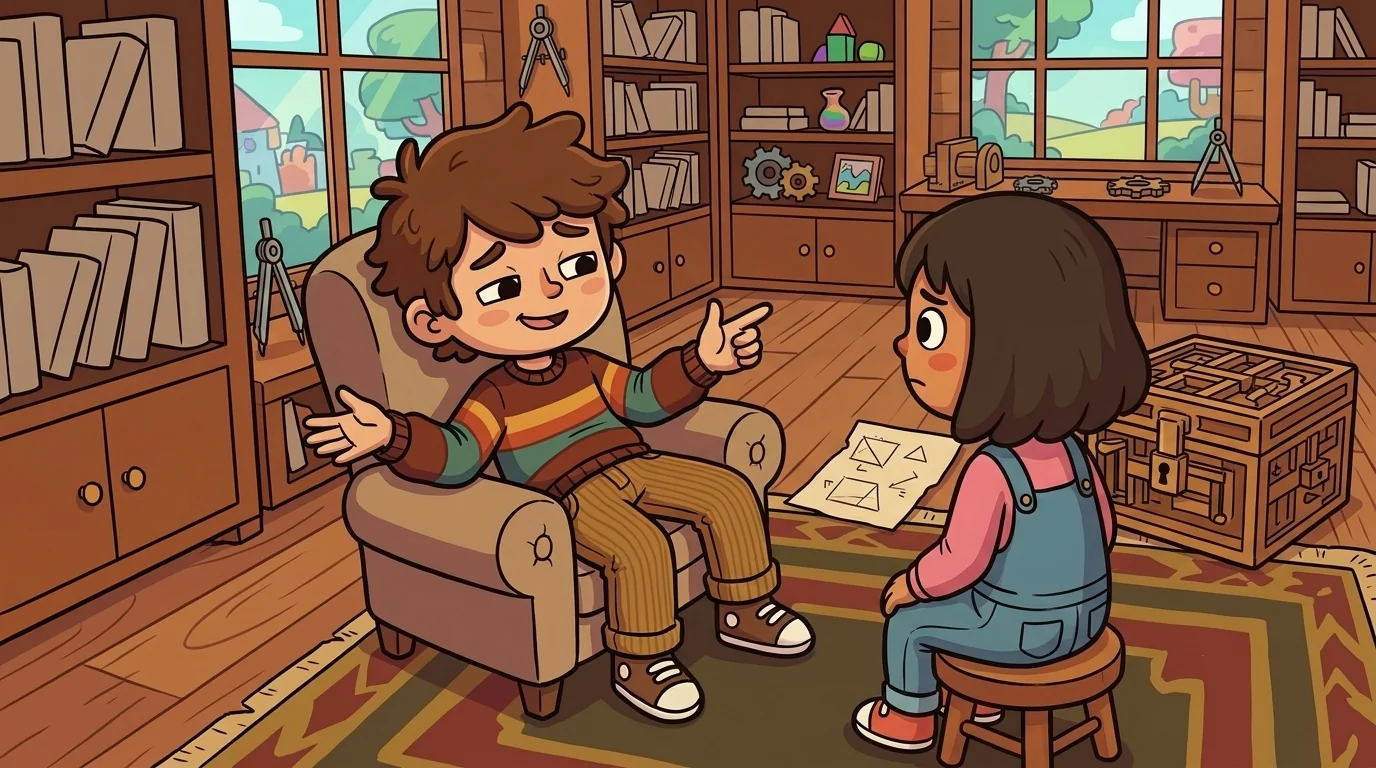
In his workshop, Contra taught students that being wrong out loud was a tool. One rain-soaked afternoon, a younger apprentice named Tess came in. She sat terrified at a workbench, clutching a wooden locked-room puzzle. She was afraid to guess. She was terrified of failing in front of the others.
Contra's face lit up with sympathy and mischief.
"You're afraid of finding a contradiction," he said, pulling up a stool beside her. "A contradiction is two facts that cannot exist together, like rain made of fire. It's the most helpful thing in the world. It's a flashlight pointing at the exact spot where an idea breaks."
He tapped the wooden puzzle box between them. "Don't try to find the right answer," Contra told her. "Pick the answer you're most sure is wrong, and assume it's right. Then follow it where it goes."
Tess bit her lip, picked a path on the board, and moved her wooden token. Three steps in, she hit a dead end.
"There," Contra said, clapping his hands together. "You just eliminated an option forever—not by guessing, but by proving. You aren't wrong, Tess. You're narrowing."
Tess looked at the board, her shoulders unknotting. Every contradiction she found killed a wrong answer permanently. You couldn't un-break an idea that broke. The more bad answers collapsed, the fewer choices were left standing—until the only thing left untouched was the truth.
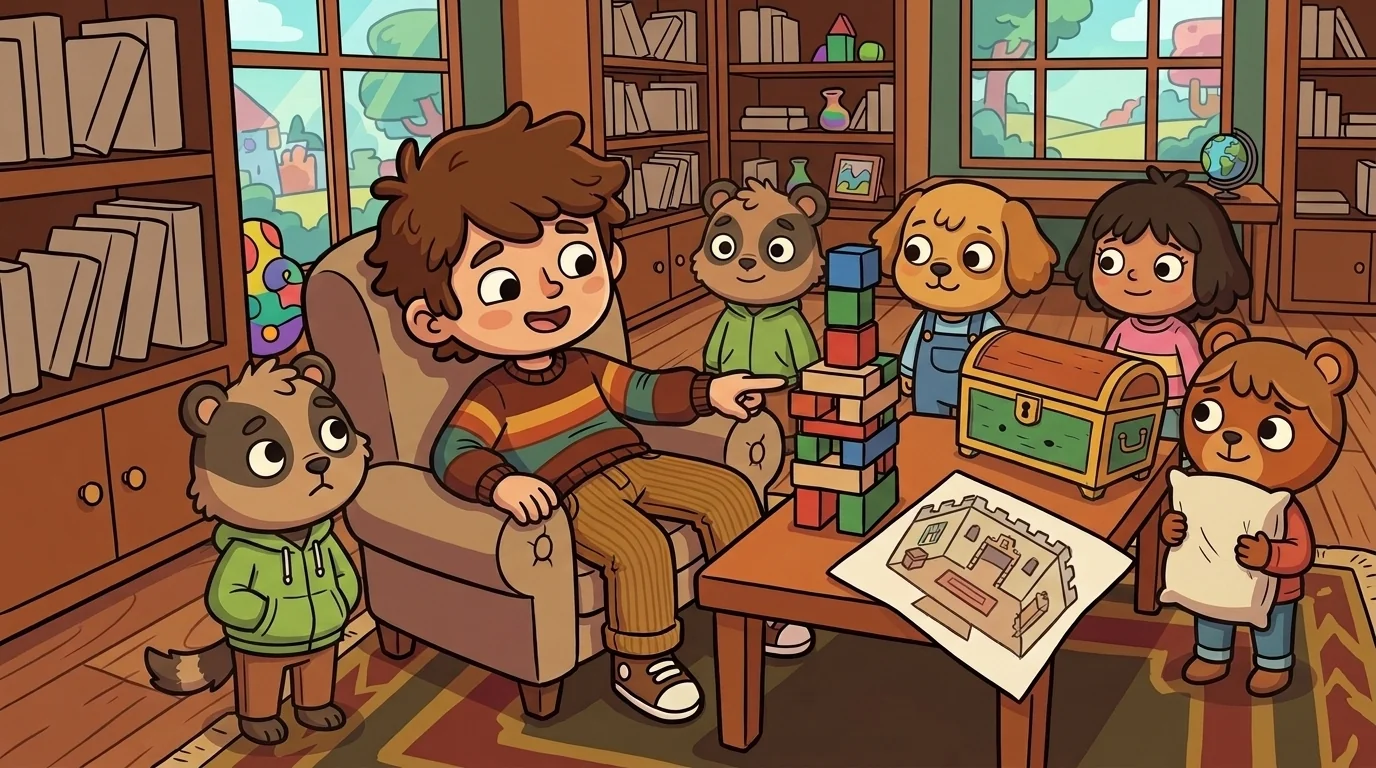
Later, while wiping down the worktables, Tess asked the question that had been lingering in her head.
"What if I follow a wrong idea and it doesn't break?" she asked. "What if it just keeps going?"
Contra nodded slowly, respecting the thought. "Then you've learned something huge," he said. "If you assume the opposite and follow it honestly and it never trips, then maybe the opposite isn't wrong. Maybe the thing you were trying to prove isn't true after all."
He tapped the table. "That's the honest part of this method," Contra said. "You have to follow the assumption fairly. No cheating. No pushing it toward the crash you want. You let it run free. If it survives, you were wrong to doubt it. If it dies... well, it was always going to die."
He leaned in, his voice quiet. "The people who never test their ideas this way spend their whole lives defending things that would have collapsed at the first honest step."
Tess went back to her dormitory that night. Before sleeping, she took one belief she had been terrified to question, and gently, honestly, supposed the opposite. She felt no fear, only a strange and quiet relief. Now she would know the truth, instead of just hoping.
The DeduceQuest ensemble
Contra is part of DeduceQuest's distributed-narrative cast. Each character embodies a different curricular primitive; together they teach the full subject.
-

Cogent
Constructing explanations: telling deductive apart from inductive reasoning
-
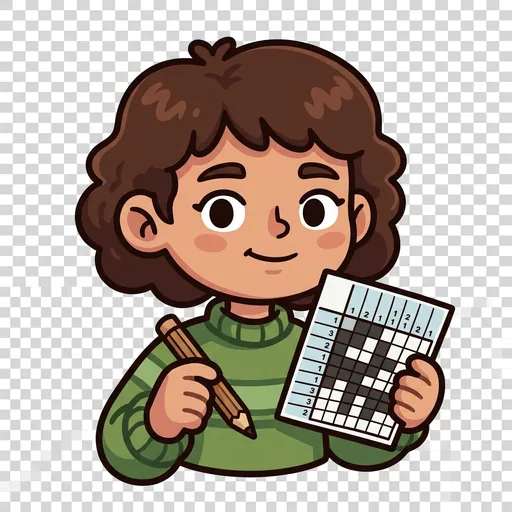
Nona
Nonograms: filling a hidden picture from number clues, cell by cell
-
Odds
Probabilistic reasoning: choosing well when you cannot be certain
-
Reeve
Cross-referencing: corroborating clues against each other
-
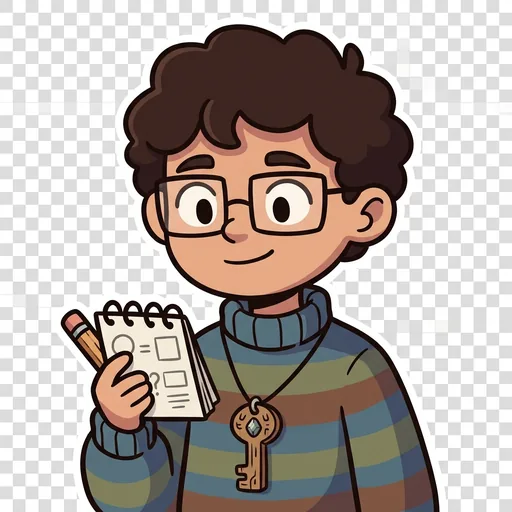
Rulewright
Guess-the-rule induction: form a hypothesis, then test it
-
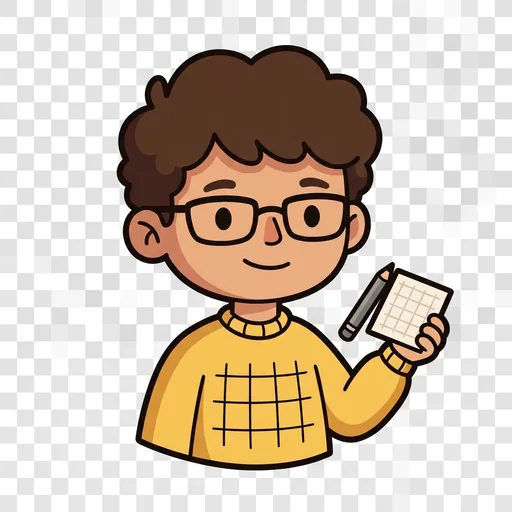
Tablo
Logic-grid deduction: eliminating possibilities in a grid
-

Vary
Controlling variables: changing one thing at a time
-
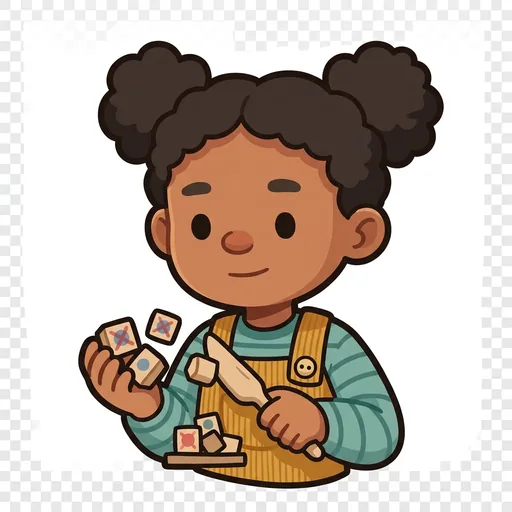
Whittle
Code-narrowing: you never hunt for the answer, you narrow toward it