How are you feeling?
Start here
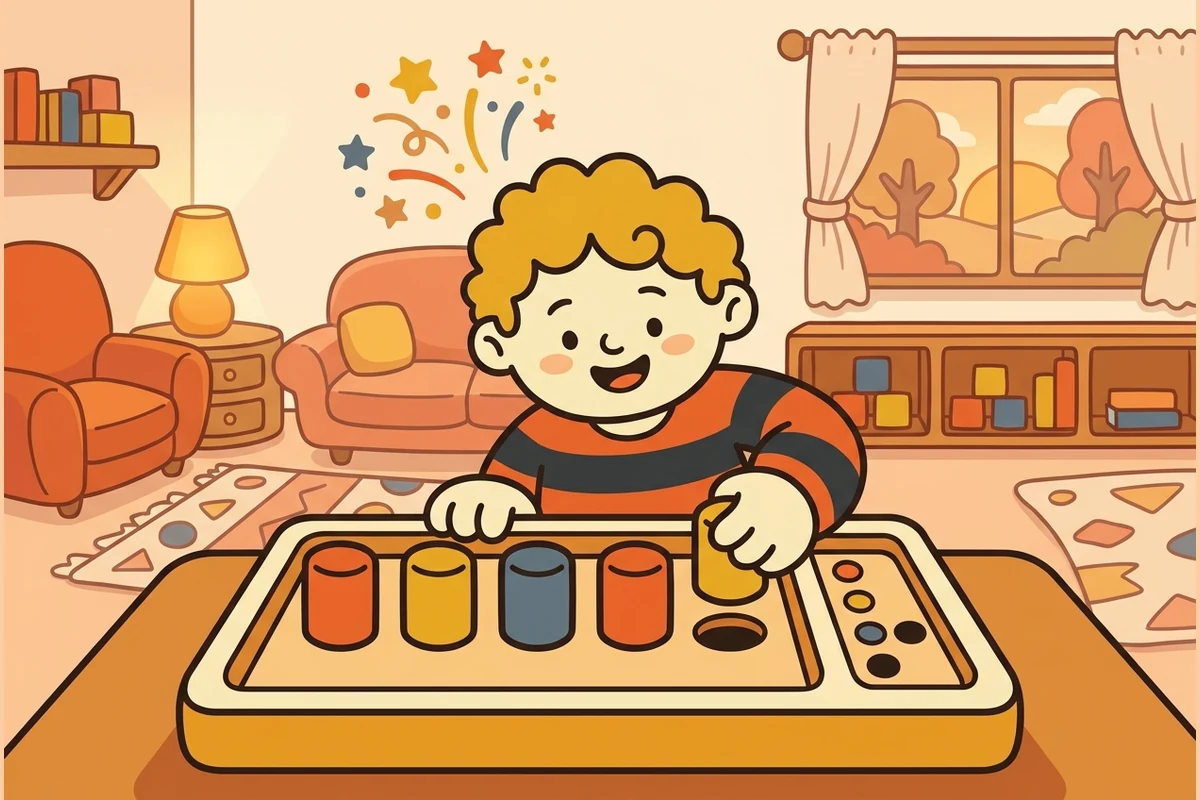 Whittle’s Code Breaker Crack a hidden colour code from feedback pegs, like Bulls and Cows.
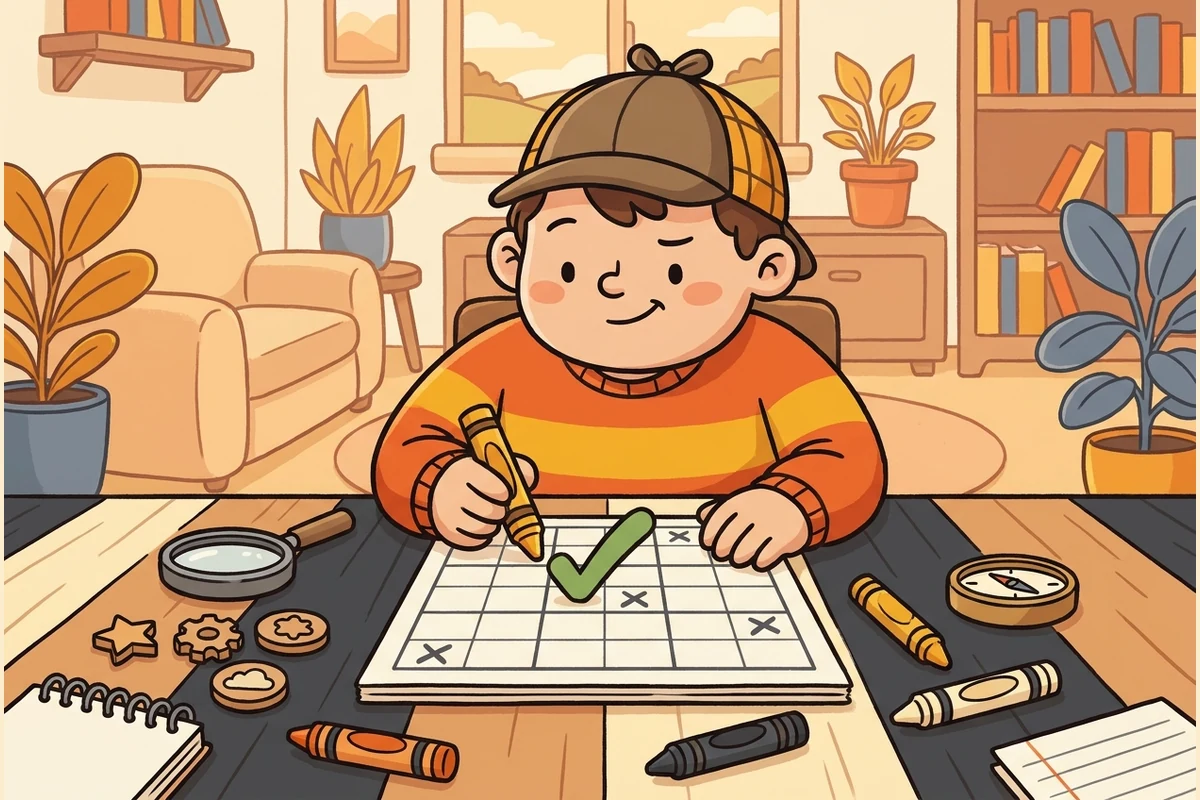 Tablo’s Logic Grid Cross off possibilities clue-by-clue until one ✓ is left per row and column.
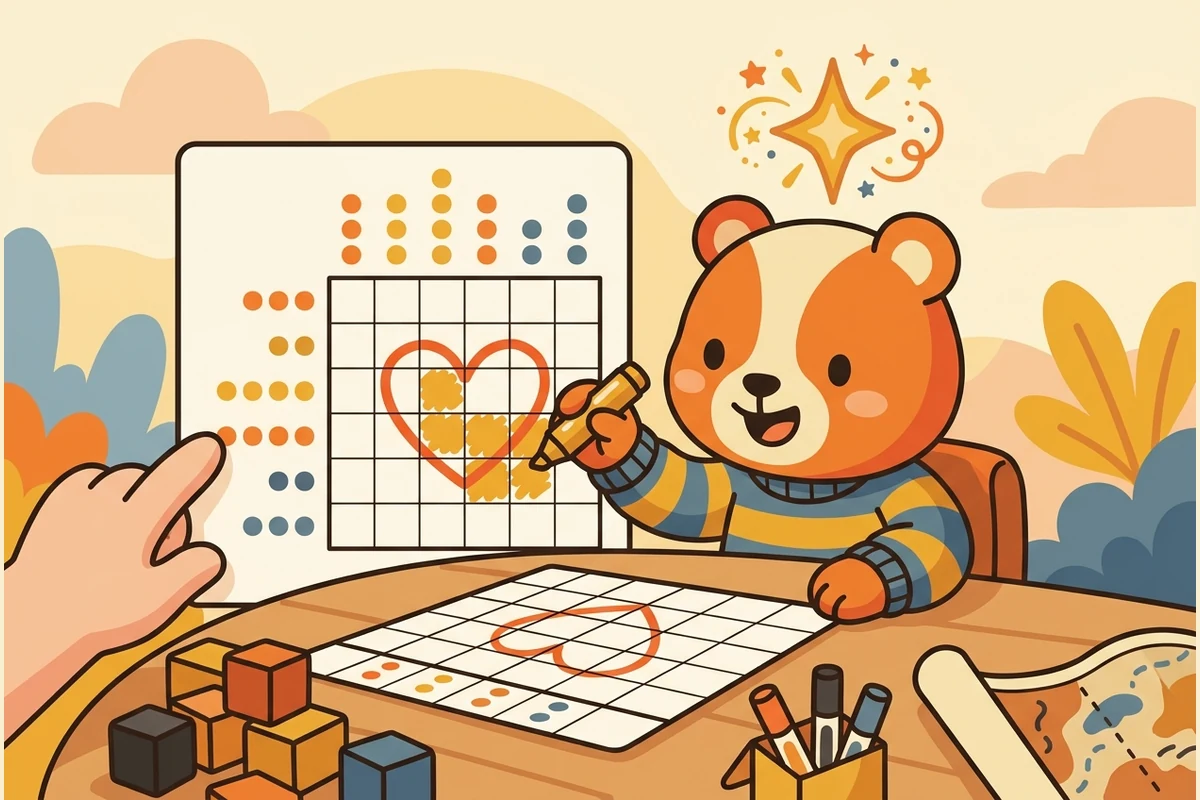 Nona’s Nonogram Fill cells purely from the row and column number clues to reveal a picture.
 Rulewright’s Guess the Rule Predict the hidden rule before the reveal, then reconcile — predict, observe, explain.
All activities
Codes
Grids
Cases
Make one
More
Concept Kits — 16 kits of deduction practice
More ways to play
Same idea, another world
Think it through first
😄 Brain break

Meet the cast — the characters who teach this
-
 Cogent Constructing explanations: telling deductive apart from inductive reasoning
-
 Contra Proof by contradiction: assume the opposite and watch it break
-
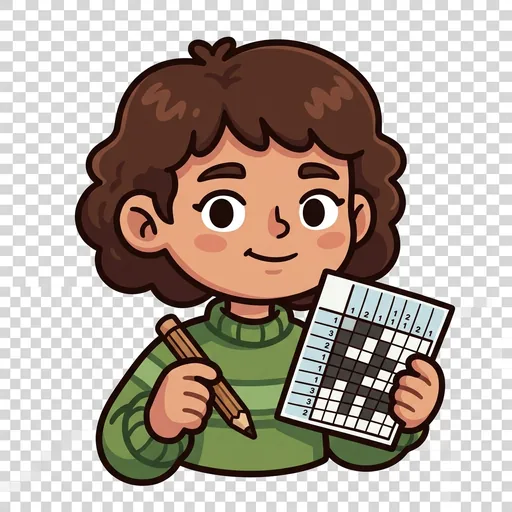 Nona Nonograms: filling a hidden picture from number clues, cell by cell
-
 Odds Probabilistic reasoning: choosing well when you cannot be certain
-
 Reeve Cross-referencing: corroborating clues against each other
-
 Rulewright Guess-the-rule induction: form a hypothesis, then test it
-
 Tablo Logic-grid deduction: eliminating possibilities in a grid
-
 Vary Controlling variables: changing one thing at a time
-
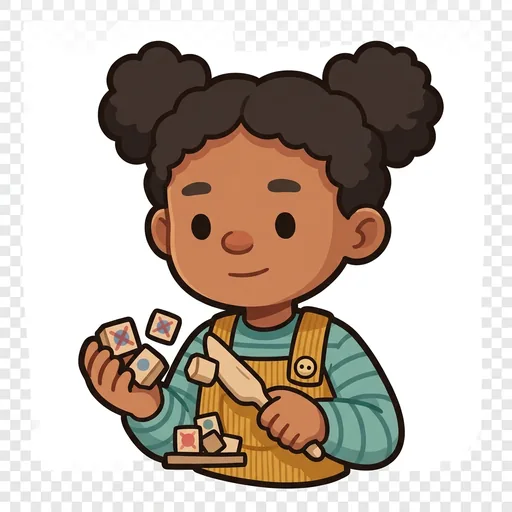 Whittle Code-narrowing: you never hunt for the answer, you narrow toward it
Ensemble stories — the cast together
What next? Pick a door
- More like this LatticeForge Which rule fills the grid? PuzzleForge What is the fewest moves to solve it? WitQuest Can your wits beat the villain?
- A bit harder DropTale Where would you drop the captured piece? SleuthLab Which suspect does the clue point to? CodeRealm Which blocks get Bit to the goal?
- Something different SignalForge Which thumbnail wins, and why? FocusForge Which focus trick works for you? DanceQuest Can you build an eight-count phrase?
Where this game comes from
Bulls and Cows, and the peg game
Bulls and Cows is a pencil-and-paper guessing game with hidden digits. In 1970 Mordecai Meirowitz, an Israeli postmaster and telecommunications expert, made a board game much like it, with coloured pegs. A plastics company near Leicester, England, Invicta, sold the peg game from 1971.
One thing to hold: A plastic board with rows of holes, a hidden row of four coloured pegs behind a shield, and small black and white pegs for the answers.
Why it matters: Every answer rules codes out. In the 1970s the computer scientist Donald Knuth showed that a careful player can always find any of the 1,296 codes in five guesses or fewer.
What we don’t know: Nobody knows who first played Bulls and Cows or when. It may be about a century old.
Dates:
- 1970 Mordecai Meirowitz makes the peg version.
- 1971 Invicta Plastics starts selling the peg game.
- 2021 A daily five-letter word game puts the same loop online, with letters instead of pegs.
📚 Books for DeduceQuest
- Storybook
- Activity book
- Strategy book
- Strategy puzzle workbook
- Flash cards
- Joke book
- Poster
- Detective gamebook