
Odds
PROBABILISTIC REASONING — when you can't be *certain,* you reason about how *likely* each possibility is. Not everything splits into true/false; some things are "probably," "more likely than not," "one chance in four." The skill is comparing likelihoods honestly, updating them when new evidence arrives, and acting well under uncertainty instead of pretending you're sure.
Loading audio…
Press play to listen along. The line being read lights up as you go.
Show full transcript
Loading transcript…
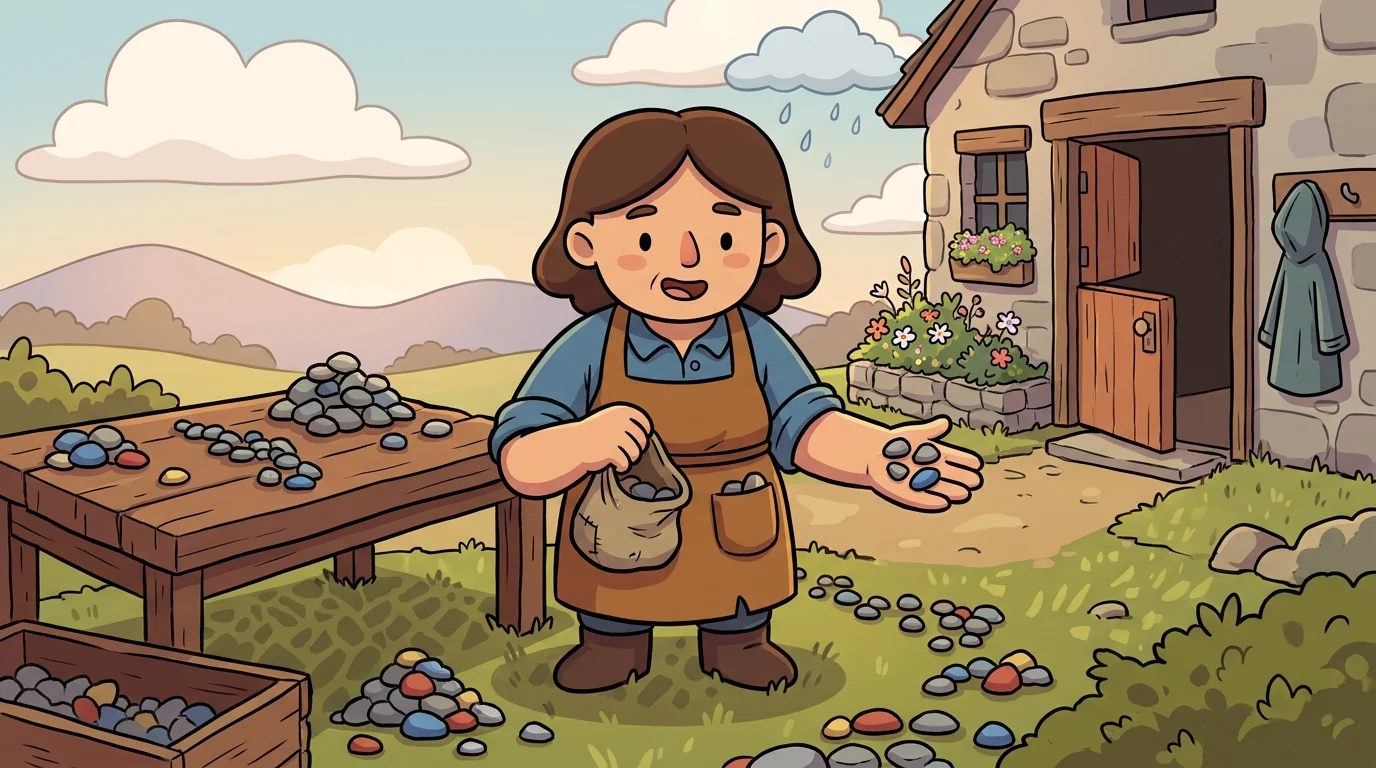
The leather stone bag hanging at Odds' belt didn't ring with the silver clink of coins. It gave off a heavy, dry clack, like smooth gravel shifting in a wooden box.
When the younger apprentices came to her with questions, they usually wanted a single word—a clear yes or a final no.
"Is it going to rain before dusk?" asked Leo, leaning over her oak workbench with his coat folded over his arm.
Odds didn't look up at the gray clouds gathering past the open window. She reached into her pouch and pulled out five flat river pebbles—four slate gray and one cornflower blue. She scattered them across the smooth pine table between them.
"Four grays, one blue," she said, her voice dry and steady. "Four chances in five it rains. Bring the coat."
Leo frowned down at the stones. "So it's a yes?"
"It's a four in five," Odds corrected, sweeping the pebbles back into her palm. "If you want an absolute guarantee, go talk to a liar. Certainty is rare and expensive in this world, Leo, and life almost never hands it out. But not knowing for sure isn't the same as knowing nothing at all."
She tied the drawstrings of her leather pouch with a quick flick of her fingers.
"There is a whole world between yes and no," she added. "It is built entirely out of how likely."
Odds had carried the core of probabilistic reasoning long before she had a name for it. As a child, she had been the kind of girl who froze in doorways, trapped by her own caution. She needed to be completely certain before taking a single step forward. If a footbridge looked slightly slippery, she stood on the riverbank until her boots grew cold and wet. If two paths led into the woods, she sat on a mossy stump, waiting for a clear sign that never came. Life almost never hands out guarantees, so she spent most of her childhood standing completely still.
Then an old road surveyor watched her freeze beside a broken fence post during an autumn drizzle.
"You are waiting for a guarantee," the surveyor said, leaning on his heavy measuring staff. "There aren't any. There are only better bets and worse bets."
That single thought shifted her entire mind. She didn't need absolute proof before she could move her feet. She only needed to know which way the weight leaned.
She began estimating her choices instead of locking up in place. Probably fine. More likely than not. Three chances in four.
Suddenly she could move. She could act, and act well, without ever needing to be certain of anything.
"Waiting for certainty is its own choice," she told her students years later. "It is usually a bad choice, because while you sit waiting, the moment passes you by. The brave thing isn't being sure. The brave thing is acting on your best estimate—and being ready to update it the second the world hands you new facts."
Deducia had brought Odds to the DeduceQuest academy after watching her win a guessing game in the crowded market square. Other players tried to name secret tokens through luck or dramatic gut feelings. Odds simply bet on the most likely option every single round, letting the math carry her across twenty turns.
On her first morning in the hall, the Head Master laid out an ancient puzzle on the high table. A silver ring had vanished from the vaulted library. The evidence pointed toward three different suspects, but none of the clues offered absolute proof.
"Solve it," the Head Master commanded, folding his arms across his dark robe. "Tell us who took it."
Odds looked down at the parchment notes spread out between them. She refused his word.
"I cannot solve it," Odds said calmly. "There isn't enough proof here to be sure. But I can rank it."
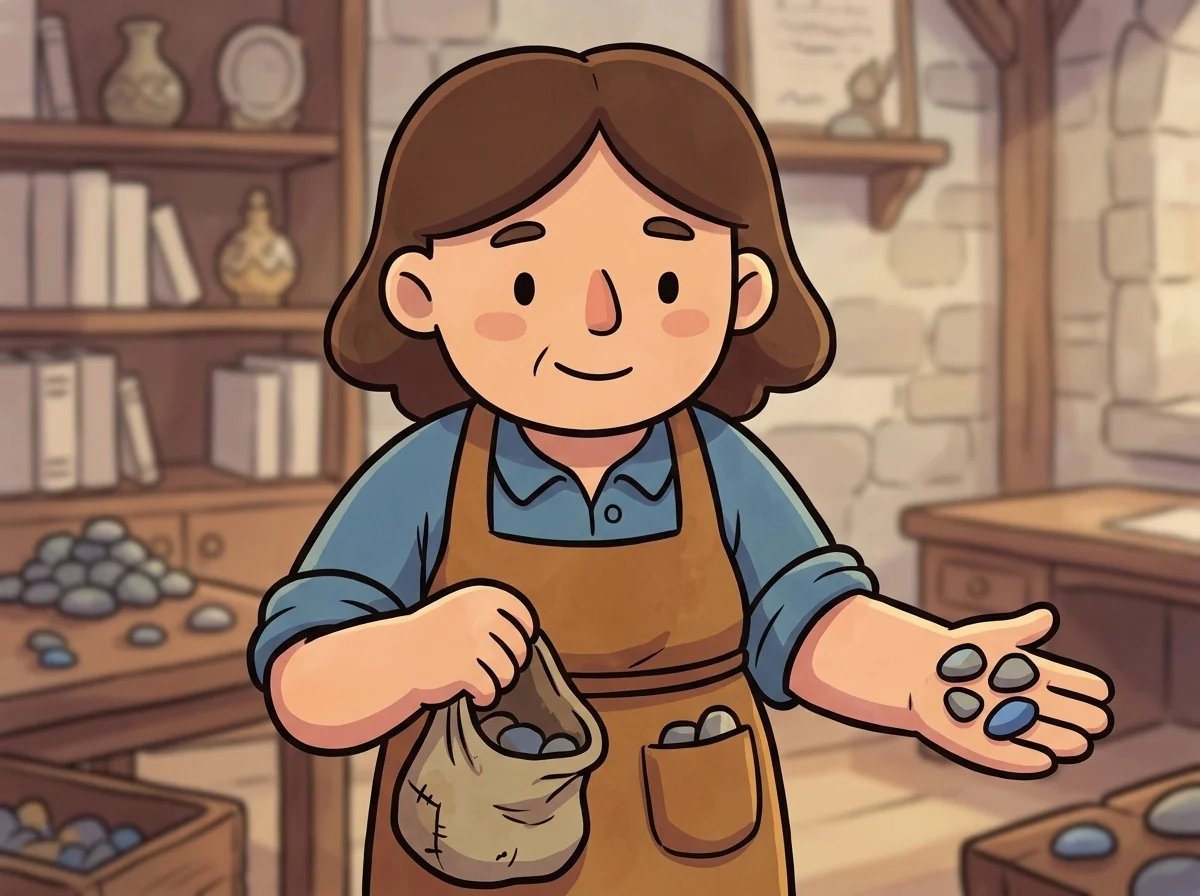
She pulled her colored stones from her bag and laid them across the suspects' names. She placed three gray stones beside the gardener, one beside the apothecary, and one beside the gatekeeper.
"It is most likely the gardener," she said, tapping the three gray pebbles. "Three chances out of five. But it isn't certain, and pretending it is would be a lie. So I act on probably the gardener, and I keep one stone on maybe not."
The Head Master watched her in silence. He had watched dozens of eager apprentices force uncertain puzzles into fake certainty just to sound clever.
"You didn't fake an answer you didn't have," he said quietly. "You measured the one you had."
In her sunlit workshop, Odds taught her students that probably was a real, sharp tool.
One afternoon, an apprentice named Bram slammed his wooden puzzle marker onto the workbench. His face was red with frustration.
"I got it wrong," Bram muttered, kicking the stool leg. "I said it was probably behind the red door, but the prize was behind the blue door. So my reasoning was garbage."
Odds leaned back in her high chair, regarding him without pity.
"Was the red door actually more likely, given what you knew at the time?" she asked.
Bram paused, rubbing his hot forehead. "Yeah. There were three doors, and two clear clues pointed straight at red."
"Then your reasoning was good and the outcome was unlucky," Odds told him firmly. "Those are two completely different things, and mixing them up will ruin your mind."
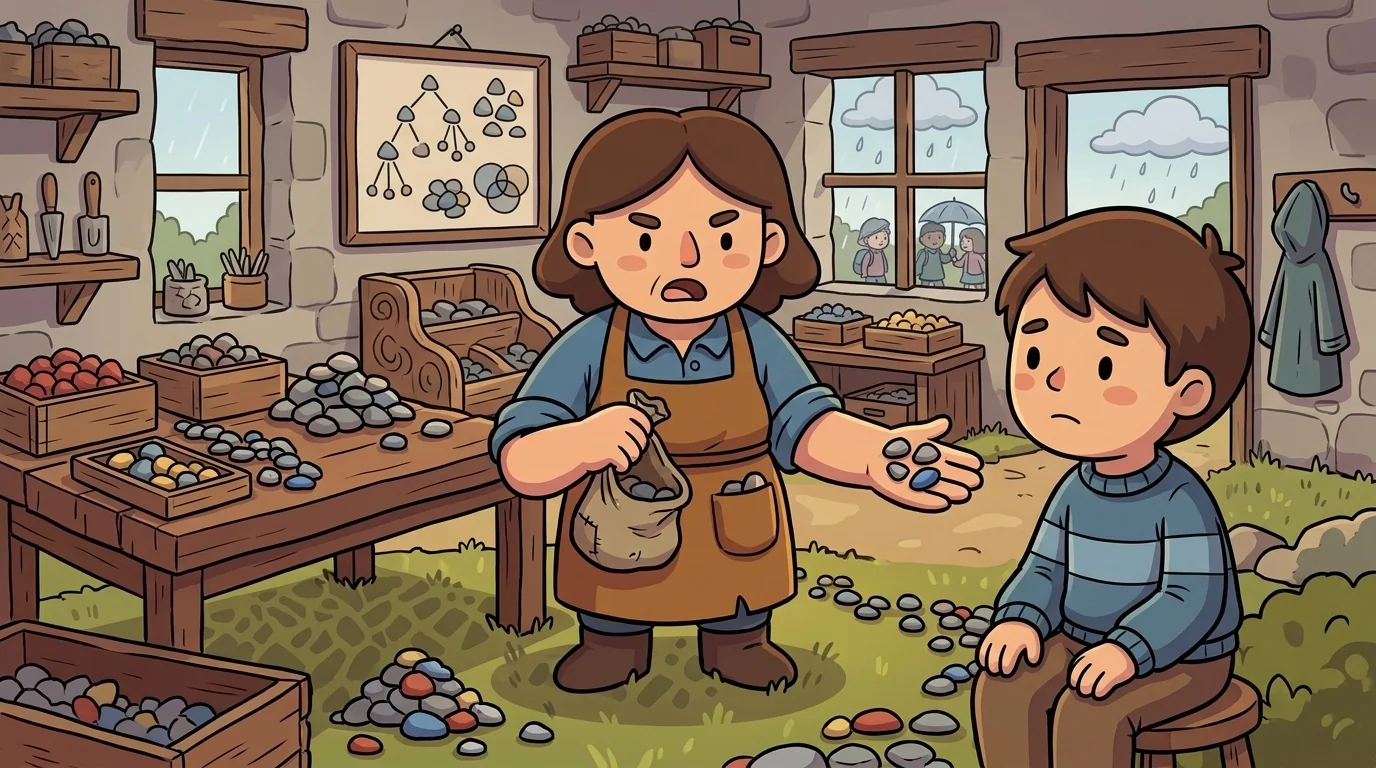
Bram stared at her, caught off guard. "How can a good choice end in a loss?"
"A good bet can lose," Odds explained, tapping her knuckles on the hard pine top. "A bad bet can win. You judge the decision by what you knew when you made it—not by how the dice happened to land."
She picked up her pouch and gave it a sharp shake. The stone gravel clacked inside the leather.
"If you bet on the most likely thing every time, you will still lose sometimes," she said. "But you will lose least often, and that is the best any of us can do in a world without guarantees."
Bram sat down slowly on his wooden stool. He ran his fingers over the grain of the bench, feeling something un-clench in his chest. A wrong answer wasn't proof that he was stupid. It was just a cold roll of the world.
Later that afternoon, Bram looked up at her with a doubtful scowl.
"But how do I even know the odds?" he asked. "You say three-in-five like you weighed it on a brass scale. Half the time, I feel like I'm just guessing."
Odds grinned, because it was the honest question.
"Half the time I am estimating," she admitted, leaning over the table. "But there is a strict discipline to it. You always start with how common a thing is normally."
She placed a single yellow pebble on the wood between them.
"Most doors aren't trapped, and most people aren't lying thieves," Odds said. "You start right there with the normal rate. Then you move your estimate with every fresh clue you discover."
She slid two slate stones toward the yellow pebble.
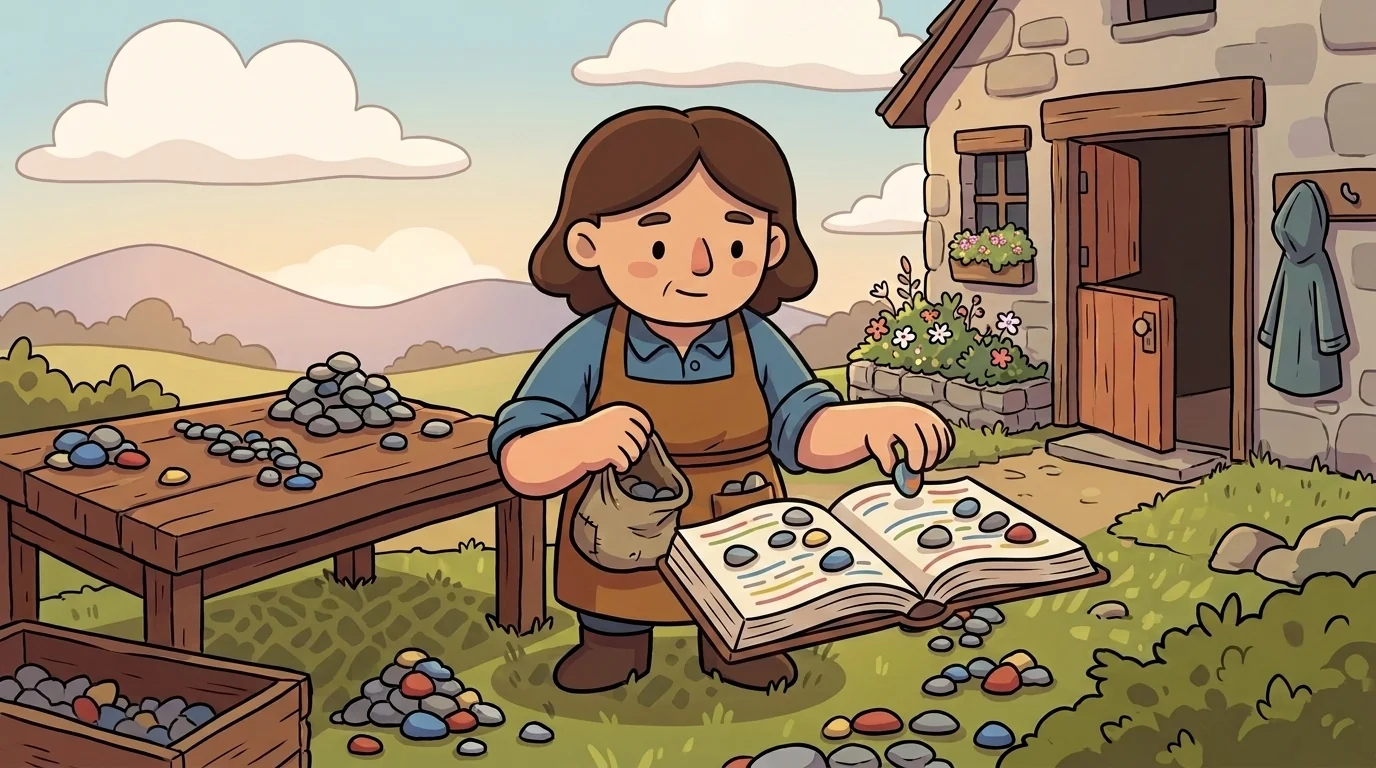
"Evidence that fits the gardener slides stones toward his name," she explained. "Evidence that doesn't fit slides them away. The exact number matters less than the direction and your honesty."
She tapped the pine tabletop with her knuckles.
"Say your estimate out loud—'I'd put it at maybe three-in-five'—so it's checkable," Odds told him. "That way, the world has a chance to correct you when you are wrong. The person who says I'm sure cannot be corrected. The person who says probably, about three in five leaves the door open for the truth to walk in."
She smiled down at him.
"Being specific about how unsure you are is far more honest—and far more useful—than pretending to be sure."
Bram walked back to the student dormitories that night with a heavy choice facing him.
A rumor was sweeping through the halls that the morning exam had been moved to the cellars. Half the apprentices were already packing their oil lamps in a panic. The official bulletin board still listed the main hall, but three older students swore the cellar was true.
Bram stood in the drafty corridor, feeling his stomach tighten into its old knot. He wanted absolute certainty. He wanted a teacher to walk out of the dark and tell him the truth.
Instead, he pictured Odds' leather bag of river stones. He asked himself the real question: Which way does the weight lean?
Official notices were usually right. Student rumors were usually wrong.
"I'd put it at four chances in five for the main hall," Bram said out loud to the empty hallway.
He picked the better bet, named his estimate out loud, and went to bed. He slept fine, even though he didn't know for sure.
The DeduceQuest ensemble
Odds is part of DeduceQuest's distributed-narrative cast. Each character embodies a different curricular primitive; together they teach the full subject.
-
Cogent
Constructing explanations: telling deductive apart from inductive reasoning
-
Contra
Proof by contradiction: assume the opposite and watch it break
-
Nona
Nonograms: filling a hidden picture from number clues, cell by cell
-
Reeve
Cross-referencing: corroborating clues against each other
-
Rulewright
Guess-the-rule induction: form a hypothesis, then test it
-
Tablo
Logic-grid deduction: eliminating possibilities in a grid
-
Vary
Controlling variables: changing one thing at a time
-
Whittle
Code-narrowing: you never hunt for the answer, you narrow toward it