Clip
ECONOMY — real written dialogue cuts the dead words. You skip the "hello, how are you, I'm fine, that's good" and start the scene late, right where it gets interesting. Every line that stays should earn its place.
Loading audio…
Press play to listen along. The line being read lights up as you go.
Show full transcript
Loading transcript…
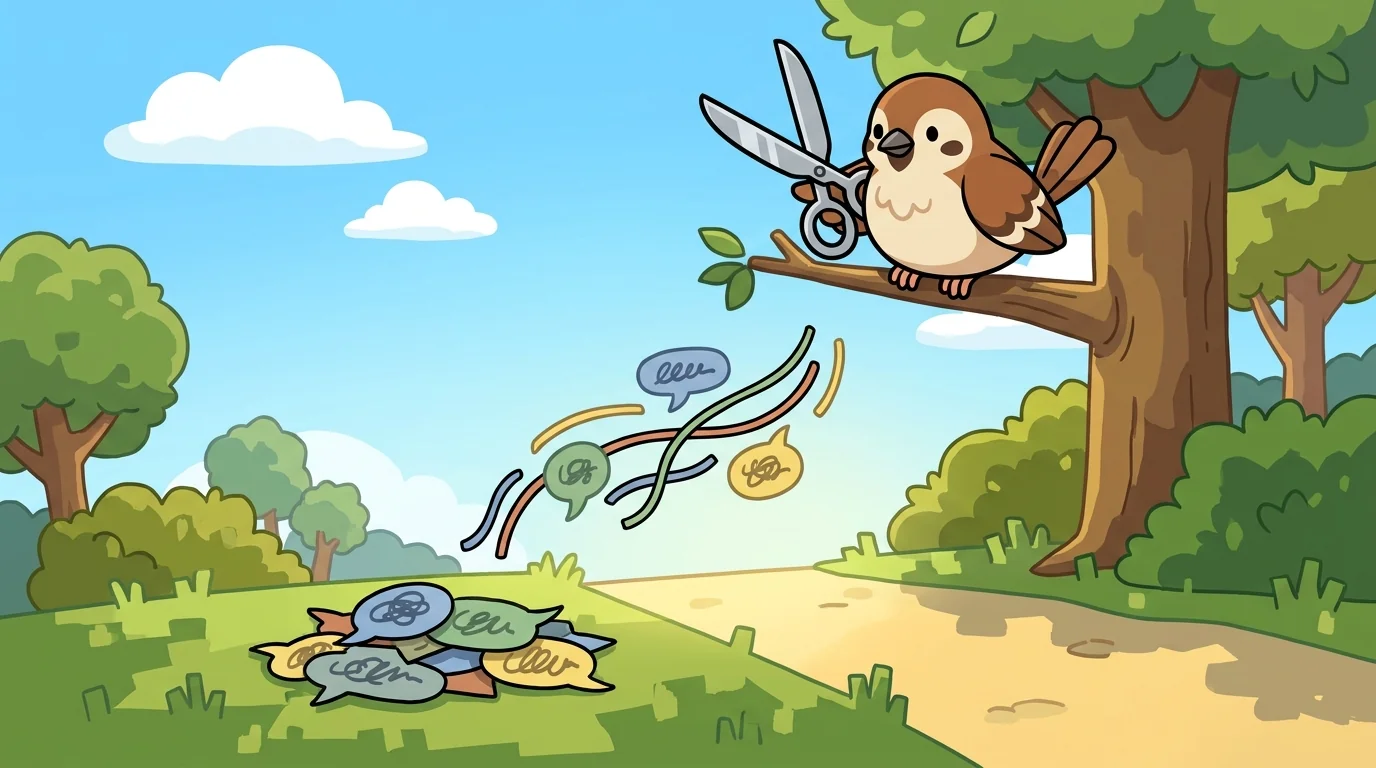
Patter met Clip on a crisp morning when the frost still clung to the grass. Their conversation was over almost before it had a chance to begin on that cold trail. Patter was carrying a heavy stack of student drafts that smelled of damp wood pulp. He stopped in his tracks when he saw the little sparrow perching on a low birch branch.
"Good morning! How are you? Lovely day, isn't—" Patter started to say.
Before he could even finish his greeting, Clip’s silver scissors flashed in the pale autumn sunlight.
Snip, snip, snip.
The dead words fell away like trimmed gray threads and vanished into the cold morning air. What was left hanging in the crisp air between them was just a quiet: "Lovely day."
"You cut my sentence," Patter said, blinking in surprise.
"I cut away the parts that weren't doing any real work for you," Clip said briskly. She hopped to a higher twig, her dark eyes shining with a bright and alert intelligence. "My name is Clip, and my job is to trim all the useless filler out of talk."
She nipped a stray "um" out of the morning breeze and let it drop to the dirt.
"Hello, how are you, I'm fine, that's nice—those words are just throat-clearing," she mimicked in a whistle. "They aren't the real talk. The real talk is what comes after."
Patter sat down on a damp mossy log and watched the little bird go to work. A long, rambling conversation between two crows drifted down to them from the high pine trees. The crows were arguing about a shiny bottle cap, but their speech was cluttered with useless phrases.
"So anyway, I was just thinking that maybe we should go to the cornfield."
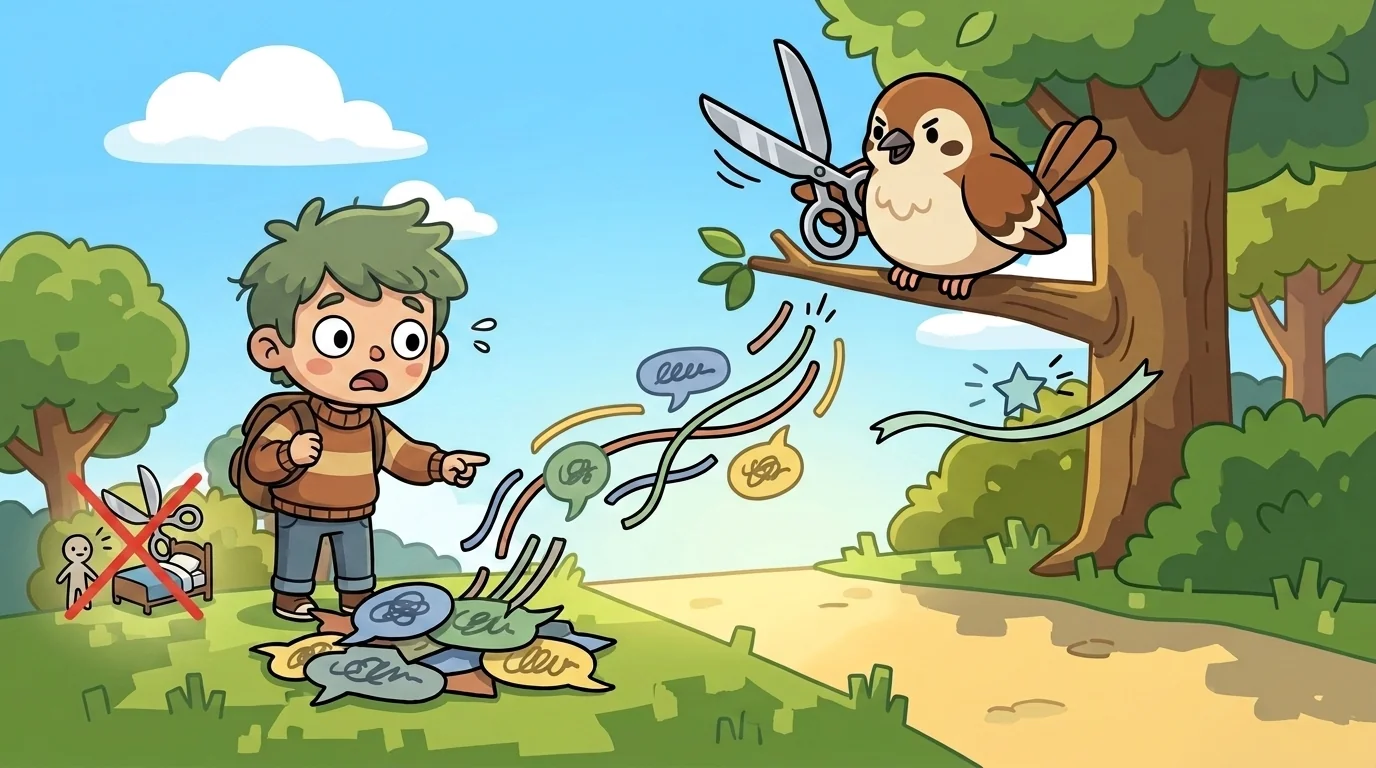
"Yeah, you know, I was thinking the same thing, what was I saying?"
Clip’s tiny silver scissors danced through the cluttered air like a pair of flashing minnows.
Snip. Snip. Snip.
When she finished her work, the whole messy argument had shrunk to just two sharp lines.
"To the cornfield."
"Let's go."
The useless words fluttered down to the damp forest floor like dry, gray confetti.
"It is the exact same talk," Clip said, wiping her silver beak on her wing. "Just without the dead weight that slows it down. Shorter. Sharper. Every word that remains is actually doing a job."
Patter looked down at the heavy pile of papers in his lap and sighed deeply. The young writers in his creative workshop had a bad habit of writing down every detail. They wrote pages about characters waking up, brushing their teeth, and eating cold buttered toast. They wrote about characters walking down long, empty hallways just to open a simple door.
"Watch this," Clip said, sensing his frustration. She hopped onto Patter's knee and pulled a fresh page from the top of the stack.
The draft began with a young boy named Toby waking up at the crack of dawn. Toby stretched his arms, ate soggy cereal, walked to his friend's house, and slowly knocked. He waited on the porch, said hello, and then finally asked if his friend was angry.
Clip's scissors clicked twice, instantly cutting away the entire first half of the messy page. The scene now started right in the middle of a tense kitchen confrontation. The heavy front door was already slammed, and the real argument was already happening.
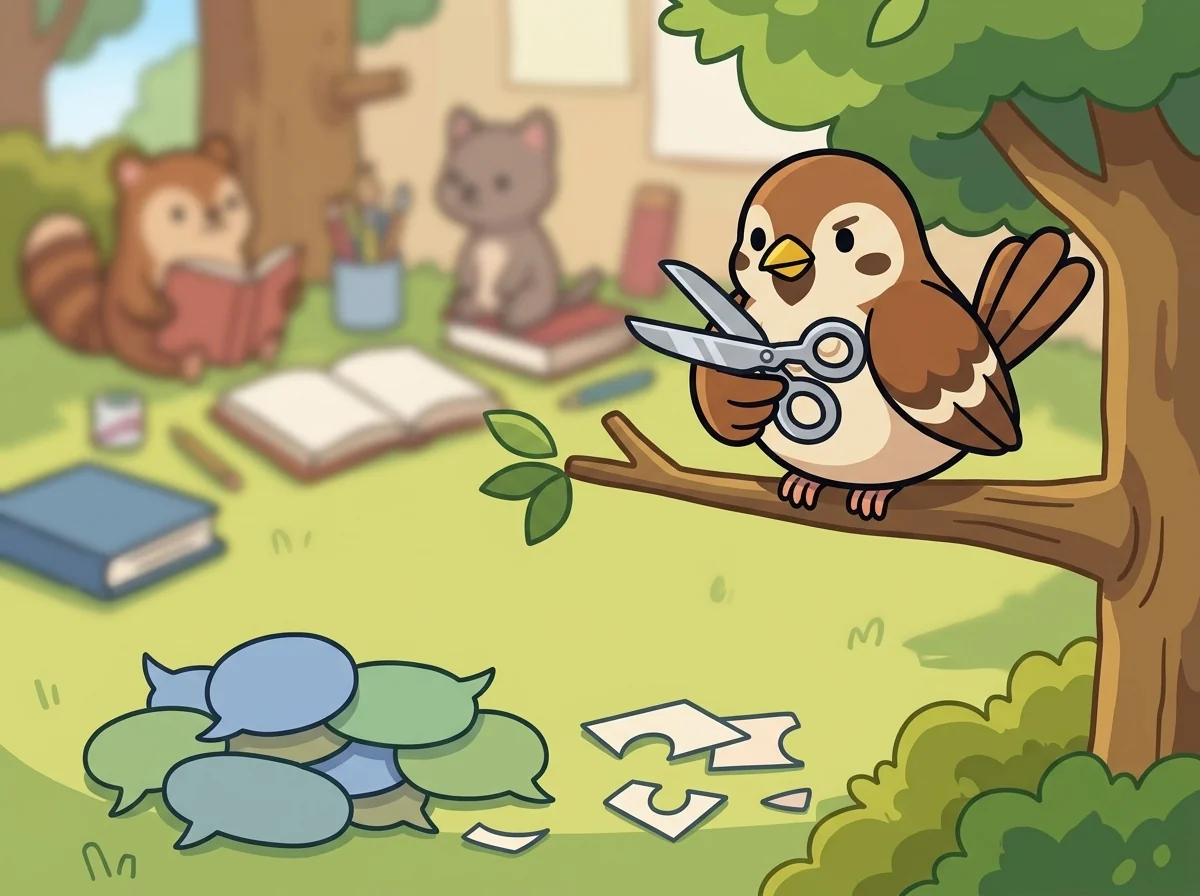
"Start late," Clip said, tucking her scissors back under her wing. "Don't begin a scene at hello. Begin it right where it gets interesting."
Patter felt a sudden spark of understanding clear away his confusion like a cool breeze. The kids wrote every single polite greeting because they thought they were supposed to. But those greetings were just heavy roadblocks on the way to the actual story. This was the true meaning of economy in the art of writing. It was not about being cheap with words, but about making every single syllable count.
"Clip," Patter said, leaning forward. "I run a workshop for young writers."
"Their dialogue scenes are full of polite chatter that takes forever to start."
"Would you come with me and show them how to use your scissors?"
Clip was already trimming his long invitation down in her mind.
"Yes," she said simply.
Patter laughed, realizing she had even clipped her own answer to him.
The afternoon workshop was held in a quiet, sunny clearing behind the old schoolhouse. Six young writers sat on rough wooden benches with their notebooks open on their knees. The autumn air smelled of cedar shavings, dry blue ink, and a little bit of anticipation. When Patter introduced his tiny guest, the kids leaned forward to get a better look.
"She's so small," whispered a boy named Leo, tapping his pencil.
"She has scissors," Maya whispered back, her eyes wide.
Clip hopped onto the center table and looked at them. "Read your dialogue out loud," she instructed, her voice crisp and clear. "Find the words that are just sitting there, doing nothing. The hellos. The ums. The so-anyways."
She clicked her little silver blades together with a sharp, metallic clink that silenced the room. "Then, you snip them."
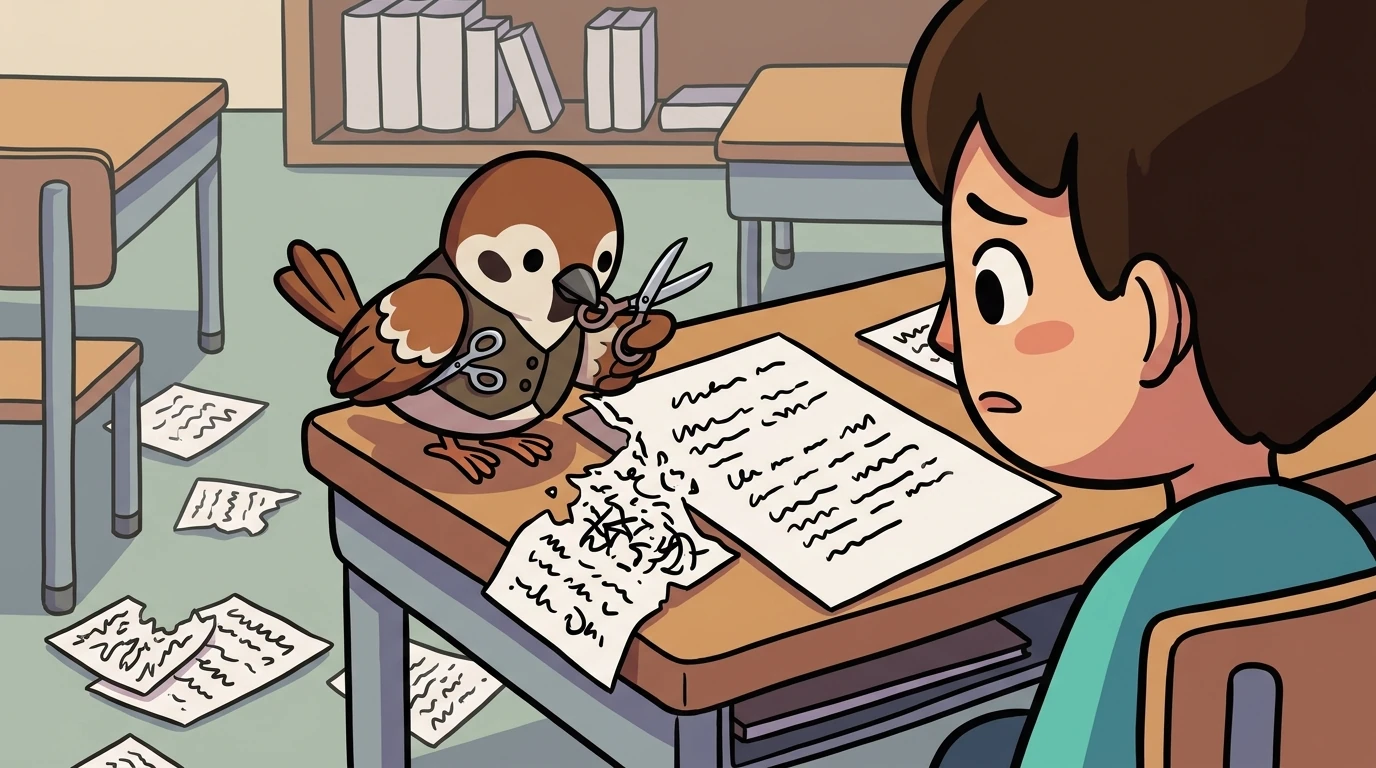
Maya volunteered to read her dialogue scene first, her voice trembling slightly in the quiet.
"Hi," she read. "Hi," the other character replied. "How are you?" "Good, you?" "Good." "So..." "So I wanted to ask you something."
Before Maya could even finish the first paragraph, Clip leaped across the wooden table. Her silver scissors flashed, and the top five lines of dialogue vanished into thin air. The scene now opened directly with the line: "I wanted to ask you something."
The change was completely instant, and the entire energy in the clearing shifted.
"Oh," Maya said, her eyes traveling down the newly shortened page with a look of surprise. "It feels like something is actually about to happen now."
"Exactly," Clip said. "The reader does not need to watch two characters shake hands. They want to know what the big question is."
Leo raised his hand slowly, looking a bit defensive of his own creative work. "But my character is really shy," Leo argued, clutching his spiral notebook to his chest. "He says 'um' a lot because he is nervous about confessing a big secret. If I cut all of those 'ums,' won't he sound far too confident?"
Clip hopped over to Leo's wooden bench and peered closely at his handwritten page. She studied the lines of dialogue carefully, her head tilting from side to side.
"The concept of economy does not mean being cold," Clip explained, her tone softening. "Sometimes a simple 'hello' or a quiet 'um' is doing very important work. If it shows fear, or hesitation, or deep anger, then it must stay on the page."
She pointed her sharp beak at a specific line of dialogue in Leo's draft. "Keep this first 'um' because it shows his heart is beating fast in his chest. But cut these other three because they are just filling up valuable space on the page."
Leo looked down at his page, then nodded slowly as he understood her point.
"The test for any word is always very simple," Clip told the gathered group. "Is this word doing real work, or is it just sitting there on the page?"
"How do we actually know the difference?" Maya asked, chewing thoughtfully on her pink eraser.
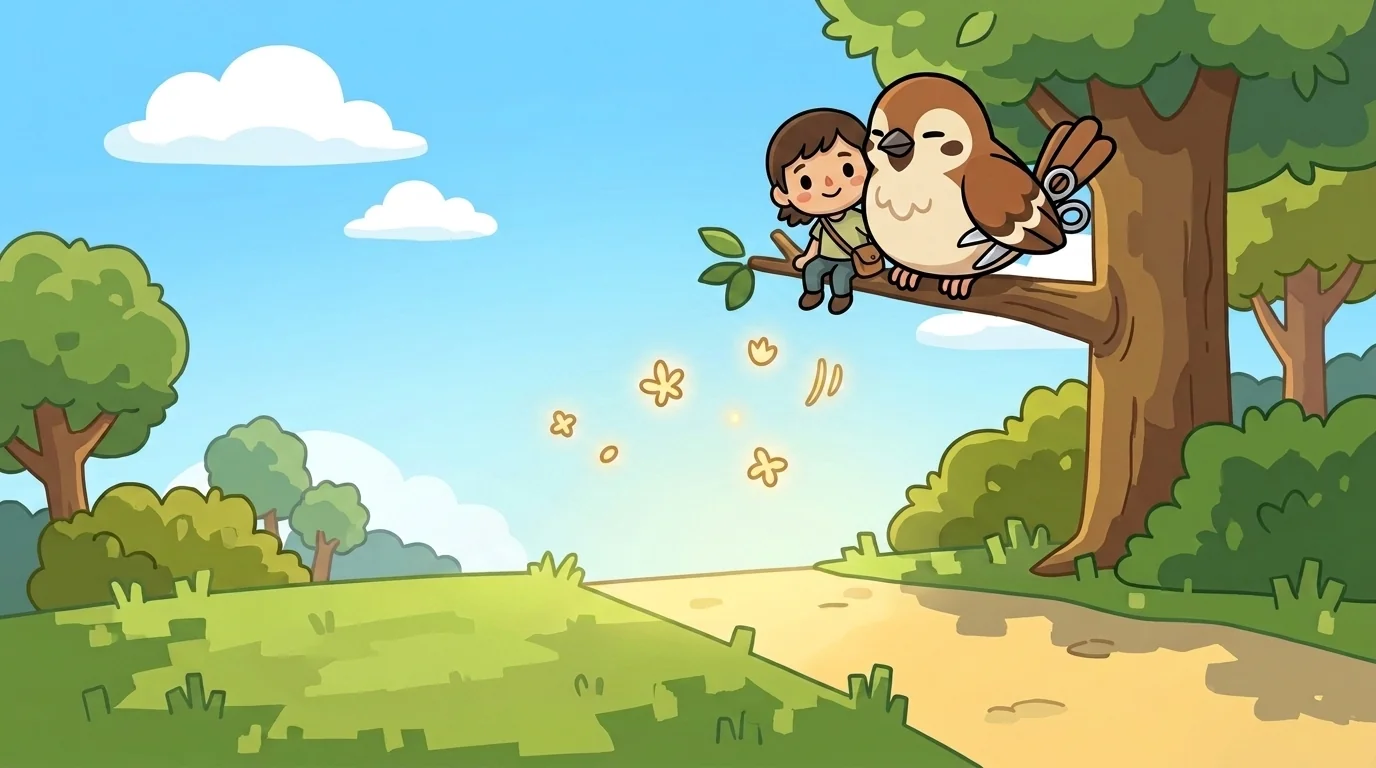
"Take the line out of the story completely," Clip said, her silver scissors gleaming. "If the story still makes perfect sense, the line was never doing any work. Leave it out of the draft and let the page breathe a little bit. But if something truly important breaks when you remove it, put it right back. That is how you know a word has earned its place in your story."
The young writers spent the next hour working in absolute silence under the trees. The only sounds were the scratching of pencils and the occasional sharp snip of Clip’s scissors. She flew from bench to bench, helping them trim their long sentences down to size.
One girl had written a massive three-page description of a rusty, forgotten bicycle. Clip helped her reduce that entire section to a single, haunting image of a broken pedal. A boy had written a long, boring speech where a villain explained his entire plan. Clip trimmed the speech down until the villain only said three terrifying, quiet words.
The tension in their stories grew much tighter, like a violin string being tuned. By the time the autumn sun began to set, the clearing was completely quiet. The ground was littered with the gray, weightless scraps of all those discarded words. But the notebooks themselves actually seemed lighter, packed with a brand new energy.
After the young writers had packed up their notebooks and gone home, the clearing grew still. The long, dark shadows of the pine trees stretched slowly across the grass. Clip perched quietly on Patter’s shoulder, her little silver scissors finally resting under her wing. Patter looked down at the pile of gray paper scraps on the ground.
"You cut so much away from their stories today," Patter said quietly to her. "Doesn't it ever feel like a terrible loss to lose all of those words?"
Clip remained silent for a long moment, watching a tiny beetle crawl over a dry leaf.
"It used to feel that way," she admitted, her voice soft in the gathering twilight. "I used to worry that trimming meant throwing perfectly good things away. I thought that making a story shorter always meant making it feel like less."
She reached up with one tiny foot to smooth a ruffled feather on her breast.
"But then I noticed how a conversation really breathes when the dead words are gone. The real words shine so much brighter when they aren't buried under piles of filler. A friend leans in much closer when you finally say the true thing, plain."
A quiet, clean contentment seemed to settle over her small feathered frame.
"Cutting isn't loss," Clip said, looking out at the darkening woods with a smile. "Cutting is simply making room for the things that actually matter in the end. When you trim away the waste, the true story can finally be heard by everyone."
She tucked her silver scissors away, feeling light and unburdened in the evening chill. Patter smiled, realizing that some of the very best lessons required no words at all.
The DialogueQuest ensemble
Clip is part of DialogueQuest's distributed-narrative cast. Each character embodies a different curricular primitive; together they teach the full subject.
-
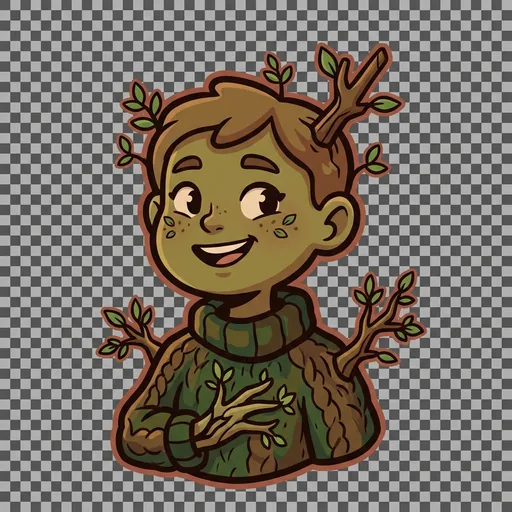
Sprig
Branch meaningfulness — sapling-tween whose visible branching skeleton shifts physically when she picks between dialogue options (the choice re-routes her body)
-

Glance
Subtext — arctic-fox-tween in a thick scarf; speech-bubble visibly half-empty with dotted-line ghost-text floating beside it
-
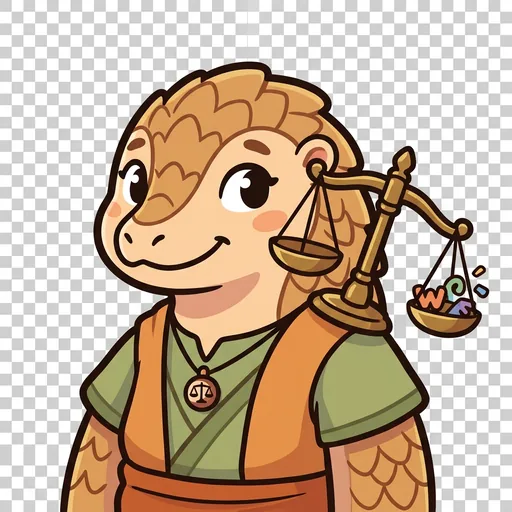
Weigh
Tag balance — pangolin-tween with a brass balance-scale on her shoulder; scales tilt visibly as dialogue happens around her
-
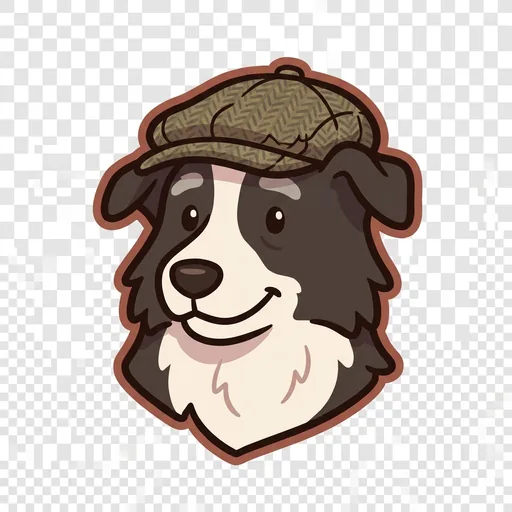
Brogue
Voice consistency — border-collie-elder in a worn flat-cap who uses exactly 4-5 signature words across every appearance (deliberately non-specific old-country accent)
-
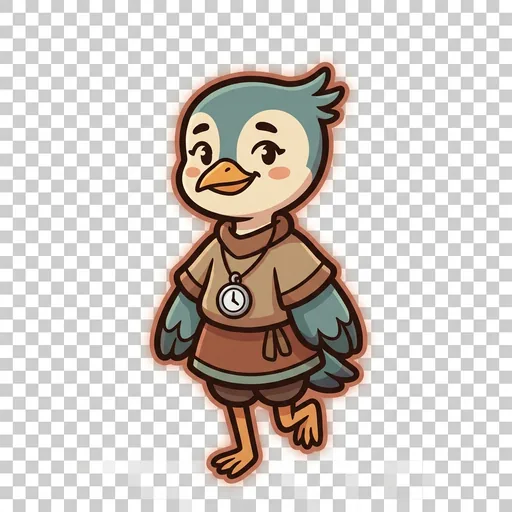
Rest
Rhythm + silence — heron-tween with a small silver pocket-watch around her neck; one foot perpetually raised mid-step; treats the pause as a line of dialogue itself
-

Prop
Action beats — red-squirrel-tween whose paws are always busy with a small acorn; the little actions between lines show feeling and set the rhythm of a talk
-
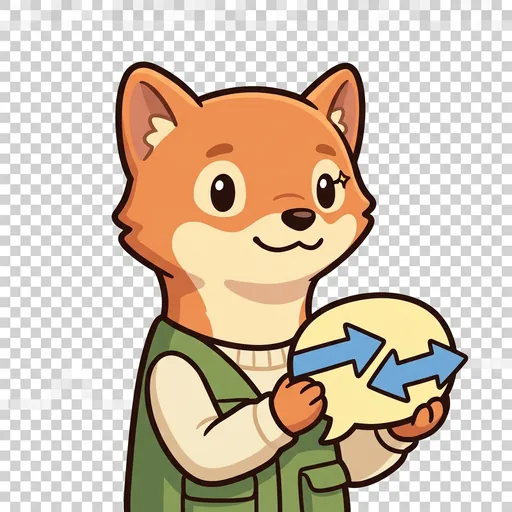
Spar
Conflict / friction — pine-marten-tween whose speech bubbles push against the other speaker's; two characters wanting different things is the engine (the push stays kind)
-

Dash
Interruption / overlap — chipmunk-tween who crashes into the ends of others' lines with a dash when feeling runs too high to wait (used on purpose, sparingly)
-
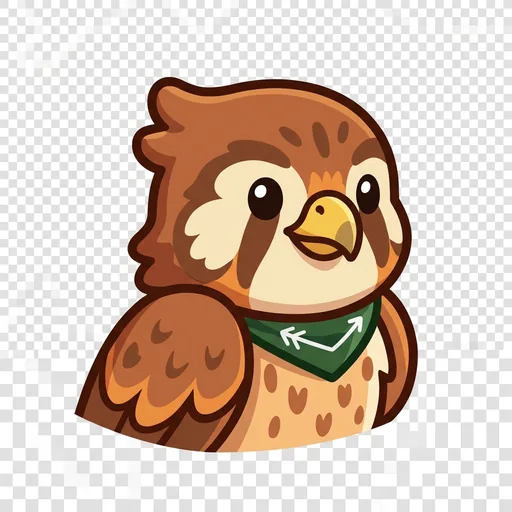
Aim
Line purpose — kestrel-tween with arrow-shaped speech bubbles that point at what each line is really trying to DO (ask, dodge, persuade), not just say