
Spar
CONFLICT IN DIALOGUE — a good conversation is two characters who want different things, gently pushing against each other. The friction is the engine that drives the scene. When both characters want the exact same thing, the talk goes flat and there is nothing left to pull the reader forward.
Loading audio…
Press play to listen along. The line being read lights up as you go.
Show full transcript
Loading transcript…
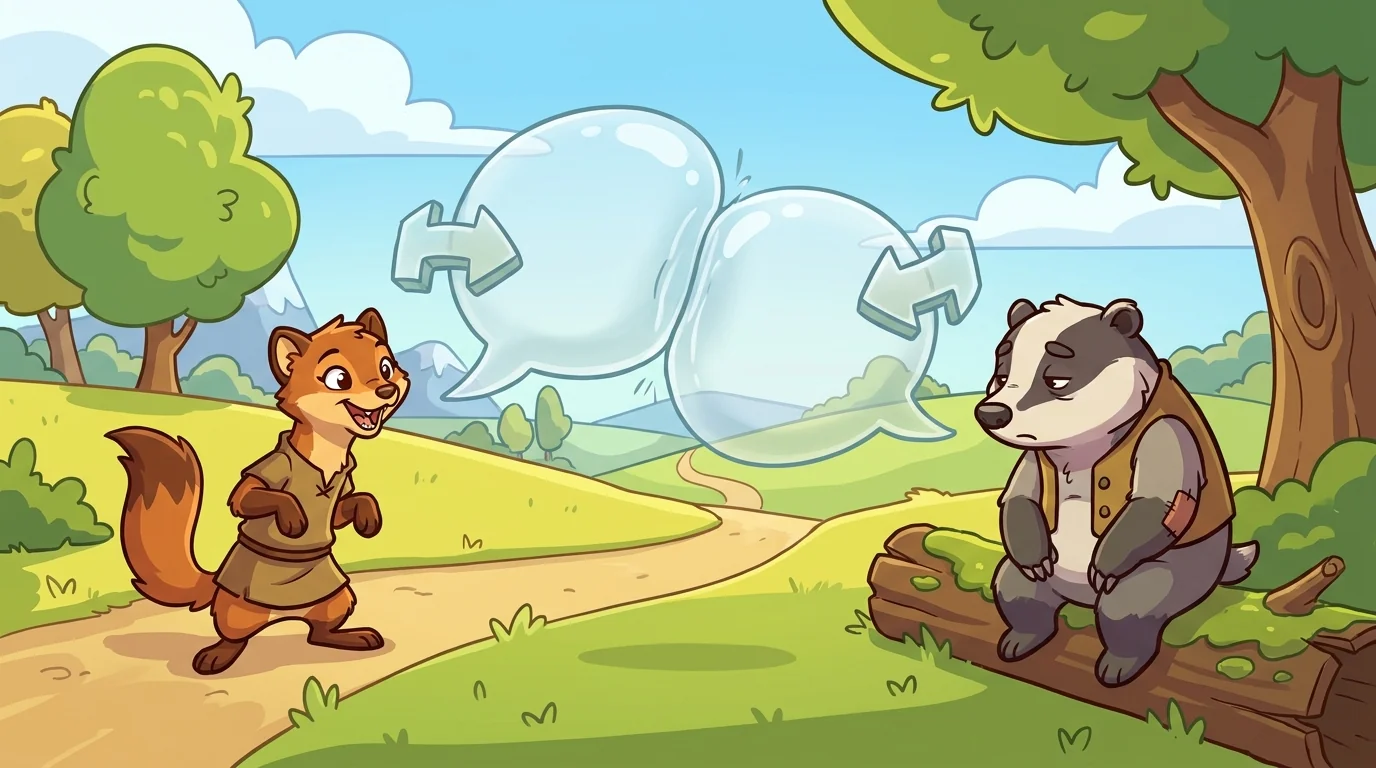
Patter met Spar on a bright, breezy morning when the whole valley seemed to be leaning into the wind, and the very first thing he noticed about her was that her speech bubble was not shaped like anyone else's. It carried two small arrows upon it — one straining outward, and one bracing back — as though the bubble itself were a thing that expected, at any moment, to be leaned against.
Spar was a quick, bright-eyed pine marten, sleek and light on her feet, forever half a heartbeat from springing somewhere. When Patter came upon her she was deep in conversation with a large, sleepy badger, and Patter watched their two speech bubbles meet in the air between them — and push, the way two rams meet on a hillside, the way two palms press flat against each other. The badger's bubble said, in a slow, comfortable rumble, "Let's just stay in today." And Spar's bubble pressed straight back against it: "But the whole valley is waiting for us!" The two shapes leaned together, quivering, and neither one tipped the other over — and the conversation between them crackled and snapped with a bright, unmistakable life.
"Your words are pushing directly against his words," Patter said, marveling.
Spar grinned and bounced once on her toes. "That's the whole fun of the thing," she said. "My name is Spar, and I keep the friction — the push that happens between two characters who want different things. He wants to stay curled up by the fire. I want to be out in the wide morning. And because our wants pull in different directions, our talk has somewhere to go."
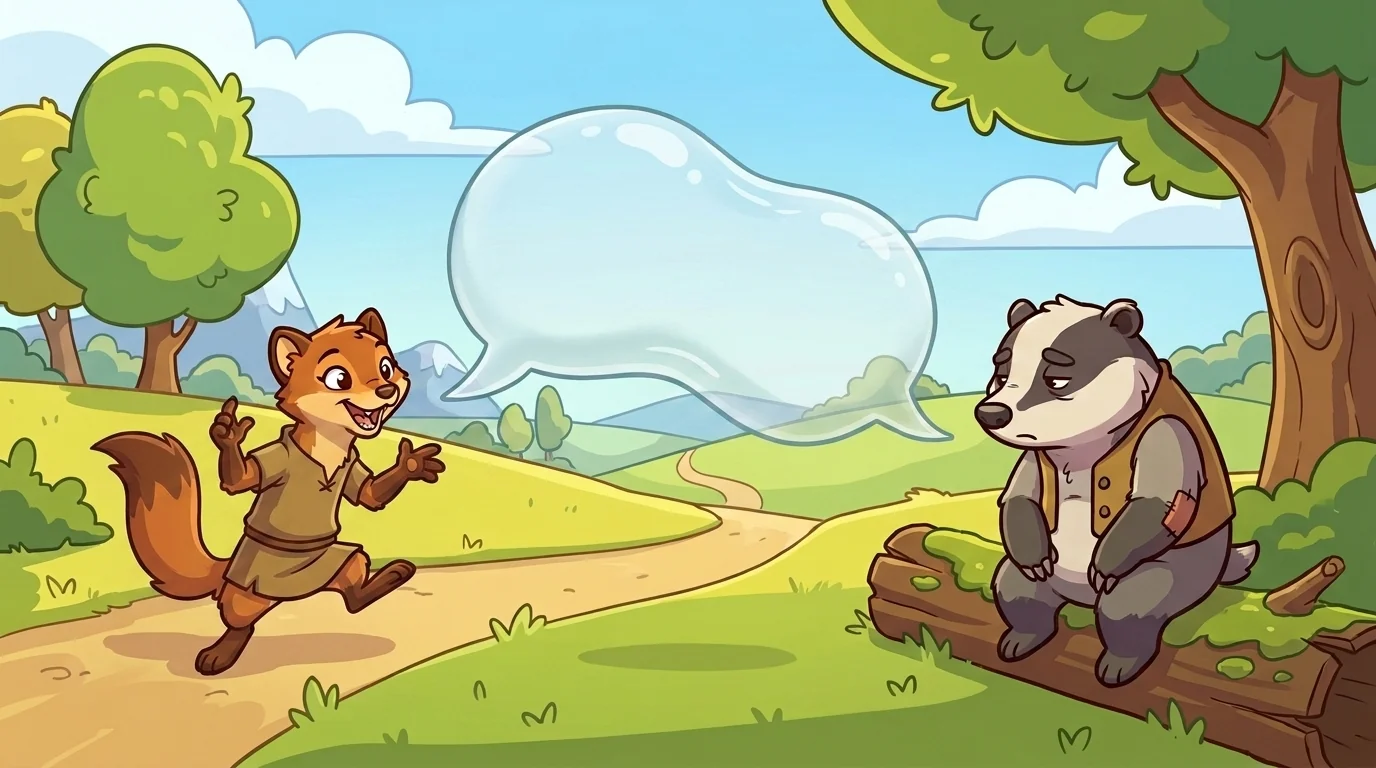
Patter watched the two of them trade a few more rounds — push, brace, push, brace — and the conversation never sagged, never drifted, never lost its forward lean for so much as a second. Then, to demonstrate something, Spar turned to the badger and deliberately did the opposite of everything she had just been doing.
"You know what," she said sweetly, "let's just stay in too. That sounds perfect." And the badger, delighted, agreed at once: "A fine idea." And in that instant the conversation simply died. The two speech bubbles drifted apart and floated side by side in the still air, limp and slack, with nothing whatsoever to press against. There was, quite suddenly, nowhere at all for the talk to travel.
"You see it?" Spar said, spreading her paws. "The very moment we both wanted the identical thing, the whole conversation went flat as a spilled puddle. No push, no spark, no pulse. Agreement is a lovely thing to feel and a deadly thing to read." She bounced again, recovering her energy. "Friction is the engine. Two characters, two genuinely different wants — that is the force that pulls a reader down the page, because the reader has to know how the little tug-of-war comes out."
Patter felt the click settle into place. Most of my young writers make characters who agree with one another endlessly, he thought. Polite, warm, pleasant — and stone dead on the page. It is precisely the push they are missing.
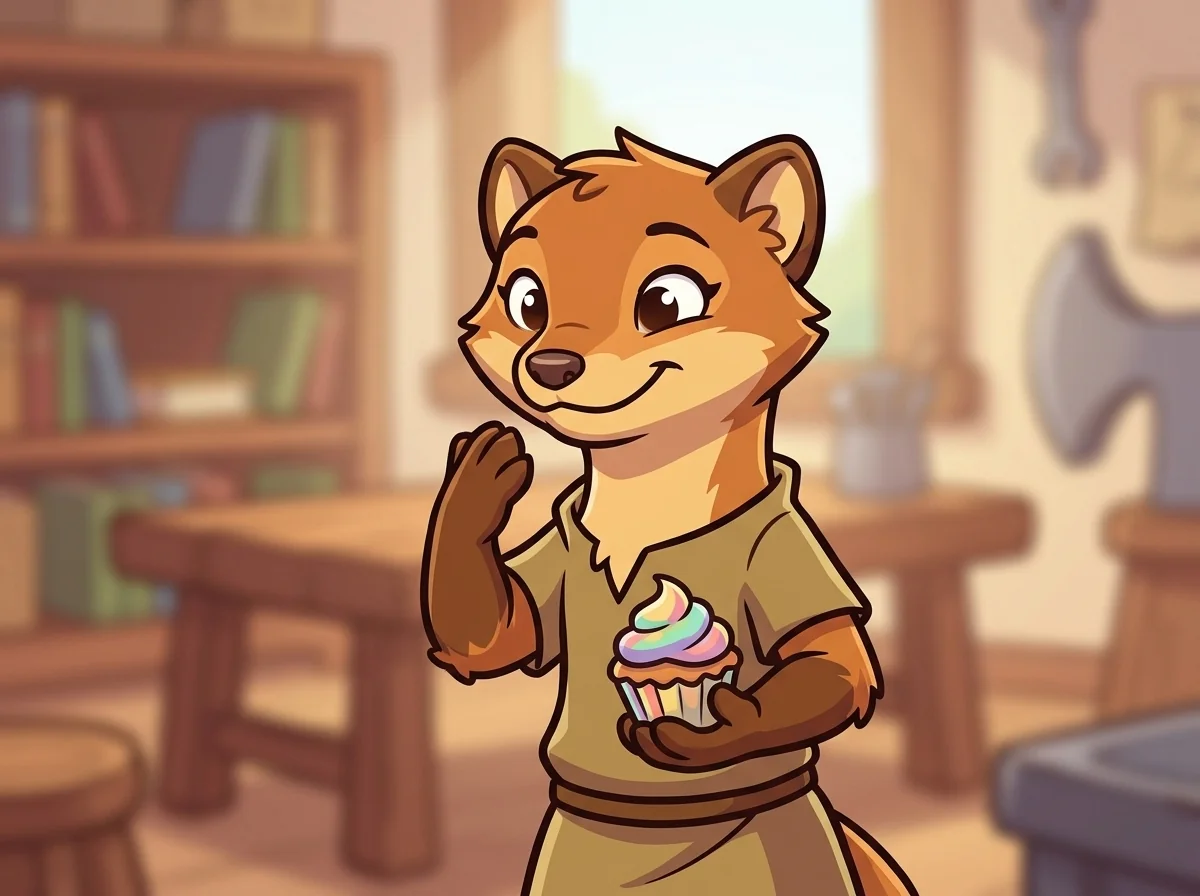
"Spar," Patter said, "I run a workshop for young writers, and I keep meeting the same quiet disaster. Their characters agree with each other, always, about everything. 'Good idea.' 'Yes, let's.' 'I was just thinking the very same thing.' Nothing ever presses on anything. Would you come and join us — and teach them to let their characters want different things, out loud?"
Spar was already nodding along before he had finished the sentence — and then she caught herself doing it and burst out laughing. "You see that? I nearly just agreed with you flat out. But yes — I'll come, on one firm condition: I get to argue about which snacks we bring." Patter laughed too. She would come.
So Spar joined the workshop, and the talking-scenes the young writers build have a pulse in them now, a real one, that quickens and pushes and pulls.
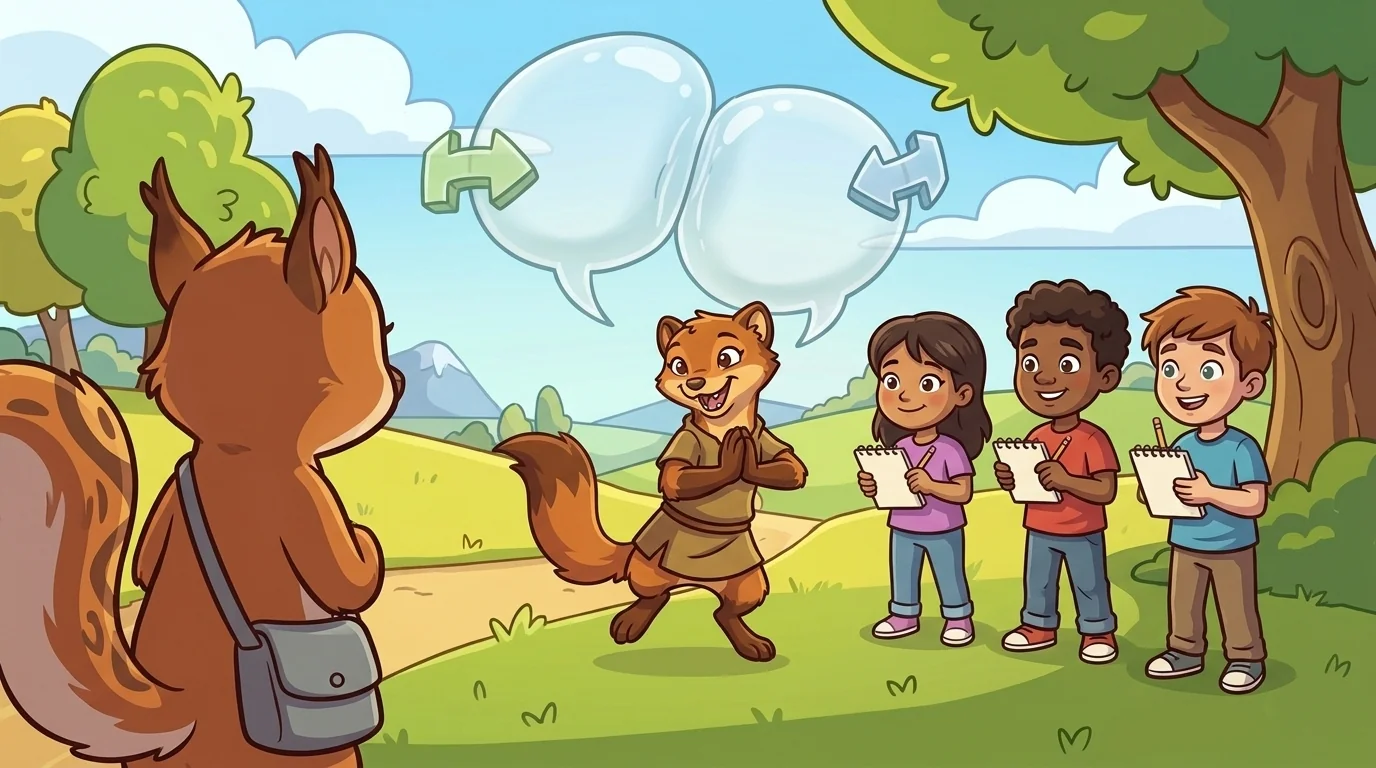
When Patter teaches the friction of dialogue, Spar takes the lead. "Before you write a single line of a conversation," she tells the young writers, "ask yourself one plain question: what does each character want, right now, in this room? And then — this is the important part — make those wants different. Even a little. Even just slightly." She presses her two paws flat together to show the shape of it. "One wants to leave; the other wants to stay. One wants the truth spoken; the other wants it buried a while longer. One wants to be brave; the other wants, very badly, to be safe. And then you let them push."
A young writer had written a scene in which two friends both wanted ice cream and cheerfully went and got some. "Now — where is the push in that?" Spar asked, kindly. The writer thought hard, then changed a single thing: now one friend wanted the ice cream, and the other wanted to save their coins for a secret they weren't ready to tell. All at once the little scene had a spark leaping across it — a tiny, tender tug-of-war, brimming with life.
"But here," said Spar, and her restless bouncing went suddenly, completely still, "is the part that matters more than all the rest. The push is never, not for one moment, about being cruel. It is not a fight. It is not two enemies trading blows. It is two characters who both care — who have simply come to care about two different things. The finest friction in all the world happens between friends who love each other. You can push with your whole strength and remain entirely kind. In truth, that is the only kind of push worth the ink it takes to write."
A young writer asked, uncertainly, "But what if I don't like it when my characters argue?"
"Then don't think of it as arguing," Spar said, warm as sun on fur. "Think of it as wanting. Two people, wanting, out loud, in the same small room, at the same moment. That is not a quarrel at all — that is only two honest hearts, each showing what it holds. And honesty, wherever you find it, is always, always interesting."
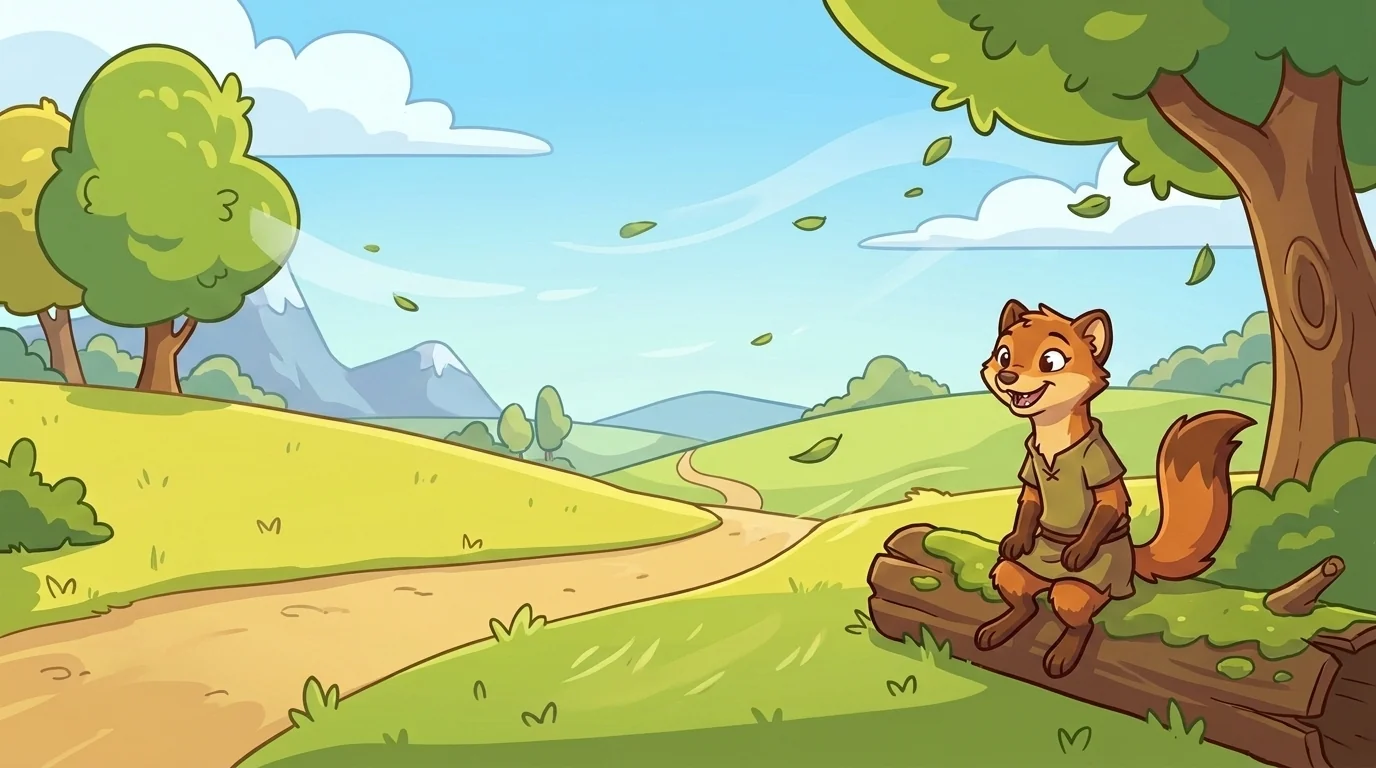
After the workshop had emptied and the long grass had swallowed the last of the young writers, Spar sat down beside Patter, finally and genuinely still, and together they watched the evening breeze comb slow waves through the meadow.
"You love the push more than anyone I've met," Patter said. "And yet you're the gentlest creature in the whole room. How do those two things live in you at once?"
Spar was quiet a moment, a little surprised at herself. "For the longest time," she said, "I believed that wanting something different from someone I loved meant I was being difficult. Troublesome. That if I didn't simply agree, I might lose them altogether." She watched a single stalk of grass bend low in the wind and then spring cleanly back. "But then I learned the exact opposite was true. The friends I can push against — the ones I can want a wholly different thing right out loud with, and not be afraid — those are the friends I am closest to in all the world. Because we both know, deep down, that the wanting doesn't break anything between us." A warm, steady gladness settled over her small frame. "The push, it turns out, isn't the thing that pulls people apart at all. It's one of the ways we hold on to each other. And knowing that — really, truly knowing it, all the way down — is the safest I have ever felt in my life." And she sprang up, light again, glad through and through to be a creature who could disagree with someone she loved and trust the love, entirely, to hold.
The DialogueQuest ensemble
Spar is part of DialogueQuest's distributed-narrative cast. Each character embodies a different curricular primitive; together they teach the full subject.
-
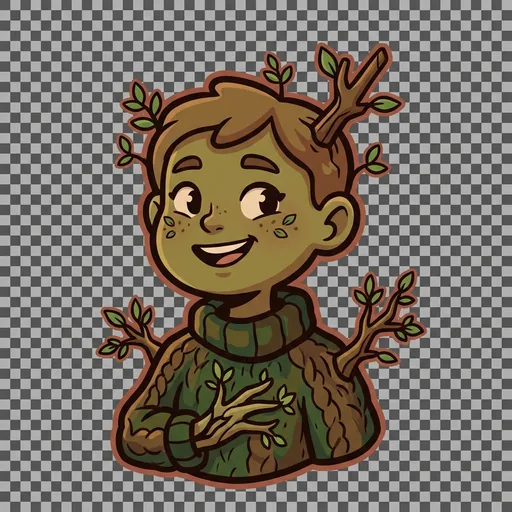
Sprig
Branch meaningfulness — sapling-tween whose visible branching skeleton shifts physically when she picks between dialogue options (the choice re-routes her body)
-

Glance
Subtext — arctic-fox-tween in a thick scarf; speech-bubble visibly half-empty with dotted-line ghost-text floating beside it
-
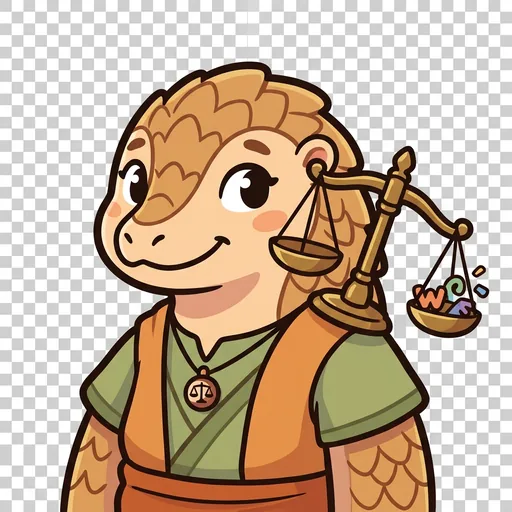
Weigh
Tag balance — pangolin-tween with a brass balance-scale on her shoulder; scales tilt visibly as dialogue happens around her
-
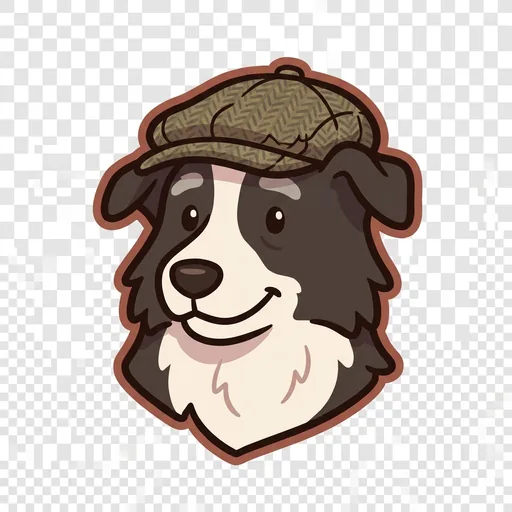
Brogue
Voice consistency — border-collie-elder in a worn flat-cap who uses exactly 4-5 signature words across every appearance (deliberately non-specific old-country accent)
-
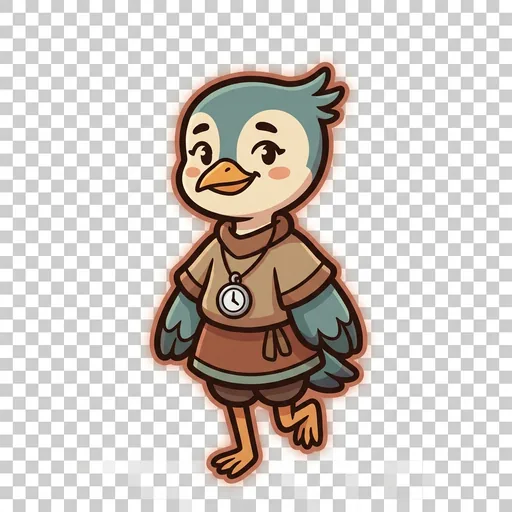
Rest
Rhythm + silence — heron-tween with a small silver pocket-watch around her neck; one foot perpetually raised mid-step; treats the pause as a line of dialogue itself
-
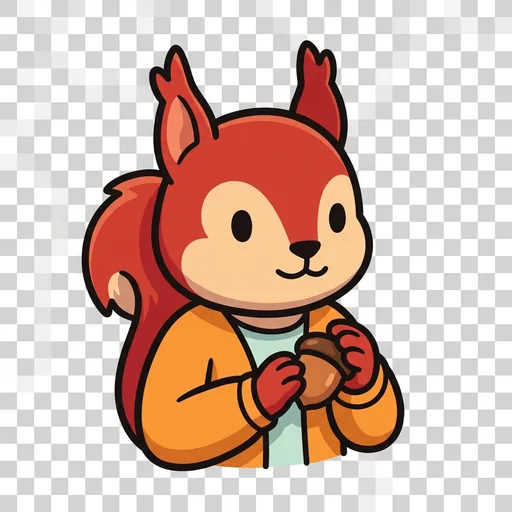
Prop
Action beats — red-squirrel-tween whose paws are always busy with a small acorn; the little actions between lines show feeling and set the rhythm of a talk
-
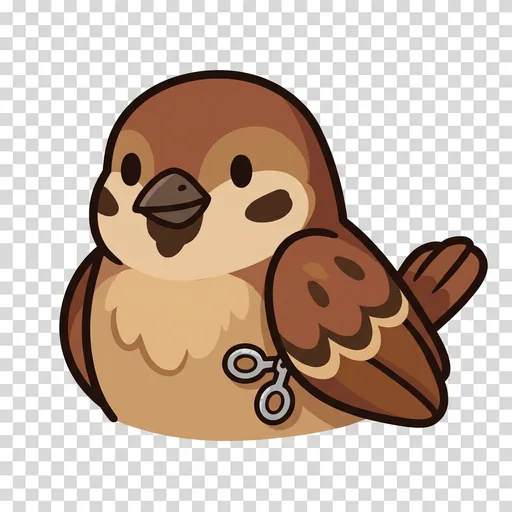
Clip
Economy — sparrow-tween with tiny silver scissors who trims the filler ('hello, how are you, fine') and starts scenes late, right where they get interesting
-

Dash
Interruption / overlap — chipmunk-tween who crashes into the ends of others' lines with a dash when feeling runs too high to wait (used on purpose, sparingly)
-
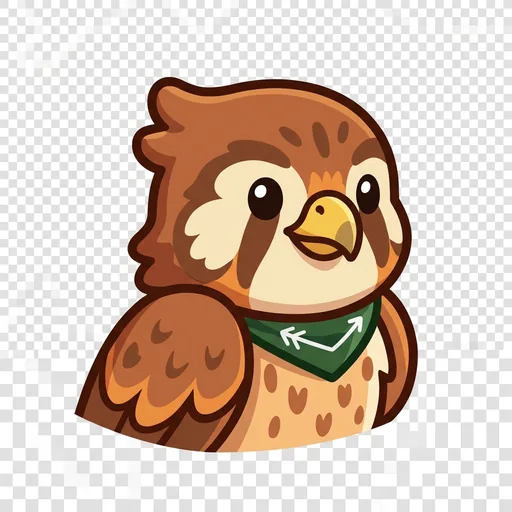
Aim
Line purpose — kestrel-tween with arrow-shaped speech bubbles that point at what each line is really trying to DO (ask, dodge, persuade), not just say