
Cinder
CARBON CYCLE — the same carbon atoms move through reservoirs (air, plants, animals, soil, ocean, rock) and back again, and that flux is balanced. The trouble is EXTRA carbon — fossil carbon dug up and burned faster than the slow cycle can sequester it — thickening the atmosphere's heat-trapping blanket (the greenhouse effect).
Loading audio…
Press play to listen along. The line being read lights up as you go.
Show full transcript
Loading transcript…
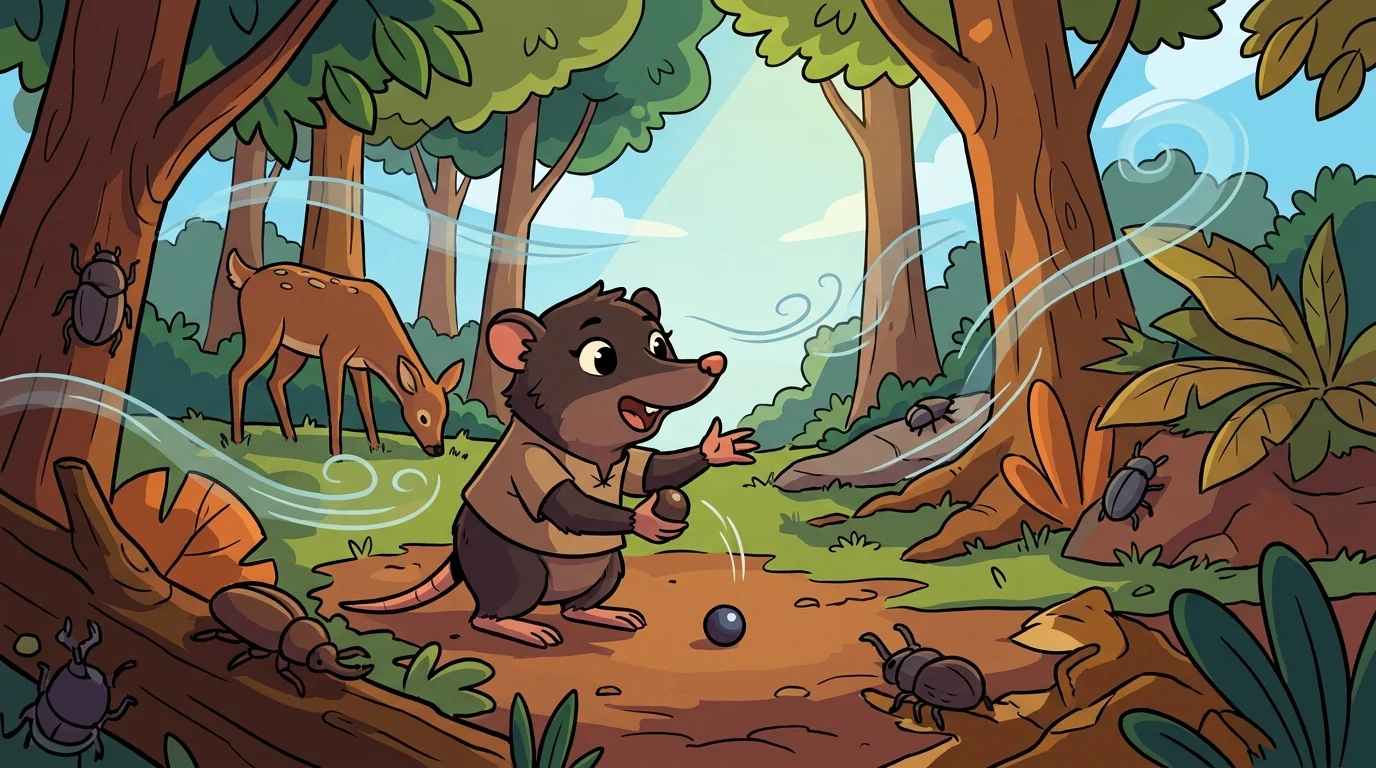
In the warm-lamp corner of the EcoSphere nature center, a badger-tween named Cinder was moving a single black glass bead around a painted board, and the whole room was following it with their eyes.
His coat was the deep charcoal-and-silver of banked embers, and the board on his workbench was a ring of six painted pools — one for the AIR, one for a green PLANT, one for an ANIMAL, one for dark SOIL, one for the blue OCEAN, and one for grey ROCK. He pinched the bead — "This is one carbon atom," he said — and walked it from the air-pool into the plant. "A leaf catches sunlight and pulls this atom out of the air. Photosynthesis. Now it's sugar, it's wood, it's leaf." He walked it into the animal. "Something eats the plant — now the atom is muscle." He tapped it back into the air. "The animal breathes out. Respiration. Back to the sky." The bead had made a full loop and none of the pools had changed. "See? The same atom, round and round. Nothing lost. Each pool is a reservoir, a place carbon rests — and the moving between them is called FLUX. In, out, in. Balanced."
A student frowned. "So if it's balanced, why does everyone say carbon is a problem?"
"Good," Cinder said, and reached under the bench.
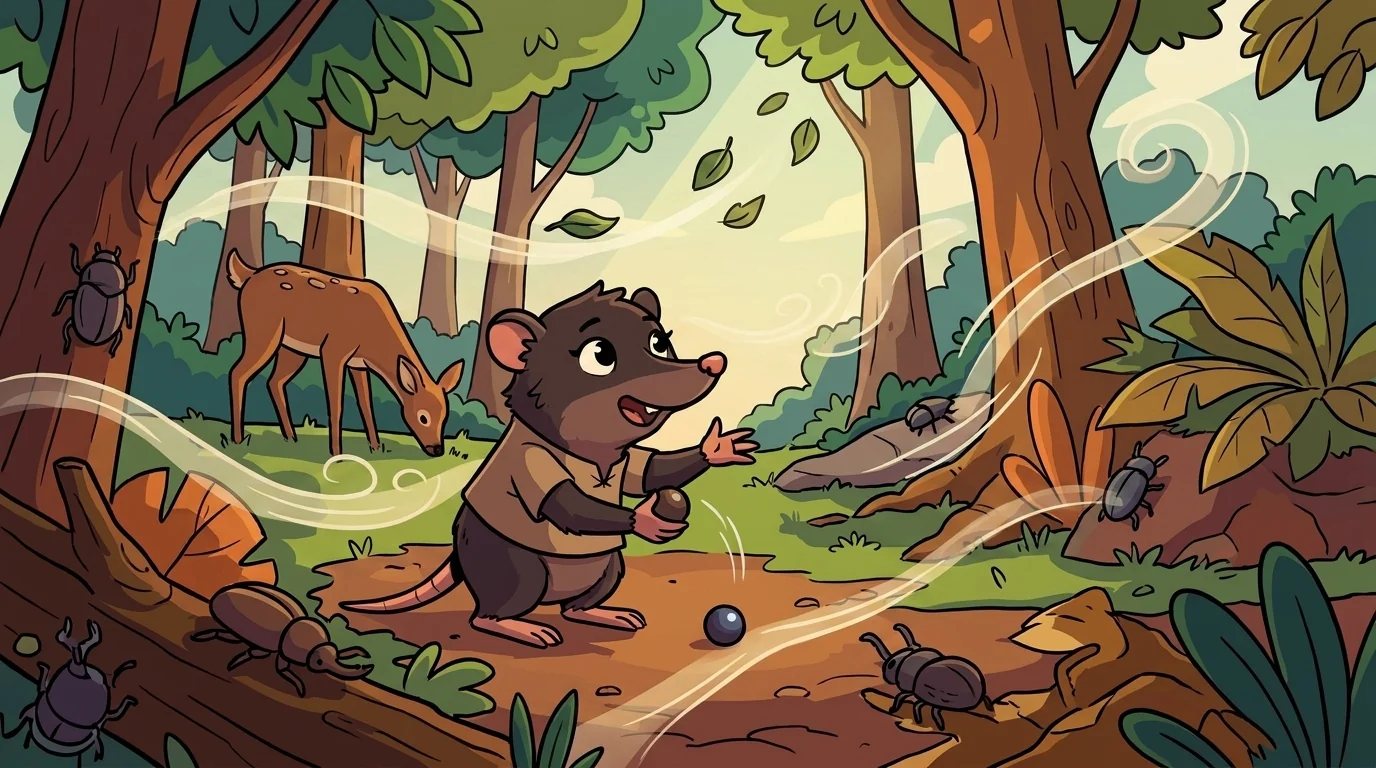
Cinder had learned about slow things and fast things long before he learned the word carbon.
He'd grown up in a hill-village where his family were charcoal-burners — they built low earth-covered mounds of wood and let them smoulder for days, slow and airless, until the wood became charcoal. It was the most patient work he knew. You could not rush a burn; rush it and the whole mound flared to useless ash. His mother's rule, said a hundred times: what took the forest a hundred years to grow, you do not get to release in an afternoon.
He hadn't understood the size of that rule until he was older. The wood in their mounds had spent a century pulling carbon out of the sky one leaf at a time. And the burn handed it all back to the sky in a day and a night. Slow in. Fast out. He'd felt the wrongness of that imbalance in his chest long before he had a lesson to hang it on — it turned out his mother had been teaching him the whole trouble with fossil fuels without either of them ever saying the word.
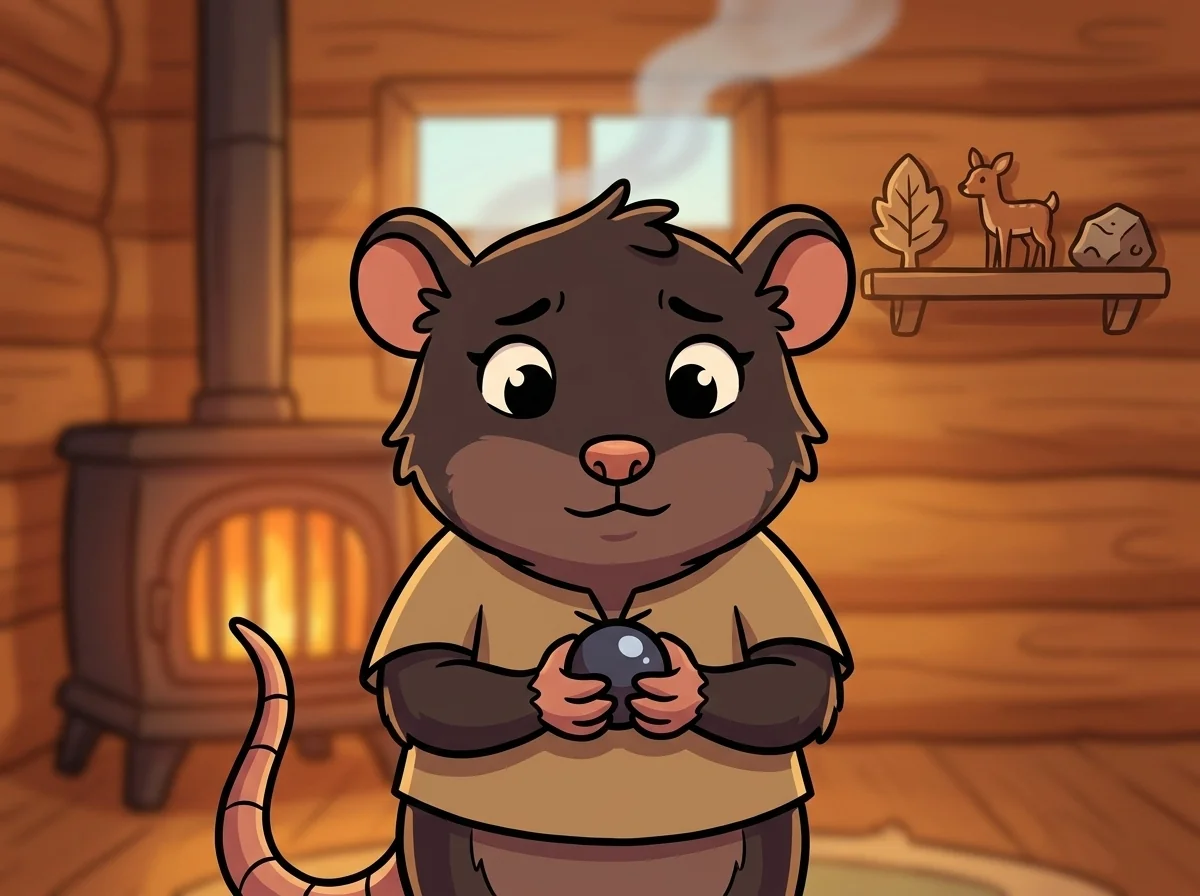
He walked to the EcoSphere academy when he was twenty-two, smelling faintly of woodsmoke, and Terra — who ran the place — did not ask him for a single certificate.
She watched instead the way he handled the black bead, gentle, like it mattered. "Tell me what the greenhouse effect is," she said, "and don't make it scary."
Cinder set the bead in the air-pool. "The air keeps a thin blanket of gases — carbon dioxide is one — that lets sunlight in but slows heat from leaving. That's not a villain; it's the reason Earth isn't a frozen rock. We need the blanket." Then he took a fistful of beads from his pocket — dull grey ones — and poured them from the ROCK pool straight into the AIR. "This is the fossil part. Coal, oil, gas: carbon the slow cycle locked into rock over hundreds of millions of years. We dig it up and burn it back into the air in a few generations. Not new poison — just the old balance, broken by speed. The blanket gets thicker. Earth holds a little more heat than it used to."
Terra looked at the grey beads sitting in the air-pool where they didn't belong. "Most people either shrug or panic," she said. "You did neither. You're appointed."
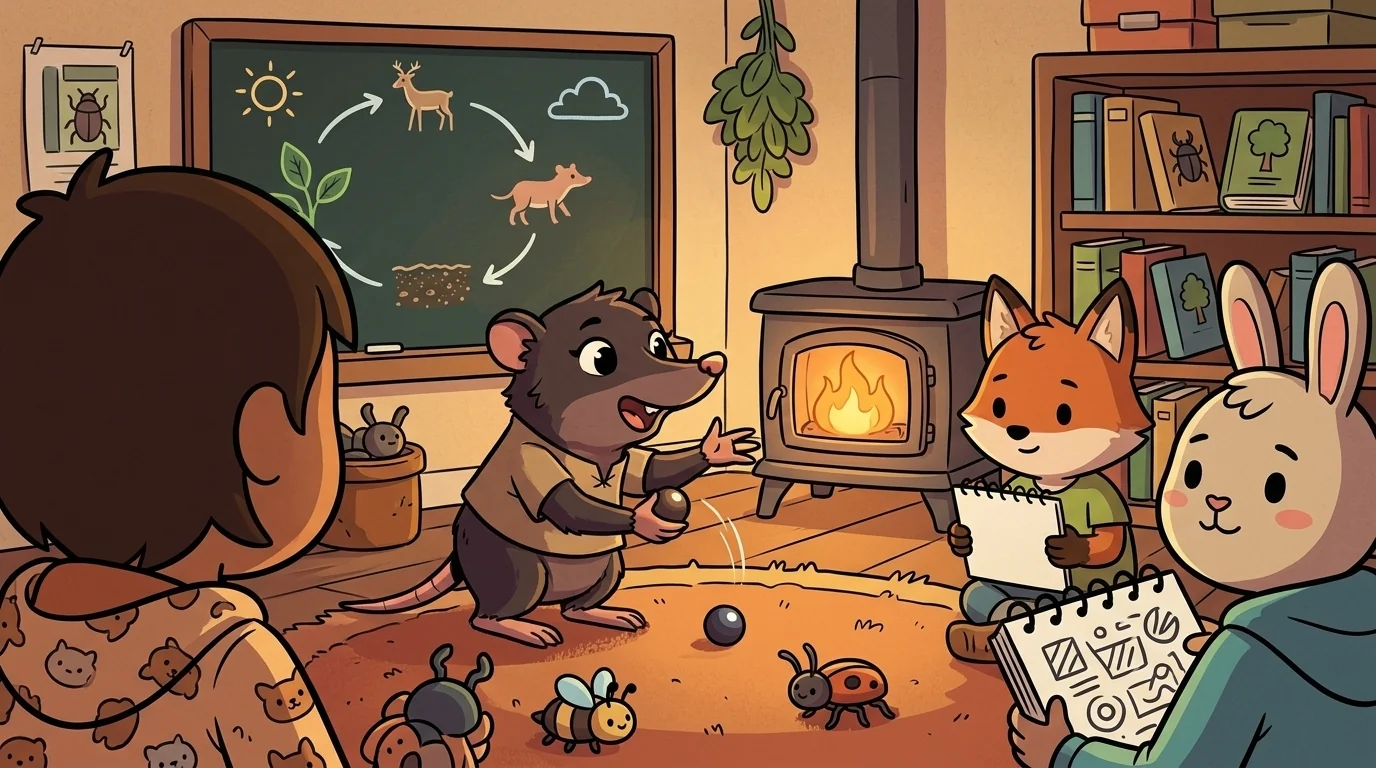
Cinder's first-day lesson always began with a wrong idea, offered gently so he could turn it over.
"Carbon dioxide is pollution," a boy said one afternoon, sure of it. "It's bad. We should get rid of all of it."
"Half right, which is the trickiest kind of wrong," Cinder said. He rolled the single black bead around the balanced ring — air, plant, animal, soil, air. "Carbon isn't the enemy. You're made of it. This whole meadow is carbon on the move. A world with no carbon dioxide would freeze solid — no blanket at all." Then he added the grey fossil beads to the air-pool, and now the pool was crowded, spilling. "The problem was never the carbon. It's the extra, and the speed — more going up than the plants and the ocean and the slow rock can tuck away. Flux out of balance." He nudged a grey bead back down toward the soil-pool, slowly, one grain at a time. "So the fix isn't 'destroy carbon.' It's 'slow the fast side and help the slow side' — burn less of the buried kind, and protect the forests and soils and seas that pull it back down. Understandable. And understandable things can be worked on."
The boy looked at the overfull air-pool for a long moment. "So when people say it's hopeless..."
"They're tired, not wrong-hearted," Cinder said, and a small warm smile crossed him. "Doom is just fear that forgot it could DO anything. Catching that — and switching back to where is the atom going, and can I help it get there — that's the actual skill. That's the thing I'm teaching."
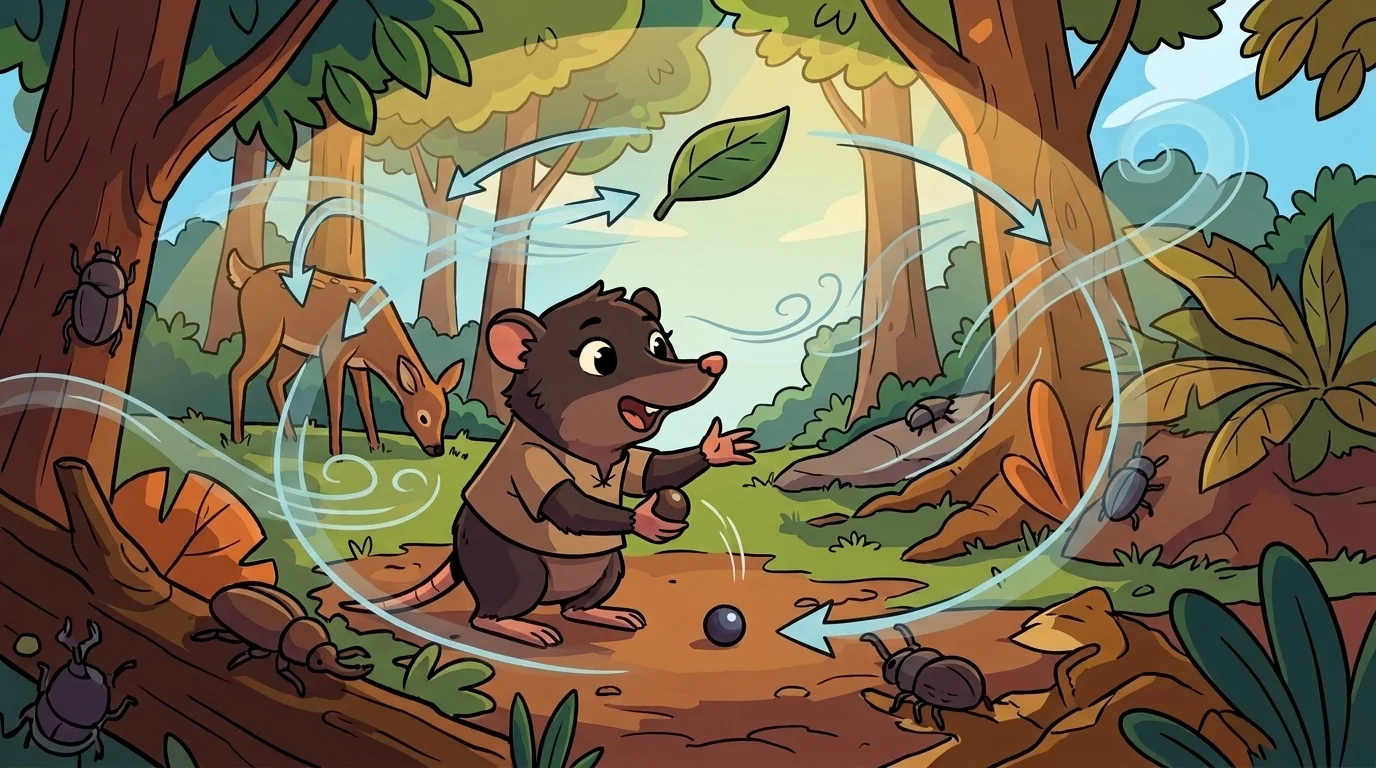
When the room emptied, the boy stayed, rolling the single black bead between two fingers.
"I thought carbon was just a bad word," he said, almost embarrassed. "I never once thought I was made of it."
"Neither did I, at your age," Cinder said, and sat beside him. The lamp warmed the little painted pools. "I watched my family's mound release a hundred years of forest in one night, and I felt something was wrong in my chest years before I could say what. Slow in, fast out. When I finally learned the words for it, it wasn't scary. It was — steadying. Like the worry had somewhere to stand."
The boy set the black bead carefully back in the air-pool, where it belonged, in the balanced ring.
Cinder watched him do it and felt the old ember-warmth rise easy in his chest — that quiet gladness of watching a child trade panic for understanding, the tight knot of dread loosening into something a person could actually hold and work with. Nothing about the sky had changed on the bench that afternoon. Only the looking had. And that, Cinder thought, breathing slow in the amber light, was the best thing he ever got to feel: a young one learning that a big trouble, once understood, becomes a thing with handles.
The bead sat in the air-pool. The ring waited to be traced. Somewhere, another atom was already on its way around.
The EcoSphere ensemble
Cinder is part of EcoSphere's distributed-narrative cast. Each character embodies a different curricular primitive; together they teach the full subject.
-

Chain
Food chain / trophic flow (energy moving up levels)
-

Niche
Ecological role / job-in-the-ecosystem
-
Phase
Succession / ecosystem change over time (primary, secondary, climax)
-
Crown
Canopy / trophic-pyramid structure (top vs. base)
-
Brink
Tipping points / ecosystem thresholds / resilience-or-collapse
-

Lodge
Keystone species — one species that holds a whole ecosystem together; remove it and the web unravels
-

Mulch
Decomposition — what dies doesn't leave; it is broken down and handed back to the living
-

Rill
Water cycle — the same water goes round forever: sea to sky to rain to stream to sea
-
Sprawl
Invasive species — a species carried somewhere new, where nothing holds it back