
Lodge
KEYSTONE SPECIES — one species whose effect on its ecosystem is far larger than its abundance would suggest; remove it and a trophic cascade reshapes the whole community. Named directly: keystone, ecosystem engineer, trophic cascade, the disproportionate role.
Loading audio…
Press play to listen along. The line being read lights up as you go.
Show full transcript
Loading transcript…
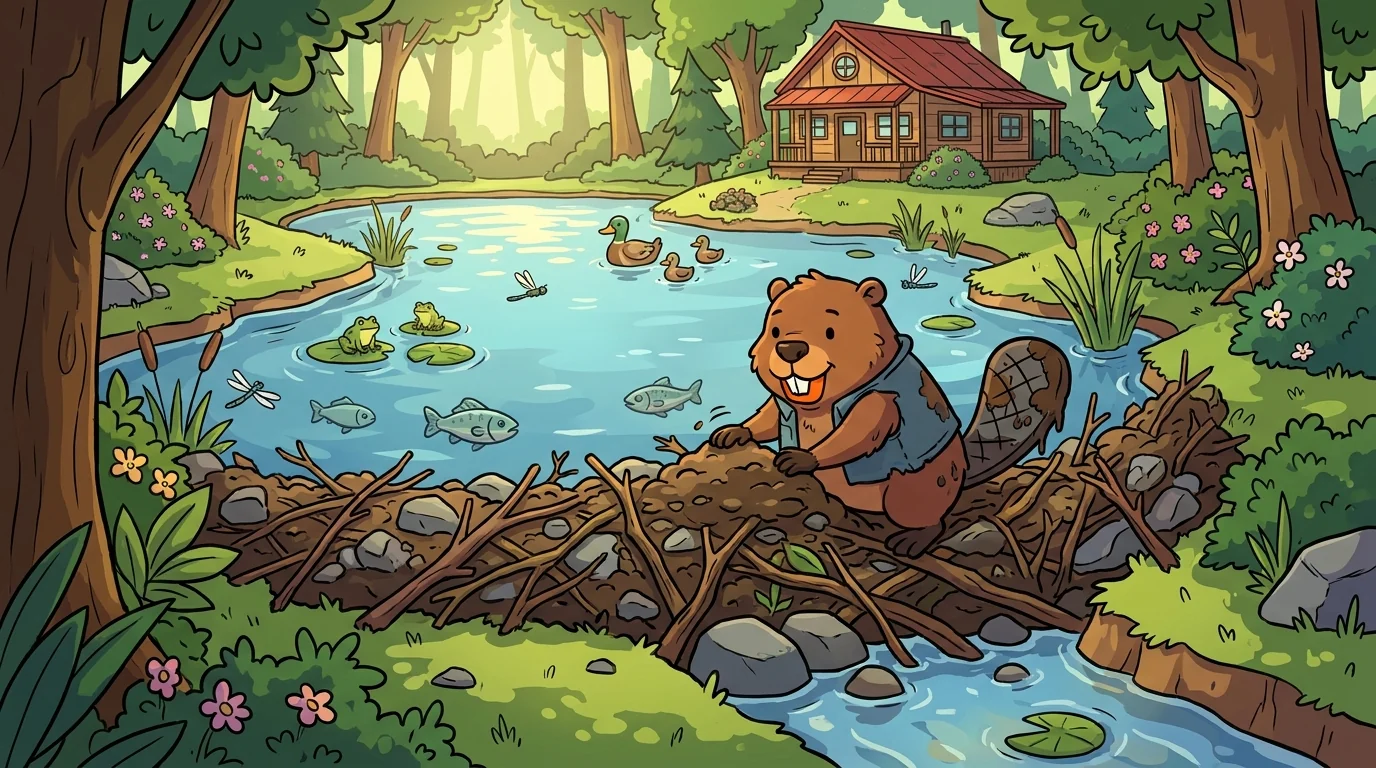
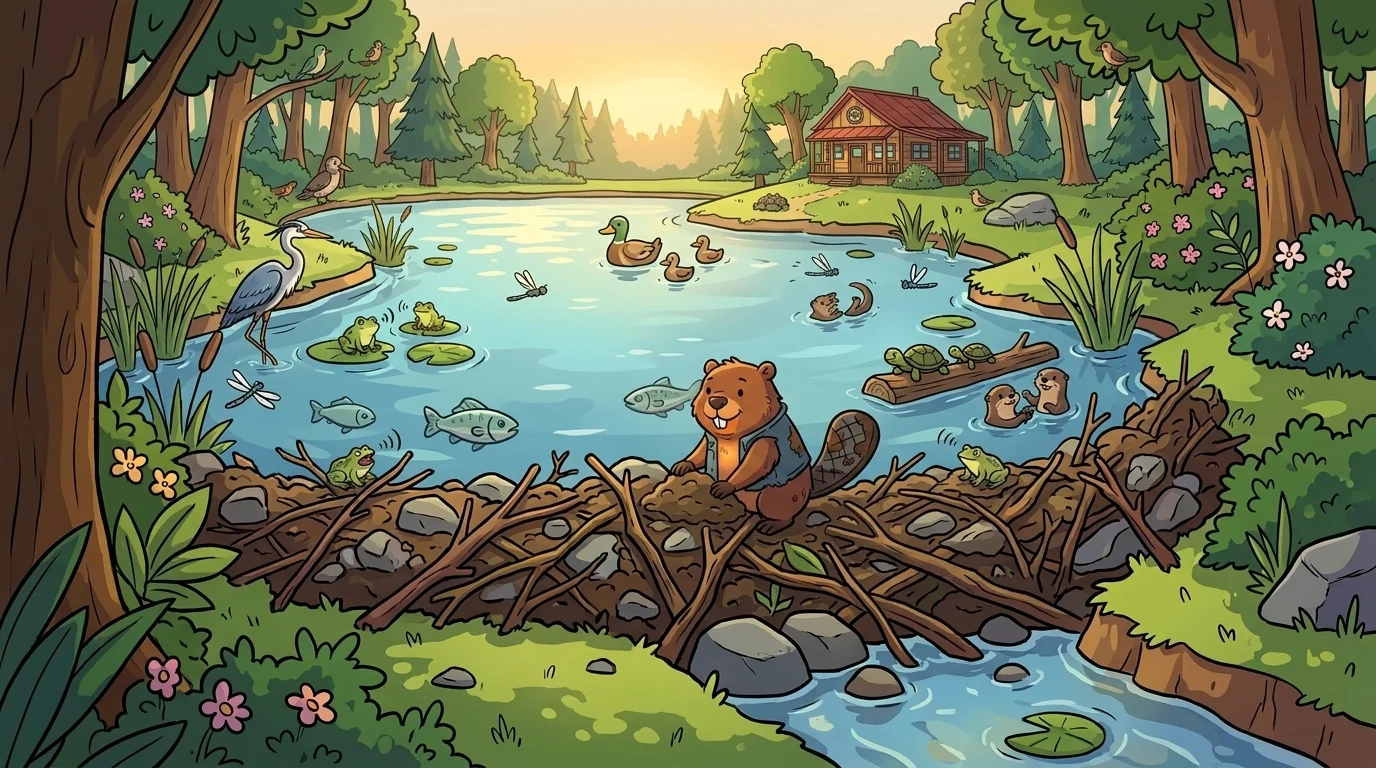
At the water's edge of the EcoSphere wetland chamber, a beaver-tween named Lodge was pulling a single stone from a model archway, and the whole arch was about to teach the lesson for her.
She was broad and unhurried, her fur the wet-earth brown of a riverbank, and on her bench stood a little stone arch she'd built herself — a curve of small stones with one wedge-shaped stone at the very top of the curve. "This top one," she told the ring of students, resting a claw on it, "is called the keystone. It's not the biggest stone. It's not even doing the most obvious work." She wiggled it. "But watch." She drew it out. The whole arch collapsed into a clatter of ordinary stones. "Every other stone was leaning on that one. It looked like just one piece. It was holding up all the rest."
A student tilted her head. "But it's not the strongest stone, though?"
"No," Lodge said. "That's the whole surprise. In a river, a KEYSTONE SPECIES is like that stone — not the biggest animal, not the most common, but the one whose work holds the shape of everything." She smiled slowly. "Take it out, and the arch doesn't just lose one piece. The arch stops being an arch."
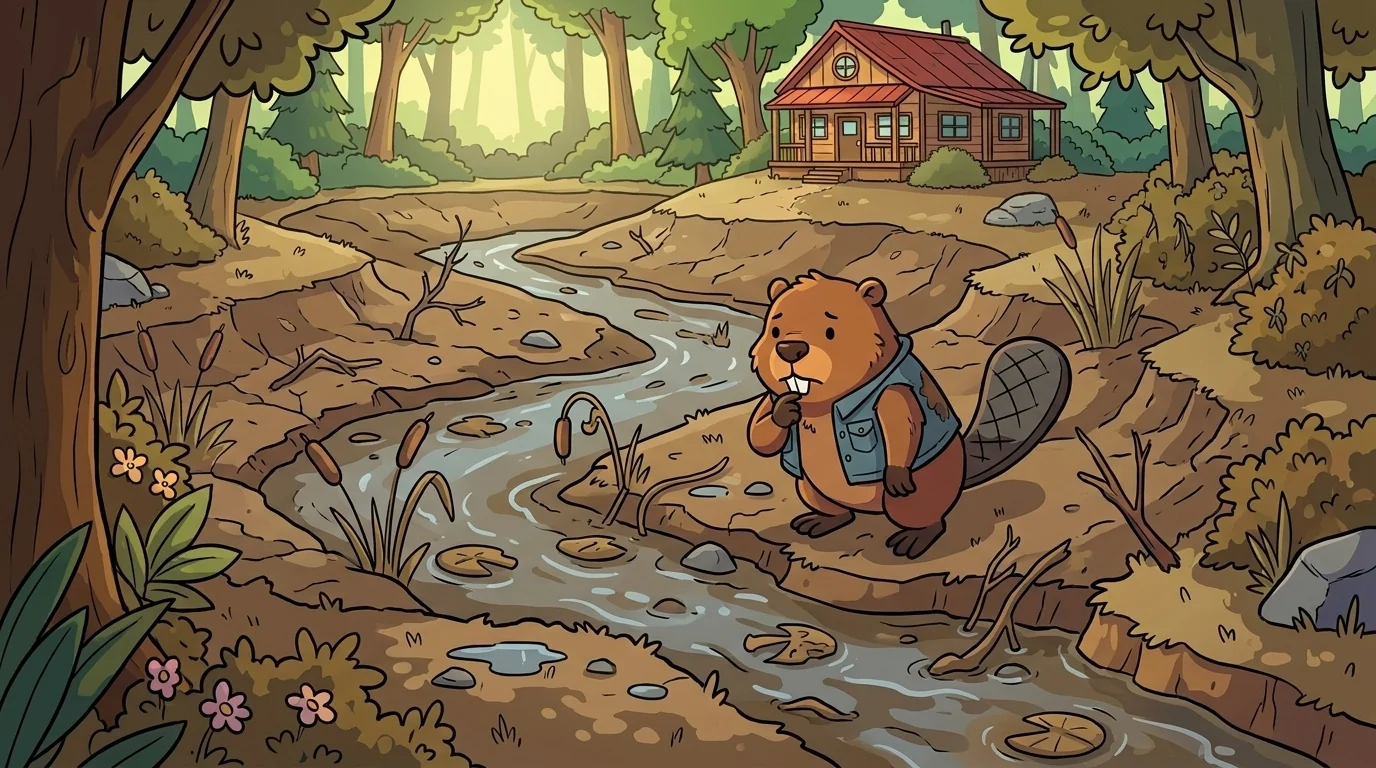
Lodge had learned about holding-things-up long before she learned the word keystone.
She came from a river-family of dam-builders — real ones, who felled trees and wove them into the barriers that turned a rushing stream into a still, deep pond. It was slow, thankless work, done mostly underwater and mostly at night. Nobody thanked a dam. But she had watched, year on year, what a single dam made: the pond it raised became home to frogs, to fish, to herons that fished the fish, to dragonflies over the still water, to willows drinking the wet edges. One patient act of engineering, and a whole neighborhood of lives arrived to fill the space it opened.
Her grandmother's rule, said while packing mud into a lattice of sticks: we don't build a pond. We build a dam, and the pond builds everything else. Lodge hadn't understood the size of that sentence at six. It turned out her grandmother had been teaching her the idea of an ecosystem engineer — a creature whose ordinary daily work physically remakes the home dozens of other species live in — without either of them ever using the term.
She walked to the EcoSphere academy at twenty-two, her paws still calloused from years of packing mud, and Terra — who ran the place — never asked to see a qualification.
She watched Lodge rebuild the little stone arch instead, patient stone by patient stone. "Tell me what a keystone species is," Terra said.
Lodge set the last stone. "It's a species whose effect is way bigger than its numbers. There might be only a few of them — a handful of otters, one pack of wolves, the beavers on one stretch of river — but pull them out and you get a TROPHIC CASCADE." She drew the top stone; the arch fell; she began to rebuild. "That's the fancy word for a change that tumbles down through the whole food web. Otters gone, so sea urchins boom, so the urchins eat the kelp forest bare, so every creature that lived in the kelp has nowhere left. One animal removed, and the change rolls all the way down. Not because the otter was the biggest — because the otter was the keystone."
Terra looked at the small stone in Lodge's paw, the one holding the arch. "Most people point at the biggest animal," she said. "You point at the one doing the load-bearing. You're appointed."
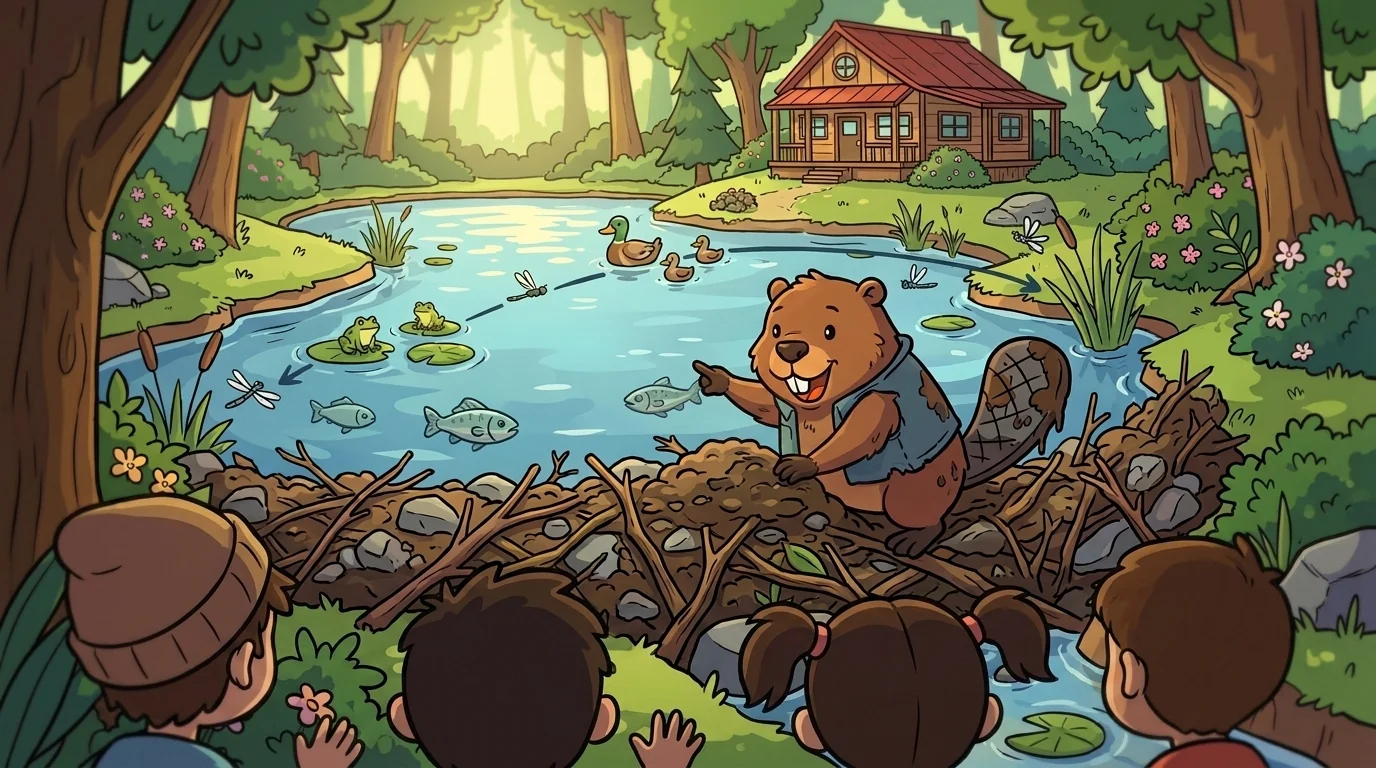
Lodge's first-day lesson always started with someone naming the wrong hero.
"The most important animal in a place is the biggest predator," a boy said, certain. "The one at the top. The scariest one."
"That's the answer almost everyone gives," Lodge said gently. "So let's test it against the arch." She built it up — ordinary stones, then the keystone at the crown. "Sometimes the top predator is the keystone — a wolf, an otter. But sometimes the keystone is small and quiet and does its work with its teeth in the mud." She tapped a plain middle stone. "A beaver isn't scary. A beaver isn't big. But take the beaver off a river and the pond drains, the wetland dries, and the frogs and fish and herons and willows all leave together. Disproportionate. That's the key word — the effect is out of proportion to the size." She drew the keystone; the arch fell. "So the question is never 'who's the biggest.' It's 'who is everyone else leaning on.' Those are different questions, and people mix them up all the time."
The boy frowned at the fallen stones. "So the beaver matters more than the wolf sometimes?"
"Sometimes," Lodge said, and a slow warm smile crossed her face. "The 'biggest is most important' idea is just the old story leaking in — the loud fierce thing must be the one that counts. Catching that, and switching to who is holding the shape of everything — that's the whole skill. That's the thing I'm actually teaching."
When the lesson ended and the room cleared, the boy stayed, turning the small keystone stone over in his hand.
"I always would've picked the scariest animal," he said quietly. "I never thought about who everything else was leaning on."
"Neither did I, at your age," Lodge said, and settled beside him, the water lapping soft at the chamber's edge. "I thought the dam was just work nobody thanked. Then one spring I counted everything living in the pond my family had raised, and I understood — we hadn't built a pond. We'd built one dam, and the pond built all the rest. I remember exactly how that felt. Like the whole picture tilting into place."
The boy set the keystone gently back at the top of the rebuilt arch, the way you'd steady something you didn't want to lose.
Lodge watched him do it and felt the old riverbank fondness rise slow and warm in her chest — that quiet gladness of watching a child stop looking at the biggest thing and start seeing the load-bearing one, the puzzle loosening into something that finally held its shape. Nothing about the arch had changed on the bench that afternoon. Only the looking had. And that, Lodge thought, breathing easy by the still water, was the best thing she ever got to feel: a young one learning to spot the quiet keystone that had been holding everything up all along.
The arch stood. The water lapped. Somewhere, a river waited for one patient dam.
The EcoSphere ensemble
Lodge is part of EcoSphere's distributed-narrative cast. Each character embodies a different curricular primitive; together they teach the full subject.
-
Chain
Food chain / trophic flow (energy moving up levels)
-
Niche
Ecological role / job-in-the-ecosystem
-
Phase
Succession / ecosystem change over time (primary, secondary, climax)
-
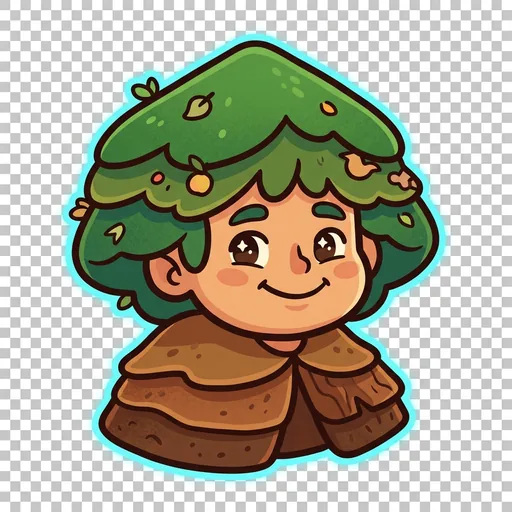
Crown
Canopy / trophic-pyramid structure (top vs. base)
-
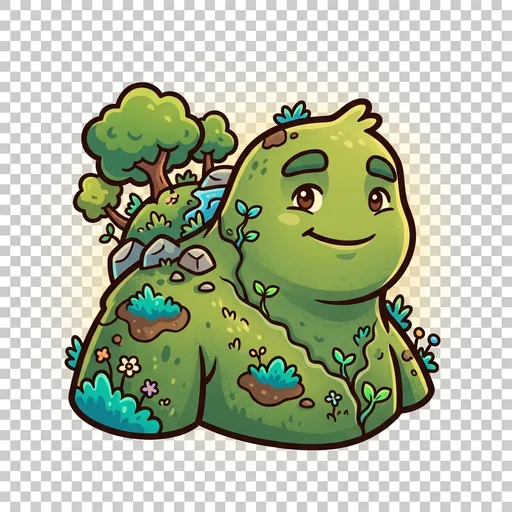
Brink
Tipping points / ecosystem thresholds / resilience-or-collapse
-

Cinder
Carbon cycle — the same carbon moves round and round: air to plant to animal to air
-

Mulch
Decomposition — what dies doesn't leave; it is broken down and handed back to the living
-

Rill
Water cycle — the same water goes round forever: sea to sky to rain to stream to sea
-
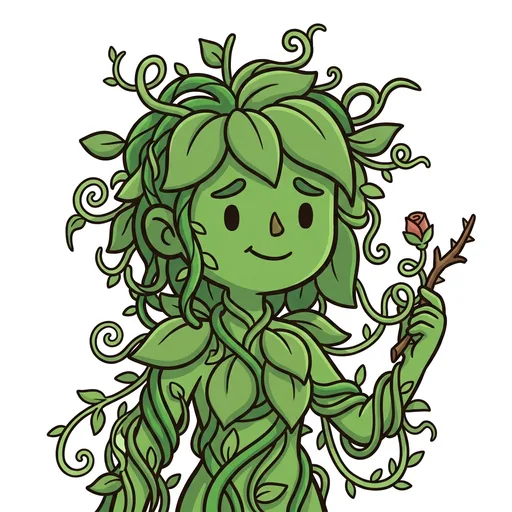
Sprawl
Invasive species — a species carried somewhere new, where nothing holds it back