
Mulch
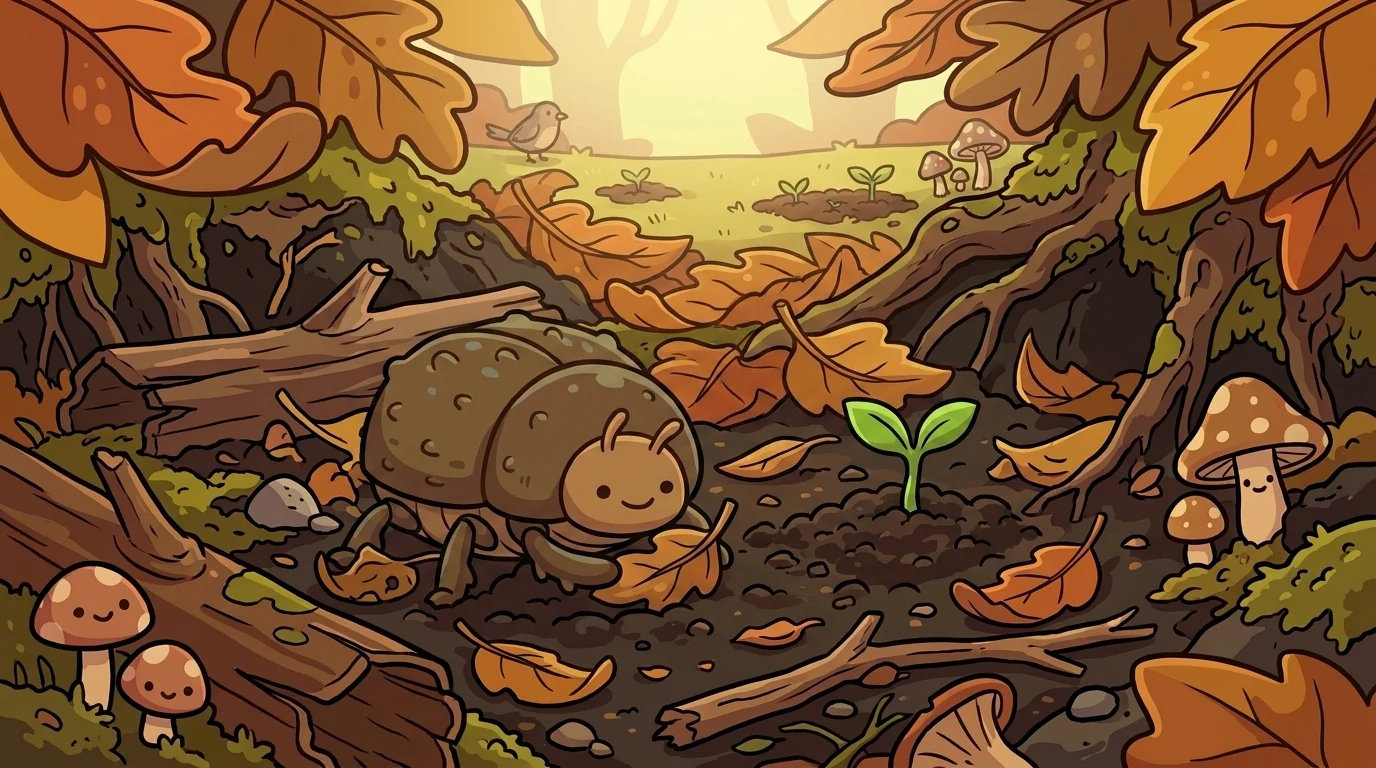
DECOMPOSITION / NUTRIENT CYCLING — decomposers (fungi, bacteria, detritivores) break dead matter back into the mineral nutrients living things need, closing the loop at the base of every food web so the soil never runs empty. Named directly: decomposer, detritivore, nutrient cycling, the return.
Loading audio…
Press play to listen along. The line being read lights up as you go.
Show full transcript
Loading transcript…
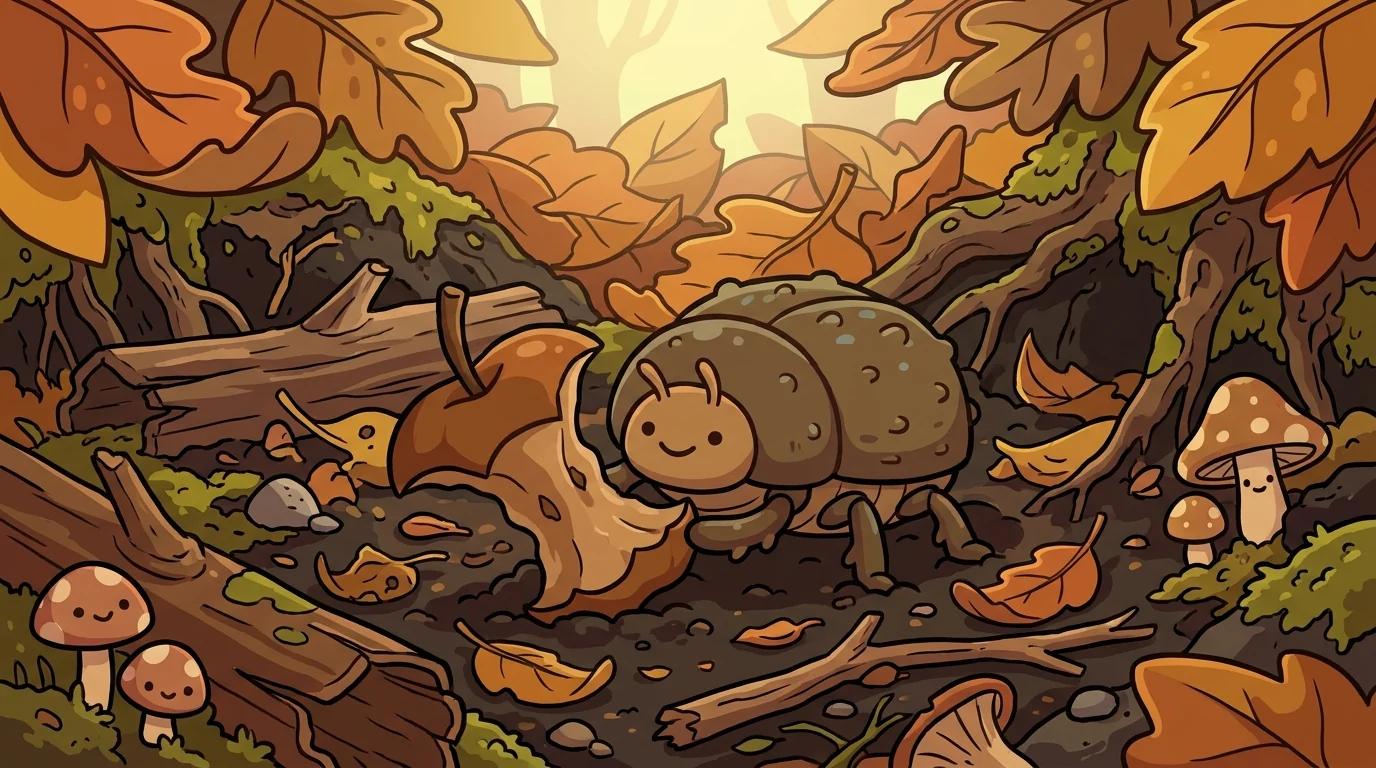
In the shaded forest-floor chamber of the EcoSphere nature center, a hedgehog-tween named Mulch was tipping a jar of dark crumbled soil into a student's cupped hands, and telling them they were holding last autumn's leaves.
He was small and unbothered, his spines tipped the soft brown of a leaf gone to lace, and along his bench ran a low glass table — a "before and after" — with a whole fresh oak leaf at one end and, at the other, the fine dark crumb of finished soil. "Same leaf," he said, walking a claw down the table. "Give it a season on the forest floor, and the workers get to it." He lifted a magnifier over the middle of the table, where the leaf had gone to a skeleton of veins and grey fuzz. "Fungi, first — those threads. Then bacteria, too small to see. Then the little chewers — the DETRITIVORES, the woodlice and worms and springtails. Together they're the DECOMPOSERS. And what they do has a name: they turn what died back into the nutrients the living need."
A student peered into her handful of crumb. "So this is... a leaf?"
"This was a leaf," Mulch said, delighted. "And it's about to be a leaf again, once a root drinks it up. That's the whole trick. Nothing here ends. It just gets handed back."
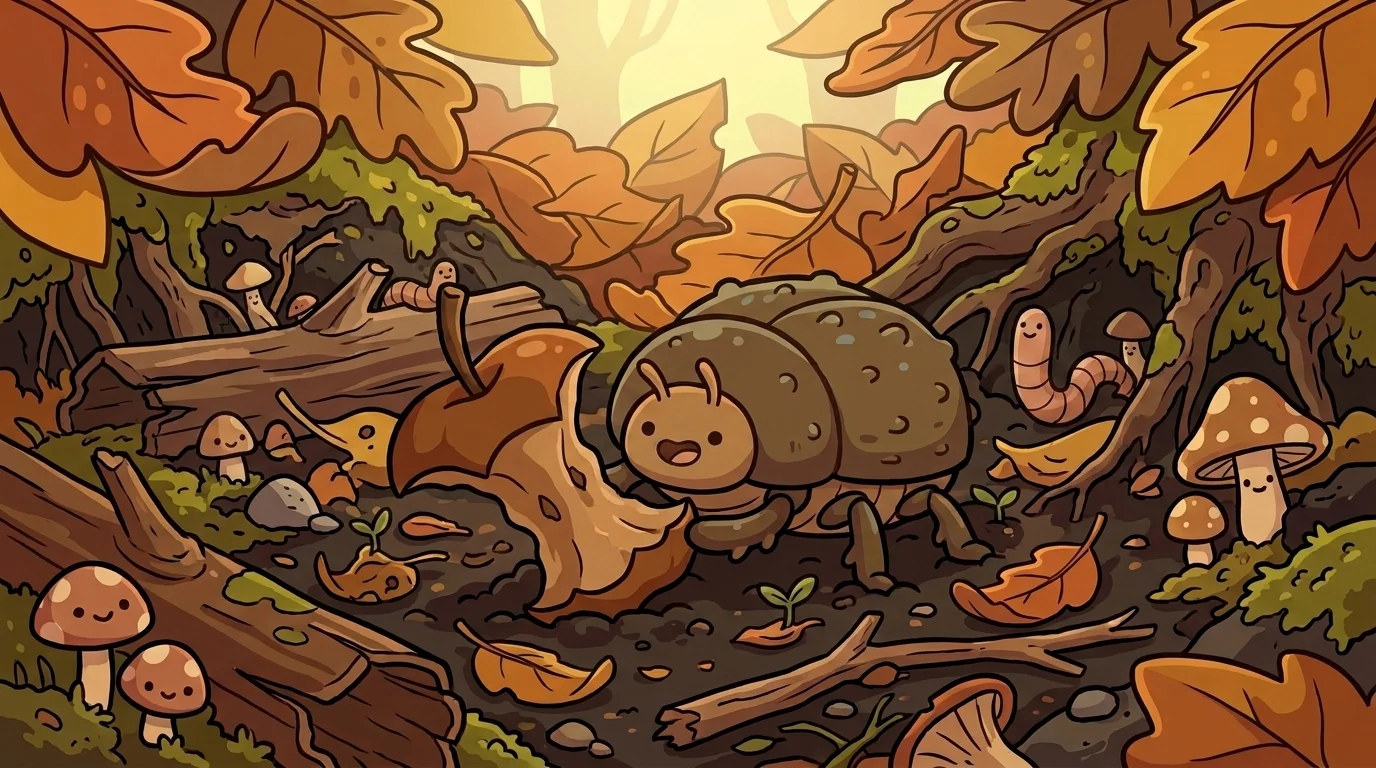
Mulch had learned about handing-things-back long before he learned the word decomposer.
He came from a compost-village, where his family kept the great steaming heaps that turned every kitchen scrap and fallen leaf and worn-out thing into black gold for the gardens. It was humble, invisible work. Nobody wrote songs about the compost-keepers. But he had grown up watching the miracle of it: you fed the heap what everyone else called garbage, and months later you dug out the richest soil in the valley, and the whole village's vegetables grew from it. Rot, patiently kept, became abundance.
His father's rule, said while turning the steaming heap with a fork: there is no such thing as waste. There is only matter waiting to be handed back. Mulch hadn't grasped the size of that sentence at six. It turned out his father had been teaching him nutrient cycling — the closing of the loop that keeps the base of every food web supplied — without either of them ever using the word.
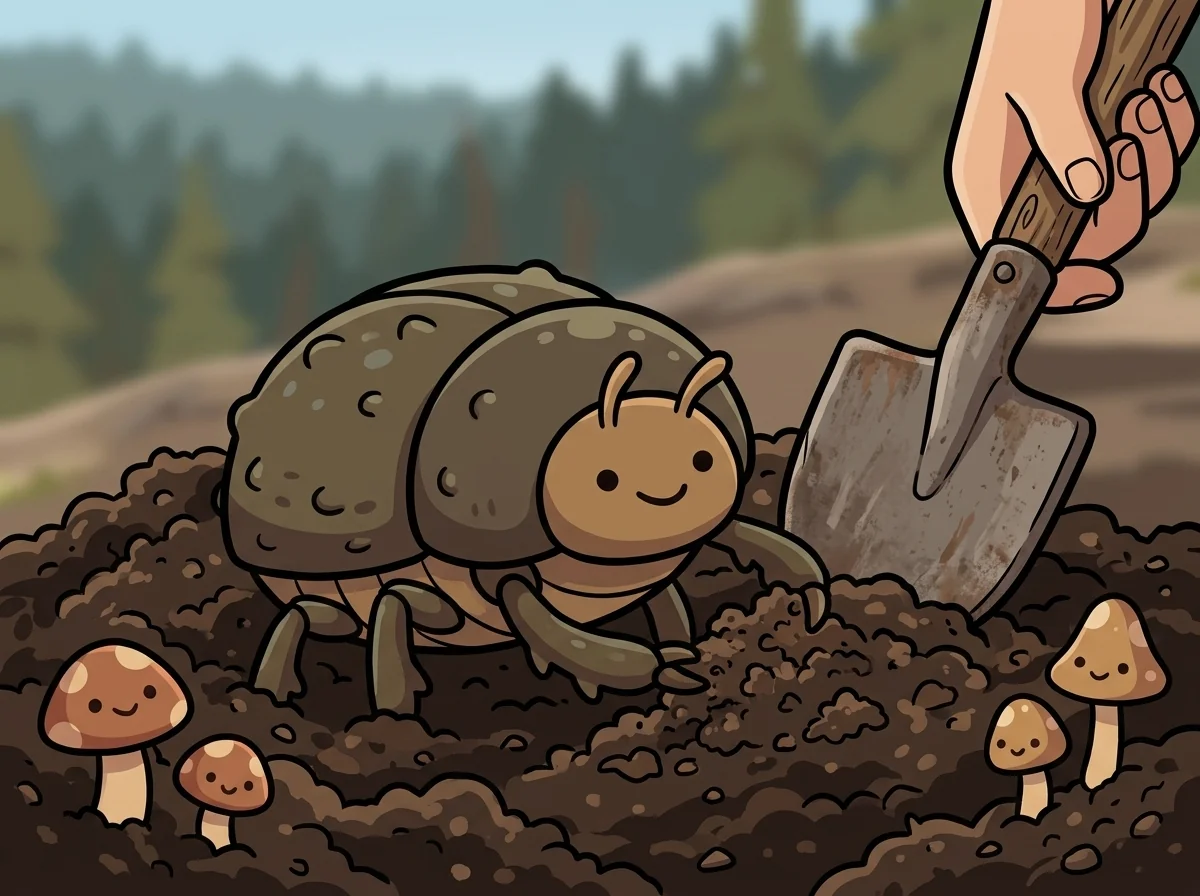
He walked to the EcoSphere academy at twenty-two, smelling honestly of good earth, and Terra — who ran the place — did not ask him for a single credential.
She watched him run his "before and after" table instead, patient and glad over a rotting leaf. "Tell me why decomposers matter," Terra said. "The ones nobody thanks."
Mulch set the fresh leaf beside the finished crumb. "Because they close the loop. Energy in an ecosystem FLOWS — it comes in as sunlight, climbs the food chain, and leaks away as heat. It only goes one way; it never comes back." He tapped the crumb of soil. "But MATTER cycles. The same nitrogen, the same carbon, the same minerals get used over and over — and decomposers are the ones who make that possible. They take the dead plant, the dead animal, the fallen leaf, and break it back down into the nutrients a new root can drink." He smiled. "Without them, every nutrient on Earth would end up locked inside something dead, and the soil would run empty, and the whole living world would slowly stop. The quiet workers are the reason it never does."
Terra looked at the little crumb of returned soil. "Most people find the recyclers boring," she said. "You find them holy. You're appointed."
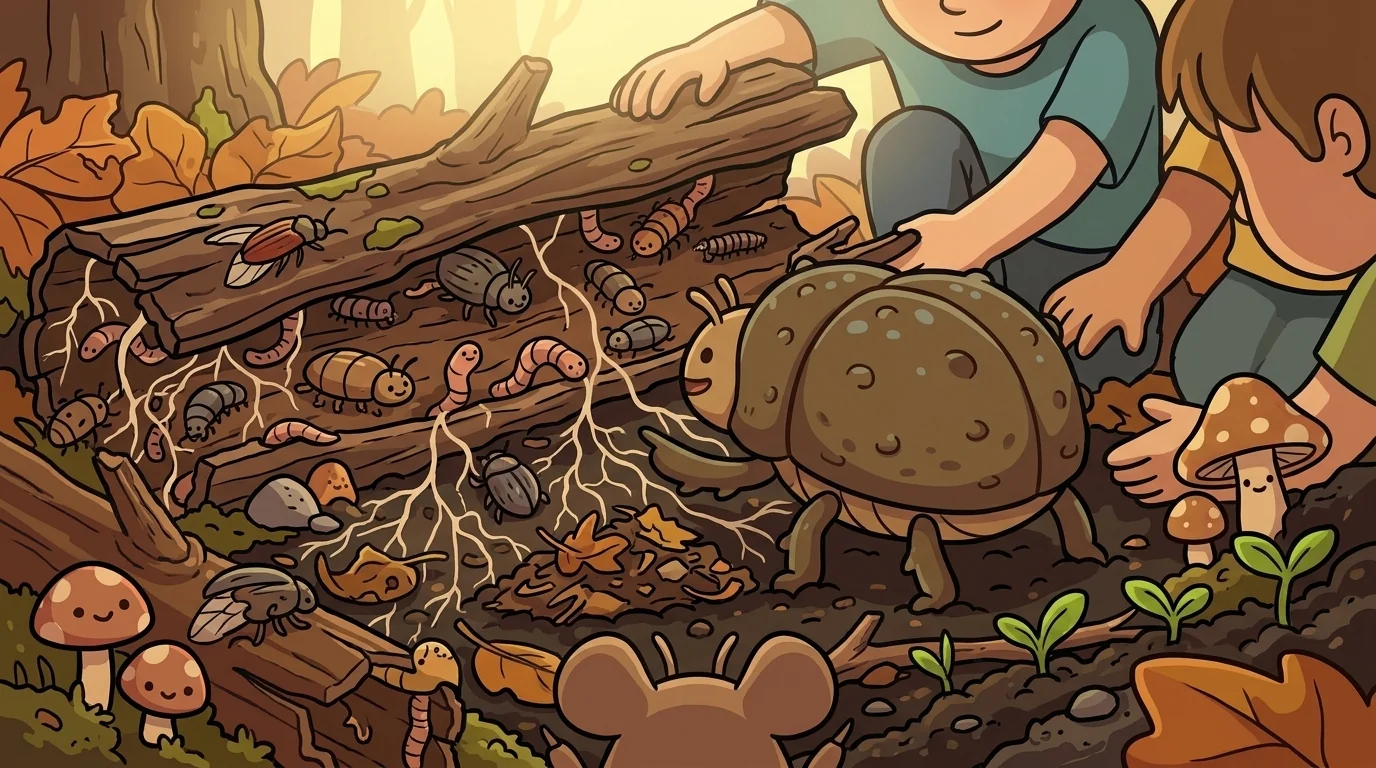
Mulch's first-day lesson always began with someone calling his workers gross.
"Decomposers are just... the yucky part," a girl said, wrinkling her nose. "The rotting. Why would anyone care about the rot?"
"That's what almost everyone thinks," Mulch said, without a trace of offense. "So let's test it." He held up two jars — one of fresh leaves, one of finished dark soil. "Imagine the decomposers went on strike. Nothing rots. Every leaf that ever fell just... stays. Every dead thing piles up, whole, forever." He let that sit. "Within a few seasons the forest floor is a mountain of un-rotted leaves, and none of the nutrients inside them ever get back to the soil. The trees can't pull up what they need. The grass at the base of every food chain starves. And then everything above the grass starves too." He set the jar of rich soil down gently. "The rot isn't the yucky part. The rot is the return. It's the reason spring can happen at all."
The girl looked at the dark soil differently now. "So the gross part is actually the... the part that lets everything keep going?"
"Every bit of it," Mulch said, and a soft warm smile crept over him. "'Rot is gross' is just the old squeamishness leaking in — we're taught to look away from endings. Catching that, and turning to look, this ending is feeding a beginning — that's the whole skill. That's the thing I'm actually teaching."
When the lesson ended and the room emptied, the girl stayed, holding a pinch of the dark finished soil.
"I always thought rotting was just... the sad, gross part," she said quietly. "I never thought it was the part that gives everything back."
"Neither did I, at your age," Mulch said, and sat beside her among the soft forest smells. "I thought the compost heap was the humble chore nobody praised. Then one spring I dug out the black earth and watched the whole village's garden rise out of what everyone had called garbage. I remember exactly how that felt. Like the world quietly turning a loss into a gift while I wasn't looking."
The girl pressed the pinch of soil back onto the finished end of the table, gently, the way you'd return something you'd come to respect.
Mulch watched her do it and felt the old earthy fondness rise soft and warm in his chest — that quiet gladness of watching a child stop flinching from an ending and start seeing the beginning folded inside it, the squeamish knot loosening into something tender and hopeful. Nothing on the long glass table had changed that afternoon. Only the looking had. And that, Mulch thought, breathing the good-soil air slow and easy, was the best thing he ever got to feel: a young one learning that nothing is ever truly wasted — that every return is also an arrival.
The dark soil sat rich in the jar. The forest floor waited, patient. Somewhere, a leaf was falling, right on time.
The EcoSphere ensemble
Mulch is part of EcoSphere's distributed-narrative cast. Each character embodies a different curricular primitive; together they teach the full subject.
-

Chain
Food chain / trophic flow (energy moving up levels)
-

Niche
Ecological role / job-in-the-ecosystem
-

Phase
Succession / ecosystem change over time (primary, secondary, climax)
-

Crown
Canopy / trophic-pyramid structure (top vs. base)
-

Brink
Tipping points / ecosystem thresholds / resilience-or-collapse
-

Cinder
Carbon cycle — the same carbon moves round and round: air to plant to animal to air
-

Lodge
Keystone species — one species that holds a whole ecosystem together; remove it and the web unravels
-

Rill
Water cycle — the same water goes round forever: sea to sky to rain to stream to sea
-
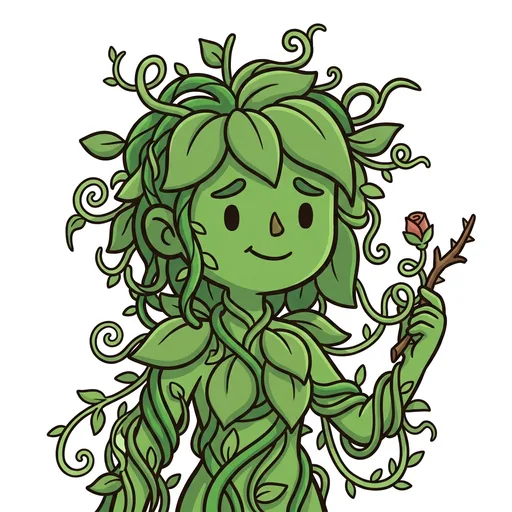
Sprawl
Invasive species — a species carried somewhere new, where nothing holds it back