
Sprawl
INVASIVE SPECIES — a species moved to a new range where the predators, competitors, and parasites that limited it back home are absent, so it spreads unchecked and outcompetes natives. It isn't wicked — it's a population released from the checks that once held it in balance. Named directly: introduced/invasive species, native range, natural checks (predators, competitors, disease), out-competing, restoring balance.
Loading audio…
Press play to listen along. The line being read lights up as you go.
Show full transcript
Loading transcript…
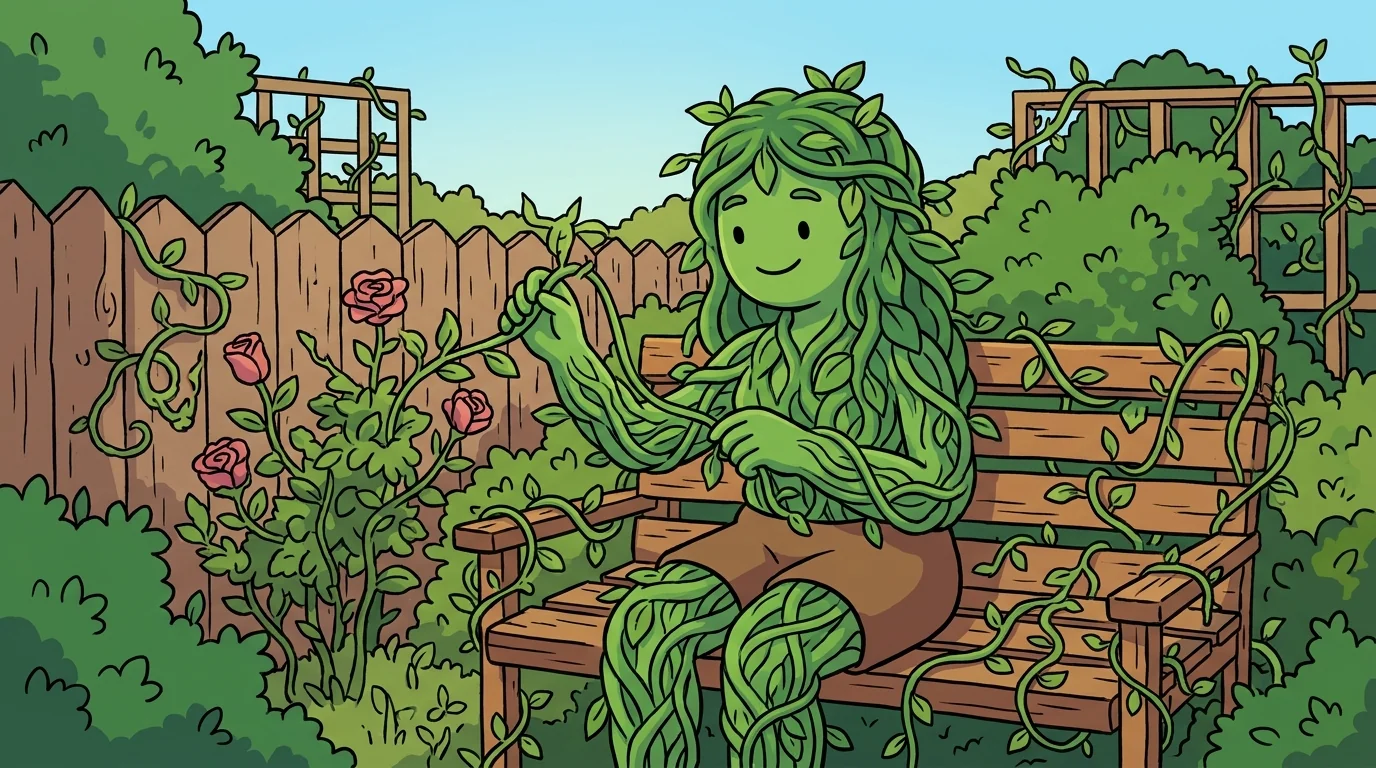
In the greenhouse chamber of the EcoSphere nature center, a rabbit-tween named Sprawl was gently untangling a fast-green vine from around a whole shelf of smaller plants, and telling the students the vine had done nothing wrong.
She was soft and quick-growing herself — round, with fur the pale green-brown of a sprout — and she kept two matched planters on her bench. In the first, a leafy vine grew politely, ringed by other plants and a painted card of a beetle. In the second, the same vine had swallowed everything: climbed the trellis, smothered its neighbors, filled the whole box. "Same vine," she said, resting a paw on the overgrown one. "Same seeds. The only difference is this one" — she tapped the polite planter — "lives where it grew up. Back home, a beetle eats its leaves, a fungus nibbles its roots, other plants crowd it for light. Those are its natural CHECKS. They keep it in balance." She lifted the overgrown planter. "This one got carried somewhere new — a garden across the sea — where none of those checks came along. No beetle. No fungus. Nothing to slow it. So it grew, and grew, and grew."
A student stared at the smothered box. "So the vine is... bad?"
"That's the thing everyone wants to say," Sprawl said. "And it's the one thing I won't let you get away with."
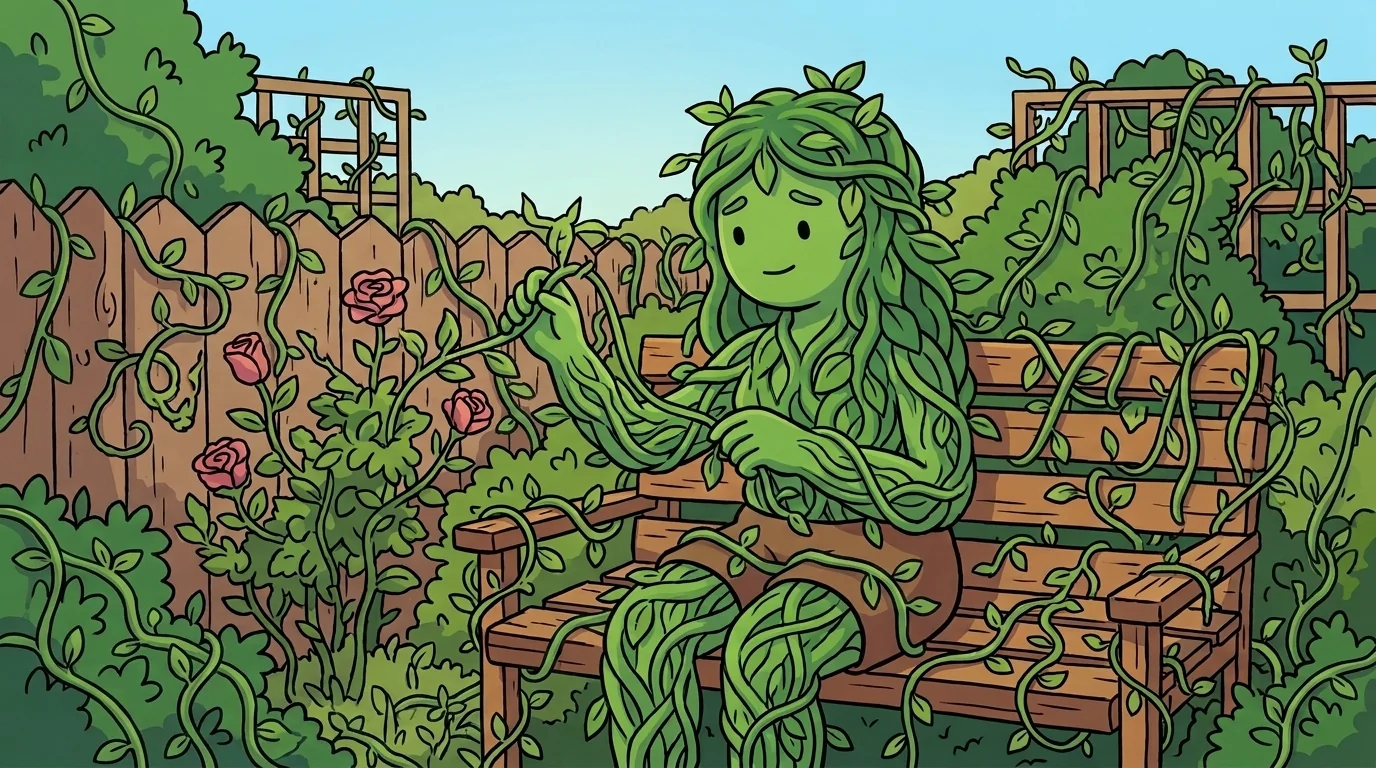
Sprawl had learned about growing-past-your-limits long before she learned the phrase invasive species.
She came from a hedge-village, where her family were the pruners — the ones who walked the great living hedgerows with shears, keeping them shaped, keeping them from swallowing the lanes and fields. It was endless, patient work, because a hedge left alone doesn't stop; it reaches, it climbs, it takes every inch it can. Her family didn't hate the hedge for it. A hedge isn't greedy, her mother said, snipping steady. It's just a hedge, doing the only thing a hedge knows. Our shears are the check it doesn't have on its own.
Sprawl hadn't understood the size of that at six. It turned out her mother had been teaching her that unchecked growth isn't wickedness — it's what any living thing does when nothing is there to limit it — without either of them ever using the word.
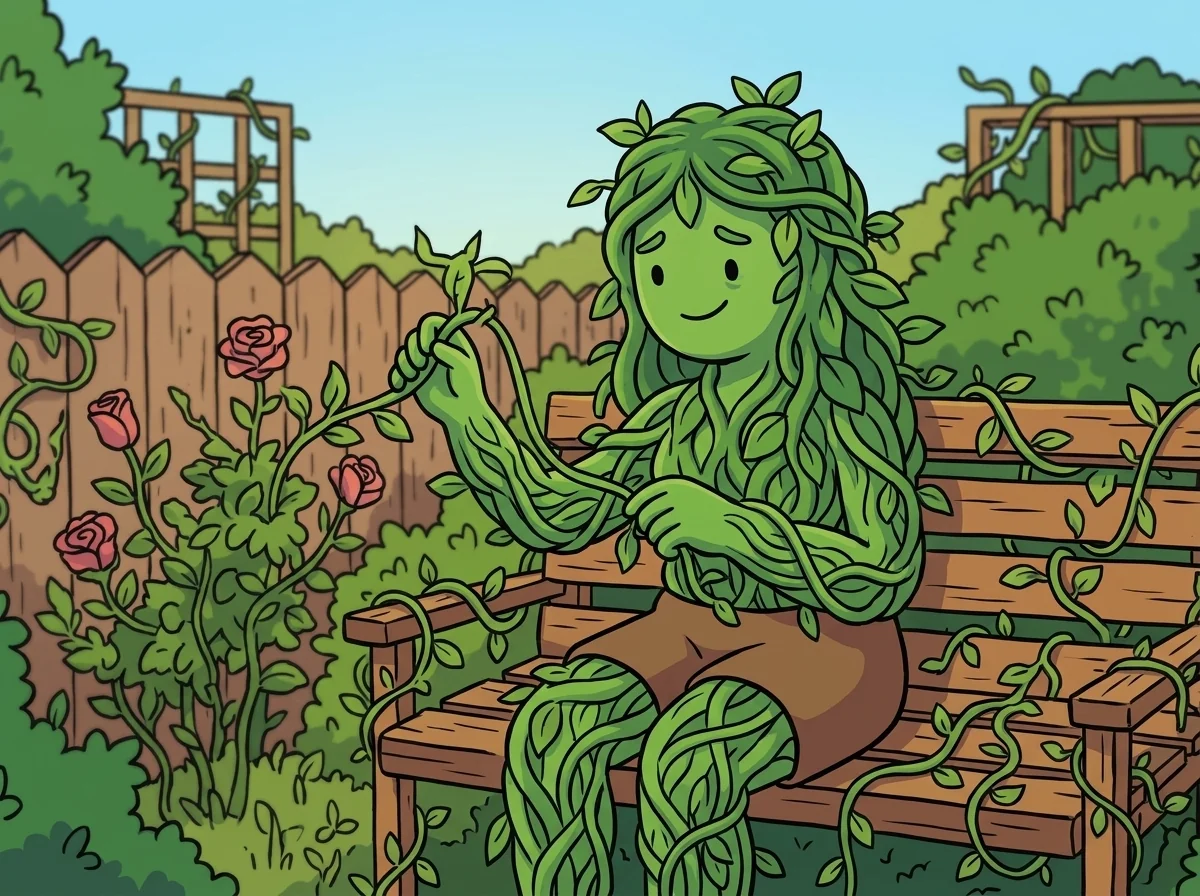
She walked to the EcoSphere academy at twenty-two, still carrying a small pair of shears out of habit, and Terra — who ran the place — did not ask her to prove a thing.
She watched Sprawl tend the two matched planters instead, tender even with the overgrown one. "Tell me what makes a species invasive," Terra said. "And do it without calling it evil."
Sprawl set the two boxes side by side. "An invasive species is one that got moved out of its NATIVE RANGE — the place it evolved — into a new place where the things that used to limit it are missing." She touched the polite planter's beetle card. "Back home, predators and competitors and diseases hold its numbers steady. That's balance — not because anyone planned it, but because everybody grew up together, keeping each other in check." She lifted the smothered box. "Take it somewhere those checks don't exist, and it doesn't know to stop. It out-competes the natives — grabs the light, the water, the space — until they can't hold on. Not out of malice. Out of release. The brakes just aren't there anymore."
Terra looked at the overgrown planter, at the smaller plants losing underneath it. "Most people want a villain," she said. "You gave me a system with a missing piece. You're appointed."
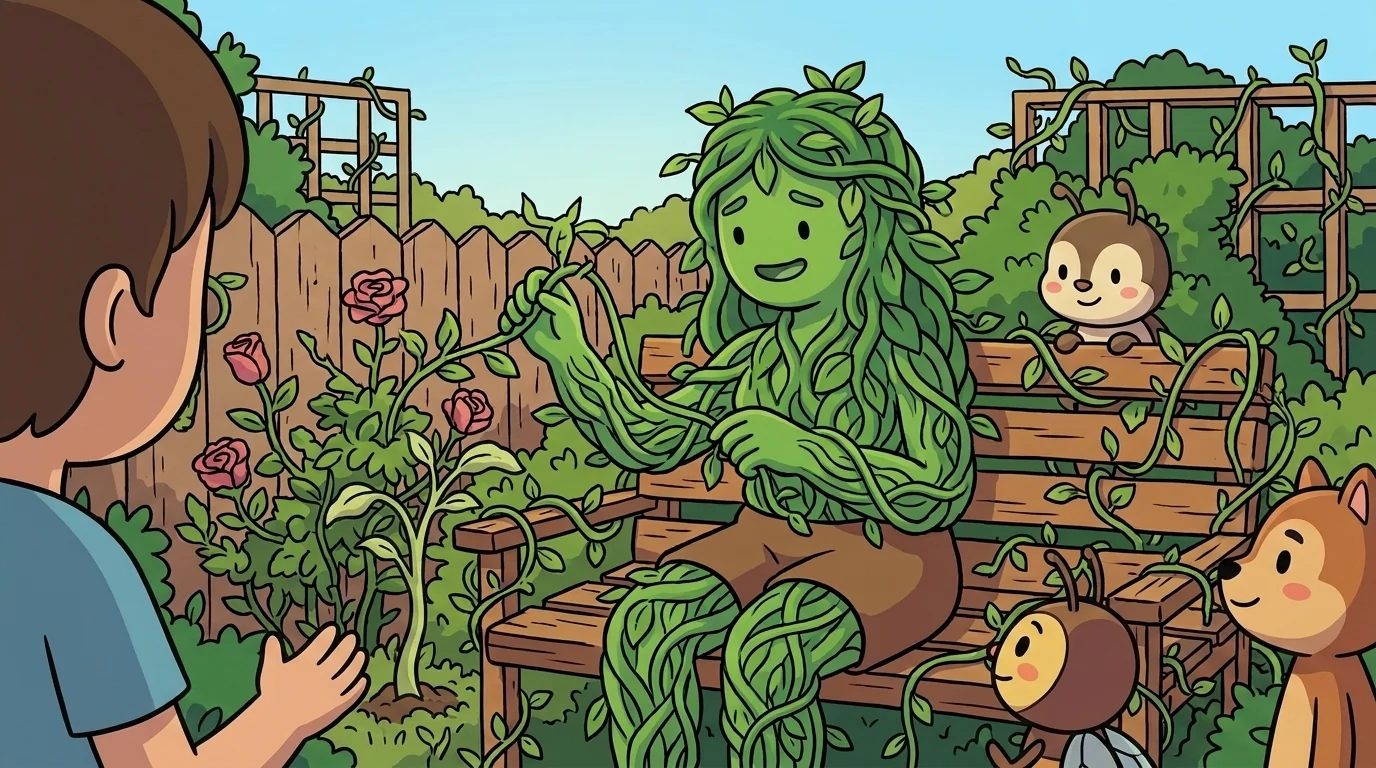
Sprawl's first-day lesson always began with someone reaching for blame.
"So we should just hate the invasive plants," a boy said, arms crossed. "They're the bad guys. Rip them all out."
"That's exactly where everyone goes first," Sprawl said gently, "and it's exactly where the thinking stops being useful." She held up the two planters. "Hating the vine tells you nothing about how to fix it. Look instead at why it's winning: it's missing its checks. So the real question is — what can put balance back? Sometimes it's careful removal. Sometimes it's bringing in a controlled predator or competitor from its home range, very carefully, so we don't cause a second invasion. Sometimes it's protecting the natives so they can hold their ground." She set the boxes down. "None of those come from anger. They come from understanding what's actually out of balance." She smiled, small and steady. "The plant isn't a criminal. It's a population with the brakes removed. Fix the brakes, not the blame."
The boy uncrossed his arms slowly. "So being mad at the plant is... kind of useless?"
"Kind of," Sprawl said, and a warm dawning smile crossed her face. "'It's the bad guy' is just the old story leaking in — every trouble needs a villain. Catching that, and switching to what check is missing, and how do we restore the balance — that's the whole skill. That's the thing I'm actually teaching."
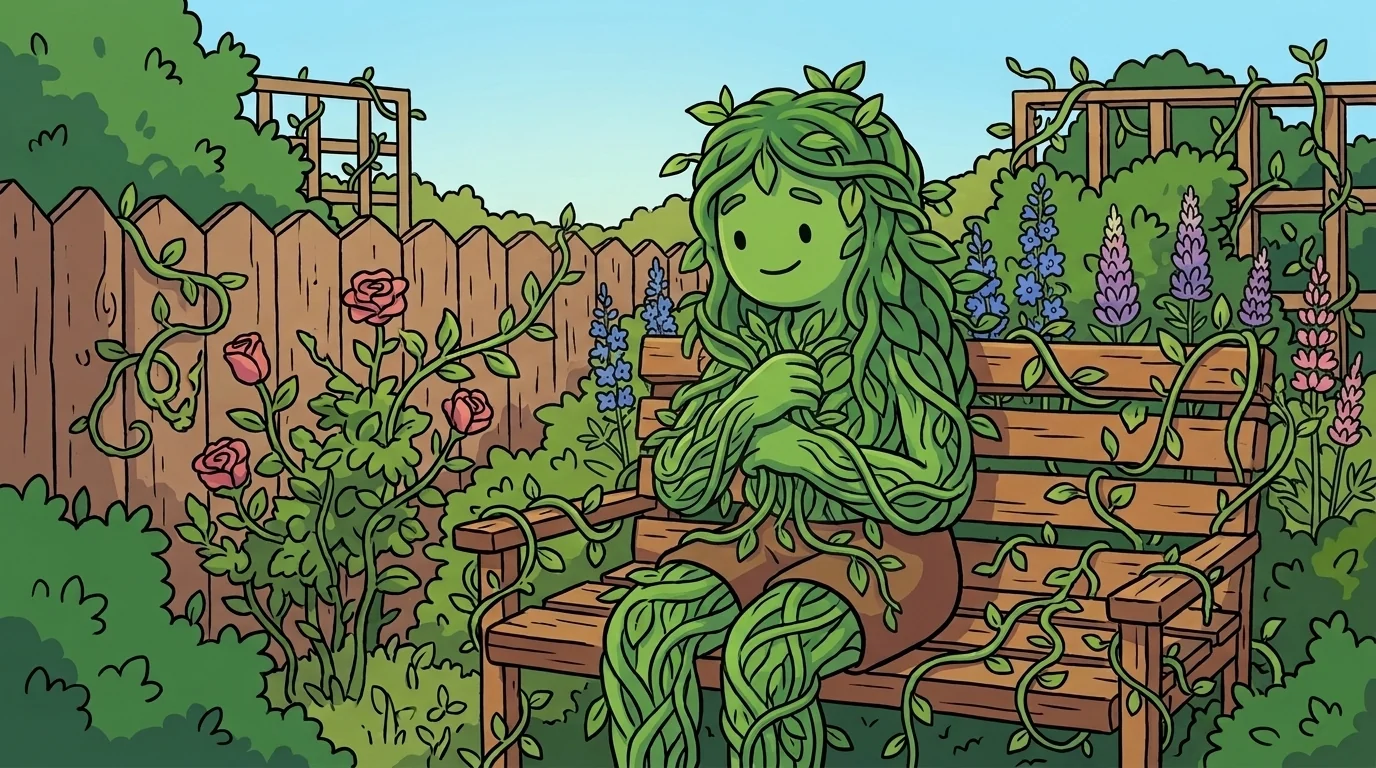
When the lesson ended and the room cleared, the boy stayed, looking between the two planters — the balanced one and the overrun one.
"I always thought the invasive ones were just... bad plants," he said quietly. "I never thought about them missing something. About it not being their fault."
"Neither did I, at your age," Sprawl said, and settled beside him among the green smells. "I thought our family's shears meant the hedge was greedy and needed punishing. Then my mother told me the hedge was only doing what a hedge does — that our shears were just the check it didn't have — and something in me eased. Being angry at it had felt so heavy. Understanding it felt like setting the weight down."
The boy gently touched the polite planter — the balanced one — the way you'd steady an idea you wanted to keep.
Sprawl watched him do it and felt the old green fondness rise soft and warm in her chest — that quiet gladness of watching a child trade a villain for a system, blame loosening into understanding, anger easing into something a person could actually use. Nothing about the two planters had changed that afternoon. Only the looking had. And that, Sprawl thought, breathing the leafy air slow and easy, was the best thing she ever got to feel: a young one learning that the fix for a broken balance is never rage — it's the missing check, patiently put back.
The two planters sat side by side, balance and imbalance. The greenhouse breathed green. Somewhere, a vine was reaching, doing the only thing it knew, waiting for someone to understand instead of hate it.
The EcoSphere ensemble
Sprawl is part of EcoSphere's distributed-narrative cast. Each character embodies a different curricular primitive; together they teach the full subject.
-
Chain
Food chain / trophic flow (energy moving up levels)
-
Niche
Ecological role / job-in-the-ecosystem
-
Phase
Succession / ecosystem change over time (primary, secondary, climax)
-
Crown
Canopy / trophic-pyramid structure (top vs. base)
-
Brink
Tipping points / ecosystem thresholds / resilience-or-collapse
-
Cinder
Carbon cycle — the same carbon moves round and round: air to plant to animal to air
-

Lodge
Keystone species — one species that holds a whole ecosystem together; remove it and the web unravels
-

Mulch
Decomposition — what dies doesn't leave; it is broken down and handed back to the living
-

Rill
Water cycle — the same water goes round forever: sea to sky to rain to stream to sea