
Spread and Prise
DISTRIBUTE AND FACTOR — a(b + c) = ab + ac read both ways; Spread rolls the multiplication across each term inside, Prise pulls the shared part back out, and the two are the same road travelled in opposite directions.
Loading audio…
Press play to listen along. The line being read lights up as you go.
Show full transcript
Loading transcript…
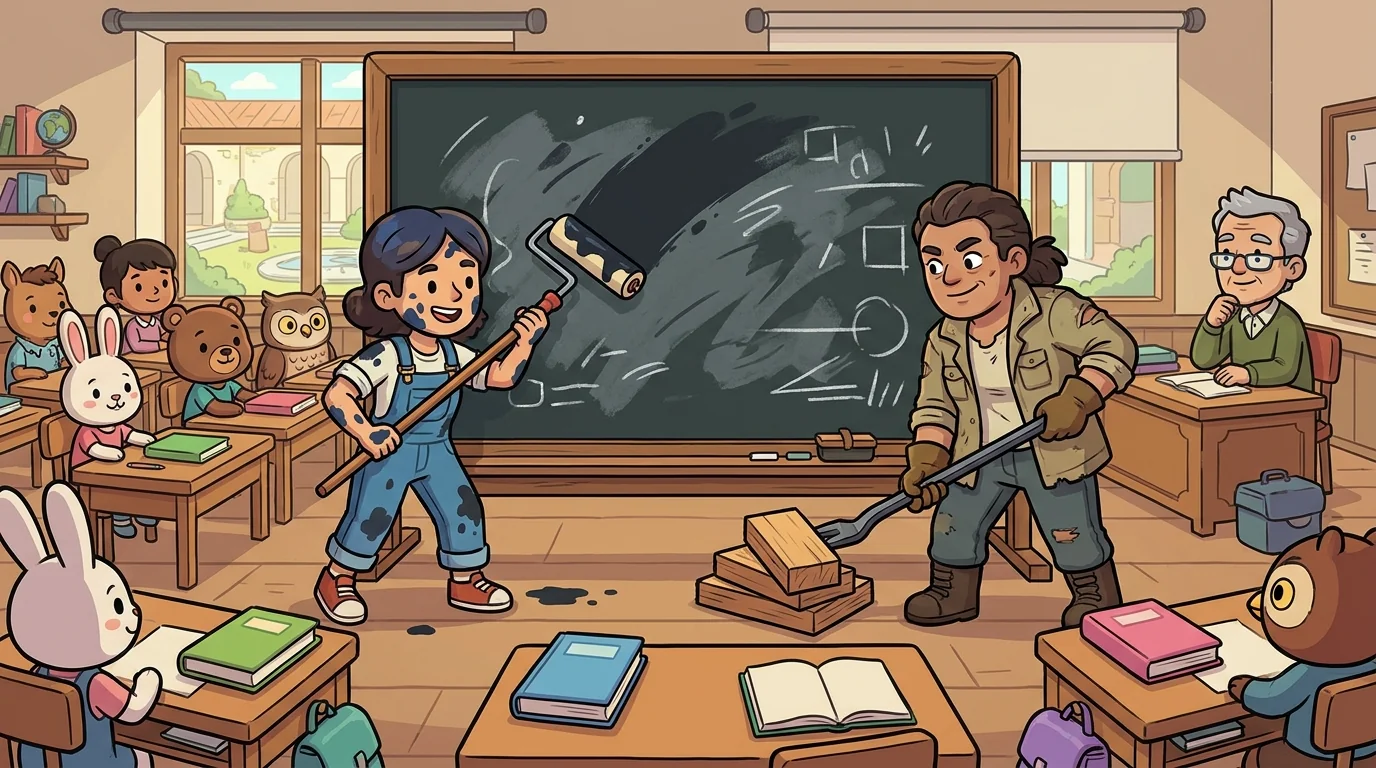
At the EquationQuest academy there were two teachers whose classrooms sat across a single corridor, and the students swore the corridor was a road that ran both directions.
On one side worked Spread, who had once painted long fences for a living and knew that when you carried a load along a row, you had to reach every post, not just the first. On the other worked Prise, who had spent thirteen years on the docks finding the one thing a stack of crates secretly shared and pulling it out in a single clean pull. The students went one way down the corridor with Spread and came back the other way with Prise, and slowly they understood that the two teachers were not teaching two things. They were teaching one thing, walked forwards and backwards.
"Everything I roll out," Spread would say, "Prise can gather back in."
"And everything I pull in," Prise would answer through the open door, "Spread can roll back out. Same road. We just walk it opposite ways."
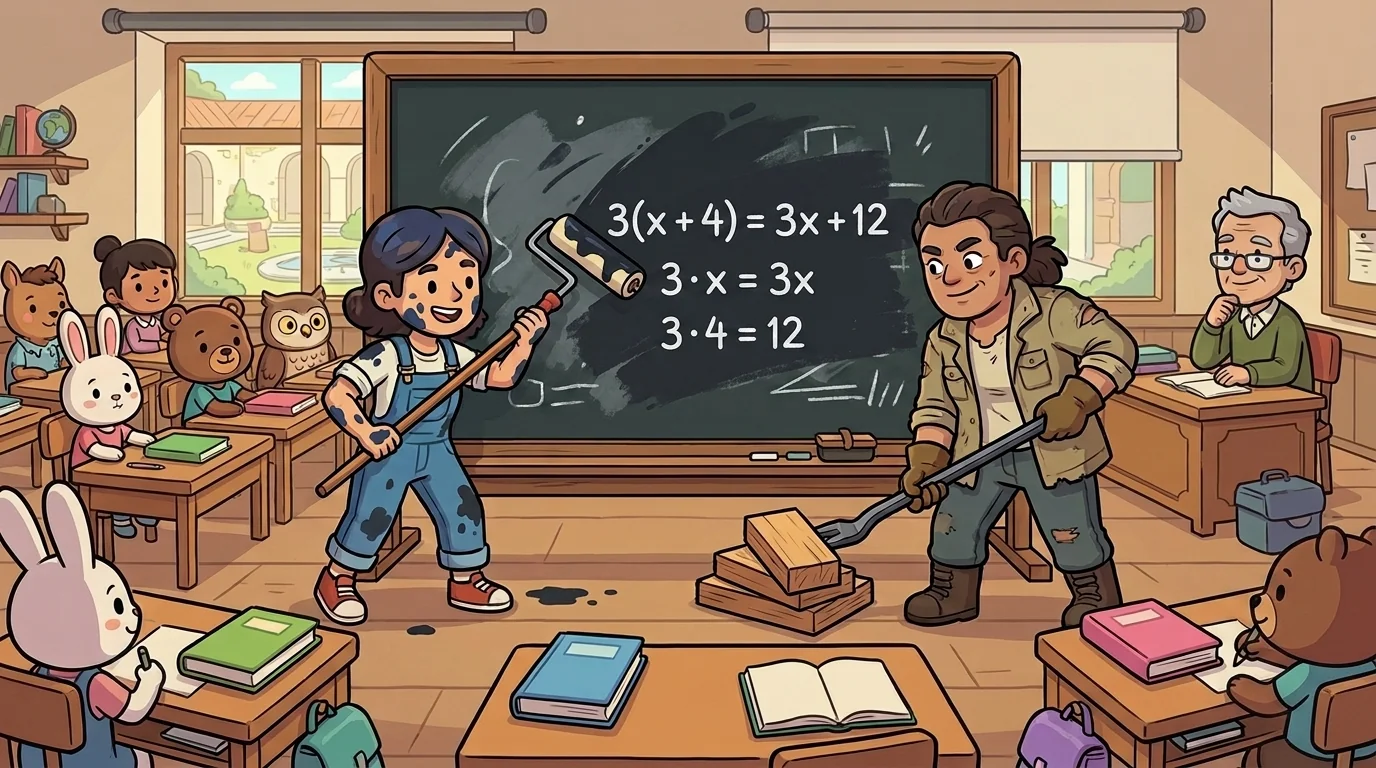
Spread went first, because it is usually easier to see the road rolled out before you learn to gather it back.
"Here is a load with a lid on it," said Spread, and wrote 3(2x + 3) on the board. "The 3 is standing outside the brackets, and the brackets hold two things: a 2x and a 3. My whole job is to carry that outside 3 to everything inside — and this is the rule people break most, so hear it plainly: the outside number must reach every term in the brackets, not just the first one it meets." Spread rolled the chalk across. "3 × 2x = 6x. And — do not stop here — 3 × 3 = 9. So 3(2x + 3) rolls out to 6x + 9." Spread underlined it. "If you'd carried the three to the 2x and lazily left the 3 alone, you'd have written 6x + 3, and the whole load would be wrong. Distributing means distributing — to all of it. The brackets come off only when everyone inside has been reached."
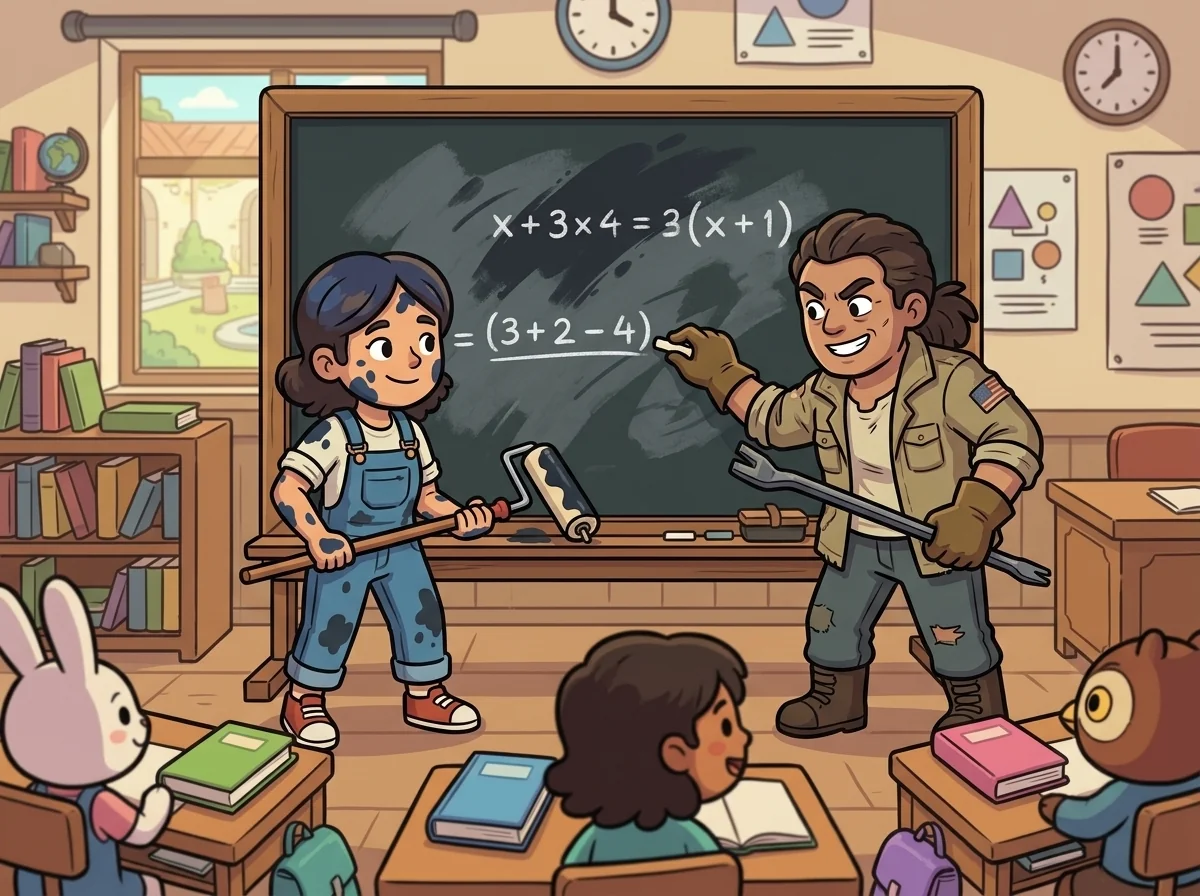
Then Prise leaned in through the doorway, worn pry-bar in hand, because the second half of the road is the return trip.
"Now watch me walk it backwards," said Prise, and pointed at Spread's answer, 6x + 9. "Spread started with the three tucked outside and rolled it across. I start with it rolled across — 6x and 9, looking like two separate loads — and I find what they share. 6 is 3 × 2. 9 is 3 × 3. Both carry a three. So I set my bar against them and prise the shared three back out to the front: 6x + 9 becomes 3(2x + 3)." Prise set down the bar. "Look where we are. That is exactly where Spread began. Spread rolled 3(2x + 3) out to 6x + 9; I gathered 6x + 9 back to 3(2x + 3). Same road. Opposite pull. Neither of us changed the value one whit — the load weighs the same rolled out or gathered up. We only changed which coat it wears."
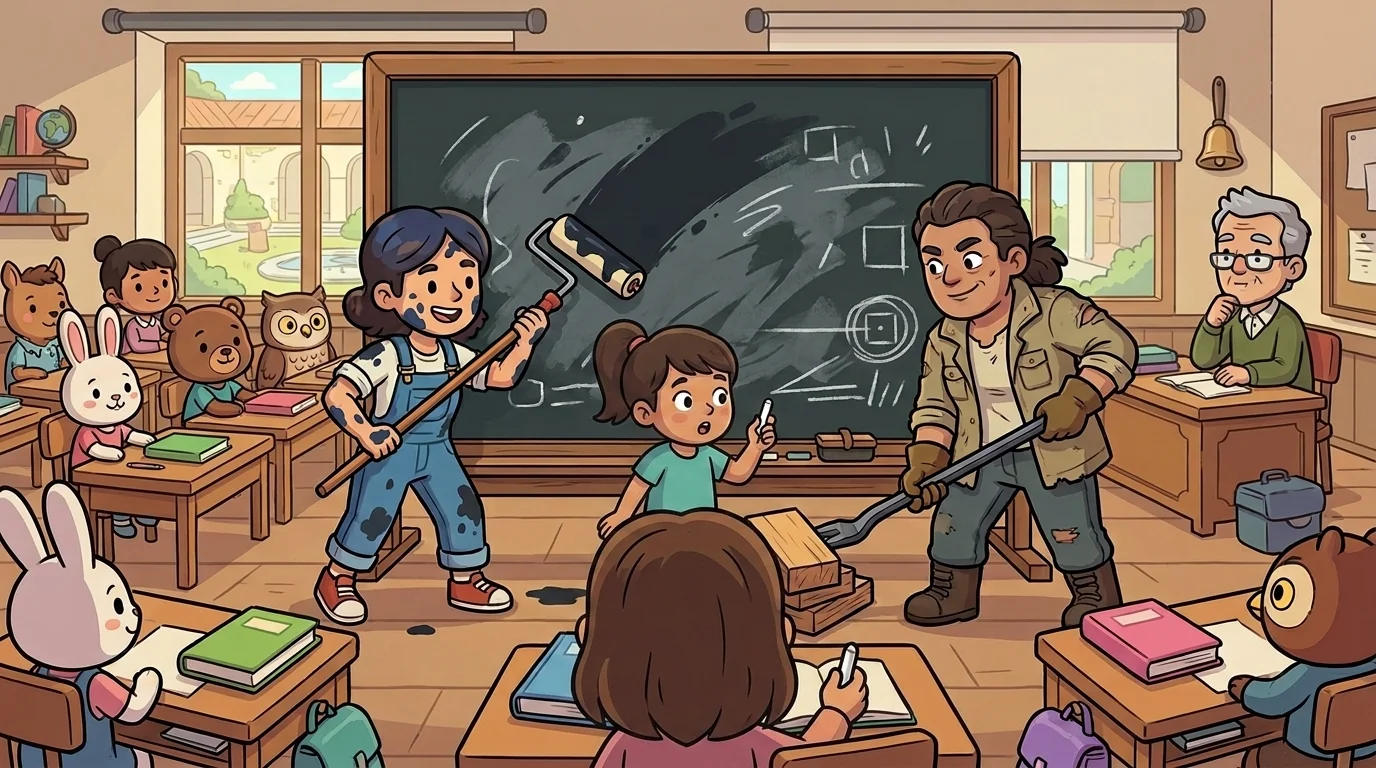
A student in the middle of the corridor, who could now see both classrooms at once, said the thing the two teachers had been waiting all term for someone to say: "So if I ever forget which is which — I can just check. Roll it out, then gather it back, and if I land where I started, I did it right."
"That," said Spread, "is the best tool either of us can give you."
"Distribute, then factor to check," said Prise. "Or factor, then distribute to check. The road runs both ways precisely so you can walk back and catch your own mistakes. A three left behind when you distributed? You'll find it missing when you try to gather. A shared part you only half-pulled when you factored? Roll it back out and the answer won't match. The reversibility isn't a trick. It's your proof."
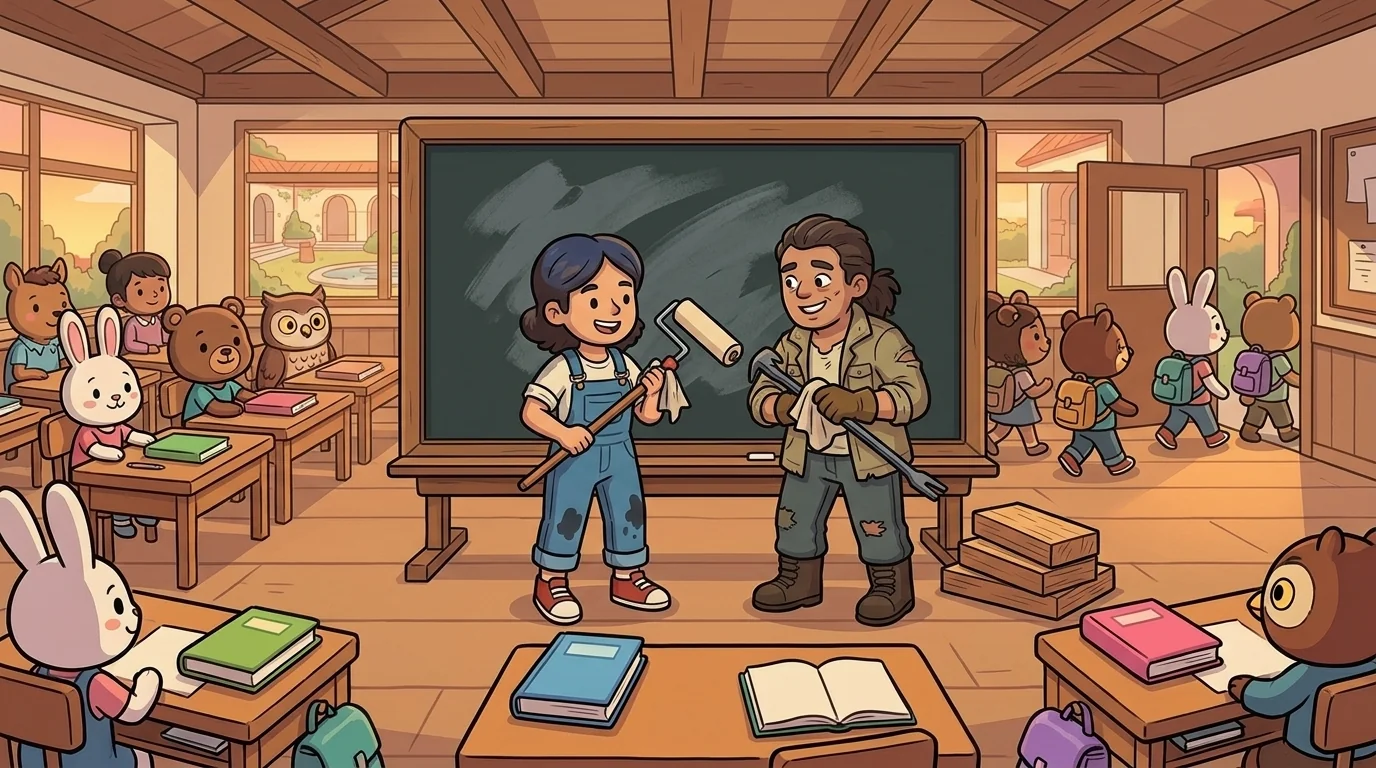
And so the students stopped thinking of distributing and factoring as two frightening, separate chapters, and started thinking of them as one honest road with a signpost at each end. Roll the shared part across every term inside the brackets — that is Spread. Pull the shared part back out to the front — that is Prise. And whichever way you are walking, you can always turn around and walk back to prove you got there fairly.
"Same road," said Spread, wiping the board.
"Two ways," said Prise, hanging up the bar.
There is a deep steadiness in learning that two things you feared separately are secretly one move reversed. It means every distribution carries its own check inside it, and every factoring does too; it means you are never stranded, because the way forward and the way home are the same corridor. Spread spreads. Prise gathers. And the load — six-x-plus-nine, or three-times-the-quantity-two-x-plus-three — is the very same load the whole time, only ever wearing the coat you asked it to wear.
The EquationQuest ensemble
Spread and Prise is part of EquationQuest's distributed-narrative cast. Each character embodies a different curricular primitive; together they teach the full subject.
-

Lever
Maintaining balance — do the same thing to both sides
-

Solo
Isolating the variable — moving everything else away from x
-

Undo
Inverse operations — addition ↔ subtraction, multiplication ↔ division
-

Spread
Distribution — multiplying across parentheses
-

Flipper
The sign-flip in inequalities when multiplying/dividing by a negative
-

Corral
Combining like terms — you can only add or subtract terms of the same kind; gather the like ones together
-

Leaven
Exponents — repeated multiplication; the small raised number counts how many times
-

Marshal
Order of operations — the agreed sequence for working an expression (PEMDAS)
-

Prise
Factoring — find the part two or more terms share and pull it out front
-

Stead
Substitution — put a known value in place of a variable, then simplify