
Arbor
THE GAME TREE / SOLVED GAMES — every position branches: each move opens several replies, each reply opens more, a spreading *tree* of possible futures. Thinking ahead means walking the tree. A game is "solved" when the *whole* tree is known — Connect-4 is a first-player win, checkers is a draw with perfect play. Computers solve games by exploring the tree and assuming both sides play their best (looking ahead + backing the value up).
Loading audio…
Press play to listen along. The line being read lights up as you go.
Show full transcript
Loading transcript…
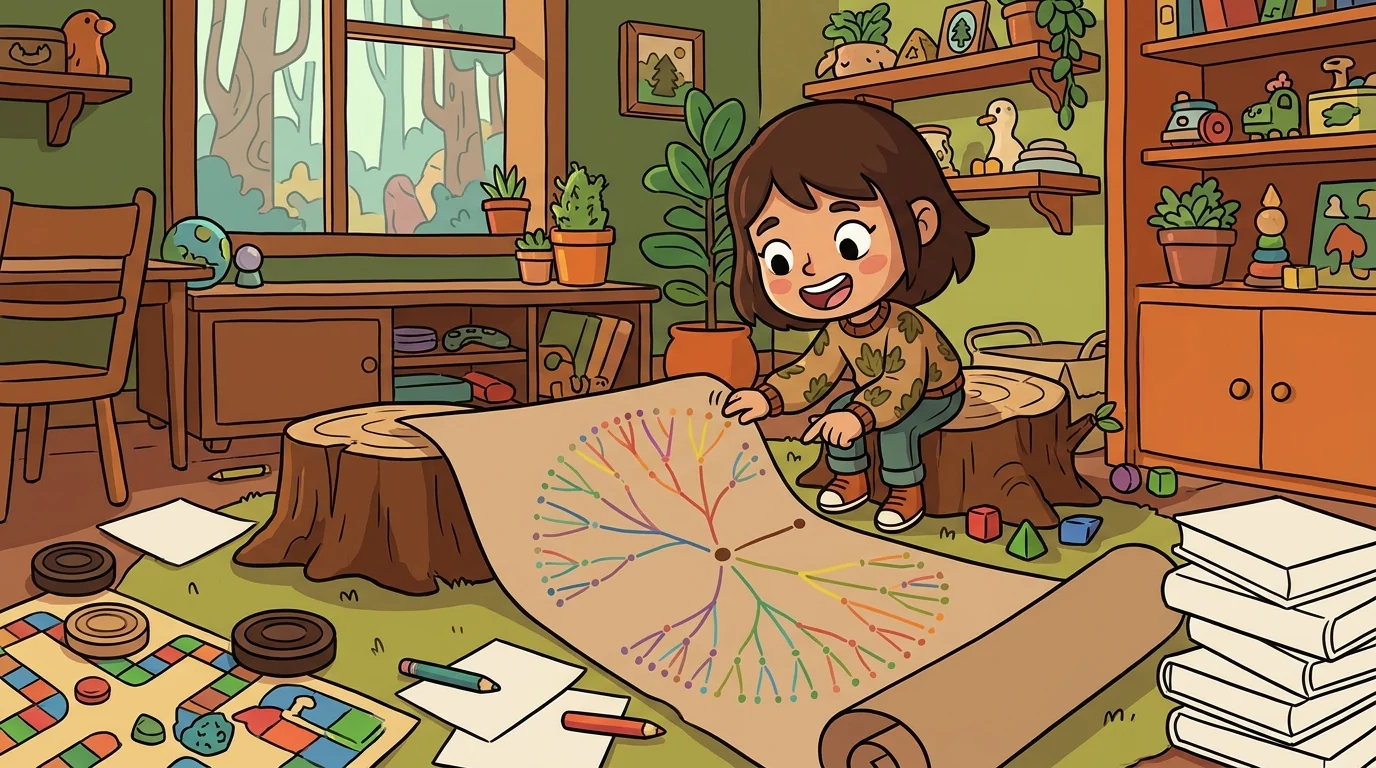
Arbor saw every game as a tree, and she meant it literally. She could not stop sketching them, crowding the margins of her grid paper with slender trunks and bursting crowns. She drew them on paper napkins, wooden tabletops, and the margins of her history homework.
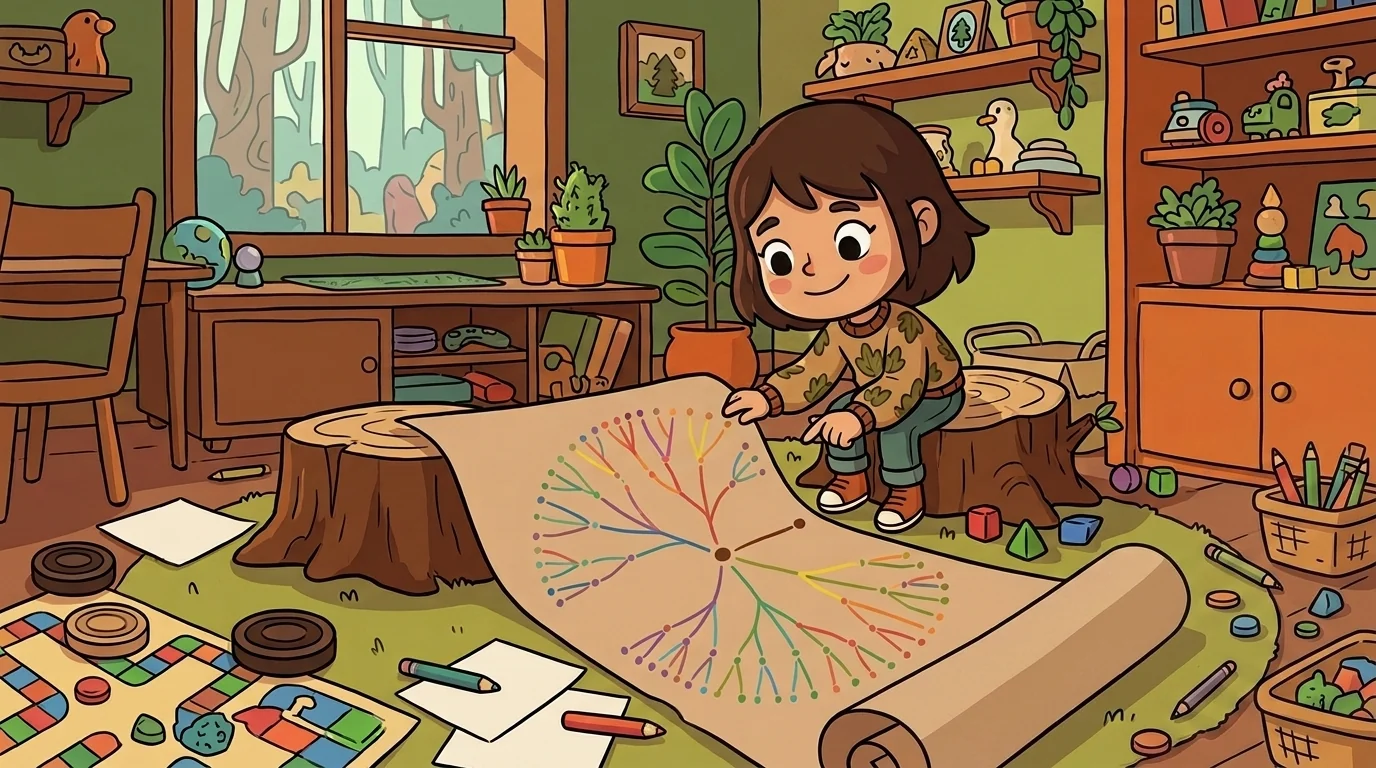
"Start right here," Arbor said, pressing her pencil lead onto a blank sheet of butcher paper. She left a single, dark graphite dot. "This dot is right now, and from here you have four legal moves."
Rowan leaned over her shoulder, spinning a red wooden disc between his knuckles. He was a builder, always focused on the line he was laying down right in front of his nose. "I just drop a chip in column four," he said, tapping the grid. "That builds my line."
"Sure," Arbor said, her pencil already moving. "That is branch one, but look what happens next." Four thin lines shot out from the central dot like spider legs. "You pick this branch. Now it is my turn, and I have five logical replies." She drew five smaller sticks fanning out from the end of his line. "From each of those five, my choice gives you six more," she said. "The game branches out, spreading across the page. Every possible future grows from that first little dot."
She tapped the sprawling drawing with the blunt end of her pencil. This was her game tree.
"When an adult tells you to think ahead, this is what they actually mean," Arbor explained. "You are climbing a few steps up into the branches. And when someone says a game is solved—" Her dark eyes sparkled under the workshop lights. "They mean a machine climbed every single branch, all the way to every leaf. It knows, with absolute certainty, who wins if nobody makes a mistake."
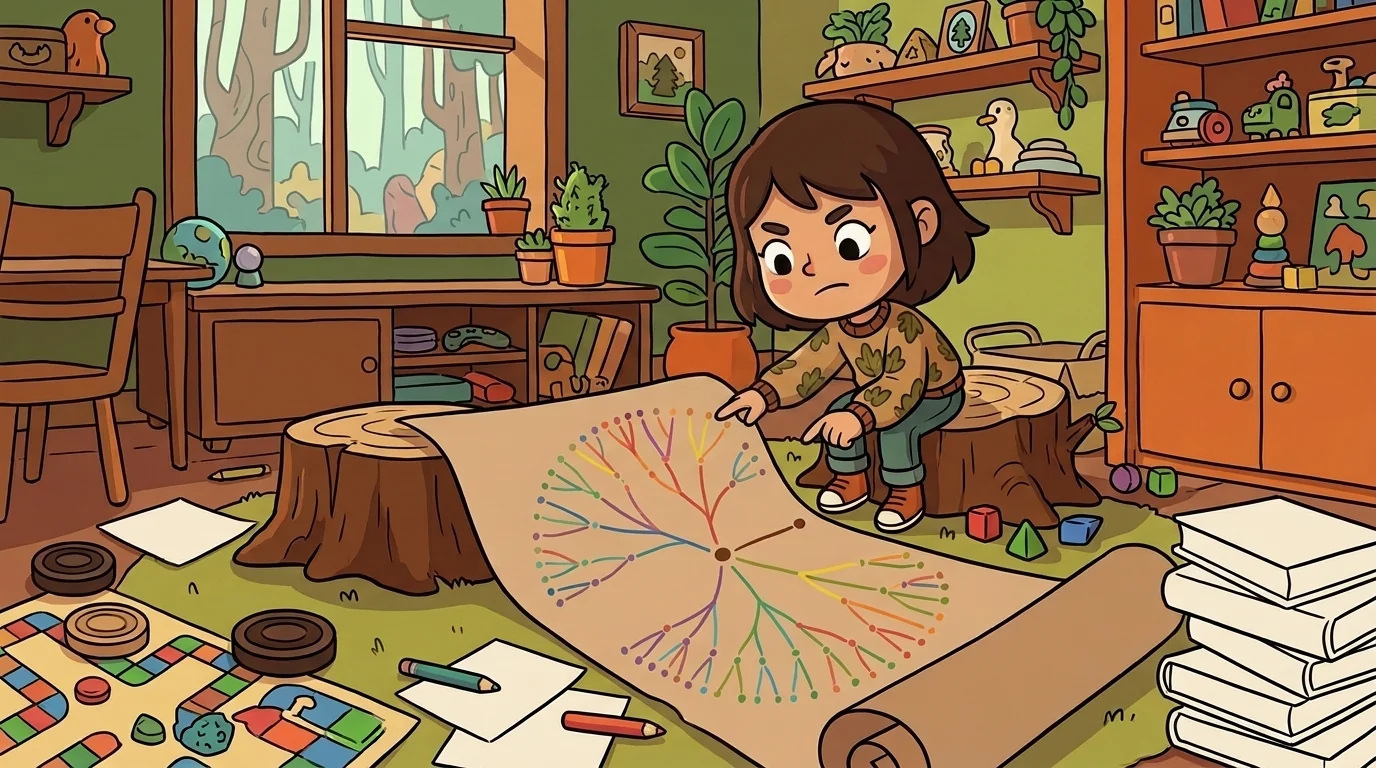
Before Arbor came to the GridForge academy, adults thought her habit was a problem. She was the kid who drove her parents crazy by constantly asking, "But then what?"
She could never take a simple plan at face value. If her mother suggested driving to the beach, Arbor wanted to know what happened if the parking lot was full. If her teacher announced a class project, Arbor asked what would happen if two groups chose the same topic.
For years, people thought she was just an anxious kid. But in fifth grade, Arbor realized her habit was not a flaw at all. It was a superpower without an off switch. She was simply building trees inside her mind. She followed every choice down to its logical conclusion, step by step.
Because of that, real life rarely surprised her. Arbor did not worry about what might happen, because she had already visited most of it. She walked down the branches in her head, spotted the hidden traps, and came back to the present knowing which paths to avoid.
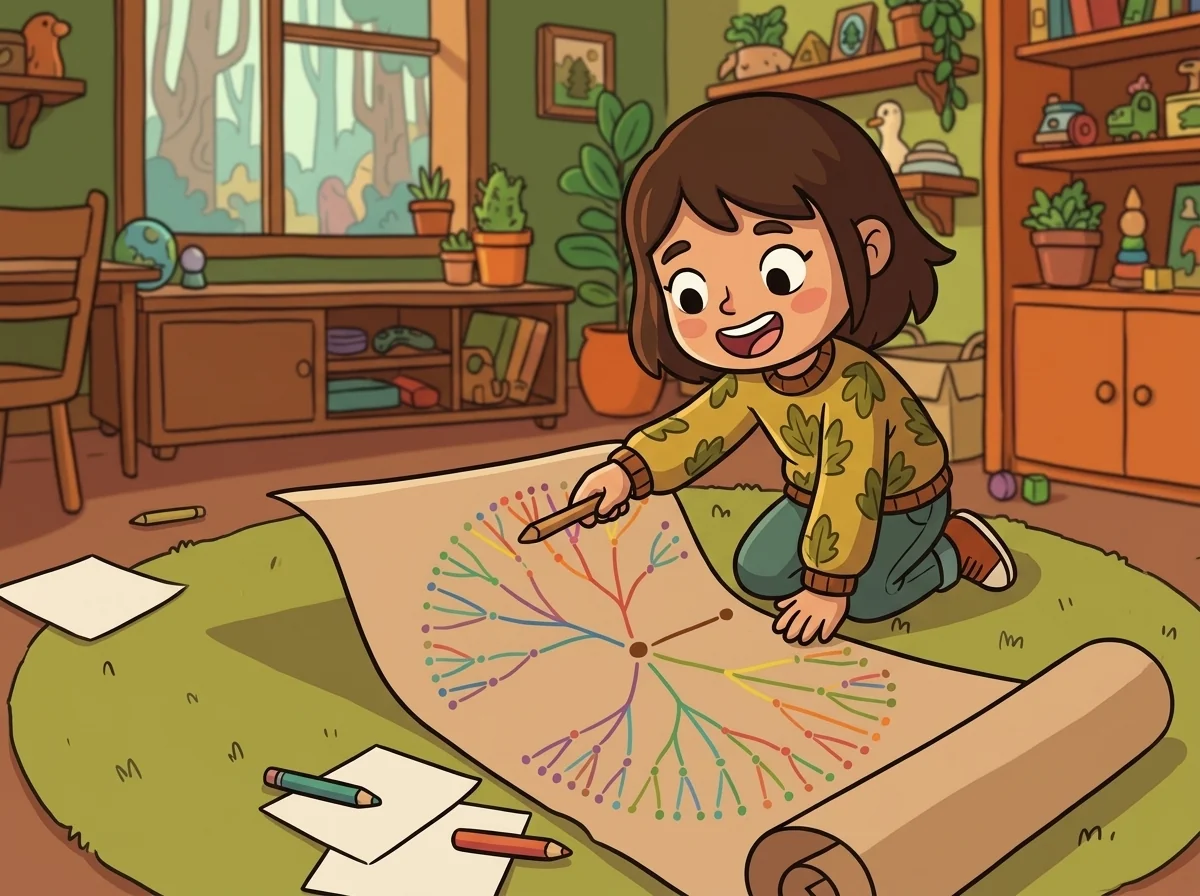
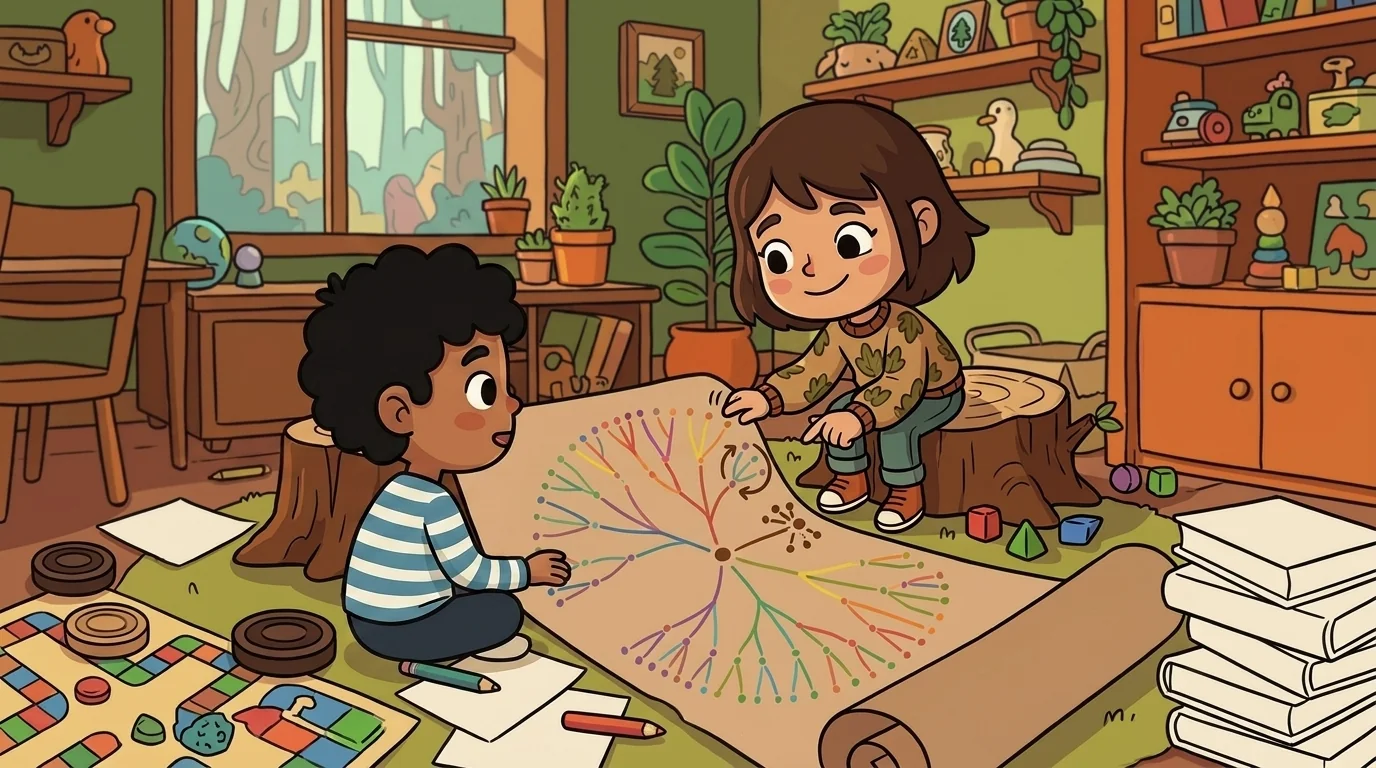
"Every choice you make is a branch," she told Rowan, pointing to her butcher-paper diagram. "Most people only look at the twig they are standing on right now. But the rest of the tree is right there, waiting for you to climb it."
Rowan snorted softly. "Nobody can draw every move in a real game, Arbor, because there are just too many."
"You do not have to climb the whole tree," she replied gently, because nobody can do that anyway. "The tree for chess has more branches than there are atoms in the universe. But if you climb just three or four moves deep, you win. The trick is to imagine your opponent picking their absolute best move at every single fork. Not their laziest move, and certainly not the move you hope they make. Plan against their best, and you stop reacting. You start seeing."
Gridley had invited Arbor to the academy to run the computational-thinking capstone. Gridley was the elder mentor who kept the academy running, and he wanted students to understand how games were cracked open by machines.
On her first morning, Gridley stood beside a tall slate chalkboard in the main hall. He held a piece of white chalk in his liver-spotted hand.
"Arbor," Gridley asked, his deep voice echoing off the stone walls. "Explain to the class why Connect-4 is officially considered a first-player win."
Arbor walked up to the board and picked up her own piece of yellow chalk. She drew a single circle at the bottom, then drew seven branches extending upward.
"In 1988, a computer program climbed the entire Connect-4 tree," Arbor said, turning toward the quiet room. "It visited over four trillion positions."
She turned back to the board and drew smaller forks on each branch.
"It reached every final leaf on every branch, proving that if the first player plays perfectly, the second player cannot stop them," she said. "It does not mean the first player usually wins," Arbor continued. "It means they win always, provided they never pick a weak branch. We know this because the whole tree was explored."
Gridley nodded, his thick gray eyebrows lifted in approval. "And how does the computer know which branch is best at the very beginning?"
"It works backward," Arbor said, tapping the chalk leaves at the top of her yellow tree. "You look at the end of every game. A leaf is either a win, a loss, or a draw, so you give each outcome a clear score. Then you push those scores back down the tree, from the leaves to the trunk."
She drew chalk arrows pointing downward along the branches.
"At every fork, you assume both players choose the best branch for themselves," she explained. "The winner picks the highest score, and the loser picks the lowest. That score flows all the way down to the starting dot. That is how value backs up the tree."
Gridley set his white chalk down with a crisp click. "You did not just explain a game move," he said softly. "You showed us how a game gets known all the way down."
Later that afternoon, Arbor sat at a wooden table in her workshop. A twelve-year-old boy named Leo sat across from her, staring at a grid game with his jaw clenched tight. He sat completely frozen.
"I cannot plan ahead," Leo muttered, dropping his forehead onto his knuckles. "There are too many possibilities, and my brain just freezes."
Arbor smiled warmly and slid a fresh pad of paper across the table. "Your brain freezes because you are trying to climb the entire forest at once," she said. "Nobody can do that, and even supercomputers cannot climb every single branch of a complex game."
She drew a neat, simple trunk on the paper.
"The secret is called pruning," Arbor said. "You prune away the silly branches instead of staring at every single move on the board. You only look at two or three of your best options."
Leo looked up from his hands, blinking. "Just two?"
"Just two or three," Arbor said, tapping her pencil on the paper. "At each fork, ask yourself what your strongest choices are. Follow only those lines. And at your opponent's turn, assume they are going to play their absolute smartest reply."
She pointed to the opponent's fork on the page.
"Never assume they will make a silly mistake," Arbor warned. "If you plan for them to play like a genius, you will never be ambushed."
Leo picked up his pencil and looked at the wooden board in front of him. Instead of panicking over fifty possible moves, he selected his two favorite options. He traced two branches down three steps, assuming Arbor would make her sharpest counters.
The tight knot in his shoulders relaxed. Within two minutes, he reached down and made a decisive, confident move.
"See?" Arbor grinned. "A tree with a few good branches is completely climbable. Seeing three moves clearly will always beat seeing fifty moves in a blur."
Leo tapped his game piece against the table, suddenly thoughtful.
"If computers can solve games completely," he asked, "what is the point of us playing? If the tree is already known, isn't every game already decided?"
Arbor laughed, because that was her favorite question in the world.
"Very few games are actually solved," Arbor said, "and only small ones with simple trees. Games like chess and Go have trees so massive that all the computers on Earth could not reach every leaf before the sun burns out."
She leaned across the table, her tone turning gentle.
"Besides, even if Connect-4 is solved by a computer, you have not solved it," Arbor said. "The goal of playing is not to act like a machine. The goal is to climb the tree yourself, a little higher each day."
She patted the paper sketch between them.
"The machine explored the tree to state a fact," Arbor said. "You explore the tree so you can become someone who sees further into the dark. Those are two very different prizes, and yours is by far the better one."
That night, back in his dorm room, Leo faced a tricky choice about trading his favorite collector cards. He sat at his desk, pulled out a scrap of notebook paper, and sketched a tiny tree. He drew his two best offers, imagined his friend's smartest replies, and stepped one branch deeper.
Then he made his choice, moving with the quiet calm of someone who had already visited the future.
The GridForge ensemble
Arbor is part of GridForge's distributed-narrative cast. Each character embodies a different curricular primitive; together they teach the full subject.
-
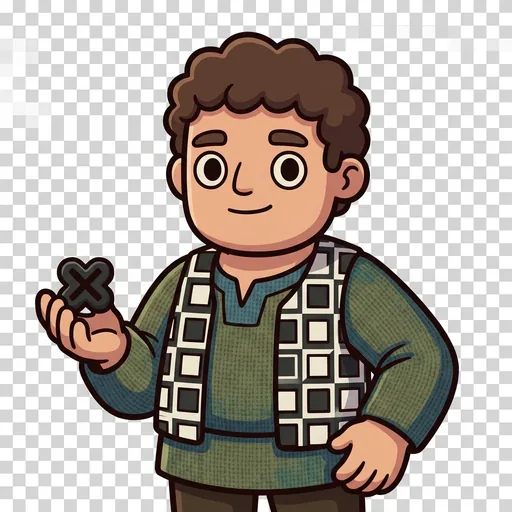
Ballast
Stability and corners: the unflippable pieces in Reversi
-
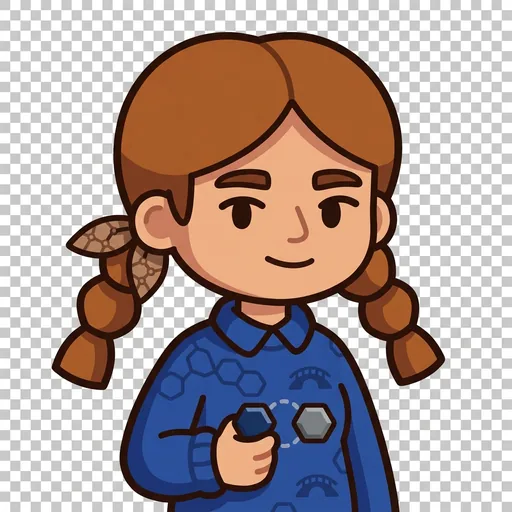
Causeway
The bridge: a virtual connection that cannot be cut in Hex
-
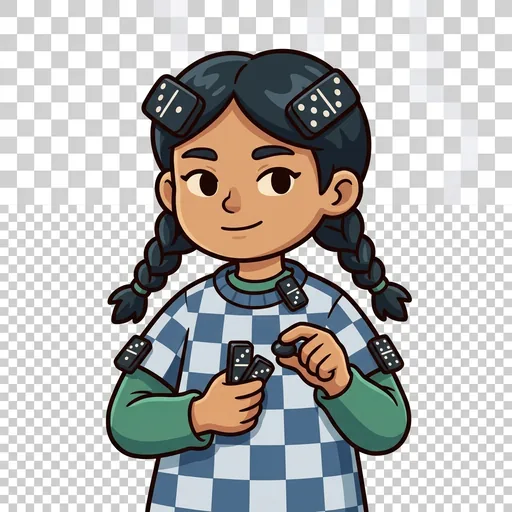
Domino
Forcing sequences: chaining threats to keep the initiative in Gomoku
-

Flank
Territory flip: capturing a line of pieces in Reversi
-

Mobi
Mobility: keeping more moves available than your opponent
-
Oddwin
Parity: who-moves-last, the key to Dots-and-Boxes
-
Rowan
Connection: extending a chain of your pieces toward a win
-

Twain
The fork: one move that makes two threats at once