How are you feeling?
Start here
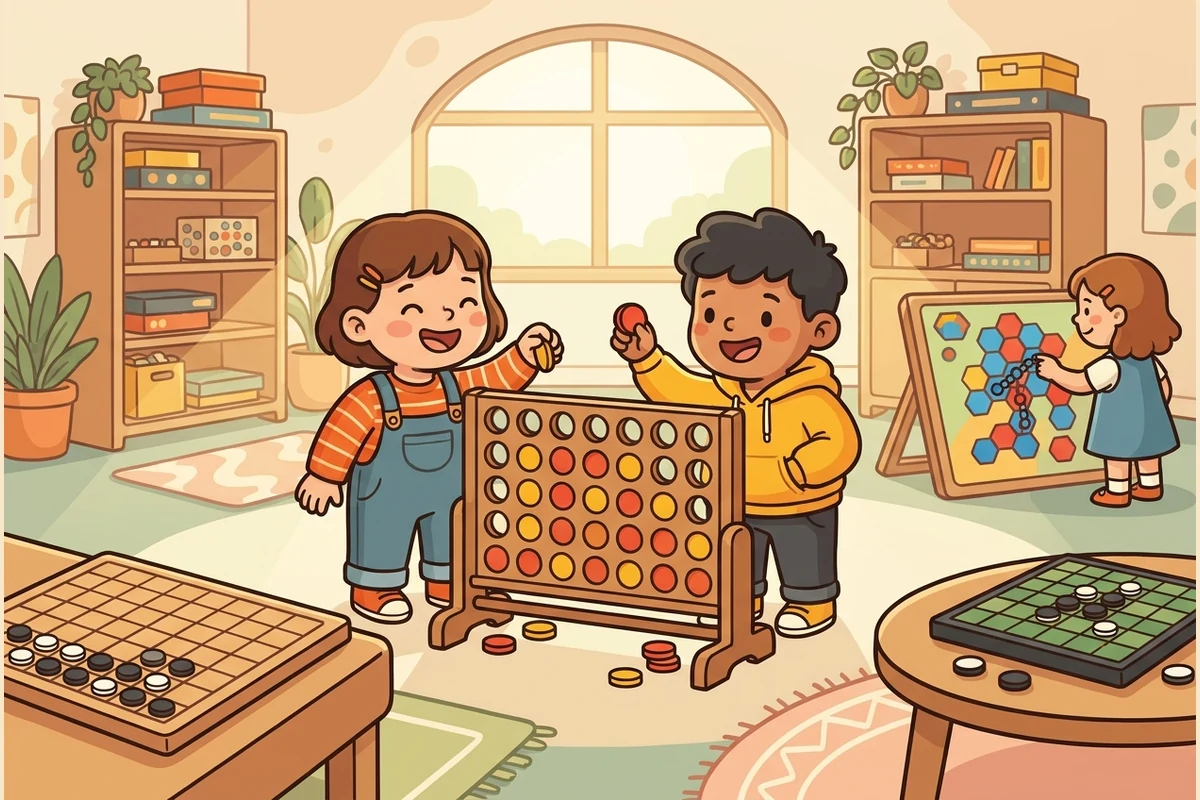
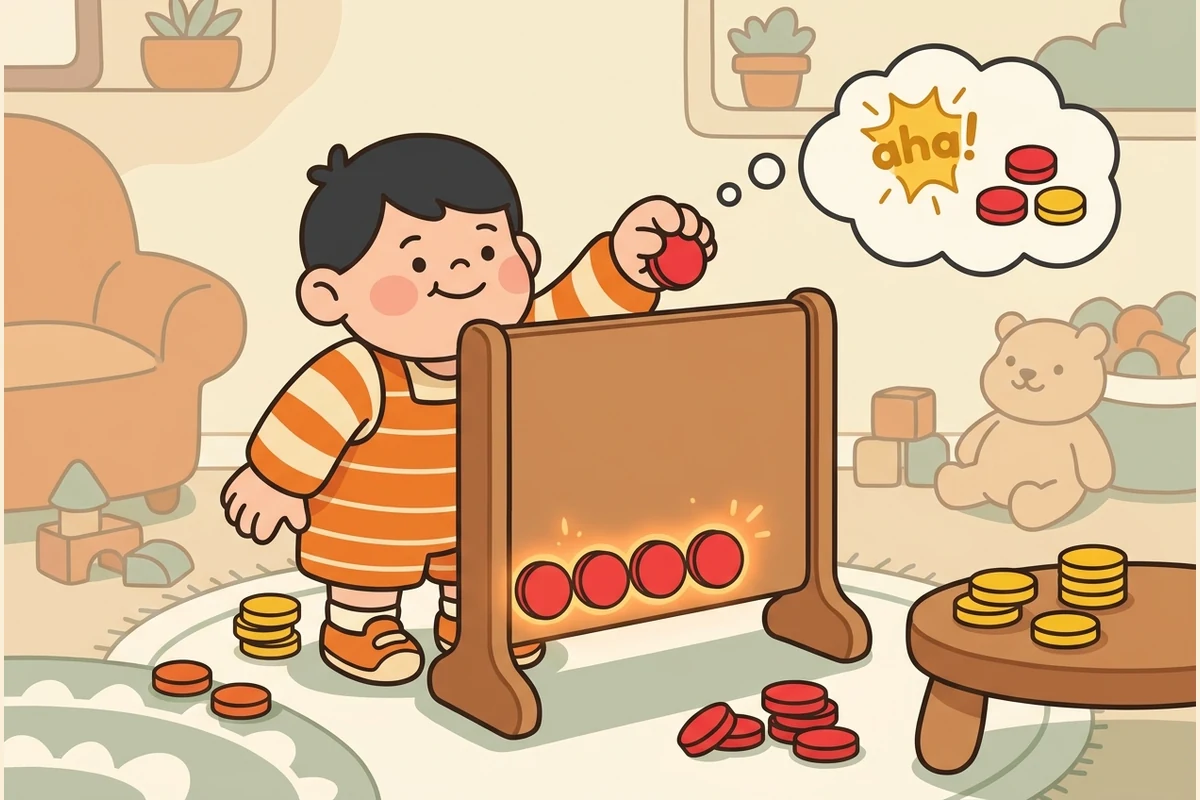 Connect 4 Drop pieces to make four in a row — build a double threat the opponent cannot block both ways.
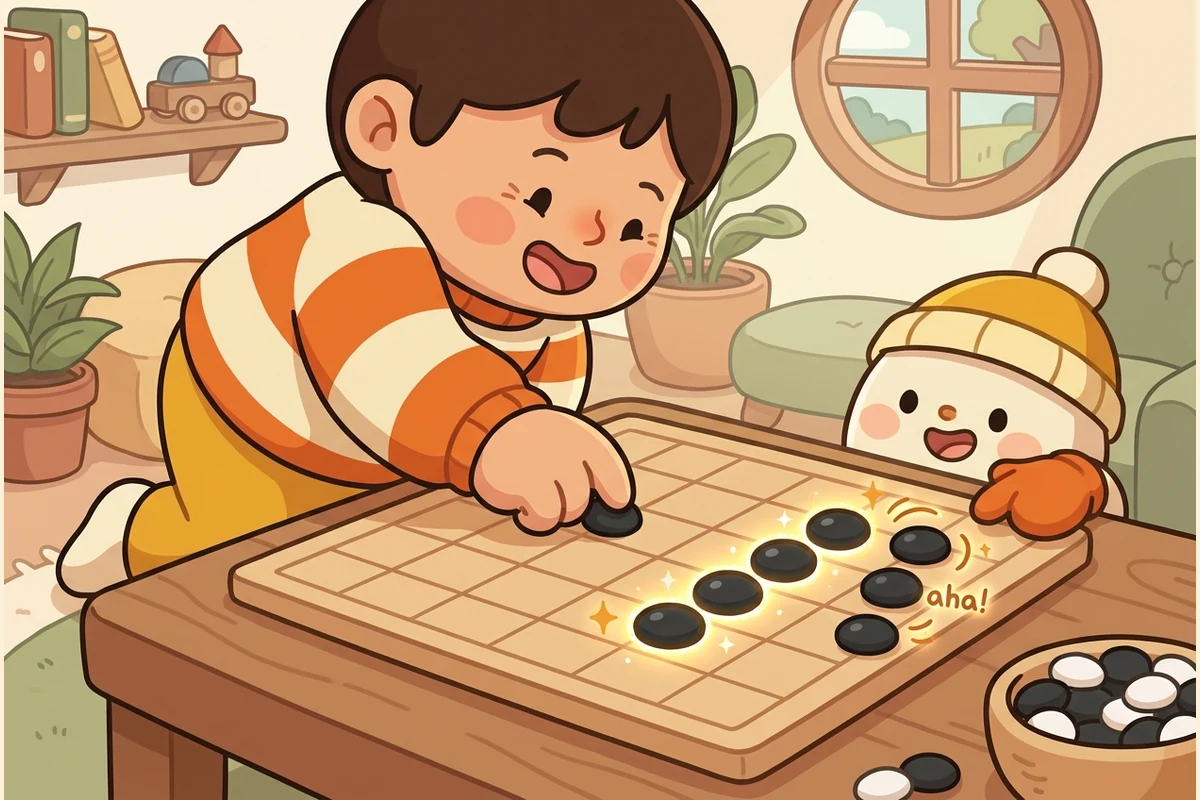 Gomoku Five in a row on the open grid — make two threats at once and the game is won.
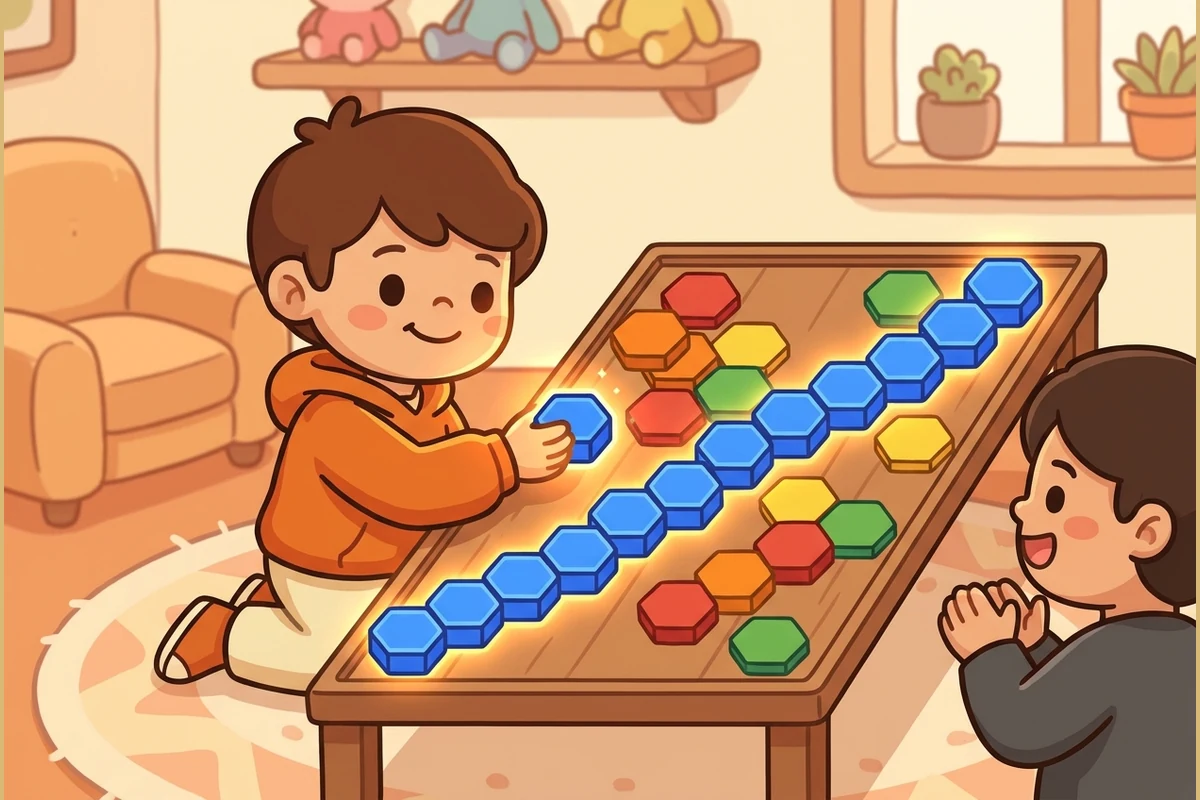 Hex Connect your two sides across the board — one unbroken chain, and there is always a winner.
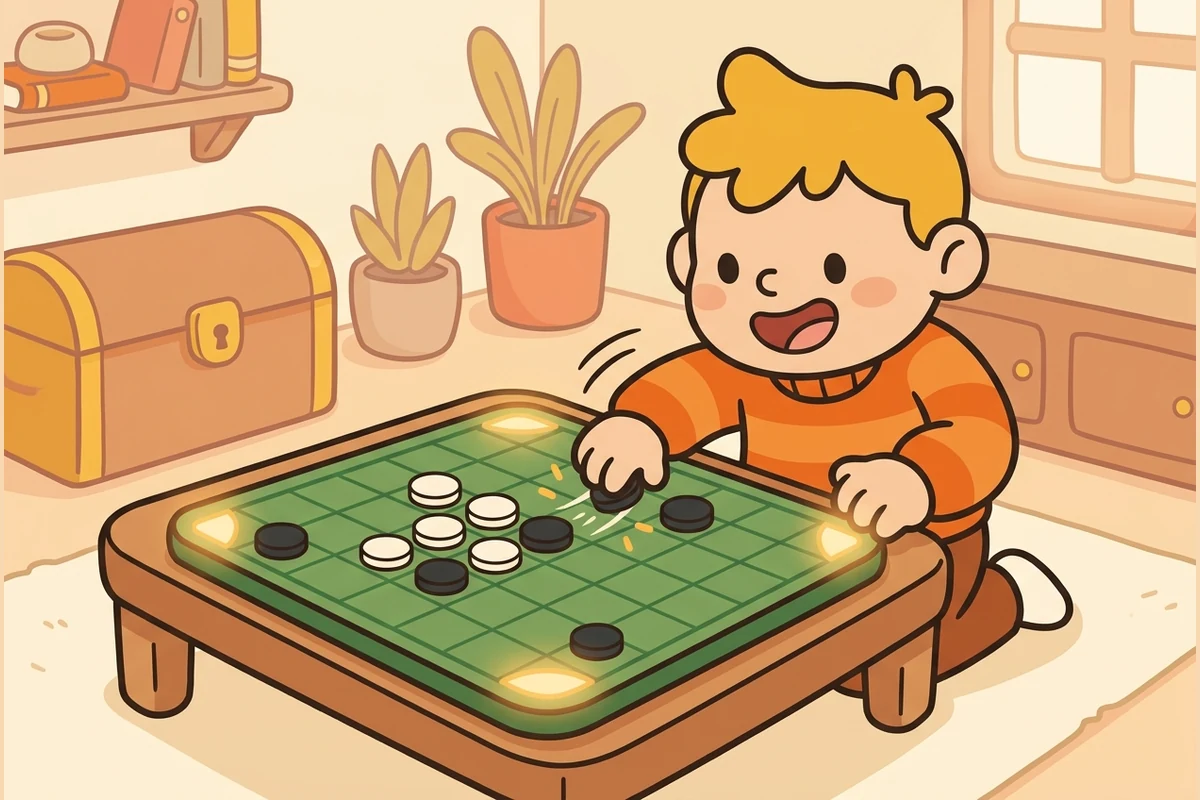 Reversi Flip the line between your pieces — hold the corners and control the whole board.
All activities
Play a game
Sharpen your play
Practice & together
Concept Kits — 16 kits of connection-game strategy
More ways to play
Where this game comes from
Reversi
Reversi was invented in London in the 1880s. Two Englishmen, Lewis Waterman and John Mollett, each claimed they had invented it first.
One thing to hold: Each disc is dark on one side and light on the other, so it can change sides.
Why it matters: Nothing is ever safe until the end: one move can flip a whole line.
Hex
Hex was invented twice. Piet Hein, a Danish poet, invented it in 1942. John Nash, a young American mathematician, invented it again in 1948.
One thing to hold: The board is a diamond of hexagons, and the game has no draws.
Why it matters: Nash proved the first player can always win if they play perfectly, but nobody knows the winning moves on a big board.
Dots and boxes
Dots and boxes was first written down by Édouard Lucas, a French mathematician, in 1889. He called it la pipopipette.
One thing to hold: All you need is a pencil and a page of dots.
Why it matters: It looks like luck, but it is a game of counting: near the end, the player who can count the long chains can choose who gets them.
What we don’t know: Children may well have played it before Lucas wrote it down; nobody knows.
Gomoku
Gomoku, “five in a row”, is played in Japan on a Go board with Go stones. Its tournament form was given the name renju in 1899; the extra rules that slow Black down were added over the years after.
One thing to hold: The same board and the same stones as Go, used for a different game.
Why it matters: Black, who moves first, has a big advantage, so players kept adding rules to make the game fair. Fairness is part of the design.
What we don’t know: How old five-in-a-row games are, and where they began, is not known.
😄 Brain break

Meet the cast — the characters who teach this
-
 Arbor The game tree: every position branches into the moves that follow
-
 Ballast Stability and corners: the unflippable pieces in Reversi
-
 Causeway The bridge: a virtual connection that cannot be cut in Hex
-
 Domino Forcing sequences: chaining threats to keep the initiative in Gomoku
-
 Flank Territory flip: capturing a line of pieces in Reversi
-
 Mobi Mobility: keeping more moves available than your opponent
-
 Oddwin Parity: who-moves-last, the key to Dots-and-Boxes
-
 Rowan Connection: extending a chain of your pieces toward a win
-
 Twain The fork: one move that makes two threats at once
Ensemble stories — the cast together
What next? Pick a door
- More like this CrownTales Where is the forced-capture shot? DropTale Where would you drop the captured piece? StrategyForge What is the winning move here?
- A bit harder PipQuest Who is ahead in the pip race? DealTales What is your partner telling you? TableForge Is your board game fair?
- Something different VoxelForge Is that shape turned, or flipped? MapForge Which side of the mountain gets the rain? InkQuest Which headline do the numbers support?
📚 Books for GridForge
Browse all books →Built from these ludemes
A ludeme is a building block of a game's rules. This one combines: