
Causeway
THE BRIDGE / VIRTUAL CONNECTION (Hex) — in Hex you win by connecting your two sides, and the strongest connections aren't direct — they're *bridges.* Two of your stones with a specific gap between them are "virtually connected": there are *two* ways to link them, so if the opponent blocks one, you take the other. The opponent can never cut a bridge. Real strength isn't a solid wall; it's a network of links that *can't be severed.*
Loading audio…
Press play to listen along. The line being read lights up as you go.
Show full transcript
Loading transcript…
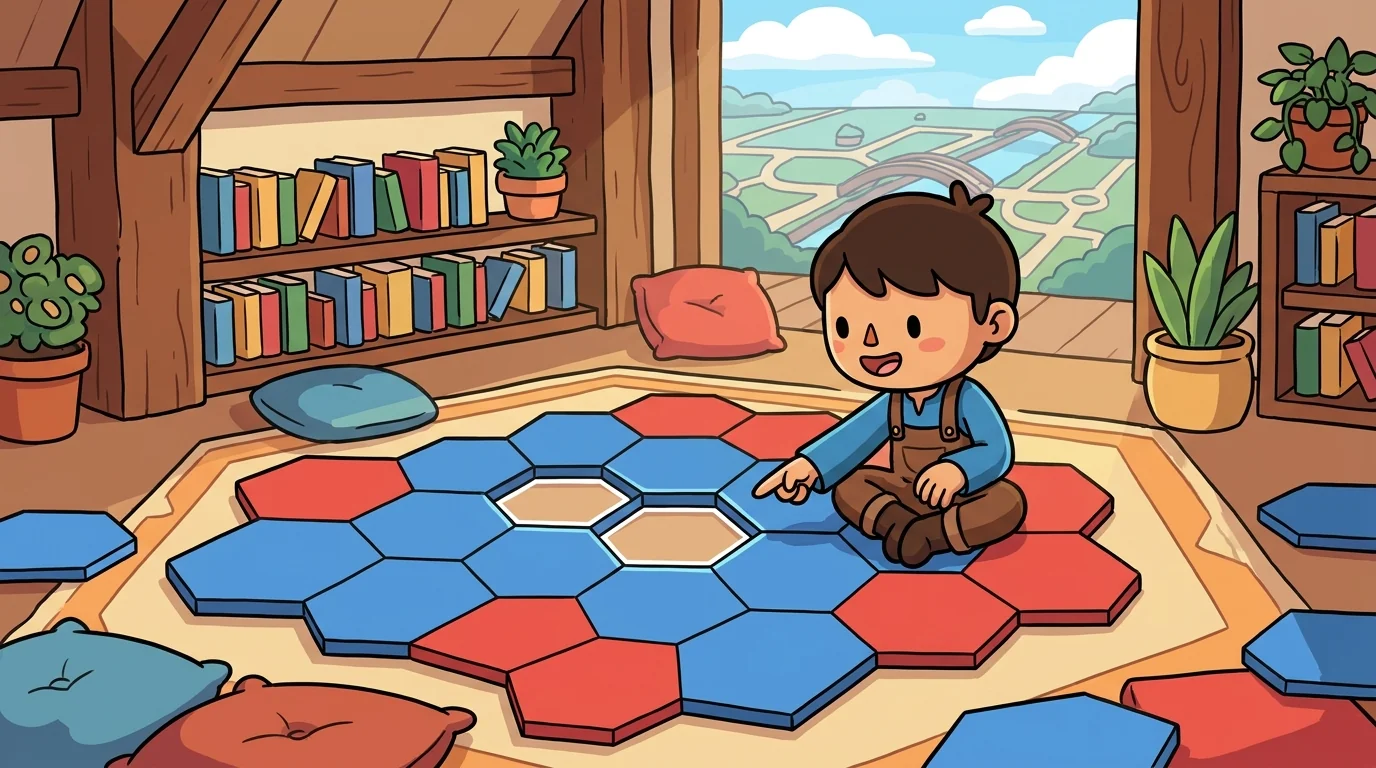
Causeway built bridges, but not the kind made of timber, stone, or heavy steel. She built the kind that nobody could knock down.
On any quiet afternoon at the GridForge academy, you could find her seated at a polished oak table, staring at an eleven-by-eleven hexagonal board. The game was Hex. The goal sounded simple enough: connect your two opposite sides of the board with a continuous chain of colored stones before your opponent did the same. Most beginner players tried to build the obvious way. They laid down one stone touching the next, forming a tight, solid line.
Causeway almost never built solid lines. Instead, she placed two polished black stones with a distinct gap between them—an open, diamond-shaped space consisting of two empty hexagonal cells.
New opponents always grinned when they saw that gap. They thought she had made a careless mistake. "You left a hole in your line," they would say, snapping a white stone straight into the center of her open space. "Now I cut your path in half."
Causeway never panicked. She would calmly tap the remaining empty cell in the diamond.
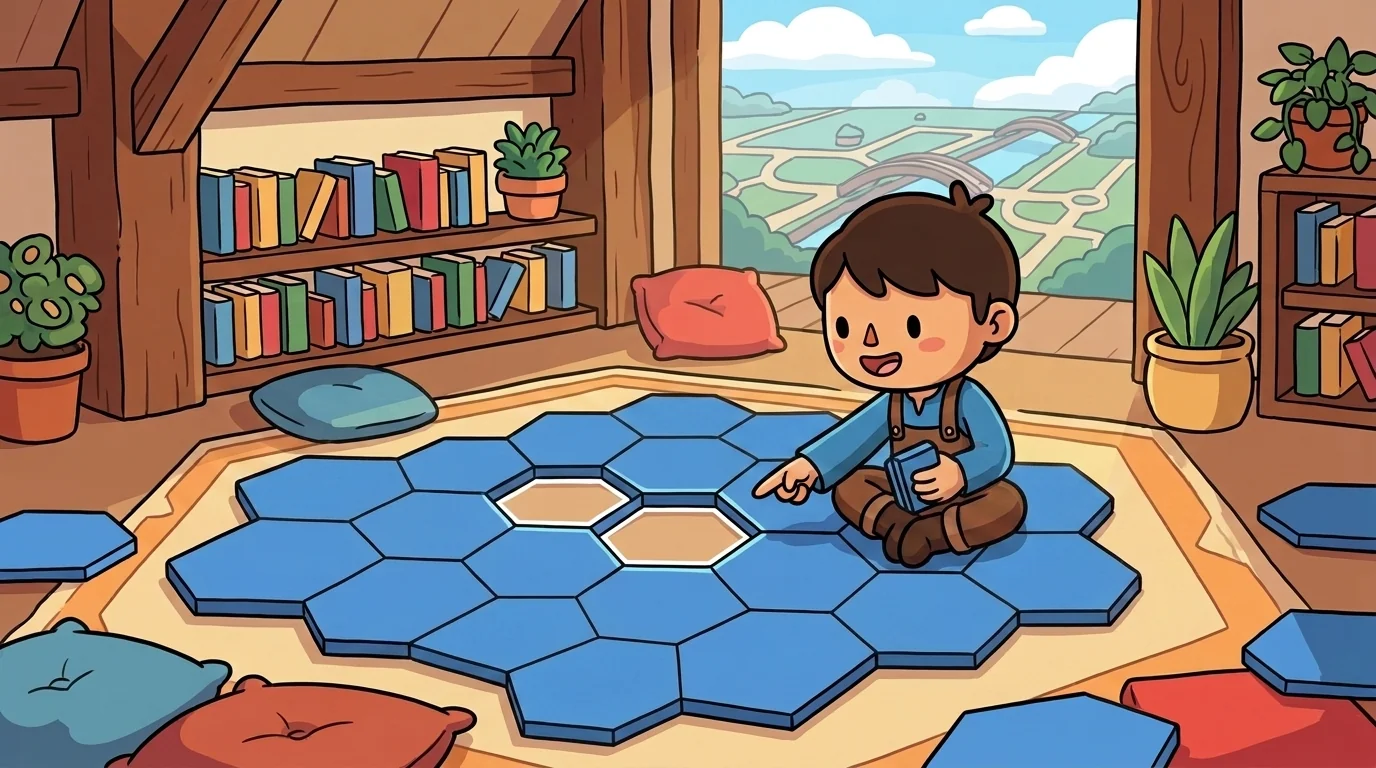
"Look closely at the board," Causeway said, setting her second stone into place. "There were two empty cells that could link my first two pieces. When you claimed one, you left the second one wide open for me. If you had picked the other cell first, I would have taken this one. You can only block one space at a time."
She leaned back in her chair with a faint, knowing smile.
"That gap is not a hole," she said. "It is a virtual connection, a bridge that cannot be severed because it always has two ways across."
Growing up, Causeway had been a chronic worrier. She was the kind of child who lay awake at night listening to the wind rattling the windowpanes, imagining every possible disaster. For years, those runaway thoughts simply kept her exhausted and afraid.
Then, around her eleventh birthday, she discovered a practical trick. If her mind insisted on inventing worst-case scenarios, she would force it to invent a second solution for every single one. If the footbridge across the creek washed away in a rainstorm, she mapped out a second crossing near the old mill. If her lantern battery died during a storm, she kept a brass candle stub in her coat pocket.
She realized she did not need to be fearless. Being doubly prepared was much better than being fearless anyway. A person relying on a single path walked nervously, terrified of making a mistake. A person with two independent paths walked with calm confidence across ground that would terrify anyone else.
"A single solid line looks strong because it is big and obvious," Causeway explained to the younger students in her workshop. "However, a solid line has a dozen places where an opponent can cut it. A bridge looks weak because it contains a gap. Yet that bridge cannot be cut, because every single link brings a built-in spare."
She pointed to the wooden board between them.
"Fragile strength relies on one single path," she said. "True strength hides inside the gap where the choice lives."
Gridley, the master host of the academy, had invited Causeway to teach. He wanted his students to see that direct force rarely won complex battles. On her first morning in the great hall, Gridley set up a massive Hex board. He asked the assembled class to connect two opposite borders as securely as possible.
Rowan, a tall boy who favored direct action, immediately lined up seven black stones in a thick, straight wall. His construction looked heavy, imposing, and completely solid.
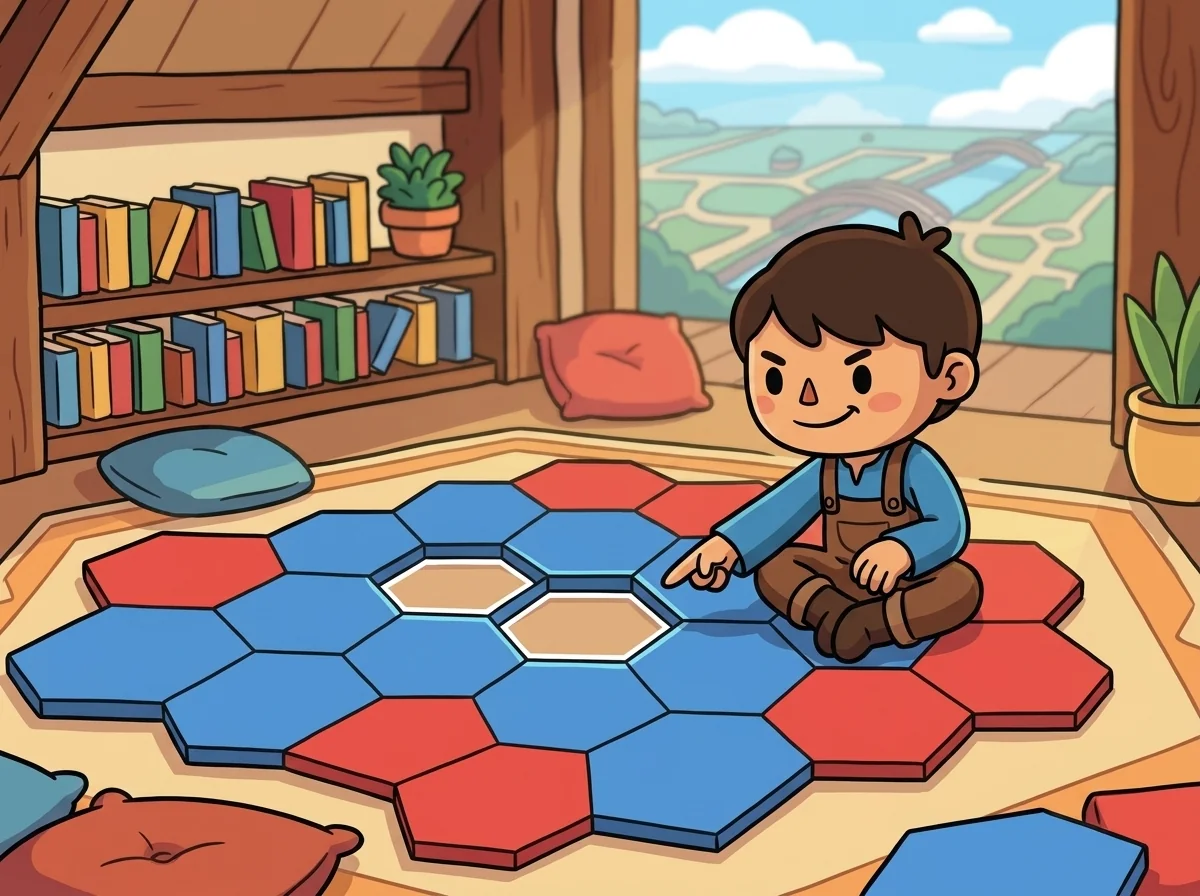
Causeway worked differently. She scattered five stones across the board in a sparse, diagonal skeleton, leaving diamond gaps between every pair. She used half as many pieces as Rowan, yet her pattern stretched from corner to corner.
"Rowan built a wall," Causeway said softly. "I built a web. Try to sever my connection."
Rowan frowned and pressed a white stone into one of her gaps. Causeway instantly answered by dropping a black stone into the twin cell beside it, completing that link forever. Rowan tried three more cuts at different spots along her network. Each time, Causeway played into the open twin cell without breaking her stride. Her sparse web held firm, while Rowan's heavy wall had three separate places where a single enemy stone could snap his line completely.
Gridley watched the demonstration from the back of the hall, nodding slowly. "You did not just connect your stones, Causeway," he said. "You connected them in a way that makes disconnection impossible."
Later that week, a younger student named Micah sat grumbling at her workshop table. His fingers were smudged with white chalk, and his board was a mess of blocked routes.
"I keep building solid chains," Micah complained, throwing his hands up in frustration. "Every single time, my opponent finds one weak spot and chops my line in two."
"Of course they do," Causeway replied warmly. "A solid line is made entirely of single points. You are spending double the effort to build something that breaks the instant someone touches it."
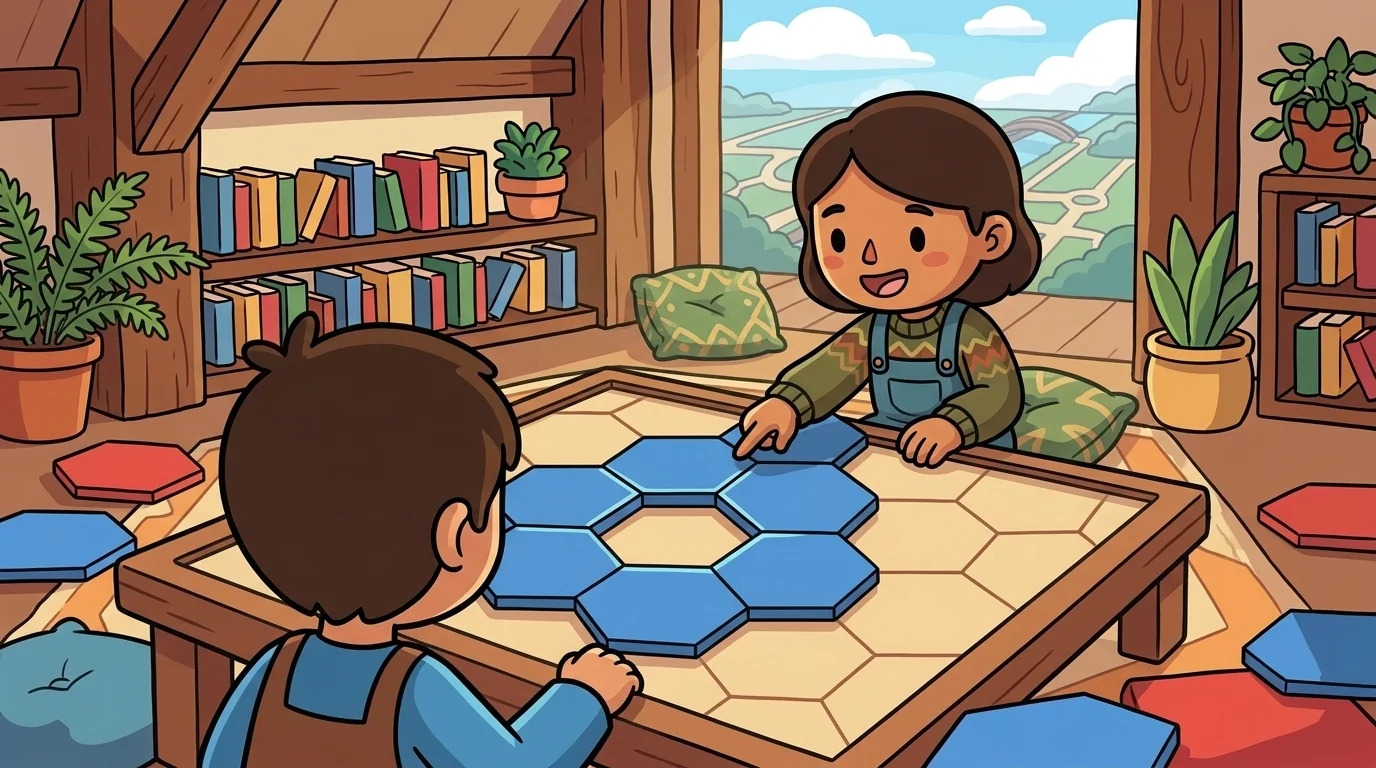
She cleared his board and placed two black stones down, leaving the familiar diamond gap between them.
"Leave the space open on purpose," she instructed him. "These two stones are separated by two key cells. That means this single link has a backup plan built directly into its shape. Your opponent needs one target to break a path, but you have given him two choices. He can never take both away at once."
Micah stared at the diamond pattern, tracing the empty cells with his fingernail. "So the empty space is actually the strongest part of the build?"
"The empty space holds your options," Causeway said. "And choice is the one thing an opponent cannot steal from you."
Micah took a deep breath and tried the technique in his next practice match. Instead of piling up heavy walls, he placed sparse bridges across the grid. His network looked light and full of holes, yet his opponent hunted frantically for a way to break through and found none. Micah reached the far border in half the usual number of moves.
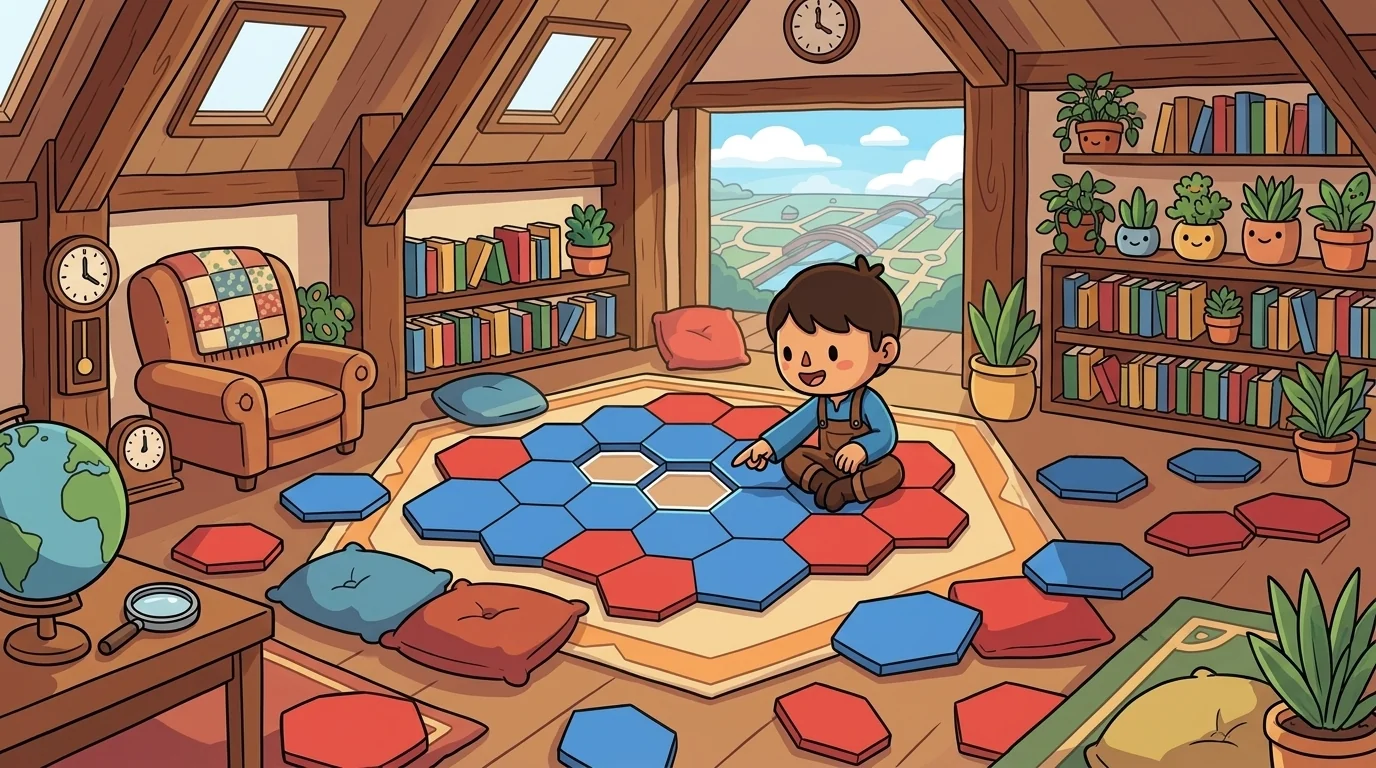
During the final review that evening, Micah held up his hand with a sudden frown.
"Wait," he said, staring down at his board. "What happens if two different bridges share the exact same empty cell? If my opponent takes that one shared space, does it break both bridges at the same time?"
Causeway smiled brightly. That was the real test, the subtle trap that separated ordinary players from masters.
"Yes," Causeway said, tapping the board with her fingernail. "That is a single point of failure wearing a disguise. If two of your bridges rely on the exact same empty cell for their safety, then those backups are not really independent. An opponent takes that single cell, and both of your bridges suddenly lose their safety nets."
She rearranged the stones on the table to show him the difference.
"When you build a network," she continued, "you must check that your backup cells do not secretly overlap. Real safety requires paths that can fail separately without dragging each other down."
Micah nodded slowly, watching how the independent gaps protected every angle of the board. That night, when he packed his satchel, he planned his long walk home in the dark. He picked two different routes and made sure they did not cross the same old wooden bridge.
The GridForge ensemble
Causeway is part of GridForge's distributed-narrative cast. Each character embodies a different curricular primitive; together they teach the full subject.
-
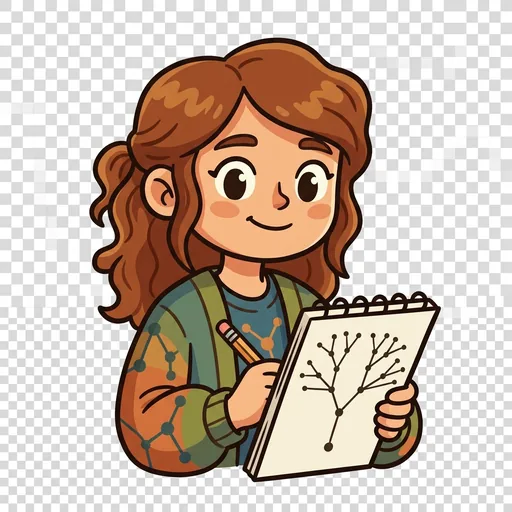
Arbor
The game tree: every position branches into the moves that follow
-
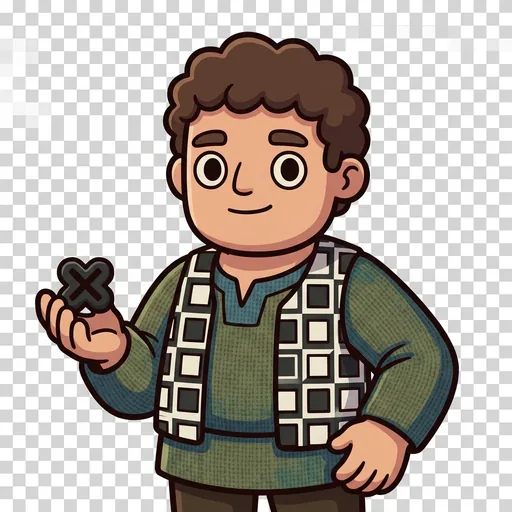
Ballast
Stability and corners: the unflippable pieces in Reversi
-
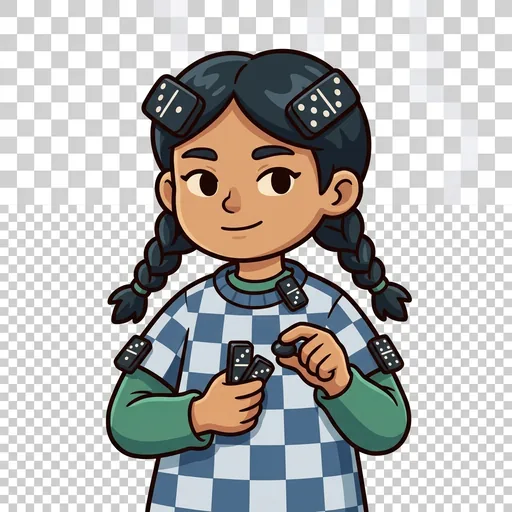
Domino
Forcing sequences: chaining threats to keep the initiative in Gomoku
-
Flank
Territory flip: capturing a line of pieces in Reversi
-

Mobi
Mobility: keeping more moves available than your opponent
-
Oddwin
Parity: who-moves-last, the key to Dots-and-Boxes
-
Rowan
Connection: extending a chain of your pieces toward a win
-

Twain
The fork: one move that makes two threats at once