Domino
FORCING SEQUENCES / INITIATIVE (Gomoku)
Loading audio…
Press play to listen along. The line being read lights up as you go.
Show full transcript
Loading transcript…
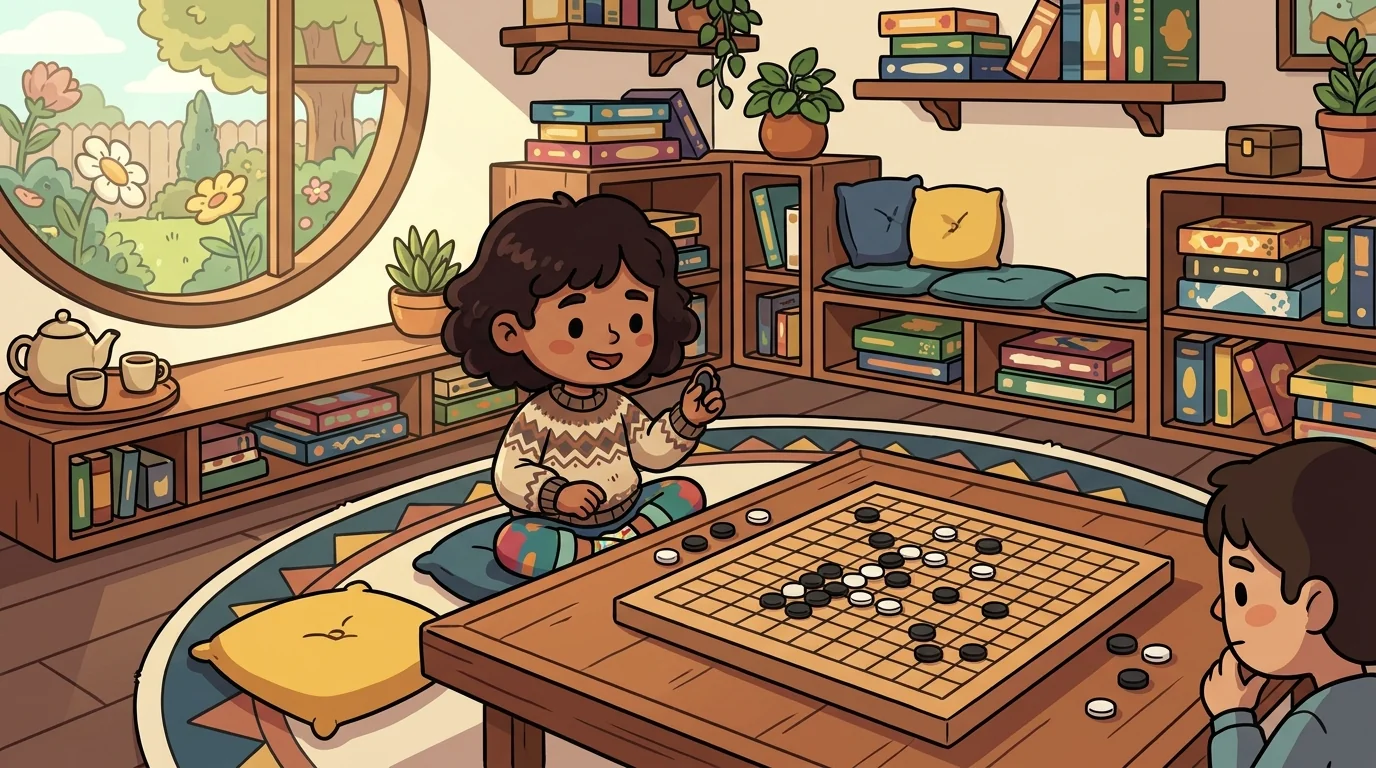
Domino plays like a person tipping over a row of dominoes: one small push, and everything after it has to happen.
She plays Gomoku — five-in-a-row — and she rarely makes a move that just "looks good." She makes moves that force a reply. She'll build an "open three" — three of her stones in a line with room to extend both ways — and her opponent groans, because now they have to block it. If they don't, she makes four, then five, and wins. "See their face?" she says quietly, as the opponent reluctantly places a blocking stone exactly where she knew they'd have to. "They didn't want to play there. I made them. And while they were busy being forced, I got to place my next stone wherever I liked — building the next threat they'll have to answer." She sets it down. "That's the whole secret. I'm not playing my moves and their moves. I'm playing my moves, and choosing theirs."
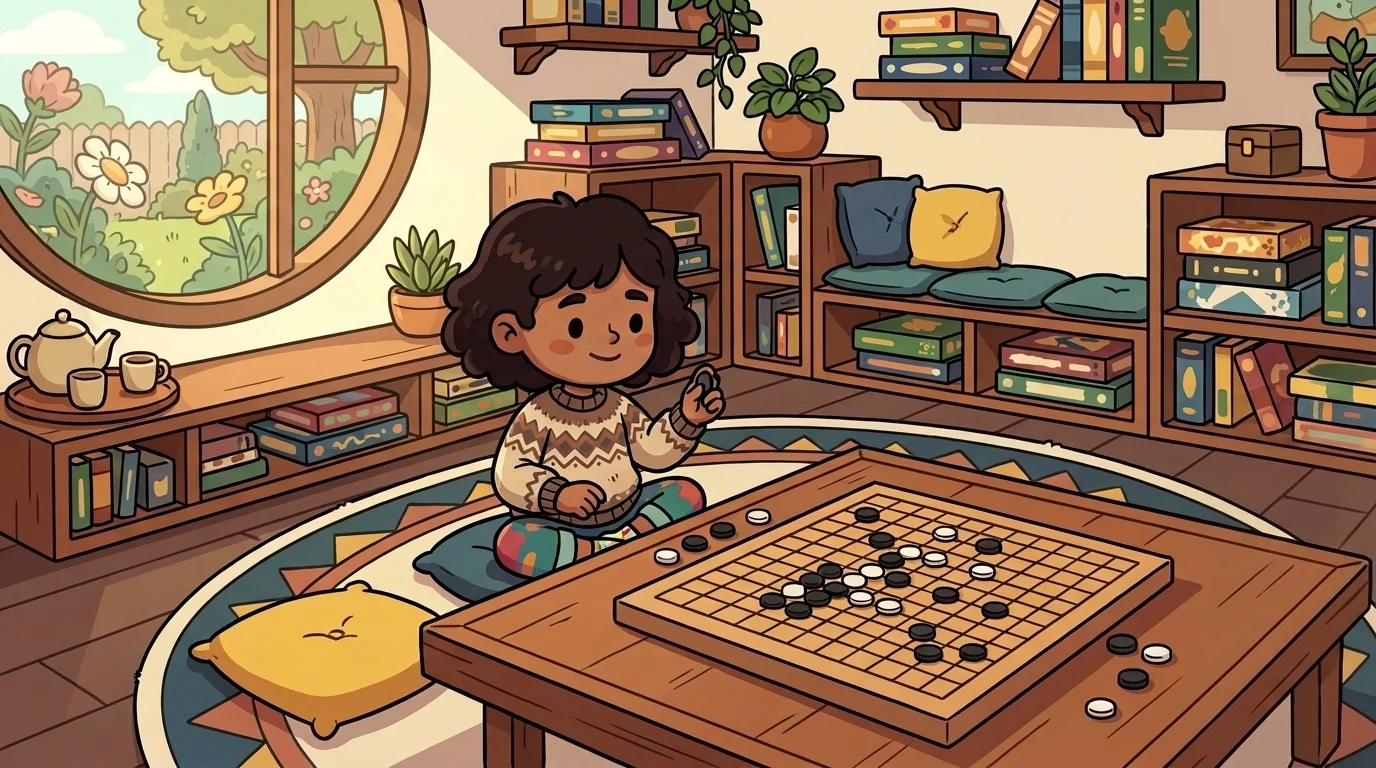
Domino was the youngest in a chaotic house where she rarely got to decide anything — always reacting to what bigger people did. She hated the feeling of never having the initiative, of always being the one who responded. So when she found games, she became obsessed with the opposite feeling: being the one who sets the terms, who makes the other person react. She discovered that you don't get the initiative by being aggressive or loud. You get it by making threats the other person cannot afford to ignore — and then never letting go, one forcing move after another, so they never get a turn that's truly theirs.
"A threat they can ignore is worthless," she says. "You make a scary-looking move, they just... don't respond, and play their own plan, and now you've wasted a turn. But a threat they must answer — an open three, a four — that's tempo. Every forced block they make is a turn they didn't get to attack you. String enough of those together and they spend the whole game with their hands tied, blocking, blocking, blocking, while you quietly build the one threat that finally can't be blocked."
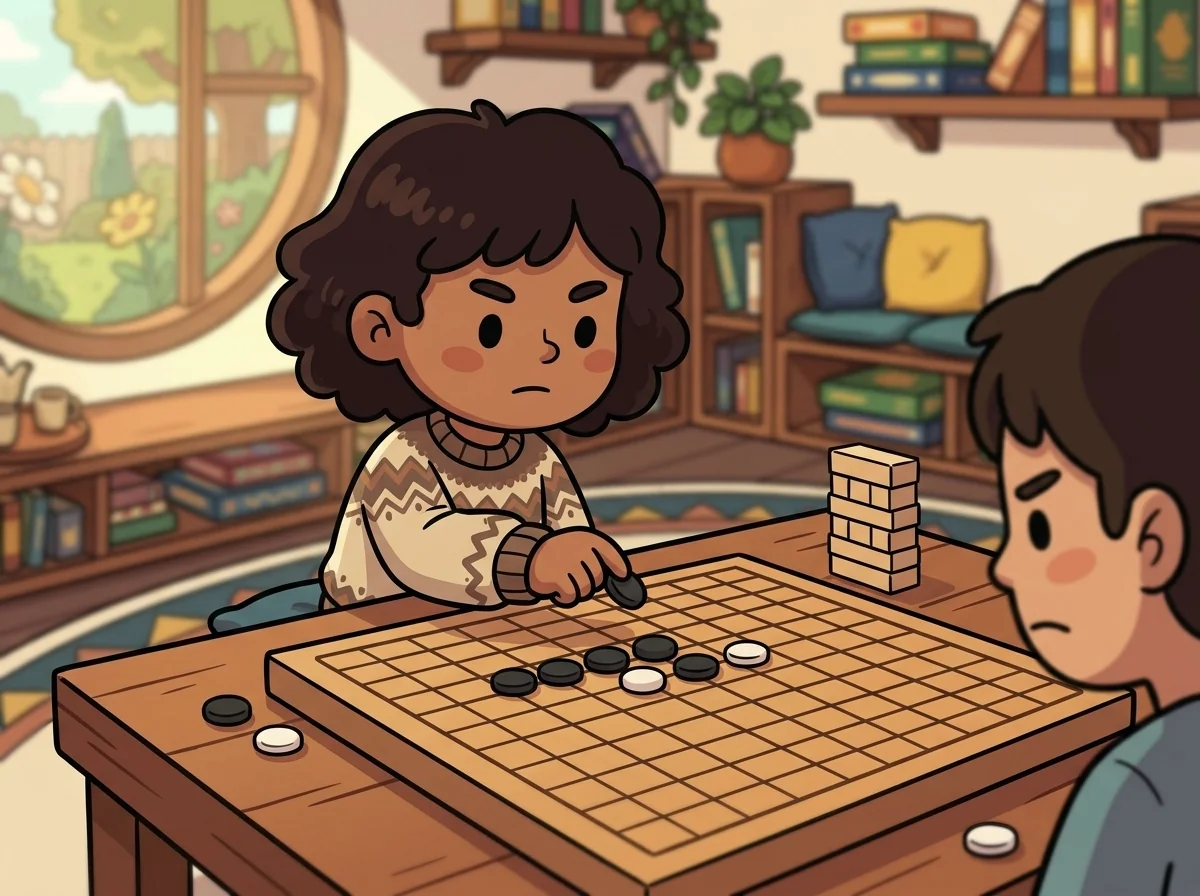
She came to the GridForge academy because Gridley, the family host, wanted someone to teach the difference between a good move and a forcing move. On her first day Gridley set up a Gomoku board and asked her to "make the strongest move." Domino didn't make the move that built the biggest cluster. She made a modest open three. "That cluster over there is bigger," Gridley observed. "It's bigger and optional," Domino said. "My opponent can ignore it. This one —" she tapped her open three — "they have to block, or I win in two moves. So this small forcing move is worth more than that big optional one, because this one lets me keep the move after it." She played it, forced the block, and immediately built a second threat off her forced-safe position. Gridley, who wanted students to value initiative over size, said quietly, "You didn't make the biggest threat. You made the one that let you keep making threats."
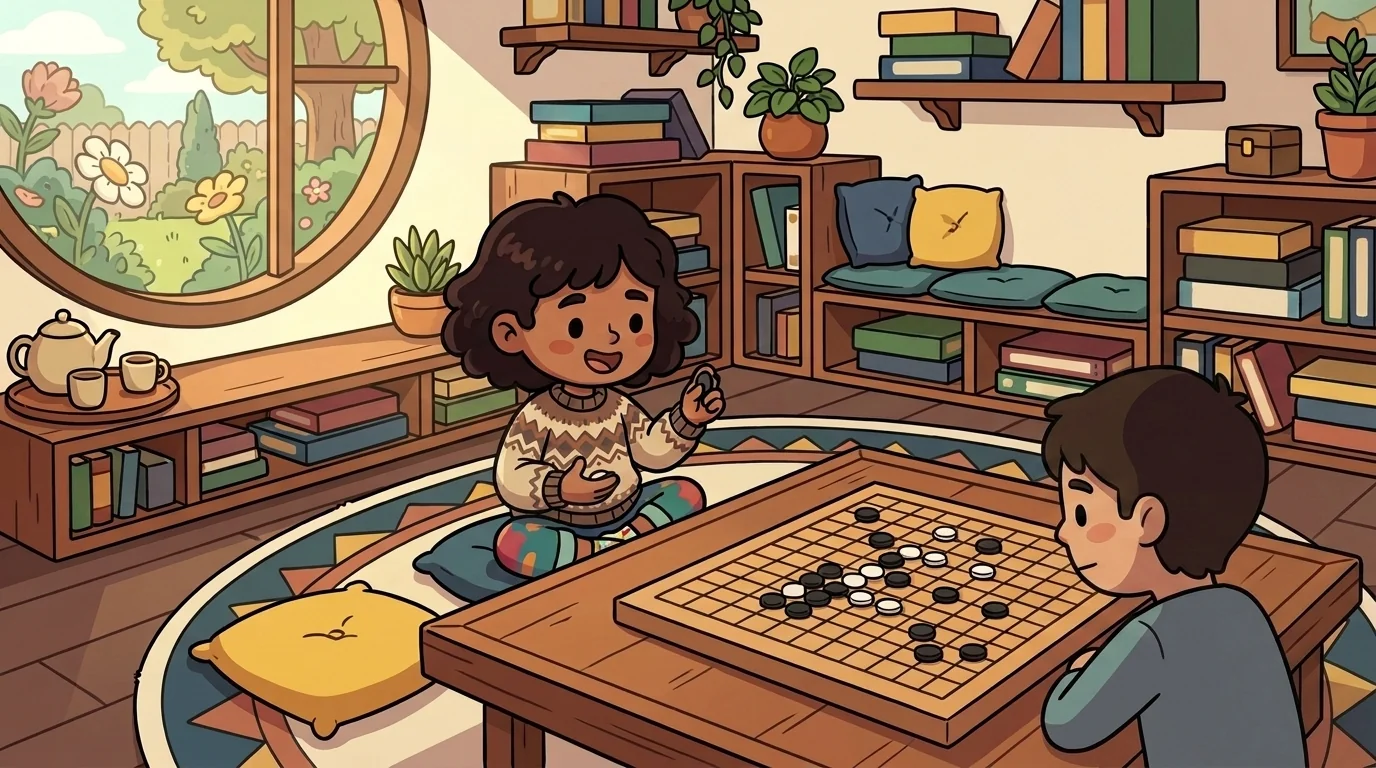
In her workshop she teaches students to seize and hold the initiative. A boy came in frustrated: "I attack, they defend, I attack, they defend, and somehow they win." Domino nodded. "Because your attacks are ignorable," she said. "You're making moves that look threatening but don't force anything, so your opponent blocks when they feel like it and attacks when they don't — and their attacks force you. You've got it backwards: they have the initiative, not you." She set up the board. "The fix is: only attack with moves they must answer. An open three. A four. Each one forces a block. And here's the magic — while they're forced to block, look for a move that both blocks-forces AND builds toward your win. Chain those, and they never get a free turn." She showed a sequence — force, force, force — where the opponent blocked four times in a row and never once got to build their own line. "See? They didn't lose because your last move was brilliant. They lost because they never got a turn that was theirs."
The boy practiced making only forcing threats, and discovered that keeping the opponent reacting felt completely different from trading blows — like holding a rope taut instead of yanking it.
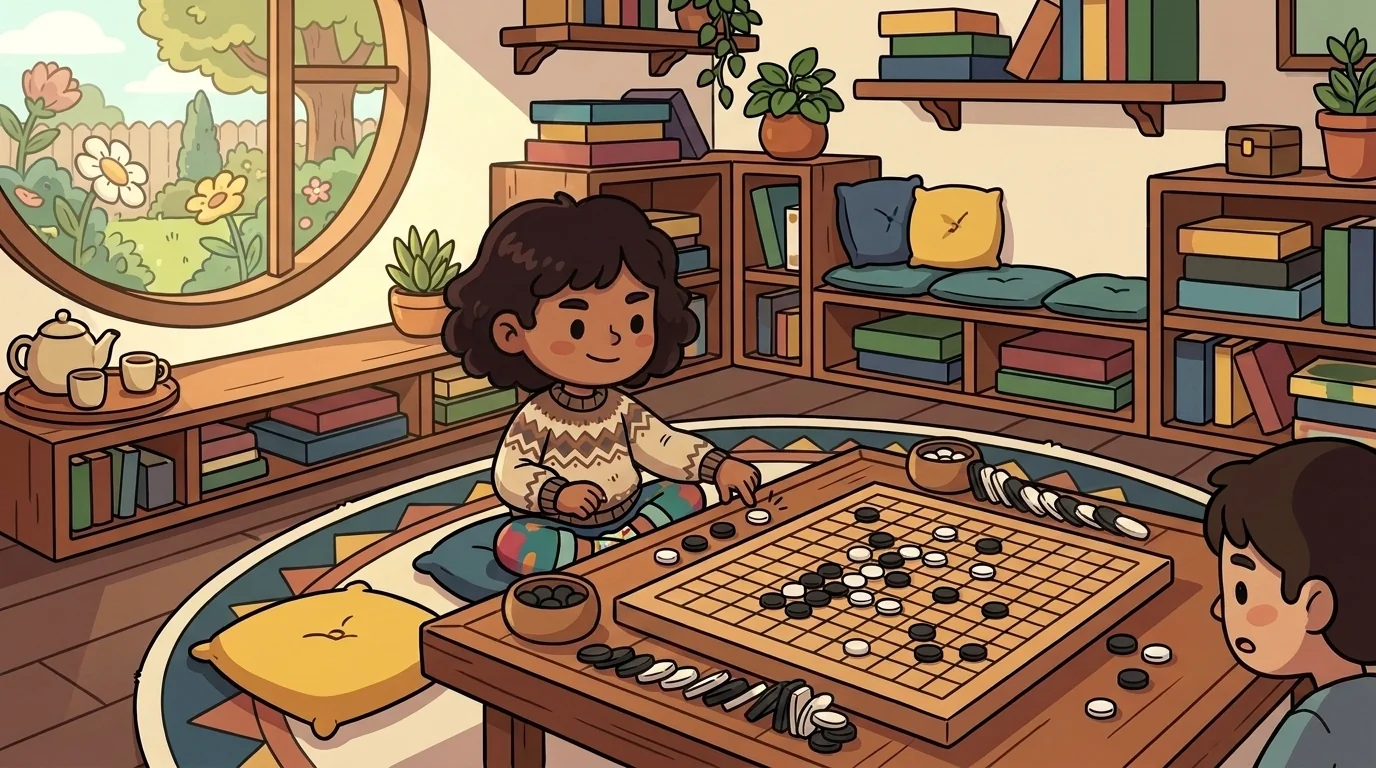
Later the boy asked the question. "But I'll run out of forcing moves eventually, right? What happens when I can't find another threat they have to answer?"
Domino nodded seriously. "That's the real art — and the real danger," she said. "A forcing sequence is only worth it if it arrives somewhere. If you just force, force, force and then run dry with nothing to show, you've wasted all that tempo and now it's their turn with a fresh board." She tapped the table. "So you don't force randomly. Every forcing move has to build — each one should leave a stone that contributes to a bigger threat down the line, so that when the chain ends, it ends on a threat they can't block: two threats at once — a double — where blocking one loses to the other." She smiled. "That's the whole plan: use the moves they must answer to quietly set up the one they can't. A single forcing move is a nudge. A forcing sequence that lands on a double threat is the whole row of dominoes going down at once." She leaned back. "The initiative isn't for its own sake. It's for steering them to the exact spot where their next block comes one move too late."
The boy went home and, that night, thought about how much better it felt to keep the initiative than to keep reacting, and started asking, in more than just games, "is this a move they have to answer — or one they can ignore?"
Hear it as an audio drama
A short play starring Domino, from GridForge. Different voices, same idea. Listen any time after you read.
Loading audio…
Read the drama script
- Narrator: From Spark and Anvil and Gridforge — this is Domino, in chapter 1 of the Gridforge cast.
- Narrator: This drama uses an AI-generated voice. Voiced via Gemini 2.5.
- Narrator: Domino plays Gomoku — five-in-a-row — and Domino has one goal above all: never let the other player attack.
- Domino: The secret word is initiative. When it's my threats they're forced to answer, they can only react. They never get to build anything of their own. I keep them blocking, blocking, blocking — until my threats stack up into one they can't stop.
- Narrator: The engine of it is a move called the open three.
- Domino: Three in a row with open space on both ends. If they don't block it, I make four, then five, and win. So they MUST block. And while they're forced to block THIS, I'm already placing my next threat somewhere else. Each forcing move buys me a free move.
- Narrator: Domino used to play scattered — a threat here, a random stone there, giving the opponent time to attack back.
- Domino: Every time I paused to play something quiet, they'd start their OWN open three, and suddenly I was the one blocking. I'd handed them the initiative without realizing. One idle move and the whole game flips.
- Narrator: So Domino learned to chain threats — each forcing move flowing into the next, never letting go.
- Domino: Threat, they block. New threat, they block. And I arrange it so my threats keep pointing at the same key square — until finally I make a double threat they can't answer, and it's done. They were never allowed to breathe.
- Narrator: A boy kept making one threat, then wandering off.
- Domino: Don't drift. You made an open three — good — but your next move has to make ANOTHER threat while they're stuck blocking. Keep the pressure unbroken. The moment you play something quiet, they attack.
- Narrator: The boy chained his threats, and his opponent never got a single free move.
- Domino: Force them to react and never stop. Keep the initiative — and the game is a story you're telling and they're only reading.
- Narrator: You've been listening to a Spark and Anvil chapter, written by the Spark and Anvil writing team for ages 9 to 14.
- Narrator: Apps stay free forever.
- Narrator: Curriculum aligned to Common Core and Next Generation Science Standards.
- Narrator: Released under Creative Commons BY-NC-SA 4.0 for educational reuse. Visit Spark and Anvil for the full transcript.
The GridForge ensemble
Domino is one of the friends in GridForge. Each friend shows you one idea by how they act; meet them all and you have the whole subject.
-
Arbor
The game tree: every position branches into the moves that follow
-
Ballast
Stability and corners: the unflippable pieces in Reversi
-
Causeway
The bridge: a virtual connection that cannot be cut in Hex
-
Flank
Territory flip: capturing a line of pieces in Reversi
-
Mobi
Mobility: keeping more moves available than your opponent
-

Oddwin
Parity: who-moves-last, the key to Dots-and-Boxes
-
Rowan
Connection: extending a chain of your pieces toward a win
-

Twain
The fork: one move that makes two threats at once