Flank
TERRITORY FLIP (REVERSI/OTHELLO)
Loading audio…
Press play to listen along. The line being read lights up as you go.
Show full transcript
Loading transcript…
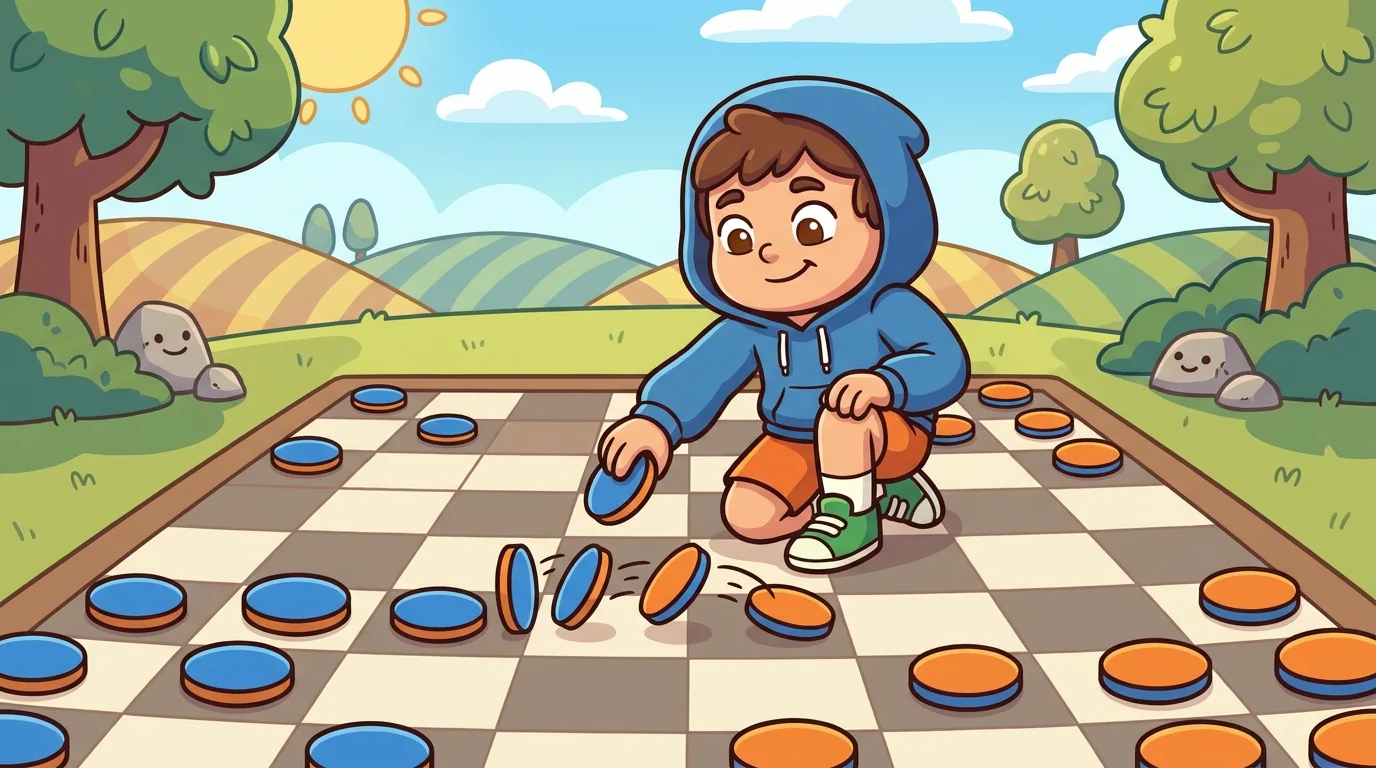
Flank plays a game where nothing stays the same colour for long.
In Reversi, when he sets a piece down so that a row of enemy pieces is trapped between it and another of his own, every one of those trapped pieces flips — enemy becomes ally, in an instant, right across the board. "Ownership isn't fixed here," he says, placing a piece and watching a whole line change colour. "What's mine can become yours; what's yours can become mine. The board is always changing hands. The trick is knowing which pieces will stay mine — and heading for those."
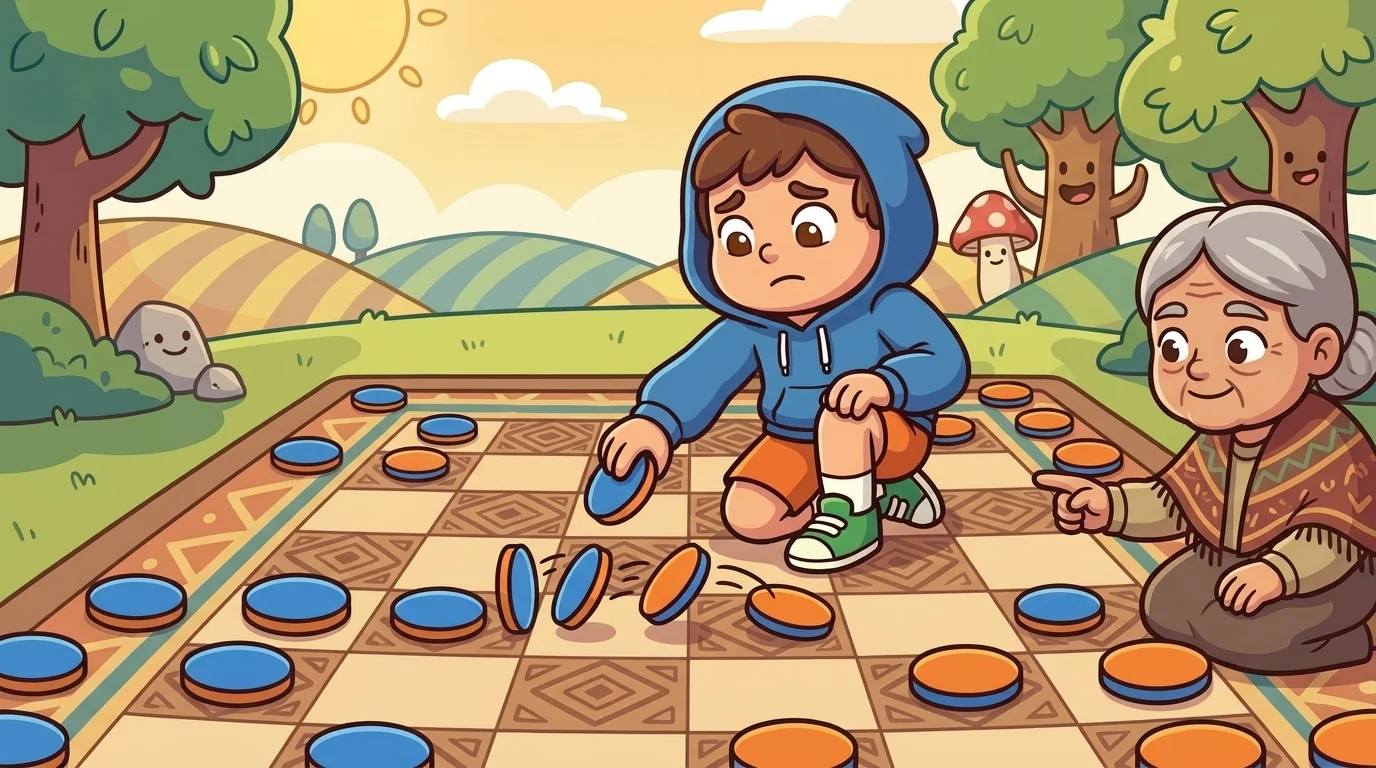
Flank used to be terrified of changing his mind.
He'd been raised to think that changing your position on anything was a kind of defeat — that once you'd claimed something, or said something, or picked a side, flipping to the other was proof you'd been wrong, and being wrong was shameful. So he clung, stubbornly, to whatever he'd first decided, even when the board had clearly changed around him. It made him rigid, and it made him lose.
An old strategist taught him to see flipping differently. "You're playing a game built on changing sides," she said, "and you're afraid to change anything. Watch —" She flanked a line, and a whole row of pieces flipped to her colour. "Flipping isn't losing. It's how the game works. Pieces change hands. Minds change. That's not weakness — it's the whole mechanism." Then she pointed at a corner. "But here's what matters: some things can't be flipped. A corner piece can never be trapped, so it stays yours forever. The wisdom isn't refusing to ever change. It's knowing which things last — and building on those."
He came to the GridForge academy as the piece who teaches territory. On his first day the head asked him to explain how Reversi is won.
Flank placed a piece, flanked a line, and flipped it. "You win by owning the most pieces at the end," he said. "But watch — the count keeps changing, because pieces flip. Leading in the middle means almost nothing." Then he took a corner. "This piece, though? It can never be flipped. No line can trap it. So the real game isn't grabbing the most pieces now — it's claiming the ones that will still be yours when the flipping stops. Corners. Stable edges. The things that last."
"Most beginners grab everything they can flip right now," the head said. "You play for what will stay." And that has been his role ever since: teaching that in a world of flipping ownership, you build on what's stable.
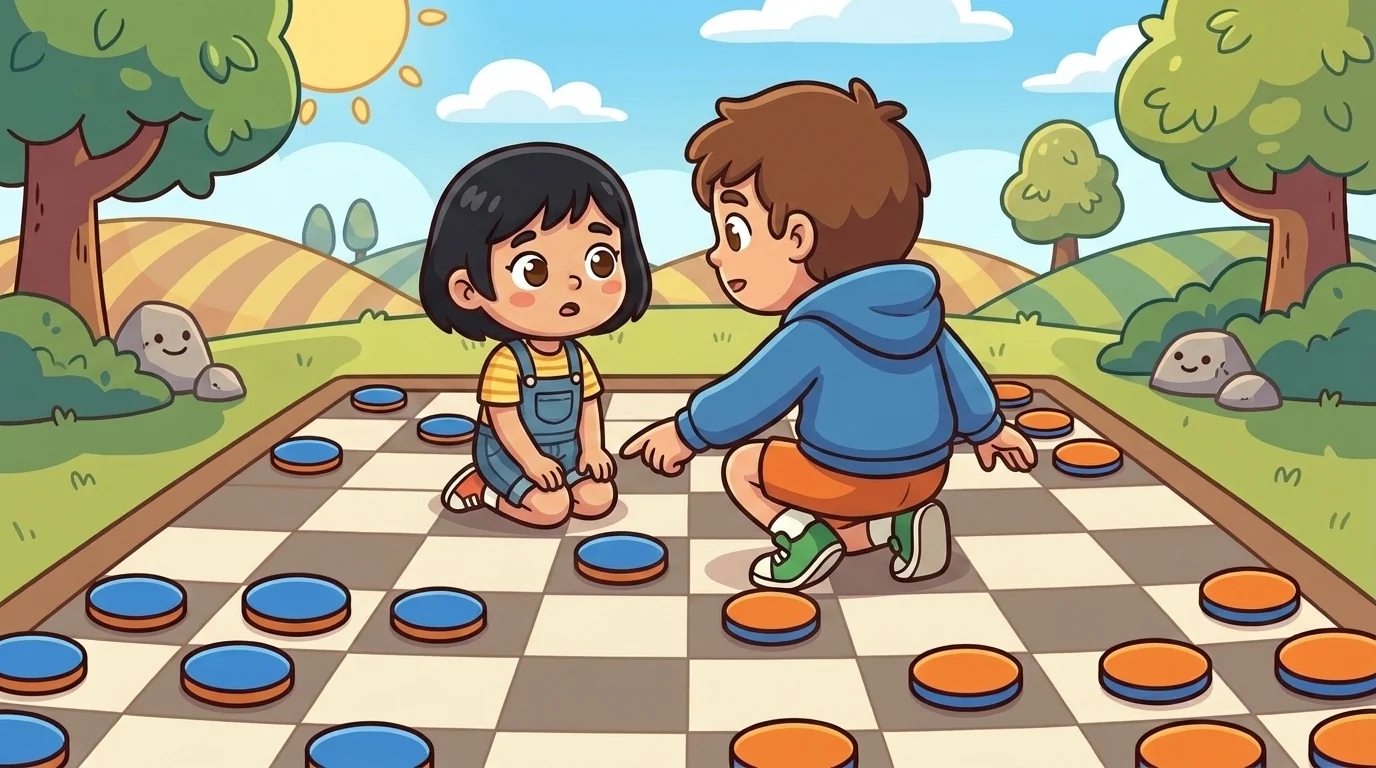
A young piece came to him upset. "I had the most pieces, and then everything flipped and I lost!" Flank nodded knowingly. "Because you grabbed pieces that could be flipped right back," he said. "A big lead in the middle is a mirage — it can all change colour in a few moves. Don't chase the pieces you can flip now. Chase the ones that can't be flipped later." He showed the young piece a corner. "Take this. It's stable. It'll be yours at the very end, guaranteed, no matter how much else flips. Build from the things that last, and let the middle churn."
The young piece stopped chasing the flashy mid-game lead and started quietly claiming corners, and its position — unglamorous but stable — held all the way to the end.
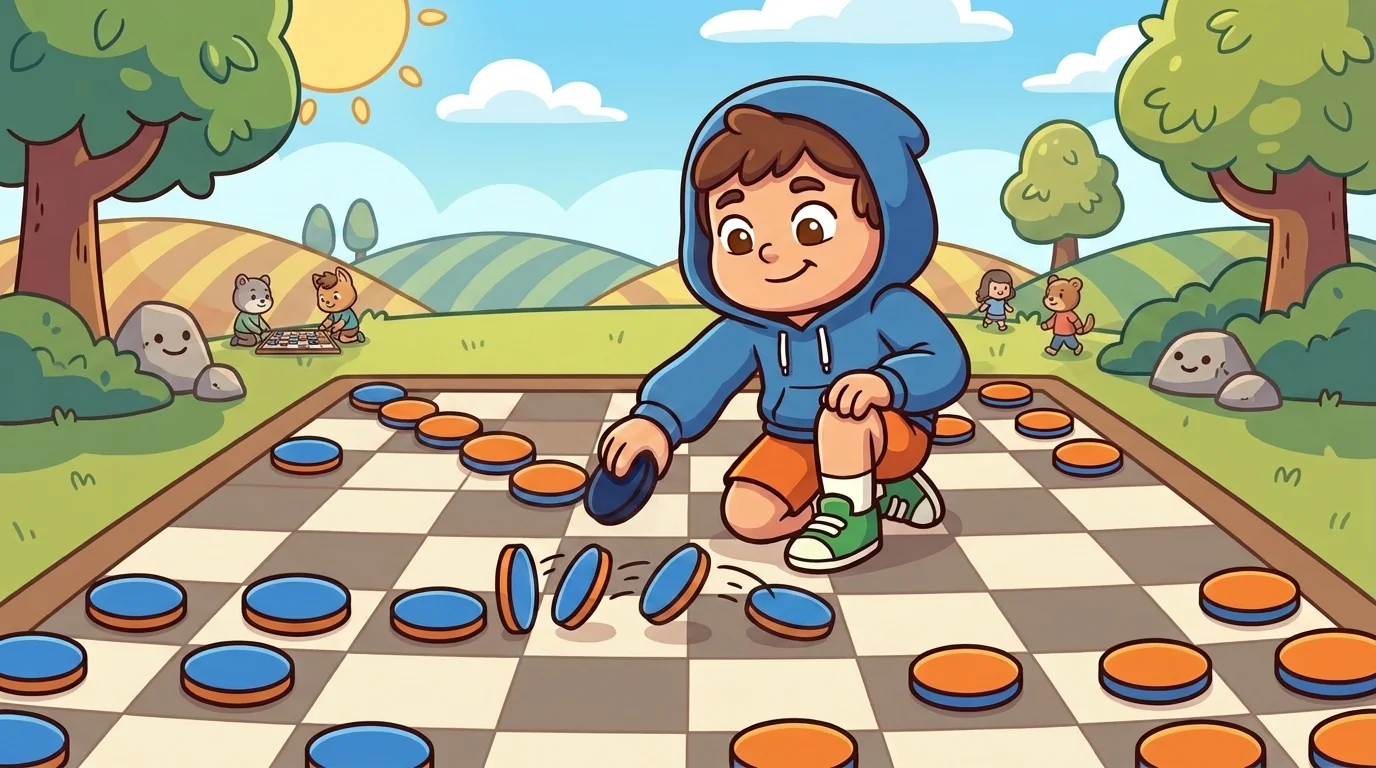
Later the young piece said the deeper thing. "I always thought changing was bad. Losing pieces, changing my mind — it felt like failing."
Flank set a piece down and, for a moment, was the rigid kid who couldn't stand to flip. "I thought so too, for a long time," he said. "I clung to whatever I'd decided first, even when everything around me had changed, because flipping felt like admitting I was wrong. And I lost, over and over, being that stubborn." He flipped a line, easily, without shame. "Then I learned that changing isn't failing — in this game, and honestly in life, things change hands, minds change, and that's healthy. The skill isn't refusing to change. It's staying steady on the few things that truly last —" he touched a corner "— while letting everything else be free to flip."
The young piece went home lighter, no longer ashamed of changing its mind, and quietly certain about the few corner-solid things that wouldn't.
Hear it as an audio drama
A short play starring Flank, from GridForge. Different voices, same idea. Listen any time after you read.
Loading audio…
Read the drama script
- Narrator: From Spark and Anvil and Gridforge — this is Flank, in chapter 1 of the Gridforge cast.
- Narrator: This drama uses an AI-generated voice. Voiced via Gemini 2.5.
- Narrator: Flank plays Reversi, the game where the pieces are never truly yours — until they are.
- Flank: Here's the magic. I place one piece so a line of YOUR pieces is trapped between mine — the one I just placed, and one already there. And *snap* — the whole line flips to my colour. Ownership changes hands in a single move.
- Narrator: The board is a sea of flipping colours. What was yours becomes mine, and back again.
- Flank: That's the thrill and the trap. Nothing is safe just because it's your colour right now. A row you're proud of can flip on the very next turn. So don't fall in love with a big pile of your own pieces mid-game.
- Narrator: When Flank started, she grabbed every flip she could, greedily, filling the board with her colour.
- Flank: I felt like I was winning — look at all my pieces! Then, three moves later, my opponent flipped a whole edge back and I had almost nothing. I learned that flipping the MOST isn't the same as flipping the RIGHT ones.
- Narrator: And she learned the one square that can never betray her.
- Flank: A corner. A corner has no two sides to be trapped between, so it can NEVER be flipped. A corner is forever. From a corner, a whole edge becomes safe too. I stopped chasing big flips and started chasing what LASTS.
- Narrator: A boy was gleefully flipping huge lines everywhere.
- Flank: Careful — every piece you flip on the edge gives me a way in. Don't grab everything. Grab the corner. See? Now that whole side is locked to you, and I can't touch it.
- Narrator: The boy took the corner, and for the first time his pieces stopped flipping away from him.
- Flank: Trap and flip is how you take. Corners are how you KEEP. Value what lasts over what looks big — that's Reversi.
- Narrator: You've been listening to a Spark and Anvil chapter, written by the Spark and Anvil writing team for ages 9 to 14.
- Narrator: Apps stay free forever.
- Narrator: Curriculum aligned to Common Core and Next Generation Science Standards.
- Narrator: Released under Creative Commons BY-NC-SA 4.0 for educational reuse. Visit Spark and Anvil for the full transcript.
The GridForge ensemble
Flank is one of the friends in GridForge. Each friend shows you one idea by how they act; meet them all and you have the whole subject.
-
Arbor
The game tree: every position branches into the moves that follow
-
Ballast
Stability and corners: the unflippable pieces in Reversi
-
Causeway
The bridge: a virtual connection that cannot be cut in Hex
-
Domino
Forcing sequences: chaining threats to keep the initiative in Gomoku
-

Mobi
Mobility: keeping more moves available than your opponent
-
Oddwin
Parity: who-moves-last, the key to Dots-and-Boxes
-
Rowan
Connection: extending a chain of your pieces toward a win
-

Twain
The fork: one move that makes two threats at once