
Twain
THE FORK / DOUBLE-THREAT — make one move that creates TWO winning threats at once, so the opponent can only block one and you win with the other. The tactic that recurs across Connect-4, Gomoku, and beyond.
Loading audio…
Press play to listen along. The line being read lights up as you go.
Show full transcript
Loading transcript…
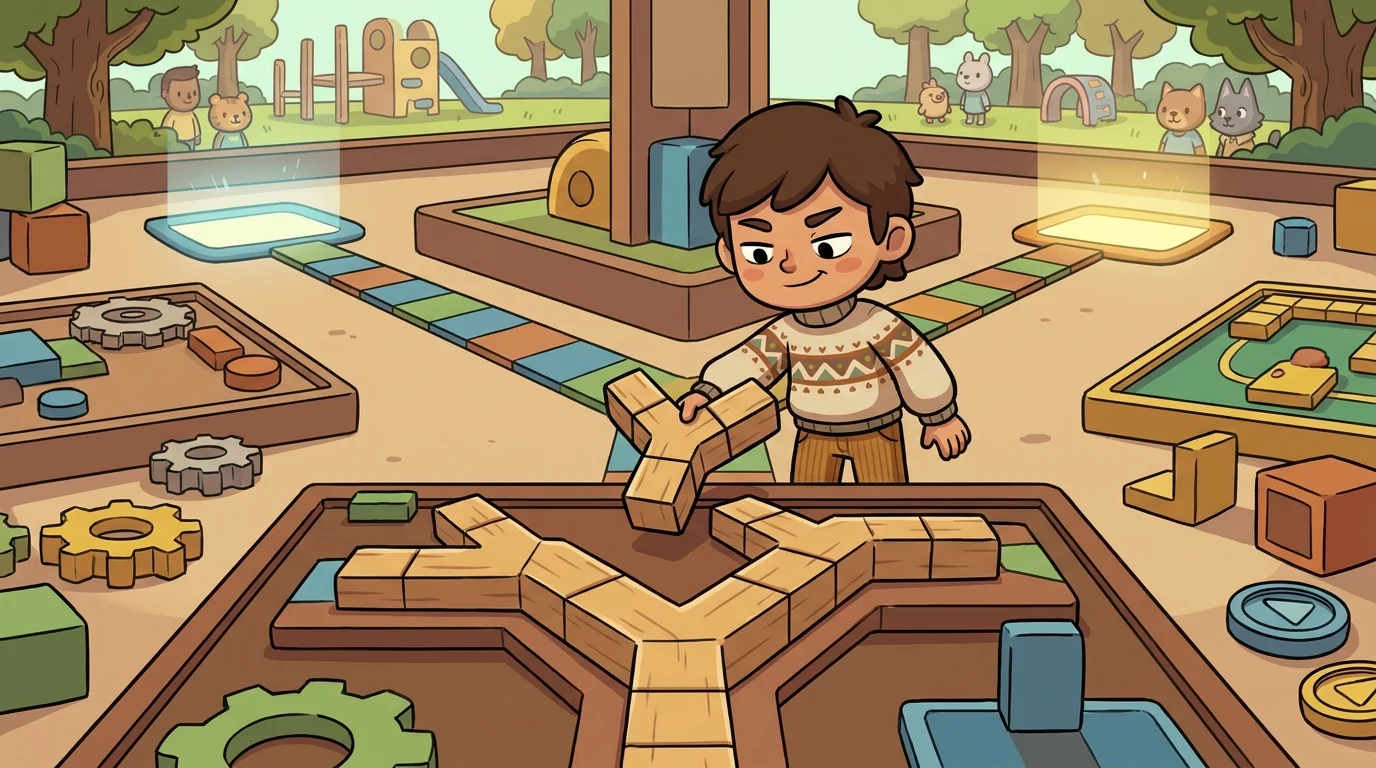
The Connect-4 grid at GridForge Academy sat on a heavy oak table between two low benches. It was made of yellow molded plastic, slightly scratched from thousands of drops. A sliding blue lever sat at the bottom to flush the tokens into the tray.
Twain leaned back, holding a single red token between his middle fingers. Across the table, a young apprentice named Pip stared at the vertical board until his eyes watered.
Pip had spent six turns carefully stacking blue tokens into column four. He had three in a vertical row. He was one single drop away from a win, and he looked like a champion already.
Twain did not look worried. He did not look anywhere near column four.
Instead, Twain slid his red token into column six with a clean plastic thwack.
Pip blinked in surprise. "That doesn't stop my column," Pip said, reaching for his stack. "I win on my very next turn."
"You could," Twain said softly. "If you drop in column four right now, you get your four in a row. But take a look at row two first."
Pip paused, his fingers hovering over the yellow plastic tray.
Along the bottom row, three red tokens sat waiting in a silent line. The drop Twain had just made in column six did not only fill row two. It also completed a diagonal line rising steadily toward column three.
"Wait," Pip muttered, leaning sideways to count the empty slots. "If you drop in column two, you get row two across the bottom. And if you drop in column three, you get the rising diagonal."
"Both threats are ready," Twain said. "And both need a block on your very next turn."
Pip stared down at his single blue token. He had only one move. He could block the horizontal row in column two, or he could block the diagonal in column three. He could not do both. If he completed his own four-in-a-row in column four, Twain would win on the next drop anyway.
"That isn't fair," Pip whispered. "You didn't even try to contest my line."
"I didn't have to," Twain replied. "You gave everything to a single path, so I built a fork."
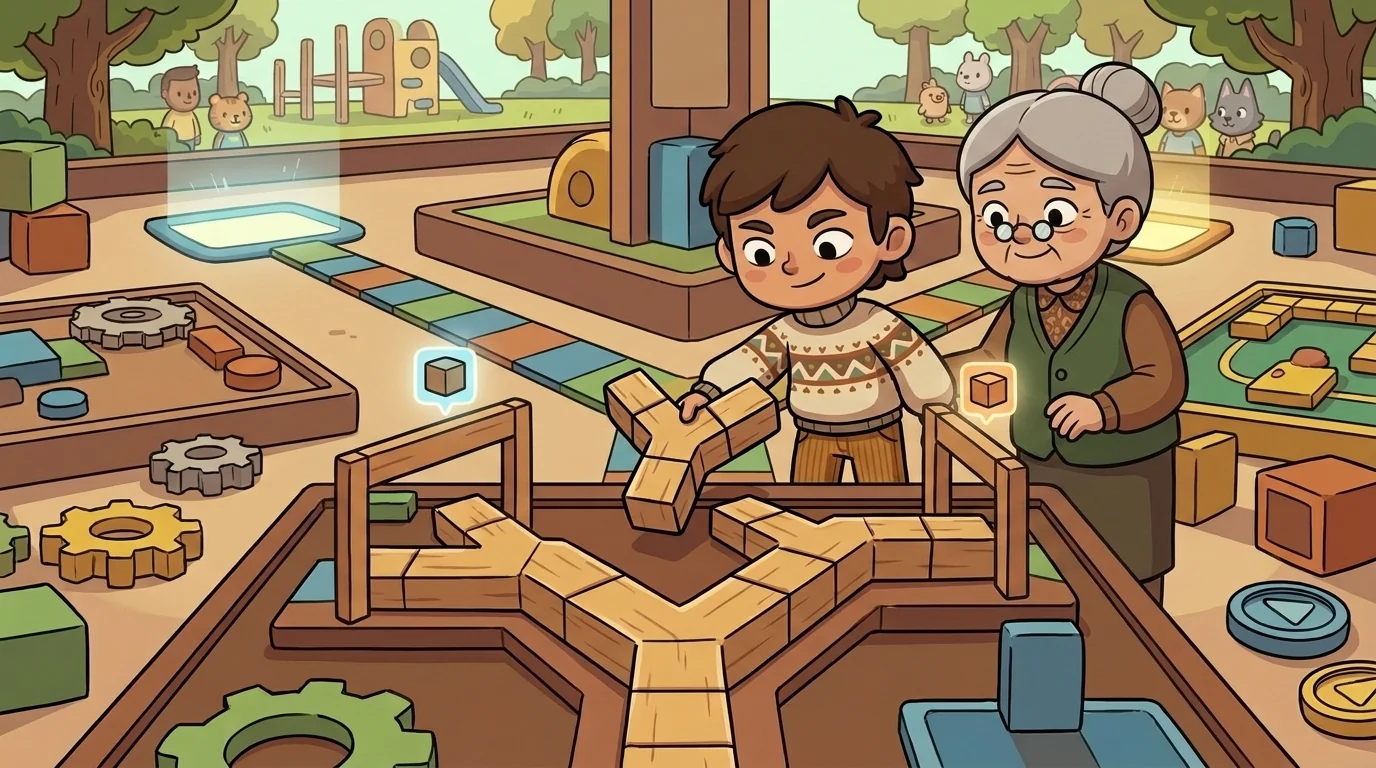
Twain had not always played with such quiet confidence.
Years ago, before he ever wore the instructor's coat at GridForge, he loved single lines. He would pick a diagonal early and commit his entire soul to building it. He watched it grow step by step like a tall wooden tower. He ignored everything else happening across the rest of the board.
Then his opponent would drop a single blue disc into the key square. Just like that, the tower collapsed. The path was dead.
In those early days, Twain would sit frozen, staring at the blocked square. The defeat always felt sharp and personal to him. A blocked line felt like a declaration that his judgment had completely failed. He had spent ten minutes building a castle, and someone had kicked the corner out easily.
An old referee named Master Vane watched him lose three matches in a row that way. After the room cleared out, Vane pulled two heavy chairs to a corner table. He laid out seven black tokens and six white ones on the polished wood.
"You build like a man walking a narrow tightrope," Vane told him. "You put one foot in front of the other, praying nobody shakes the wire. The second they touch the rope, you fall."
"If I build faster, they can't block it," Twain insisted, his knuckles white.
Vane chuckled softly and shook his head. "Speed never fixes a single wire, Twain. Watch this."
Vane placed a black token on row three, column three. He tapped the board with one calloused finger.
"This square belongs to two lines at once," Vane explained. "It completes a horizontal row across the middle, and it anchors a rising diagonal. One single piece creates two directions of pressure."
Twain leaned closer as the geometry of the board seemed to shift before him.
"Now," Vane said, handing Twain a white token. "Block me."
Twain raised his white token toward the horizontal row. As his fingers hovered over the slot, he saw the diagonal sitting completely open. He moved his hand toward the diagonal, but then the horizontal line sat waiting.
"I can't stop both," Twain said slowly. "I only have one move."
"Exactly," Vane said. "One block stops one threat, because that is the rule of the grid. So if you want to win, never offer your opponent a single target. You set up two paths that share a single heart. When they block one, they are simply choosing which win to hand you."
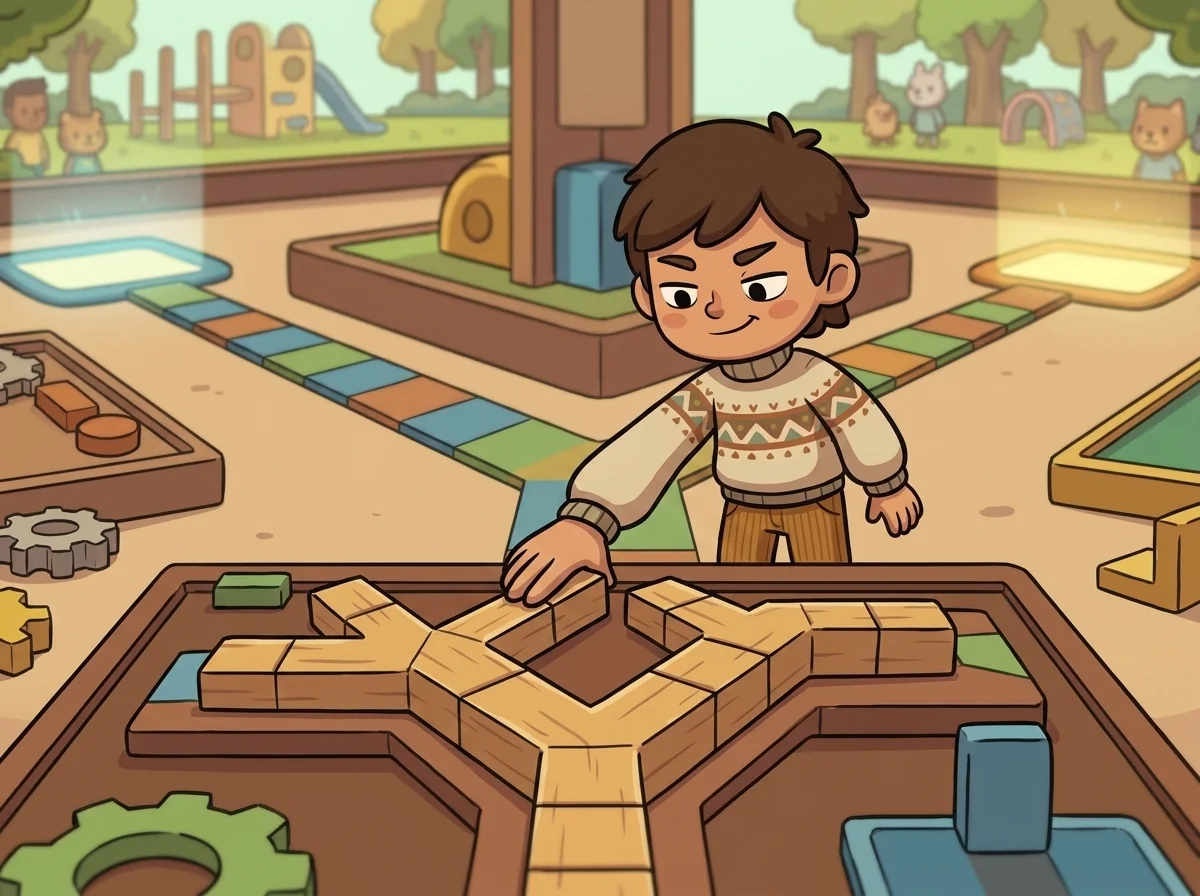
When Twain applied to teach strategy at GridForge Academy, the selection panel was difficult to impress. The Head Administrator was a retired grandmaster who knew every opening sequence by heart.
"Show me your core idea," the Head Administrator said, gesturing to the vertical frame. "Most instructors teach opening traps or heavy defensive walls. What is your primary lesson?"
Twain sat down without speaking. He did not start with a flashy center-column rush. He placed red tokens quietly across the bottom three rows, spreading them thin.
To an untrained eye, his board looked messy and disconnected. The Head Administrator smirked, stacking blue tokens straight up column four.
"You are letting me claim the entire center," the Head noted. "That is usually considered a fatal mistake."
"It is a mistake if I only have one answer," Twain said quietly.
On turn eight, Twain picked up a red token and dropped it into column five.
Thwack. The token landed firmly on row two.
The Head Administrator stopped mid-reach. He looked at column five, then scanned left, then traced the rising diagonal.
The new red token connected a row of three horizontally across the bottom. At the exact same time, it completed a rising diagonal of three extending upward.
"If I block column two," the Head Administrator muttered, "you win on the diagonal."
"And if I block column six, you take the bottom row," Twain replied.
The Head Administrator sat back in his leather chair and tapped his glasses. "Most players hunt for one brilliant line and pray their opponent misses it," he said. "You build so that two winning lines exist at the same moment."
"Hope is not a strategy," Twain answered. "A fork is."
He was hired that very afternoon.
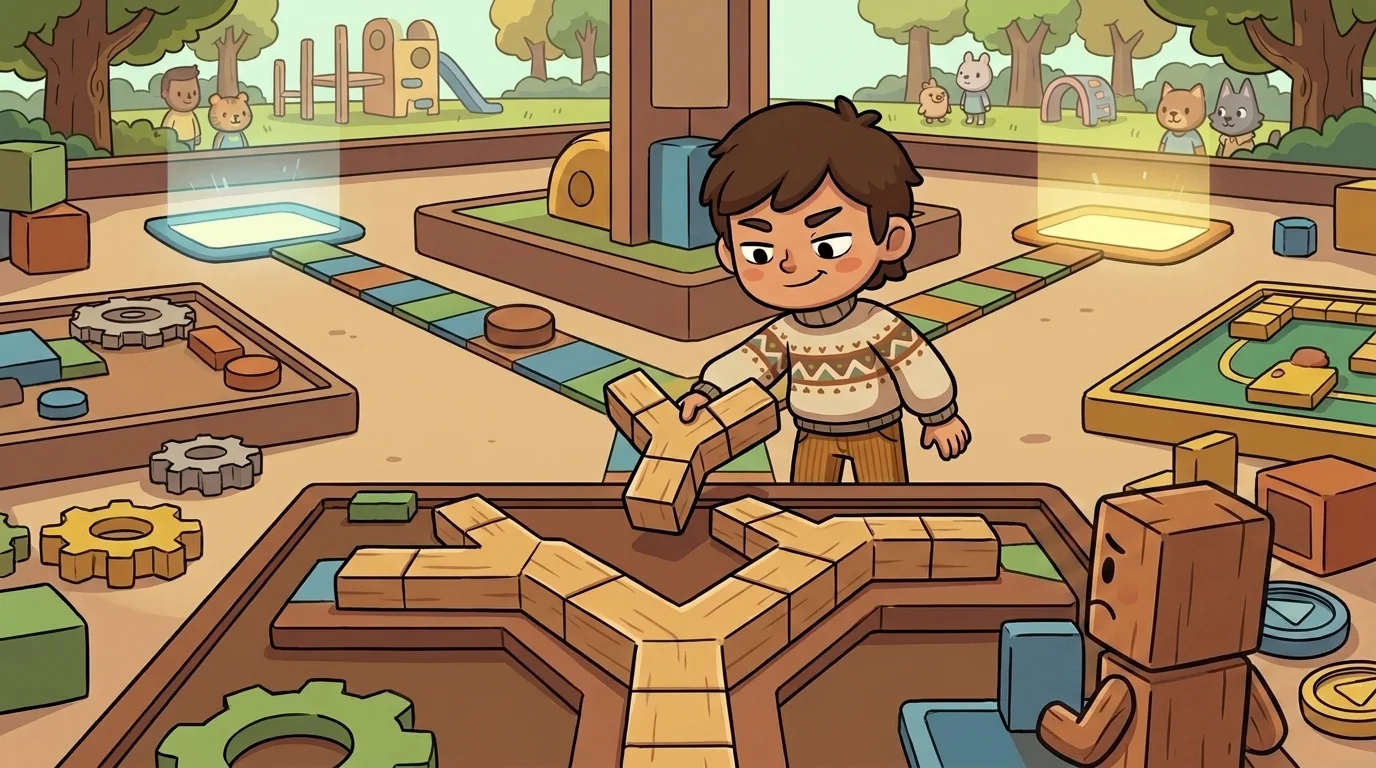
By his second year at the academy, Twain's classroom was always full of struggling trainees. One afternoon, a young player named Toby sat at a corner table, sighing heavily.
"It's completely useless," Toby complained, pushing his yellow chips aside. "Every time I build three in a row, my brother drops a disc on top. I can't ever finish a line because he blocks everything I do."
Twain pulled up a low stool and set an empty plastic frame between them.
"He blocks you because you give him an easy job," Twain said gently. "If I throw one ball at you, you can catch it easily, right?"
Toby frowned. "Yeah. Of course I can."
"What if I throw two balls at your face at the exact same second?"
Toby cracked a small, dry smile. "I'd probably drop both of them."
"Your opponent has two hands, but the rules give him one glove per turn," Twain said. "When you build one line, you throw one ball. He catches it every time, and you get angry."
Twain placed three red tokens along row two and two along a diagonal, sharing column three.
"Now look," Twain said. "When you drop in column three, how many winning lines do you create?"
Toby leaned forward, counting the empty slots with his finger against the frame. "One across row two," Toby said slowly. "And one rising up toward the right."
"Two balls in the air," Twain said. "One glove for your brother. What happens next?"
"He can only stop one," Toby whispered, a light flickering in his eyes. "He blocks the bottom row, but I still get the diagonal!"
"He doesn't even stop you," Twain corrected gently. "He just chooses which win he hands you."
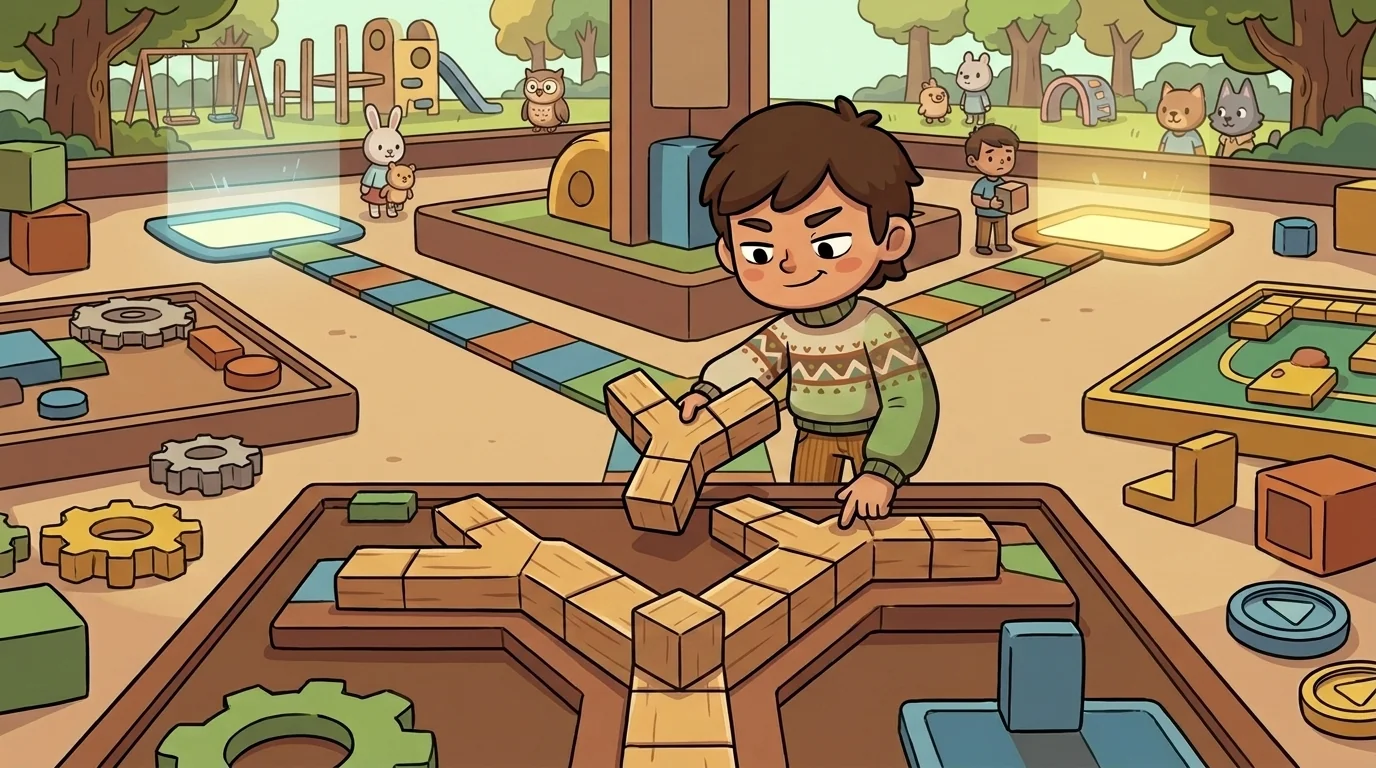
Later that evening, after the other students left the hall, Toby lingered by the window. He dropped blue tokens into an empty grid, listening to the hollow plastic sound.
"Mr. Twain?" Toby asked without turning around.
"Yes, Toby?"
"When my plan gets blocked," Toby admitted, "I feel like I failed. It makes me feel like I am just bad at this game."
Twain stopped wiping down the large wooden demonstration board. He walked over and sat on the bench beside the young player.
"I used to feel that exact same sting," Twain said softly. "I thought every blocked line meant I was foolish for trying."
He picked up two tokens from the tray—one red, one yellow.
"A single line is never a promise," Twain told him. "It is only a path. If you only build one path, a falling rock ruins your whole day. But if you build two paths, the rock just shows you where to turn."
Toby looked at the grid for a long moment, then looked up at Twain. "So getting blocked isn't a defeat?"
"Getting blocked on a fork is just step two of winning," Twain smiled. "You were never standing on only one foot. Why let a single block crush you when you held two keys all along?"
Toby nodded slowly, a real smile replacing his old frustration. He packed his chips into his cloth bag and walked out into the courtyard.
From that day on, Toby stopped rushing single lines. He built patiently, setting up shared squares and holding a second path in reserve. And whenever an opponent blocked his first threat, Toby did not flinch. He simply smiled, reached into his tray, and took the second path home.
The GridForge ensemble
Twain is part of GridForge's distributed-narrative cast. Each character embodies a different curricular primitive; together they teach the full subject.
-
Arbor
The game tree: every position branches into the moves that follow
-
Ballast
Stability and corners: the unflippable pieces in Reversi
-
Causeway
The bridge: a virtual connection that cannot be cut in Hex
-
Domino
Forcing sequences: chaining threats to keep the initiative in Gomoku
-
Flank
Territory flip: capturing a line of pieces in Reversi
-
Mobi
Mobility: keeping more moves available than your opponent
-
Oddwin
Parity: who-moves-last, the key to Dots-and-Boxes
-
Rowan
Connection: extending a chain of your pieces toward a win