Bondi
number bonds / part-part-whole
Bondi Draws Number Bonds
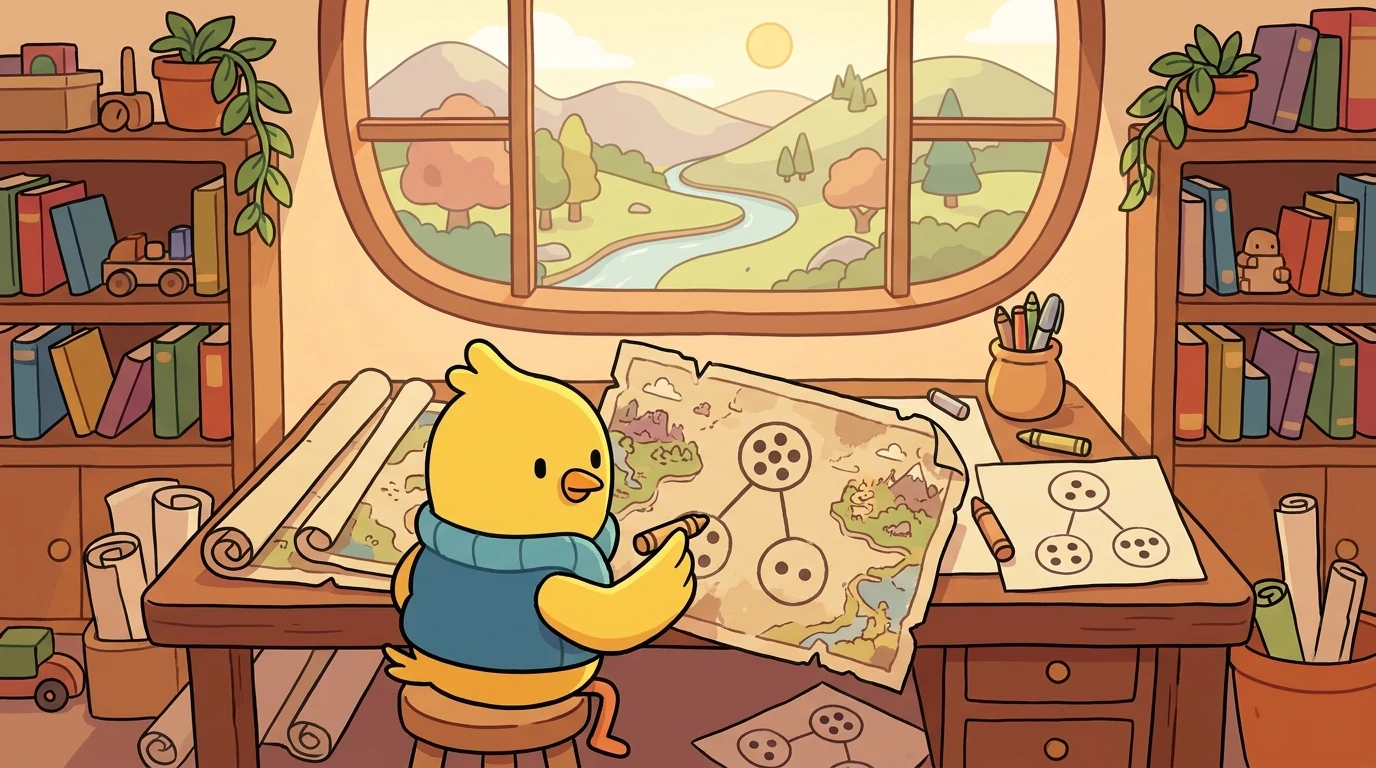
Bondi was a cheerful yellow bird who drew number routes on the map. Her favorite was the number bond — a little picture that shows a whole number breaking into parts, and the parts joining back into the whole. It’s how math is taught in classrooms now.
“Take the number 5,” said Bondi, drawing a circle with two little circles branching below. “Five can break into parts — say, 2 and 3.” She showed it: two dots here, three dots there, five dots in all. A whole splits into parts.
“And it works both ways,” Bondi said, sweeping the parts back up. “2 and 3 join to make 5 again. Parts make the whole.” She showed other breaks too — 1 and 4, 0 and 5 — all the same whole, split different ways. Numbers are flexible, like clay.
A grown-up leaned in. “Ah — so number bonds are why they don’t just memorize; they see the parts.” Bondi beamed. “Yes! When you see the parts, adding and subtracting become easy. 5 minus 2? Just find the missing part — 3.” The bond holds the secret.
Bondi tucked her drawing away. “A number can break into parts — and the parts make the whole. Remember that, and numbers become friendly.” Now you and your grown-up drew bonds the same way the classroom does, so every kitchen-table sum matched school. Whole, parts, whole again.
Reading together with a grown-up? A card for the grown-up
For the grown-up: ask one question, then wait. When they answer, add one word to what they said. Tap the button when they have said something — that is one turn each, a circle. Nothing is recorded or kept.
Let them finish it
Say “A number can break into parts — and …” and stop. Let them finish it.
Now wait. Count slowly to five in your head. Their answer is worth the quiet.
Circles together: 0
The MapPals ensemble
Bondi is one of the friends in MapPals. Each friend shows you one idea by how they act; meet them all and you have the whole subject.