
Tare
MASS / WEIGHT — how much stuff there is, in grams and kilograms on a balance. The key operation is the TARE: zeroing the container so you measure NET (contents) not GROSS (contents + container). Taring doesn't change the container's real mass — it stores that mass as an offset the scale subtracts, so every later reading is contents-only.
Loading audio…
Press play to listen along. The line being read lights up as you go.
Show full transcript
Loading transcript…
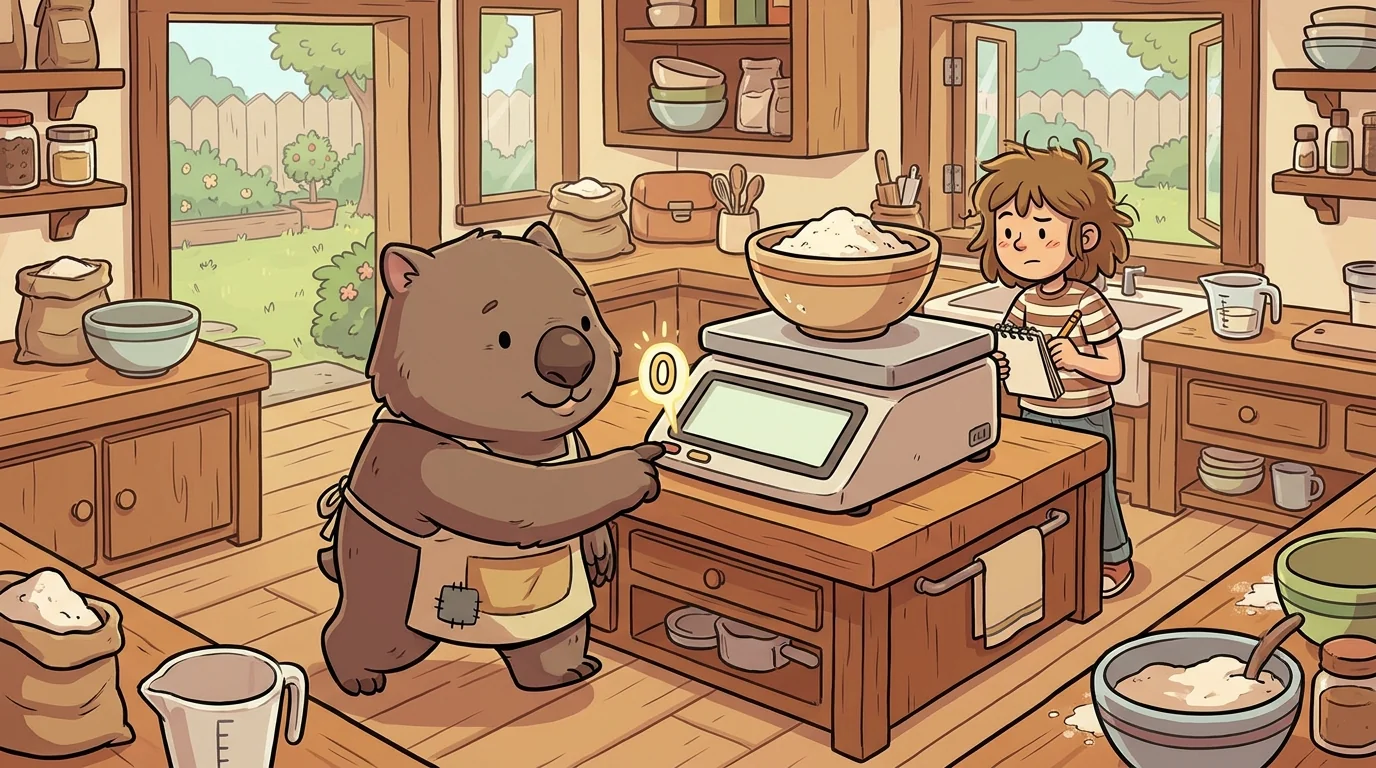
The little kitchen scale was lying, and a student was about to write the lie in her notebook.
She'd plopped a bowl on the scale, poured in flour, and read four hundred grams. "Four hundred grams of flour."
"Four hundred grams of flour and bowl," Tare corrected gently, waddling over — a wombat, low and solid, built like something never once knocked over. "That's the gross weight — contents plus container. The bowl weighs eighty grams by itself, so you just told your recipe eighty grams of flour that don't exist. What you want is the net — the contents alone."
The student stared. "So how do I weigh just the flour?"
"You weigh the container first, then tell the scale to forget it." Tare lifted the flour, set the empty bowl down, pressed a button — the scale blinked to zero with the bowl still on it. "That's the tare. The scale hasn't decided the bowl weighs nothing — it's stored the bowl's eighty grams as an offset and now subtracts it from everything that follows. Pour." The scale climbed to three-twenty. "Three hundred twenty grams of flour. Net. The container's weight got subtracted before your contents were ever counted."
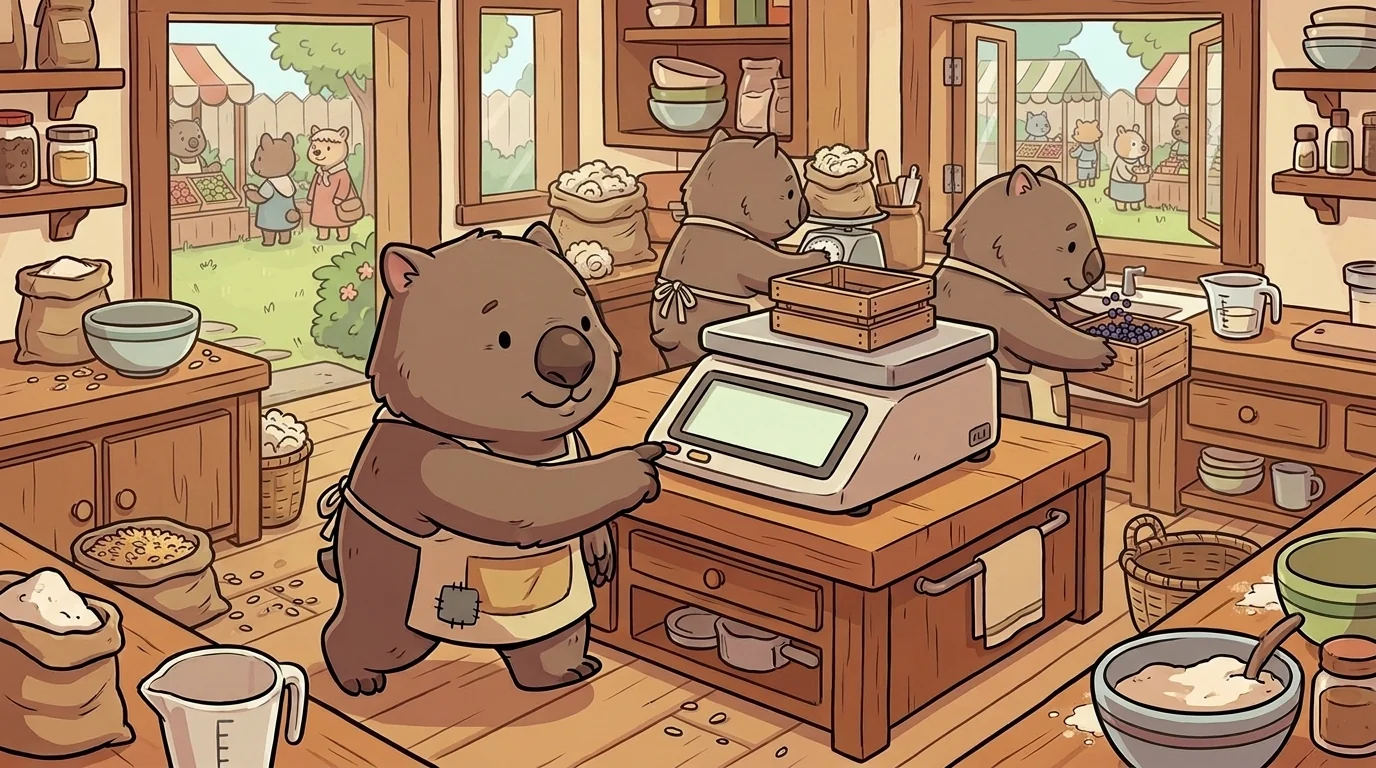
Tare had learned to zero things out young, and it once kept a market honest.
Her family were the weigh-keepers of MeasureQuest's market — wombats, because the village decided a creature that low and steady wouldn't lean on the scale. When Tare was small she watched a trader weigh berries in a heavy crate and charge for the whole number, crate and all. Her grandmother caught it instantly: she set the empty crate down, zeroed it, then poured the berries back — and the honest net was a good deal less than the trader's gross.
"He wasn't weighing berries," her grandmother said. "He was selling a crate and calling it fruit. The tare is how you pay for the thing, not the thing's overcoat." Small Tare held it: the honest weight is the contents, with the container stored as an offset and subtracted first.
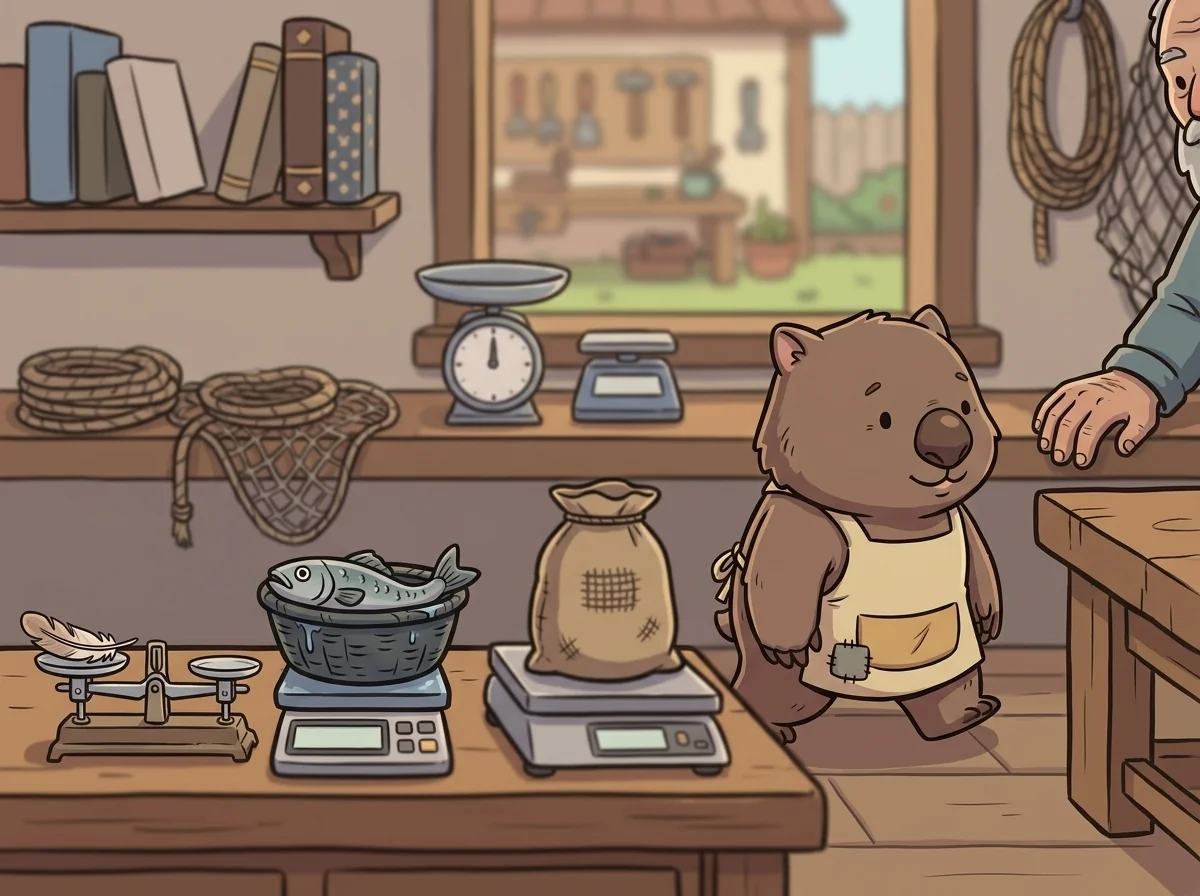
She waddled into MeasureQuest at twelve, and Yard was mending a net.
Instead of a quiz, Yard slid over a feather, a fish, and a sack of sand. "Weigh each — and weigh them true."
Tare didn't rush. For the feather she found the most sensitive balance — "a heavy scale can't even resolve a feather." For the fish she set the wet basket down, tared it to zero, then laid the fish in, so the soaked basket didn't pad the net. The sand she read plain on the platform scale. Three weights, each the contents and nothing extra.
Yard looked up. "Most kids drop it on and read whatever pops up — the gross. You subtracted every container. Sit down. You've got the craft."
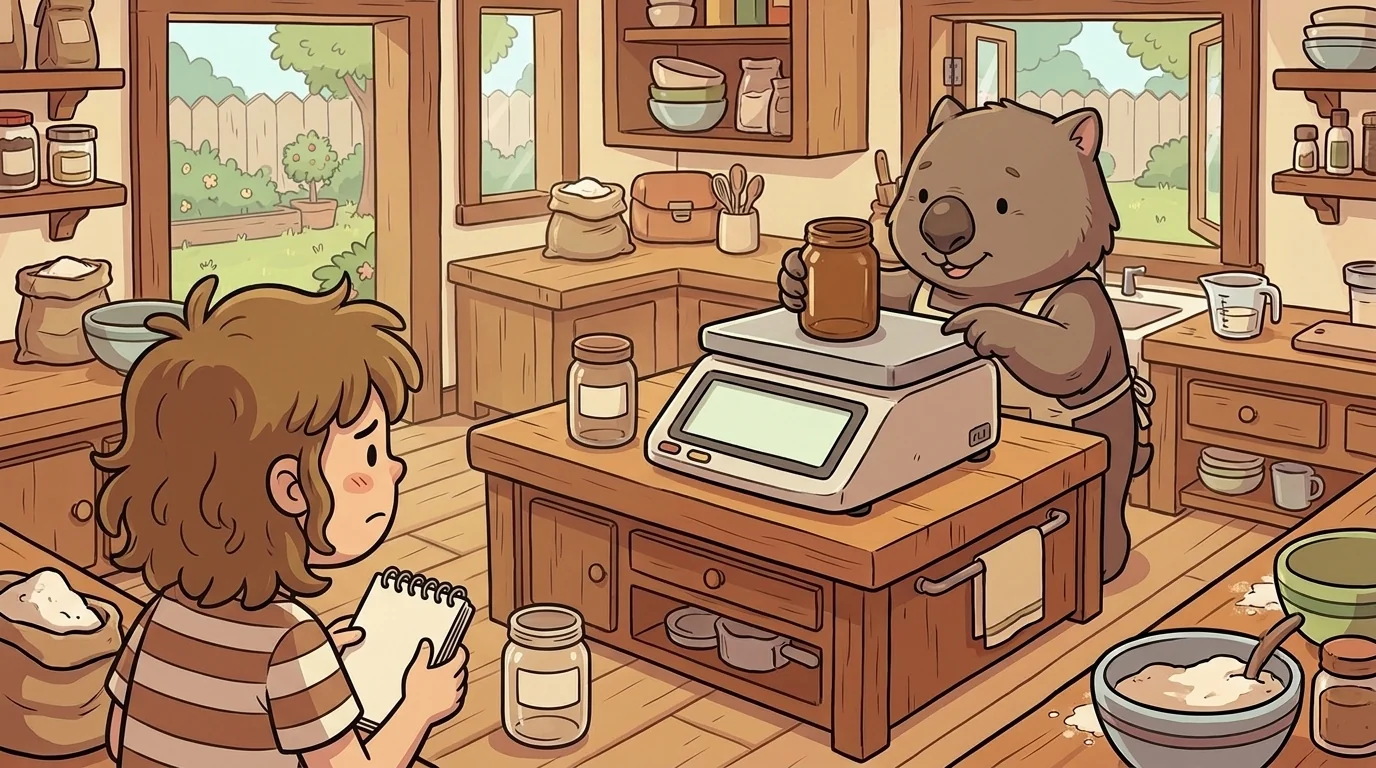
Weeks later, Pip weighed beans for a recipe.
"Watch," Tare said, patting the scale. "Empty jar down — ninety grams, the jar being honest about itself. Press the button —" it fell to zero, jar still on it "— now the scale has the jar's ninety stored as an offset. Every gram it reports from here is after subtracting that ninety." She spooned in beans to two hundred. "Two hundred grams of beans. Net. Not one gram of jar."
Pip frowned. "But the jar's still there. It still really weighs ninety."
"It does — taring doesn't make it weigh nothing," Tare agreed, pleased she'd noticed. "The jar's real mass is unchanged. The scale just remembers the ninety and subtracts it, so it only counts what came after the zero. Net equals gross minus the tare — that's the whole arithmetic." She caught Pip about to add beans to an un-zeroed second jar. "Zero the new jar first. Different container, different offset. Skip the tare and you bake the bowl right into your bread."
Pip set the second jar down, zeroed it. "So the first thing I weigh," she said slowly, "is the thing I don't want to count — I store it so it gets subtracted."
"Now you've got it," Tare said. "Weigh the overcoat, set it to zero, and the contents can finally tell you their own net weight."
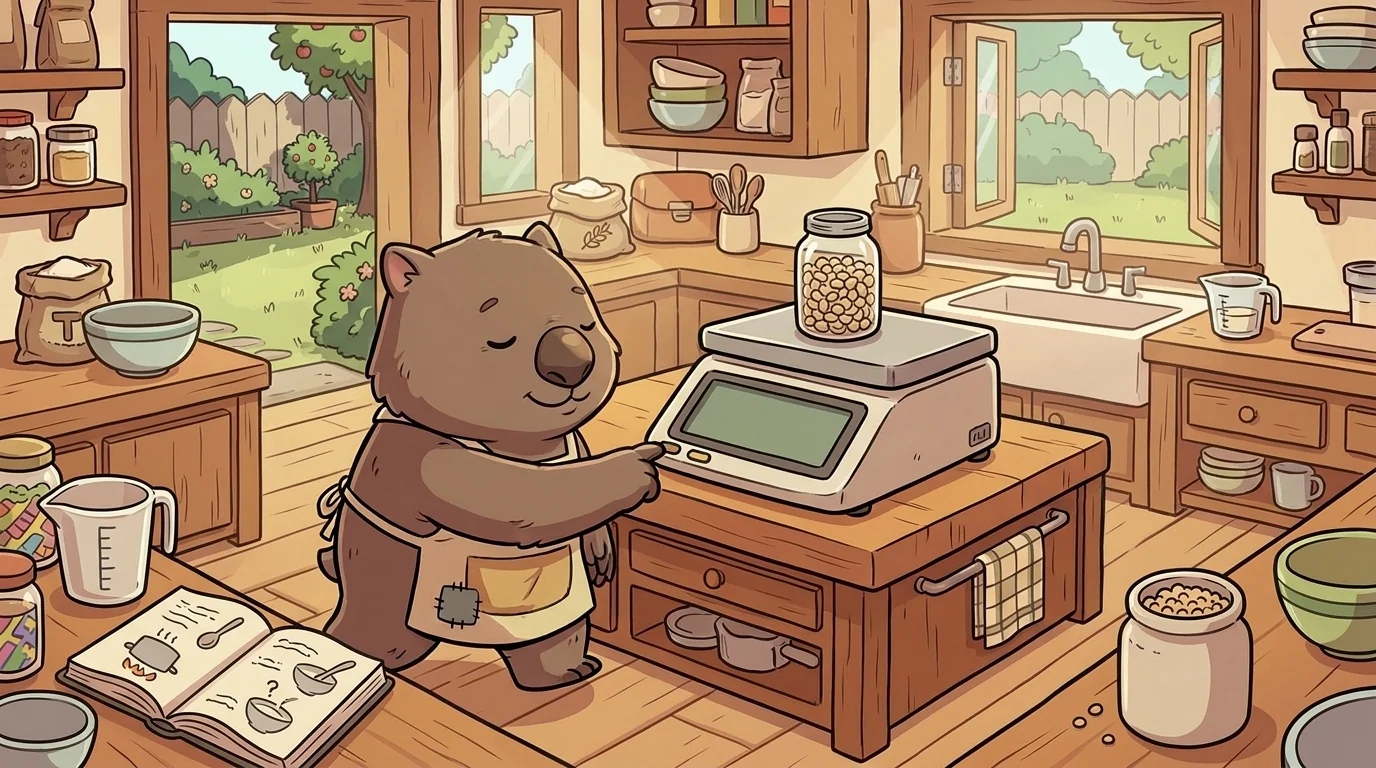
Pip weighed the beans again, zeroing the jar herself first, and got two hundred grams — the beans, only the beans, a number anyone could check — and a small settled feeling in her chest, a fair number with nothing hidden in it.
Tare pressed the scale back to zero one last time and let out a slow, level breath — the deep calm of a creature who'd spent her life making sure people paid for the fruit, not the crate. Somewhere in the memory of it, a market grew quiet and fair.
"Weigh the thing, not its overcoat," she said softly. "Store what isn't it, subtract it, and let the contents tell the truth. That's the calm part. That's the part worth zeroing for."
The MeasureQuest ensemble
Tare is part of MeasureQuest's distributed-narrative cast. Each character embodies a different curricular primitive; together they teach the full subject.
-

Rod
Linear measurement — length and perimeter (1D extent)
-

Tile
Area — 2D coverage (square units)
-

Cup
Volume and capacity — 3D space (cubic units, liquid measures)
-

Tick
Time — elapsed duration, intervals, and the special-case unit-system (60 / 60 / 24 / 7 / 12)
-

Pace
Unit conversion — translating between metric and customary systems
-
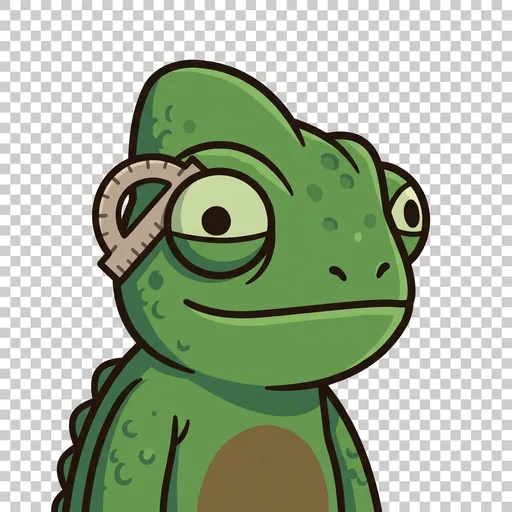
Bevel
Angle — how much a turn, not how long a line; measured in degrees on a protractor
-

Degree
Temperature — how hot or cold, read off a thermometer; the scale (Celsius/Fahrenheit) you pick matters
-

Thumb
Estimation — measuring without a tool by comparing to references you carry
-
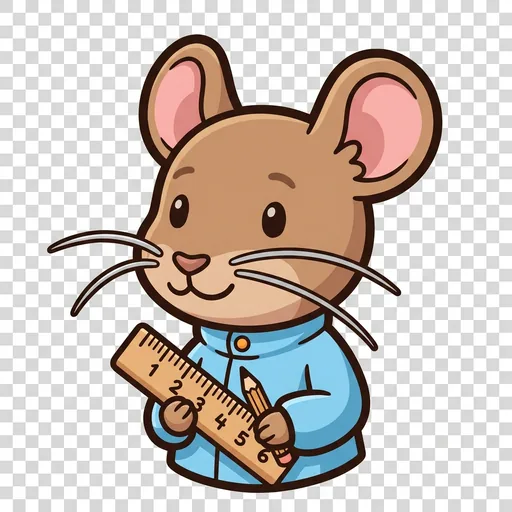
Whisker
Uncertainty — no measurement is exact; every real number carries a give-or-take (plus or minus)