Touch
RELATIONSHIP SKILLS — communication, boundaries, repair. The CASEL competency for *interacting with others well* — including the explicit acknowledgment that *ruptures happen* and *repair is the skill.*
Loading audio…
Press play to listen along. The line being read lights up as you go.
Show full transcript
Loading transcript…
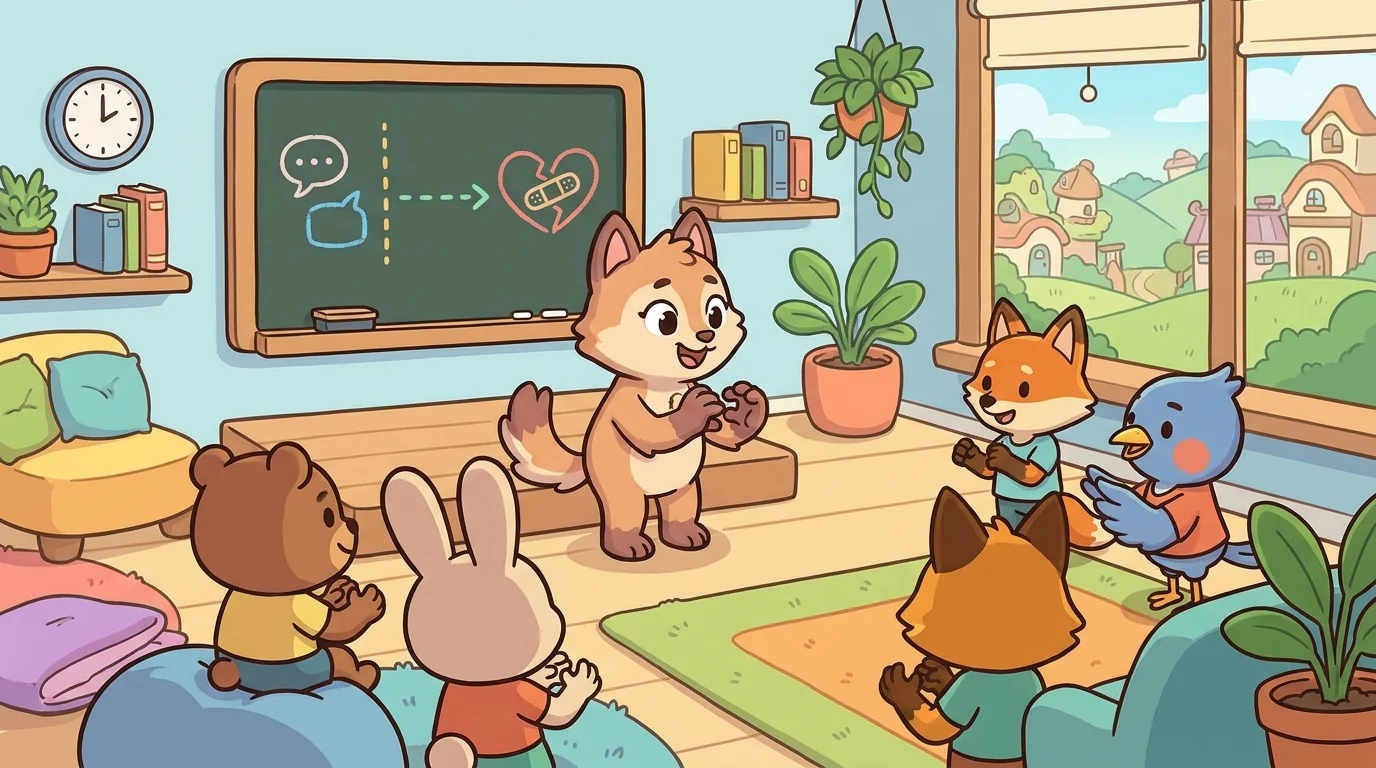
Meet Touch. She's an animal-tween, and her small paws look like tiny hands that move a lot when she talks — because her paws show you exactly what she means.
When she teaches "say it small," her paws come together until there's just a tiny space between them, like a little box. That means: keep your words short and clear. When she teaches "listen big," her paws spread wide, arms reaching, palms open, as if she's ready to catch something. That means: listen with your whole self.
Touch teaches relationship skills — how to be good with other people — and her lessons have three parts. Communication: say what you mean, short and kind. Boundaries: know what's yours and what's theirs — your feelings, your stuff. And repair: fixing things when they go wrong. Most kids never learn that third one. Touch thinks it's the most important of all.
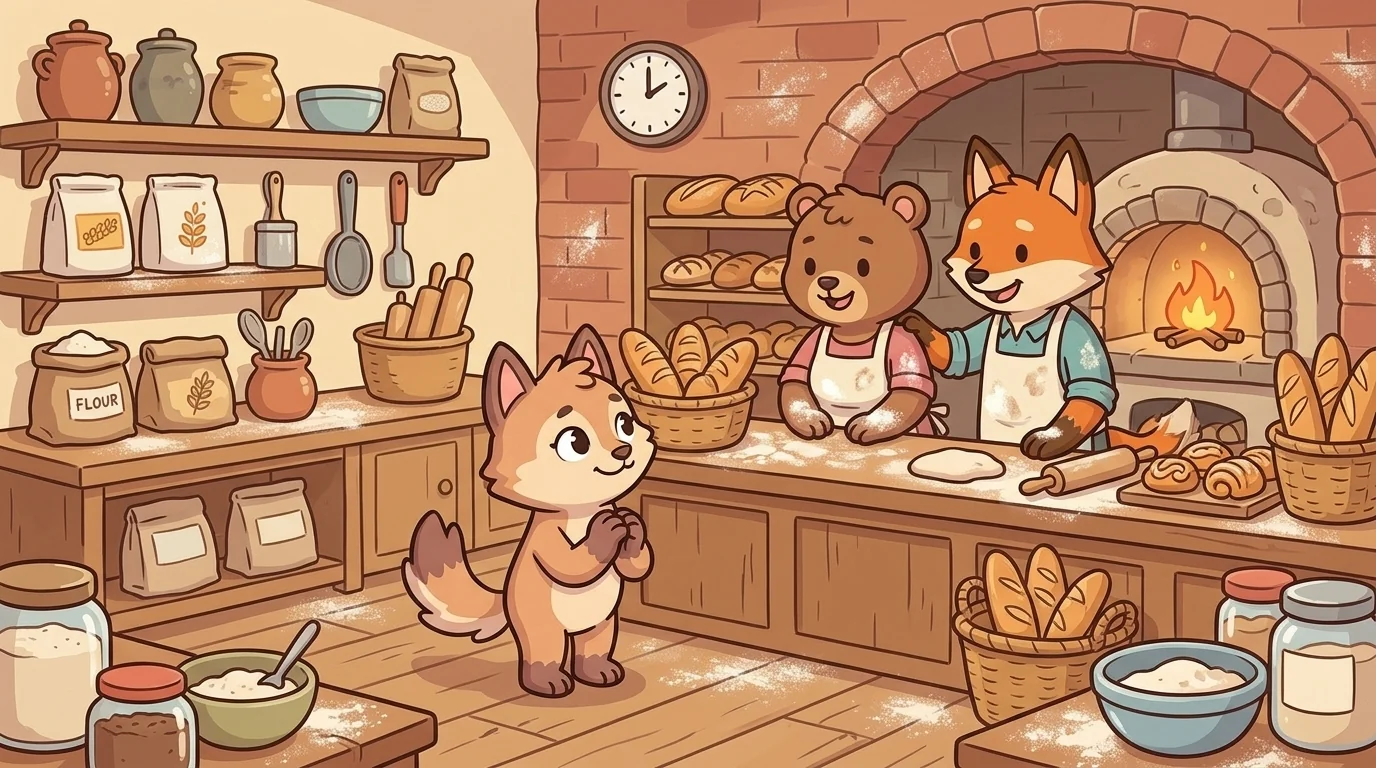
Touch grew up in a bakery — a small, warm, flour-dusted one her family ran together, everyone working close in tight quarters, talking all day long. And in tight quarters, on busy mornings, words sometimes got sharp. Her family made mistakes. They snapped. They bumped into each other's feelings.
But here's what little Touch watched, again and again: her parents would mess up — and then they'd notice it, name it, and fix it. The fixes were small and quick. "Sorry I snapped about the bread," her dad might say. "I know. I was sharp too. Let's start over," her mom would answer, and they would. Her family wasn't perfect — not even close. But they were repair-fluent. The sharp words weren't the special thing about them. The fixing was.
Touch never forgot it. Most kids, she noticed later, grew up thinking a good friendship was one with no problems. But she'd grown up inside a good, loving, bumpy, always-mending one — and she knew the truth was different. The problems were normal. The repair was the skill.
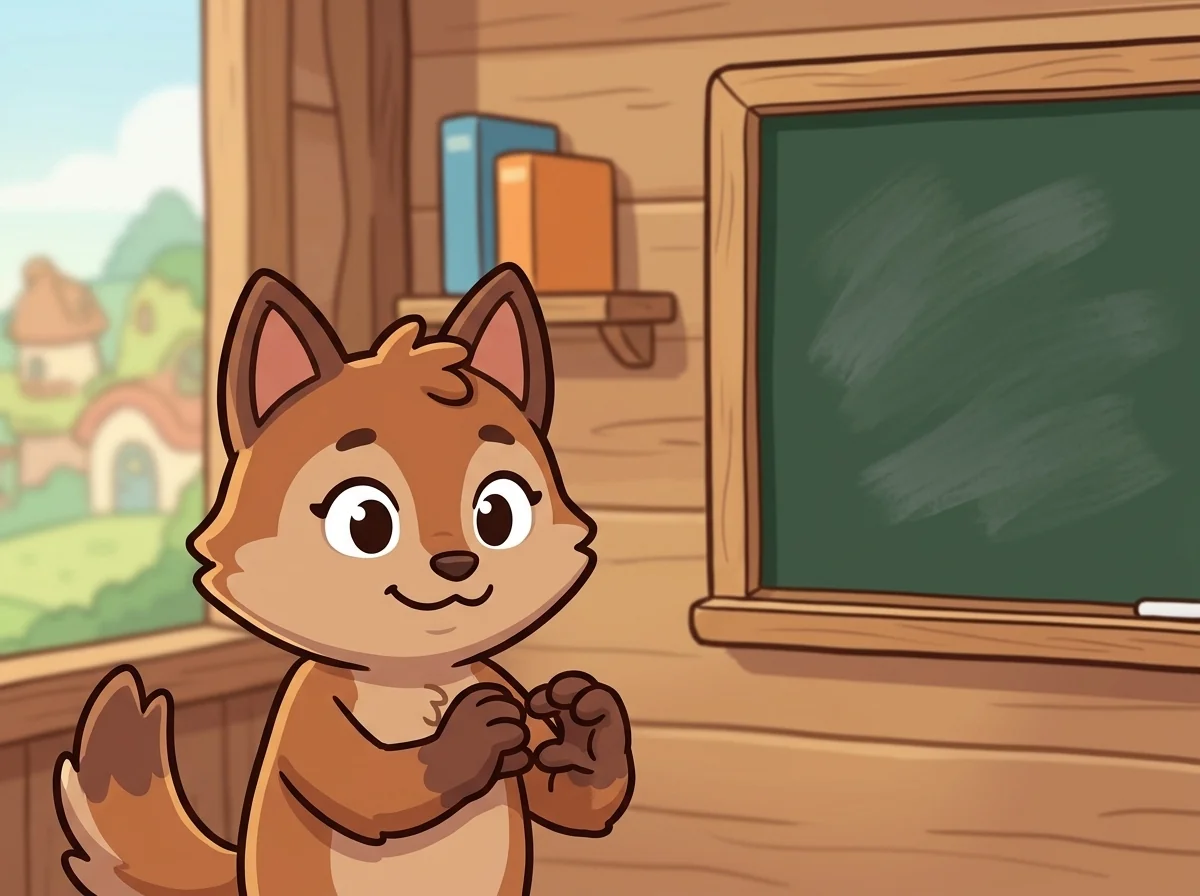
Grown, Touch walked to the MindForge academy. Sage, the head teacher, asked her, "What are relationship skills?"
"Three parts," Touch said, and her paws moved as she spoke. "Talk clearly — say it small. Listen well — listen big. And when things go wrong — because they will — repair it." She paused. "Repair is the most important. Most people never learn it. They think a problem means the friendship is over. It isn't. Problems are normal. Fixing them is what makes friends strong."
Sage nodded. "You are appointed."
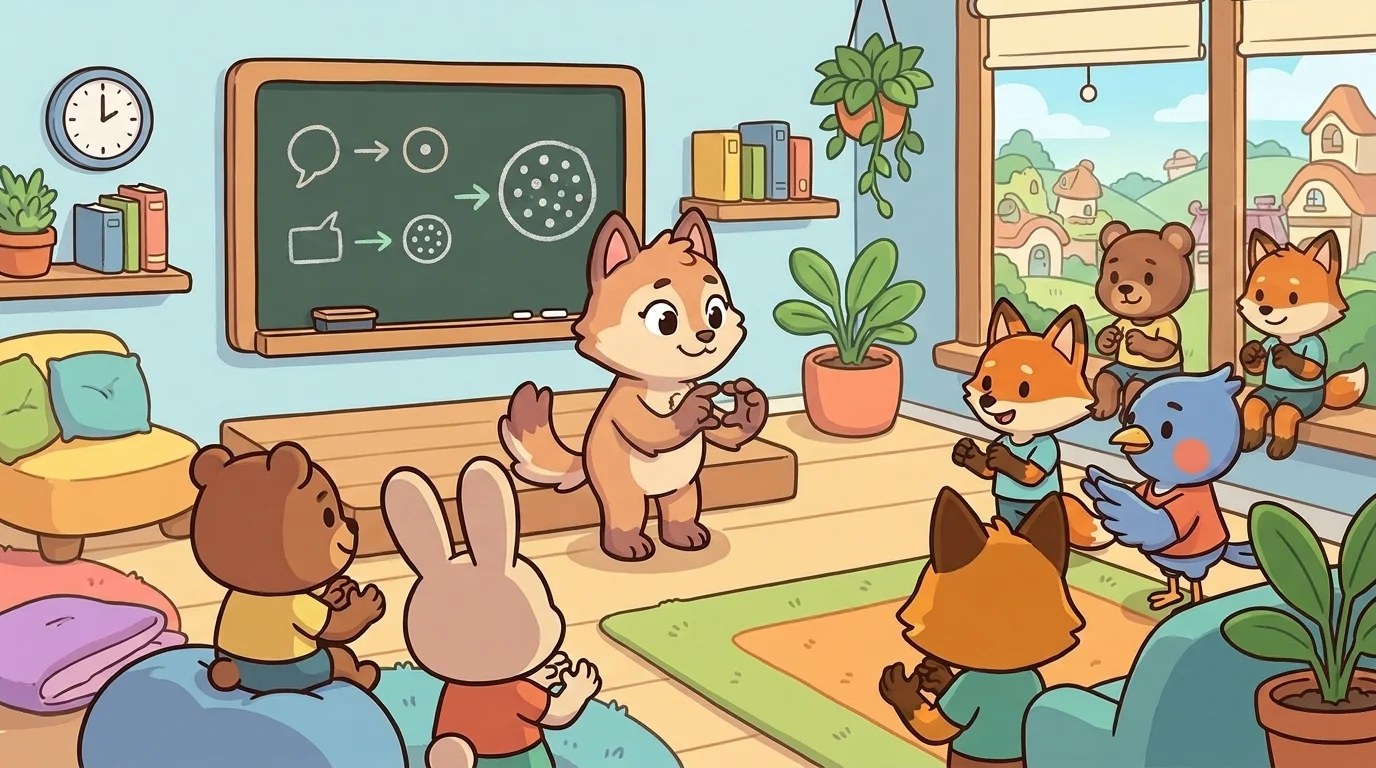
In her classroom, Touch begins every first day with her paws. She brings them close together. "Say it small," she tells the students, and gives an example — short, clear, no blaming: "I felt hurt when you forgot." Then she spreads her paws wide. "Listen big," she says, and shows them: she goes still, breathes slow, looks right at them, doesn't interrupt, doesn't plan her reply — she just listens, with her whole self.
Then, gently, she gets to repair. "Sometimes you'll say something mean. Sometimes someone will hurt your feelings. Sometimes you'll just misunderstand each other and both get mad. That's okay. That's normal. Friendships have bumps. Repair is how you smooth them." And she teaches her five-step repair, counting on her paws. First, name what happened: "I forgot your birthday last week." Second, own your part: "I'm really sorry — that wasn't okay of me." Third, ask what they need: "What would help you feel better?" — maybe they want to talk, maybe they want space. Fourth, offer what you can: "Could we do a special celebration this weekend, my treat?" Fifth, continue forward — don't pretend it never happened, but don't keep poking the bruise either. The hurt is mended; the friendship is strong again. The students are almost always surprised. So many of them believed good friends never fought. Touch teaches them the freeing opposite: good friends do bump — and then they fix it.
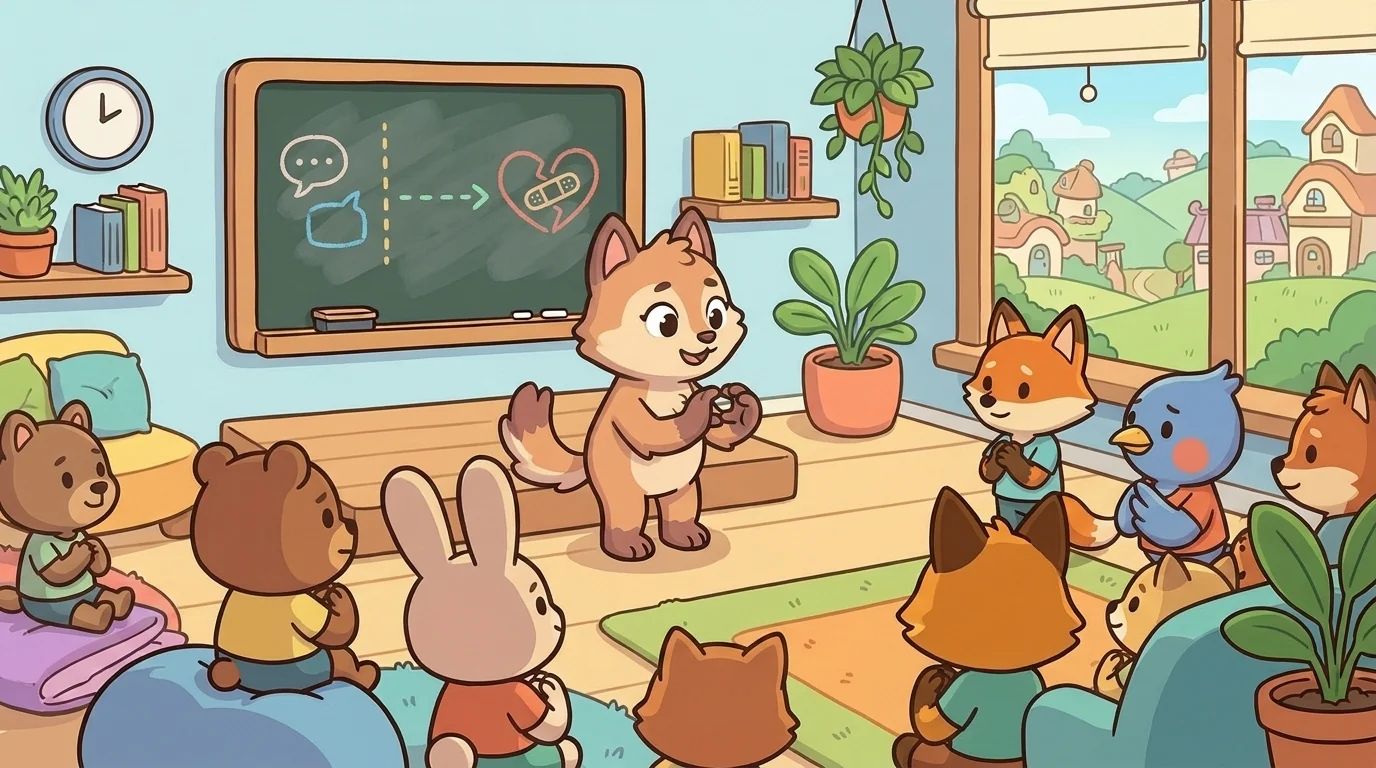
By the end, more than one student is quietly thinking of a friendship they'd like to go mend.
"Are relationship skills hard?" one asked her once. Touch shook her head. "They aren't hard. It's just three things. Say it small. Listen big. And repair when you need to. That third one makes friendships strong — because problems happen, and fixing them is the skill."
She brought her paws close, then spread them wide, then close again — like a small, slow dance. And the students felt the warmth of it settle into their own chests: that soft, mended, relieved feeling you get after you've patched something up with someone you love — the tightness in the chest loosening, the shoulders dropping — the quiet, hopeful gladness of learning that a bump in a friendship is never the end of it, and that they now held, in their own two hands, the small brave steps to mend one.
The MindForge ensemble
Touch is part of MindForge's distributed-narrative cast. Each character embodies a different curricular primitive; together they teach the full subject.
-

Inside
Self-awareness — emotion + thought + body awareness; 'Notice. Don't fix.'
-

Settle
Self-management — regulation + impulse + stress; 'One breath. Then I choose.'
-
Open
Social awareness — perspective + empathy + context; 'Their world. Then ours.'
-
Choose
Responsible decision-making — values + consequences + action; 'What matters? Then I act.'
-
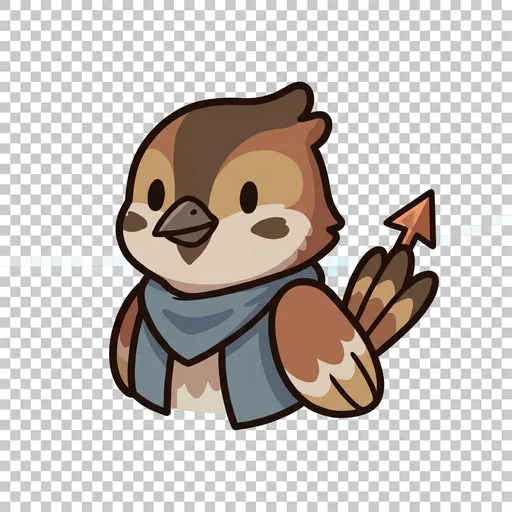
Vane
Names the exact feeling, not just good or bad, because the precise word points the way to what actually helps.
-

Ballast
Helps you stay steady inside a big feeling, like the weight that keeps a boat from tipping while the wave passes.
-
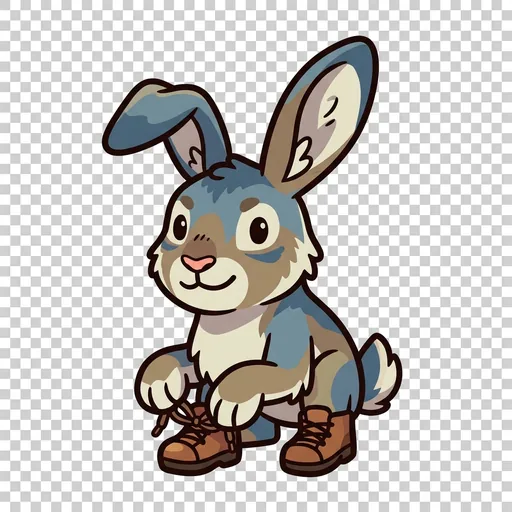
Vantage
Climbs to where someone else is standing, so you can see what they see instead of guessing.
-

Darn
Mends a small everyday rift early, before a little tear becomes a big hole.
-
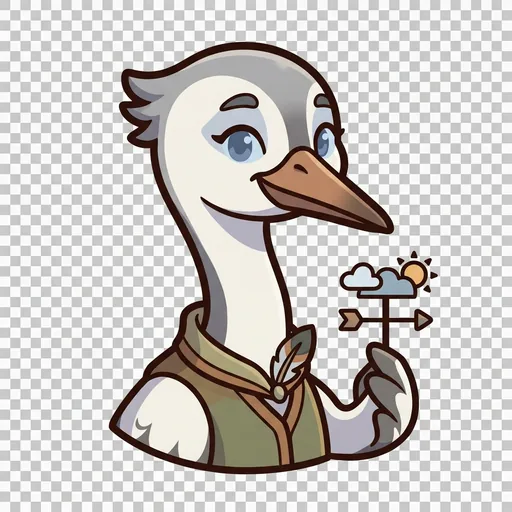
Forecast
Looks down the road of a choice to see where it leads, so your future self gets a vote too.