
Vane
EMOTIONAL GRANULARITY — moving from I feel bad to the precise feeling underneath, because the exact name changes what actually helps.
Loading audio…
Press play to listen along. The line being read lights up as you go.
Show full transcript
Loading transcript…
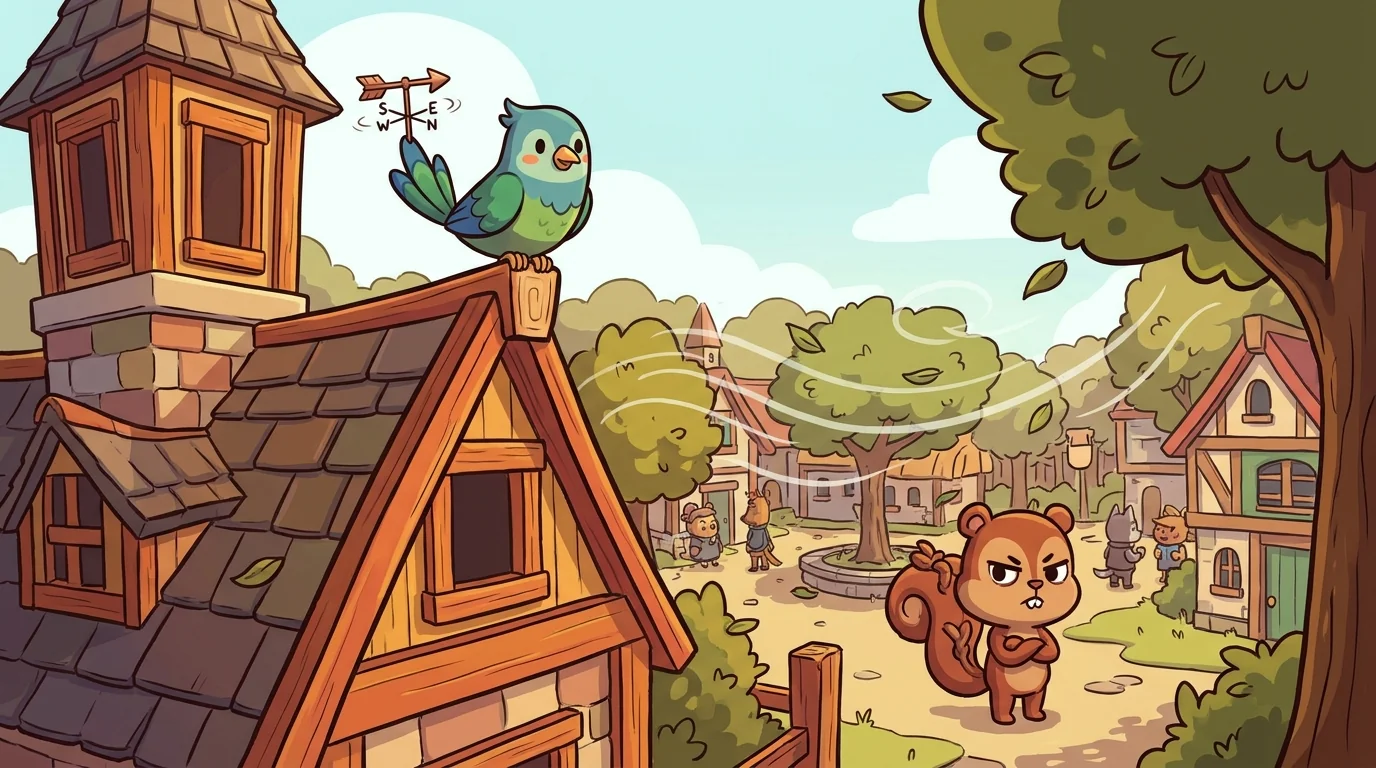
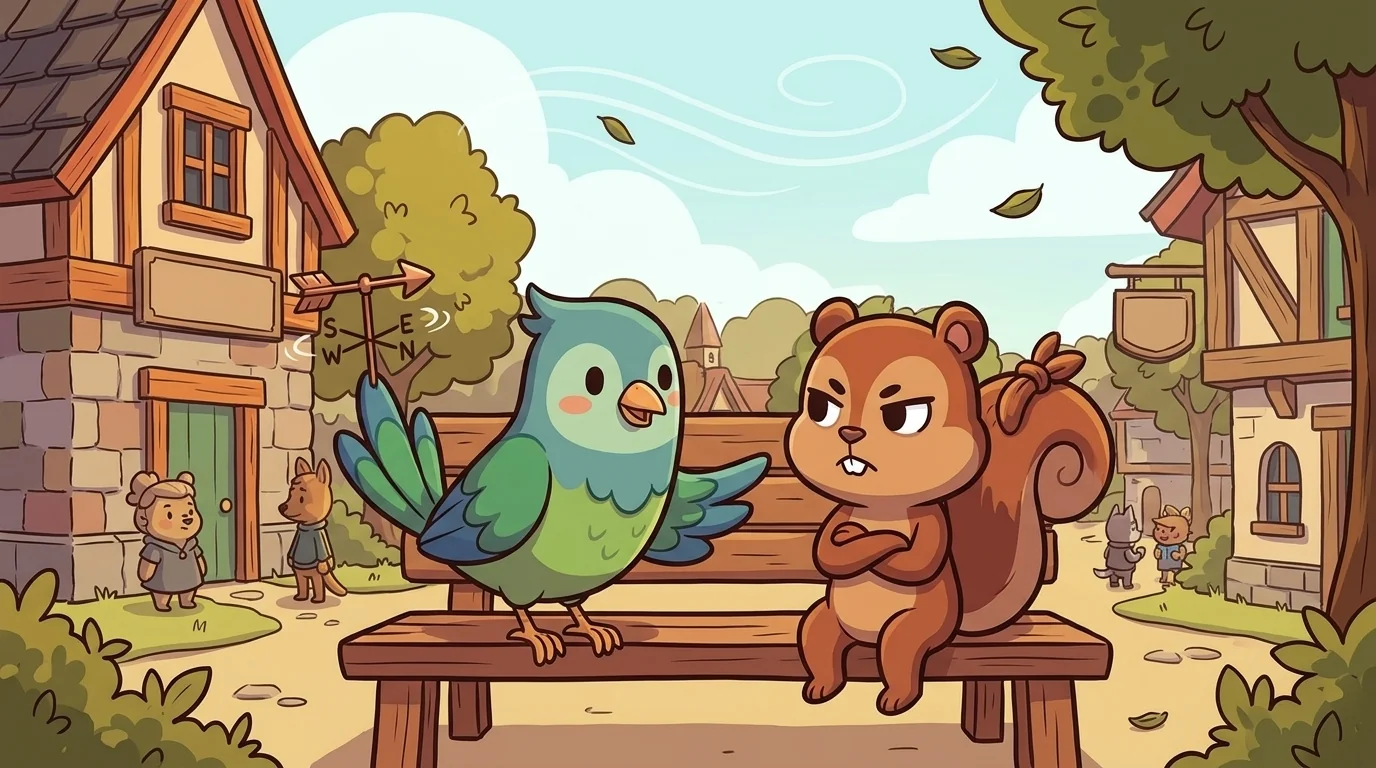
High on the roof of the MindForge academy sat a small bird named Vane, and on the tip of her tail spun a tiny copper arrow. Not a pretend one — it really turned, pointing wherever the wind came from.
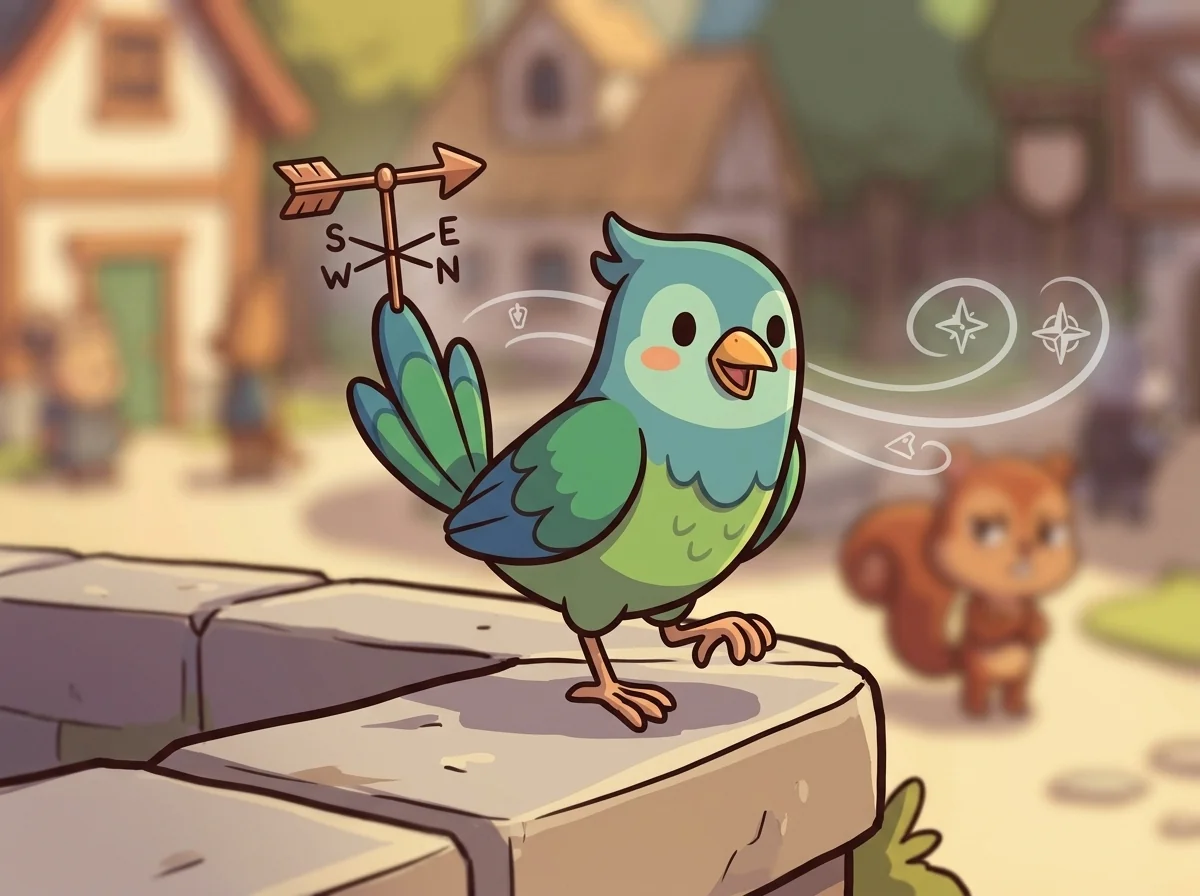
"Creatures say the wind is 'just wind,' as if there's one kind," Vane said, in a quick light voice like someone sharing a delightful secret. "But there's the wind that smells of rain, the wind that pushes you uphill, the wind that sneaks under the door. They feel the same for about a second. Then they don't. Feelings are the same — and here's the skill nobody teaches: telling them apart. Some creatures have only three words for everything they feel — good, bad, fine — and so every hard feeling arrives as one giant blur called 'bad.' Others have a whole cabinet of exact words. That cabinet isn't a luxury. It's the most useful tool you own, because the exact name changes what actually helps."
Down in the courtyard a young squirrel named Wren stood with her arms crossed and her tail in a knot. "I feel bad," she announced. "Just bad. That's it." Vane's copper arrow gave a small, interested spin, and she came down in three soft hops.
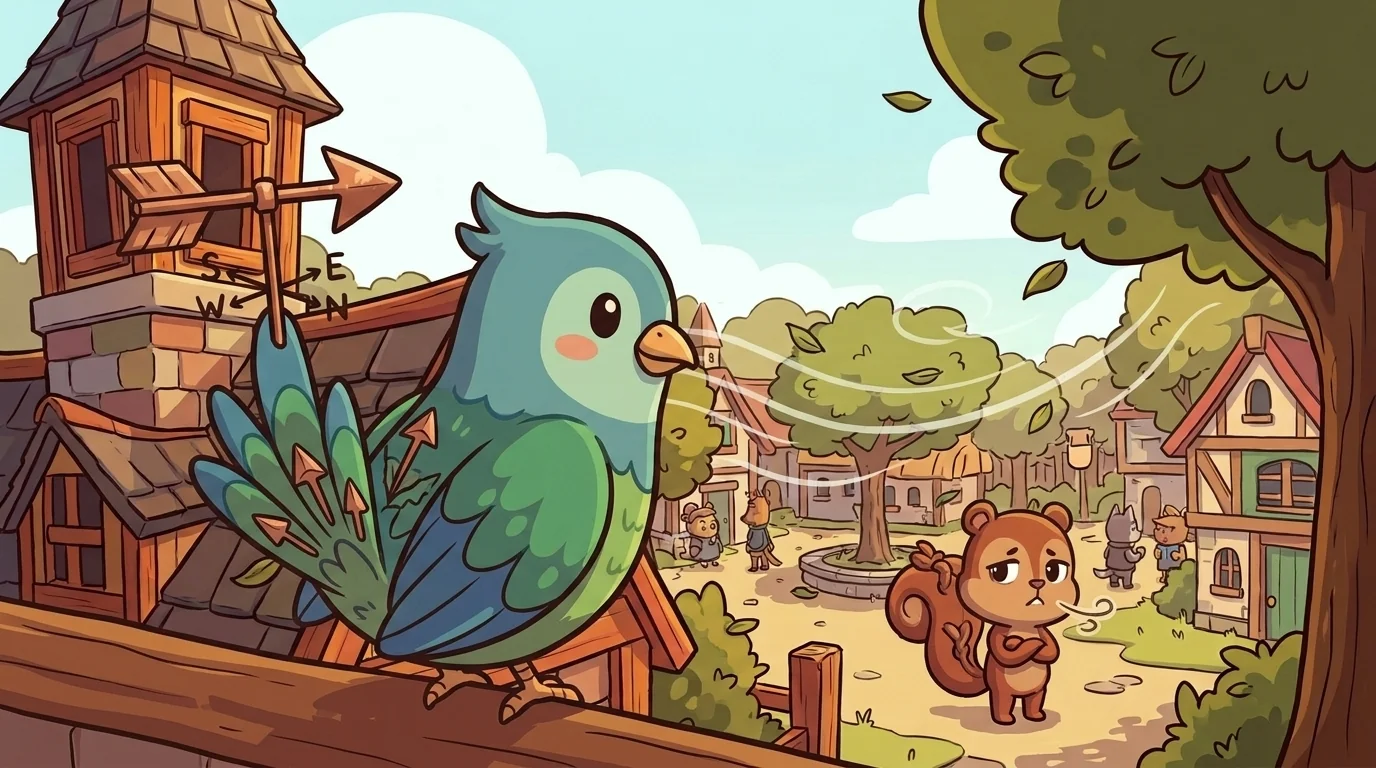
She did not say calm down — she never said that; it seemed to her like asking the weather to stop being weather. "'Bad' is a good place to start," she said. "But it's usually the front door. The real feeling is further down the hall." Her tail-arrow began to turn, slow and careful. "When you say 'bad' — is it hot and fast, like you want to stamp your foot? Heavy and slow, like your backpack filled with stones? Or small and sharp, like a pinch where no one can see?" Wren went quiet; the question had more room in it than she expected. "...The pinch one," she said. "The small sharp one." The arrow stopped, pointing gently at the sore spot.
They walked the long way around the courtyard. "There's a word for the small sharp one," Vane said. "Actually lots — that's the thing nobody tells you. Dozens of feelings wear the same coat called 'bad,' and each one wants a different thing. Angry wants to push. Scared wants to hide. Embarrassed wants to disappear. Lonely wants to be found. From far away they look alike. Up close they're as different as four kinds of wind — and, more importantly, they point you toward four different doors." Her eyes went bright. "That's why the exact name matters. What helps angry doesn't help lonely. Stamp your foot when you're really lonely and you end up alone and tired. Find the true name and it points you at the thing that actually helps. The word is a compass, Wren — not a label. A compass to the need underneath."
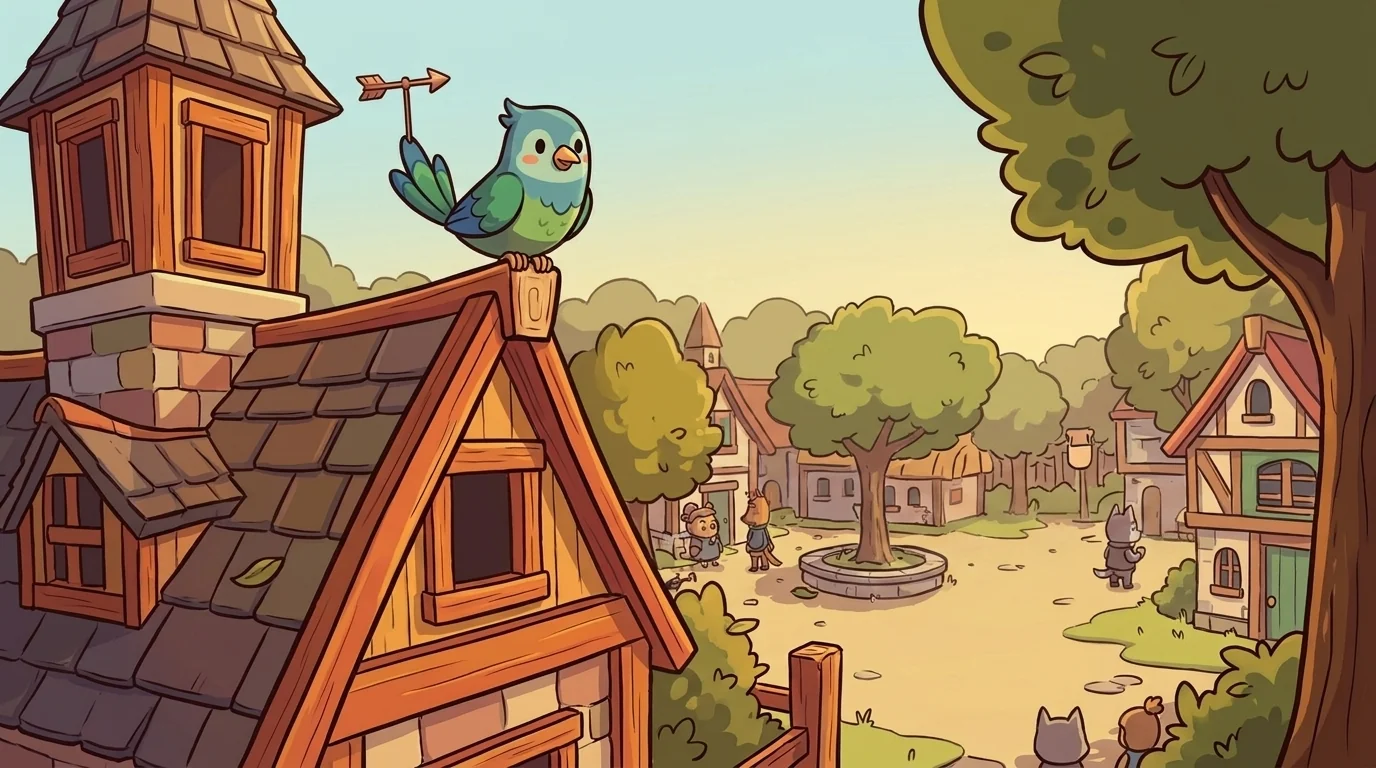
"Okay," said Wren. "The small sharp one. Where does it point?" "Don't reach for the word," said Vane. "Let it come. When did the pinch start?" "At lunch. Everyone was planning the weekend. And nobody—" She stopped; the arrow swung, sure and steady. "Nobody asked me." "Angry would want to push the table over," Vane offered. "Does that fit?" Wren shook her head. "No. I want to be at it." "There's your word," Vane said softly. "Not angry. Left out. And left out doesn't want a stamped foot — it wants to be included. Now you know which way to walk: toward someone, not away." And the strangest thing: nothing about lunch had changed, yet the knot in Wren's tail loosened by one loop — because just putting the true, exact name on a feeling turns the volume down on the alarm, and the real name was so much smaller and more solvable than "bad."
That evening Sage found them on the wall, the arrow turning idly. "She thought she was just 'bad,'" Vane reported. "Turned out she was left out. Whole different wind." "And how does left out feel," Sage asked Wren, "now it has its name?" Wren considered. The pinch was still there, a little — but it had edges now, and a direction. "Like something I can do something about," she said. "Less like a wall, more like a path. Lighter, just from knowing what it's actually called." Vane's tail-arrow gave one happy spin and went still.
The MindForge ensemble
Vane is part of MindForge's distributed-narrative cast. Each character embodies a different curricular primitive; together they teach the full subject.
-

Inside
Self-awareness — emotion + thought + body awareness; 'Notice. Don't fix.'
-
Settle
Self-management — regulation + impulse + stress; 'One breath. Then I choose.'
-

Open
Social awareness — perspective + empathy + context; 'Their world. Then ours.'
-

Touch
Relationship skills — communication + boundaries + repair; 'Say it small. Listen big.'
-
Choose
Responsible decision-making — values + consequences + action; 'What matters? Then I act.'
-

Ballast
Helps you stay steady inside a big feeling, like the weight that keeps a boat from tipping while the wave passes.
-
Vantage
Climbs to where someone else is standing, so you can see what they see instead of guessing.
-
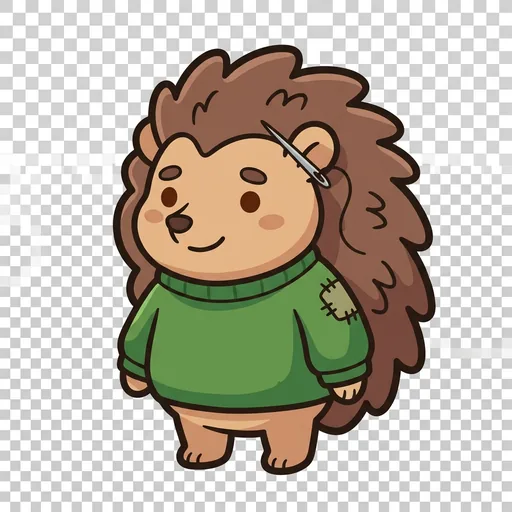
Darn
Mends a small everyday rift early, before a little tear becomes a big hole.
-
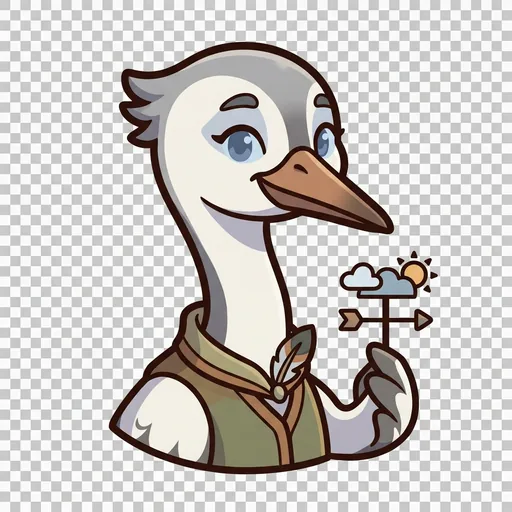
Forecast
Looks down the road of a choice to see where it leads, so your future self gets a vote too.