
Ply
TEXTURE — *how many things are happening at once.* Texture is how thick or thin the music is — one voice alone, or many woven together. A single tune is bare and intimate; many layers stacked up are lush and full. Knowing when to add a layer and when to strip away is the art.
Loading audio…
Press play to listen along. The line being read lights up as you go.
Show full transcript
Loading transcript…
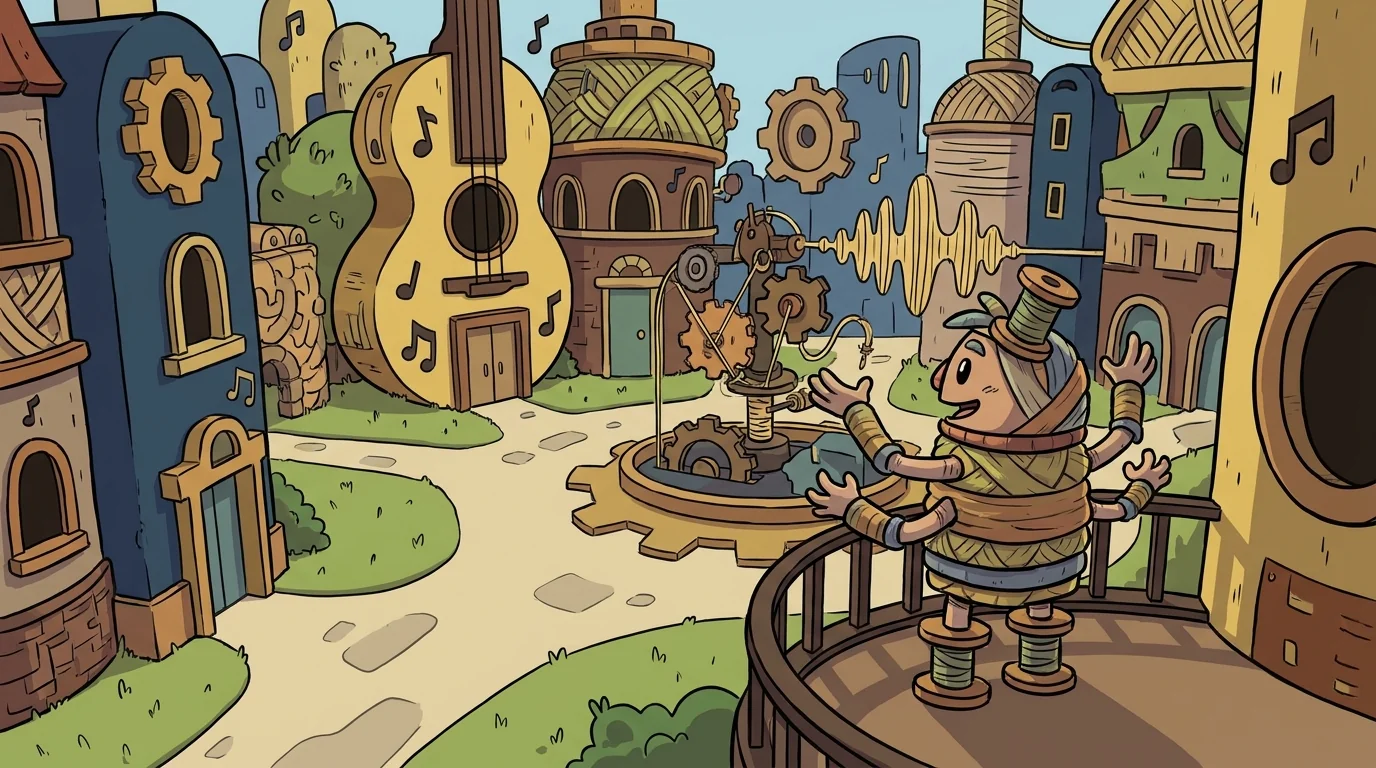
At the MotifLab academy, where a small tune named Trill was the hero of every song, there lived a thoughtful, many-handed creature named Ply — and Ply decided how many things happened at once.
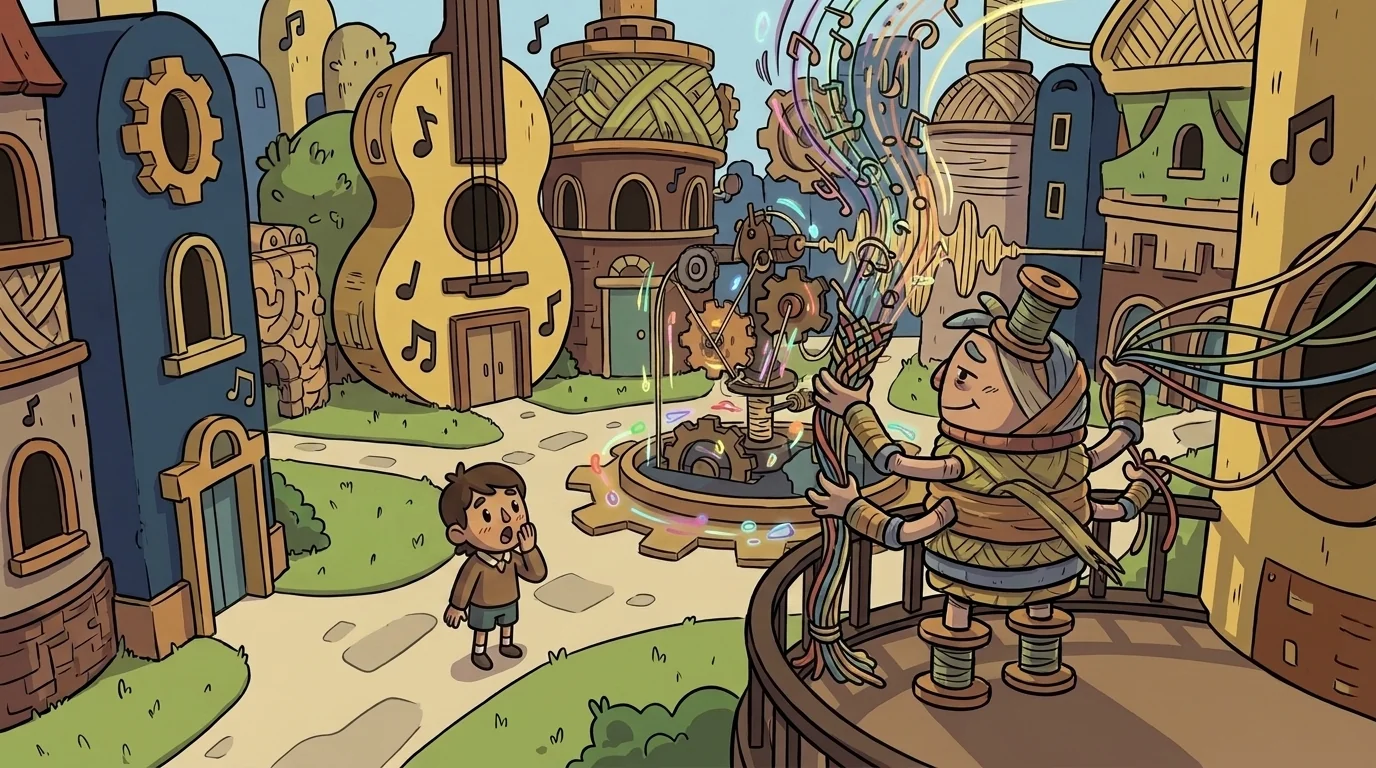
When Trill sang alone, his single tune was bare and intimate, like one voice in a quiet room. Then Ply could begin to layer: adding Meld's harmony, then Thrum's bass, then Twine's counter-tune — stacking sound until the music was thick, lush, and full. Or she could do the opposite, peeling layers away until only Trill's bare little song remained. Same melody at the center; completely different feeling, depending on how much was woven around it.
"You can make it huge OR tiny just by adding and taking away other sounds!" a young composer said.
"That's texture," Ply said, miming weaving threads together, then pulling them apart. "I'm Ply. I keep the texture — how many things are happening at once. One voice alone is bare and intimate. Many layers stacked up are lush and full. Knowing when to add a layer and when to strip one away — that's the art."
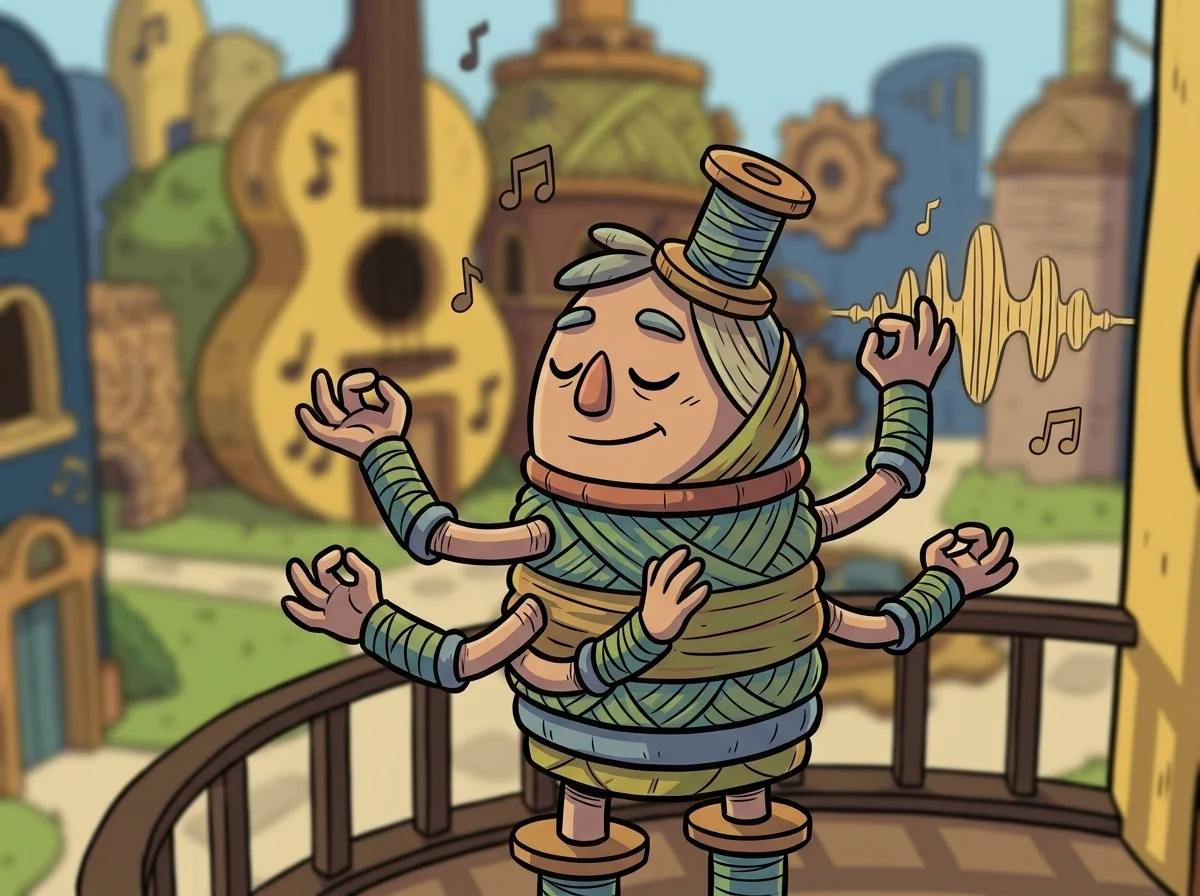
Trill sang his motif. Ply demonstrated: she piled on every layer at full thickness, all the time — and it became a wall of mush where you couldn't hear anything clearly. "Too thick," she said. "When everything plays at once, nothing stands out." Then she shaped it: started bare with just Trill, slowly added layers as the song grew, then stripped back to bare Trill for the tender ending. The room felt the music open up and close in. "Texture isn't more is better. It's the right amount at the right moment."
A young composer considered. "So sometimes I should take sounds away?"
"Often," Ply said. "A bare, single voice after a big thick moment can be the most powerful thing in the song. Adding is exciting — but stripping away is where the heart shows. Both are texture."
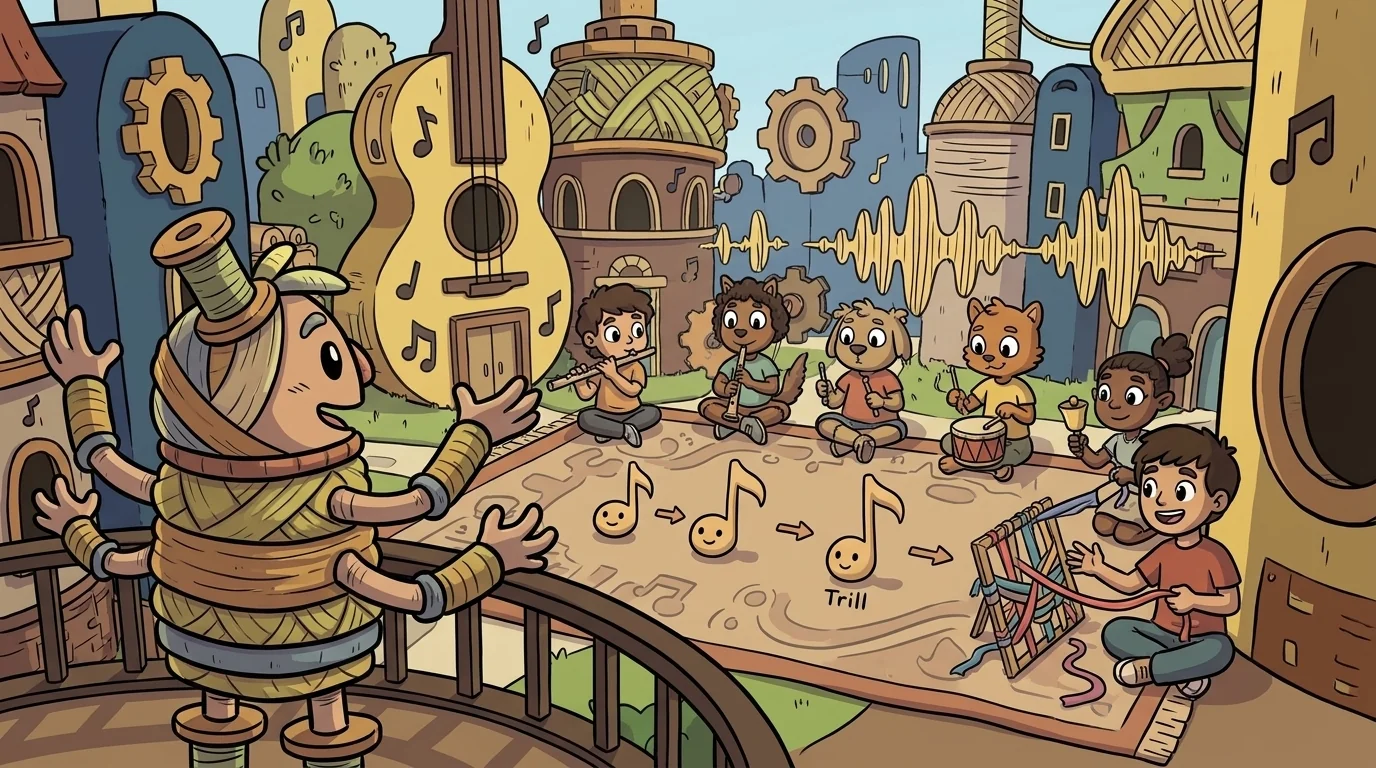
The instructor asked Ply to teach. "The students either leave everything bare or pile on so much it's mush," the instructor said. "Will you teach them to weave?"
Ply was glad to. When she teaches, she gives one rule: "Think about how thick you want the music at each moment. Start by deciding what the listener should hear clearly. Add layers to build fullness — but only as many as still let the melody breathe. And don't forget to strip back: a bare moment can say more than a full one. Add for power; subtract for heart."
A young composer built Trill's piece from one bare voice up to a lush peak, then stripped it back to bare Trill at the close. The room felt the whole shape of it. "It's like the song opened and then leaned in close," the composer said. "That's texture," Ply smiled.
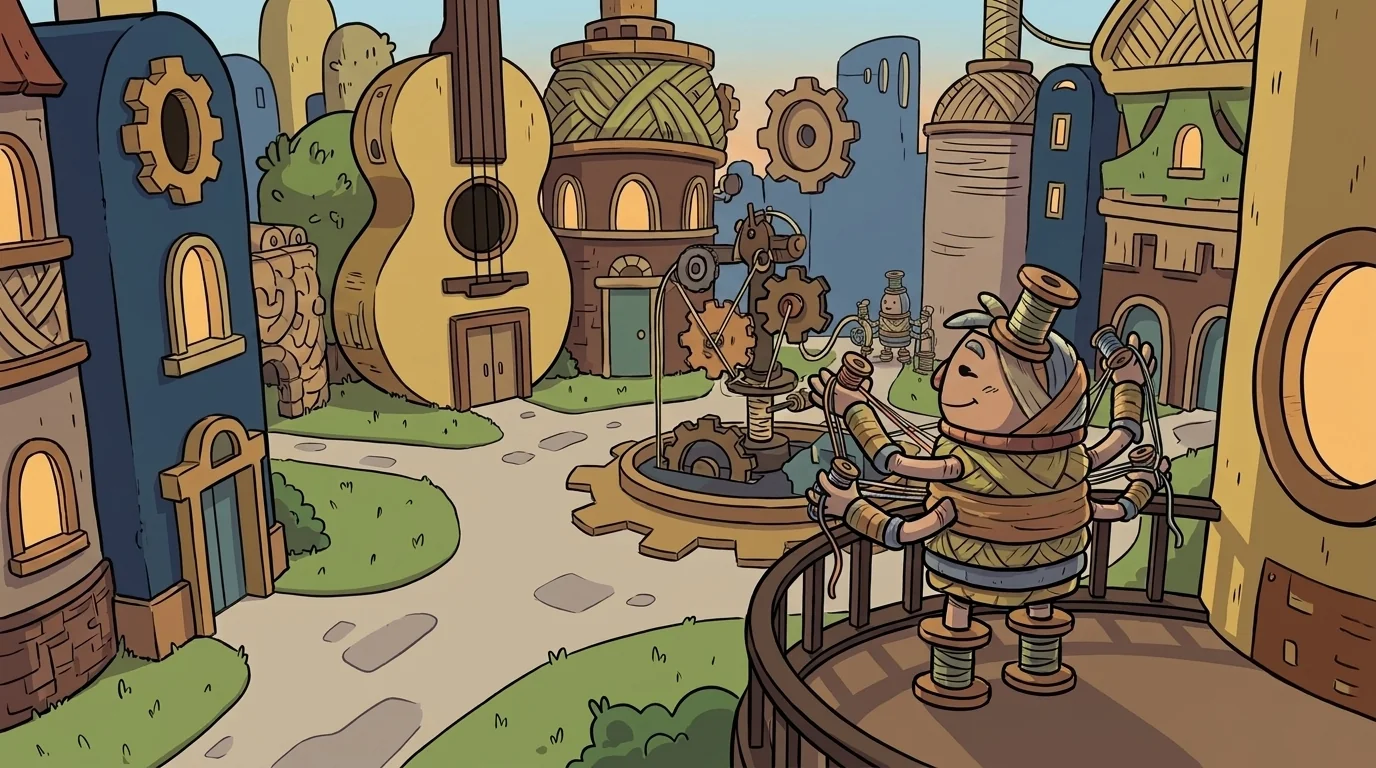
After class, Ply rested, idly weaving and unweaving a few threads between her many hands, the way she liked to think.
For a long time, Ply had carried a quiet uncertainty. Her whole job was about other sounds — how many of them, how thick, how thin. She never made a sound of her own; she just decided how much of everyone else you heard. She'd wondered if managing other voices meant she had no voice at all.
But resting there, weaving her threads, remembering how the room had felt the song open wide and then lean in close, Ply felt her uncertainty settle into a calm, woven contentment. Deciding the texture was her voice — the one that shaped how full or how bare, how overwhelming or how intimate every moment felt. Knowing when to pile on and when to strip away was a real and subtle art, and the whole shape of a song's feeling passed through her hands. A quiet, layered gladness settled over her, and she wove one more thread, content, ready to shape tomorrow's song thick and thin.
The MotifLab ensemble
Ply is part of MotifLab's distributed-narrative cast. Each character embodies a different curricular primitive; together they teach the full subject.
-

Trill
The motif itself — visual posture shifts as the motif develops, inverts, fragments
-

Meld
Harmony — notes that bloom underneath to support the melody
-

Thrum
Bass — the deep low foundation the whole song stands on
-

Clap
Rhythm — the steady beat pattern the song walks on
-

Twine
Counter-melody — a second tune that weaves against the main one
-

Surge
Dynamics — how loud and soft; how a song breathes
-

Tint
Timbre — the color or flavor of a sound
-

Nest
Key — the home note the song keeps returning to
-

Wend
Cadence — how a phrase comes to rest; the song's punctuation