
Twine
COUNTER-MELODY — a second, independent tune that weaves against the first: it plays at the same time as the main melody without copying it or fighting it, moving in the gaps the main tune leaves and resting where the main tune sings, so two lines braid into something richer than either alone.
Loading audio…
Press play to listen along. The line being read lights up as you go.
Show full transcript
Loading transcript…
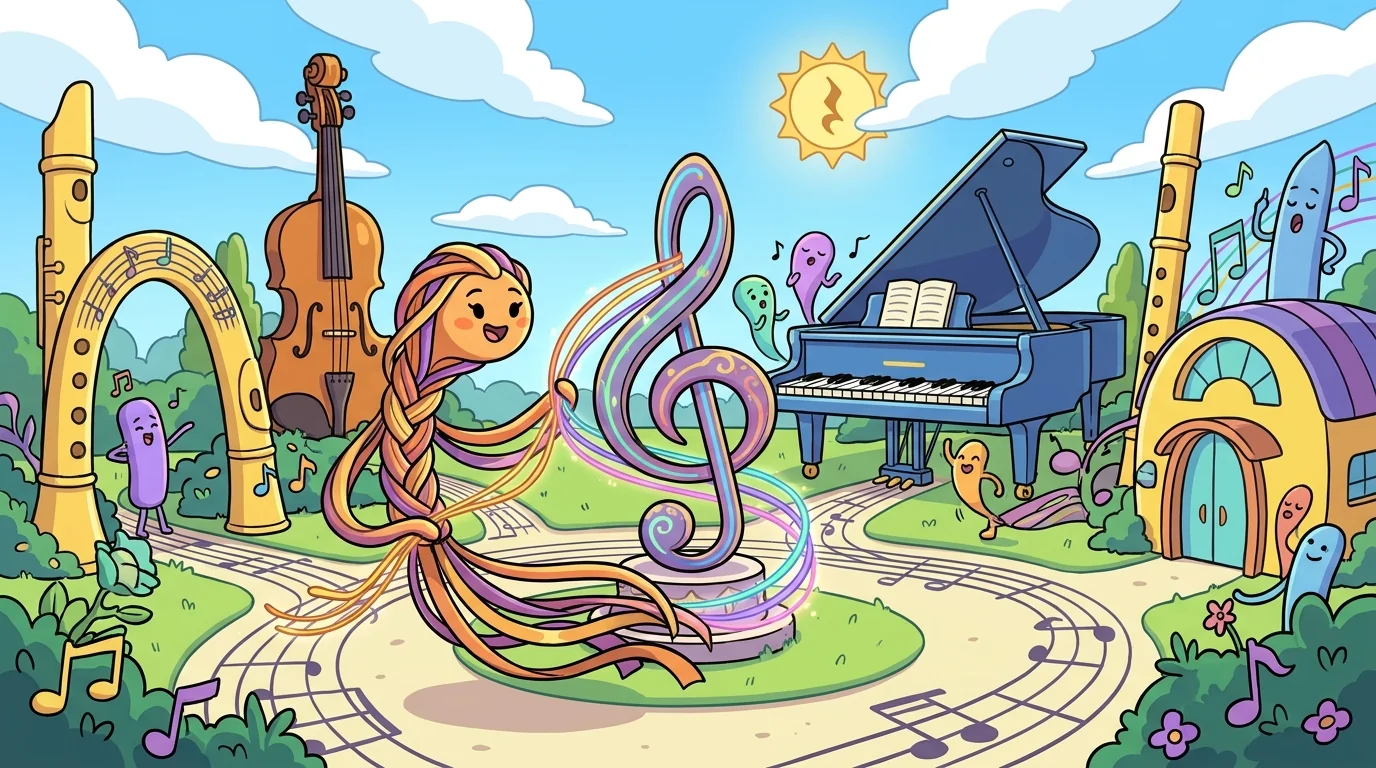
At the MotifLab academy, where a small tune named Trill was the hero of every song, there lived a graceful, quick creature named Twine — and Twine's whole art was singing her own independent melody at the very same moment as someone else's, so precisely braided that the two never once collided.
When Trill sang his four-note motif, Twine slipped in beside him with a different line — not a copy, not a harmony stacked vertically beneath, but a melody of its own, moving horizontally against his. Where Trill sustained, Twine moved; where Trill leapt, Twine held. Two independent voices, each complete, braided into a single texture richer than either could be alone. "That," she said, tracing a braid in the air, "is counterpoint — two tunes that listen to each other so closely they seem to finish one another's thoughts."
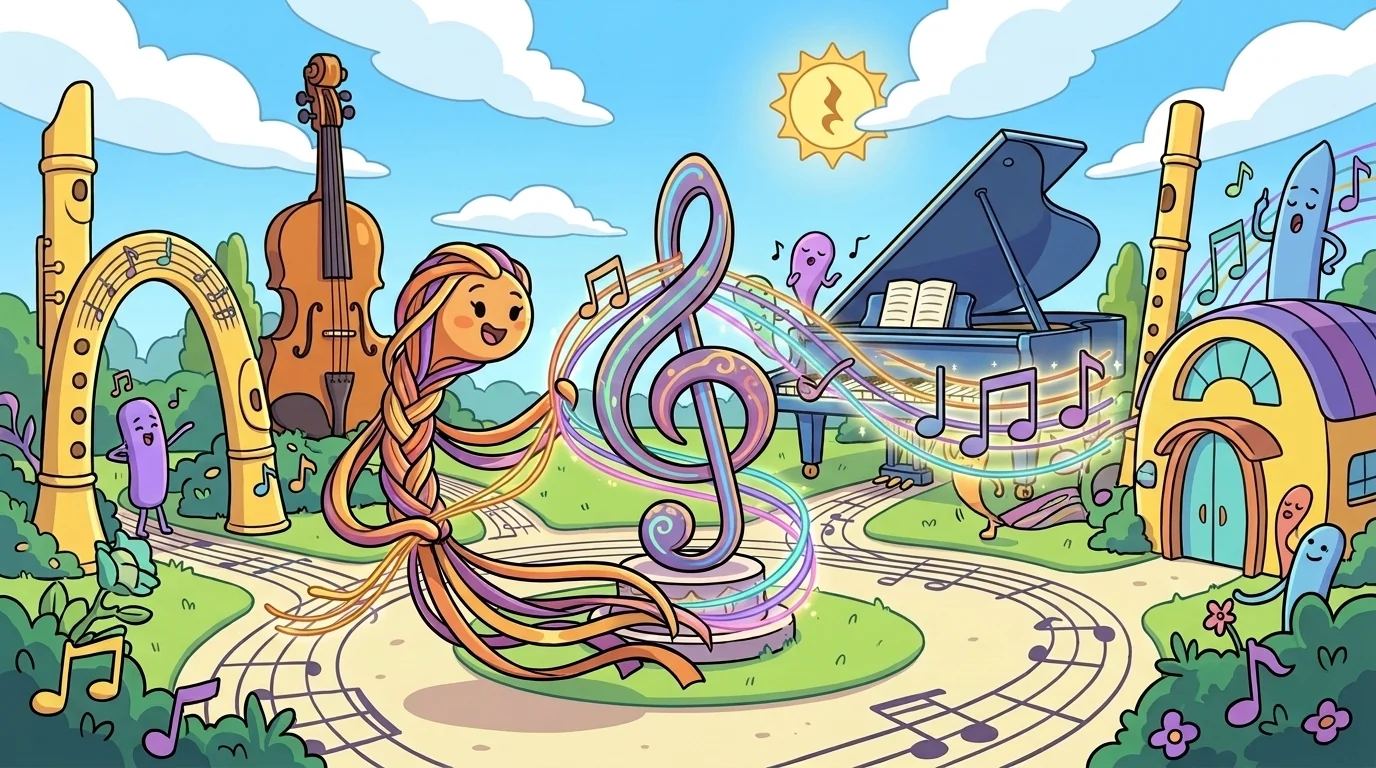
Twine demonstrated the failure first, because it teaches faster than the success. She sang a counter-line that crowded every one of Trill's notes — both voices busy in the same instant, each fighting for the same air. The result was not richness but noise: a tangled, undifferentiated mess where neither line could be heard.
"Too much," she said, stopping. "When two melodies move in exactly the same rhythm at exactly the same moment, they stop being two voices and become one muddy blur. The ear can't separate them, so it hears neither." She let the tangle fall silent. "A counter-melody isn't a second melody played loudly alongside the first. It's a second melody played considerately — one that knows where the main tune is at every instant, and deliberately goes elsewhere."
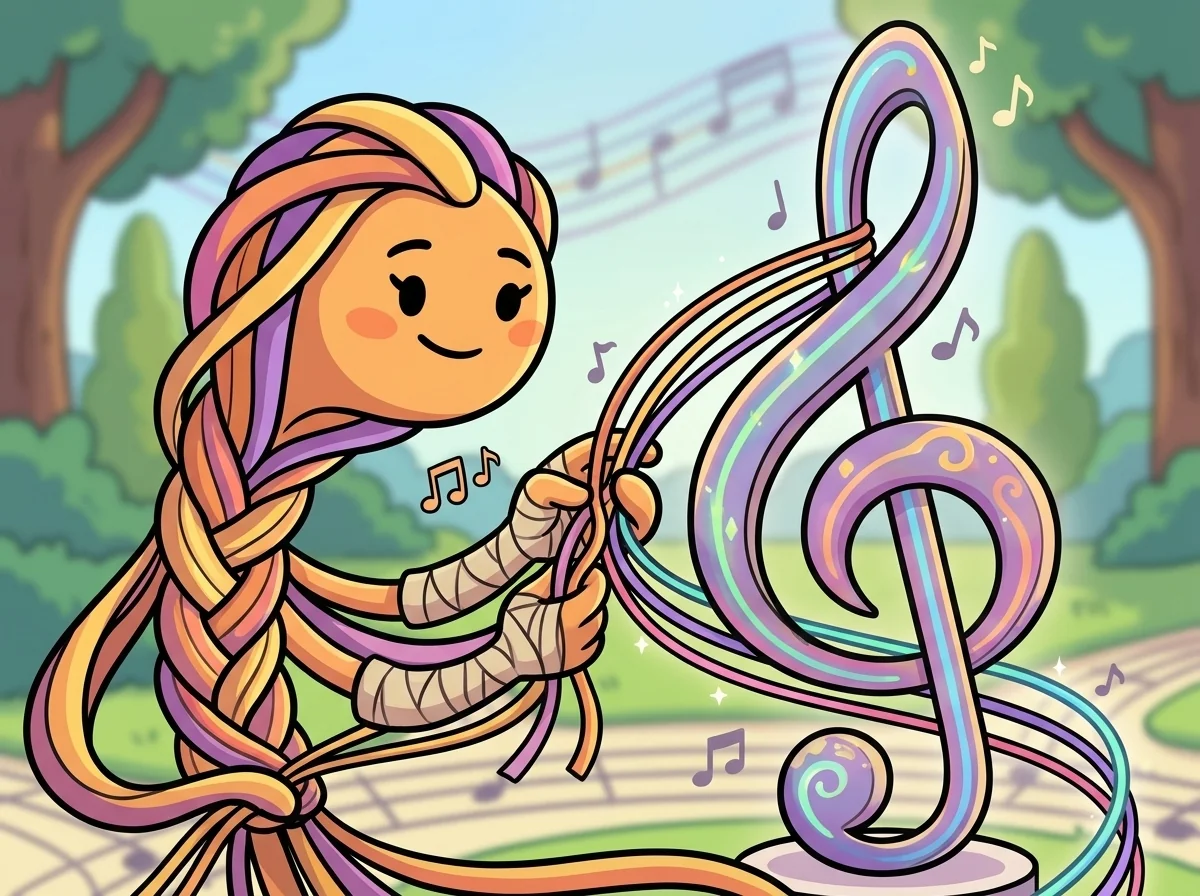
Then she did it correctly, and the difference was total. Twine moved into the gaps — filling the silences where Trill rested, going still the moment Trill sang, answering his long notes with motion and his motion with stillness. The two lines interlocked like fingers, each one's activity landing exactly where the other's was quiet.
"Hear it now," she said. "I move where he's still. I rest where he sings. We share the space instead of fighting for it." A young composer listened, wide-eyed, as the two independent tunes braided into a single glowing texture. "So you have to know Trill's melody the whole time?" the composer asked. "Constantly," Twine said. "A counter-melody that ignores the main tune is just noise happening nearby. I have to hold his line in my ear almost as clearly as my own — because every choice I make is a response to where he is. Counterpoint is listening made audible."
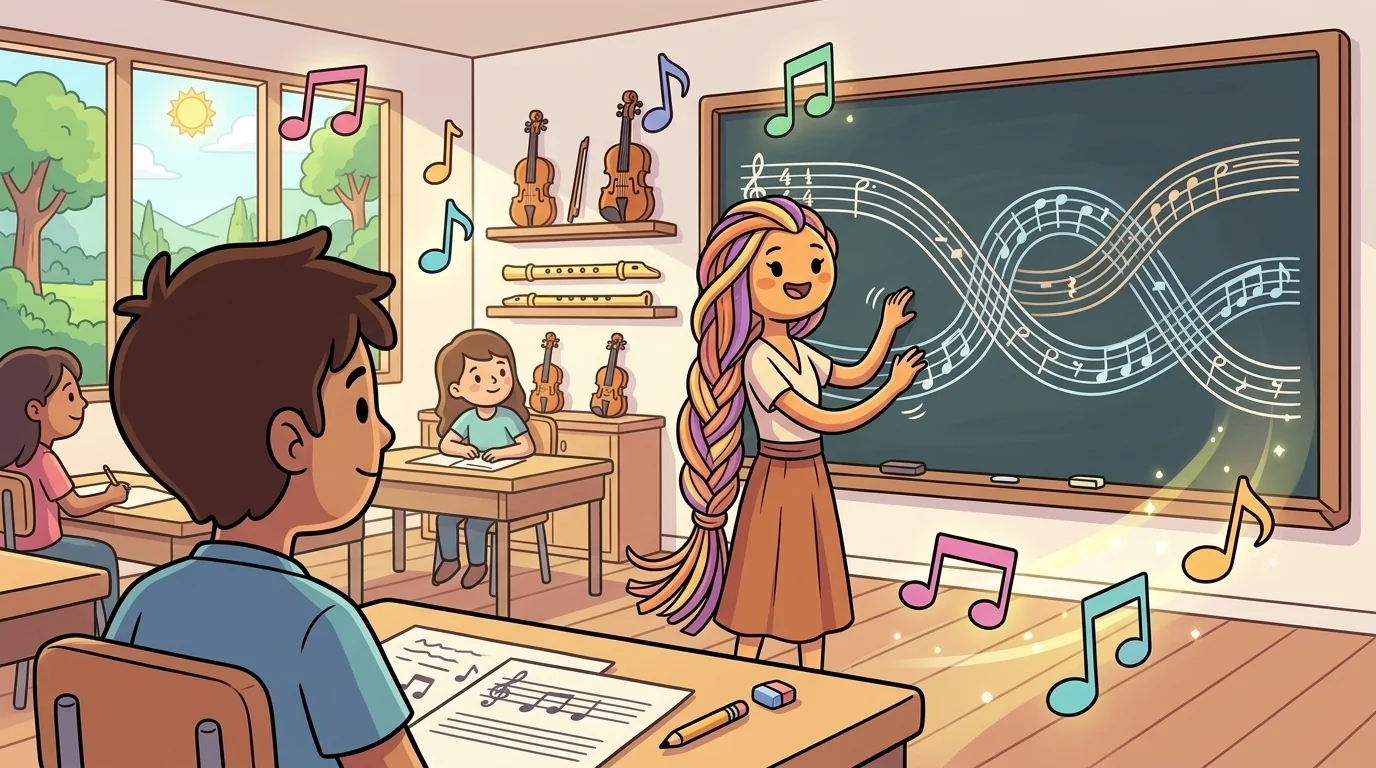
The instructor, Thalia, asked Twine to teach — the students' pieces were either one lonely tune or two tunes at war. Twine gave them a single working method. "Keep the main melody as the hero; never bury it. Then write a second independent line — its own real tune, not a shadow of the first. And govern it by one rule: move in the gaps. When the main tune holds, your line may dance; when the main tune is busy, your line should rest or sustain. Above all, listen to the main melody the entire time you write — because a counter-melody is not composed first and forced to fit; it is composed in answer." A young composer wrote a gentle line that moved only when Trill paused, and the two braided so cleanly the room sighed. "It's like they're completing each other," the composer whispered. "That," Twine said, "is two voices, one weave."
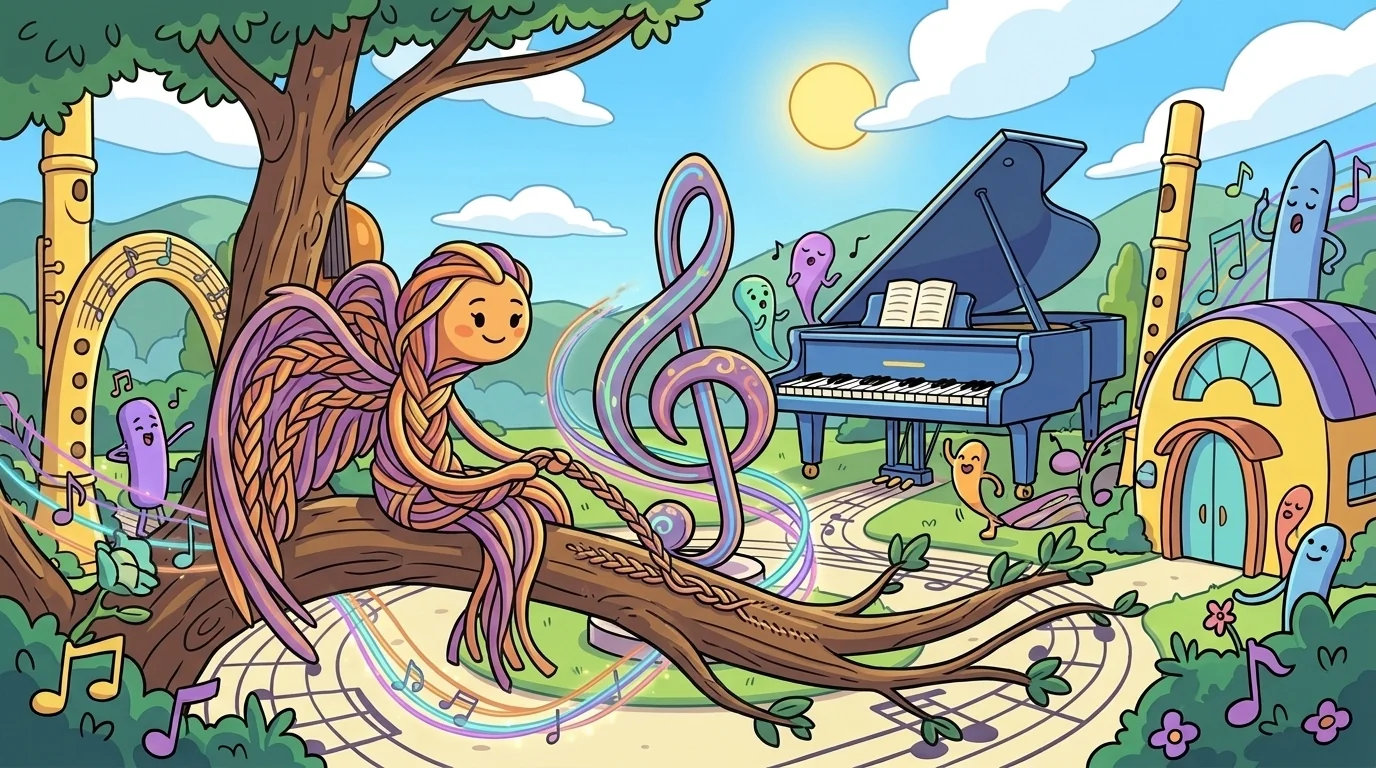
After class, Twine settled onto a branch and traced slow braiding patterns with one wing, the way she did when she was content. For a long time she had carried a quiet worry: her whole art lived around someone else's, in the gaps and the spaces, never the melody in the center. She had wondered whether always weaving around Trill meant she would never simply sing her own song, full and free, at the front.
But resting there, remembering how her line and Trill's had braided into something that made the whole room exhale, the worry softened into a settled gladness. Weaving around another voice was not a lesser art — it was the art of making something neither voice could make alone. Her tune and Trill's, braided, were unmistakably richer than either solo, and the rare discipline of listening so closely that she could dance inside his silences belonged, fully, to her. She traced one more braid, content, and was ready to weave into tomorrow's song.
The MotifLab ensemble
Twine is part of MotifLab's distributed-narrative cast. Each character embodies a different curricular primitive; together they teach the full subject.
-

Trill
The motif itself — visual posture shifts as the motif develops, inverts, fragments
-
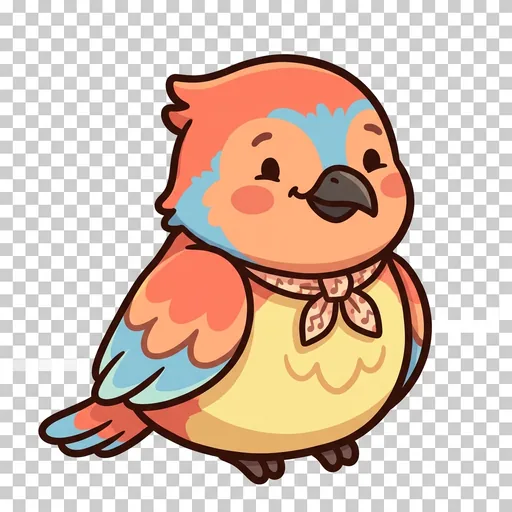
Meld
Harmony — notes that bloom underneath to support the melody
-
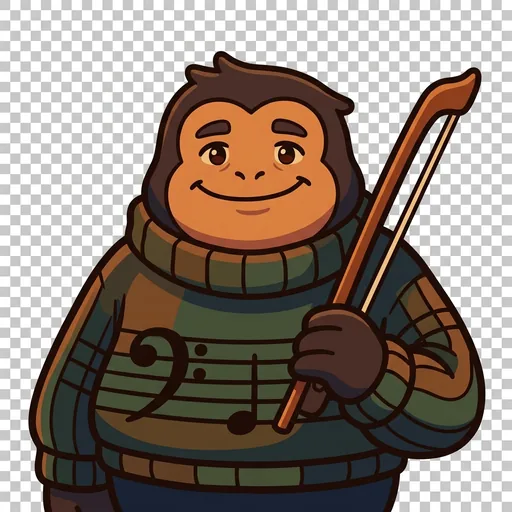
Thrum
Bass — the deep low foundation the whole song stands on
-

Clap
Rhythm — the steady beat pattern the song walks on
-

Surge
Dynamics — how loud and soft; how a song breathes
-
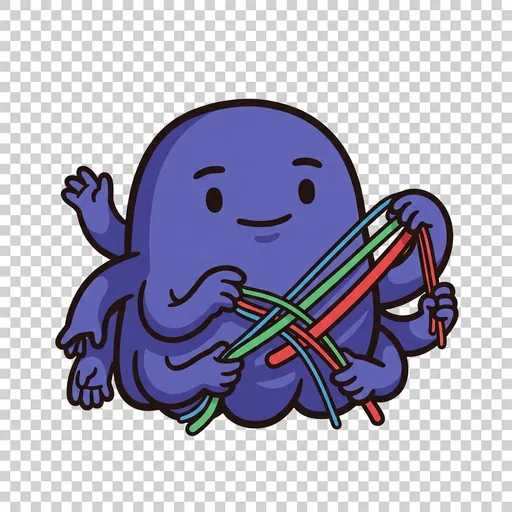
Ply
Texture — how many layers sound at once; thick or thin
-

Tint
Timbre — the color or flavor of a sound
-
Nest
Key — the home note the song keeps returning to
-

Wend
Cadence — how a phrase comes to rest; the song's punctuation