
Wend
CADENCE — the way a phrase comes to rest: the little landing at the close of a musical sentence. Some cadences feel finished and settled, some leave the listener hanging and wanting more; endings are punctuation, and choosing a phrase's period, comma, or question mark shapes how the whole phrase feels.
Loading audio…
Press play to listen along. The line being read lights up as you go.
Show full transcript
Loading transcript…
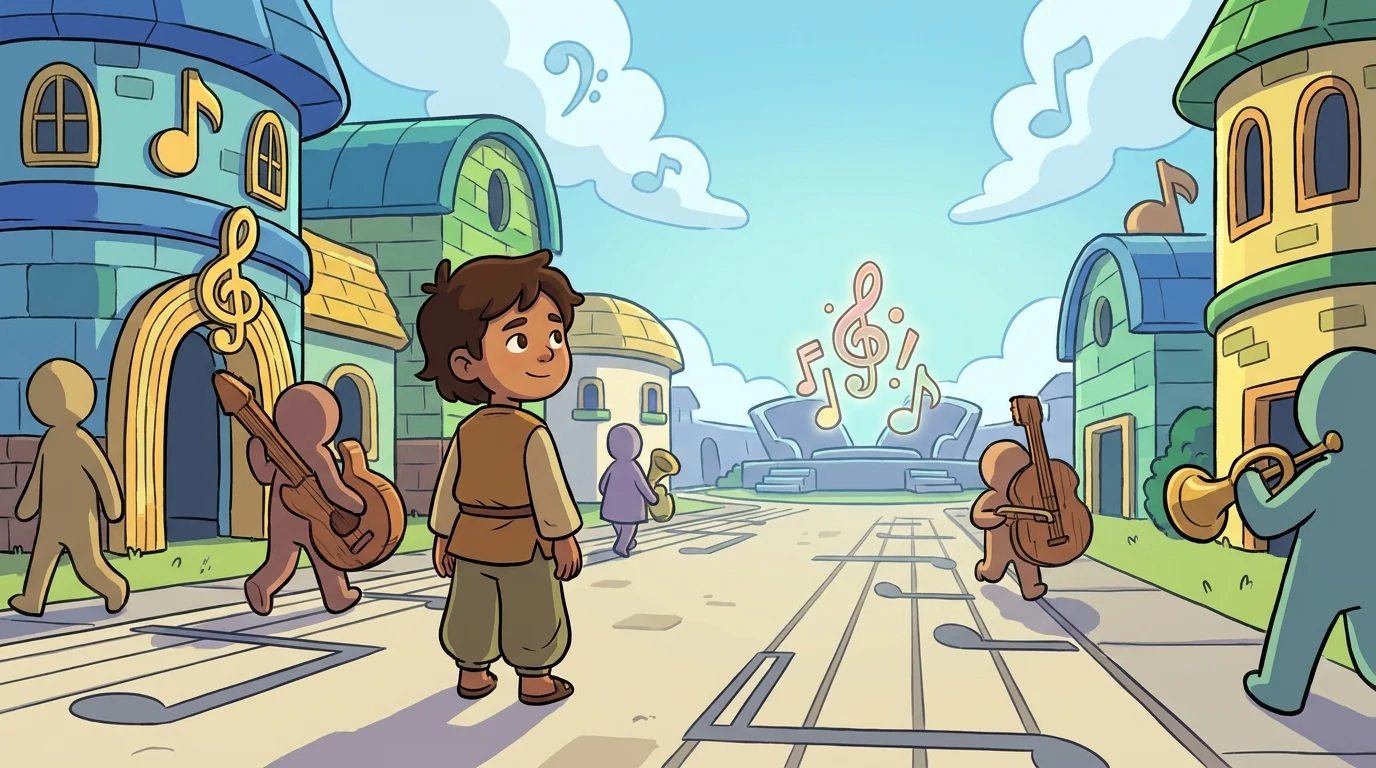
At the MotifLab academy, where a small tune named Trill was the hero of every song, there lived a thoughtful, gentle creature named Wend — and Wend cared, above everything, about how things end. Every musical phrase, she understood, is a sentence, and the way its final notes come to rest is its punctuation. She shaped that landing with a jeweller's care.
Some of her endings arrived home and settled — a full stop, a door drawn quietly shut. Others hung in the air, unresolved, tilting the listener forward — a comma, or a question mark held open. When Trill finished a phrase, it was Wend who decided whether it felt concluded or still asking — and that single choice changed how the entire phrase was felt in memory.
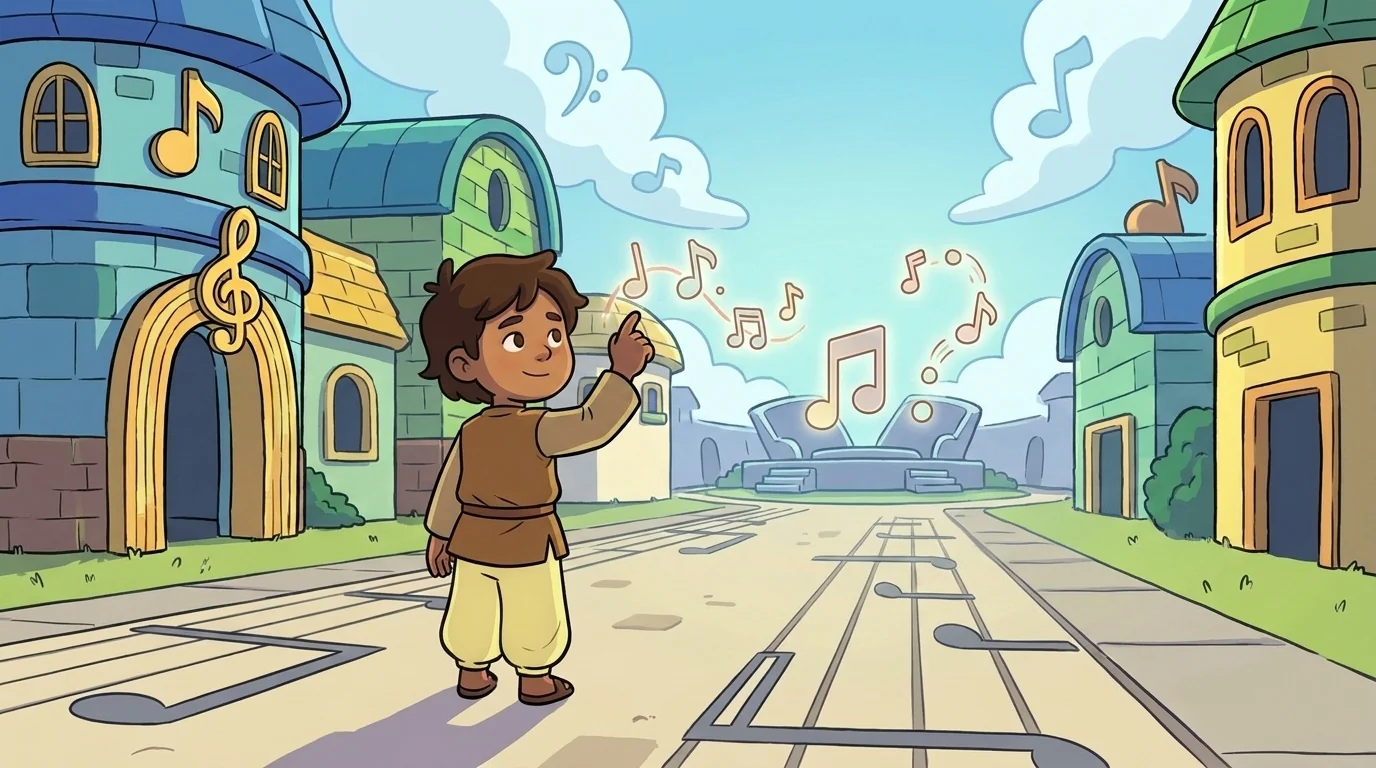
Wend demonstrated the two poles on one of Trill's phrases. First she landed it on the home note, low and resolved: the phrase simply ended, complete and closed. "A full stop," she said. "The sentence is finished; the ear is at rest." Then she took the identical phrase and lifted its final note up and away, into an unresolved suspension — and the whole room leaned in, waiting for a continuation that hadn't yet come.
"A question mark," Wend said. "The same notes, a different close, and now the phrase is asking. It needs an answer, and the listener will lean forward until it arrives." She let the open ending hang a beat longer than was comfortable, and every head tilted toward it. "That leaning-forward is not an accident. It is something you engineer, by choosing how the phrase comes to rest."
Then she named the craft behind the choice. "A song built entirely of full stops feels choppy — every phrase slams shut, and the piece never flows. A song built entirely of question marks is exhausting — nothing ever settles, so the listener never gets to rest. The art is alternation: settle here, open there, so the music breathes between arrival and anticipation." She traced a long line of gentle landing-curves. "And there is one more rule, the most important: save your strongest, most conclusive cadence for the very last phrase. Every earlier ending should point toward it — so that when the true full stop finally lands, the whole song is felt to arrive."

The instructor, Thalia, asked Wend to teach — the students' phrases all closed the same way, or simply stopped at random, so nothing felt shaped. Wend gave them one working method. "Treat every phrase as a sentence and choose its punctuation on purpose. Want the listener settled? Land it home. Want them pulled forward? Leave it open, asking. Vary the two so the piece breathes. And make the final cadence the most finished of all — the real period at the end of the whole song." A young composer ended Trill's middle phrases with soft question marks and the last with a settled full stop, and suddenly the piece had shape — leaning forward, then arriving. "It feels like it was going somewhere," the composer said. "That," Wend said gently, "is every ending pointing toward the last."
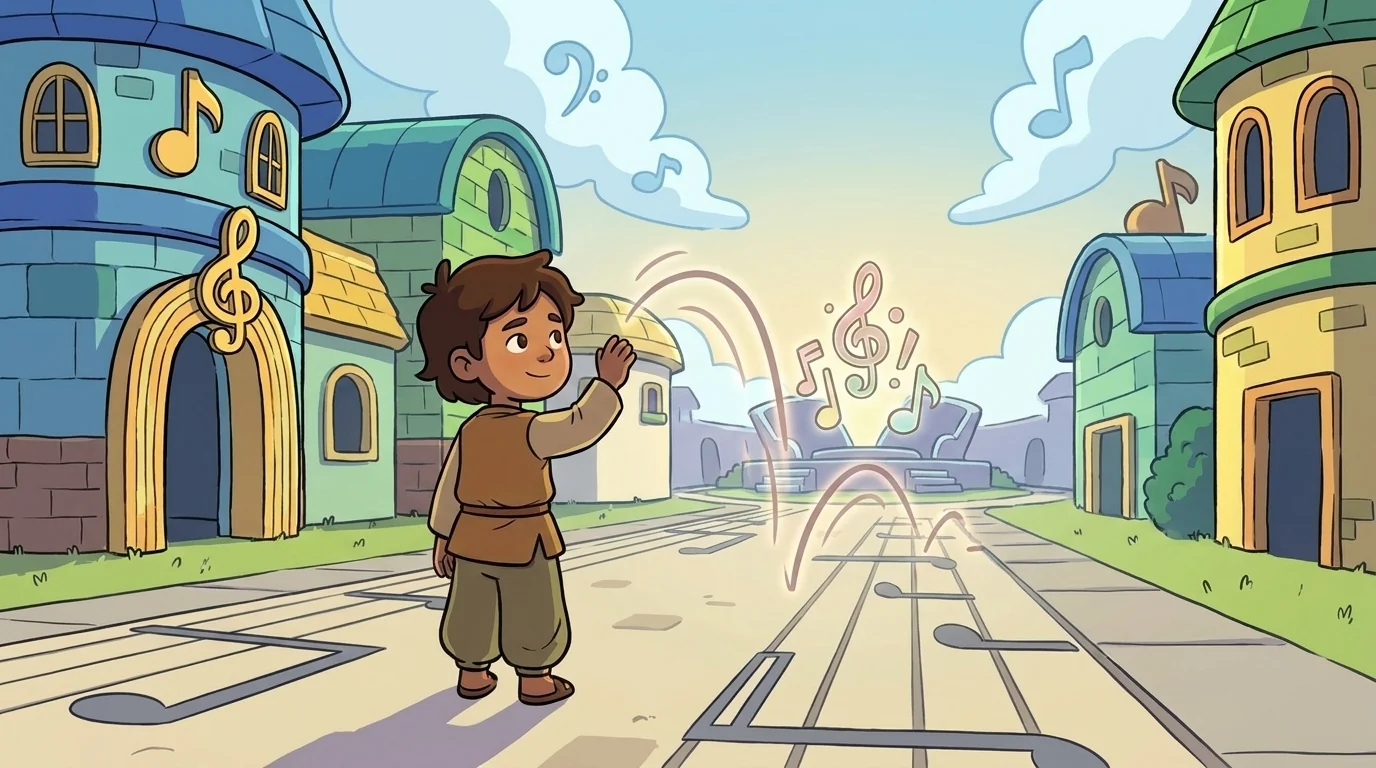
After class, Wend lingered, tracing slow landing-curves in the air, the way she did when she was at peace. For a long time she had carried a quiet melancholy: her whole art was endings — the close, the finish, the goodbye — and she had wondered whether being the keeper of endings made her the sad one, forever attending to things being over.
But lingering there, remembering the young composer's delight that the song felt like it was going somewhere, her melancholy softened into a settled peace. Endings were not sad — they were what gave everything shape and meaning. Without a satisfying close, even the loveliest song merely trails off and is forgotten; a well-chosen cadence is precisely what lets a listener feel the whole journey arrive. Shaping how things come to rest was a gift — the gift of making a song feel complete. She traced one last soft landing, content, and was ready to bring tomorrow's song safely home to rest.
The MotifLab ensemble
Wend is part of MotifLab's distributed-narrative cast. Each character embodies a different curricular primitive; together they teach the full subject.
-

Trill
The motif itself — visual posture shifts as the motif develops, inverts, fragments
-

Meld
Harmony — notes that bloom underneath to support the melody
-

Thrum
Bass — the deep low foundation the whole song stands on
-

Clap
Rhythm — the steady beat pattern the song walks on
-

Twine
Counter-melody — a second tune that weaves against the main one
-

Surge
Dynamics — how loud and soft; how a song breathes
-

Ply
Texture — how many layers sound at once; thick or thin
-

Tint
Timbre — the color or flavor of a sound
-

Nest
Key — the home note the song keeps returning to