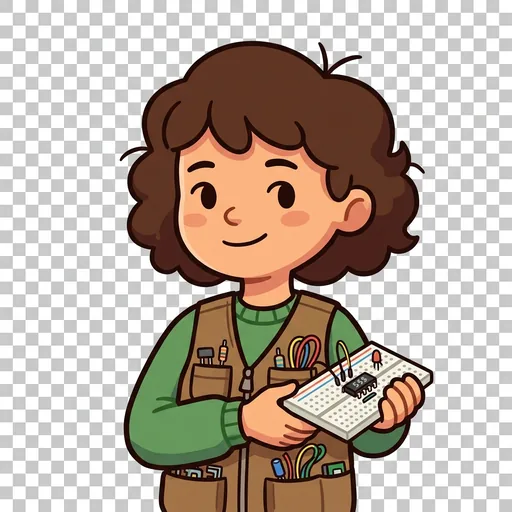
Rive and Yoke
THE TWO-TEST — parity is the first and easiest factor test. If a number pairs off evenly (Yoke's even-test), then two divides it (Rive's factor-split): you can halve it and keep hunting factors. If it is odd, two is ruled out and you skip straight past it. Checking even-or-odd is the fastest first move in taking any number apart.
Loading audio…
Press play to listen along. The line being read lights up as you go.
Show full transcript
Loading transcript…
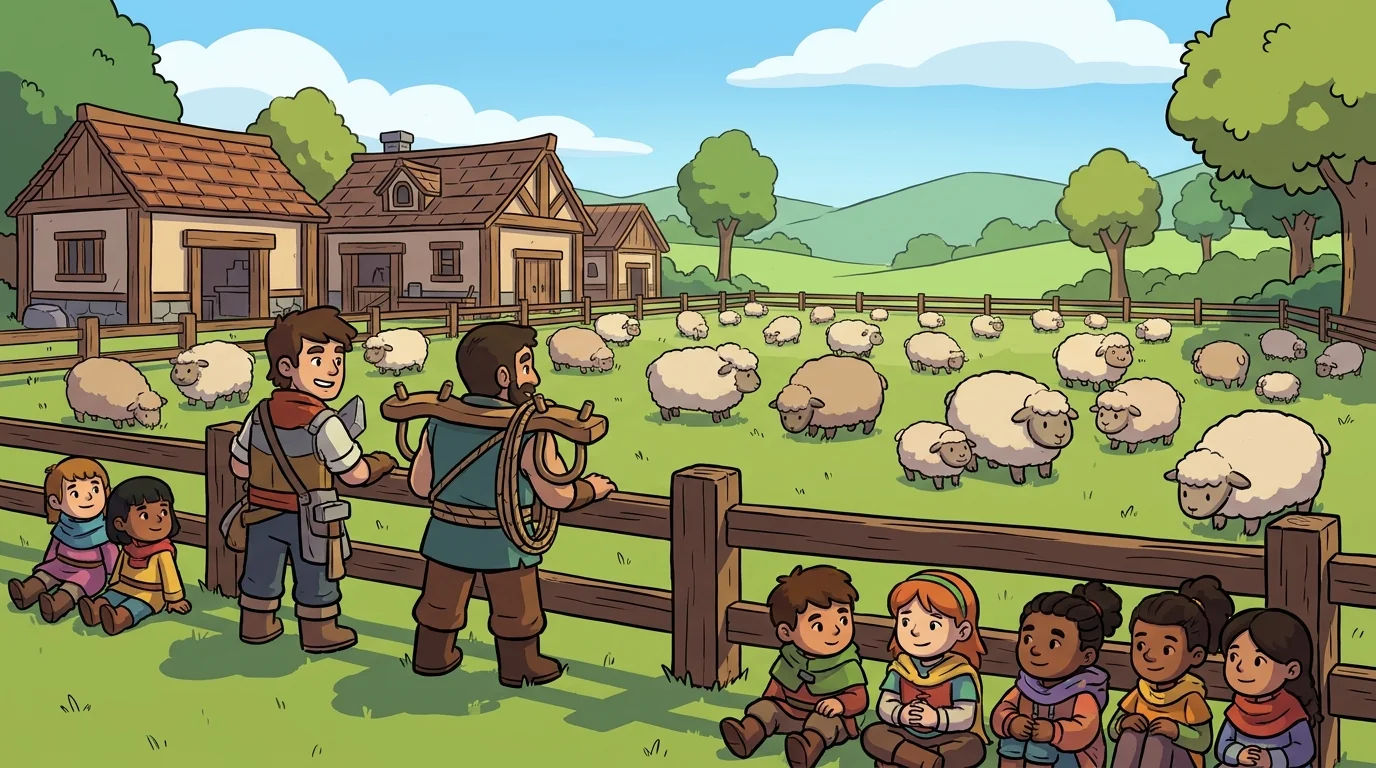
The academy kept a small teaching-herd — thirty gentle beasts that lived in the paddock behind the workshops and were used for lessons in counting, sharing, and, on the day this story is about, factors.
Rive, who had grown up riving stone into equal rows, and Yoke, who had grown up pairing oxen at the plough, had never taught a lesson together. They had, in truth, always thought their crafts were separate. Rive broke numbers into their factors. Yoke sorted numbers into even and odd. One was about splitting; the other was about pairing. They nodded to each other in the corridors and left it there.
But the factors-and-primes lesson and the even-and-odd lesson had been scheduled, by an over-full calendar, for the same afternoon in the same paddock. So the two of them stood together at the fence, thirty beasts before them, and a class of children waiting to be shown how to find every way a herd could be split into equal pens.
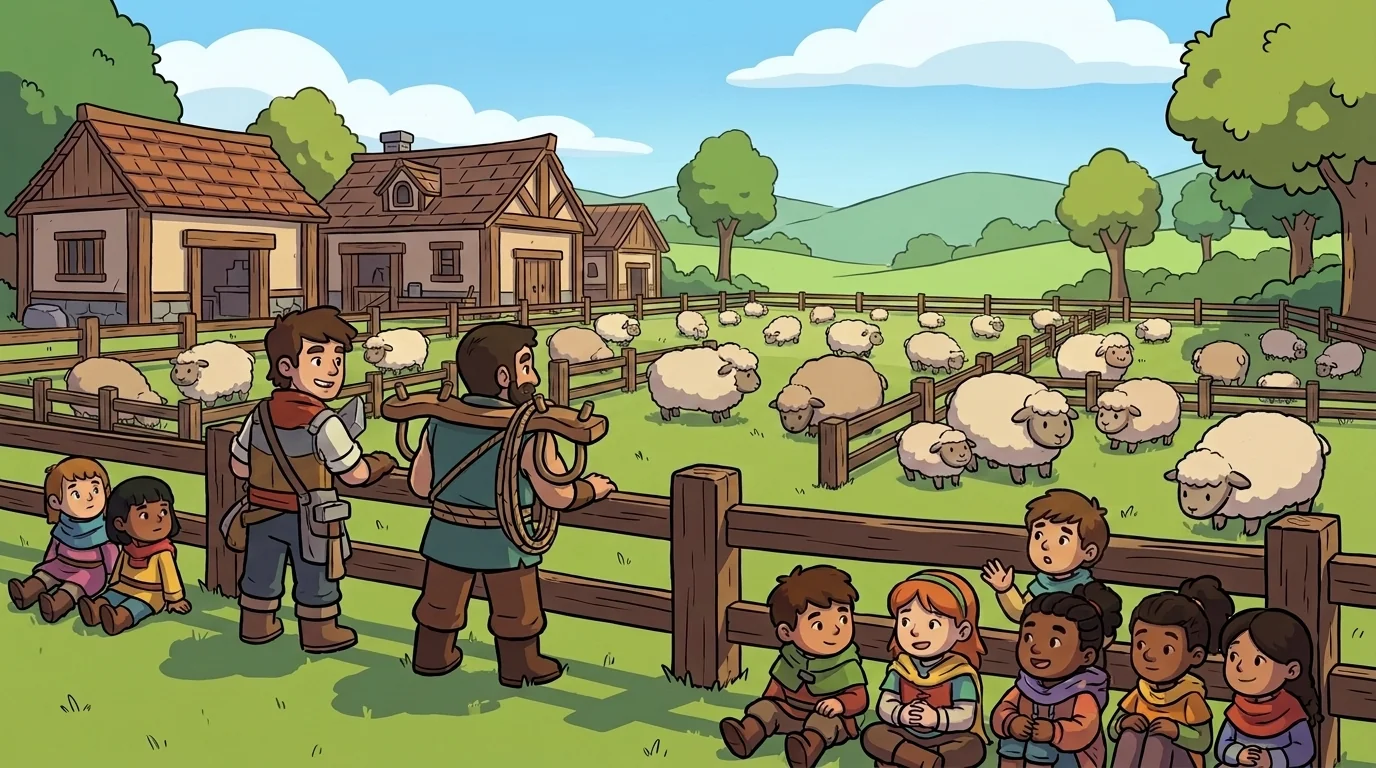
Rive went first. "Finding a number's factors," he told the children, "is finding every way it rives into equal rows. Thirty beasts — can we make equal pens? Try pens of two: fifteen pens of two, clean, no beast left over. So two is a factor. Try pens of three: ten pens of three, clean. Three is a factor. Try five: six pens of five. Five is a factor." He was thorough and slow, testing each number in turn, and the children began to see that a factor was simply a pen-size that used up the whole herd with nothing standing loose.
But it was slow work, testing every possible pen-size one after another, and a child near the back asked, plaintively, whether there was a way to know where to start instead of trying every number blindly.
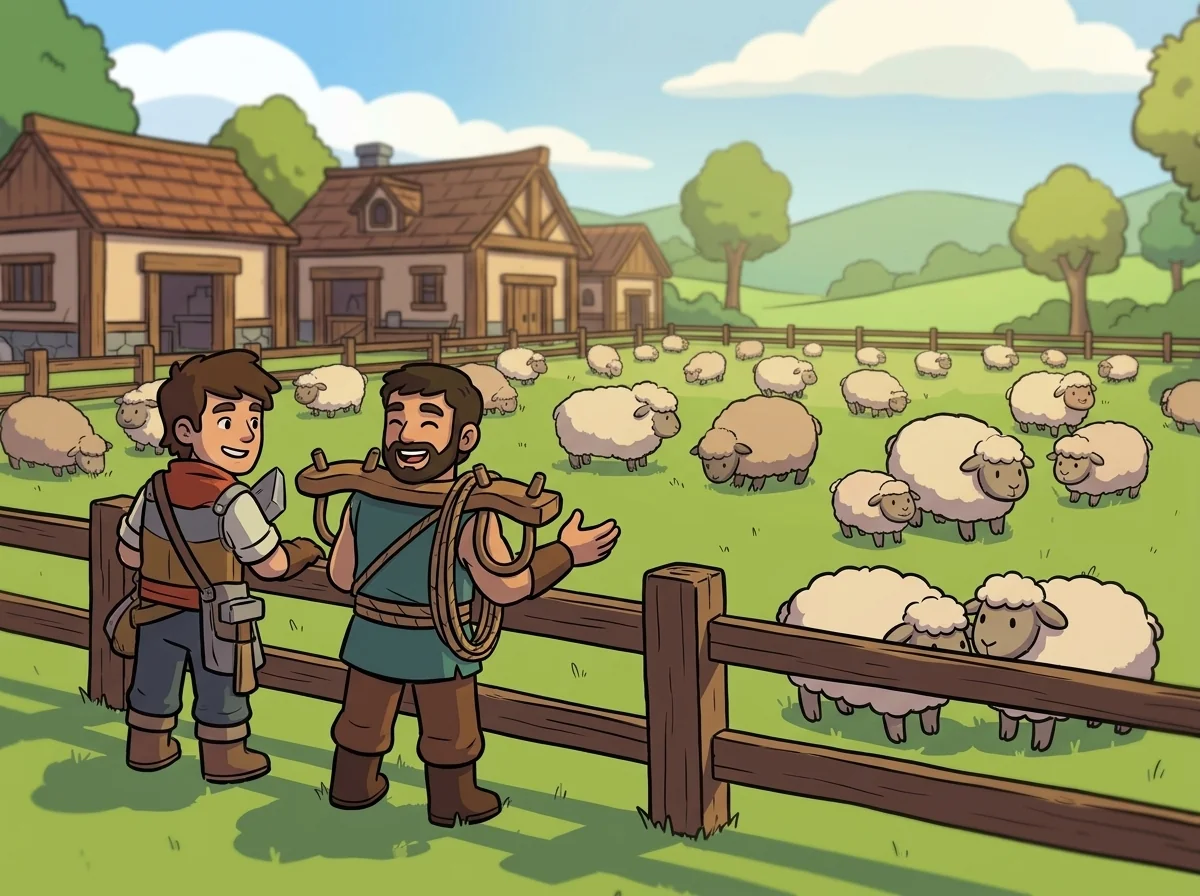
Yoke, at the fence beside him, laughed. "There is," she said, "and it is my whole trade. Before you try to rive a number at all, ask the easiest question in the world: is it even? Pair the herd off — this beast with that, this with that. If every beast finds a partner, the number is even, and that means" — she paused, and looked at Rive, and something dawned on both of them at once — "that means two rives it cleanly. An even number can always be split into pens of two. So you never have to test two on an even number. You already know."
She showed them with the herd. Thirty beasts paired off with none left standing. "Even," she said. "So two is a factor — I didn't have to try it, I could see it. And an odd number? One beast always left standing, so pens of two never come out clean — two is not a factor, and you can skip straight past it without testing at all."
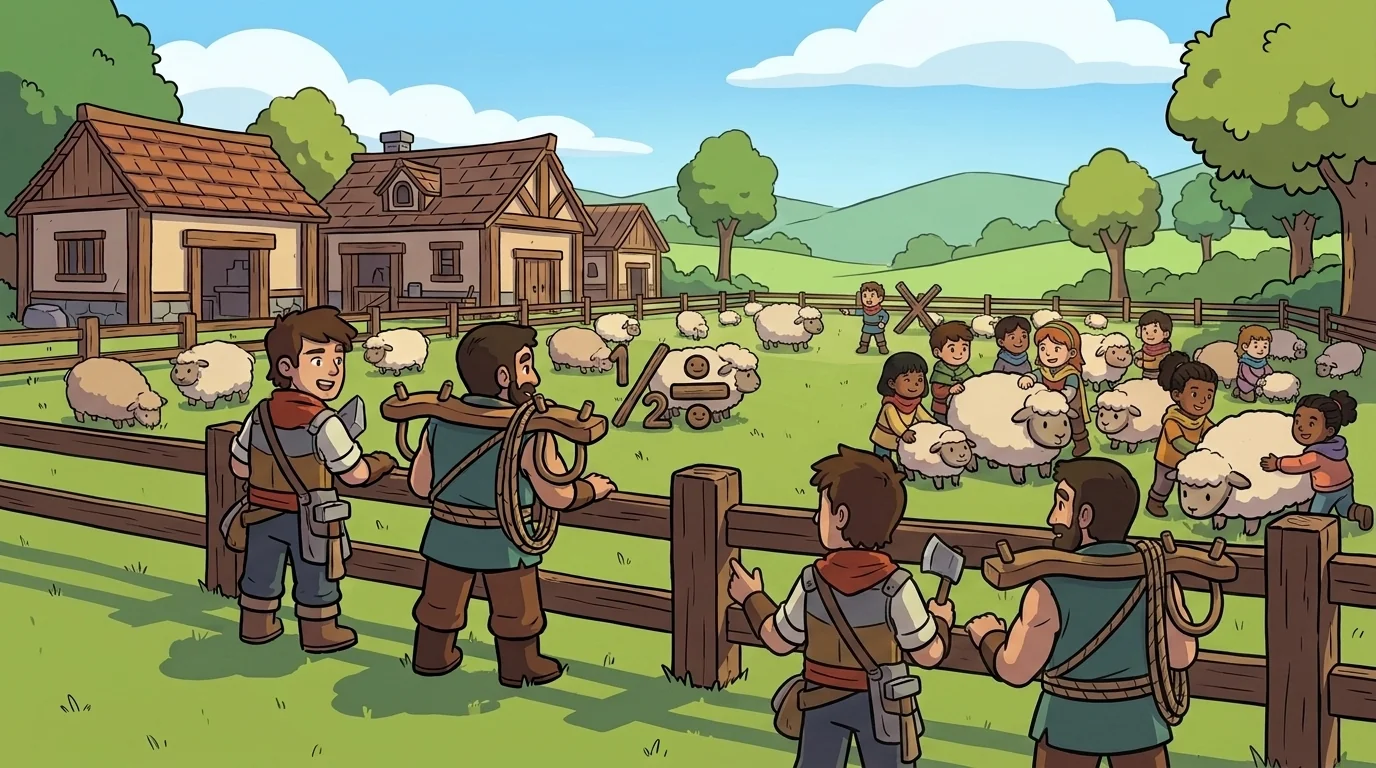
And then, at the fence, the two of them built the thing that was better than either craft alone — and they had the children do it, hands on the herd, to feel it work.
"Take thirty," Rive said, "and let's find its factors the fast way. Yoke — the easy question first." Yoke had the children pair the herd: even. "So two is in," said Rive, "and I can halve it — thirty splits into two fifteens, so now I only have to understand fifteen." He set fifteen beasts apart. "Yoke — is fifteen even?" The children paired them and found one left standing. "Odd," said Yoke. "So skip two entirely — don't waste a moment testing it." "Then I try three," said Rive, "and fifteen rives into three fives — and five and three are both stubborn, un-riveable primes, so we're done." The children looked at what they had built together: thirty, taken all the way apart into two, three, and five, and they had never once tested a pen-size blindly. Every hard split had been aimed by an easy question. Ask if it's even first. If yes, two's a factor — halve it. If no, skip two and move on. The pairing-test had become the first, fastest move of the factor-hunt.
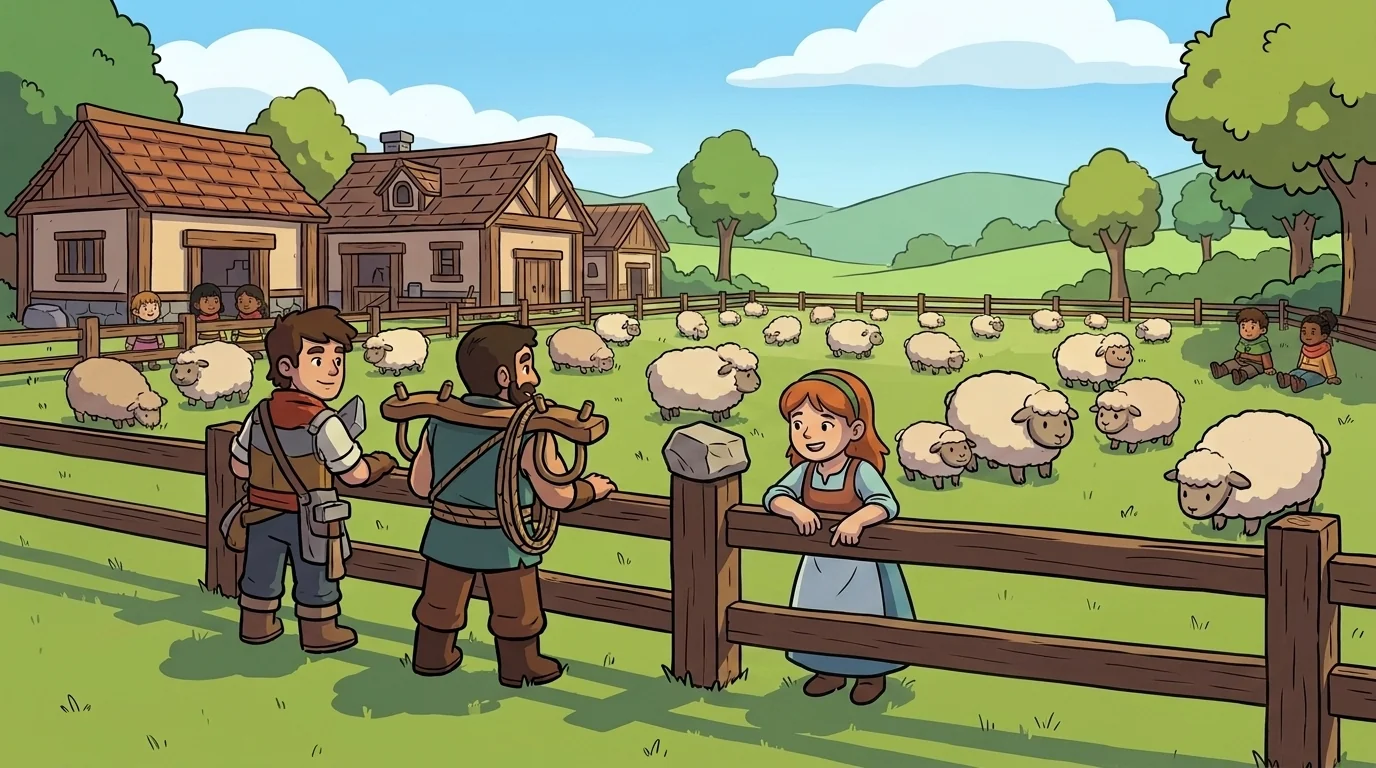
Afterward, leaning on the fence while the herd drifted back together, Rive said he could not believe he had spent years testing two by hand on every number when Yoke's pairing-glance had known the answer all along. Yoke said she had spent years thinking her even-and-odd was a lesser lesson than his grand factoring, a chore beside a craft, when really it had been the doorway to his craft the whole time.
They agreed to teach the afternoon together every year after that. And the children who learned it that way — the easy question before the hard one, the pairing-glance before the patient riving — carried something past the paddock: the quiet confidence that a hard problem often has a small, easy first question hidden inside it, and that finding it makes the hard part smaller. Rive and Yoke, who had nodded past each other in the corridors for years, discovered they were not two lessons at all. They were one method, waiting for the two of them to stand at the same fence.
The MathVerse ensemble
Rive and Yoke is part of MathVerse's distributed-narrative cast. Each character embodies a different curricular primitive; together they teach the full subject.
-

Tenfold
Place value — powers of 10, positional notation
-

Zeph
The zero placeholder — its load-bearing role in positional notation
-

Mirror
Negative numbers — reflection across zero on the number line
-

Skip
Skip-counting and multiples — repeated addition as forward stepping
-

Tug
Inverse operations — addition ↔ subtraction (and the same idea for × ↔ ÷) as opposite pulls on the same line
-
Nigh
Rounding and estimation (judging a number by the nearest landmark)
-
Rive
Factors, divisors, and prime numbers (splitting a number into what divides it)
-
Vie
Comparing and ordering (magnitude — greater-than and less-than)
-
Weld
Number bonds (part-part-whole decomposition; making ten)
-
Yoke
Parity (even and odd numbers)