
Weld
NUMBER BONDS AND DECOMPOSITION — a number is the sum of its parts and can be split and re-joined freely without changing its value; breaking a number into a friendly part (especially the part that completes ten) turns a hard sum into an easy one by re-grouping, not by adding or removing anything.
Loading audio…
Press play to listen along. The line being read lights up as you go.
Show full transcript
Loading transcript…
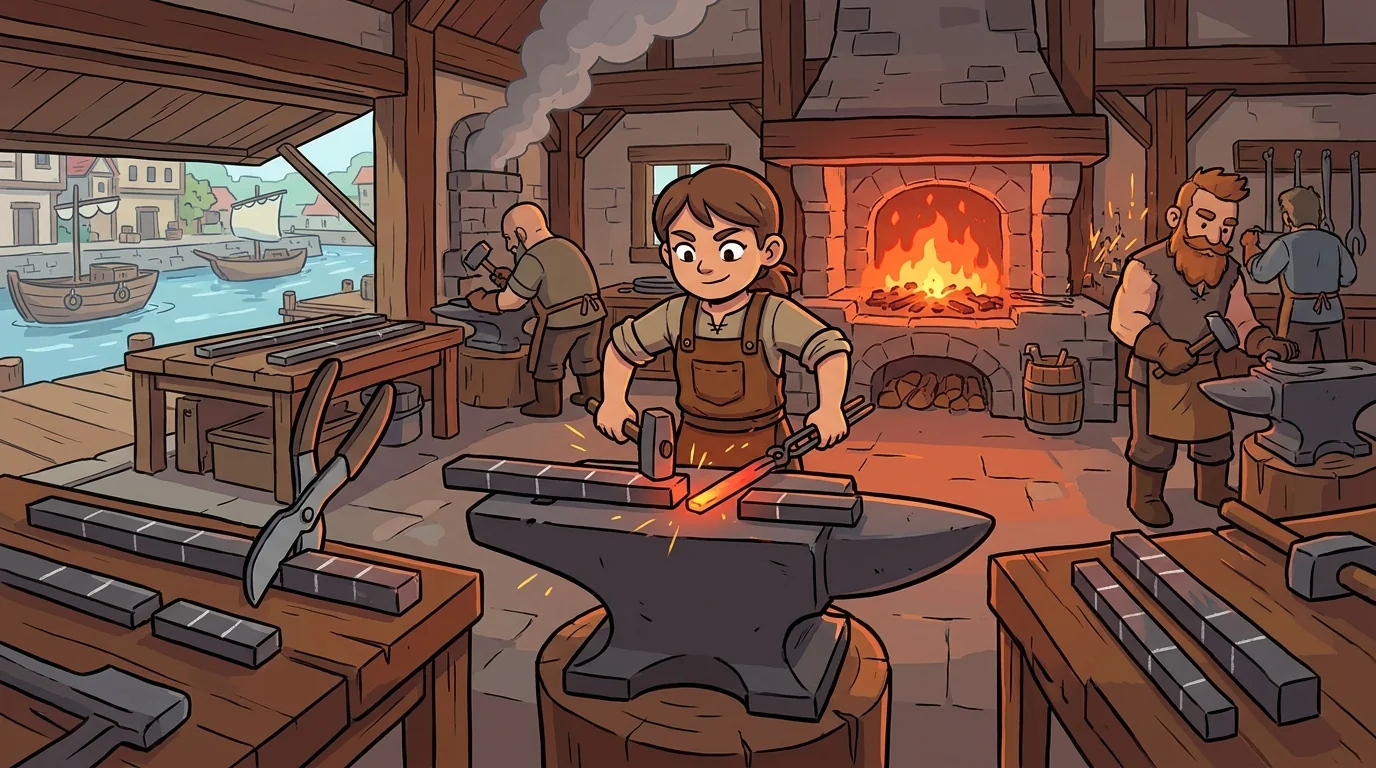
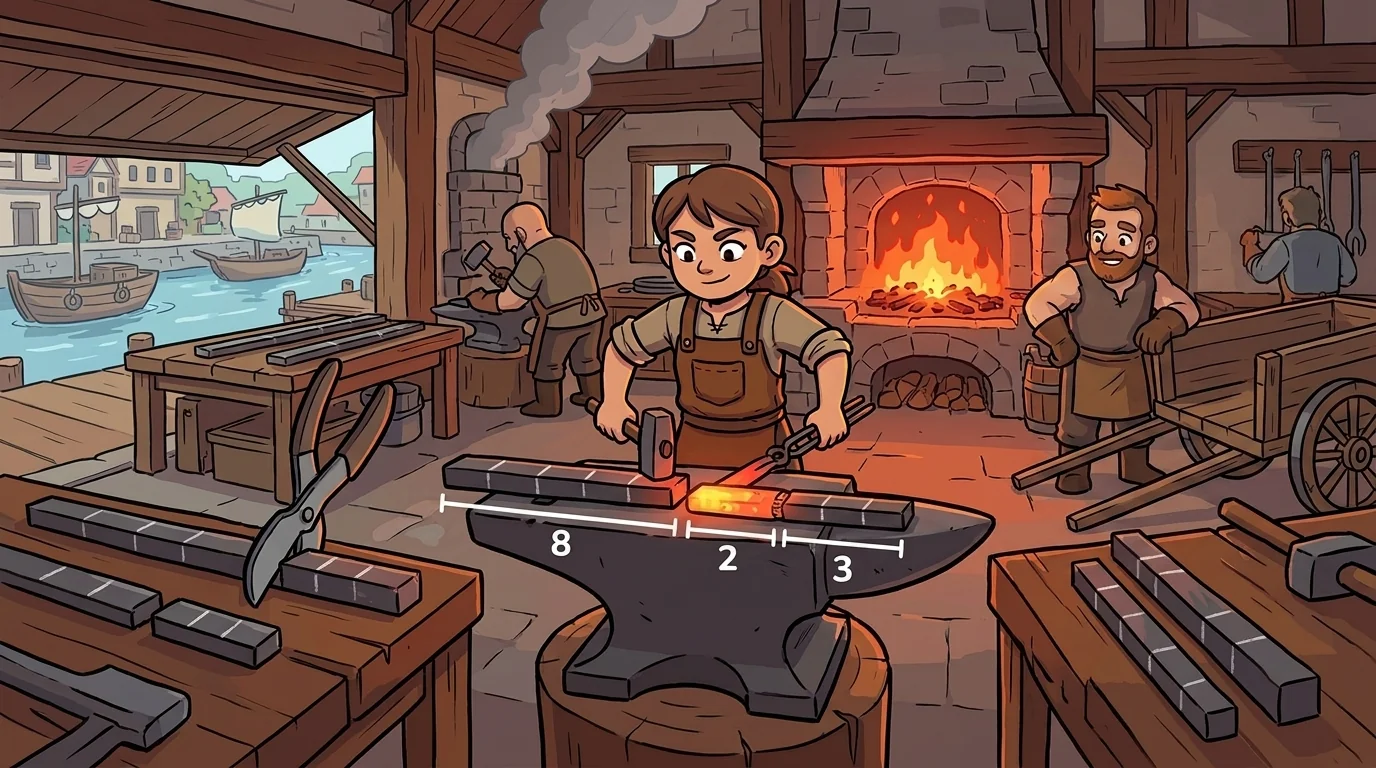
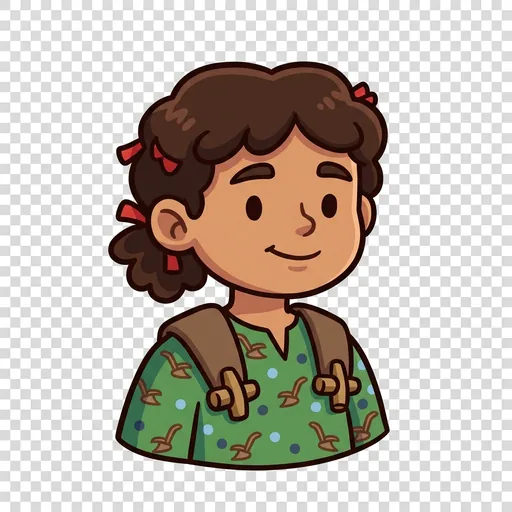
Weld grew up at a forge, joining metal, and learned about numbers from the way a bar of iron could be cut apart and welded back to exactly what it had been. Her family were smiths in Cinder, and their trade was iron bars — cutting them to length, welding shorter pieces into longer ones. A bar eight spans long could be cut into a five and a three, or a six and a two, or a seven and a one; and any of those pieces welded back made eight again, not a fingernail more or less. The iron did not lose itself in the cutting. Eight was eight, however you split it.
That is the whole of what the academy calls number bonds and decomposition: every number is the sum of its parts, splits freely, and re-joins to exactly its original value. Weld's job from a young age was to make up lengths — a customer wanted ten spans and the forge had eight, so she found the missing two and welded it on. She grew so quick she stopped thinking of ten as a thing you counted to and started thinking of it as a thing you completed: eight wants two, six wants four, nine wants one. Every number under ten had a partner it needed to reach ten, and she knew them all by feel. Those are the bonds of ten, and Weld teaches them as the pair worth knowing above all others.
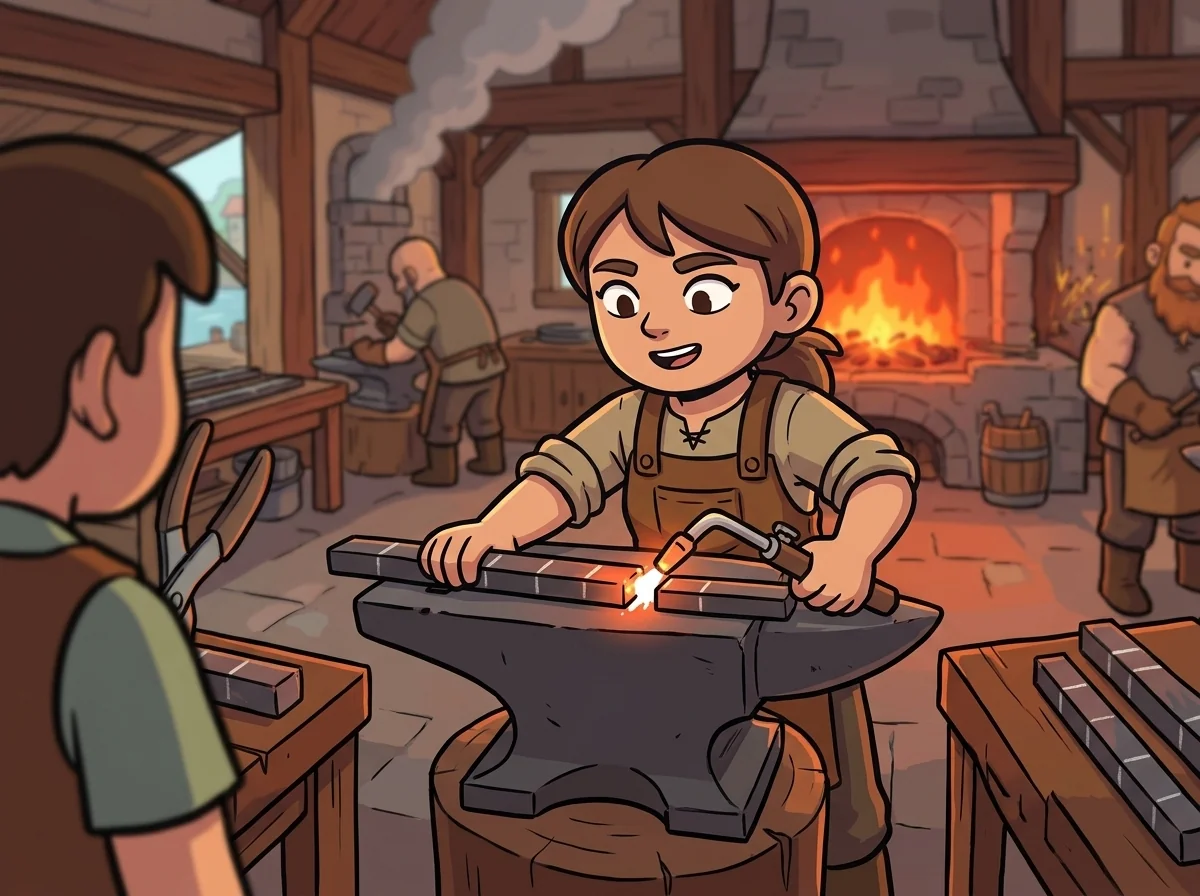
"A number's never just itself," her uncle said, hammer resting. "It's all the ways it comes apart. Learn which piece each number needs to make ten — that's the pair that unlocks the rest."
Weld's given name was Isolde, but she was called Weld from the day a wheelwright needed exactly thirteen and the forge had a nine; she said, "Nine wants one to make ten, and three more makes thirteen," welded on a four, and had it right the first time. She came to see arithmetic as cutting and joining. The trick of every hard sum was to break one number into the friendly part and the rest. Adding eight and five looked hard — but five is a two and a three, and eight wants that two to reach ten, so eight-and-five becomes eight-and-two-and-three, which is ten-and-three, which is thirteen. "I never added anything or took anything away," she insists. "I only cut the five in a clever place. The value never changed — I re-grouped it." That re-grouping is legitimate because addition lets you re-associate the parts freely; bridging through ten is just choosing the split that lands you on a friendly landmark.
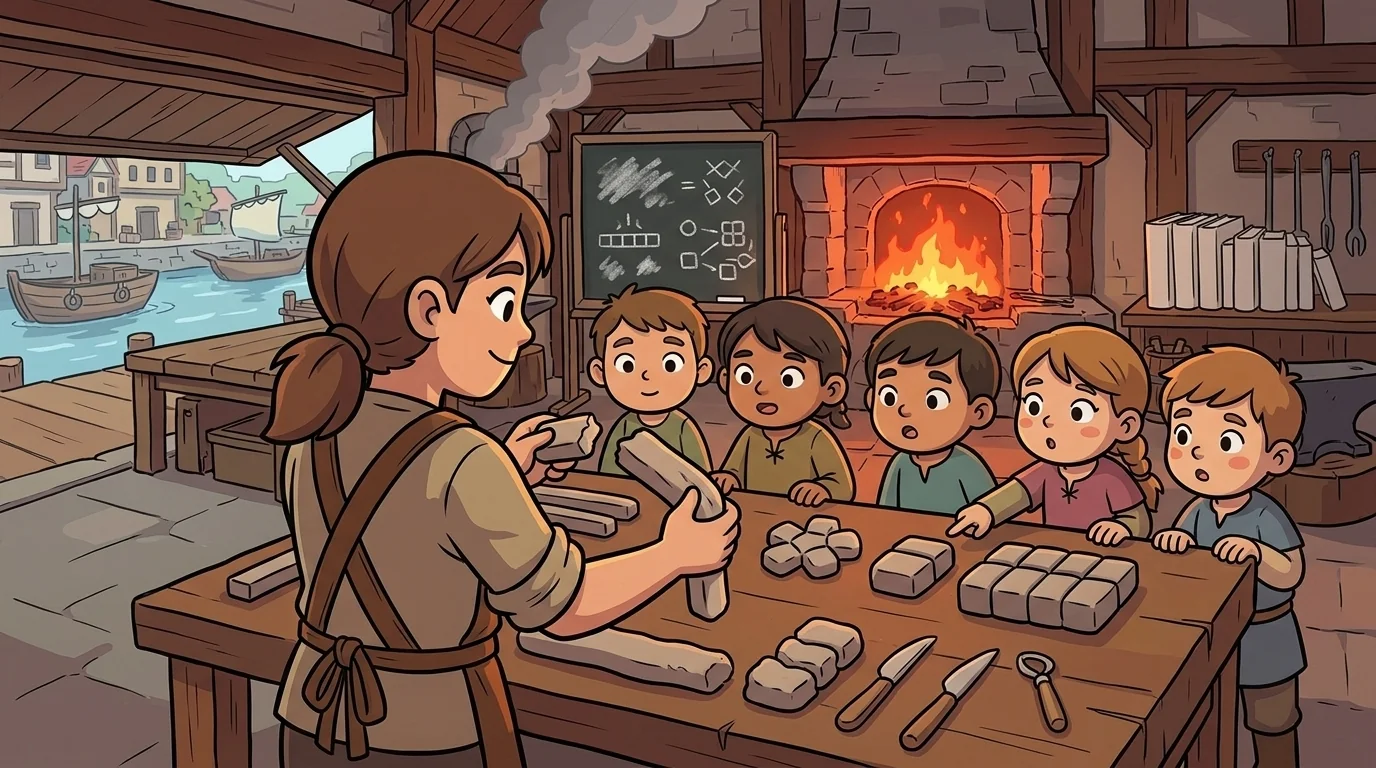
An academy smith came to Cinder for tools and found Weld teaching an apprentice to "make up a length by way of ten." "You are decomposing numbers — number bonds, making ten," he said. "We teach it and children think it a trick with no reason. You do it because the iron taught you it was true." Weld liked the thought of children learning it as real, not as a rule, and has taught number bonds for seven years.
She begins each year with a soft clay bar the children pinch in two. "Break eight." They pinch — a five and a three, a six and a two — and she writes each as a bond: 8 is 5 and 3; 8 is 6 and 2. "Every one is eight. You didn't lose any. A number is all the ways it comes apart." Then the pair that matters most: she lines up the numbers under ten and asks each, "What do you want to make ten?" Eight wants two, seven wants three, six wants four — and the children chant the bonds of ten until they know them cold. Finally the payoff: she writes 8 + 5 and says, "Hard? Break the five where eight wants it. Eight wants two; five is two and three; eight and two makes ten, and three more makes thirteen." The children watch a scary sum fall apart into a friendly one and see they never added a single extra thing — they only cut in the right place.
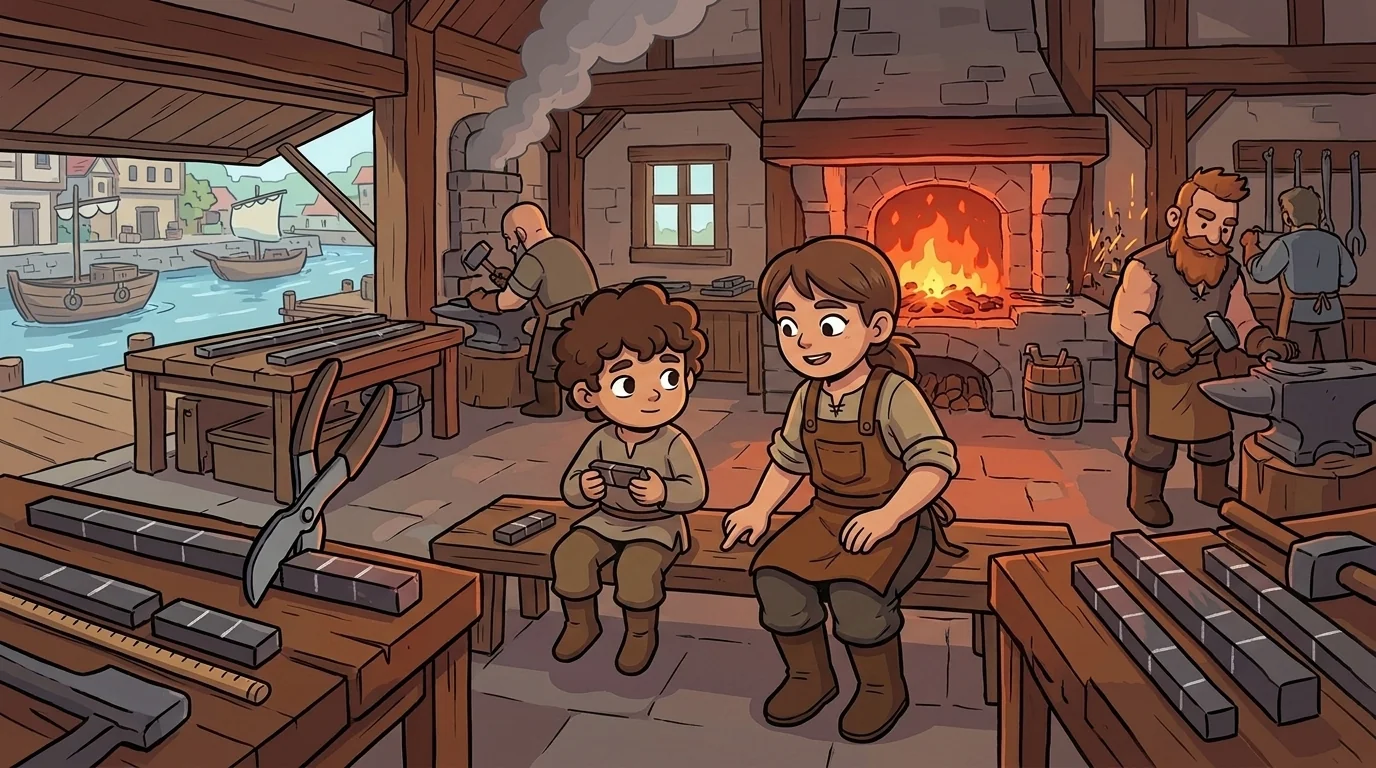
A boy named Rue stayed after, turning the clay bar over, and said the strange part was that the hard sum hadn't gotten easier so much as it had gotten smaller — cut down into a step he could actually take. Weld sat with him at the cool end of the bench. "That's exactly it, and it's true of more than sums. A big weld looks impossible until you cut it into the one small join you can make right now. Then you make that join, and the next, and the impossible thing is done — and you never lifted more than one piece at a time." Rue thought about the thirteen that came apart into a ten and a three, into a step he could stand on, and felt the steadiness of a hard thing turning, in his hands, into a manageable first move.
Weld is warm, deliberate, and cannot see a number without idly noticing what it would need to make ten. She still goes back to Cinder when the forge is busy, still makes up lengths in her head faster than anyone with a measuring-rod, and still thinks ten is the friendliest number there is.
The MathVerse ensemble
Weld is part of MathVerse's distributed-narrative cast. Each character embodies a different curricular primitive; together they teach the full subject.
-

Tenfold
Place value — powers of 10, positional notation
-

Zeph
The zero placeholder — its load-bearing role in positional notation
-

Mirror
Negative numbers — reflection across zero on the number line
-

Skip
Skip-counting and multiples — repeated addition as forward stepping
-

Tug
Inverse operations — addition ↔ subtraction (and the same idea for × ↔ ÷) as opposite pulls on the same line
-
Nigh
Rounding and estimation (judging a number by the nearest landmark)
-
Rive
Factors, divisors, and prime numbers (splitting a number into what divides it)
-
Vie
Comparing and ordering (magnitude — greater-than and less-than)
-
Yoke
Parity (even and odd numbers)