Kerf
WHERE YOU CUT
Listen along — Kerf
Loading audio…
Press play to listen along. The line being read lights up as you go.
Show full transcript
Loading transcript…
Kerf the Beetle
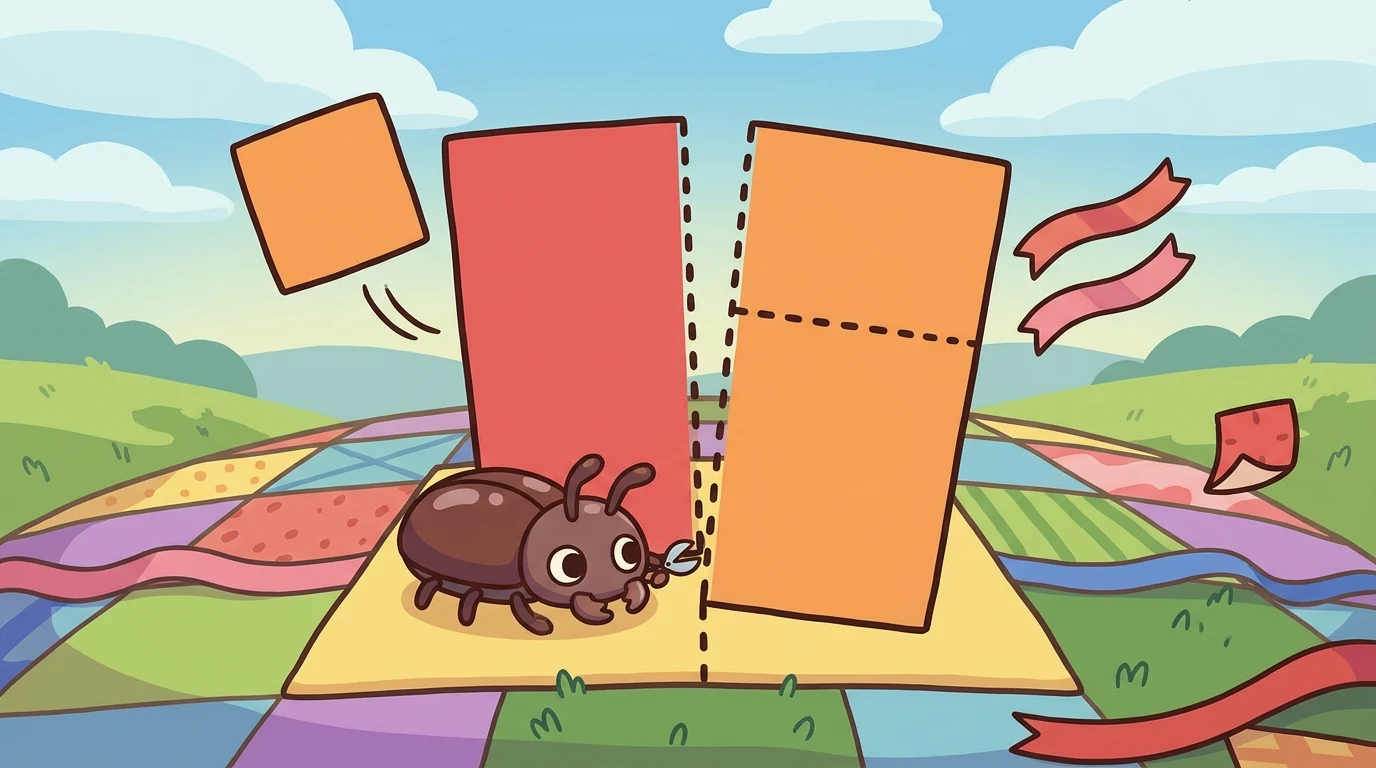
Kerf is a small, kind beetle with two little mandibles that go snip. Not a scary snip. A gentle snip - the tidy kind that cuts a piece of paper right along the line, straight and neat. Kerf lives on Tila’s quilt, and Kerf has a special helping job: Kerf shows how the big square comes apart into its patches.
The big square looks like one thing. But Kerf knows a gentle secret: inside it are four patches, hiding, waiting. And Kerf has one gentle idea, and it is this: “One snip this way, one snip that way, and the big square falls into its parts.”
So Kerf climbs to the top of the big square. Snip - a straight cut down the square. Now there are two tall pieces. Then Kerf turns. Snip - a straight cut across the square. And now - look! - the big square has fallen open into four neat patches.
Not four just-anything patches. Always the same four: one small square, two matching ribbons (Miro and Moro’s twins!), and one tiny corner square. Every time Kerf snips a big square this way, out come exactly those four pieces. A square. Two ribbons. A corner.
That is Kerf’s whole gentle teaching.
Snip down, snip across - and the big square falls into a square, two ribbons, and a corner.
If a child wants to see what a big square is made of, Kerf snips it open, gently, so the parts lie side by side. And if you push them back together - they make the big square again. Nothing lost. The parts are the whole, just spread out to look at.
A grown-up can play too! You can be Kerf. Take a square of paper. Make one straight fold or cut down it. Make one straight fold or cut across it. Open it up - four pieces! Point to each: “a little square… a ribbon… a matching ribbon… and a tiny corner.” Then slide them back together into the big square. Say it: “Snip down, snip across - a square, two ribbons, a corner.” You can snip a sandwich this way too, or a slice of soft bread, with a grown-up’s help.
That is where you cut. A gentle snip down and a gentle snip across, and a big square shows you its parts: a square, two twin ribbons, and one little corner - the same four, every single time.
When the four patches lie open in the sun and Kerf sees the big square’s tidy secret revealed, Kerf feels a warm, satisfied click inside - the calm gladness of a thing coming apart neatly, exactly as it should. Kerf folds its little wings. “Four,” Kerf says softly. “Always these four. And together again - one.”
And Kerf slides the patches back, snug, until the big square is whole once more.
Reading together with a grown-up? A card for the grown-up
For the grown-up: ask one question, then wait. When they answer, add one word to what they said. Tap the button when they have said something — that is one turn each, a circle. Nothing is recorded or kept.
Let them finish it
Say “Kerf says: one gentle snip this way, one snip that way, and the big square falls into …” and stop. Let them finish it.
Now wait. Count slowly to five in your head. Their answer is worth the quiet.
Circles together: 0
The PatchPals ensemble
Kerf is one of the friends in PatchPals. Each friend shows you one idea by how they act; meet them all and you have the whole subject.
-
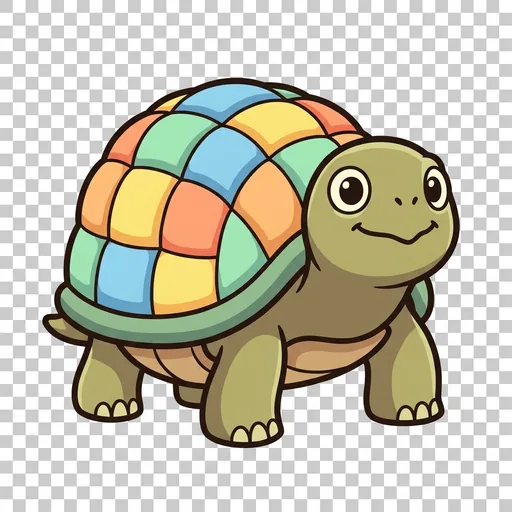
Tila
The whole square - a gentle tortoise whose shell is a patch-grid; the finished quilt is made of its parts, and the parts always add back up to the whole
-
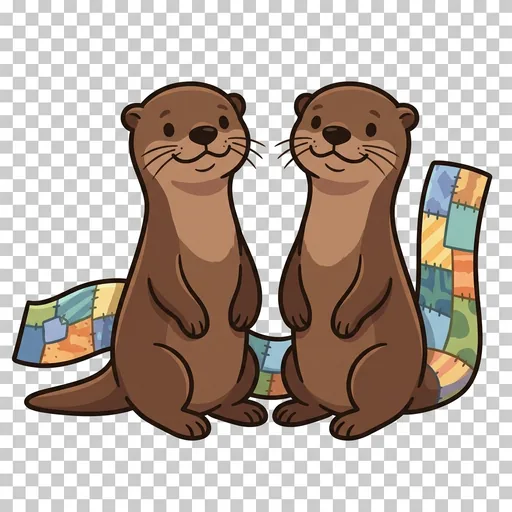
Miro & Moro
The twin strips - two otters exactly the same size, one just turned the long way; two matching ribbons is the idea of TWO-of-the-same, the coefficient 2
-
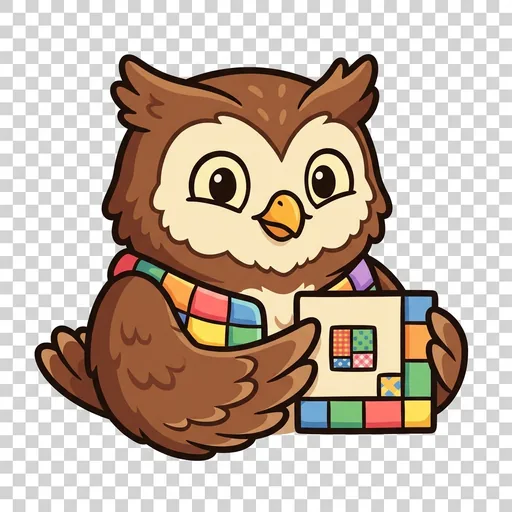
Broody
Making it bigger - an owl who grows a square by adding a strip along two sides and one tiny corner; a bigger square is the old square plus its growth
-
Parra
The spatial word - a parrot who says WHERE a patch sits (corner, beside, above, top, bottom); naming the place is how you find it