Direct-Proof Dora
The DIRECT PROOF
A story read by Direct-Proof Dora
Loading audio…
Press play to listen along. The line being read lights up as you go.
Show full transcript
Loading transcript…
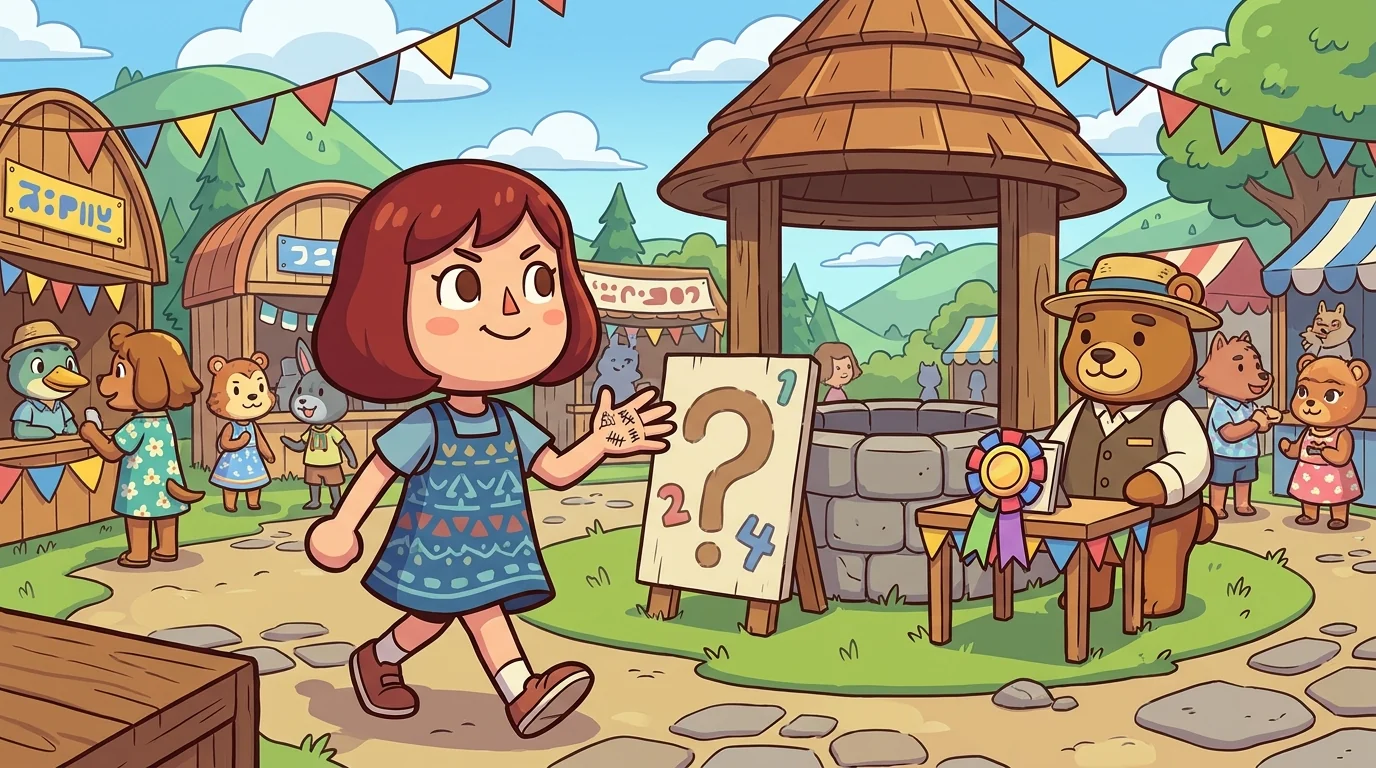
The day Dora learned to trust the long way, she was nine years old and absolutely, completely certain she was right.
Her town, Stepwell, was holding its summer fair, and the prize question was painted on a board by the well: Every number you make by adding two odd numbers together — is it always even? First correct answer with a reason won the big ribbon. Dora scribbled a few sums on her hand. Three plus five is eight. Seven plus one is eight. Nine plus three is twelve. Even, even, even. She felt the answer light up in her chest like a lamp. Yes. Obviously yes. And because she was sure — because she could FEEL how right it was — she did not want to bother with the slow part. She wanted the ribbon now.
So she marched up to the judge and said, "It's always even. I checked three of them and they all worked, so it works for all of them." She said it fast, proud, certain. A shortcut. Skip the fussy middle; jump straight to the end.
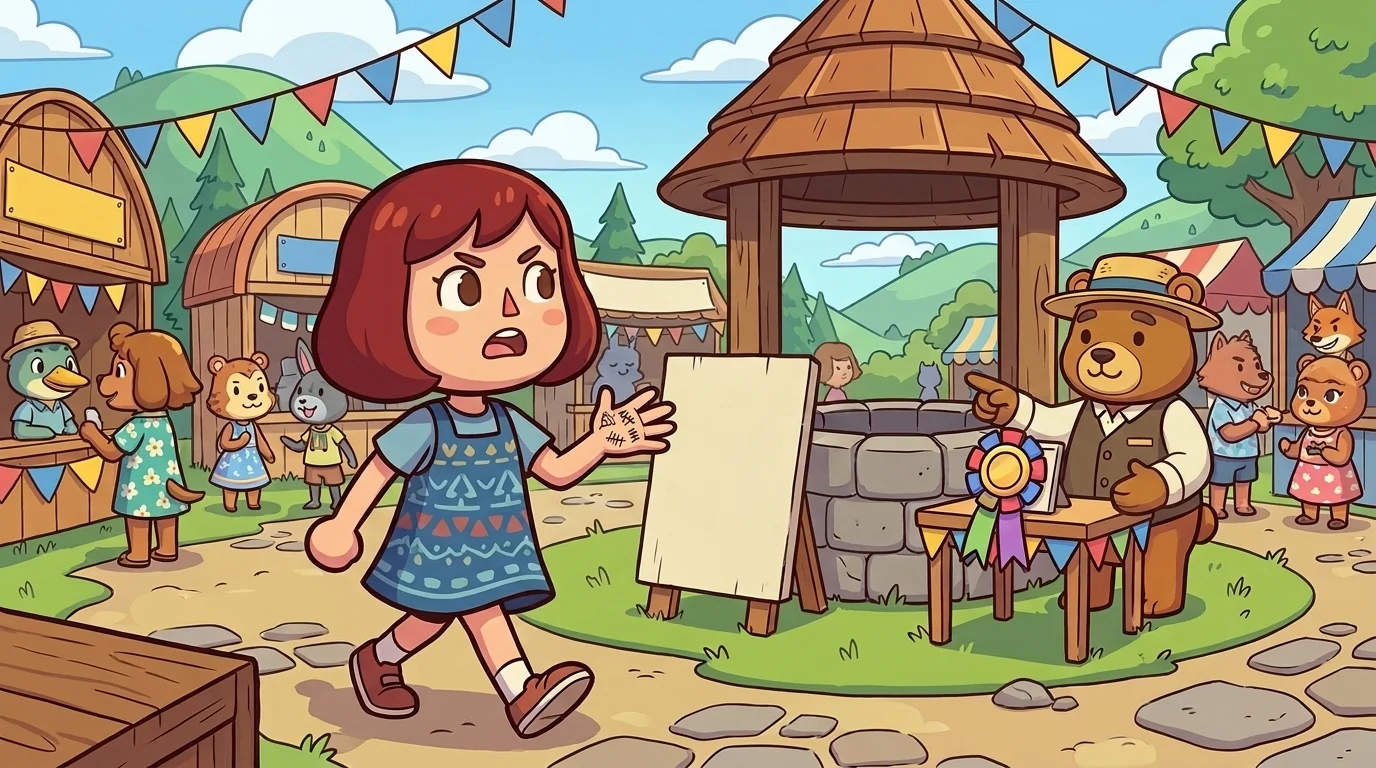
The judge, a patient old baker named Mr. Fenn, tilted his head. "Three of them," he repeated. "Out of how many pairs of odd numbers are there, Dora?"
"Lots," Dora admitted.
"More than lots. There's no end to them." He wasn't unkind about it. "You checked three and jumped to all. That's a lovely-feeling jump. But a jump is not a bridge." He pointed to the far edge of the fairground, where a boy named Cass was grinning. "Cass made the same kind of jump this morning, on a different question. Ask him how it went."
Dora didn't want to ask Cass anything. She was RIGHT and she knew it. The answer was even. She could feel it. Why should she have to crawl through steps to prove a thing that was already obvious? The obviousness was the proof, wasn't it? She held onto that feeling all afternoon, the way you hold onto being right.
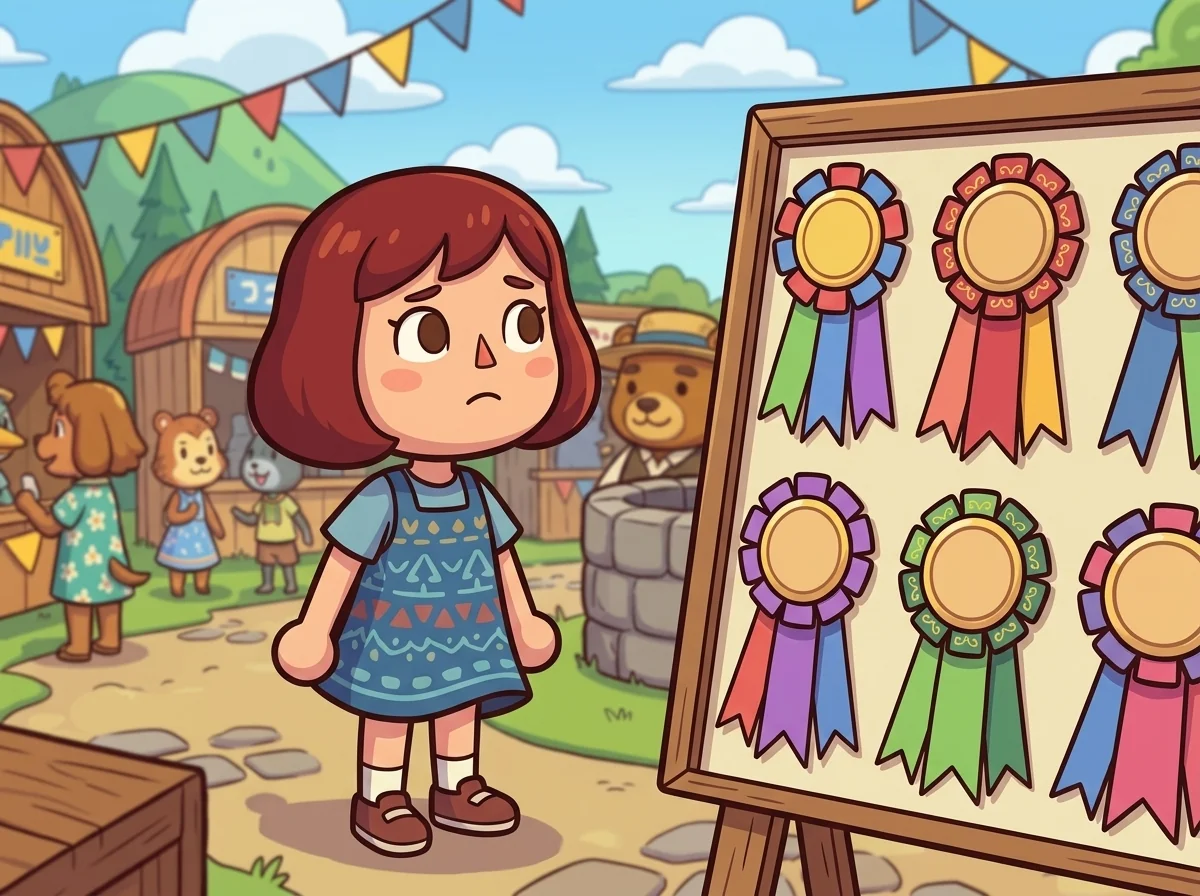
Cass found her by the ribbon board anyway. "Let me guess," he said. "You checked a few, they all worked, so you said 'always.'"
"Because it IS always," Dora said.
"Sure. This time." Cass didn't look smug now; he looked a little burned. "This morning the question was about a pattern in the fair's raffle numbers. I checked four. All four fit my rule. I was so sure — felt exactly like you look right now. I skipped to 'always' and told the judge." He winced. "The fifth number broke it. My rule was wrong the whole time. It just hadn't shown me yet. The checking that felt like enough — wasn't."
Dora opened her mouth to say her question was different, her feeling was realer. But a small cold thought had crept in: his shortcut felt exactly as sure as mine does. And his had lied to him. Feelings of certainty, it turned out, came free with both the true answers and the false ones. They didn't tell you which was which.
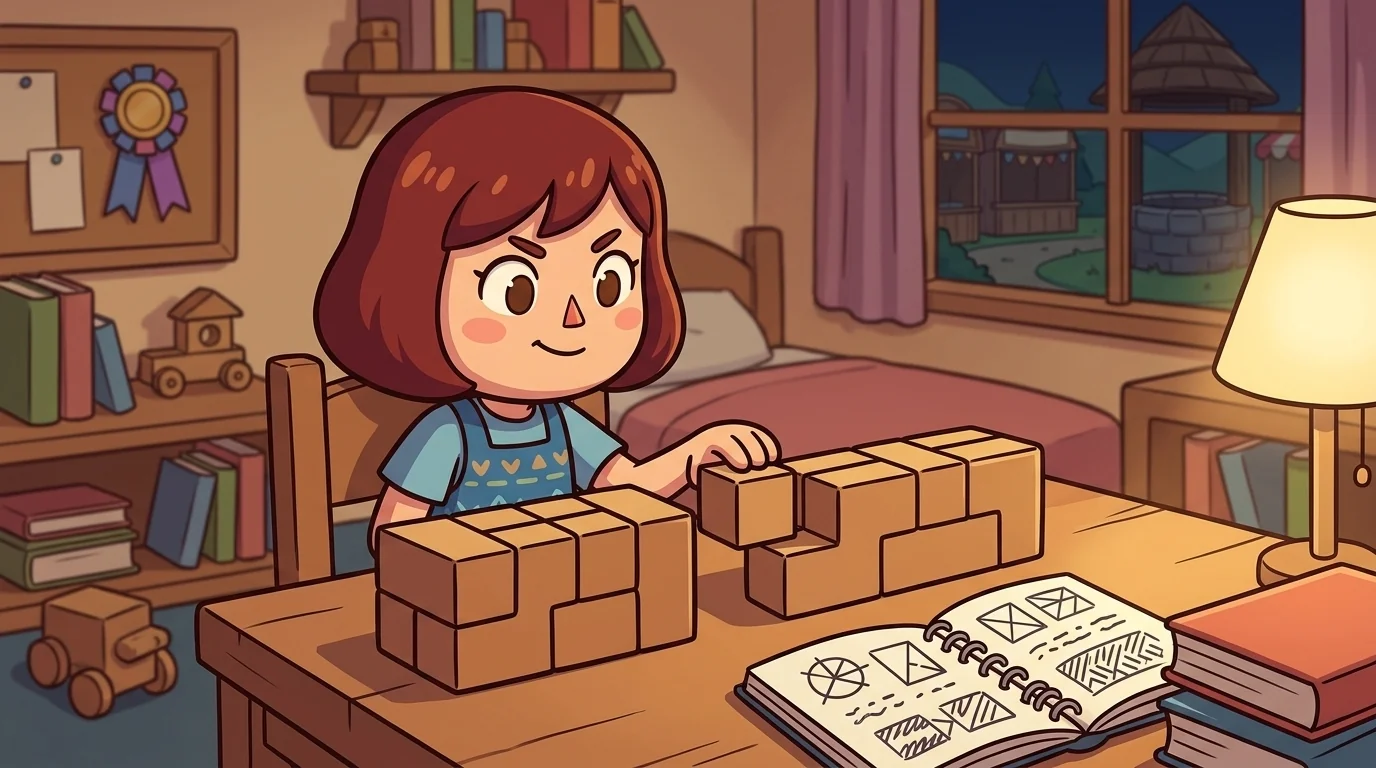
She went home that night bothered, and did the thing she had been too sure to do: she walked it. Slowly. One step at a time, refusing to skip.
What is an odd number, really? An odd number is an even number plus one — it's some pairs, with one left over. So any odd number could be written as "a bunch of twos, plus one." Now take two of them. The first is some twos plus one. The second is some other twos plus one. Add them. All the twos pile together — still made of twos, still splits into pairs — and then the two leftover ones, the plus-one and the plus-one, meet each other and make another pair. Nothing is left over. She stared at it. The two lonely leftovers had found each other and become even. That was WHY. Not "I checked three." Not "it feels right." A reason that held for every odd pair there could ever be, because she'd never once said "and the rest are probably the same." Every step followed from the step before it. No gap for a lie to hide in.
And here was the strange part: the answer was the same answer she'd blurted that morning — even. But it felt completely different now. Before, she'd been holding a guess that happened to be right, the way Cass had held one that happened to be wrong, with no way to tell them apart. Now she was holding something that couldn't turn on her. She'd checked every step, so there was no fifth number waiting to break it.
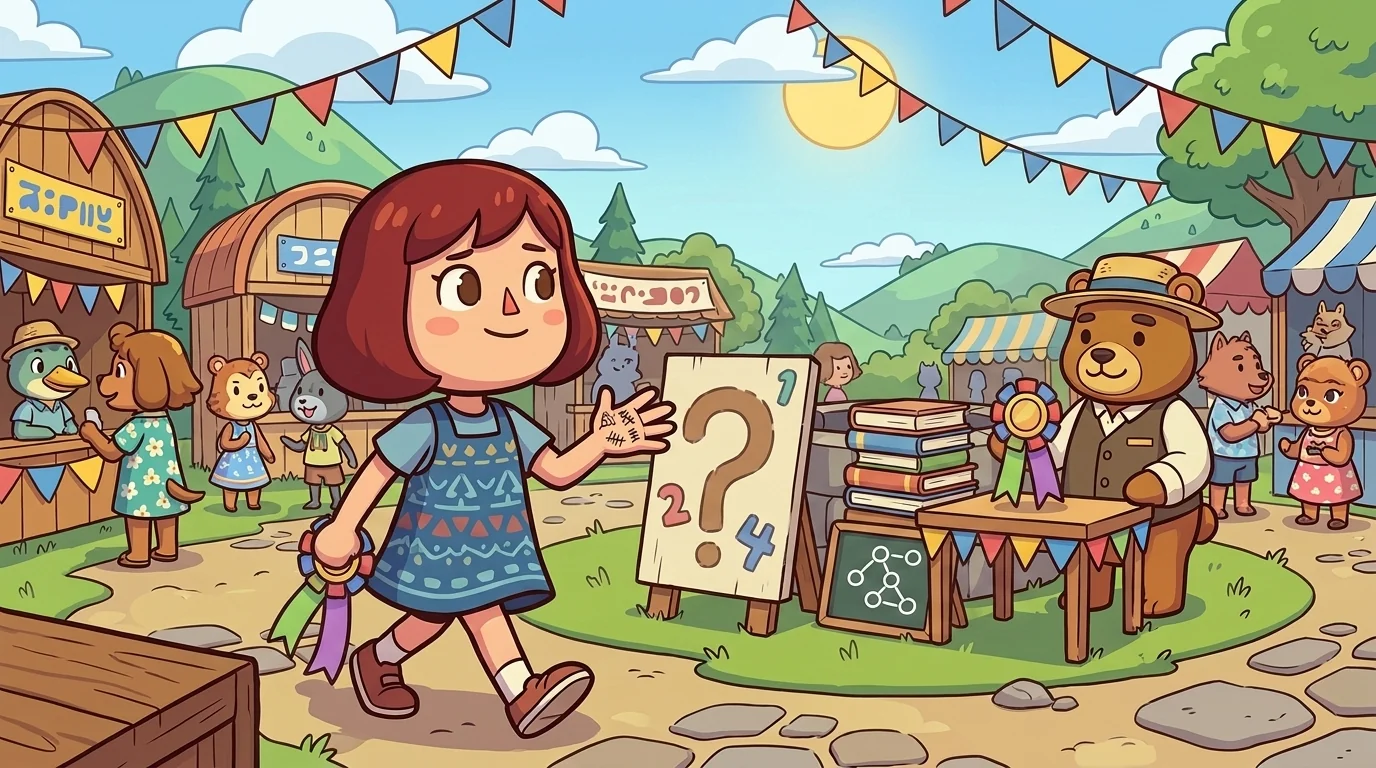
Dora went back to the fair the next morning and found Mr. Fenn. She didn't say "it's even" this time. She walked him through it — the twos, the two leftovers finding each other — step by step, no skipping.
"That," said Mr. Fenn, "is a proof. Yesterday you had an answer. Today you have a reason nobody can knock down." He gave her the ribbon. But Dora was barely looking at it. She was thinking about the difference between the two feelings — the fast, bright, hollow certainty of the jump, and the slower, heavier, solid certainty of the walk — and how alike they'd felt from the inside, and how much she never wanted to mix them up again.
She grew up to be a mathematician, and then a teacher, and she came to ProofQuest to show kids the direct proof: you start with what you truly know, you take one honest step at a time, and each step has to follow from the last — no jumping, no "probably the rest are fine." Kids always ask her the same thing she once believed: "But if you already know the answer, why not skip to it?"
And Dora, who has been that certain nine-year-old, smiles and tells them about the shortcut that lied. "You can skip," she says. "It even feels wonderful. It feels exactly as sure as the truth — right up until the fifth number shows up." She still isn't relieved by being right. She's relieved by being unable to be knocked down. That's a different, better feeling, and you only get it by walking the whole bridge.
Hear it as an audio drama
A short play starring Direct-Proof Dora, from ProofQuest. Different voices, same idea. Listen any time after you read.
Loading audio…
Read the drama script
- Narrator: From Spark and Anvil and ProofQuest — this is Dora, in chapter 1 of the ProofQuest cast.
- Narrator: This drama uses an AI-generated voice. Voiced via Gemini 2.5.
- Narrator: Direct-Proof Dora has a habit that drives some of her colleagues mildly to distraction.
- Narrator: If you ask her a question, she will answer it. But she will not answer it quickly. She will answer it step by step.
- Dora: First, you said this. Second, that means this. Third, therefore this.
- Narrator: And by the time she gets to the end of her answer, the person who asked the question has already worked it out on their own — which, as Dora has gently pointed out more than once, is exactly the point.
- Dora: I do not believe in shortcuts. I do not, in fact, believe shortcuts exist. Not in the part of the world I live in. My world is built out of paths. Some are long. Some are short. None of them are shortcuts. A path is whatever path you actually walk.
- Narrator: This is a useful habit for someone whose job is teaching children to prove things.
- Narrator: Dora grew up in a small town called Stepwell, on the eastern bank of a river too wide to ford. There was one bridge. Her grandfather had built it — a quiet engineer who had decided one summer that the town needed a bridge, and then, with the patience of someone who knows that bridges take longer than summers, built one over the next four years.
- Narrator: Dora used to walk the bridge on the way to school. It was a long bridge. It had thirty-seven planks. Dora knew, by the time she was eight, the exact order of the planks — one through thirty-seven, in the order you stepped on them. She counted them every morning. She counted them every evening. She did not get bored.
- Narrator: One spring, when Dora was nine, a stranger came through town. The stranger was looking for the bridge. He was in a hurry.
- Narrator: Dora pointed him to the bridge. He thanked her. He walked toward it. Then he stopped, halfway down the riverbank, and he looked at the bridge — all thirty-seven planks of it — and he said, half to himself:
- Stranger: Is there a faster way?
- Dora: No.
- Narrator: The stranger looked at her. He was not annoyed. He was, in fact, mildly curious.
- Stranger: Are you sure?
- Dora: Yes. The river is wide. There is one bridge. You can swim if you want, but that is also a path, and it is wetter.
- Narrator: The stranger considered this.
- Stranger: That is the most thorough answer I have ever been given.
- Narrator: And then he walked across the bridge, and across the rest of his life. And Dora went home for dinner. She thought about that conversation for years.
- Dora: The stranger had wanted a shortcut. The shortcut did not exist. But he had assumed it must exist somewhere — that there was some clever way around the bridge, some hidden alternative the locals knew about. I had counted the thirty-seven planks every morning since I was six. I knew there was only the bridge. You walked it. You arrived. That was all.
- Narrator: She decided, around the age of ten, that her job in the world was probably going to involve telling people the path is the path.
- Narrator: She became a mathematician. She also became a teacher — but the mathematician part came first.
- Dora: Step one: we assume the premise is true. Step two: from this, the next step follows. Step three: and from that, the next. Step four: and so on, until we arrive at the conclusion. That is a direct proof. There are no shortcuts. There is only the bridge. You walk it. You arrive. That is all.
- Narrator: This is what Direct-Proof Dora teaches. Not the cleverness of getting there faster. The honesty of getting there at all.
- Narrator: You've been listening to a Spark and Anvil chapter, written by the Spark and Anvil writing team for ages 9 to 14.
- Narrator: Apps stay free forever.
- Narrator: Curriculum aligned to Common Core math and discrete math.
- Narrator: Released under Creative Commons BY-NC-SA 4.0 for educational reuse. Visit Spark and Anvil for the full transcript.
More stories with Direct-Proof Dora
Another short audio story about Direct-Proof Dora. Open one when you are ready.
The direct proof
Loading audio…
Read the script
- Narrator: From Spark and Anvil and ProofQuest — this is Direct-Proof Dora, in chapter 1 of the ProofQuest cast.
- Narrator: This drama uses an AI-generated voice. Voiced via Gemini 2.5.
- Narrator: This is Direct-Proof Dora. She believes shortcuts do not truly exist, only paths you actually walk.
- Narrator: To answer a question, she starts at the beginning and carefully walks you to the end, step by logical step.
- Direct-Proof Dora: I am Direct-Proof Dora. A proof is a path. You begin with what is given. You walk until you arrive.
- Direct-Proof Dora: The path is the proof. First this, then that, then you have reached the conclusion. No skipping.
- Narrator: Dora grew up in Stepwell. Her grandfather built the only bridge across the wide river, plank by patient plank.
- Direct-Proof Dora: By age eight, I knew its thirty-seven planks by heart. I counted them every morning on my way to school.
- Narrator: One day, a man in a hurry stopped her. He pointed at the long bridge and asked if there was a faster way across.
- Direct-Proof Dora: No. The river is wide. There is only one bridge. You could swim, but that is also a path, and it is wetter.
- Narrator: The stranger considered her words. He smiled a slow smile, then walked the bridge without another word.
- Direct-Proof Dora: I was appointed to the ProofQuest academy to teach this one lesson. The path is the path.
- Direct-Proof Dora: There are sometimes shorter paths, yes. But a path is always exactly as long as the route it takes.
- Narrator: Start with the given. Follow the steps. Arrive at the conclusion. That is the direct proof. That is Dora.
- Narrator: You've been listening to a Spark and Anvil chapter, written by the Spark and Anvil writing team for ages 9 to 14.
- Narrator: Apps stay free forever.
- Narrator: Curriculum aligned to Common Core math and discrete math.
- Narrator: Released under Creative Commons BY-NC-SA 4.0 for educational reuse. Visit Spark and Anvil for the full transcript.
The ProofQuest ensemble
Direct-Proof Dora is one of the friends in ProofQuest. Each friend shows you one idea by how they act; meet them all and you have the whole subject.
-
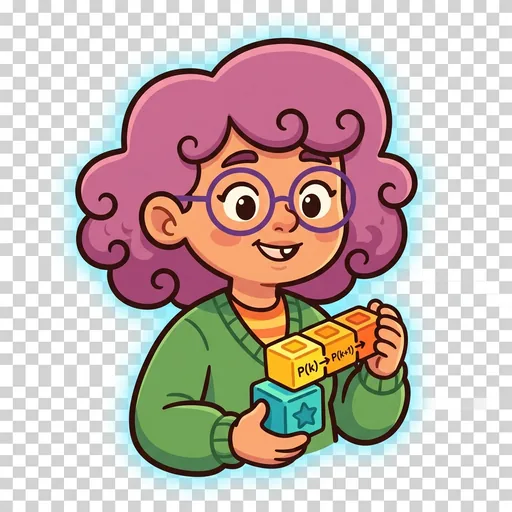
Induction Ida
Weak / standard mathematical induction: base case + inductive step
-

Strong-Induction Sten
Strong induction: base case + assume all prior cases hold
-
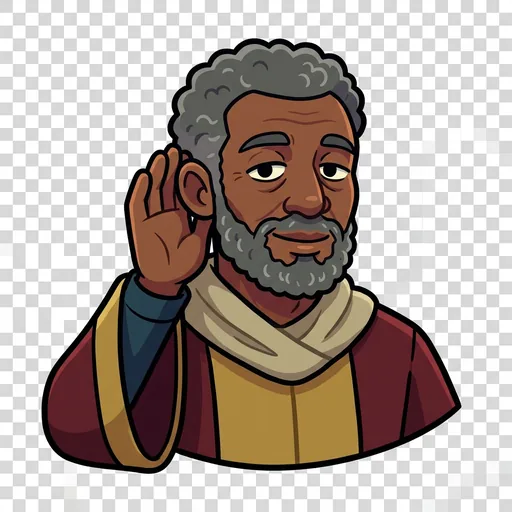
Contradiction Cassius
Proof by contradiction (reductio ad absurdum): assume the negation, derive a contradiction
-
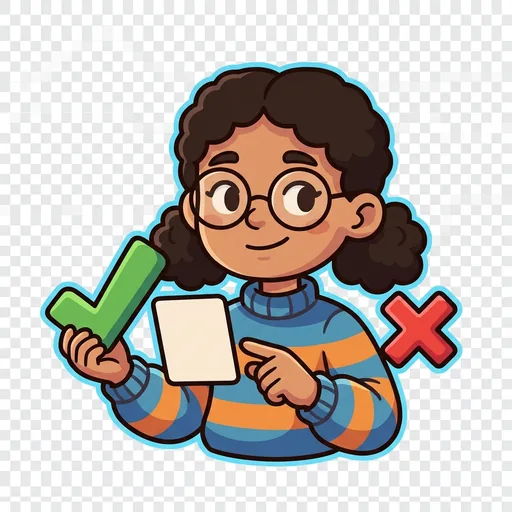
Contrapositive Cara
Proof by contrapositive: prove "not Q → not P" to establish "P → Q"
-
Construction Cole
Proof by construction: prove existence by explicit construction of an example
-

Pigeonhole Perch
Pigeonhole principle: if n+1 items are placed in n bins, at least one bin contains 2+ items
-

Exhaustion Edda
Proof by exhaustion / cases: enumerate every case and verify each
-

Counterexample Cricket
Disproof by counterexample — one exception topples a universal claim
-

Biconditional Bex
Biconditional proof — proving 'if and only if' in both directions
-

Uniqueness Una
Proof of uniqueness — suppose two, show they must be the same one
-

QED
Closing-mark mentor — the ∎ at the end of every proof; the gentle voice that names completion + invites the next problem


