Upend
A failed roll isn't a dead end
Loading audio…
Press play to listen along. The line being read lights up as you go.
Show full transcript
Loading transcript…
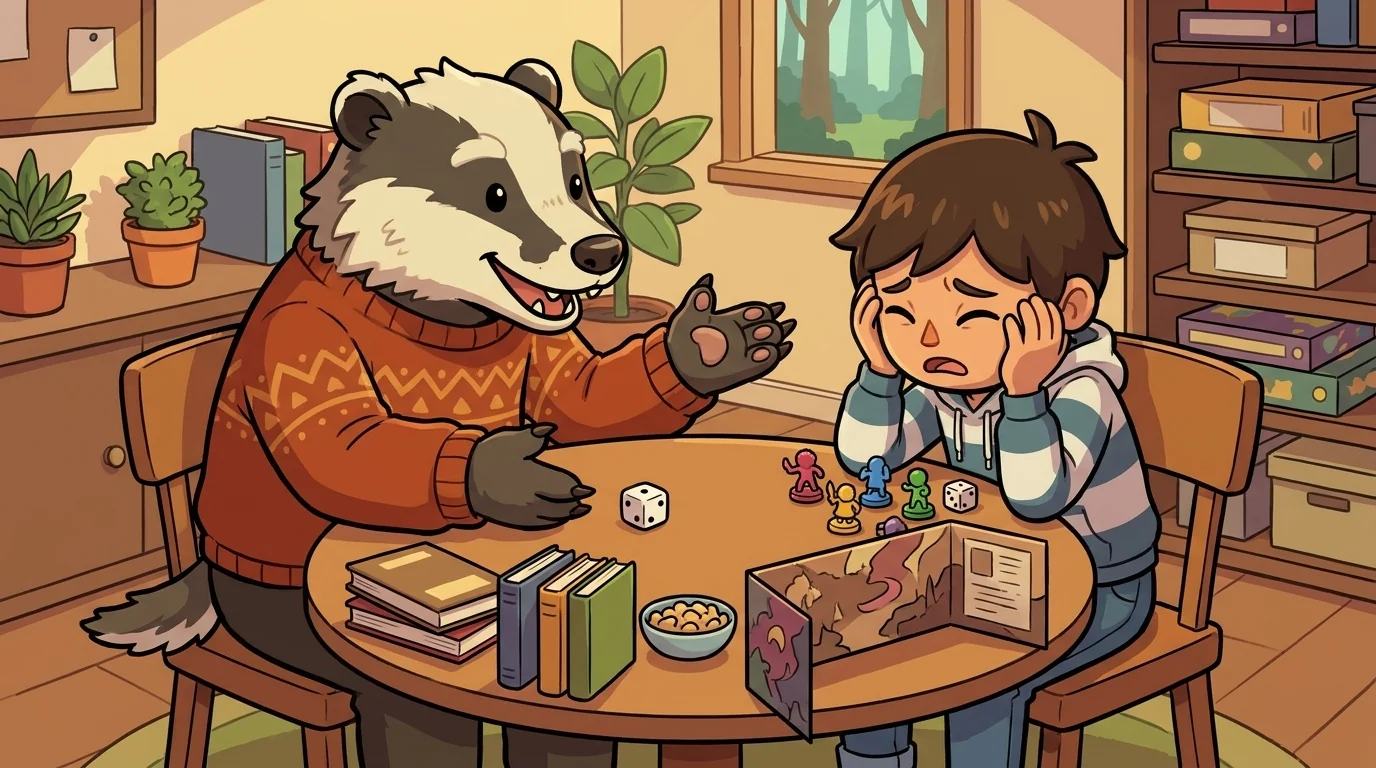
At the game table, a shaggy badger named Upend watched a kid roll the dice, groan at a terrible result — and grinned like it was the best thing that could have happened.
"You failed!" the kid moaned. "The lock didn't open! Now we're stuck!"
"Stuck?" Upend chuckled, snuffling happily. "Oh, no. You just made the story better." His whole craft is failure-forward — turning a flopped roll into a new twist. "Here's the thing nobody tells you," he said. "A failed roll isn't a wall. It's a door — just not the door you were reaching for." He tapped the dice. "You failed to pick the lock — so what? That doesn't mean 'nothing happens, try again forever.' It means something new happens. The lockpick snaps off in the lock — now you can't pick it and the guards will know someone tried. So now you have to find another way in — the window, the sewer, a disguise. Which is a whole new adventure the success would have skipped." He beamed. "If you'd succeeded, you'd have opened the door and walked in, boring. Because you failed, the night got interesting. A failure that just says 'no, nothing' is a dead end. But a failure that says 'no — and instead, THIS' is a plot twist. And plot twists are the best part of any story."
Upend learned to love failure the game he almost quit over one bad roll.
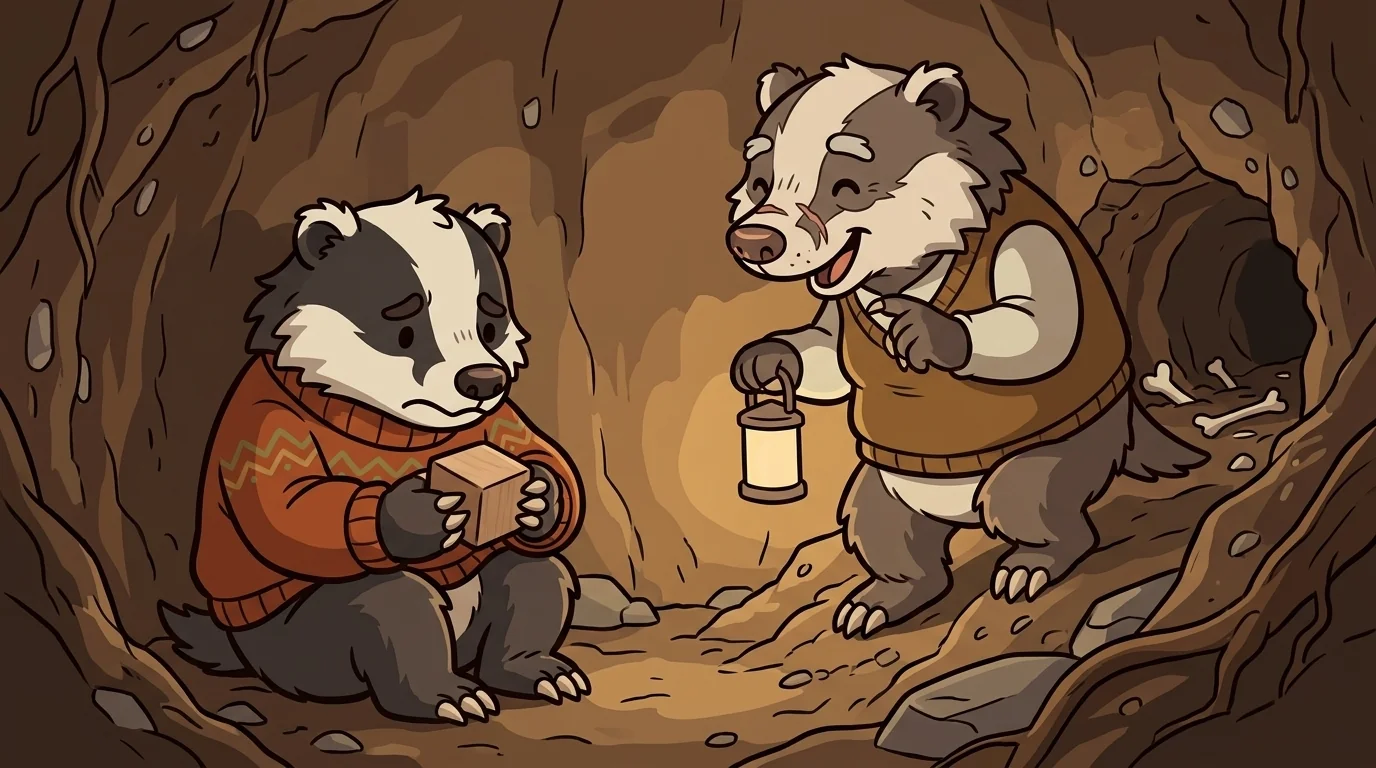
He was young, and he'd rolled terribly at the worst moment — his hero fumbled the one crucial jump and fell into a dark pit — and he was crushed, sure he'd ruined the whole adventure, ready to give up.
His grandmother, an old badger with a scarred, cheerful snout, climbed down into the story-pit with him.
"I FAILED," young Upend wailed. "I fell in the pit. The whole plan is ruined."
"Is it?" his grandmother said, snuffling around in the dark. "Or did your failure just take us somewhere we'd never have gone?" She sniffed. "Look — down here in the pit you failed into, there's a tunnel nobody knew about. And bones. And a very old door. If you'd made that jump, you'd have sailed right over all of this and never found it." She patted him. "That's the secret, little one. A failure isn't the story breaking. It's the story turning. The trick isn't to avoid failing — everyone fails, the dice make sure of it. The trick is to ask, every time you fail: what door did this just open? A snapped lockpick, a fall in a pit, a spilled potion — each one is a twist waiting to happen, if you're brave enough to say 'and instead—' and see where it goes." She winked. "The best stories aren't the ones where nothing went wrong. They're the ones where everything went wrong, and the heroes turned each disaster into the next surprise."
Young Upend climbed out of the pit through the tunnel he'd failed his way into — and never feared a bad roll again. A failure was just a door he hadn't planned to open.
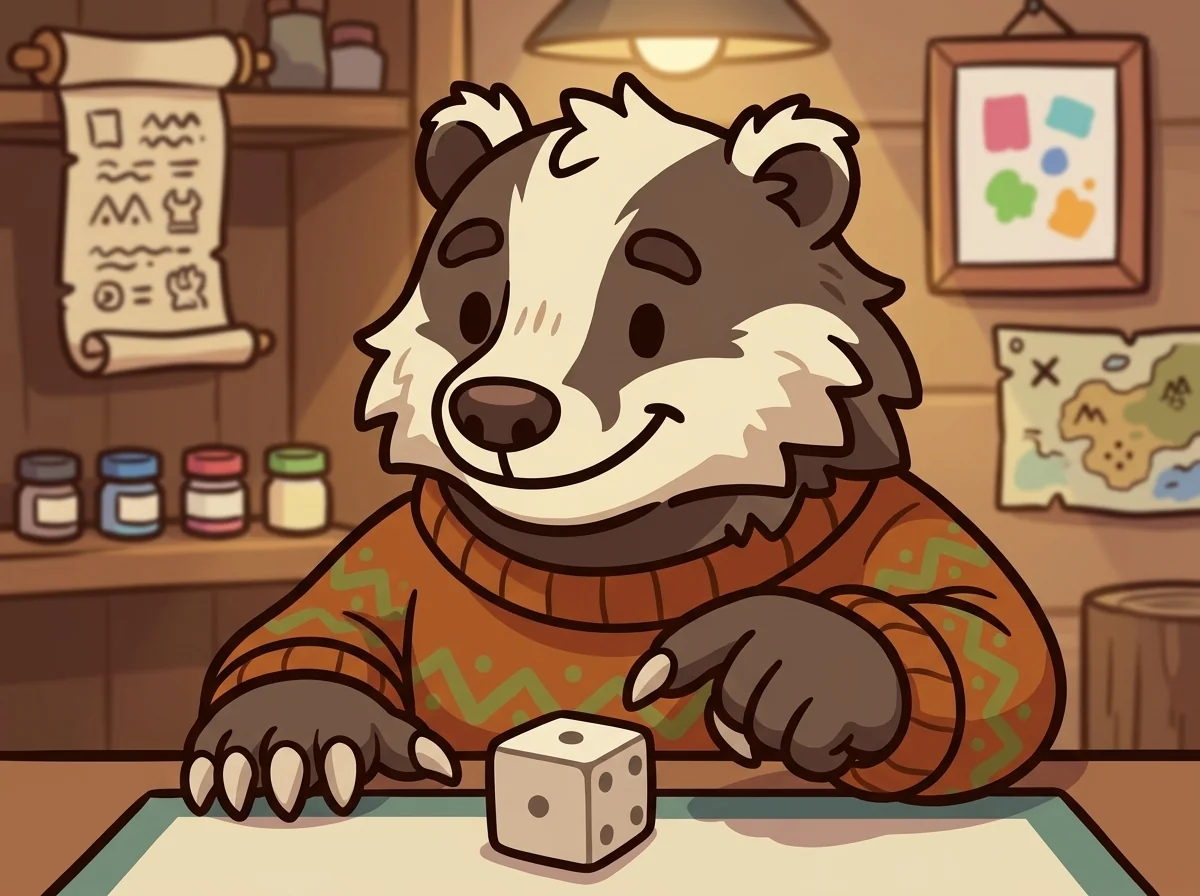
He ambled to QuestForge at twelve, because a place that built worlds out of stories ought to know that the best twists come from things going wrong.
Lorekeeper, the old mentor who ran the story-workshops, met him at the gate. He didn't ask him to prove he was clever. He asked one question. "What do you do when a player fails?"
Upend didn't answer with a speech. He rolled a die, got a terrible number, and grinned. "I fail forward," he said. "Watch. My hero tries to sneak past the guard — and fails. I don't say 'nothing happens, roll again.' I say: 'You step on a twig — CRACK — the guard spins around. Now what do you do?' The failure didn't stop the story. It launched it. A dead-end failure is boring. A failure that opens a new door is the best moment of the game."
Lorekeeper watched the badger's delight at a terrible roll. "You belong here," he said.
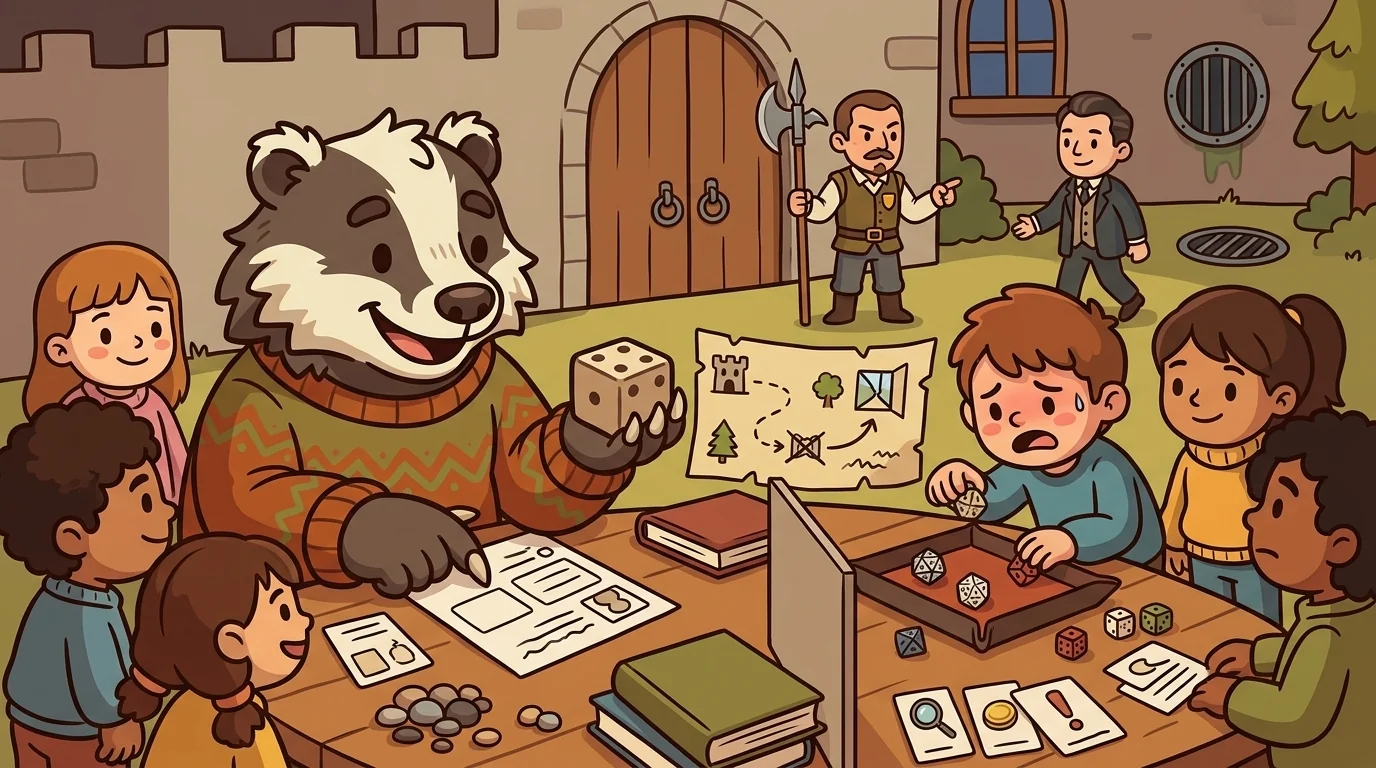
At Upend's table, he taught failure-forward by rescuing a stuck game. The kids had failed to convince a gatekeeper to let them in, and the young runner had said "okay, you fail, um... try again?" — and the game had stalled, everyone re-rolling the same thing, going nowhere. Upend leaned in. "Never 'try again forever,'" he whispered. "Fail forward. They failed to convince the gatekeeper — so the gatekeeper gets suspicious and calls his boss, and now the boss is here, and that's a whole new scene." The runner tried it — and suddenly the stuck game lurched to life. Then Upend gave the working rules: a failed roll should change the situation, never freeze it — "no, and something new happens," not "no, nothing, re-roll"; failure is a plot twist, a door to a path the success would have skipped, so you ask what does this failure make possible?; and failure is never a shame — it's the dice adding a surprise to the story, and the surprise is usually better than the plan. "A young runner told me his players 'kept failing and the game got stuck,'" Upend snuffled. "But the game wasn't stuck because they failed. It was stuck because each failure was a dead end — 'no, nothing.' The moment we made every failure a door — 'no, and now THIS' — the game couldn't stop moving. Players don't get stuck on failure. They get stuck on failure that goes nowhere."
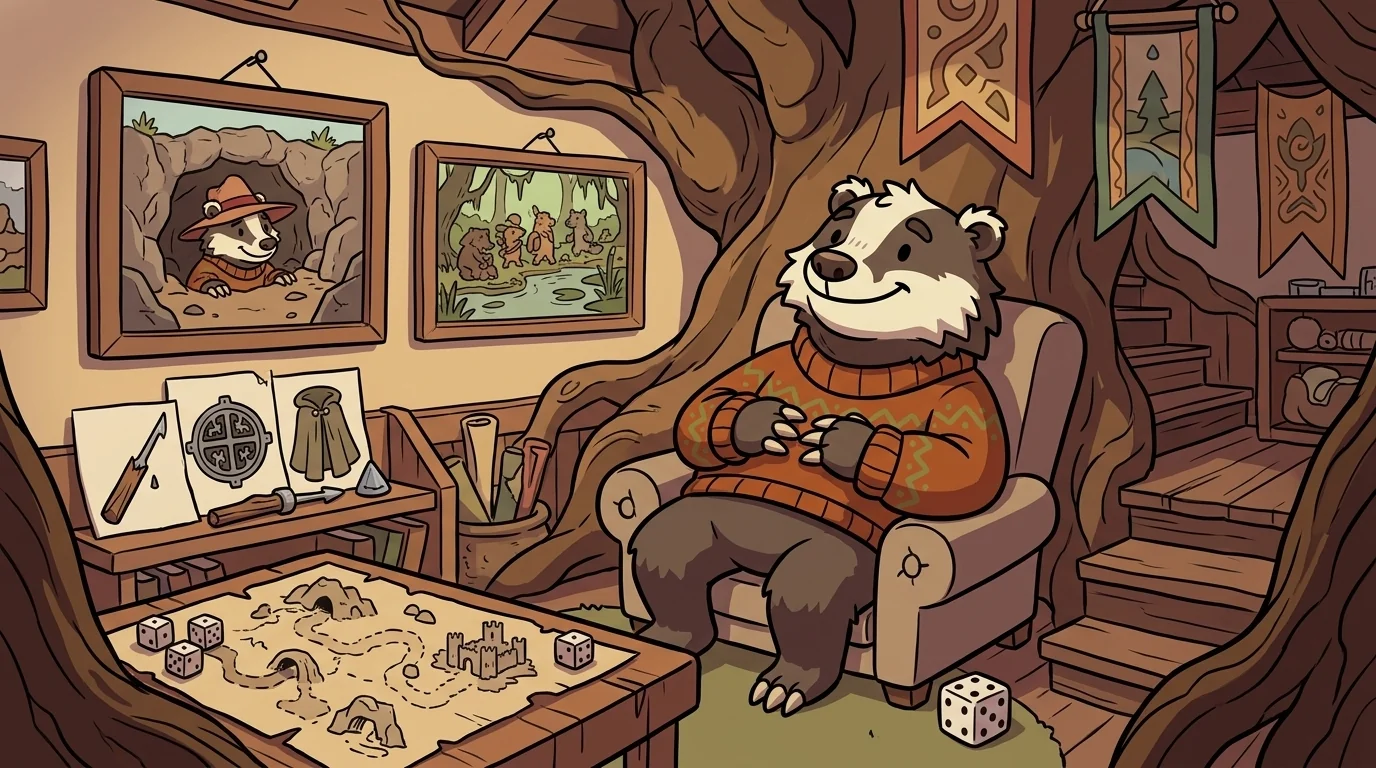
"So failing isn't the end," a kid said slowly. "It's just a turn I didn't plan?"
"A door you didn't plan to open," Upend agreed, and he settled back on his haunches, thinking of all the pits he'd failed into that turned out to have tunnels, all the snapped lockpicks that led to better ways in, and felt a deep, unashamed gladness at every single flop. There was a warm, brave happiness in it — the settled contentment of a badger who had stopped fearing failure and started following it, who knew that a story where everything went wrong was almost always better than one where everything went right, and that his own worst rolls had led to his best adventures. It made him feel fearless, and curious, and free. That failure-is-a-door, follow-the-flop-somewhere-better warmth — the unashamed gladness of a creature who turned every disaster into the next surprise — was, to Upend, the brave joy hidden inside a terrible roll. "A failure isn't a wall," he said softly, grinning. "It's a door — and behind it is usually the best part of the whole story."
The QuestForge ensemble
Upend is one of the friends in QuestForge. Each friend shows you one idea by how they act; meet them all and you have the whole subject.
-
Sheet
Point-buy character creation + stat optimization — every build is a legitimate story
-
Roll
Dice probability + distribution — dice don't remember; every roll is its own universe
-

Fork
Branching narrative + decision design — two paths, both real, both lead somewhere
-
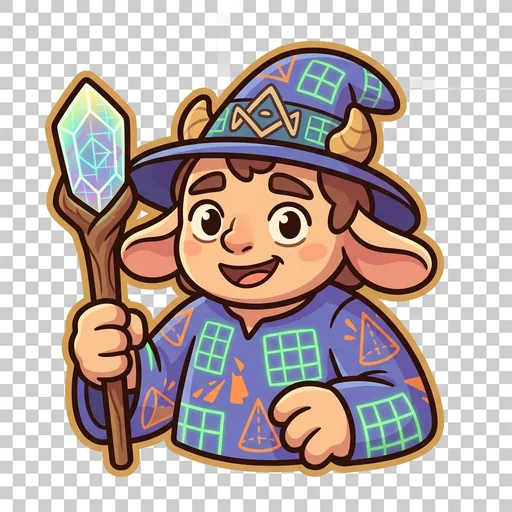
Hex
Encounter map grid + range/AOE geometry — math you can SEE
-
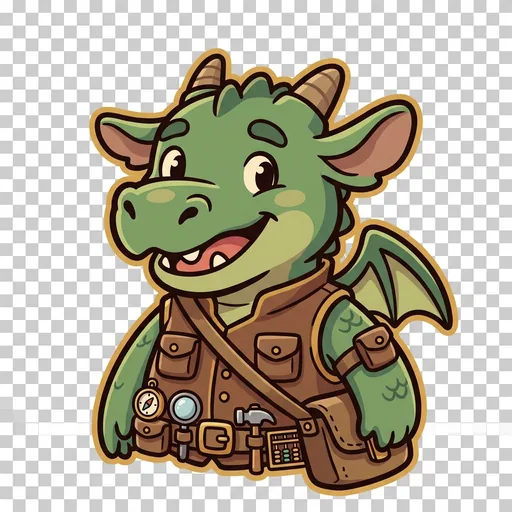
Hoard
Resource economics + budget — tools-not-trophies; counter-tropic friendly dragon
-
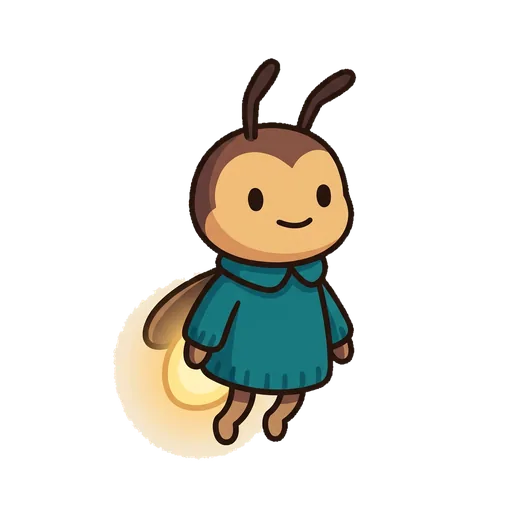
Wax
Pacing / scene rhythm
-

Ante
Stakes
-

Rally
Collaboration / "yes, and"
-
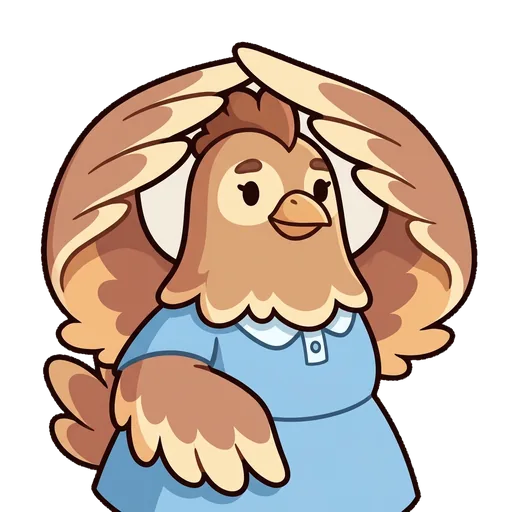
Haven
Table safety / session zero