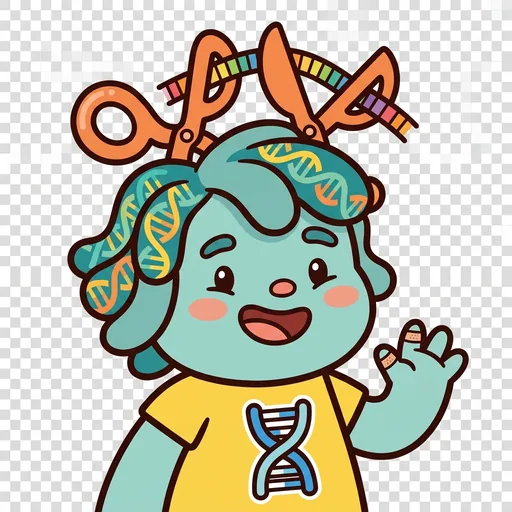
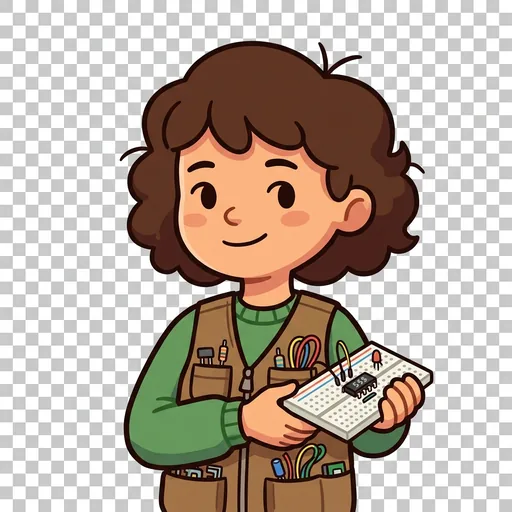
Dolly and Snip
MOVE OR CUT — there are two ways to carry an audience from one thing to another: move the camera to it (Dolly's glide, which connects and keeps time flowing) or cut to it (Snip's edit, which jumps and compresses time). A glide binds two things together; a cut sets them apart. Choosing which one a reveal wants is choosing how the moment feels.
Loading audio…
Press play to listen along. The line being read lights up as you go.
Show full transcript
Loading transcript…
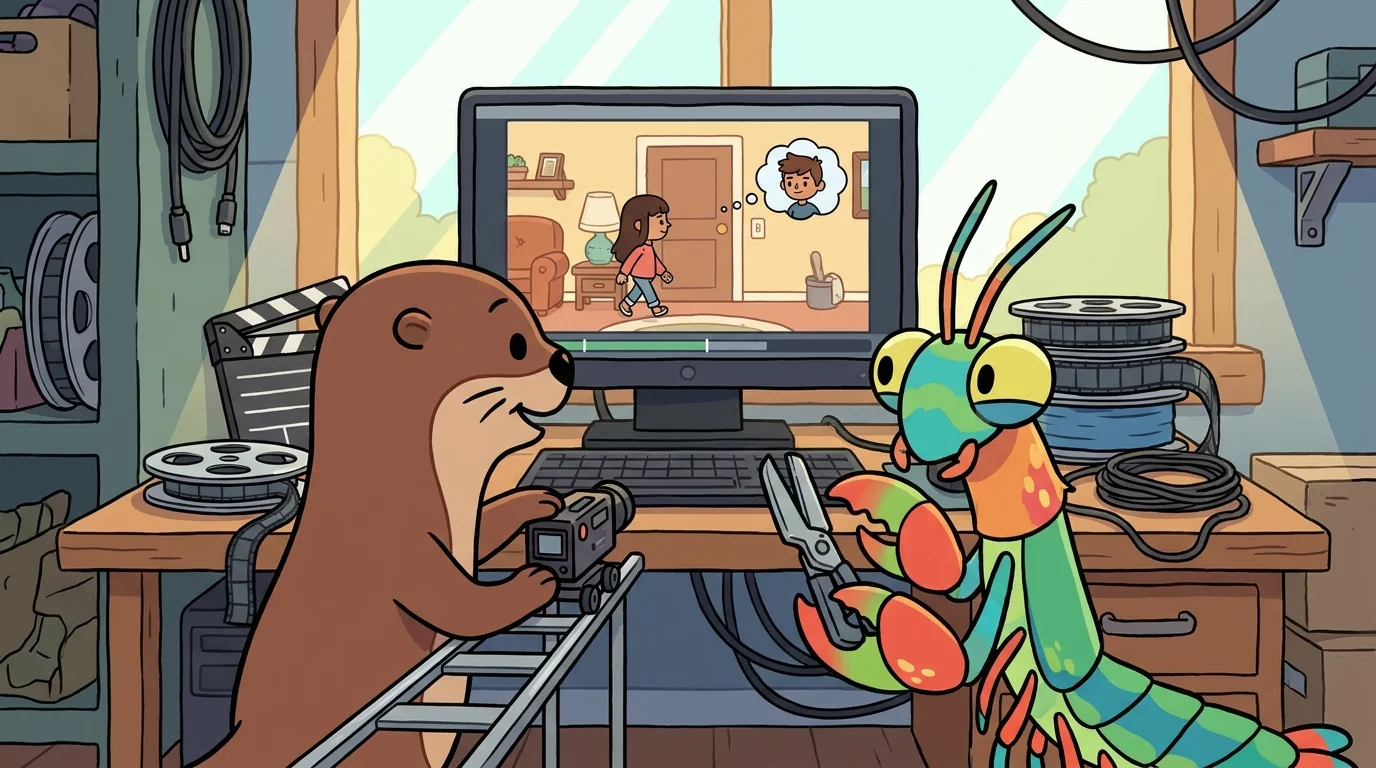
A kid came to Reelforge with a moment that wouldn't land, and it sent two very different teachers to the same editing-bench.
The scene was simple: a girl hears a knock, crosses a room, and opens a door to find her long-lost brother. The reveal — the brother's face — had to hit. But the footage felt wrong, and the kid couldn't say why, so the kid went to Dolly, the otter-tween who moved cameras, and then to Snip, the mantis-shrimp-tween who cut them, and the two of them, who usually worked at opposite ends of the craft, leaned over the same footage together.
And each, at first, was certain their own way was the way to get to that face.
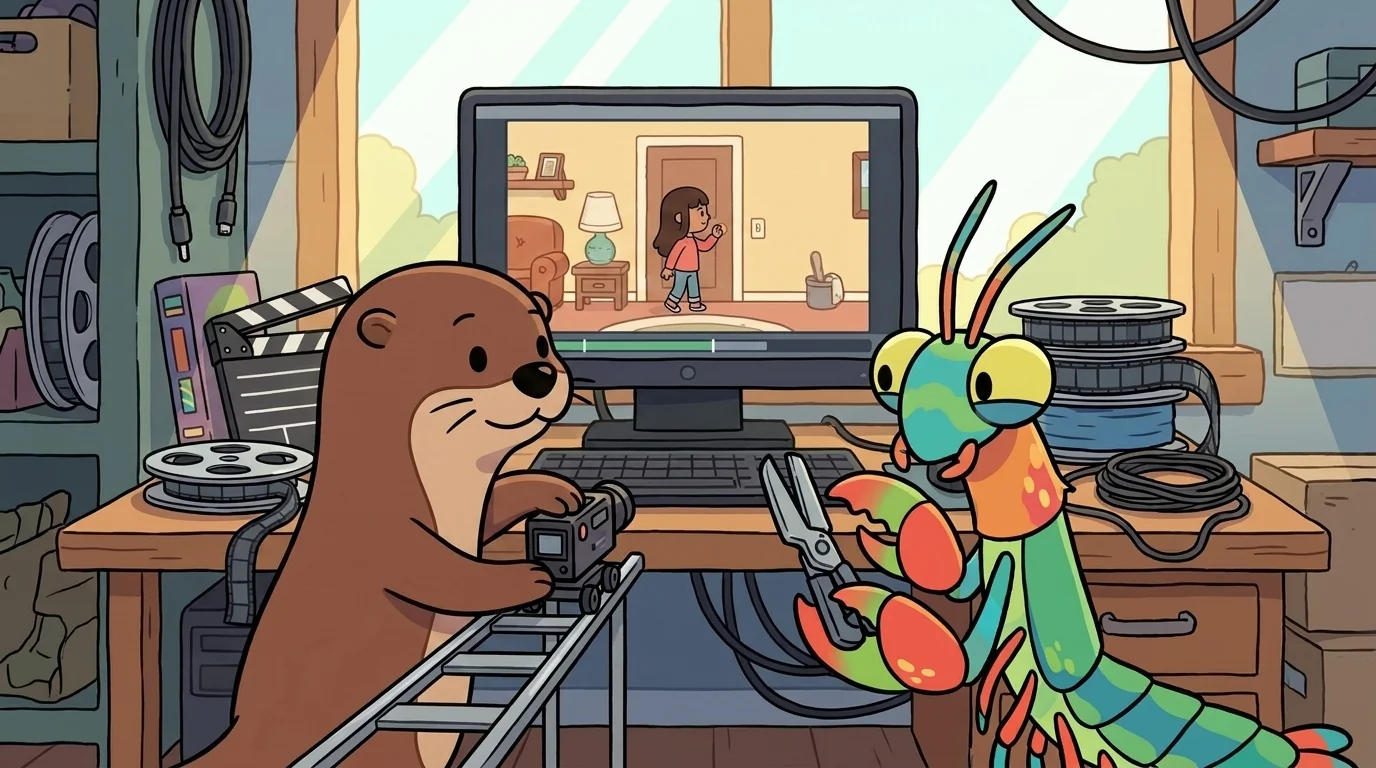
Dolly went first, because moving was her trade. "Don't just jump to his face," Dolly said. "Glide to it. Start on the girl's hand on the door, and let the camera drift slowly across and up to his face as the door swings open. A slow move connects them — it carries the audience across the space between the two of them, so we feel the distance closing." She rolled an imagined cart, smooth and slow. "A glide keeps time flowing. It says: these two belong to one unbroken moment. Watch them come together."
The kid tried it — and it was beautiful, tender, the reunion flowing in one long breath. But something about the surprise had gone soft. The brother's face arrived gently, expected, instead of hitting like a shock.
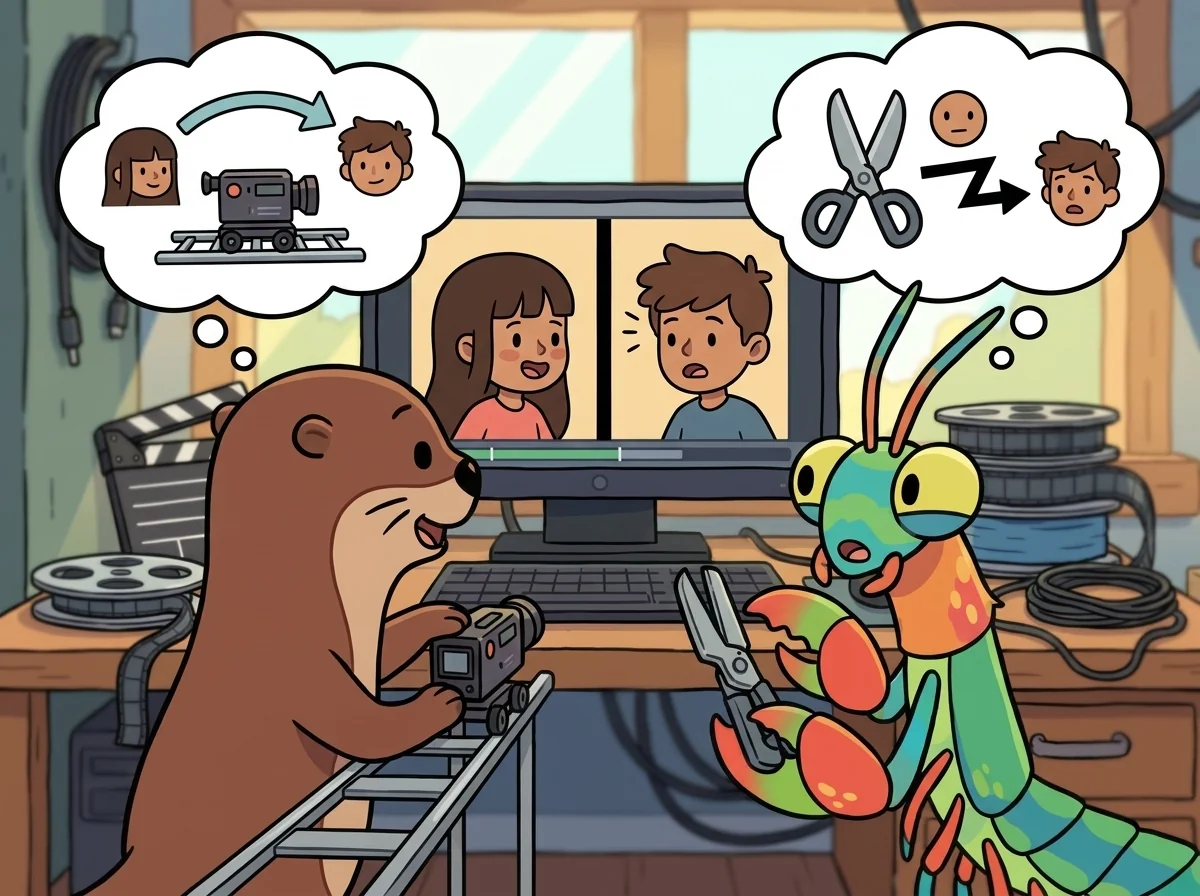
Snip had been watching, and now she saw the other truth. "Your glide is lovely," Snip told Dolly, "but this is a reveal. A surprise. And a slow glide warns us — we see it coming as the camera drifts up. If you want it to hit, you don't move to it. You cut to it." Snip mimed a hard edit. "Stay on the girl's face — her hope, her fear — and then cut, sharp, straight to his face, all at once, no warning. A cut jumps time. It skips the space between and slams the two things together. That's how a surprise lands — not a drift, but a jolt."
The kid tried Snip's way — and the brother's face hit, sudden and electric. But now, oddly, the tenderness was gone; the reunion felt abrupt, almost harsh, two strangers snapped together rather than a distance lovingly closed.
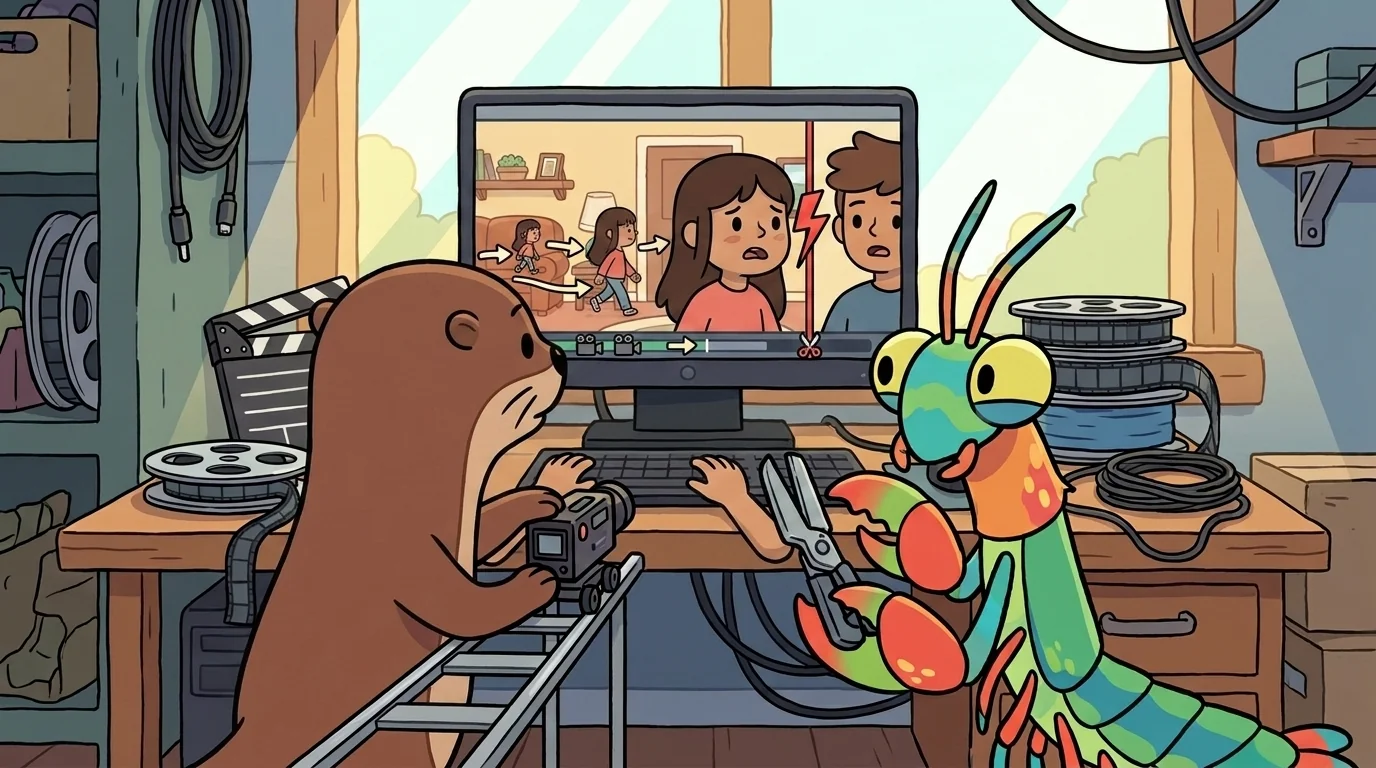
And then, over the one bench, the two of them built it together — and had the kid build it, hands on the footage, to feel that move and cut are two tools for two different jobs, and that a real scene often wants both.
"They're not rivals," Snip realized aloud. "They're two ways to travel — and this moment has two feelings in it." So they layered them. First the build: Dolly's slow glide across the room and up the girl's hopeful, frightened face — the tender, unbroken approach, time flowing, the distance closing, feel her cross toward the door. Then, at the exact instant the door opens — Snip's hard cut, sharp, no warning, straight to the brother's face. The glide had built the tenderness and the tension; the cut delivered the shock. The kid watched it and made a small sound, because now it landed whole: the long ache of crossing the room (Dolly's glide, connecting) and the electric jolt of the face (Snip's cut, surprising). "Move to build the feeling," Dolly said. "Cut to spring it," said Snip. A glide binds; a cut breaks — and knowing which one a moment wants, or where it wants each, is the whole art of getting there.
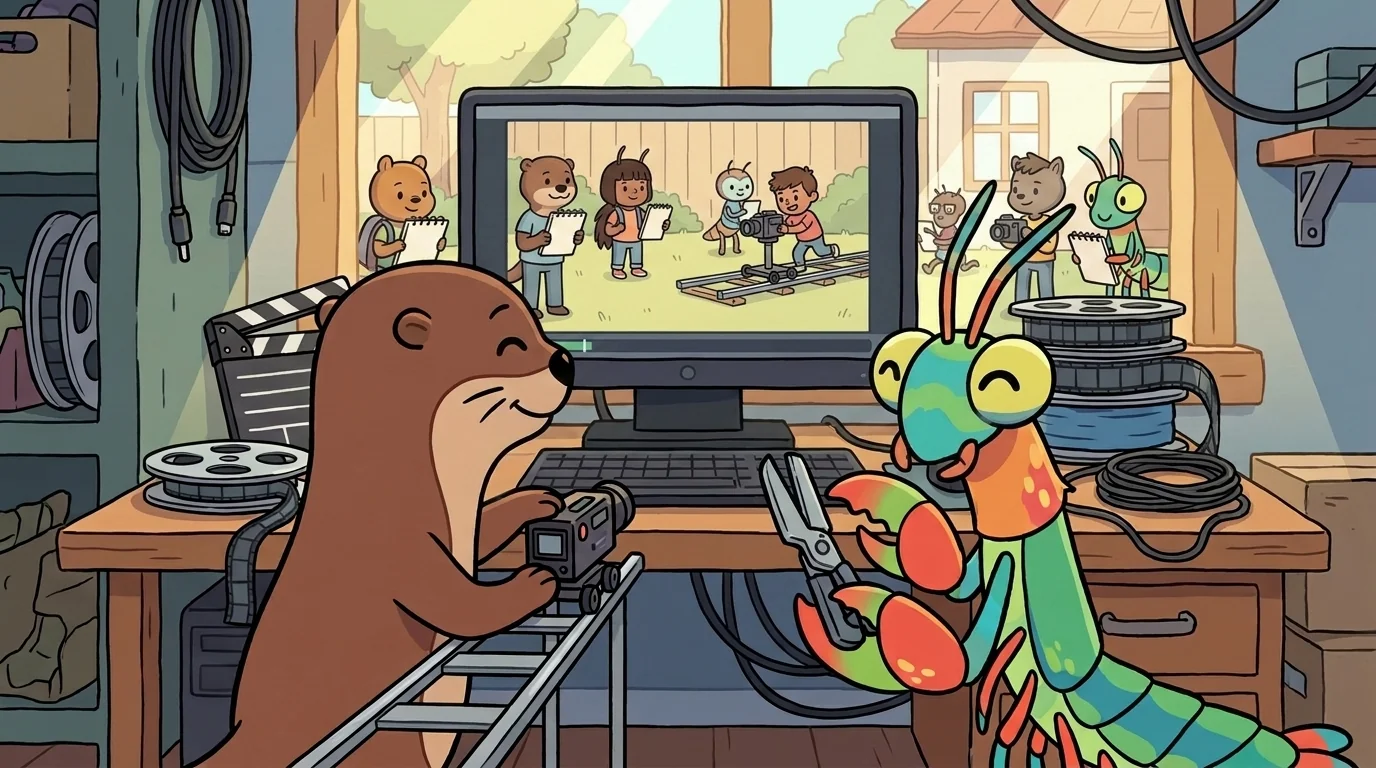
Afterward, watching the kid re-cut the scene, Dolly admitted she'd always thought a smooth move was the better way — that cutting was just what you did when you couldn't move the camera. And Snip admitted she'd thought the opposite — that a clean cut was the real craft and a glide was just showing off. Neither was true. A glide where a cut belonged went soft; a cut where a glide belonged went cold. Move and cut weren't better-and-worse. They were connect and jump — two different jobs — and a scene usually needed both, each in its right place.
They started teaching the traveling-lesson together after that, one bench, two tools. And the kids who learned it that way carried something past the editing-room: that there are two ways to arrive at anything — ease toward it slowly, or meet it all at once — and that neither is the right way in general; the moment decides. Dolly and Snip, who had worked at opposite ends of the craft for years, found they'd always been two halves of one question — move, or cut? — and that the best scenes knew exactly when to glide, and exactly when to jump.
The ReelForge ensemble
Dolly and Snip is part of ReelForge's distributed-narrative cast. Each character embodies a different curricular primitive; together they teach the full subject.
-
Draft
Storyboarding — pre-visualization; 'Draw it first. Then film it.'
-
Aim
Camera angles + framing — 'Where the camera stands changes the story.'
-

Bright
Lighting design — 'Three lights. Different feelings.'
-
Buzz
Sound design — foley + ambient + dialogue — 'Sound is the other half.'
-
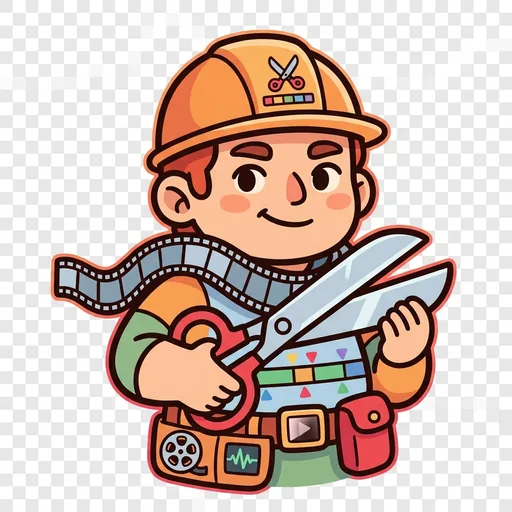
Snip
Editing — timeline + transitions + pacing — 'Cut here. Not there.'
-

Whole
Multi-scene narrative — 'Beginning. Middle. End.'
-
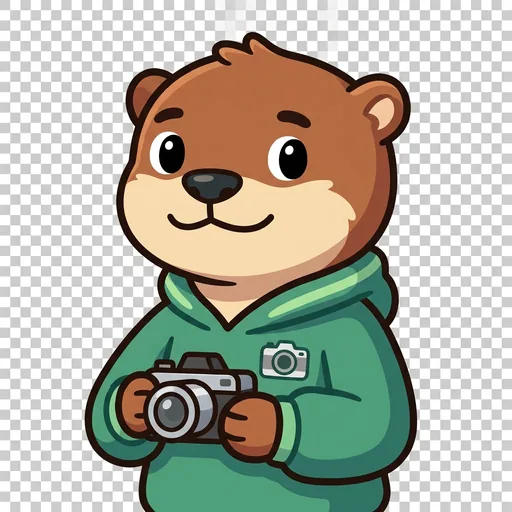
Dolly
Camera movement — the push-in, the follow, the reveal — 'Move the camera to move the eye.'
-
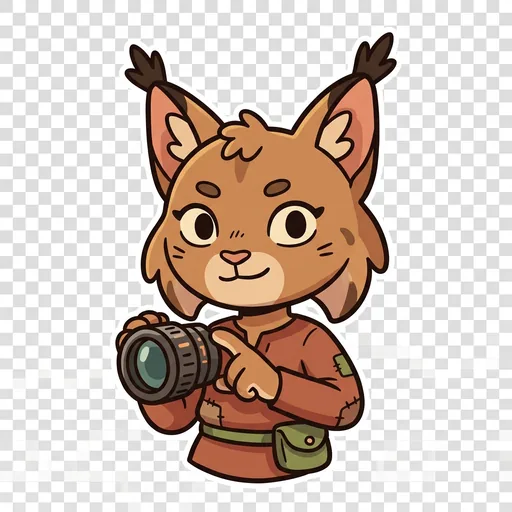
Sharp
Focus + depth of field — 'Where the eye lands.'
-
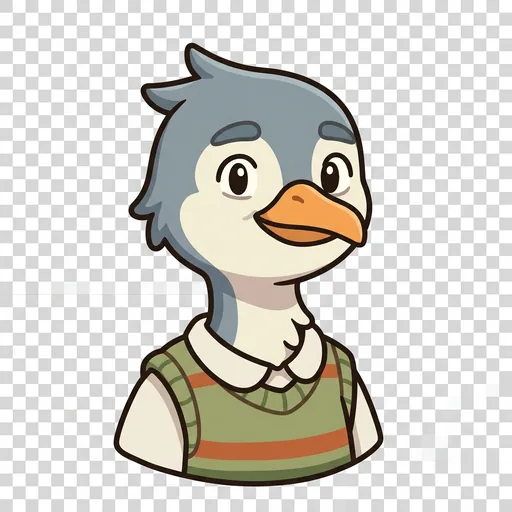
Stir
Blocking + performance — 'The body carries the scene.'
-
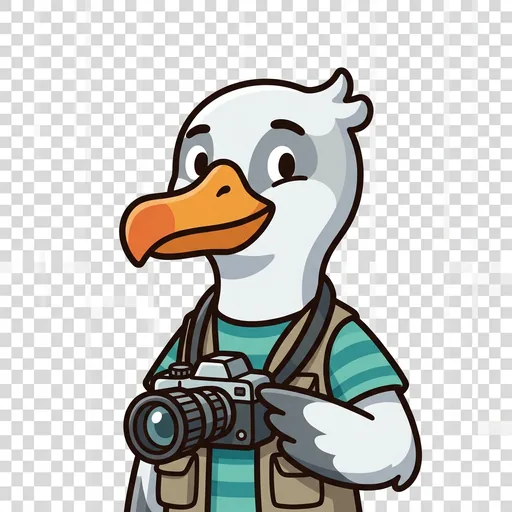
Vast
Shot size — wide, medium, close — 'How much you see changes how you feel.'