Zest
A squeeze of something sour lifts the whole dish
Loading audio…
Press play to listen along. The line being read lights up as you go.
Show full transcript
Loading transcript…
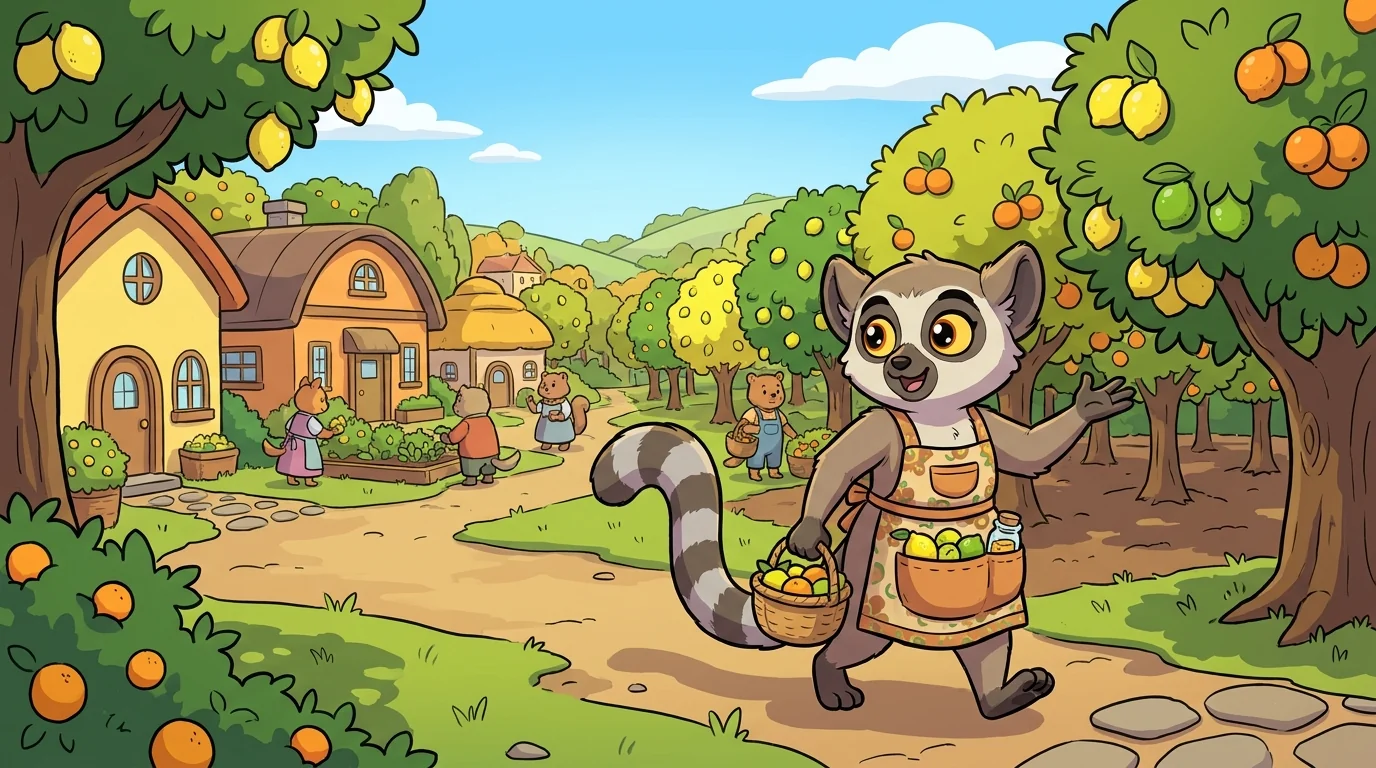
In a small village beside the citrus groves, there lived a lemur-tween named Zest who carried a little basket of lemons wherever she went.
Zest was bright-eyed and lively, with a long ringed tail and quick, curious paws. She wore an apron with a basket-pocket, and in it, always, something sour — a lemon, a lime, a small jar of vinegar. When a dish tasted heavy or flat, Zest would add the smallest squeeze of something sour, and the whole thing would seem to lift and shine.
Zest had a sentence she liked to say, bright as her lemons.
"A squeeze of something sour lifts the whole dish," Zest would say. "Acid is the sunlight of flavor. When food tastes heavy, it often isn't more salt it needs — it's a little bright sour."
People sometimes thought sour was just for lemonade. Zest would just squeeze a drop into a rich stew and let them taste it wake up.

When Zest was small, her aunt had taught her over a pot of lentils.
Her aunt made a lentil stew that was rich and warm but, one day, somehow heavy — thick and dull and sitting flat on the tongue, like a grey afternoon. Young Zest tasted it and couldn't say what was wrong. It wasn't unsalted. It was just… tired.
"Watch," her aunt said, and squeezed half a lemon into the pot, stirred, and offered the spoon again.
Zest tasted. And the stew woke up — but differently than salt woke things. It went light. Bright. The heaviness lifted, like sun breaking through cloud, and the flavors that had been buried under the richness suddenly sparkled.
"It didn't need more salt," her aunt said. "It needed lifting. A little sour cuts through the heavy and lets the light back in. Acid is the sunlight of the kitchen." Zest felt a bright wonder open in her chest — that the answer to heavy and dull wasn't more of the same, but a small, different, shining thing.

Zest came to SaffronLab as a young lemur, because a place that studied flavor ought to understand the bright half of it that so many cooks forget.
The old cook who welcomed her set out a rich, heavy sauce. "This is too flat," she said. "But do not add salt — it has enough. Fix it."
Zest tasted. Rich, yes — but heavy, sitting dull on the tongue. She did not reach for salt. She squeezed in a few drops of vinegar, stirred, tasted again — and the sauce brightened, the heaviness lifting, the flavors sparkling clear. The old cook's eyes lit up. "You reached for sour, not more salt. Most cooks only know one answer. You knew the dish needed lifting, not deepening. That is rare."
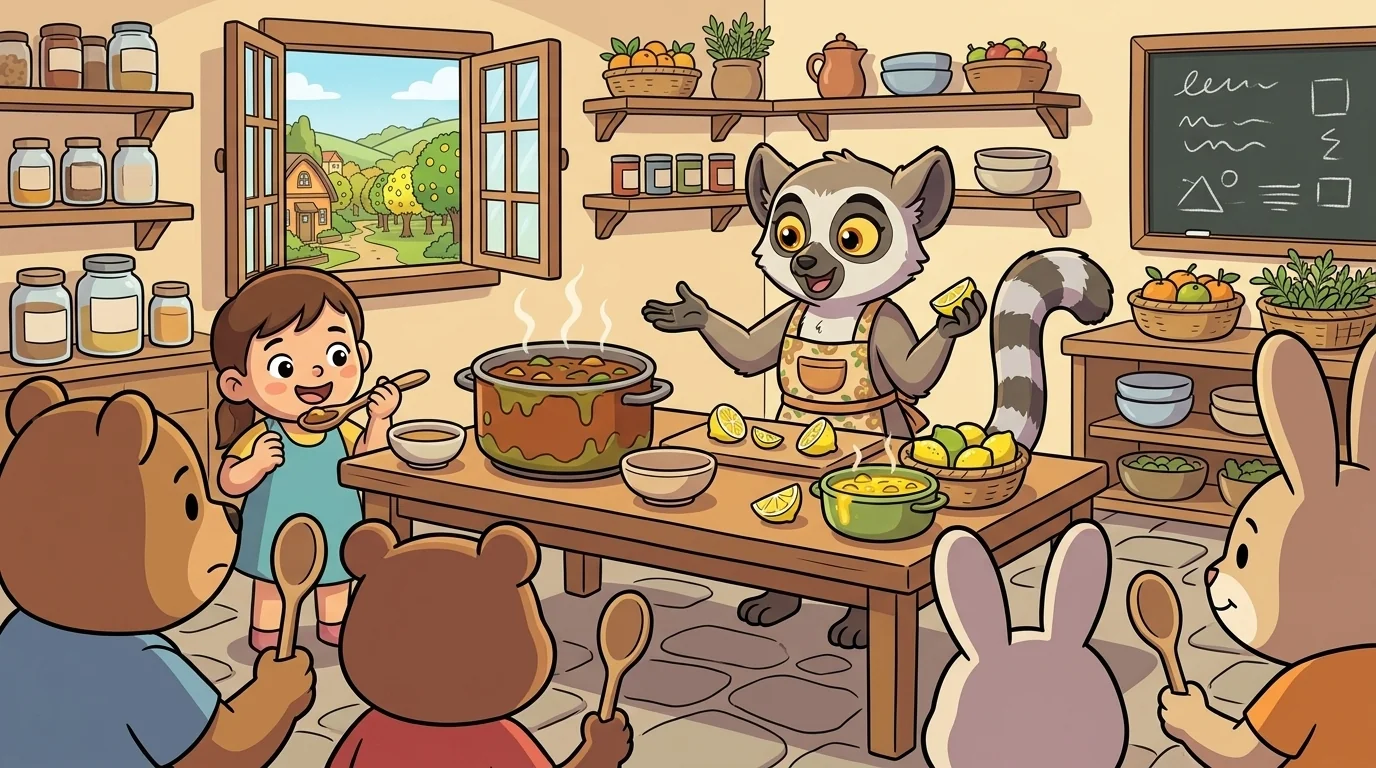
In her kitchen, Zest gave her students two spoons of the same rich soup — one plain, one with a squeeze of lemon. "The first?" she asked. Heavy. Dull. "The second?" Their faces brightened — the same soup, but light, alive, shining. "I added no salt," said Zest. "I added sour. Salt makes flavors louder. Acid makes them brighter — it cuts through richness and lets the light in." Then she taught them the real wisdom. "So when a dish tastes off, don't just add more of what's already there. Ask what it needs. Flat and sleepy? Maybe salt. Heavy and dull? Probably a little bright sour. Learning the difference — that is what makes a cook, not a guesser." She passed around lemon wedges, and let each student squeeze and taste, watching heavy dishes lift into light.
She said it warmly. "The sour is not the enemy of the rich. It is its friend. A squeeze of bright cuts through the heavy and reminds it how to shine. Every good dish is a little balance of the deep and the bright."
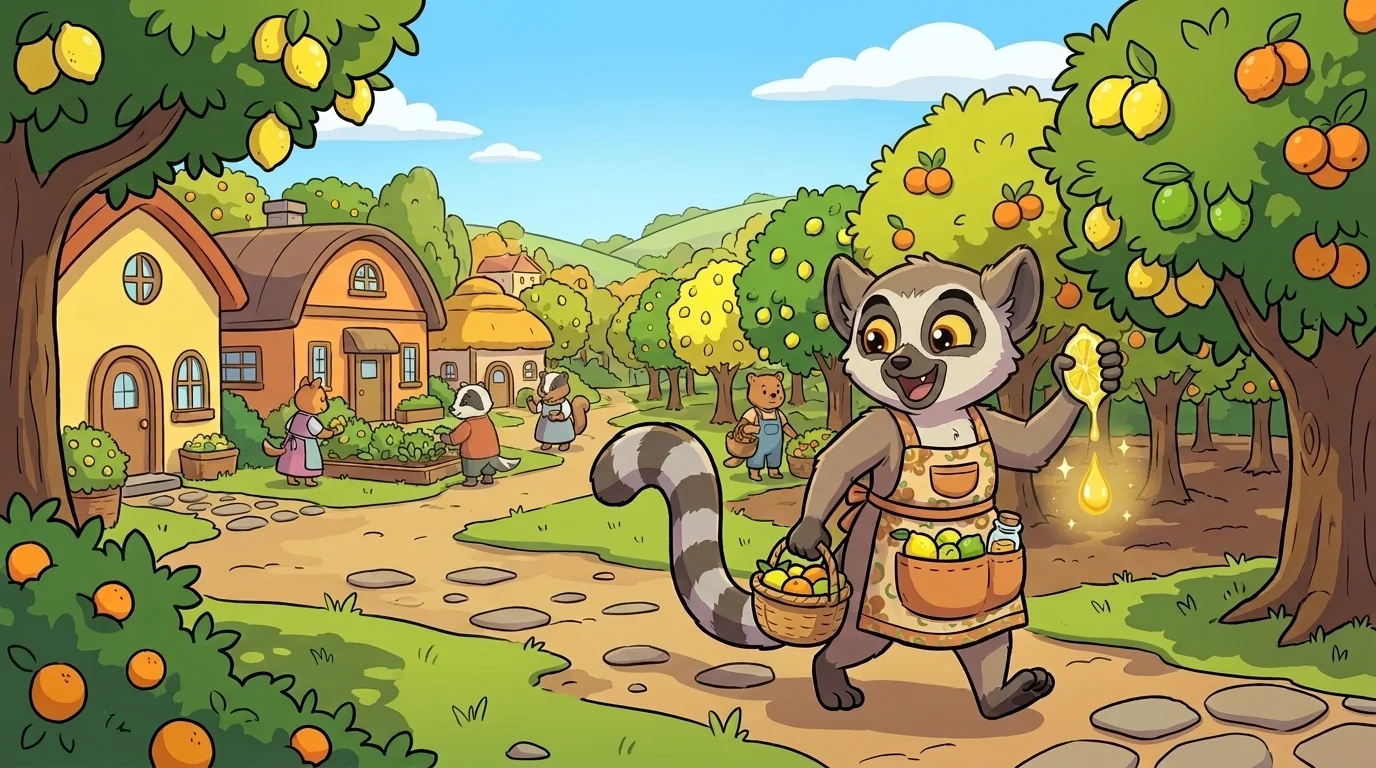
"A squeeze of something sour lifts the whole dish — acid is the sunlight of flavor." And when Zest said it, squeezing one last bright drop of lemon, her lively face filled with a warm, sparkling joy — the light, glad feeling of watching something heavy and tired be gently lifted back into brightness, and of knowing that sometimes the smallest, most different touch is exactly the one a dull thing needs.
Hear it as an audio drama
A short play starring Zest, from SaffronLab. Different voices, same idea. Listen any time after you read.
Loading audio…
Read the drama script
- Narrator: From Spark and Anvil and SaffronLab — this is Zest, in chapter 1 of the SaffronLab cast.
- Narrator: This drama uses an AI-generated voice. Voiced via Gemini 2.5.
- Narrator: This story covers food, culture, and family. Parents may want to listen first.
- Narrator: Zest is a bright-eyed, lively lemur with a long ringed tail. A basket-pocket of lemons and a little jar of vinegar ride in her apron.
- Narrator: When a dish tastes heavy or flat, she adds the smallest squeeze of something sour, and the whole thing seems to lift and shine.
- Zest: When food is heavy and dull, more salt and fat just pile on more heaviness. A little acid does the opposite: it brightens.
- Narrator: A weary cook kept adding butter and salt to a stew that only grew heavier with every spoonful.
- Zest: Stop — you're pouring more of the heavy thing onto a heavy dish. Heavy doesn't lift heavy. Bright lifts heavy.
- Zest: A few drops of lemon, a stir — and the richness cuts through, every flavor fresher and more alive, like opening a window.
- Narrator: The cook tasted his suddenly-lifted stew, amazed at how a single squeeze had woken it.
- Zest: When a dish is too much of one thing, don't add more of that thing. Reach for its balancing opposite.
- Pestle: Tell me, young brightener — why reach past the butter for a lemon?
- Zest: Because the butter would bury it and the acid opens a window. A little sour is the fastest way to wake a tired dish.
- Narrator: Not more of the heavy thing — the bright squeeze that lifts the whole pot alive. That is Zest's craft.
- Narrator: You've been listening to a Spark and Anvil chapter, written by the Spark and Anvil writing team for ages 9 to 14.
- Narrator: Apps stay free forever.
- Narrator: Curriculum aligned to Family and Consumer Sciences standards.
- Narrator: If anything in this story brought up big feelings, talking to a trusted adult helps. You can also reach support lines anytime.
- Narrator: Released under Creative Commons BY-NC-SA 4.0 for educational reuse. Visit Spark and Anvil for the full transcript.
The SaffronLab ensemble
Zest is one of the friends in SaffronLab. Each friend shows you one idea by how they act; meet them all and you have the whole subject.
-

Whisk
Mixing + emulsions — the energetic hummingbird who treats mixing as conversation between ingredients ('quick wrists, patient eyes — air goes in, lumps come out')
-

Simmer
Heat application + states of matter — the patient tortoise who treats heat as the slow-revealer ('heat moves slow, food changes slower; watch the bubbles — they're telling you')
-

Rise
Fermentation + leavening — the wise old badger who treats fermentation as the patient art of working with living things, foregrounding cross-cultural traditions ('living things take time — wait; the bread knows when it's ready')
-

Crisp
Maillard + caramelization — the focused fox who treats browning as the flavor-creating frontier ('sugar meets heat, protein meets heat — new flavors are born')
-

Brine
Preservation + food safety — the careful axolotl who treats food safety as care-for-the-eater, foregrounding cross-cultural preservation traditions ('salt remembers, vinegar remembers, cold remembers — food keeps if it's kept right')
-

Bind
Thickening — roux, reduction, how a sauce comes together — 'Patience turns liquid into silk.'
-

Mince
Knife-work — uniform cuts + mise-en-place — 'Prep first. Cook calm.'
-

Savor
Seasoning — salt as flavor-amplifier; taste as you go — 'Taste, then decide.'
-

Steep
Infusion — drawing flavor from aromatics + herbs — 'Give it time to open up.'