
Remma
THE VARIABLE - *a variable is a named place that REMEMBERS one value for the program - how many keys, how many coins - and that value can CHANGE as the game goes; you give it a name, the program stores it, and everything else can look it up or update it.*
Remma the Chipmunk Never Forgets a Count
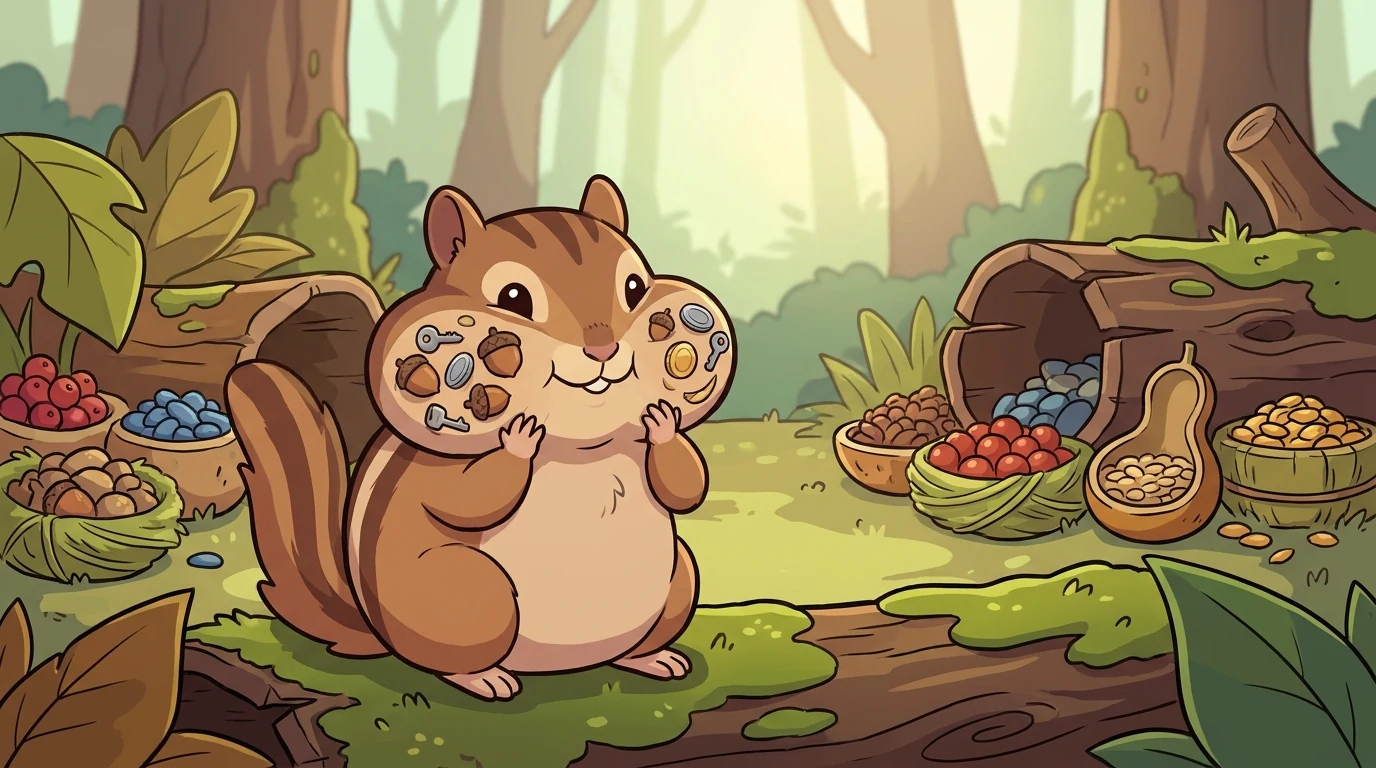
Remma is a busy, bright-eyed chipmunk with the roundest cheeks in the quest, and those cheeks are not just for show. They are pockets - labelled pockets - and Remma’s whole gift is remembering.
Here is the problem Remma solves. A program has no memory of its own from one moment to the next. On its own, it can’t recall how many keys the hero has picked up, or how many coins, or how much time is left. Each instruction just does its thing and moves on. But games need to remember - a score that grows, keys that add up, lives that run down. Something has to hold onto those numbers as the game goes. That something is Remma.
“I keep a pocket for each thing worth remembering,” Remma says, patting a cheek. “This one’s labelled keys. That one’s coins. Each pocket has a name, and each one holds a value - a number, right now.” At the start, the keys pocket holds 0. The hero grabs a key - Remma updates the pocket: now it holds 1. Grabs another - now 2. The pocket doesn’t make a new pocket each time; it’s the same pocket, the same name, holding a value that changes.
That’s the whole idea of a variable, and it’s one you’ll meet in every program ever written. A variable is a named place that remembers a value - and the value can change over time. The name stays put (keys is always keys), but what’s inside updates as things happen. It’s a labelled box the program can look inside any time it asks: “How many keys do we have?” Remma checks the pocket and answers.
The naming part matters more than it looks. Because each pocket has its own clear label, nothing gets muddled. The keys count and the coins count never mix up, even though they’re both just numbers, because they live in differently-named pockets. “Imagine if I threw everything in one big cheek,” Remma says with a shudder. “Keys and coins and seconds all jumbled together - I’d never untangle it. Names keep it all straight.”
And a variable is only useful because other parts of the program can ask it. Later on, a rule might say “if the keys pocket holds at least 1, open the door.” That rule doesn’t count keys itself - it just asks Remma. Remembering in one clear, named place means everything else can rely on the answer.
That is Remma’s careful, tidy idea.
A variable is a named pocket that remembers a value - and the value can change. Give it a name, store it, update it, look it up.
A grown-up can play too! Spot the “variables” around you - things with a name that hold a number that keeps changing. The score in a game. How many biscuits are left in the tin. The temperature outside. Each has a name and a current value, and the value updates - which is exactly what a variable is: a remembered, changeable, named number.
When the hero collects its third key and Remma updates the pocket - keys: 3 - Remma taps the cheek proudly. “Named it, stored it, kept it true,” Remma says. “Ask me any time - I’ll always know the count. That’s what remembering is for.”
Name it, store it, remember it. That’s Remma.
The scriptquest ensemble
Remma is part of scriptquest's distributed-narrative cast. Each character embodies a different curricular primitive; together they teach the full subject.