
Goad and Thwart
GOAD-AND-THWART — *own the initiative from both ends: keep them answering you, and never let them answer with a plan of their own.*
Loading audio…
Press play to listen along. The line being read lights up as you go.
Show full transcript
Loading transcript…
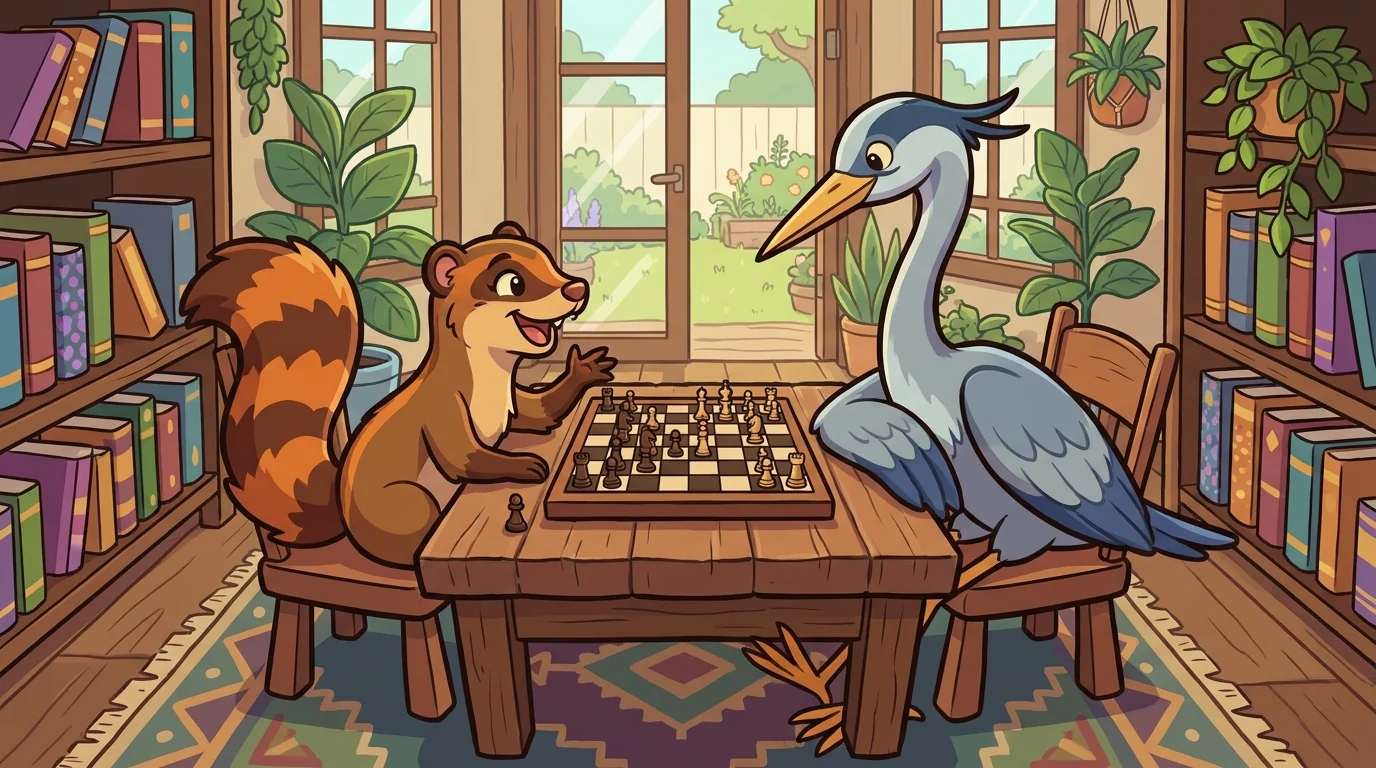
Goad the mongoose and Thwart the heron sat on opposite sides of a chessboard, and a young dormouse named Pip could not tell, at first, why they made such a good team — because they seemed like exact opposites.
Goad was quick and cheerful, always leaning in, always pressing. Thwart was tall and still, always leaning back, always watching. "We're steering the same thing from two ends," Goad said, tail flicking. "The initiative — who gets to decide what the game is about." She grinned at the heron. "I grab it. She refuses to hand it over. Between us, the other side never once gets to say what happens."
Pip looked from the darting mongoose to the still heron. "But you're nothing alike."
"Two hands are nothing alike either," Thwart said mildly, lifting one long grey leg. "And they still do one job. Own the initiative from both ends: keep them answering you, and never let them answer with a plan of their own."
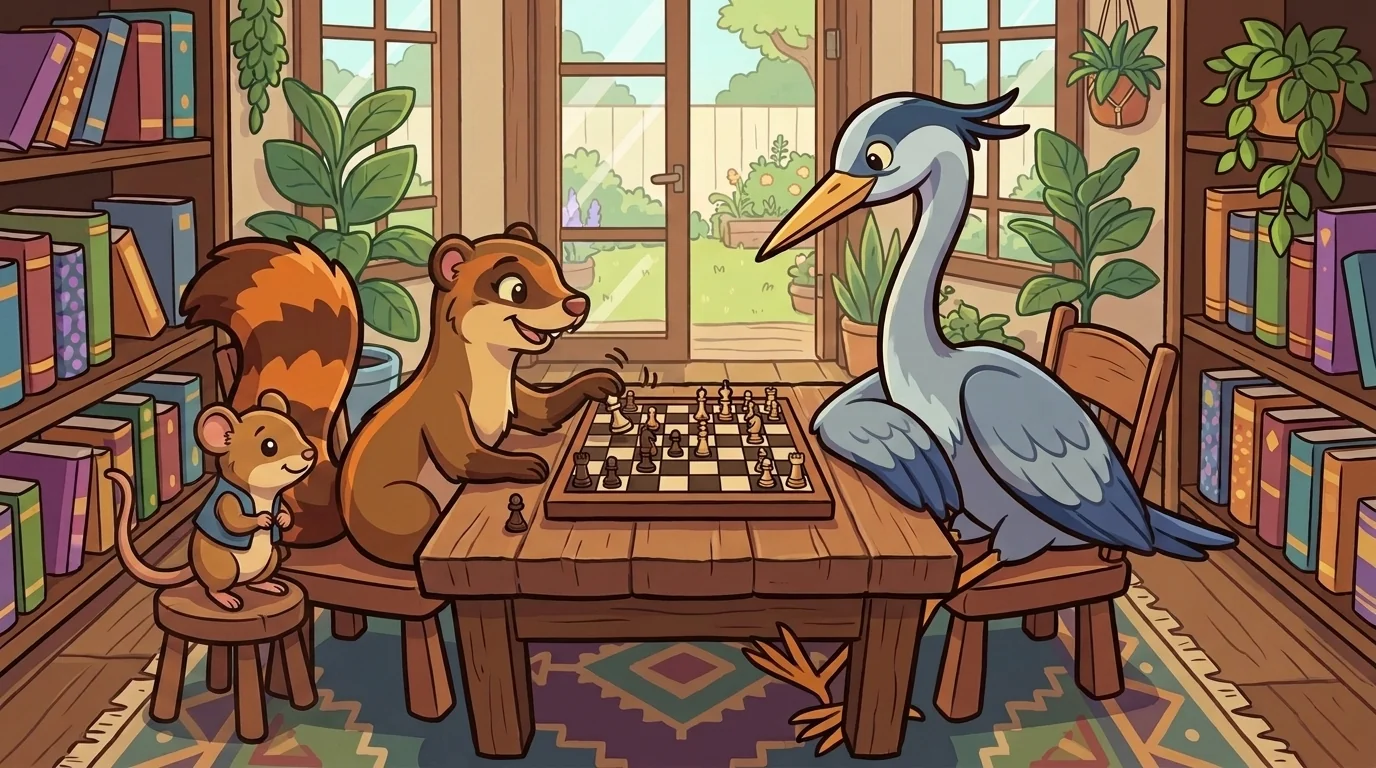
Goad went first, to show the pressing end.
She set up a plain position and began to make small forcing moves — a poke at the rook, a jab at the queen, a little check. "Watch Pip," she said. "Every move I make asks a question the other side MUST answer. So they spend their whole turn replying to me, and never get to start their own idea." Move after move, she kept the imaginary opponent scrambling.
"But be careful," she added, catching herself before a wild lunge. "If I make a scary move they can just ignore, I've wasted my turn and handed the wheel right back. Only real questions. The kind they can't shrug off." She kept her pokes small and true, and the pressure never let up. "That's my end of the rope. I keep them so busy answering me that they can't think about anything else." Pip watched the opponent's pieces flail, always a beat behind, never once building.
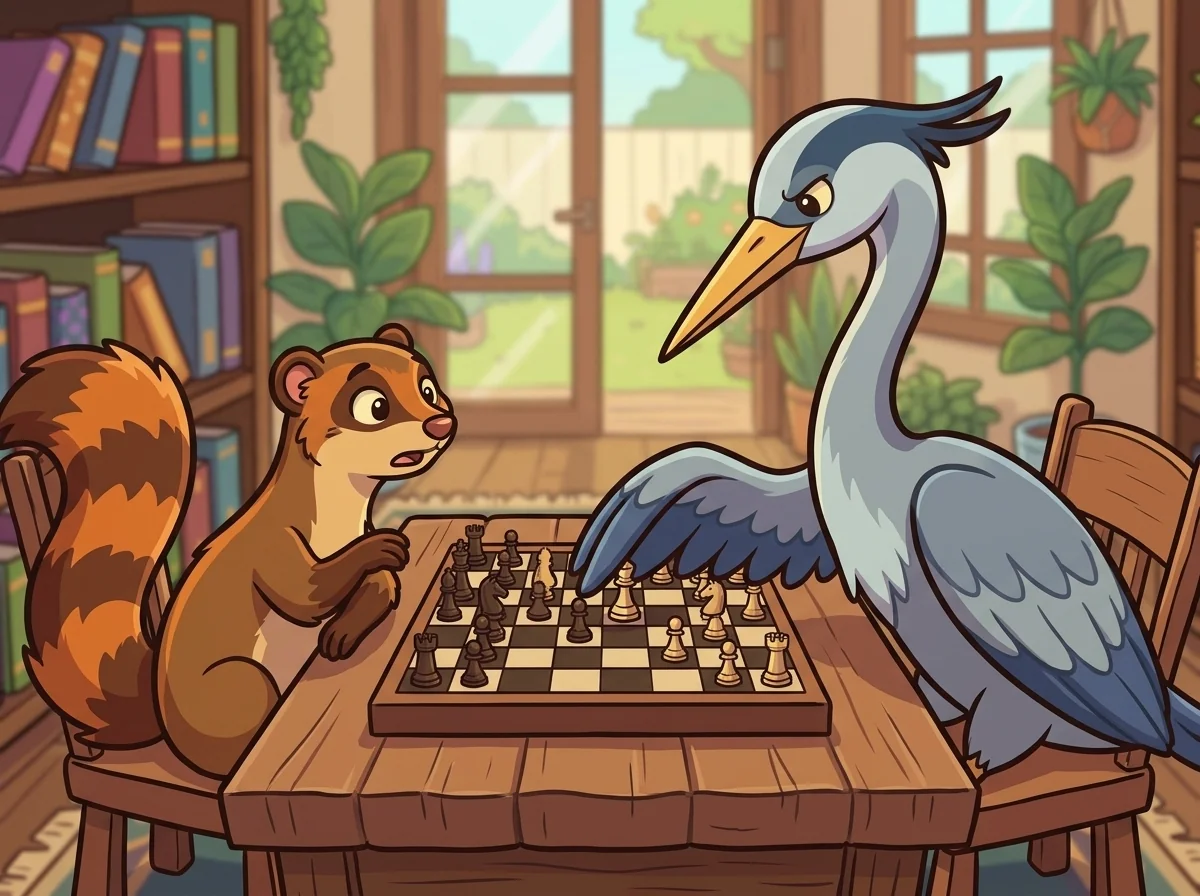
Then Thwart took the same board, to show the denying end.
She played no threats at all. Instead, before each of her own moves, she went still and looked at the board through the opponent's eyes. "What does he WANT?" she murmured. "He wants to swing his bishop over here, to aim at my king." She made one quiet little move — a pawn step — that made that square unwelcome. "There. His plan has nowhere to land now. He never even gets to try it."
Pip blinked. "But he hadn't done anything."
"Best time to stop it," Thwart said. "A plan you catch as a whisper never grows into a shout." She caught herself too, though, and added, "But I don't jump at every shadow. If he's got no real plan brewing, I don't waste a move guarding empty squares. I stop the plans that are real." One quiet move at a time, the opponent's every idea died before it drew breath. "That's my end. I make sure that even when it's their turn, they've got nothing worth playing."
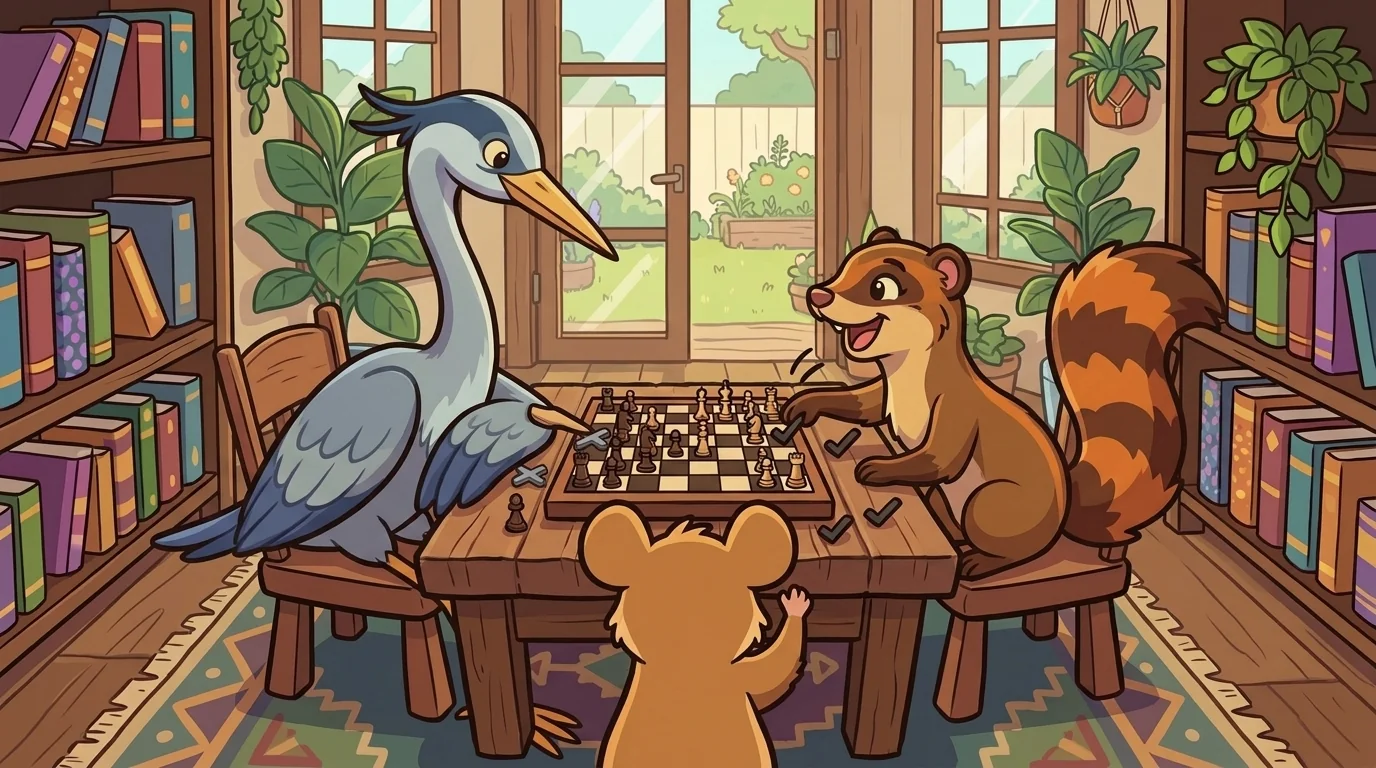
Then Goad and Thwart played the same game TOGETHER against Pip, and the dormouse finally saw the rope pull tight from both ends at once.
Goad pressed first — a poke, a jab, a check — and Pip, playing the lone opponent, spent three whole turns just answering. "See?" Goad said. "You're too busy replying to me to build anything." But Pip, clever, spotted a gap: on his fourth turn he'd finally launch his OWN idea, a knight leaping toward a fork. He reached for it — and found the square already quietly guarded. Thwart had seen it coming a move ago and stolen it.
"You never got your turn to attack," Thwart said gently, "because I took away the one plan you'd saved up for when Goad let you breathe."
Pip sat back, astonished. He understood it now. Alone, Goad's pressing might eventually run out of steam, and Pip could weather it and then strike back. Alone, Thwart's quiet prevention might let Pip slowly, slowly build. But TOGETHER — Goad kept him so busy answering that his only hope was one saved-up counter-plan, and Thwart made sure that saved-up plan was already dead when he reached for it. "You squeeze me from both sides," Pip whispered. "I can't attack because she's pressing, and I can't defend-and-wait-to-strike because she's already stolen my counter."
"Two ends of one rope," Goad said, delighted. "I keep you answering. She makes sure your answer is never a plan." Between the pressing and the preventing, Pip's pieces simply had nowhere to go.
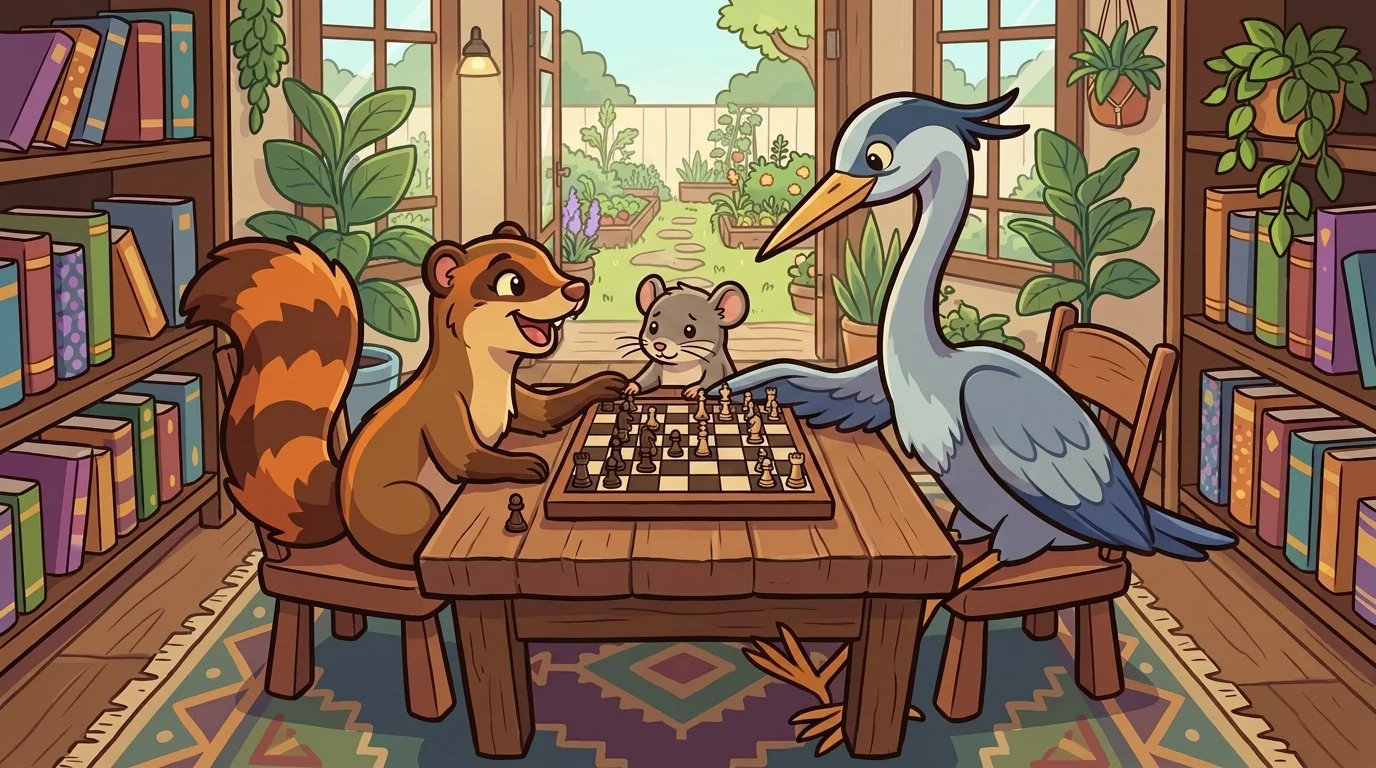
Goad and Thwart let the little dormouse sit with the feeling of being steered from both sides — and then turned it around for him.
"You looked squeezed just now," Thwart said kindly. "But here's the gift: you can be BOTH of us. When it's your game, press like Goad — ask small questions they must answer. AND, on the same turn, be Thwart for one breath — ask what THEY want, and quietly take it. Grab the wheel; don't hand it back."
"I always feel like the game is happening to me," Pip admitted, whiskers trembling. "Like everyone else is steering and I'm just holding on, and my little heart pounds the whole time."
"We both felt that once," Goad said softly — "me, trampled in a warren; her, jumped by every flood." She set a paw on one of Pip's, and Thwart rested a long wing over the other. "The wheel isn't only for bold players OR only for careful ones. Press with one hand. Prevent with the other. Both hands, one job."
Pip drew in a slow breath and let it go, and the holding-on, pounding-heart feeling loosened all the way into a warm, steady, two-handed calm — the quiet, grounded gladness of a small player who has just discovered that the wheel was always big enough for both of his hands at once.
The StrategyForge ensemble
Goad and Thwart is part of StrategyForge's distributed-narrative cast. Each character embodies a different curricular primitive; together they teach the full subject.
-

Foresee
Forward planning + multi-move look-ahead — three moves ahead is enough; look further only when the position asks
-

Trade
Piece-value reasoning + exchange evaluation — equal value isn't equal worth; position-value matters more than piece-value
-

Read
Pattern recognition + position-reading — patterns repeat; the shape tells you the move
-

Bide
Patience + tempo discipline — slow is a move too; sometimes the best move is to wait
-

Concede
Graceful loss + post-game analysis — losing is a teacher; winning is too; I write down both
-

Lodge
The outpost — a piece that can't be chased away is worth two that can
-

Pincer
The fork — one move that asks two questions; they can only answer one
-
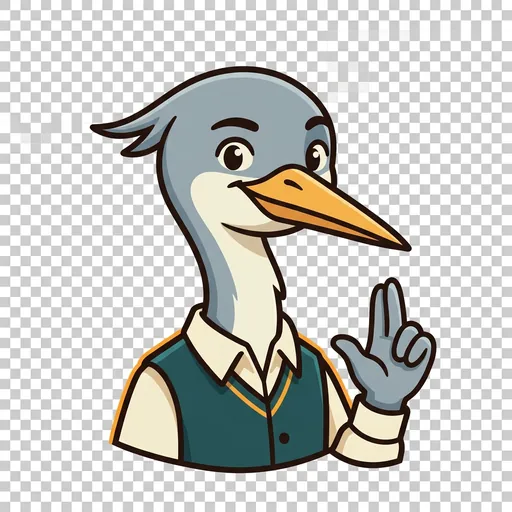
Thwart
Prophylaxis — before you move, ask what THEY want, then quietly take it away
-

Wedge
The breakthrough — when the door is jammed shut, break the wall, not the pieces
-
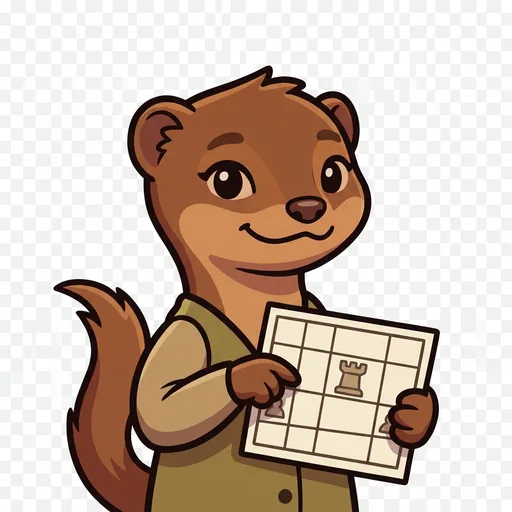
Goad
Initiative + tempo — keep them answering you, and they never get a move of their own