Wedge
WEDGE — *when the door is jammed shut, don't shove the pieces. break the wall.*
Loading audio…
Press play to listen along. The line being read lights up as you go.
Show full transcript
Loading transcript…
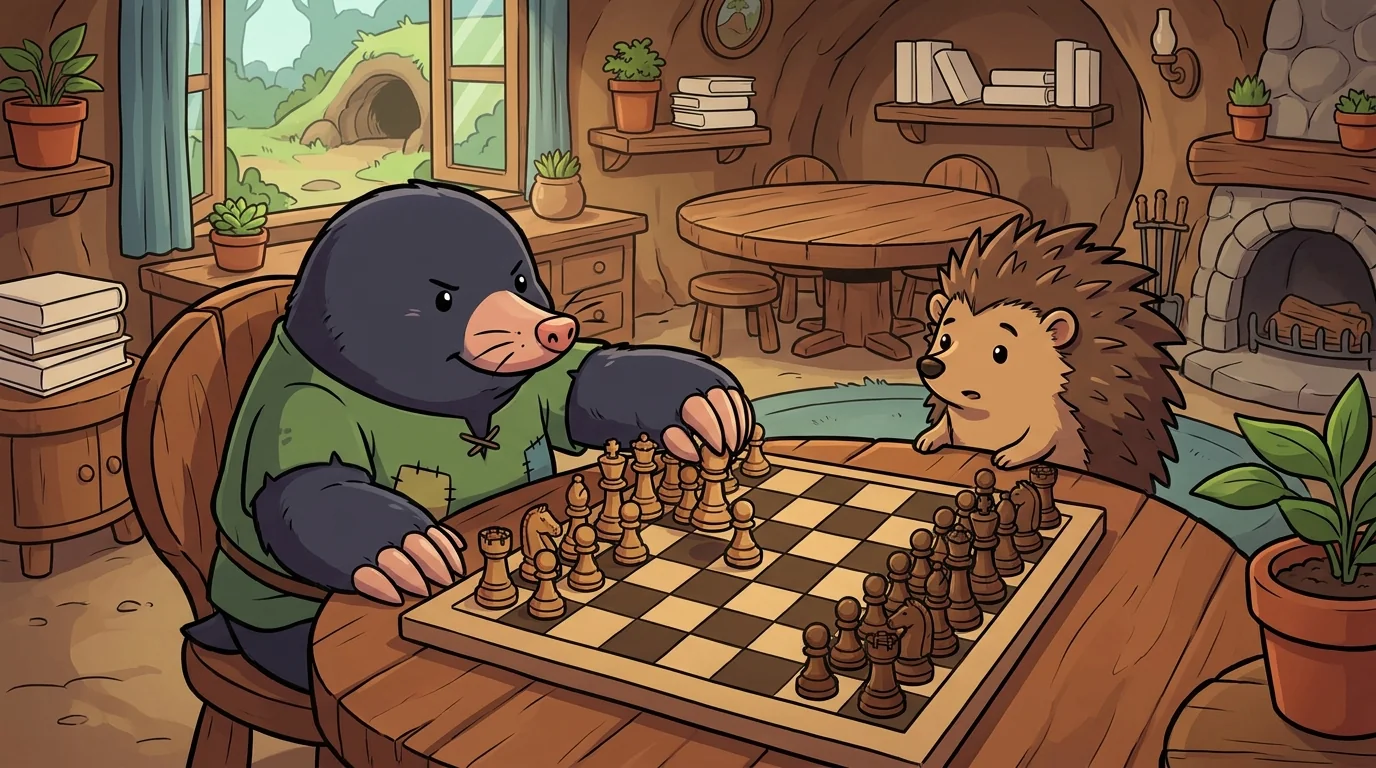
Wedge looked at a board locked tight — pawns jammed nose-to-nose across the middle, no piece able to pass — and said, to a puzzled young hedgehog named Bristle, "It's not stuck. It's asking to be split."
Wedge was a mole, velvet-dark and round, with big shovel paws and a nose that twitched at the faintest gap. He hadn't tried to squeeze a piece through the jam. Nobody could. Instead he pushed one small pawn forward, offering it against the base of the enemy's locked line. "See," he said, "the pieces can't get through the wall. So I don't move the pieces. I break the wall — right where it's weakest — and a road opens."
Bristle blinked at the wall of pawns. "But a wall is a wall. It's just... closed."
"A wall has a crack somewhere," Wedge said, twitching his nose. "Find the crack, drive a wedge, and the closed thing opens. When the door is jammed shut, don't shove the pieces — break the wall."
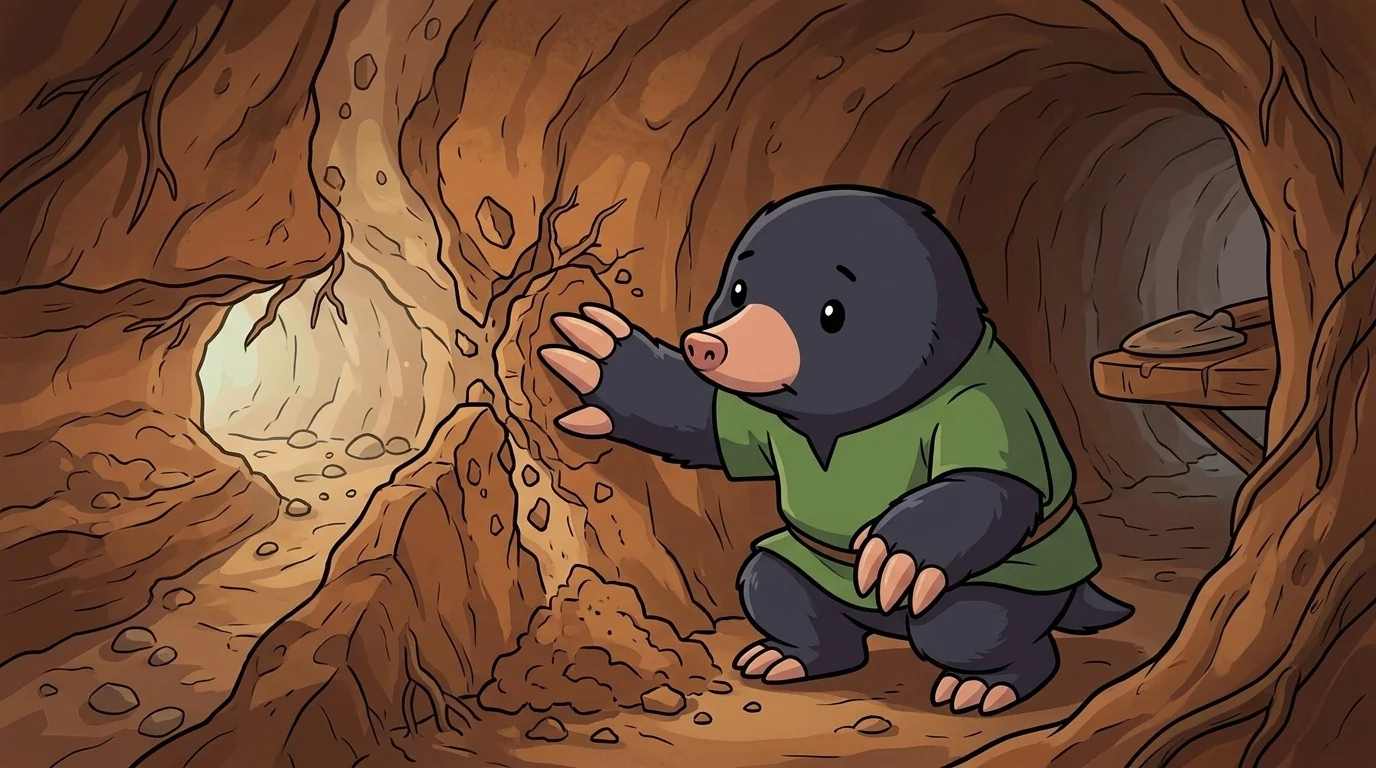
Wedge grew up in a warren of hard-packed clay where every tunnel seemed to dead-end.
As a pup he'd dig and dig straight into the hardest wall, get nowhere, and slump in the dark, certain the earth was simply against him. He dug where he happened to be facing, and the clay there was solid as stone.
His mother, a wide old mole with worn-smooth claws, felt along the wall beside him one day. "You dig where your nose points," she said. "The earth doesn't care where your nose points. Feel for the SOFT seam — the place where two clays meet, where a root has loosened things. Push there, and the whole wall gives." She pressed his paw to a spot that felt, faintly, looser. "Not the hardest place. The weakest. That's your door."
Wedge felt along the wall until his paw found the soft seam his mother meant. He pushed — and the clay crumbled, and a whole new tunnel opened where a moment before there'd been only dead-end. The trapped, jammed feeling in his chest loosened into open, breathing space.
"When you're stuck," his mother said, "you don't need to be stronger. You need to find the seam."
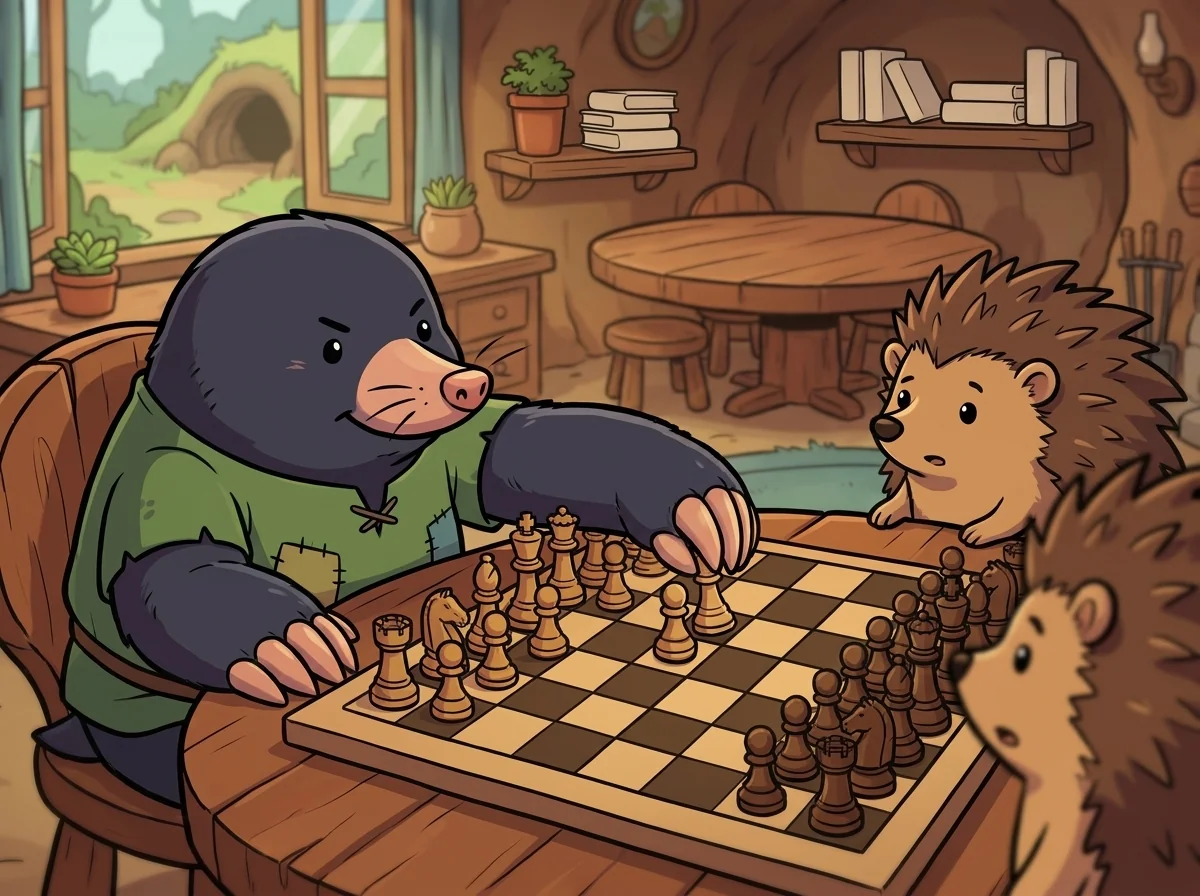
When Wedge turned twelve he burrowed up at StrategyForge, where a badger named Gambit set a chessboard before him.
Gambit had built a fortress of pawns, all locked, daring Wedge to find a way in. Wedge did not batter it with pieces. He studied the wall until he found its seam — the one square where his own pawn, pushed forward and offered, would force the whole line to break. But he broke it on the side where his OWN pieces were ready and waiting, not on the side where Gambit's army stood strong.
"You could have broken through here too," Gambit said, tapping the other flank.
"I could open the door," Wedge agreed, "but on that side YOUR pieces come pouring through it at me. I break where I'm the one who's ready. An open road is only good if it's my army that marches down it." Sure enough, when the wall cracked on Wedge's strong side, his rooks came flooding in and Gambit's fortress fell apart.
Gambit swept the pieces up, grinning. "Come teach the ones who think a locked board is a dead board."
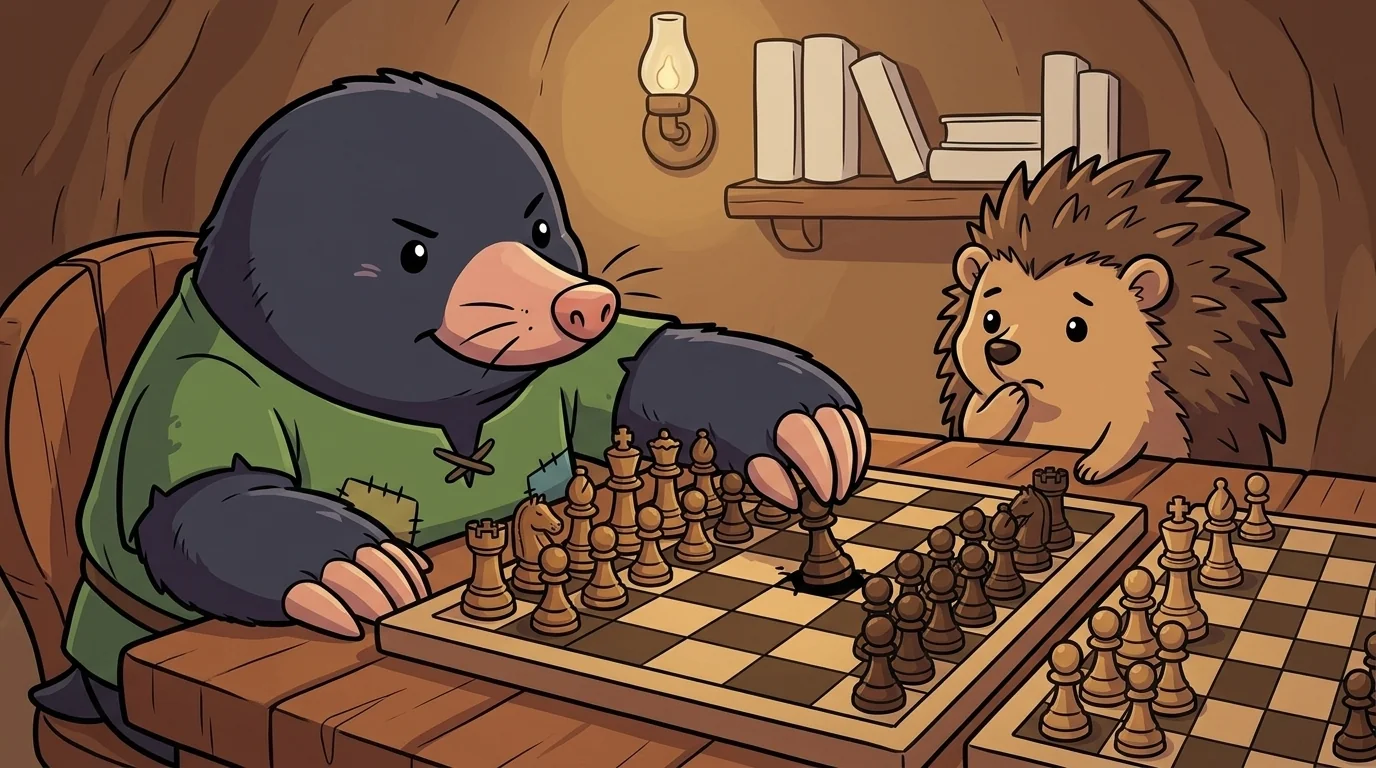
Now Bristle the hedgehog sat with Wedge at the workbench, still eyeing that wall of pawns like it might bite.
"Let's find the seam together," Wedge said. He set up two locked pawn walls, one on each side of the board. "On this side, look — behind my breaking-pawn I've got a rook and a bishop, all lined up and eager. On that side, I've got nothing ready, but YOUR pieces are stacked up close." He looked at Bristle. "If I could only break one wall, which?"
Bristle chewed his lip, counting. "This side. Where your pieces are ready. Because if you break the other one, my pieces rush in first."
"You felt the seam!" Wedge said, thrilled. "Not the closest wall. Not the easiest. The one where breaking it helps YOU." He pushed the pawn, offered it, and the wall cracked; his lined-up rook surged down the fresh road. "A door means nothing until you ask: whose army walks through it?"
Bristle pushed the breaking-pawn himself, watched the road open, and his spines settled flat with a small, satisfied breath.
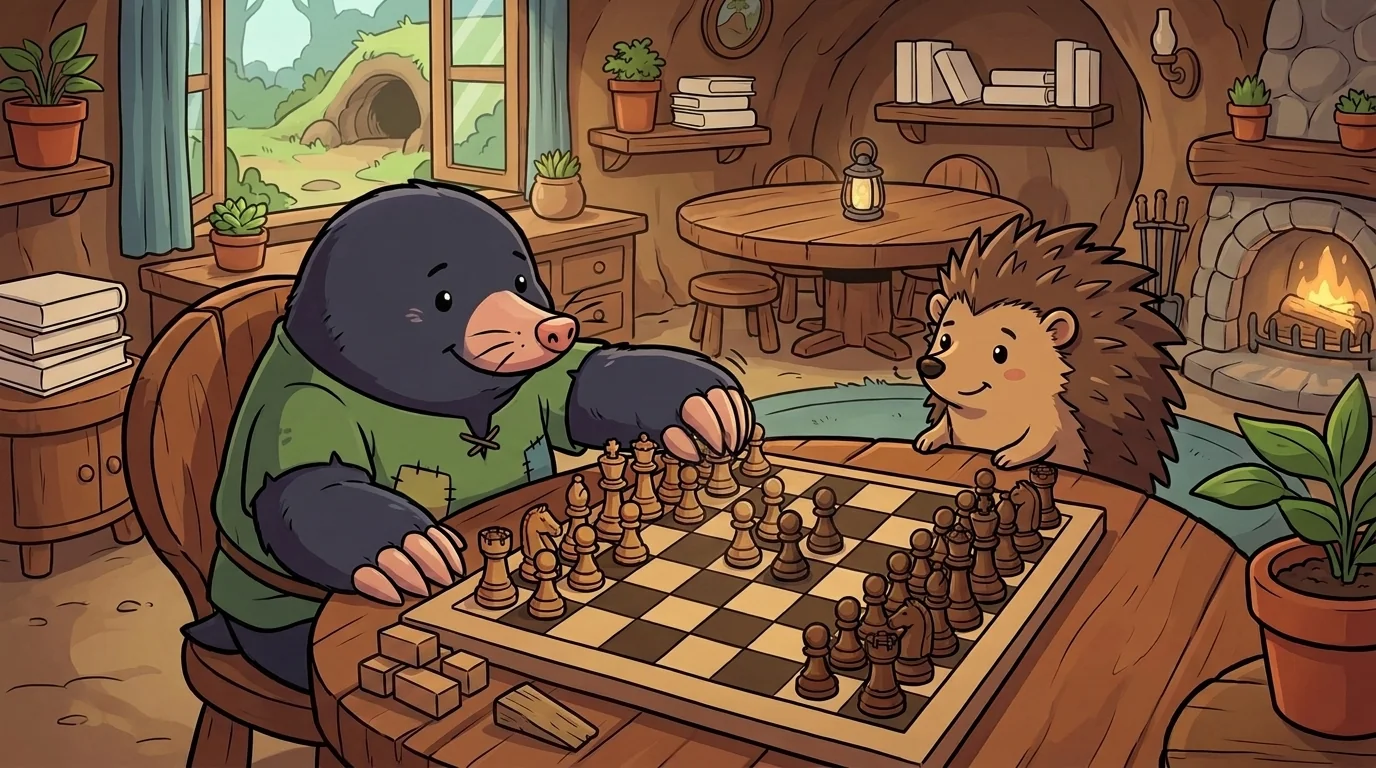
Wedge patted the board flat and let the little hedgehog sit with the openness.
"I hate stuck games," Bristle admitted. "When it all jams up, I just push pieces back and forth and my head goes tight and hopeless, like there's nothing left to do."
"I dug at hard walls for a whole pup-hood," Wedge said gently, "sure the earth was against me. It wasn't. I just wasn't feeling for the seam." He twitched his nose. "A locked board isn't a dead board. It's a wall with a crack in it. Find where you're strong, drive your wedge there, and the road opens for your army — not theirs."
Bristle breathed out slow, and the tight, hopeless, jammed-up feeling opened all the way into a warm, roomy calm — the quiet gladness of a player who has learned that a wall is only a wall until you find its seam.
The StrategyForge ensemble
Wedge is part of StrategyForge's distributed-narrative cast. Each character embodies a different curricular primitive; together they teach the full subject.
-
Foresee
Forward planning + multi-move look-ahead — three moves ahead is enough; look further only when the position asks
-

Trade
Piece-value reasoning + exchange evaluation — equal value isn't equal worth; position-value matters more than piece-value
-
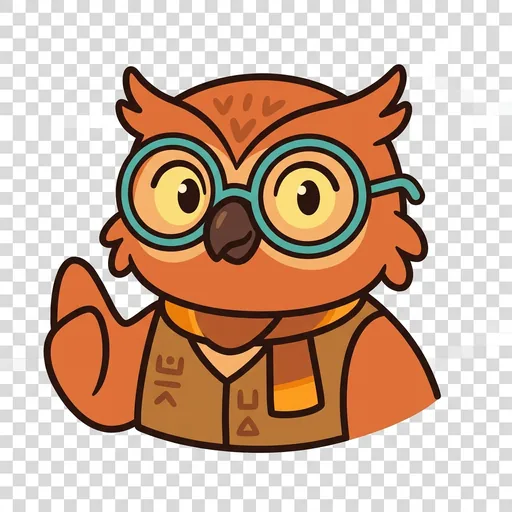
Read
Pattern recognition + position-reading — patterns repeat; the shape tells you the move
-

Bide
Patience + tempo discipline — slow is a move too; sometimes the best move is to wait
-
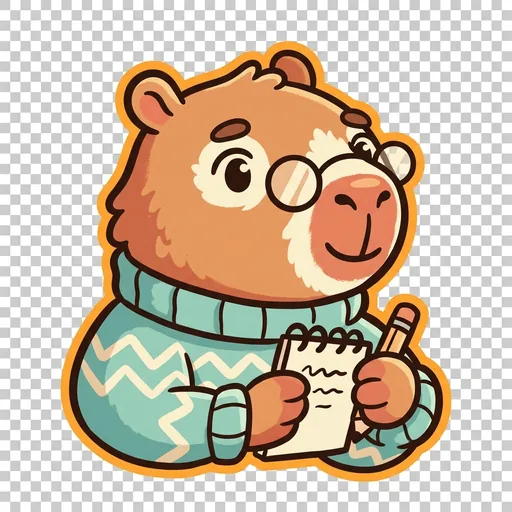
Concede
Graceful loss + post-game analysis — losing is a teacher; winning is too; I write down both
-
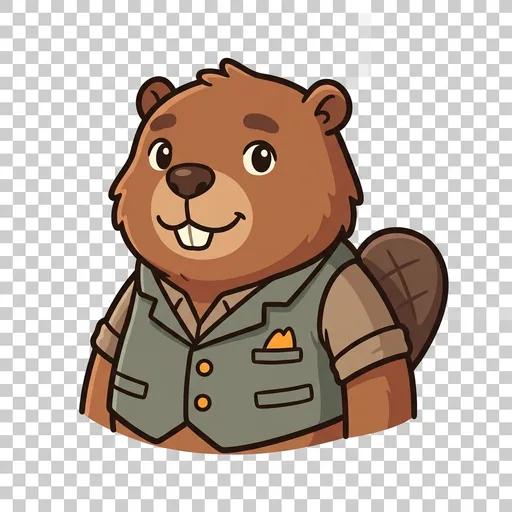
Lodge
The outpost — a piece that can't be chased away is worth two that can
-
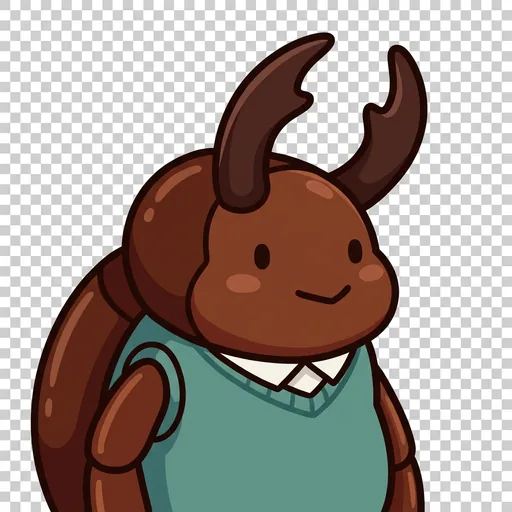
Pincer
The fork — one move that asks two questions; they can only answer one
-
Thwart
Prophylaxis — before you move, ask what THEY want, then quietly take it away
-
Goad
Initiative + tempo — keep them answering you, and they never get a move of their own