
Heart
THEME — the controlling idea a story explores beneath its events; not the subject but the claim the story makes about it. Theme is dramatized, never announced: the reader feels it through what the character does and loses, and carries it home without being told.
Loading audio…
Press play to listen along. The line being read lights up as you go.
Show full transcript
Loading transcript…
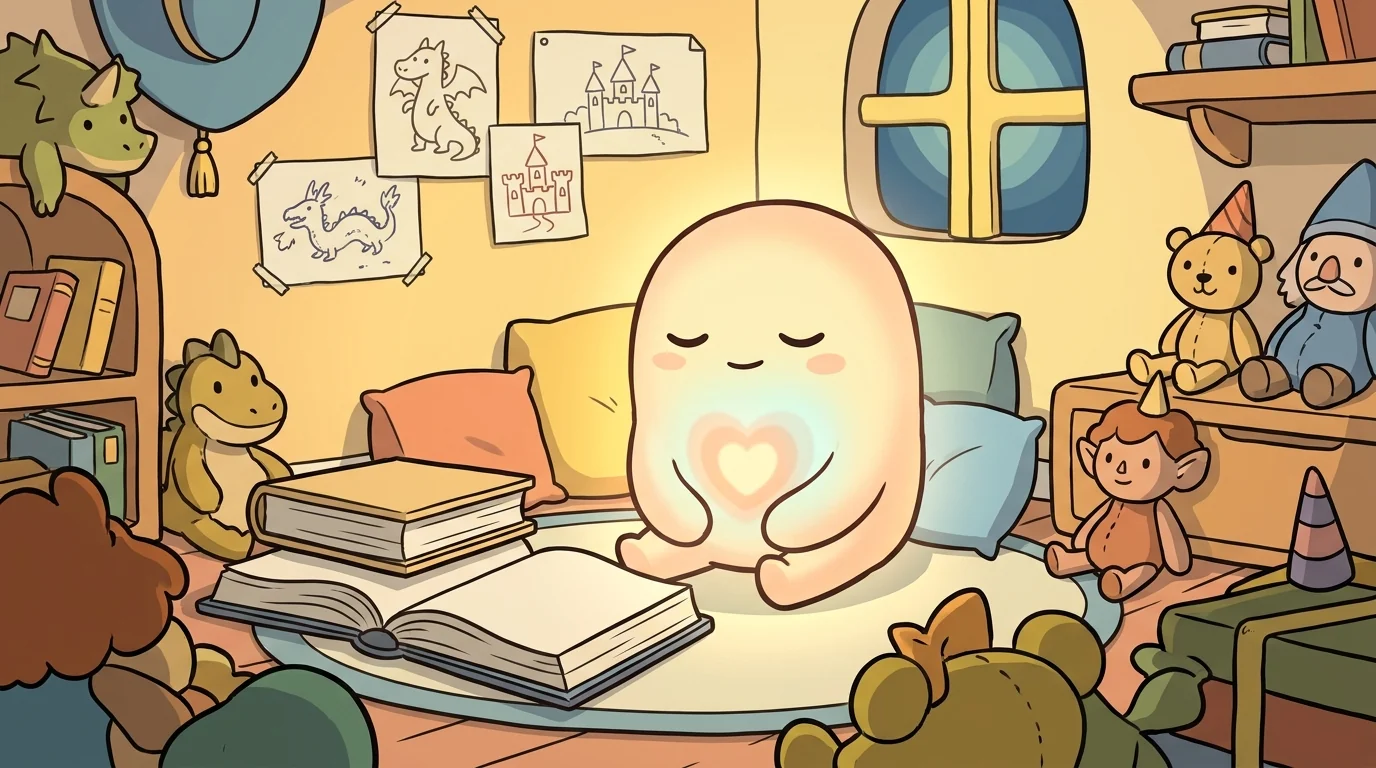
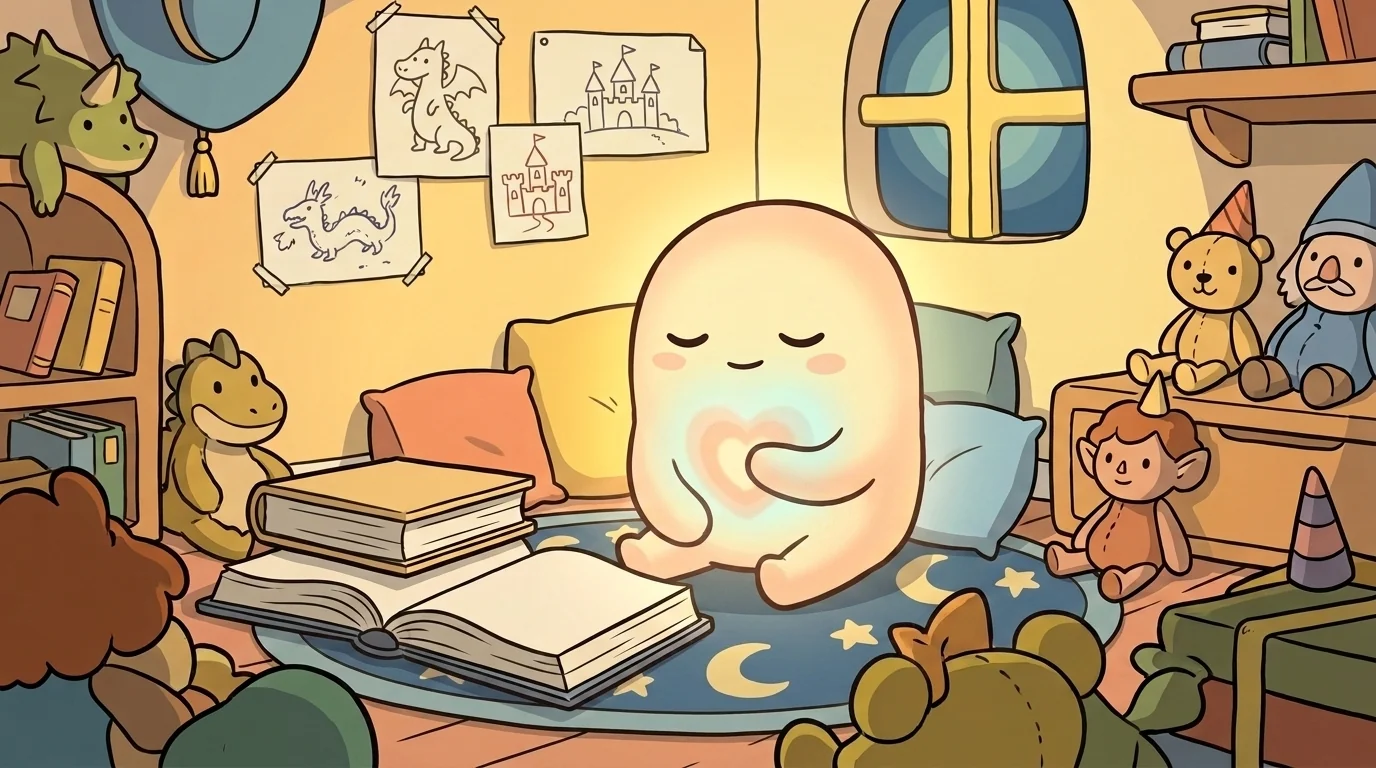
Heart was a soft, glowing creature, round and warm, with a faint light in their chest that pulsed slowly, like a heartbeat. They listened more than they spoke, and when a story was told nearby they would close their eyes and feel for the true thing beating underneath — the meaning below the dragons and castles and long roads.
The young worldbuilders brought Heart a grand tale: a quest, a monster, a treasure, a battle. But when it ended, the builders felt oddly empty. They had a story full of events — and yet it didn't seem to be about anything. Nothing stayed with them after the last word.
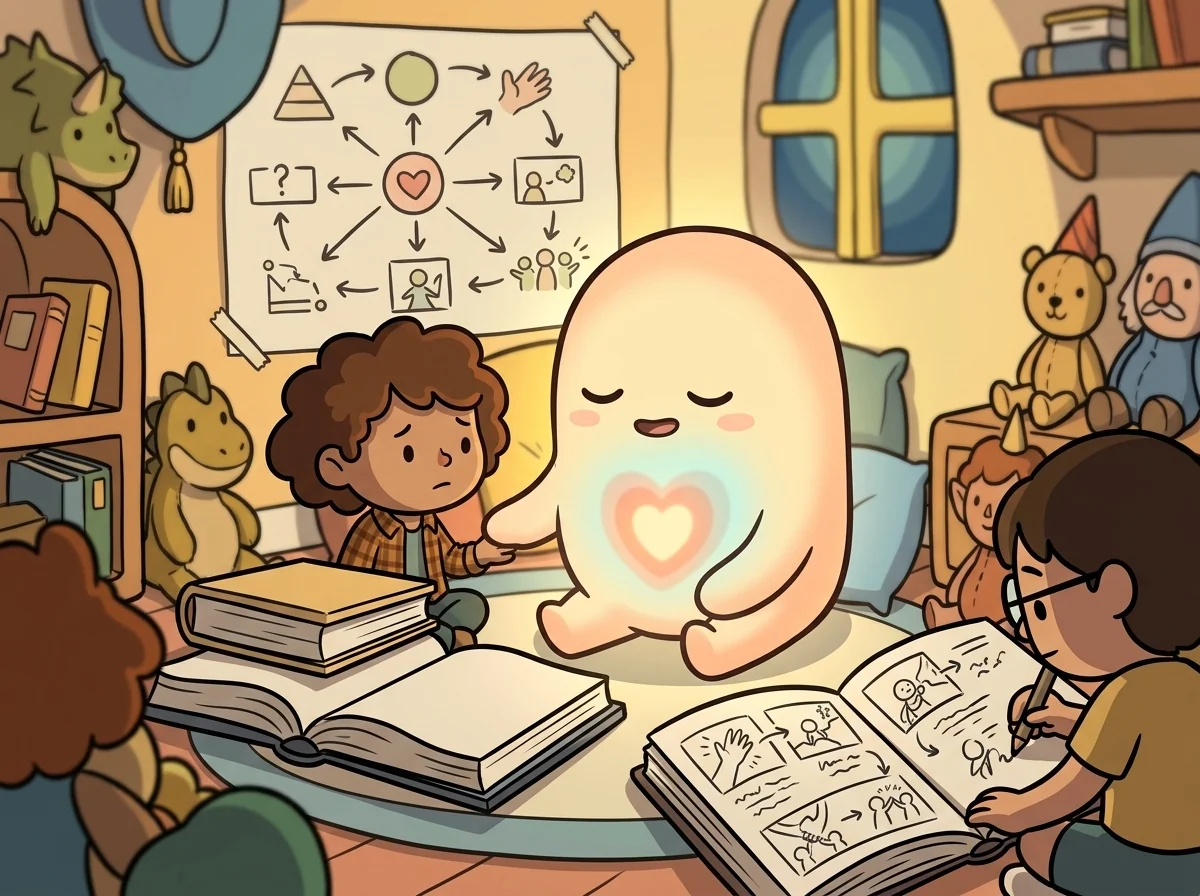
Heart laid a paw over their glowing chest and listened a long while. "There is no heartbeat under this one," they said gently. "Much happens. But the story has no theme yet." The builders looked confused — "It's about a hero and a treasure." "That is the subject," Heart said kindly. "The theme is different. The subject is what the story is about; the theme is what it says about that subject — the claim it makes and asks you to feel. 'A girl enters a contest' is a subject. 'You can be terrified and show up anyway, and that is its own courage' — that is a theme. One is the body of the story. The other is its meaning."
Heart helped the builders find the true thing hiding in their own tale. They asked the questions that surface a theme: "What does your hero learn? What is hardest for them? What do they have to give up to win?" Slowly an answer rose — their hero was someone who couldn't ask anyone for help, and the real story was them learning to. Not the treasure. The trusting. And the moment the builders named it, the whole tale reorganized around it: they let the hero fail when she went it alone, and let her win only when she finally reached for a friend's hand. Now every event earned its place — every scene either tested or revealed the controlling idea. Now the story had a heartbeat.
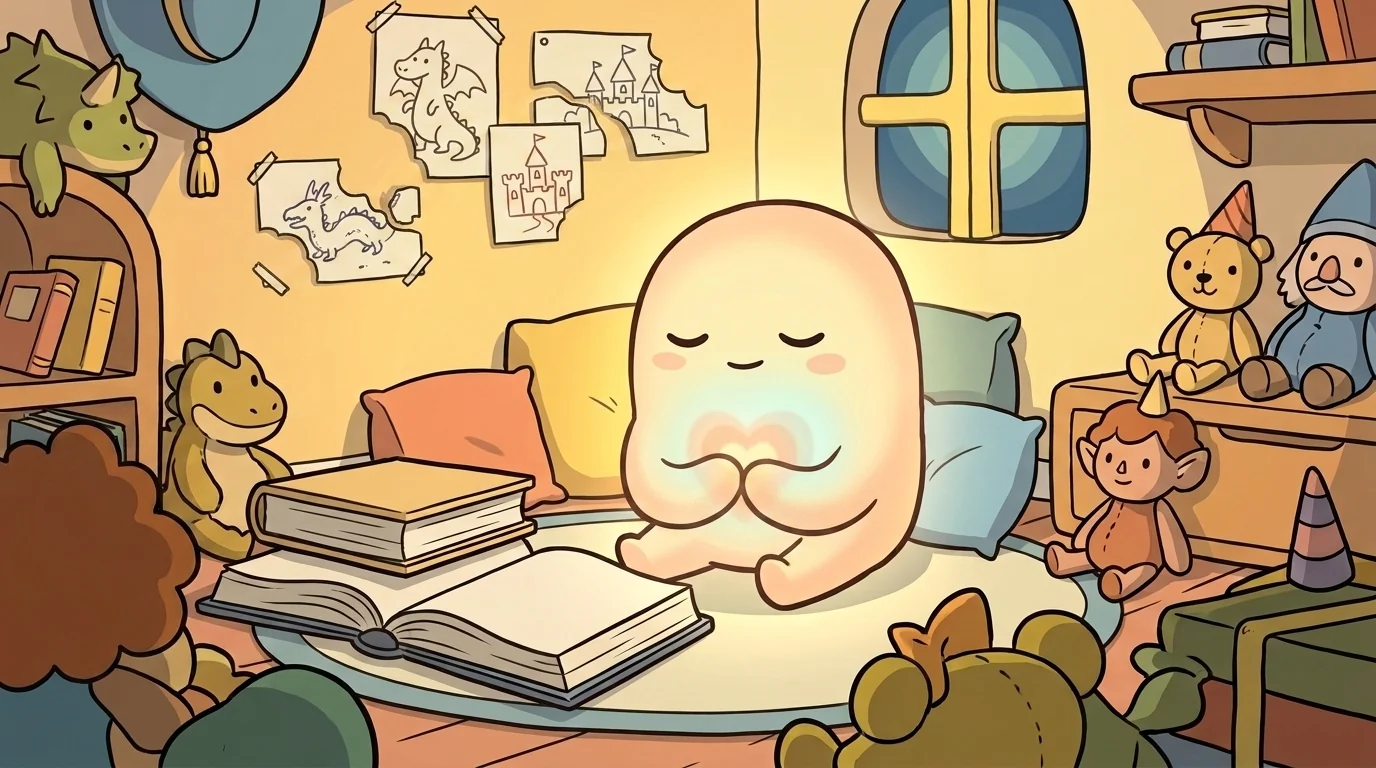
"But here is the discipline to hold close," Heart said, their light steadying. "Never announce your theme. Don't stop the story to have a character declare 'the lesson is that we must trust our friends.' The instant you state it, you kill it — because a stated theme is a lecture the reader resists, while a dramatized theme is a truth the reader discovers and therefore believes. Let the hero live the idea. Let her loneliness, her failures-alone, her one brave reach be the argument. The reader should feel the claim land without ever being told it was being made." Their light dimmed at the thought of the alternative, then warmed again.
The builders practiced. They cut every line that explained the lesson aloud and let the story do the teaching. And readers came away moved, carrying the true thing home in their chests, never having been told what it was. "How do we find our theme if we don't know it yet?" a builder asked. "Often you write the whole tale first," Heart said, "and only then feel for the beat underneath — oh, this was about courage all along. Then you go back and let that beat grow a little stronger in every scene. The theme is usually already hiding in what you wrote. You just have to listen for it, and then make each event serve it."
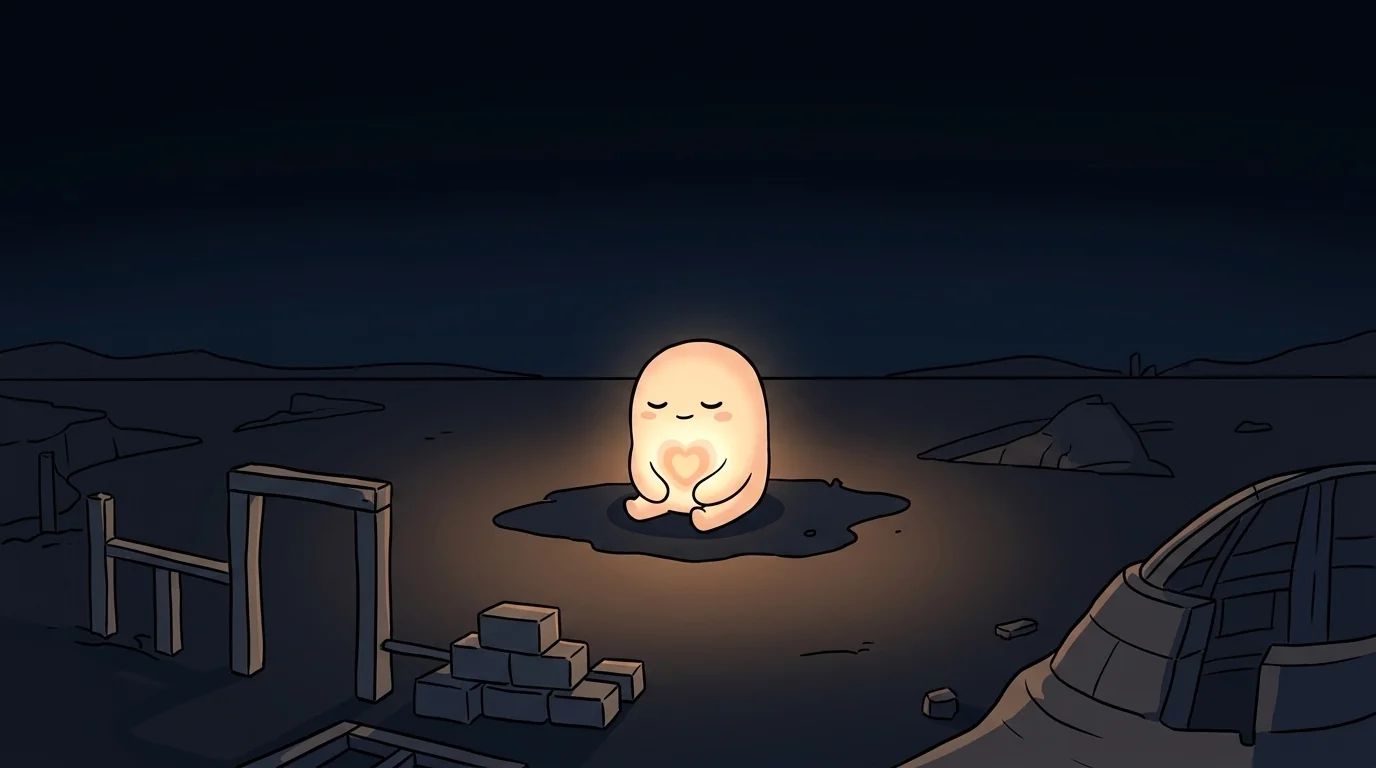
When the builders had gone, Heart sat alone in the dark, their chest-light pulsing softly, the only glow in the unfinished world. For a long time they had felt like the least important storyteller — building no castles, springing no twists, setting no pace, only listening for a quiet beat no one could see. Surely the smallest gift of all.
But in the dark, feeling the warm pulse in their own chest, Heart understood the truth. The castles and twists and racing drums were the body of a story; Heart was its meaning. Long after a reader forgot the dragon's name, they would remember how the story made them feel and the claim it made without a word — because theme is the one element that survives the forgetting of the plot. That was what lasted. That was what a story was for. A deep, glowing warmth filled them, steady as their own slow beat. They were not the smallest gift. They were the one the reader carried home.
The TaleForge ensemble
Heart is part of TaleForge's distributed-narrative cast. Each character embodies a different curricular primitive; together they teach the full subject.
-
Hook
Story elements — opening as contract with the reader; the first line is a promise; 'Make me lean in. Then keep me leaning.'
-

Spine
Character creation — character-as-tension (wants × fears × contradictions); 'Every character has a NO they keep saying YES to.'
-

Bough
World-building — coherence-rules-as-promises-the-world-keeps; what the world ALWAYS does + NEVER does (SOFT collision with LinguaQuest Bough — different role/domain/visual)
-

Echoes
Voice + dialogue — voice as listening-craft NOT inherited-by-birth; if two characters could say it, neither one really did
-
Glimmer
Revision + reflection — first draft as DATA not failure; the second look that makes the first attempt useful
-

Wager
Stakes — moss-soft creature (they/them) who carries one glowing marble holding everything they'd hate to lose; a story matters when something precious is at risk
-

Keystone
World-consistency — kind-eyed stone (they/them) at the center of an arch; an invented world feels real when it keeps its own rules all the way through
-
Swerve
The twist — sideways-shimmering creature (they/them) who loves a road that turns; a twist must be surprising AND fair (the clues there all along)
-
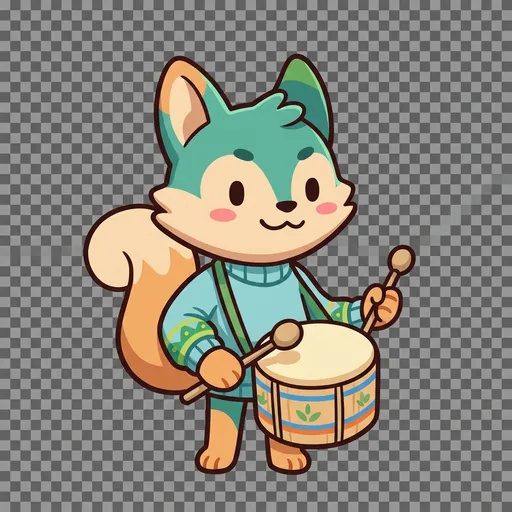
Tempo
Pace / rising tension — lithe creature (they/them) with a self-beating heartbeat-drum; a story breathes, fast and slow on purpose, climbing to its biggest moment