
Tempo
PACE — the deliberate control of a story's speed and the shape of its tension. Sentence and scene length are the throttle: short and clipped to accelerate, long and slow to breathe. Quiet moments earn the loud ones; a story with no rest goes numb. Build tension in rising steps toward one highest beat.
Loading audio…
Press play to listen along. The line being read lights up as you go.
Show full transcript
Loading transcript…
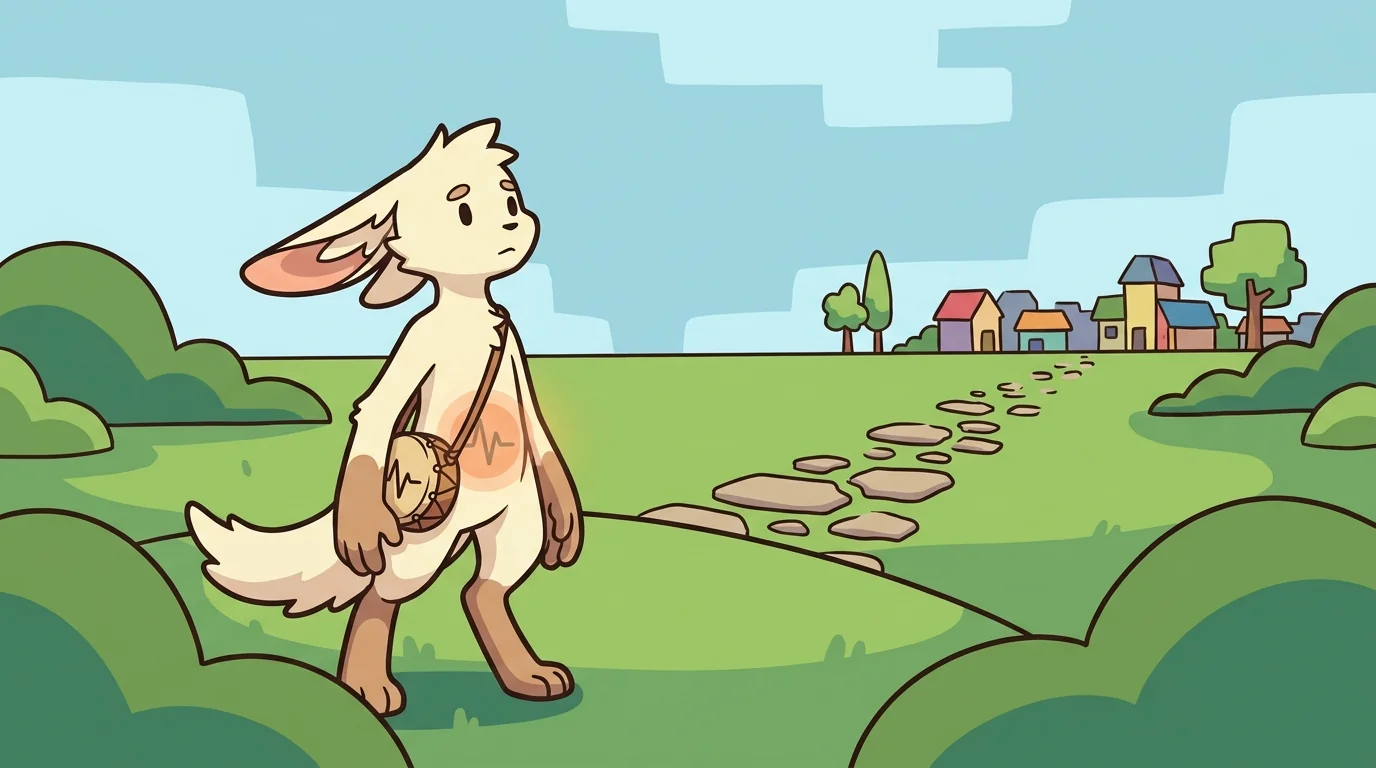
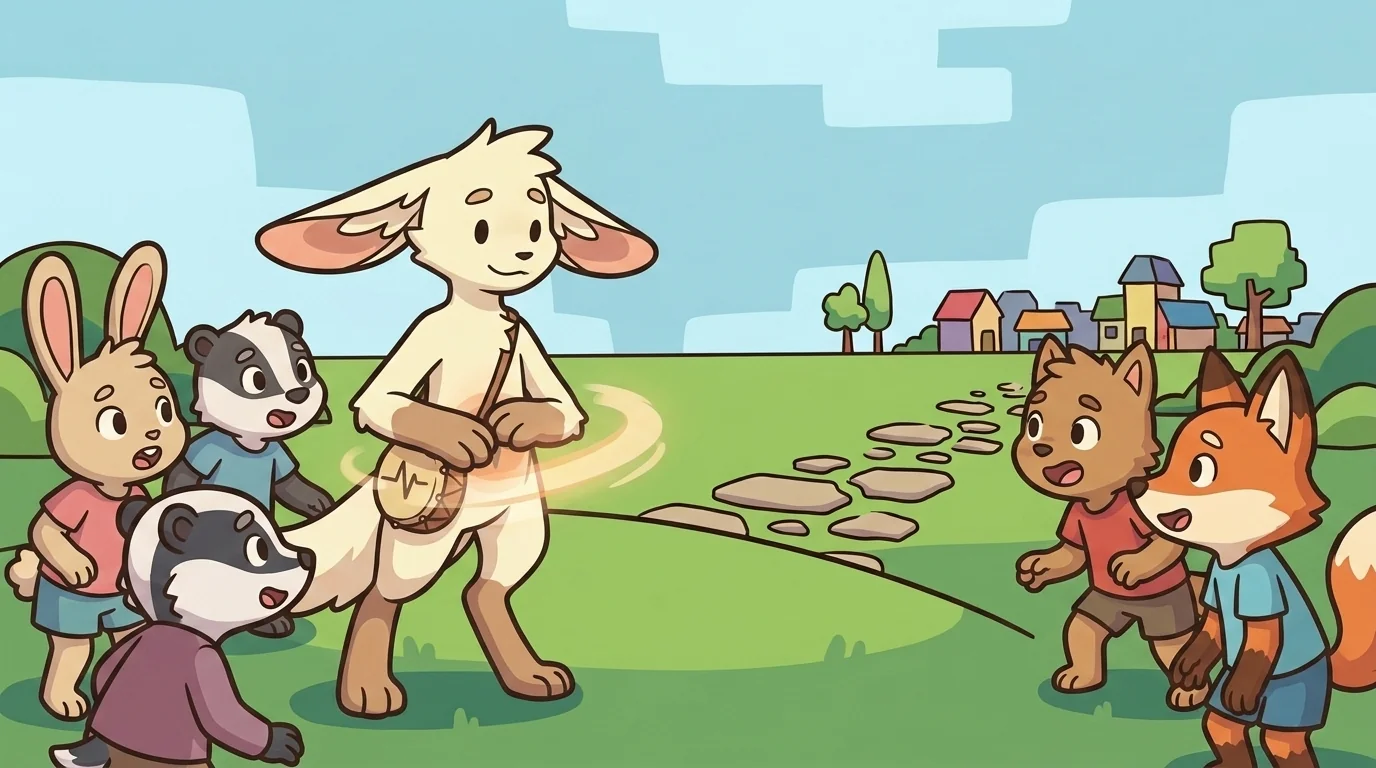
Tempo was a lithe creature with long, light paws and a small round drum slung at their side. The drum beat on its own, matching the pace of whatever story was told — slow and soft in calm moments, quick and loud when things grew exciting. You could always tell how a tale was moving by listening to Tempo's drum.

The young worldbuilders brought a story that moved at exactly one speed the whole way through. Every event got the same amount of room — the quiet breakfast and the terrible battle told in the same flat rhythm. Bum. Bum. Bum. "One speed, all the way," Tempo said, resting a paw on the dull drum. "It's like walking on a treadmill — lots of motion, no journey. A story shouldn't move at one speed. It should breathe." Then they told a small tale and let the drum work: slow at first — bum... bum... — a calm morning with room to breathe; then trouble stirred and the drum quickened — bum-bum, bum-bum — and the builders' own pulses lifted; then the big moment raced — bumbumbumbum — and they were on the edge of their seats; then, after, it slowed, soft and tender, and they let out a long breath. They had felt the whole shape of it.
"That is pace — fast and slow, on purpose," Tempo said. "And here is the craft mechanism underneath it: the length of your sentences and scenes is the throttle. In the urgent stretch you write short. Clipped. Fragments, even. Quick cuts, tiny paragraphs — and the eye moves faster, so the reader's pulse follows. In the calm stretch you write longer, unhurried sentences that let the breath out. The prose itself sets the speed; you're not describing tension, you're conducting it." Then the counterintuitive law: "The slow parts are what make the fast parts thrilling. Tension works by contrast — if everything races, the reader adapts and goes numb, and your loudest beat lands on a deadened nerve. Give them a genuine quiet first, and the storm hits twice as hard."
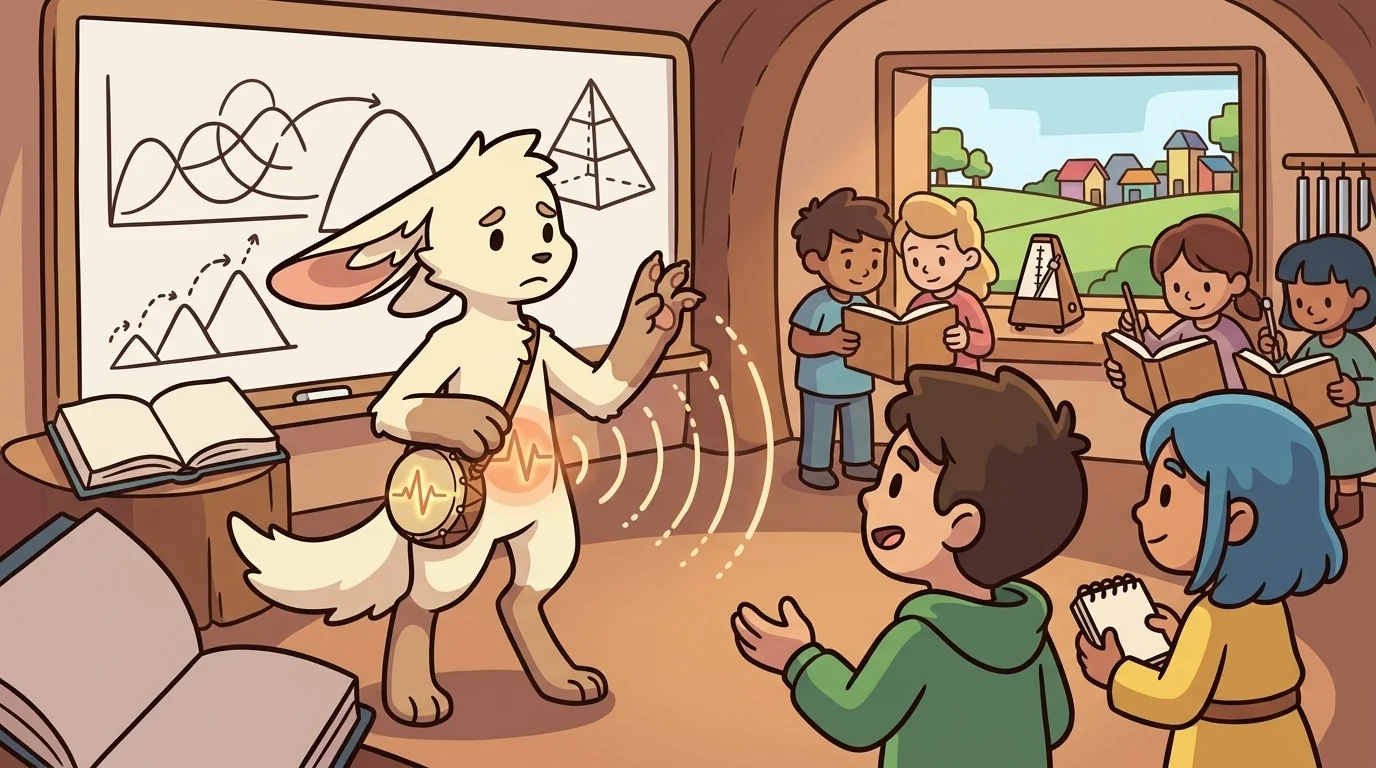
The builders went back and slowed the morning down, let a worried hush fall right before the battle — and then the battle roared, because they'd earned it with the quiet. The story finally had a shape: rest, climb, race, rest. A heartbeat instead of a treadmill. "How do we build to the biggest moment?" a builder asked. "Climb in steps," Tempo said, the drum quickening with each word. "Don't leap straight to the loudest beat — raise the tension a little in each scene, each one tighter than the last, so the reader rises with you. And spend your fastest drumming once, on the single moment that matters most. That moment is the top of the whole climb, and it's only the top because everything below built toward it."
The builders practiced reading their tale aloud, listening to the drum: where it stayed dull, they found a place to speed up or slow down; where it lurched, they smoothed the climb.
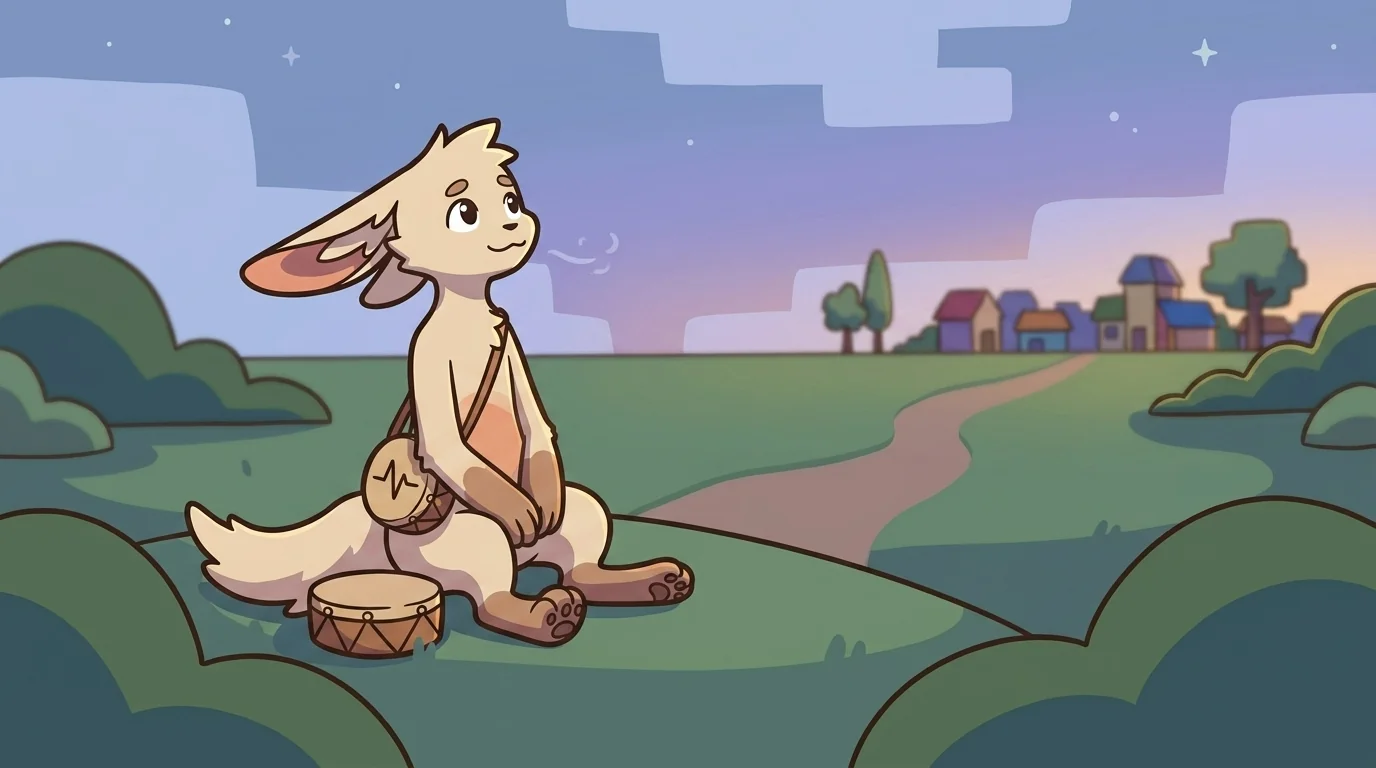
When the builders had gone, Tempo sat alone and let the drum fall truly quiet for the first time all day. For years they had believed they had to keep the drum loud and fast to matter — the quiet had frightened them, as if a silent drum meant a boring tale.
But in the soft evening hush, Tempo felt the truth of their own craft. The quiet was not the absence of the story — it was part of it: the breath between heartbeats, the rest that gave every loud beat its power. Their gift was not loudness. It was knowing when — the timing that turns motion into music. A calm, sure peace settled over them, slow as a resting drum. They did not have to race to matter. They only had to breathe, and let the story breathe with them. And in the deep, easy quiet, Tempo was, for once, completely at rest.
The TaleForge ensemble
Tempo is part of TaleForge's distributed-narrative cast. Each character embodies a different curricular primitive; together they teach the full subject.
-

Hook
Story elements — opening as contract with the reader; the first line is a promise; 'Make me lean in. Then keep me leaning.'
-

Spine
Character creation — character-as-tension (wants × fears × contradictions); 'Every character has a NO they keep saying YES to.'
-

Bough
World-building — coherence-rules-as-promises-the-world-keeps; what the world ALWAYS does + NEVER does (SOFT collision with LinguaQuest Bough — different role/domain/visual)
-

Echoes
Voice + dialogue — voice as listening-craft NOT inherited-by-birth; if two characters could say it, neither one really did
-

Glimmer
Revision + reflection — first draft as DATA not failure; the second look that makes the first attempt useful
-

Wager
Stakes — moss-soft creature (they/them) who carries one glowing marble holding everything they'd hate to lose; a story matters when something precious is at risk
-

Keystone
World-consistency — kind-eyed stone (they/them) at the center of an arch; an invented world feels real when it keeps its own rules all the way through
-

Swerve
The twist — sideways-shimmering creature (they/them) who loves a road that turns; a twist must be surprising AND fair (the clues there all along)
-

Heart
Theme — soft glowing creature (they/them) who listens for the true thing beating under a story; show the meaning, never announce it like a lesson