
Wager
STAKES — the precious thing a character stands to lose, which is what makes a reader care. Stakes aren't spectacle or a pile of gold; they are what *this* character could not bear to lose, and they only bite when the reader believes it might truly be lost. No stakes, no suspense.
Loading audio…
Press play to listen along. The line being read lights up as you go.
Show full transcript
Loading transcript…
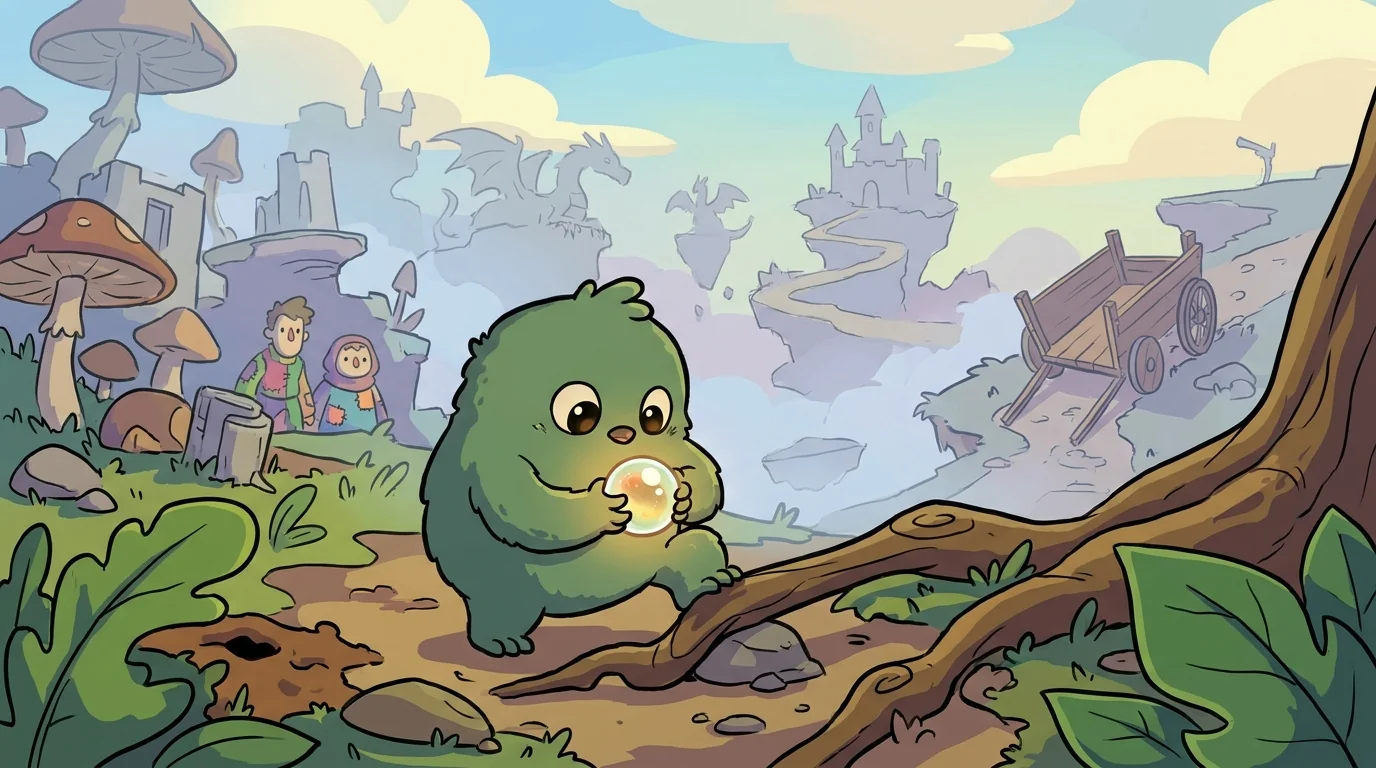
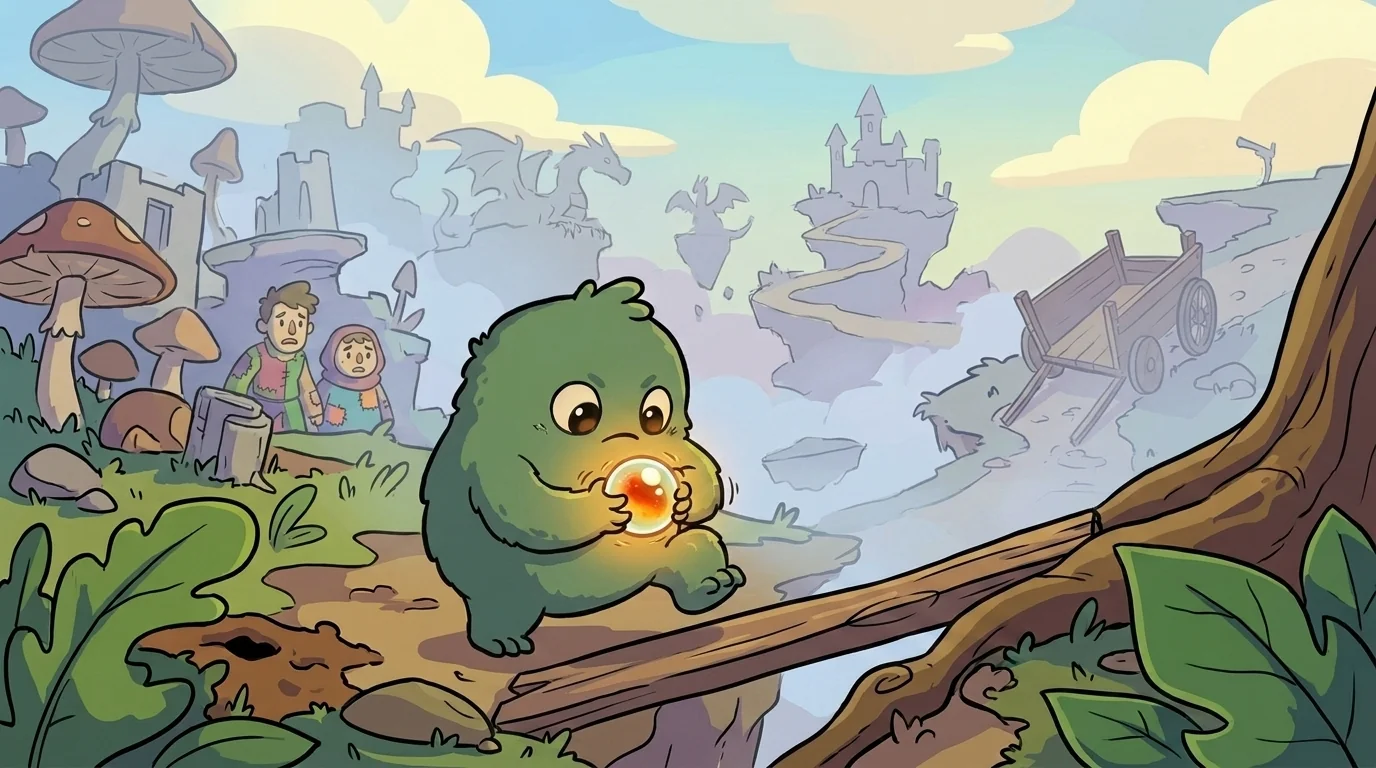
Wager was a small, round creature with moss-soft fur and wide, careful eyes, and in their cupped paws they always held a single glowing marble. Inside it a tiny light turned slowly, warm as a held breath. Wherever Wager went they walked carefully, watching every root and every gust, because the marble held everything they would hate to lose.
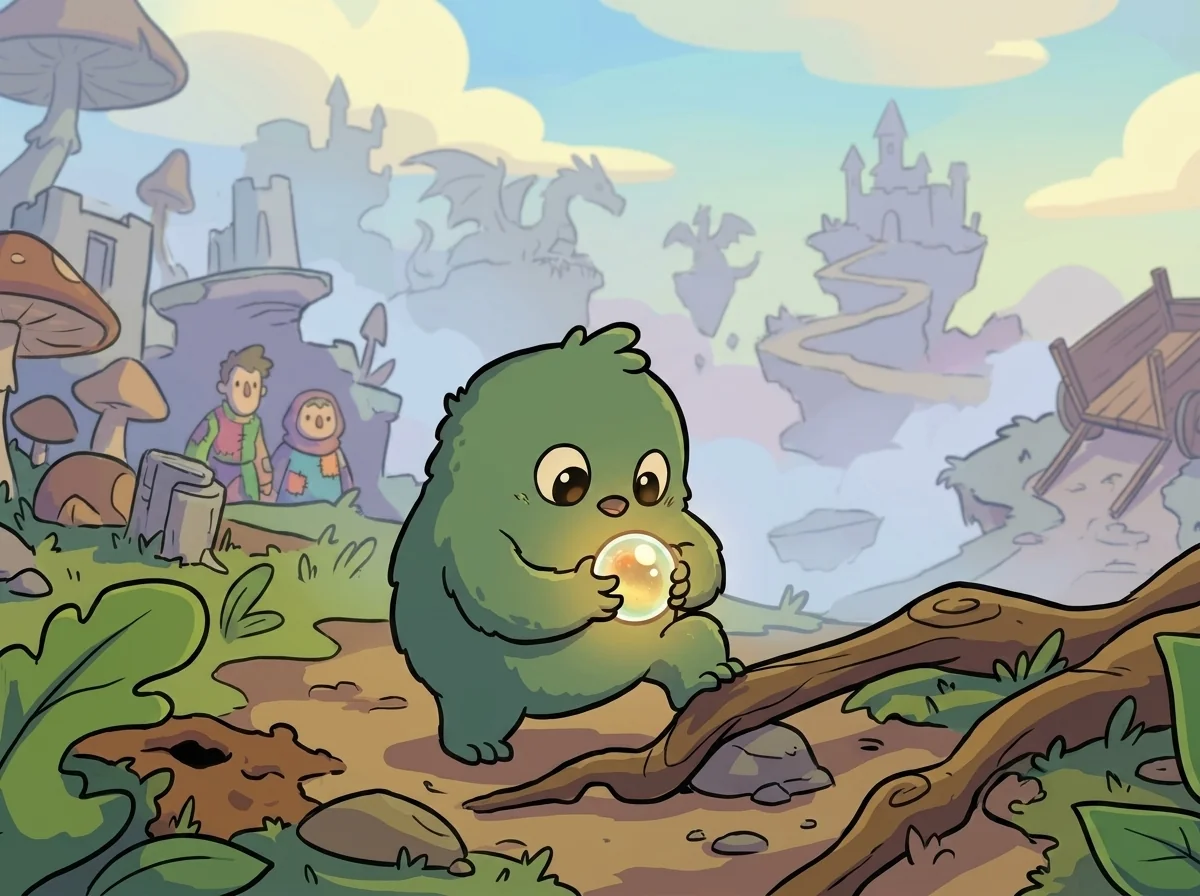
The young worldbuilders found Wager at the edge of the unfinished world. They'd built a grand tale all morning — castles, dragons, a long road — but something was wrong. Events kept happening, one after another, and nobody leaned in. The story rolled past like a cart with no one chasing it. "Your tale has everything," Wager said softly, turning the marble. "Castles. Dragons. A long road. But tell me — what does your hero stand to lose?" The builders looked at each other; they hadn't thought about it. Things simply happened to the hero, and the hero simply went along.
Wager held the marble up so its light fell across their faces. "When I carry this across a windy bridge — watch how you feel." They stepped onto an imagined bridge, paws cupped tight, the light trembling. And the builders felt it: a small, sharp worry. Don't drop it. "That worry," Wager said, "is what your story is missing. You felt it the instant something precious was at risk — and notice you felt it for me, without being told to. That's the mechanism: stakes create suspense by making the reader afraid of a specific loss. Suspense is not 'what happens next?' It is 'please don't let them lose the thing.'"
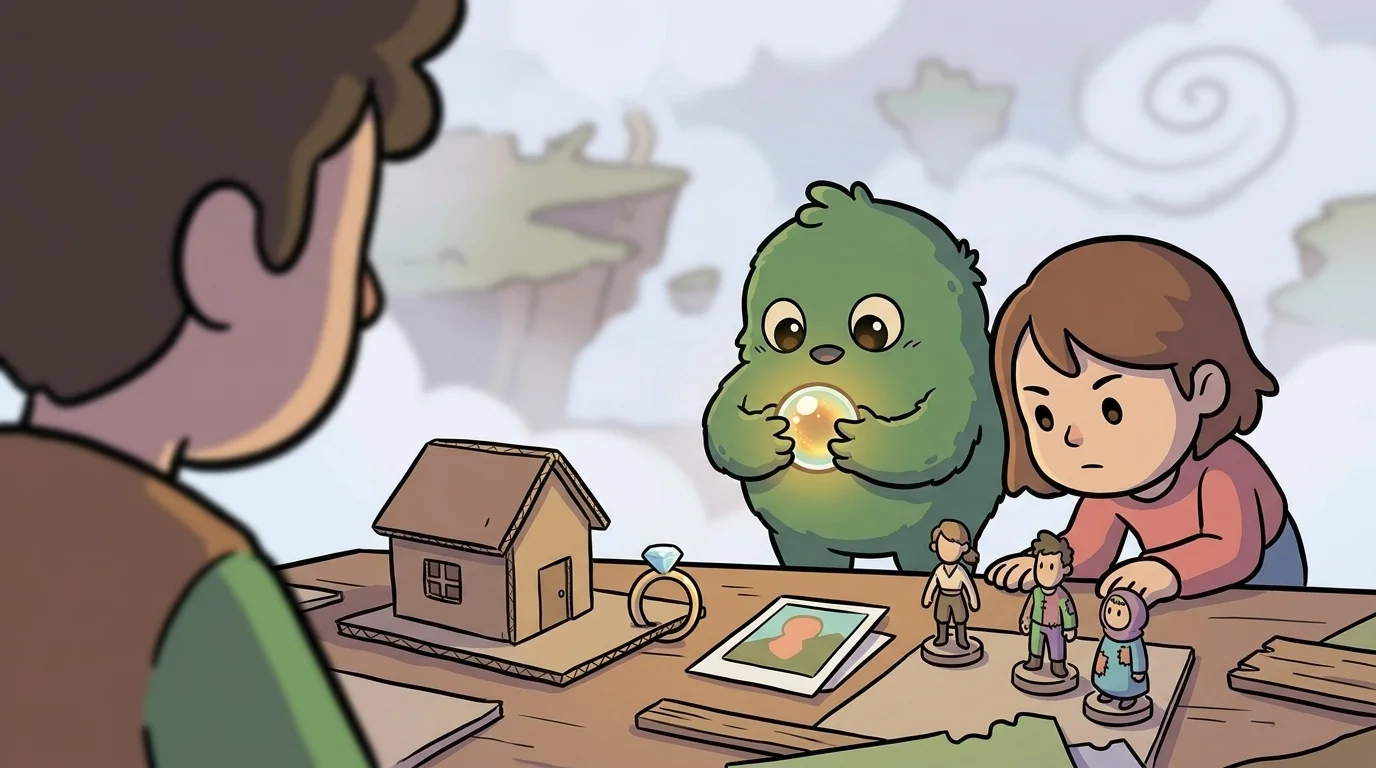
Wager walked the builders back through their tale. "Your hero seeks a treasure. But why does it matter? What happens if they fail?" The builders thought hard, then: "Their village will go hungry through the winter." And the whole story changed — the long road had weight, the dragon was terrible, because now something could be lost: a whole village, warm and real. "There," Wager said, eyes shining. "Now your hero carries a marble too." Then the discipline: "Stakes are not about making things scary or big. A pile of gold is not stakes — no one fears losing a stranger's treasure. Stakes are what this character could not bear to lose: a person, a promise, a home, their own good name. Make it specific and personal, put that in danger, and the reader holds their breath alongside them." And the second, quieter law: "Stakes only bite while the loss feels possible. The moment the reader is certain it'll all work out, the air goes out of the scene. You must let real loss stay genuinely on the table — even let smaller things be lost along the way — or the threat is just theater."
The builders practiced: a little sister who depended on the hero, a sworn promise, a home that could be lost. With each precious thing, the story pulled tighter, like a string being tuned. "How much should we put at risk?" one asked. "Only what your hero truly loves," Wager said. "And keep it in real danger. Stakes are the one thing they could not bear to lose — find that, and risk that, for keeps." They watched the builders lean over their tale, breath held, utterly inside it now, and smiled, because the story had finally come alive.
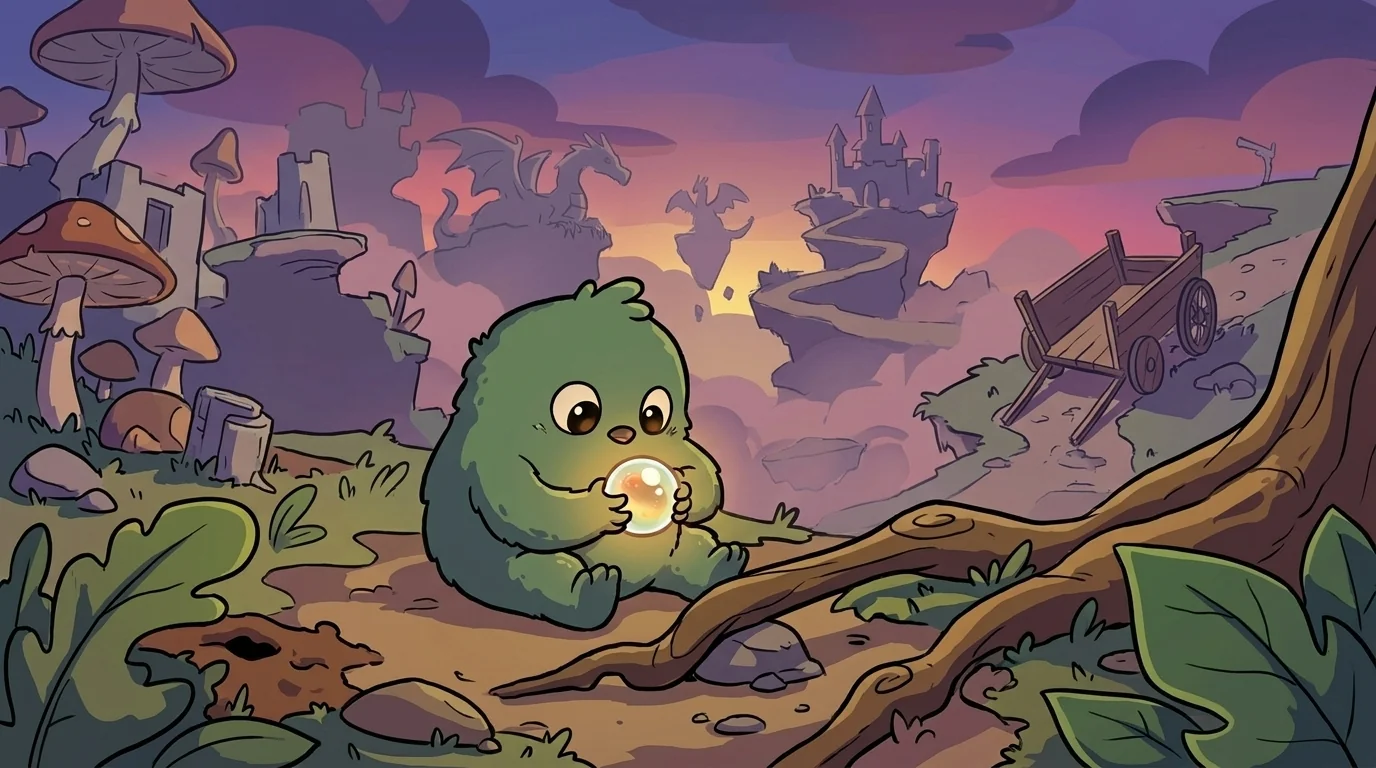
When the building was done, Wager sat alone at the world's edge, turning the marble in the dusk. For a long time carrying it had frightened them — so much could go wrong, so much could be lost — and some nights they'd wished they could set it down and walk light and free, with nothing precious to guard.
But tonight, watching the light turn warm in their paws, Wager felt something steadier. The weight of the marble was not only fear; it was love, made into something they could hold. They carried it carefully because it mattered — and the mattering was the best part of them, not the heaviest. This was the truth under all stakes: you can only fear losing what you first love, and the caring is what makes the whole story — and the whole life — worth reading. A quiet fullness settled over them, soft as moss. To carry something precious was to have something precious. And they would not have traded that tender, breath-held weight for all the lightness in the world.
The TaleForge ensemble
Wager is part of TaleForge's distributed-narrative cast. Each character embodies a different curricular primitive; together they teach the full subject.
-

Hook
Story elements — opening as contract with the reader; the first line is a promise; 'Make me lean in. Then keep me leaning.'
-

Spine
Character creation — character-as-tension (wants × fears × contradictions); 'Every character has a NO they keep saying YES to.'
-

Bough
World-building — coherence-rules-as-promises-the-world-keeps; what the world ALWAYS does + NEVER does (SOFT collision with LinguaQuest Bough — different role/domain/visual)
-

Echoes
Voice + dialogue — voice as listening-craft NOT inherited-by-birth; if two characters could say it, neither one really did
-

Glimmer
Revision + reflection — first draft as DATA not failure; the second look that makes the first attempt useful
-

Keystone
World-consistency — kind-eyed stone (they/them) at the center of an arch; an invented world feels real when it keeps its own rules all the way through
-

Swerve
The twist — sideways-shimmering creature (they/them) who loves a road that turns; a twist must be surprising AND fair (the clues there all along)
-

Tempo
Pace / rising tension — lithe creature (they/them) with a self-beating heartbeat-drum; a story breathes, fast and slow on purpose, climbing to its biggest moment
-

Heart
Theme — soft glowing creature (they/them) who listens for the true thing beating under a story; show the meaning, never announce it like a lesson