Heave
HEAVE — when two plates push together and neither can dive, the ground has nowhere to go but up. The rock folds, buckles, and heaves into mountains — the slow rising of the land where the Earth pushes against itself.
Loading audio…
Press play to listen along. The line being read lights up as you go.
Show full transcript
Loading transcript…
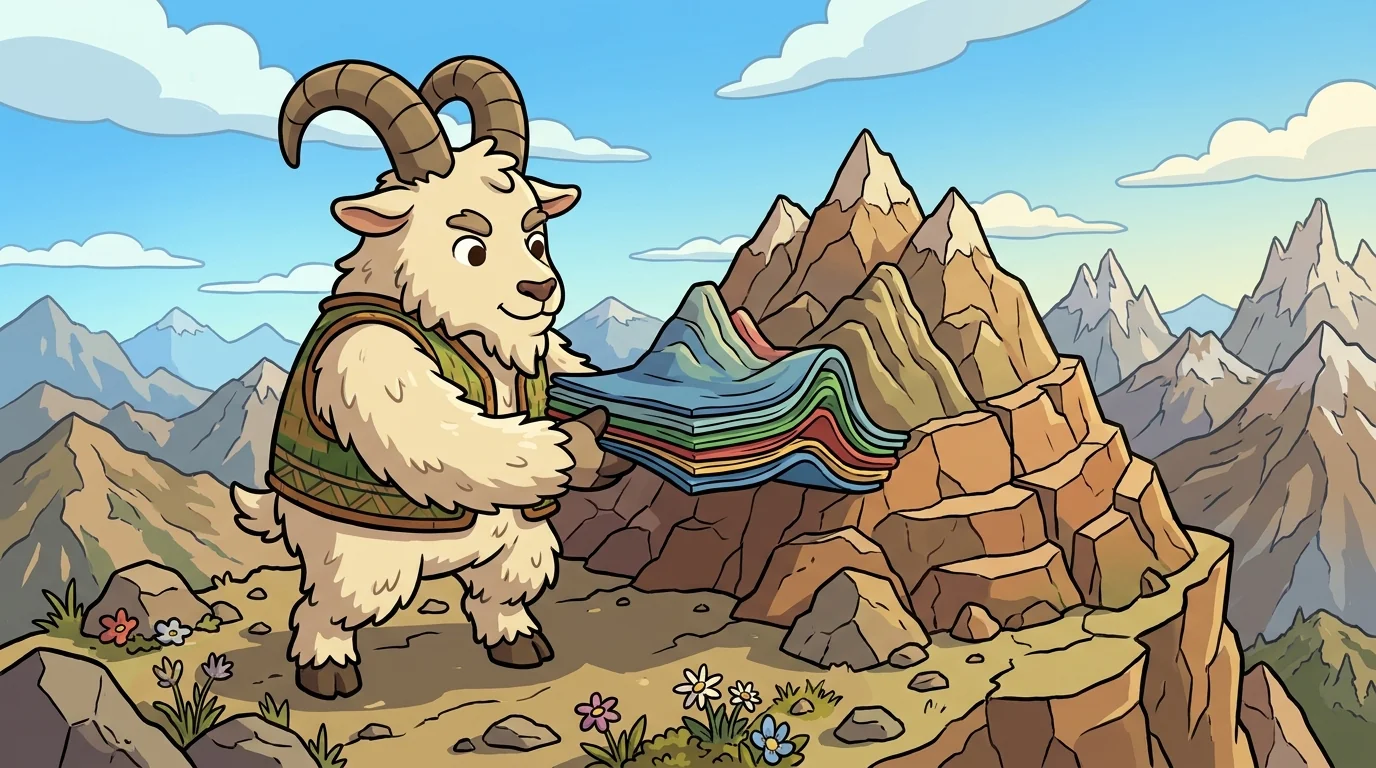
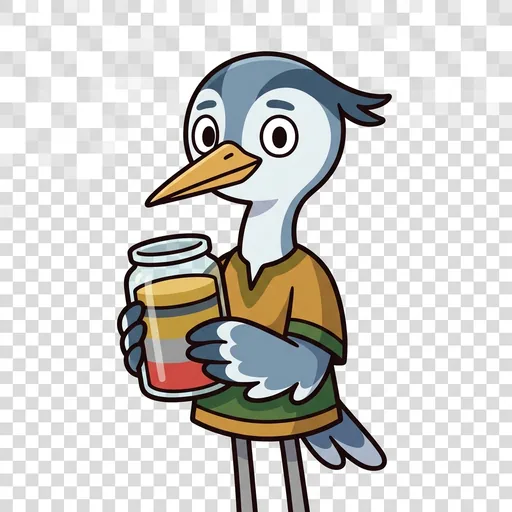
Heave is a sturdy mountain-goat-tween. He has thick shaggy fur and strong steady legs. He always carries his special fold-model — two layered cloths he can push together. He loves high places.
Heave is patient and strong. He often says, "When there is nowhere to go but up, the land rises." He grew up on the highest slopes, where the mountains were still, very slowly, growing taller.
His fold-model is his best tool. It is two stacks of colored cloth, layer on layer, like rock. Heave taps it. "Watch," he says, and pushes the two stacks together. The flat layers buckle. They fold up into ridges. "When two plates push together," Heave says, "and neither one can dive under, the rock has nowhere to go but up. It folds. It buckles. It heaves. That is how mountains are born."
Heave learned this on the day he understood his own home.
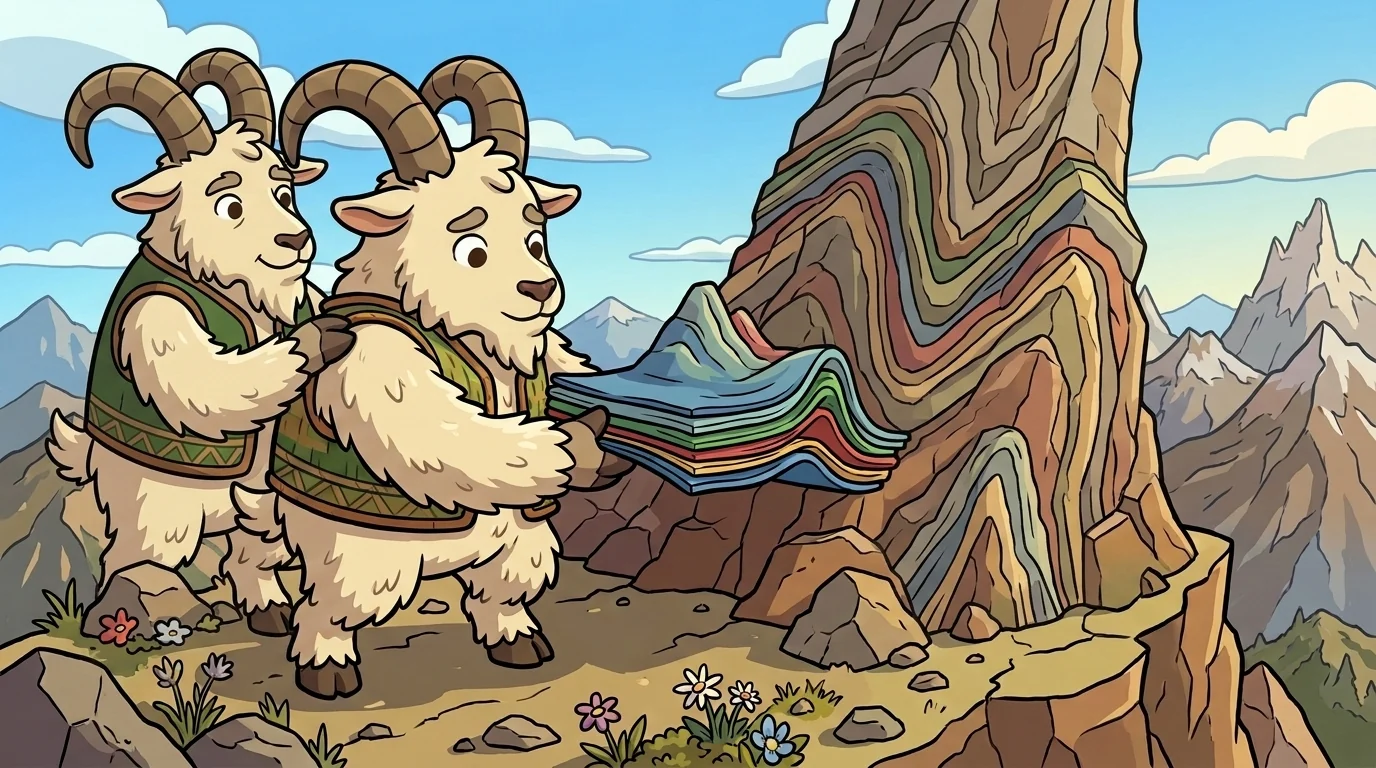
His family were high-climbers. They lived where the peaks were tallest. And one day young Heave asked his father why the mountains were there at all — why the land was not flat everywhere. His father took him to a cliff and showed him the rock: layers, once flat, now folded and tilted and standing on end, bent like a rug shoved against a wall.
"These layers were laid down flat, at the bottom of a sea, long ago," his father said. "Then two great plates pushed together, right here, and pushed, and pushed, for millions of years — and the land had nowhere to go but up. Everything you are standing on was once low. The pushing raised it." Heave looked at the folded stone and felt a slow awe rise in him — the feeling of standing on something that had been lifted, patiently, by a force with nowhere else to go.
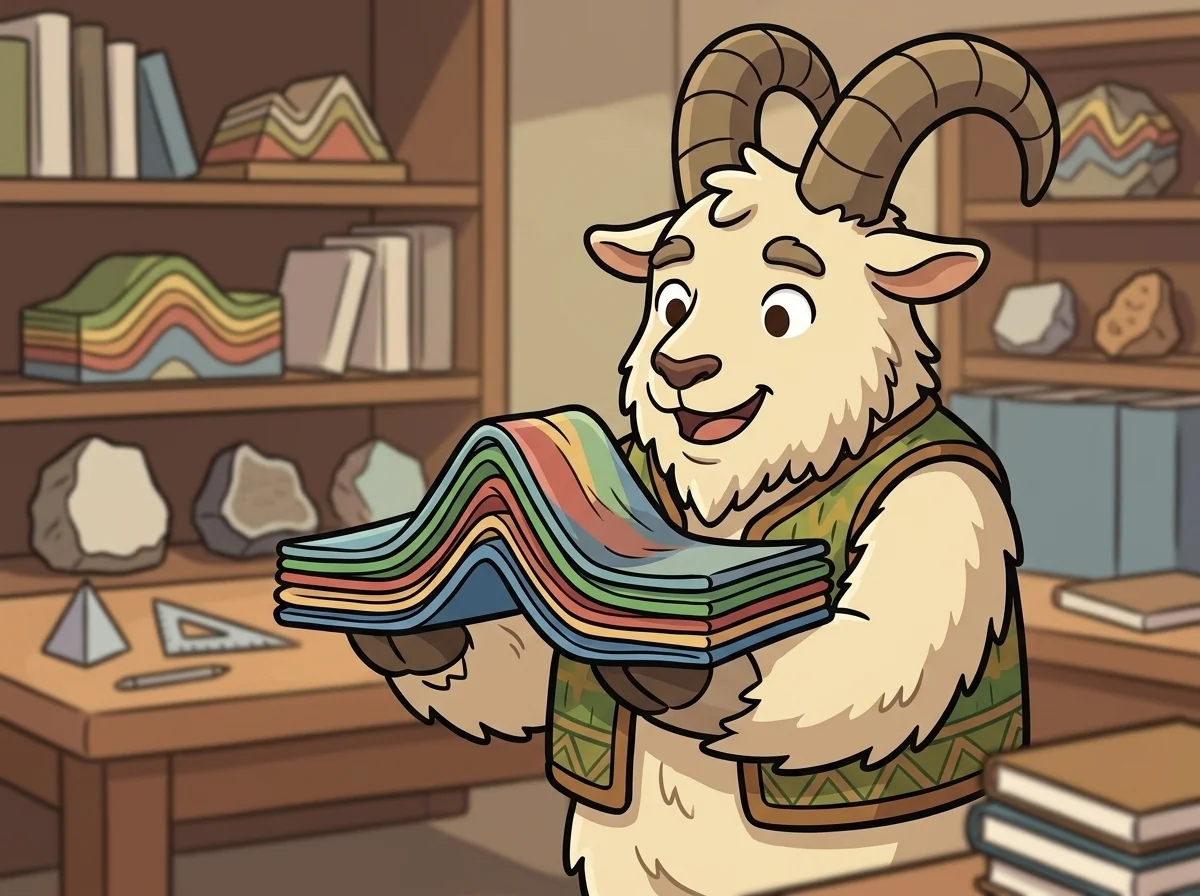
Heave climbed down to TectonicForge at twelve, because a place that studied the moving Earth ought to understand where mountains come from.
Geo, his mentor, asked one thing. "Two plates meet, and neither one sinks. What happens then?"
Heave pushed his two cloth-stacks together until they folded into a ridge. "They heave," he said. "The rock has nowhere to go but up. It folds and buckles into mountains. The Himalayas are still rising right now, because India is still pushing into Asia." Geo smiled. "You are appointed. You know that mountains are not built — they are raised."
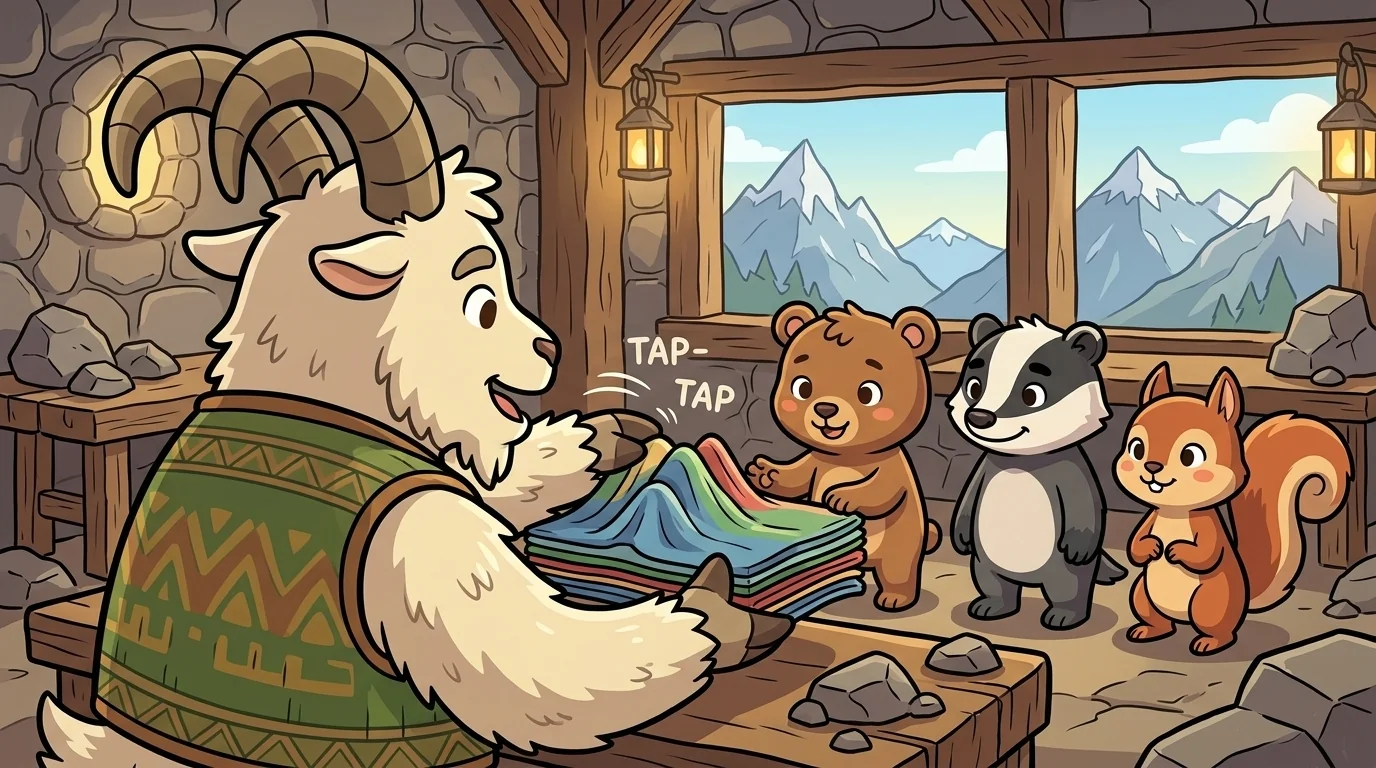
In his workshop, Heave pushed his fold-model slowly together. "Sink teaches what happens when one plate dives," he said. "But sometimes neither can dive — two thick continents meet, and both are too light to sink. So the land buckles up." He pointed at the folding cloth. "See the layers bend? Real rock does this, over millions of years. The Himalayas, the Alps, the Andes — all made this way, where plates pushed and pushed and the ground rose to meet the pressure." He let the children push the model themselves and watch the flat layers climb into peaks. "And here is the wonder: it happens a few centimeters a year. Slower than your fingernails grow. The tallest mountains on Earth were raised one tiny push at a time, over so long a time that we can barely believe it."
He spoke warmly. "Pressure does not only break things. Sometimes, when there is nowhere else to go, pressure lifts — and what was low becomes the highest place there is."
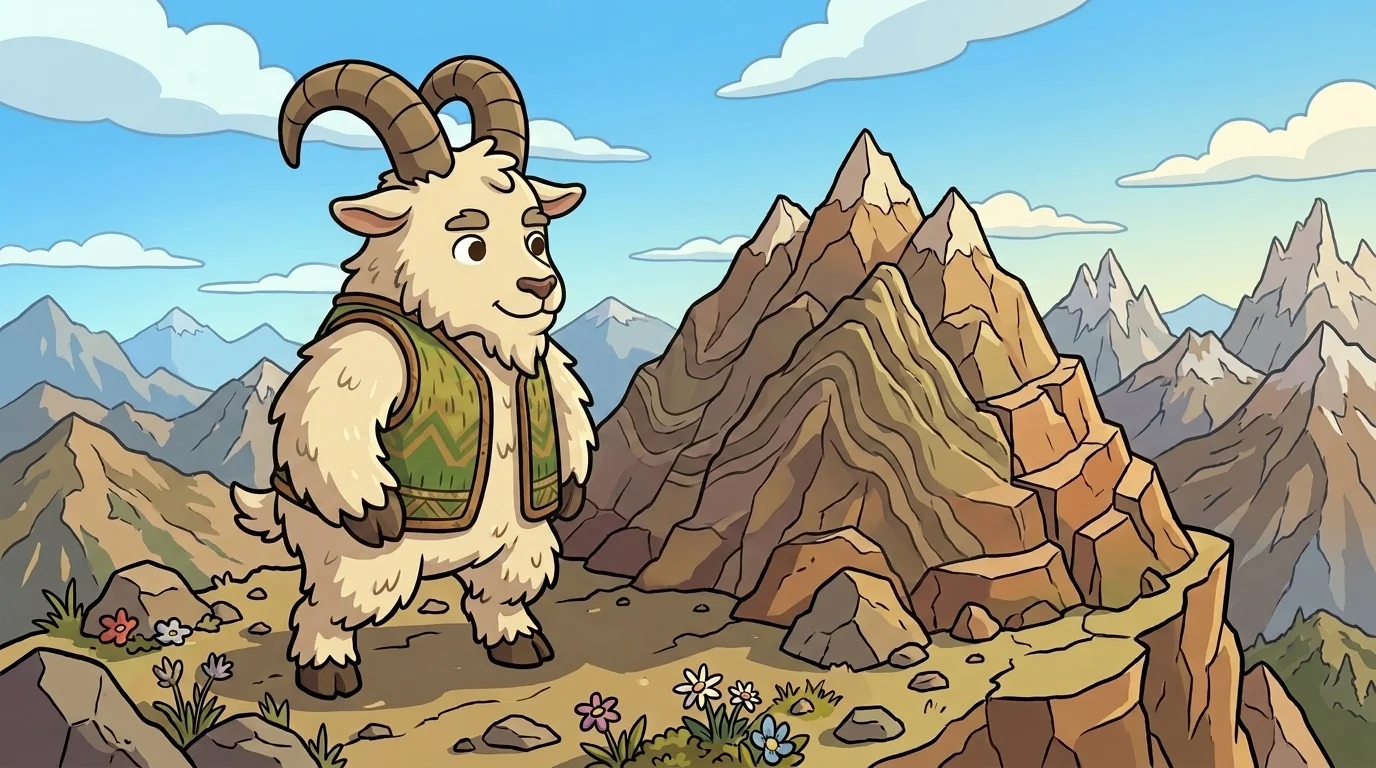
"When there is nowhere to go but up, the land rises — slowly, patiently, into mountains." And when Heave said it, his whole shaggy body seemed to stand a little taller, filled with a steady, hopeful strength — the quiet pride you feel when you realize that being pressed hard from every side does not always crush you, that sometimes it is exactly what raises you up.
The TectonicForge ensemble
Heave is part of TectonicForge's distributed-narrative cast. Each character embodies a different curricular primitive; together they teach the full subject.
-
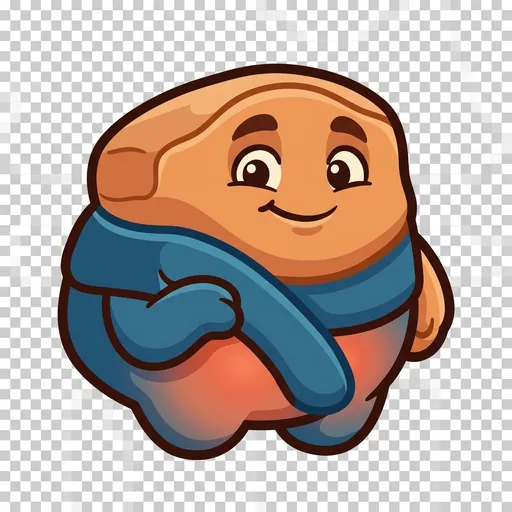
Sink
Convergent/subduction boundary — the heavier plate finds its way down; it takes a long time; that's okay
-
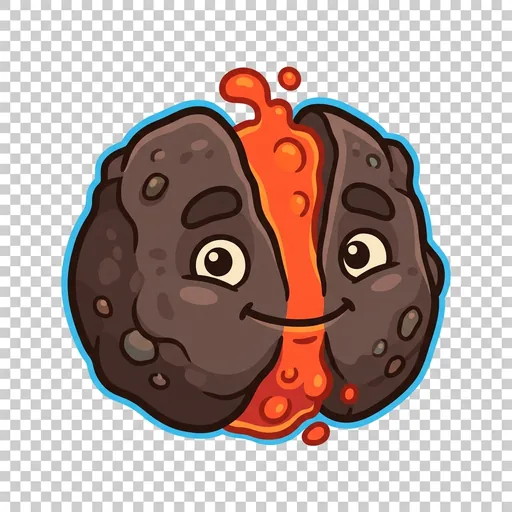
Spread
Divergent boundary + new crust — when something pulls apart, something new is forming in the middle
-

Slide
Transform boundary + stored energy — two plates sliding past; they catch, they hold, then they let go
-

Vent
Volcanism + magma chemistry — eruptions tell us what was happening below
-

Tremor
Seismology + earthquake preparedness — earthquakes are the Earth telling its story; we can read the lines; we can be ready
-
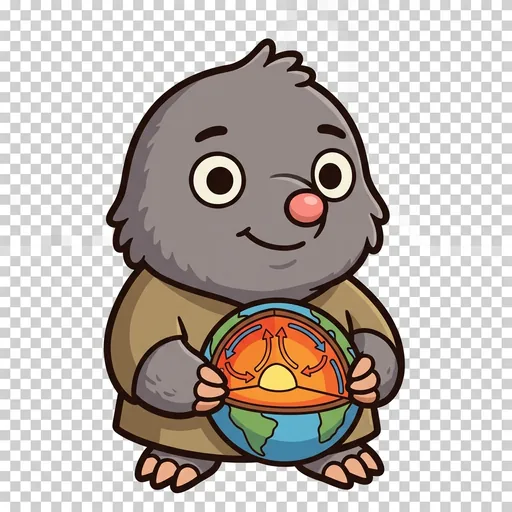
Churn
Mantle convection — the engine that drives the plates — 'Deep heat moves the whole map.'
-
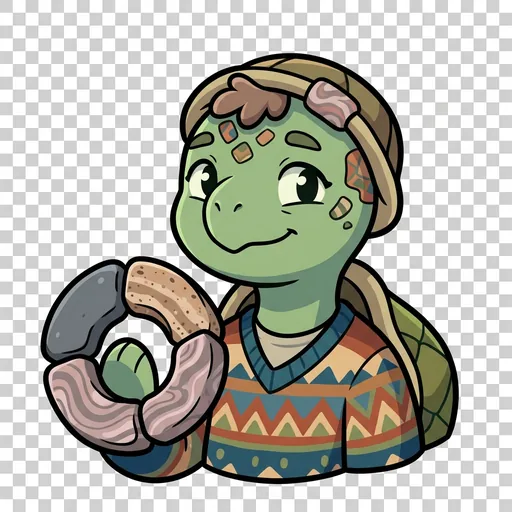
Remake
The rock cycle — igneous, sedimentary, metamorphic — 'Nothing is ever really finished.'
-

Scour
Weathering + erosion — wearing down the land — 'Water and time win.'
-
Silt
Deposition + strata — reading rock layers as time — 'Every layer is a page.'