Gust
Wind near the ground isn't steady
Loading audio…
Press play to listen along. The line being read lights up as you go.
Show full transcript
Loading transcript…
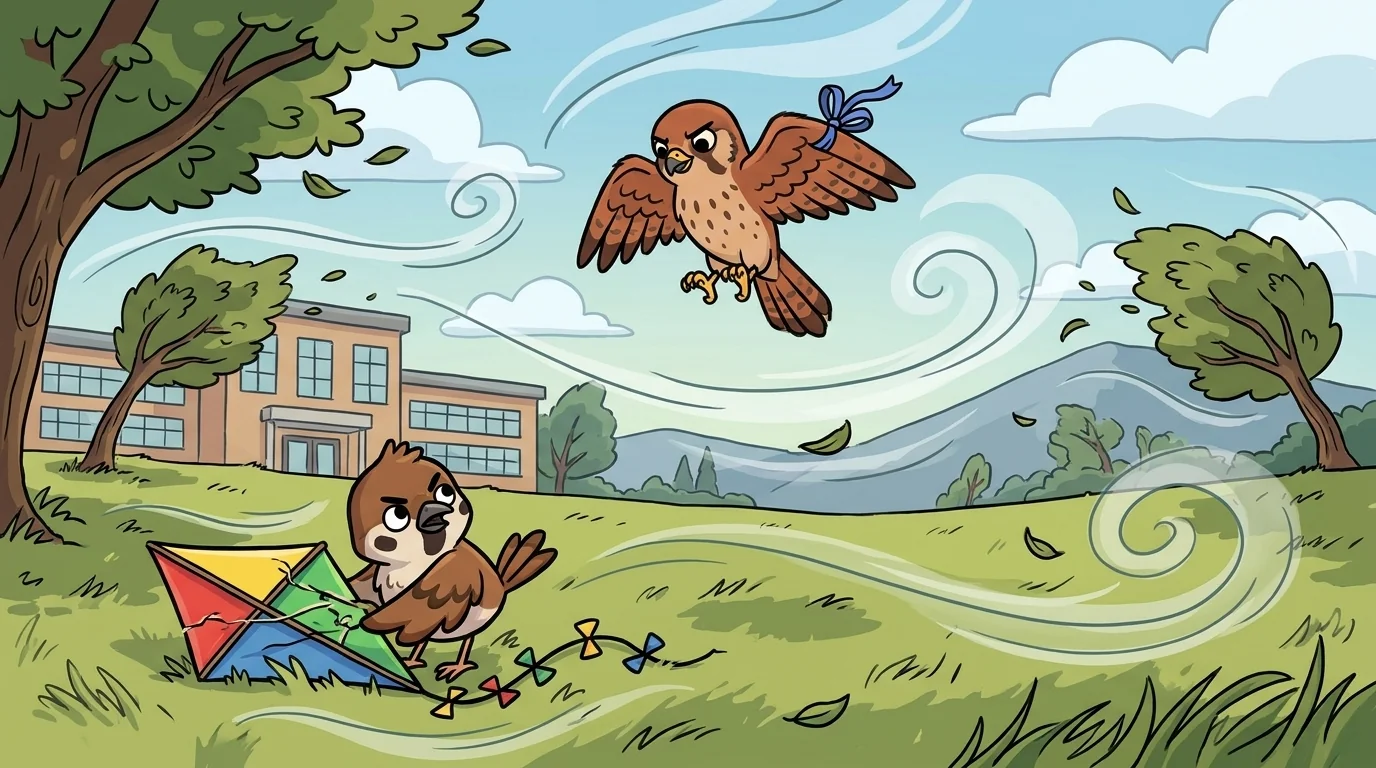
On a breezy afternoon at the school field, while a kite-flyer grew frustrated with wind that wouldn't behave, a small kestrel hovered dead-still in the air above, reading every push and pause of the wind like sheet music.
Gust was sleek and sharp-eyed, able to hang motionless on a breeze by feeling its every shift, with a little wind-ribbon tied to one wing. A young sparrow struggled below, kite crashing. "The wind is BROKEN," he complained. "One second it's strong, then it stops, then it swirls the wrong way — it makes no sense! How do you just HANG there in it?"
"Because I read it instead of fighting it," Gust said, hovering. "Wind near the ground isn't one steady flow. It comes in pushes and pauses — gusts and lulls — and it bends and swirls around anything in its way: hills, trees, buildings, even you." She tipped a wing into a gust. "Feel that? A push, then a pause. That's normal. Down here near the ground, the wind rubs against everything and breaks into gusts. Up high it's smoother, but down here it's lumpy." She rode the next lull. "Wind near the ground isn't steady. It comes in pushes and pauses, bends around hills and buildings, and shifts with the day. Read its behavior, and it stops surprising you."
The sparrow watched her hang effortlessly. "So the wind isn't broken — it's SUPPOSED to be gusty?"
"Perfectly normal," Gust said. "And once you know it comes in pushes and pauses, you stop fighting it. Launch your kite ON a push, not in a lull. Expect the swirl behind that building. Feel the gust coming and lean into it. The wind's not random — it's lumpy in ways you can learn to read."
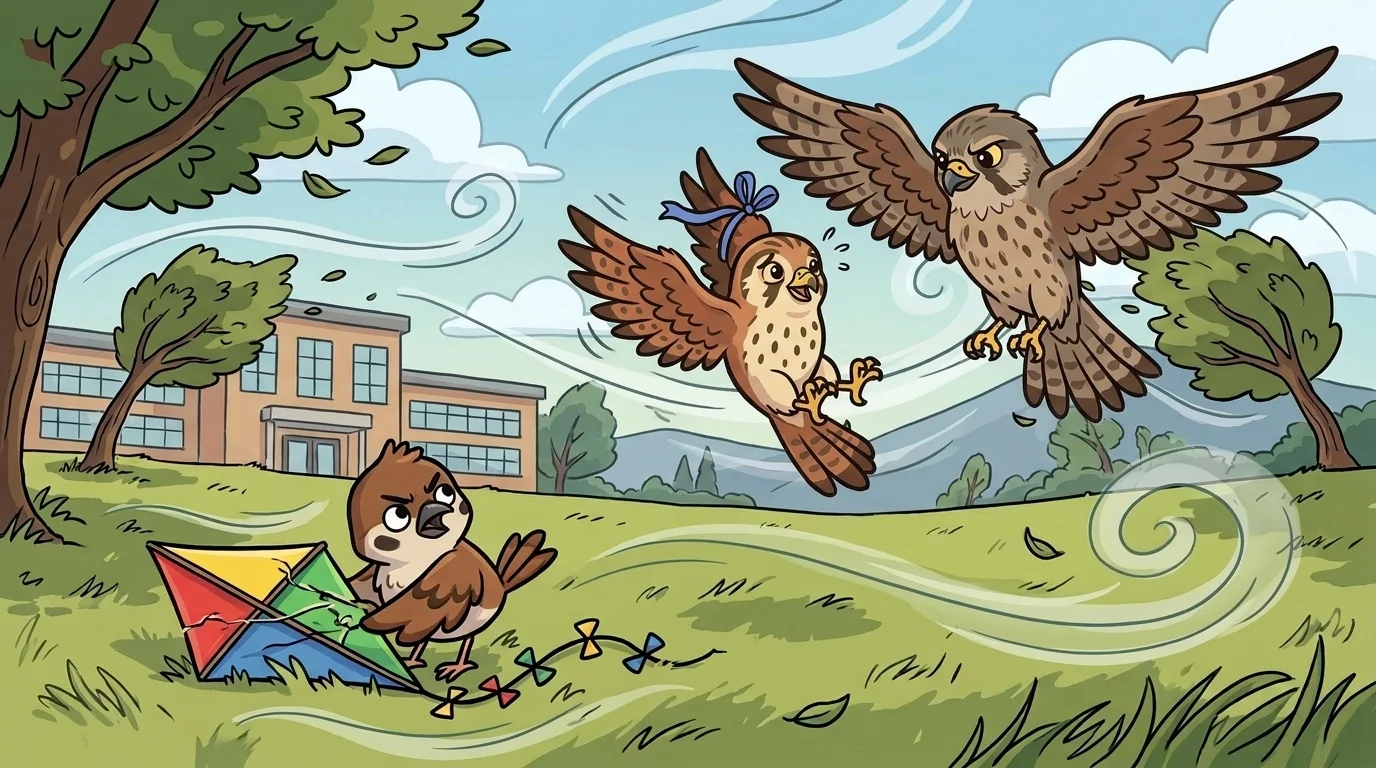
Gust had learned to read the wind as a fledgling.
The first time she tried to hover, the wind knocked her all over the sky — a gust would slam her up, a lull would drop her, a swirl would spin her — and she tumbled and flailed, sure she was simply a hopeless flyer, that the wind was her enemy and always would be.
Her father, an old kestrel who could hang motionless for an hour, glided beside her. "The wind isn't your enemy, and you're not hopeless," he said. "You're fighting the wind instead of reading it. It comes in pushes and pauses — feel them coming, and move WITH them." He tipped into a gust and held steady. "When a gust pushes you up, ease down to meet it. When a lull drops you, give a beat to hold. Don't brace against the wind stiff — that's when it throws you. Feel its rhythm — push, pause, swirl — and ride it." He hovered, perfectly still. "The wind has a pattern, always. Read the pattern, and you can hang in the stormiest sky."
Gust stopped bracing stiff and started feeling the wind's rhythm — the pushes, the pauses, the swirls around every obstacle — and moved with each one. And suddenly she could hover, motionless, reading the lumpy air. The hopeless, wind-is-my-enemy feeling turned into a keen, capable calm. The wind wasn't random or cruel. It came in readable pushes and pauses, and she'd learned to ride them.
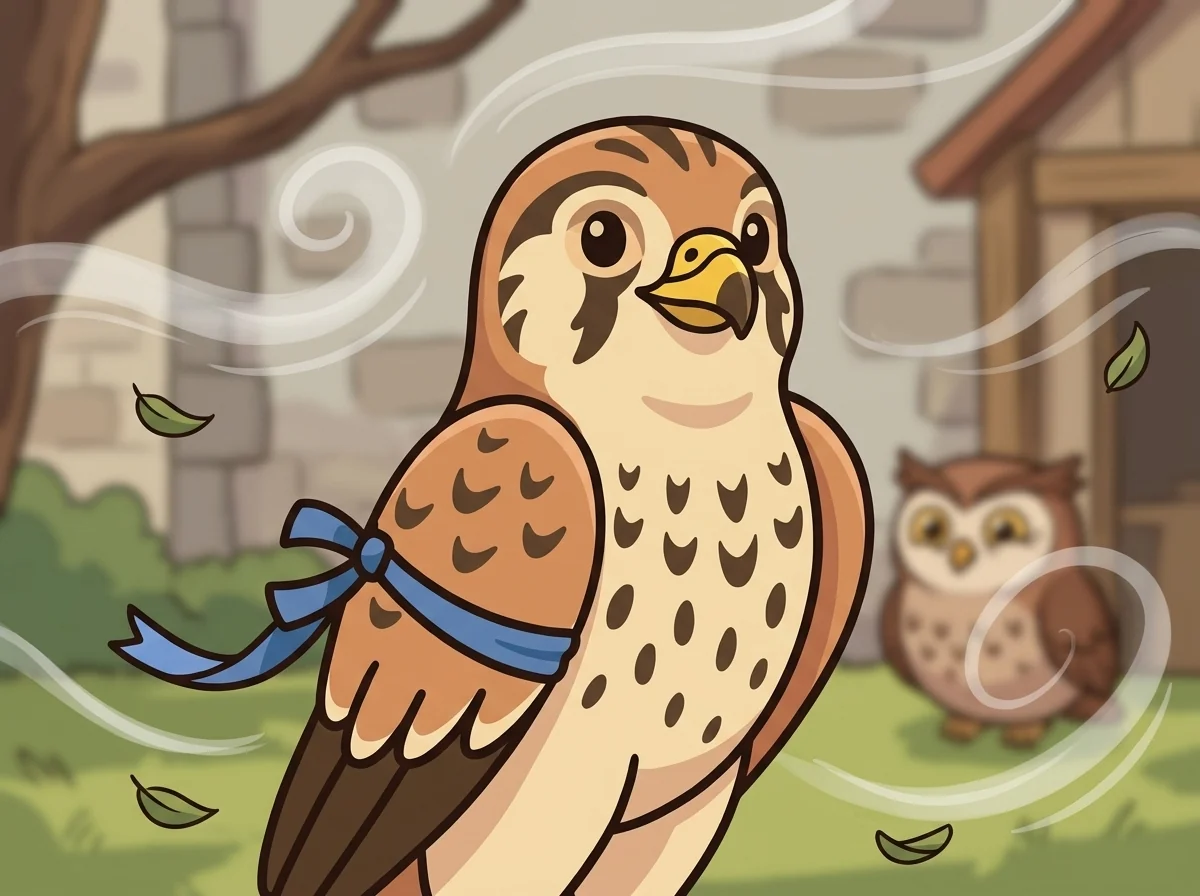
When she was older, Gust flew to the WeatherForge academy, where Gale, who ran it, asked, "Why doesn't the wind blow steadily near the ground?"
Gust didn't answer with a speech. She hovered in the breezy yard, holding still through gust and lull. "Because down here it rubs against everything — ground, trees, buildings — and breaks into gusts and swirls," she said. "It comes in pushes and pauses, bends around every obstacle, and shifts through the day as the ground heats and cools. Up high it's smoother; near the ground it's lumpy and gusty. That's normal." She rode a gust. "Read the pushes and pauses, and the wind stops throwing you — you launch a kite on a gust, expect the swirl behind a wall, and lean into what's coming."
Gale's eyes crinkled warmly. "Some think gusty wind is just chaos," Gale said.
"It's lumpy, but it's readable — pushes and pauses and swirls you can learn," Gust said. Gale smiled. "Then come in," Gale said. "WeatherForge needs someone who reads the ground-wind."
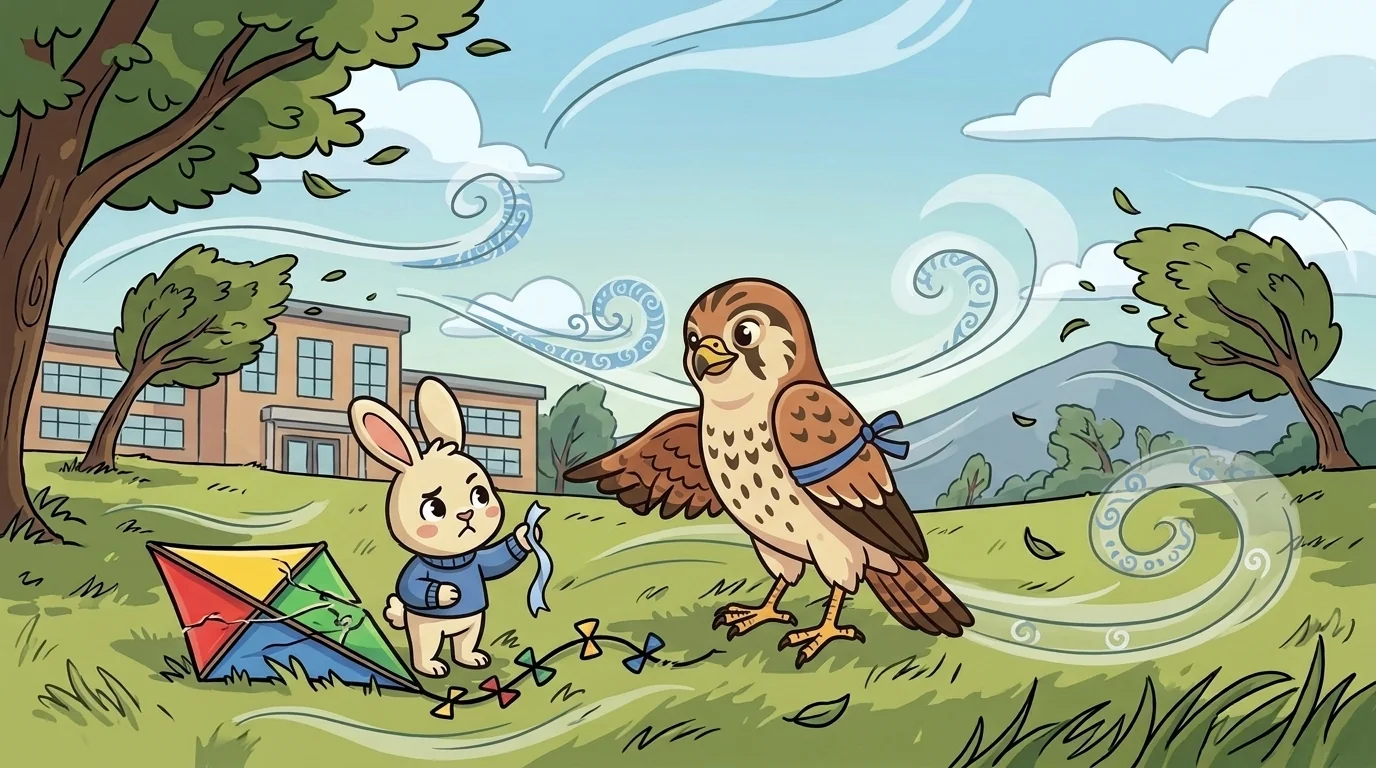
In her classroom one afternoon, a frustrated young rabbit came in, kite in tatters.
"I keep crashing my kite," the rabbit said, "and running into sudden gusts that nearly knock me over near the school wall. The wind is just RANDOM and mean. I give up."
"It's not random, and it's not mean — let me show you its patterns," Gust said gently. She took the rabbit to the field. "First, the pushes and pauses." She had him hold up a ribbon and feel the wind come in gusts and lulls. "See? It's not steady — it pushes, then pauses. So launch your kite ON a push, when the wind's strong, not during a lull." Then she led him near the school wall, where the wind swirled fiercely. "And here — feel how the wind hits the wall and swirls back on itself? That's why it 'ambushed' you here. The wall makes a swirl. Now that you know, you'll expect it." The rabbit felt the pushes, the pauses, the wall-swirl. "The wind's lumpy," Gust said, "but every lump has a reason — an obstacle, a gust-rhythm, the time of day."
The rabbit launched his kite on a push, and it soared. "So the wind isn't random OR mean," he said. "It comes in pushes and pauses, and swirls around walls, and if I read those, I can work WITH it."
"That's the whole craft," Gust said. "Wind near the ground is lumpy and gusty — always. But it follows patterns: pushes and pauses, swirls around obstacles, shifts with the day. Read them, and the wind stops ambushing you. You launch on the gust, dodge the wall-swirl, and lean into what you feel coming. And when it's a truly wild, gusty storm-wind—" her voice gentled "—reading it tells you the other important thing: that's a day to keep your kite in and stay safely low."
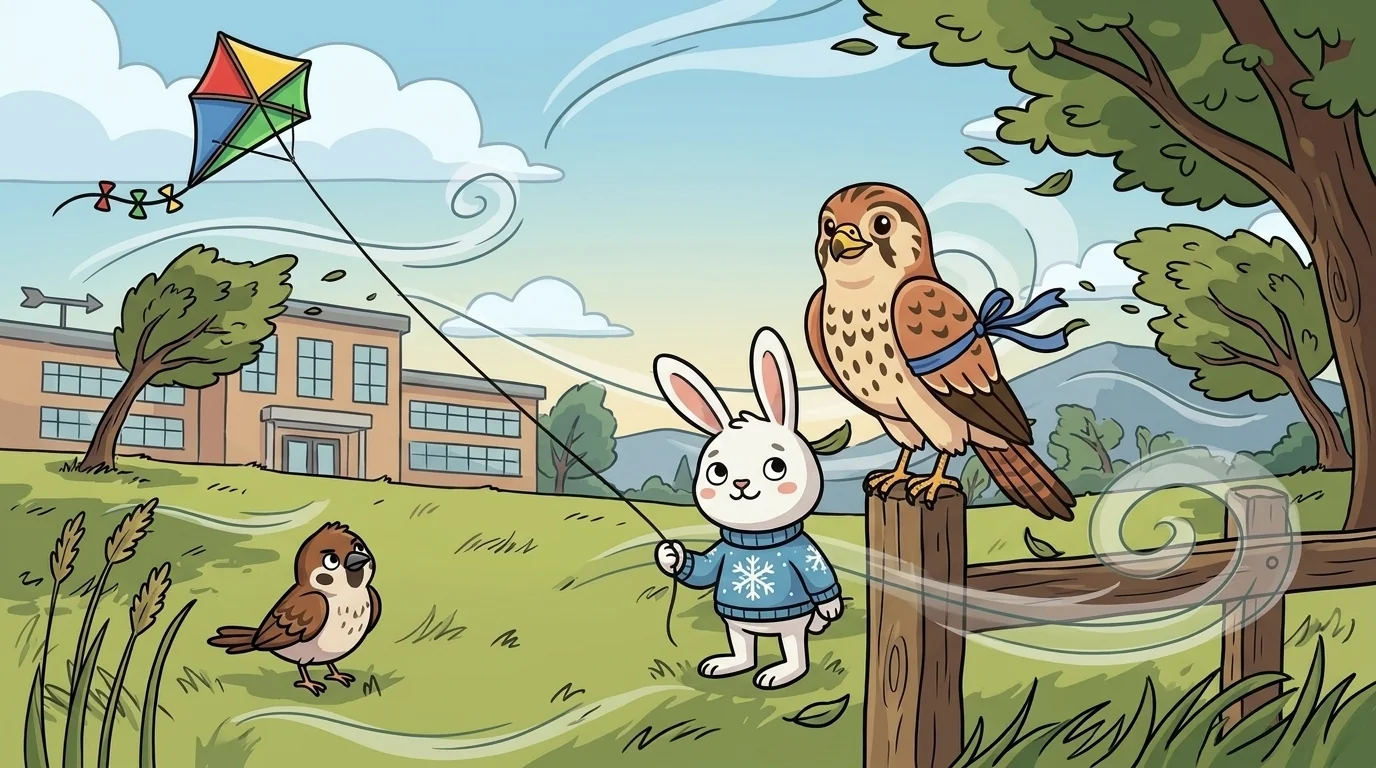
Later, as the breeze eased toward evening, the rabbit came back, flying his kite easily now, reading the pushes.
"It's kind of wonderful," the rabbit said, "that the wind has a rhythm I can feel and use, instead of just fighting me."
Gust settled on a fencepost beside him, ribbon fluttering.
"That's the keen joy of it," she said. "The wind FEELS random when you fight it stiff. But feel its rhythm — push, pause, swirl — and it becomes something you can read and ride." She tipped her wing into a gust. "There's a capable, calm feeling in that — the moment the wind stops being a mean, random enemy and becomes a lumpy, readable thing you move WITH. Launch on the push. Expect the wall-swirl. Lean into the coming gust." She hovered a moment, still. "Not random, not mean — just wind, coming in pushes and pauses, bending around the world, for anyone who learns to feel its rhythm."
The rabbit nodded, riding the pushes with his kite, and Gust watched the frustrated, wind-is-mean feeling ease into that keen, capable calm she'd found as a fledgling learning to hover — the warm gladness of a young weather-watcher who's discovered that the gusty ground-wind isn't chaos at all, but a lumpy, readable rhythm of pushes and pauses you can learn to ride.
The WeatherForge ensemble
Gust is one of the friends in WeatherForge. Each friend shows you one idea by how they act; meet them all and you have the whole subject.
-

Press
Air pressure & circulation (highs/lows + wind direction)
-

Mass
Air masses & fronts (warm vs cold, moist vs dry)
-

Loft
Water cycle & lifting (evaporation, condensation, precipitation)
-

Brew
Storm formation (instability + moisture + lifting)
-

Read
Forecasting & reasoning (synthesizing data into prediction)
-

Dew
Humidity + the dew point
-
Fleece
Reading cloud types
-

Halo
Sky optics as weather signs
-

Rime
Frost and freezing



