
Quirk and Switch
THE SNAP (Advanced) — most of the best wordplay finds a hidden second thing inside one surface. Quirk works LEXICAL AMBIGUITY: one word, two meanings (a homonym — split into the homograph, same spelling, and the homophone, same sound), and the laugh is the garden-path FLIP where the brain reads one meaning then snaps to the other. Switch works TRANSPOSITION: the same letters rearranged into a new word (an anagram), the hidden word already present, just in the wrong order. Two crafts, one insight: a word is never one flat thing.
A story read by Quirk and Switch
Loading audio…
Press play to listen along. The line being read lights up as you go.
Show full transcript
Loading transcript…
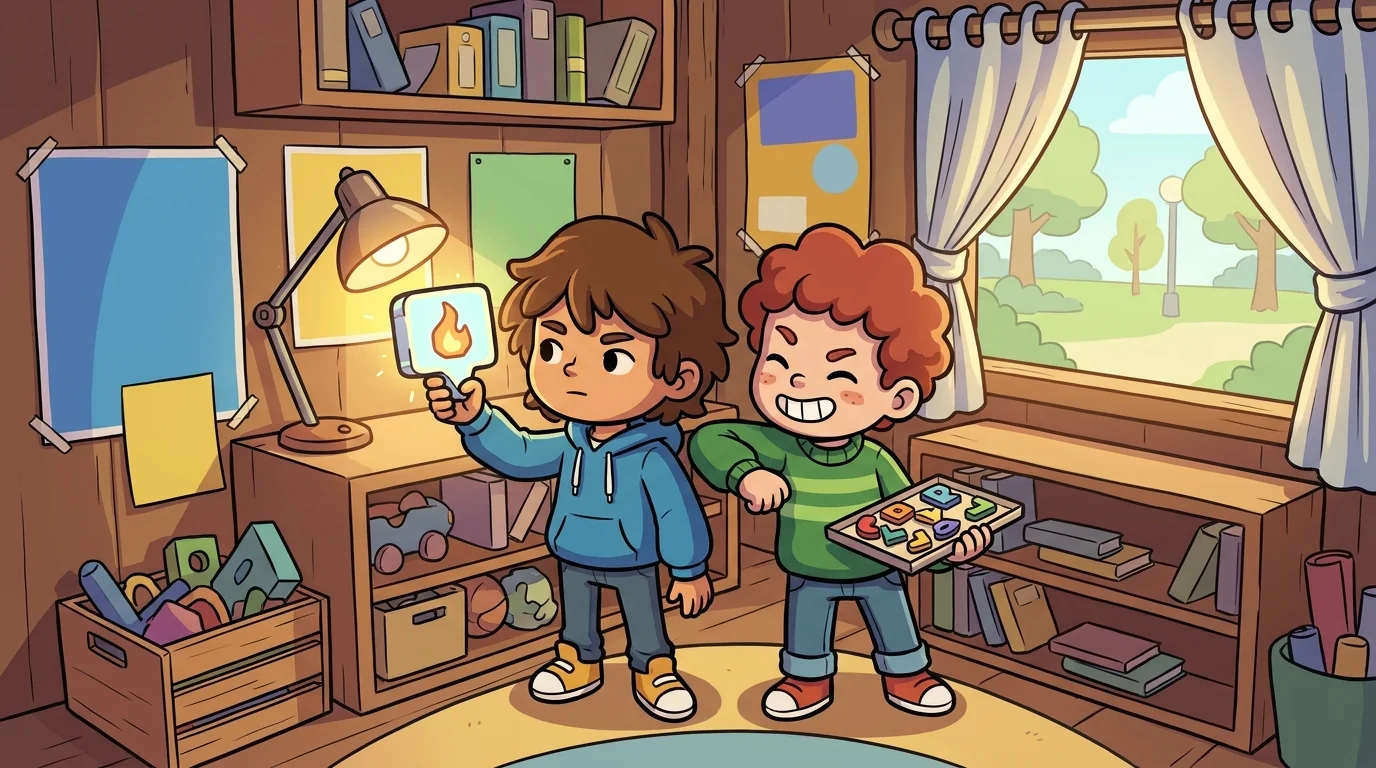
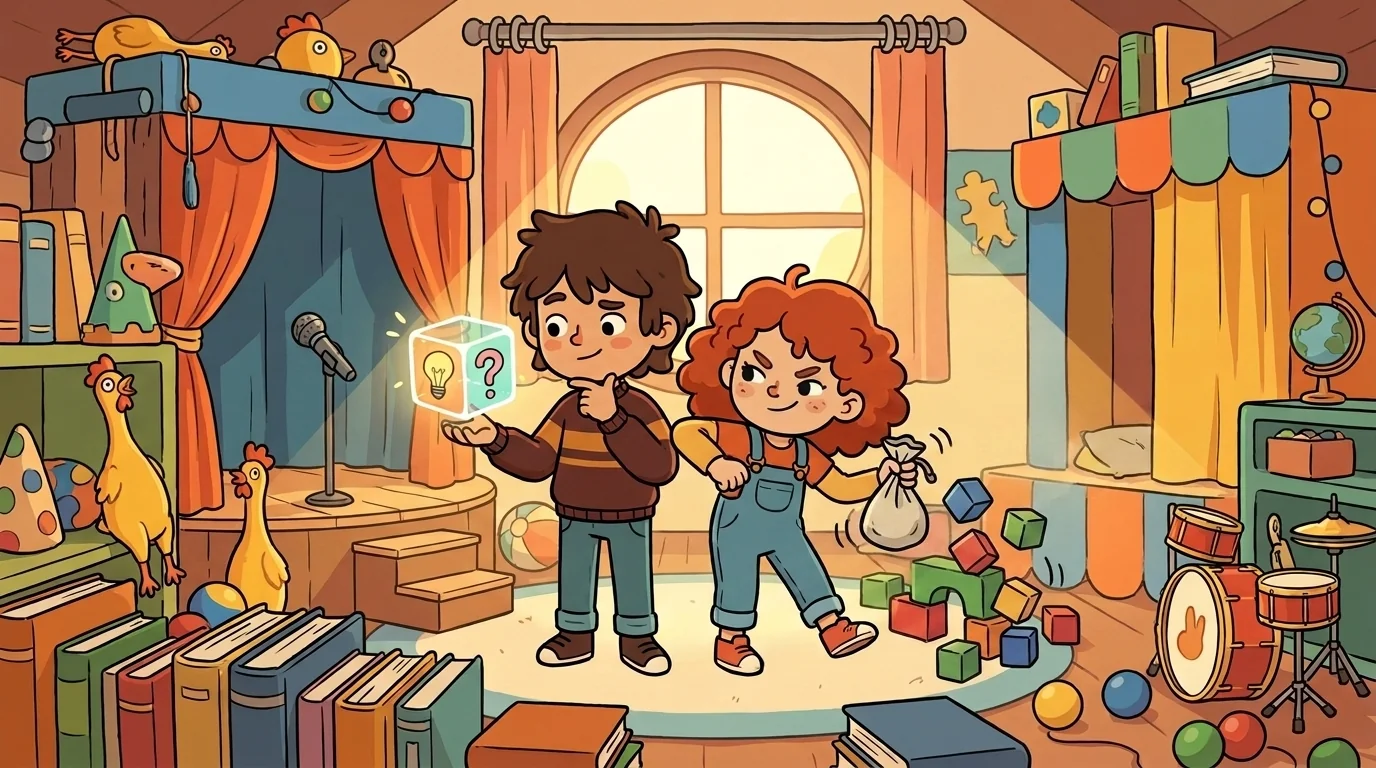
Two friends worked the same little corner of the comedy world — the corner where the jokes live inside the words themselves — and they were forever elbowing each other over who did it best, because they'd each found a different door into the same secret: a word is never just one flat thing. Quirk kept a single word held up to the light, watching it flicker between two meanings. Switch kept a bag of letter-tiles, shaking them to see what new word fell out. "I hide a second meaning," said Quirk. "Same word, two faces." "And I hide a second word," said Switch, rattling the bag. "Same letters, shaken loose. Go on then — yours first."
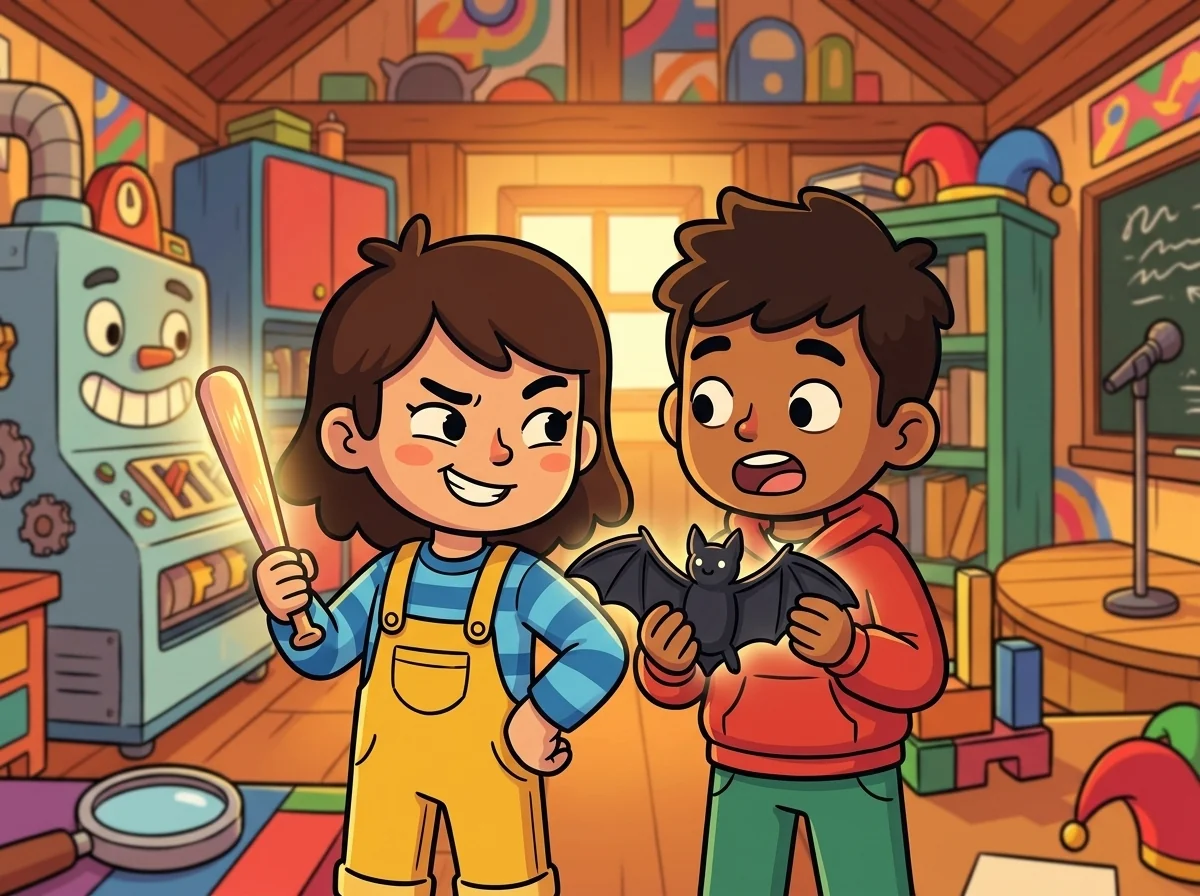
Quirk went first, holding one word to the light: bat. "One word, two completely different things living inside it — the bat you swing at a ball, and the bat that flaps around a cave. This is lexical ambiguity: a single surface carrying more than one meaning. When it's the same spelling and sound, we call it a homonym." Quirk built the joke off the seam: "Why did the baseball player bring a flashlight to the game? The coach said bring your best bat — so he brought the flappy kind." A groan; a grin; the snap. "The laugh isn't in either meaning — it's in the flip. Your brain runs down the garden path reading 'bat' as the ball kind, commits to it, and then the joke snaps it to the flappy kind. That jolt of re-reading is the laugh."
"And it splits two ways," Quirk went on, because the Advanced version knows the sub-kinds. "When the two meanings share the same spelling, that's a homograph — bat and bat, read identical on the page. When they share the same sound but not the spelling — flour and flower, knight and night — that's a homophone, and it only snaps when you hear it. Same craft either way: build a sentence that makes the brain pick one meaning, then reveal the other. The tighter the trap that hides the second meaning until the last word, the harder the snap."
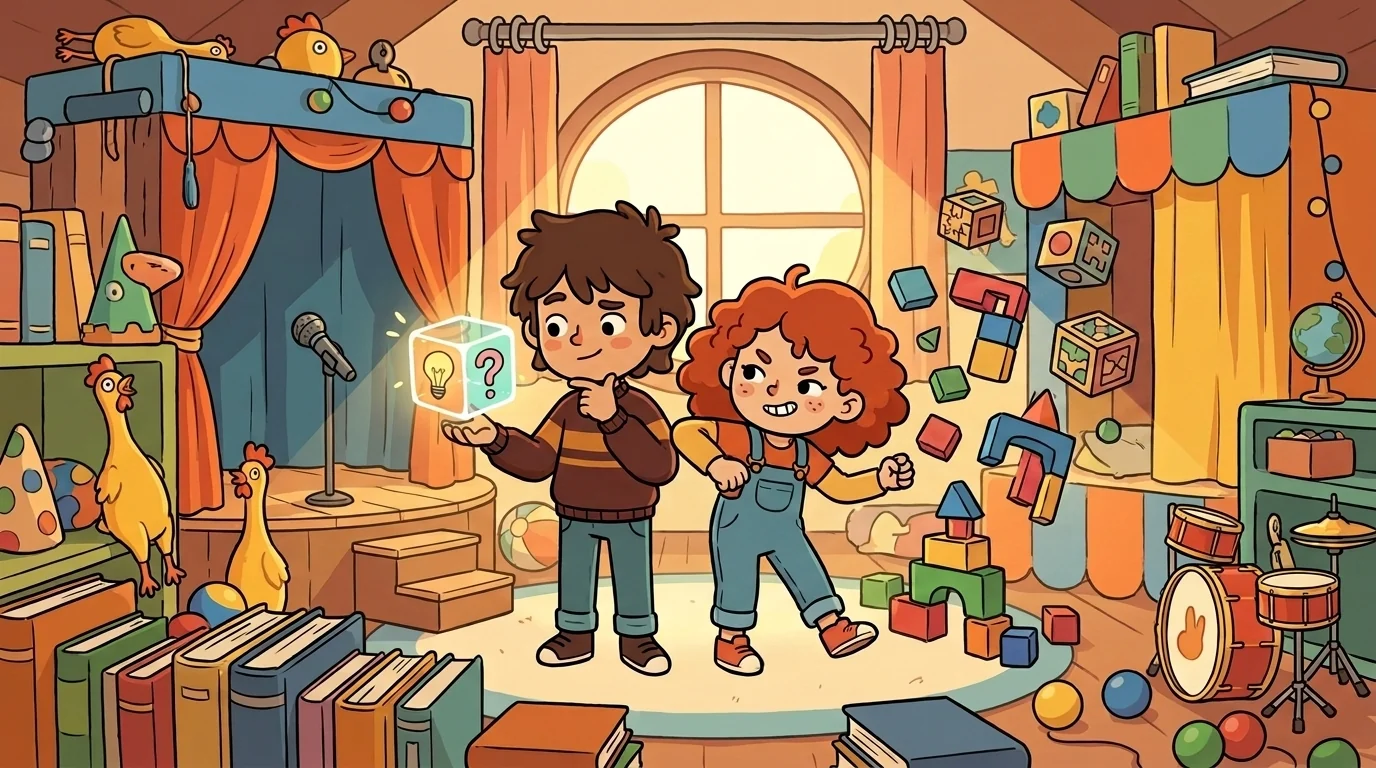
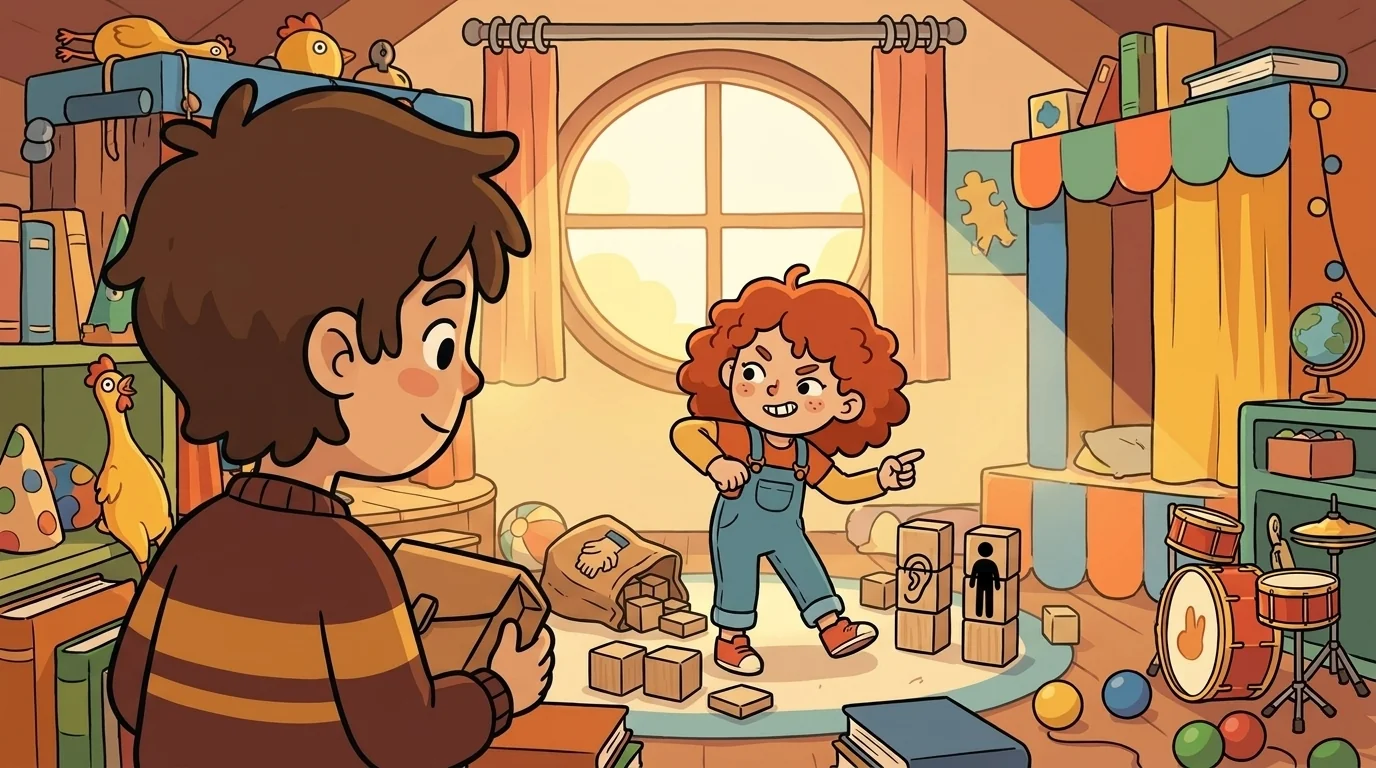
Then Switch dumped the letter-tiles and shook them, because Switch did something sneakier — kept the exact letters and rearranged them. "I don't hide a meaning. I hide a whole different word, made of the same letters. It's called an anagram — a transposition, where the second word is already there in the first, just sitting in the wrong order." Switch showed them: the letters of LISTEN, shaken and reset, spelling SILENT. "Same six letters, opposite word — and isn't it perfect that those two share letters? You have to be one to do the other." Switch shook again, and THE EYES fell out of THEY SEE. "The hidden word is never invented — it's uncovered. My whole joy is shaking the bag until the one that was always in there falls out." "Show-off," said Quirk, admiringly. "You're the show-off," said Switch. "I'm just tidy about it."
And here was the thing they both secretly knew under the elbowing: they were running the same magic trick two ways. Quirk found a second meaning hiding in one surface — lexical ambiguity, the homograph or homophone, snapped by the garden-path flip. Switch found a second word hiding in the same letters — the anagram, the transposition, uncovered by the shake. Both had seen that a word is not the flat, single, settled thing it pretends to be; it's double, with a trapdoor or a shuffle just under the surface, waiting for someone playful enough to find it. "Good snap," said Switch. "Good shake," said Quirk. There is a fizzy, particular delight in wordplay — in discovering that the words we use every day, so plain and ordinary, are secretly layered: full of second meanings and hidden rearrangements, trapdoors and shuffles, just below the surface. It teaches you to hold language loosely, turning each word over in your hands like a puzzle-box instead of reading it flat — and once you start seeing the snaps and the shakes, the bat that flaps and the listen that's silent, you never quite stop, because the whole world of words becomes a giant toy chest and you're the one who knows how to open it.
The WitQuest ensemble
Quirk and Switch is part of WitQuest's distributed-narrative cast. Each character embodies a different curricular primitive; together they teach the full subject.
-

Quirk
Puns and double-meanings
-
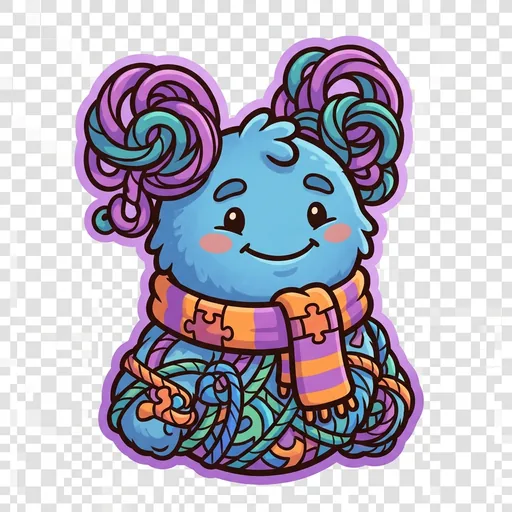
Knot
Riddles (compressed-info puzzles where you decode the answer from constrained clues)
-

Switch
Anagrams (rearranging letters to form a different word — "listen" → "silent")
-

Lilt
Idioms and figurative language (phrases whose literal meaning ≠ their actual meaning — "raining cats and dogs")
-

Hop
Lateral thinking (finding a non-obvious angle on a problem; sidestepping the assumed framing)
-
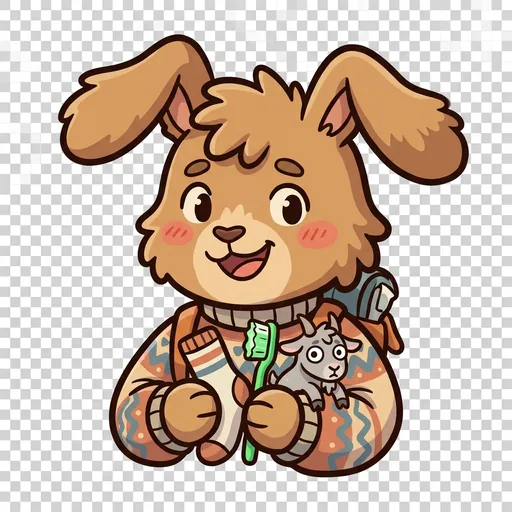
Trip
The rule of three (two beats set a pattern; the third breaks it — the break is the laugh)
-
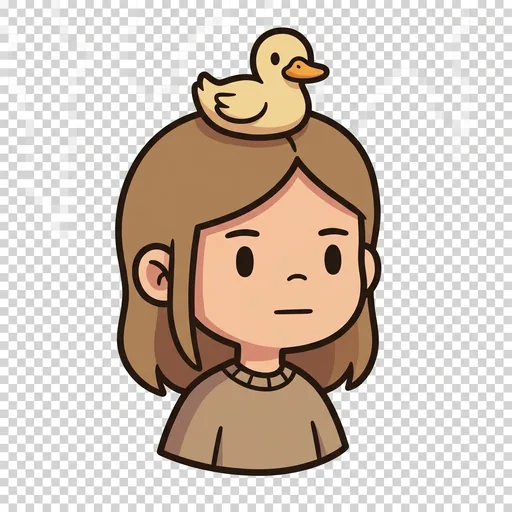
Dry
Deadpan delivery (saying something ridiculous with a calm, serious face — the flat delivery is the joke)
-
Boomerang
The callback (bringing back an earlier joke later, when it's half-forgotten — funnier the second time)
-

Topper
The topper / escalation (capping a joke with an even bigger one, raising the stakes each time)
-

Straight
The straight man / the setup (reacting normally so the absurdity stands out — comedy needs someone to be normal)