
Trip
THE RULE OF THREE (Advanced) — the comic triple. Two matched beats establish a pattern the brain begins to predict; the third beat violates the prediction, and the violation (an anticlimax / paraprosdokian swerve) is the laugh. The count is exact: two is too few to establish a pattern, four is too many and the surprise goes stale. The setup beats must be deliberately MUNDANE — the plainer and more matched they are, the stronger the prediction and the harder the third-beat swerve lands.
Loading audio…
Press play to listen along. The line being read lights up as you go.
Show full transcript
Loading transcript…
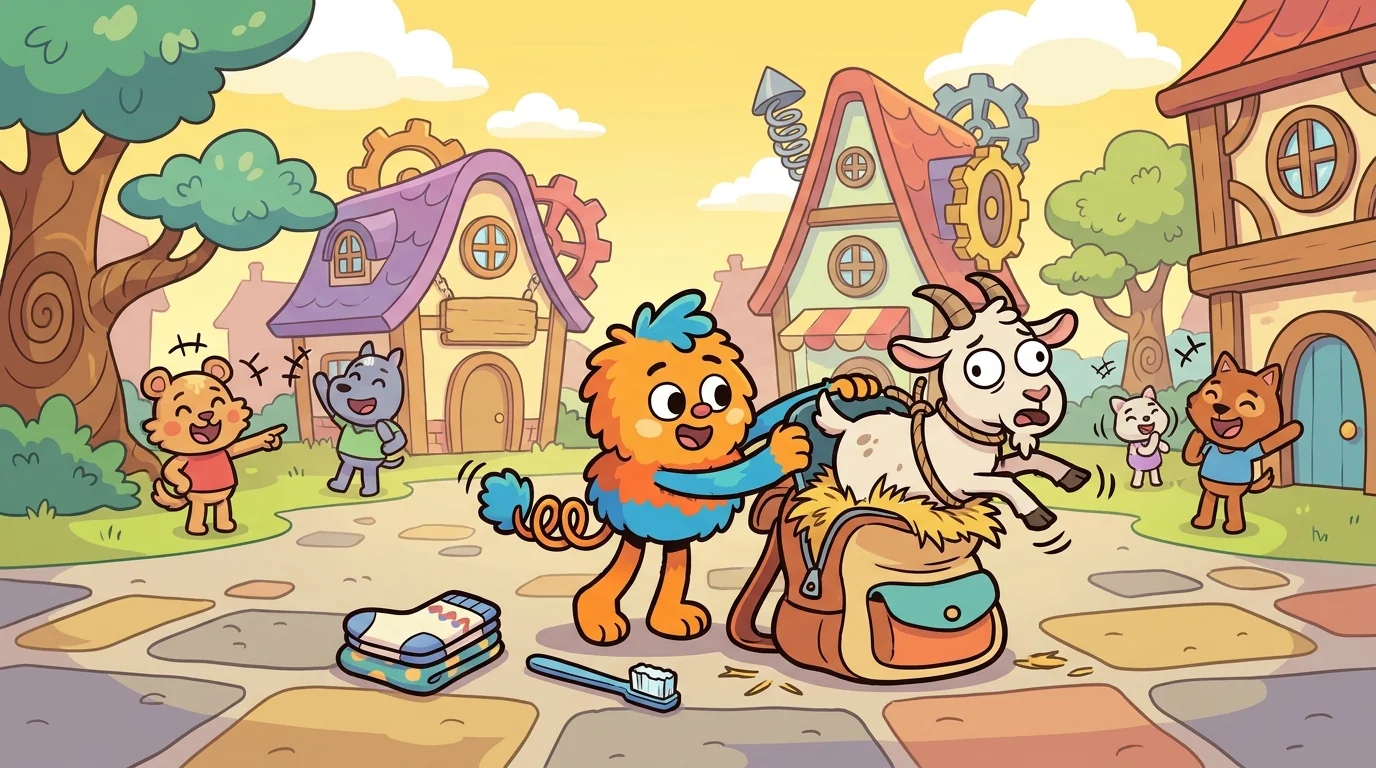
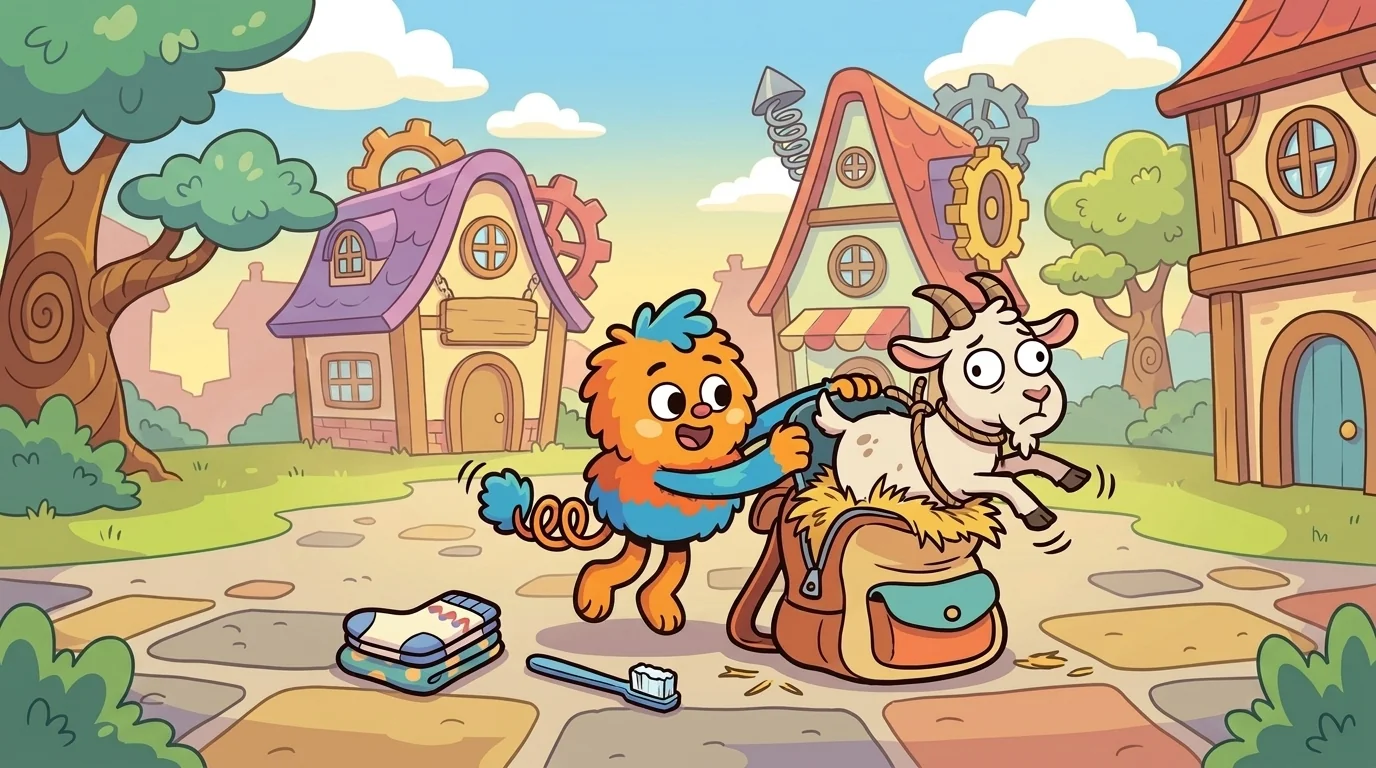
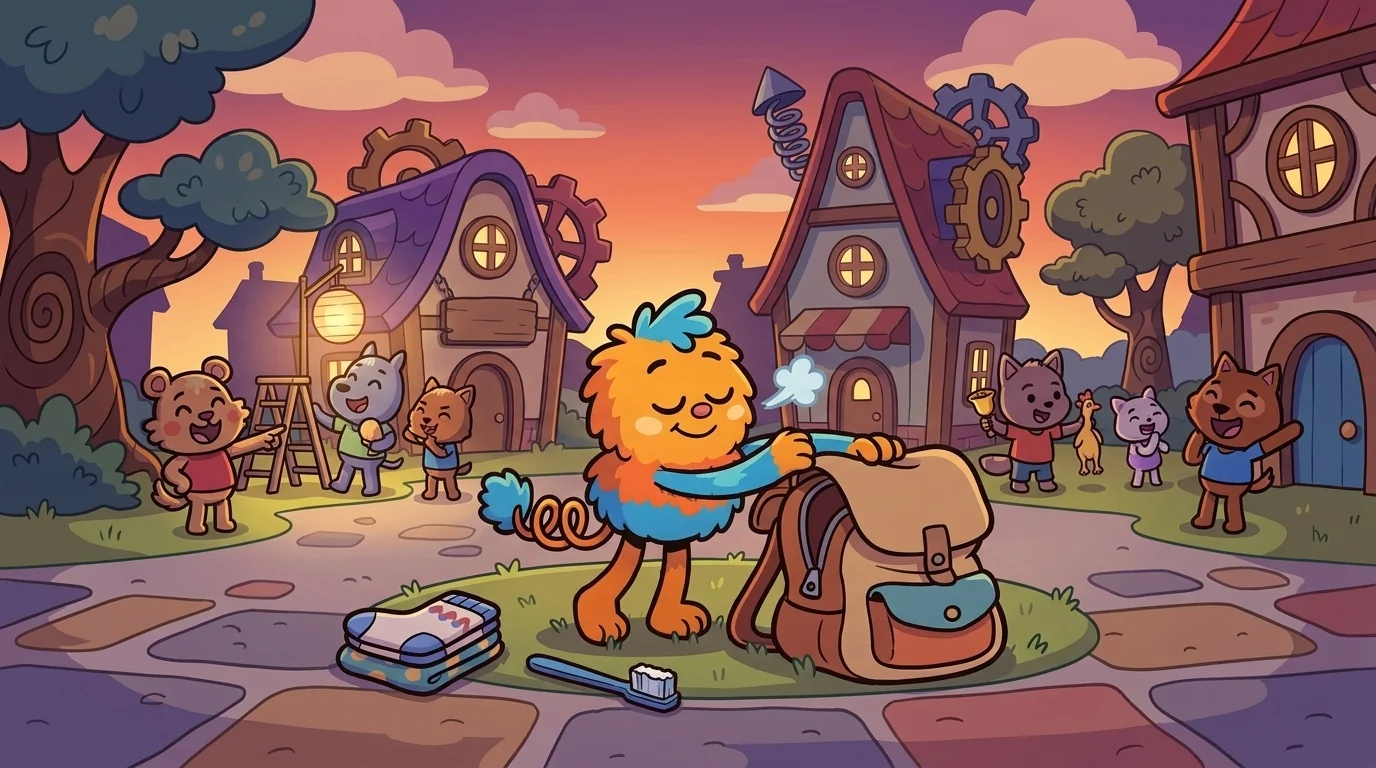
Trip loved to make people stumble — not on their feet, but into a laugh — and he'd figured out that the stumble is engineered, beat by beat, with a count you can't fudge. He'd line things up in threes: the first two always perfectly ordinary, lulling you into a tidy little pattern, and then the third would trip you, breaking the pattern so suddenly you fell straight into a giggle. "For my journey," he'd announce, "I have packed my socks, my toothbrush, and a very confused goat." Socks: normal. Toothbrush: normal. Goat: a trip-wire, and down you went.
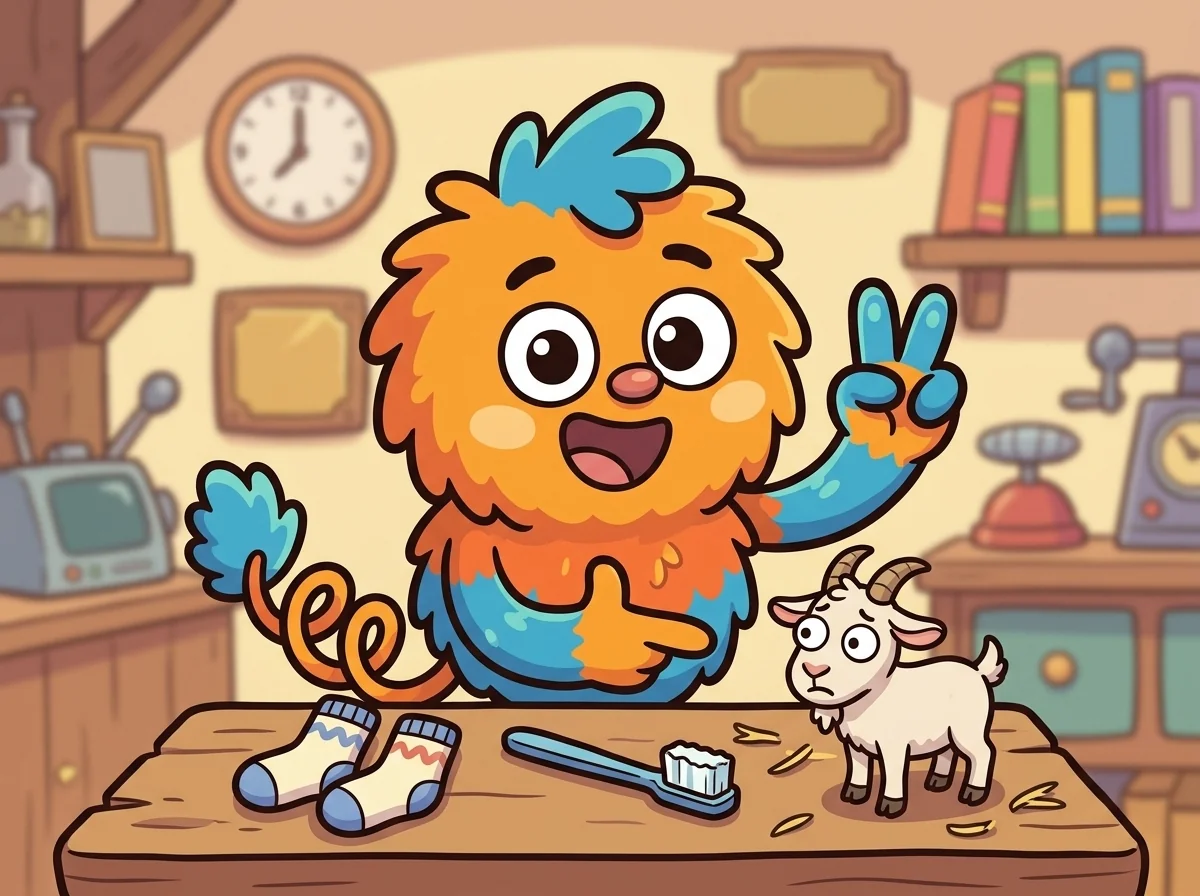
"They call it the rule of three, or the comic triple," he said, bouncing, "and here's the machine inside it. Comedy is expectation, then violation. The first two beats do a job people never notice — they build an expectation. Two matched, ordinary things and your brain quietly starts predicting: it fills in what the pattern should do next. Then the third beat violates that prediction. That swerve — where your brain was leaning one way and the joke went the other — is called an anticlimax, or a paraprosdokian when it's one sentence that turns on its last word. The trip isn't random. It's a prediction, deliberately built, deliberately broken."
The count, he insisted, is not a suggestion. He tried it with just two: "I packed my socks and a confused goat." A small smile, no real laugh. "See? Two isn't enough — there's no pattern yet, so there's nothing to predict and nothing to violate. One matched thing plus one odd thing is just a pair." Then he tried four: "Socks, toothbrush, a spoon, and a confused goat." The laugh came late and tired. "Four is too many — you feel the pattern, then you keep waiting, and by the time the swerve arrives the surprise has gone stale; the brain's already braced. Three is the exact minimum that establishes a pattern and the exact maximum before it sags. Set, set — break."
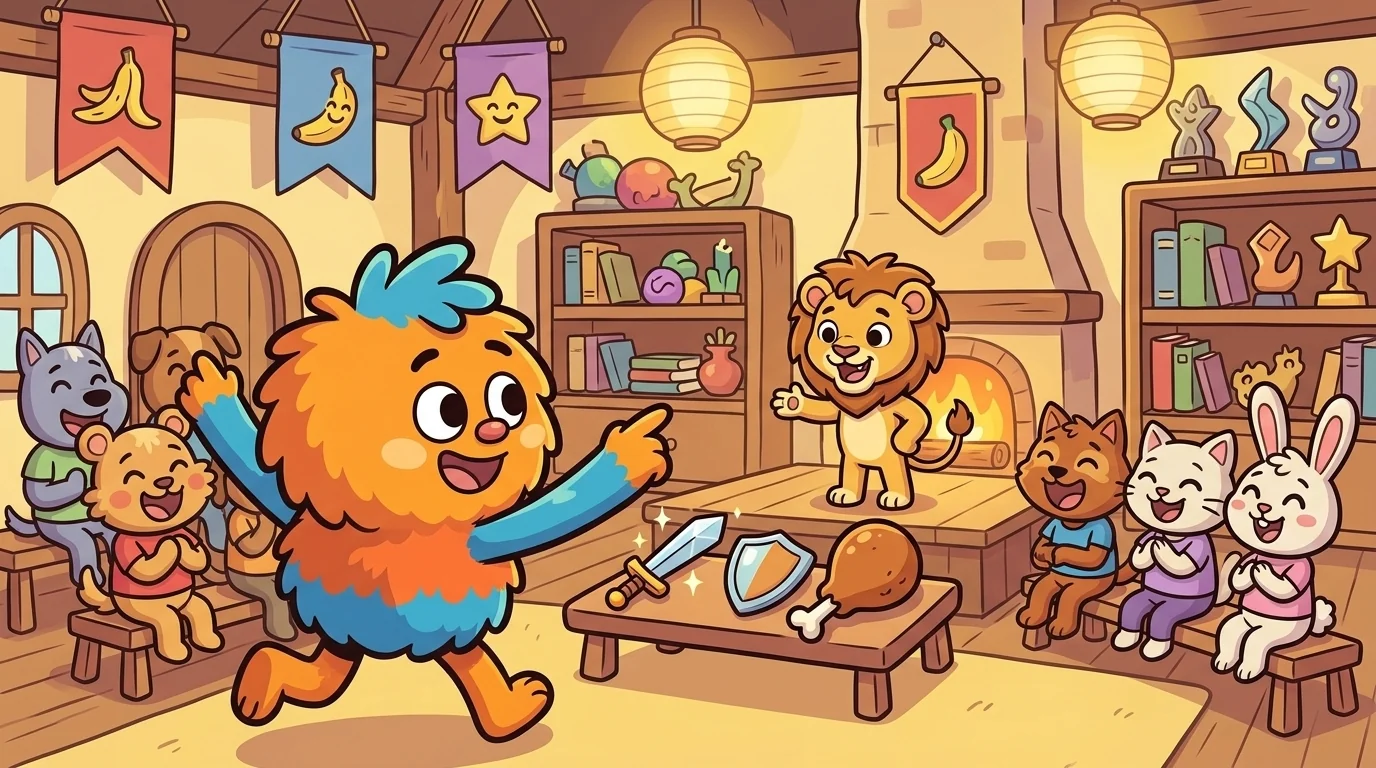
Then he named the part beginners always get backwards: the setup does the heavy lifting, and the setup must be boring on purpose. "People think the third thing is the joke," Trip said. "The third thing is only half the joke. The other half is how plain and matched the first two were. A strong, mundane pattern makes a confident prediction, and a confident prediction makes a hard swerve. Weak, already-weird setup beats make a weak prediction, and a weak prediction barely trips anyone. The plainer the step, the harder the fall." A young comic wrote: "A good knight needs courage, a sharp sword, and a really good snack." The guild burst out. "Courage — knightly. Sword — knightly. Snack — the swerve," Trip cheered. "You built the prediction with two honest, ordinary beats, then violated it. Earned fair and square."
For a long time Trip had worried his comedy was a cheap stumble — a gotcha, a banana peel, nothing clever in it — and wondered if tripping people into a laugh was a lesser art than the dazzling wordplay the others did. Resting in the warm Laughtonia evening, watching young comics build their first tripping threes, he understood his craft was the opposite of cheap. The setup was the art: the patient, boring, perfectly-matched first two beats that make the third mean something. Anyone can blurt a random weird thing — that's not a triple, it's just noise. Only a real comic builds the tidy little step, on purpose, so that the trip has something to trip against. There was craft in the boring part and joy in the fall, and the two were one thing. A warm, bouncy contentment settled through him. His stumbles weren't cheap. They were built — a pattern raised carefully, just to be broken on the third beat. And he bounced, content, already lining up his next perfect three.
The WitQuest ensemble
Trip is part of WitQuest's distributed-narrative cast. Each character embodies a different curricular primitive; together they teach the full subject.
-

Quirk
Puns and double-meanings
-

Knot
Riddles (compressed-info puzzles where you decode the answer from constrained clues)
-

Switch
Anagrams (rearranging letters to form a different word — "listen" → "silent")
-

Lilt
Idioms and figurative language (phrases whose literal meaning ≠ their actual meaning — "raining cats and dogs")
-

Hop
Lateral thinking (finding a non-obvious angle on a problem; sidestepping the assumed framing)
-
Dry
Deadpan delivery (saying something ridiculous with a calm, serious face — the flat delivery is the joke)
-

Boomerang
The callback (bringing back an earlier joke later, when it's half-forgotten — funnier the second time)
-
Topper
The topper / escalation (capping a joke with an even bigger one, raising the stakes each time)
-

Straight
The straight man / the setup (reacting normally so the absurdity stands out — comedy needs someone to be normal)