Aska
inquiry (ask a good question, check the source)
Loading audio…
Press play to listen along. The line being read lights up as you go.
Show full transcript
Loading transcript…
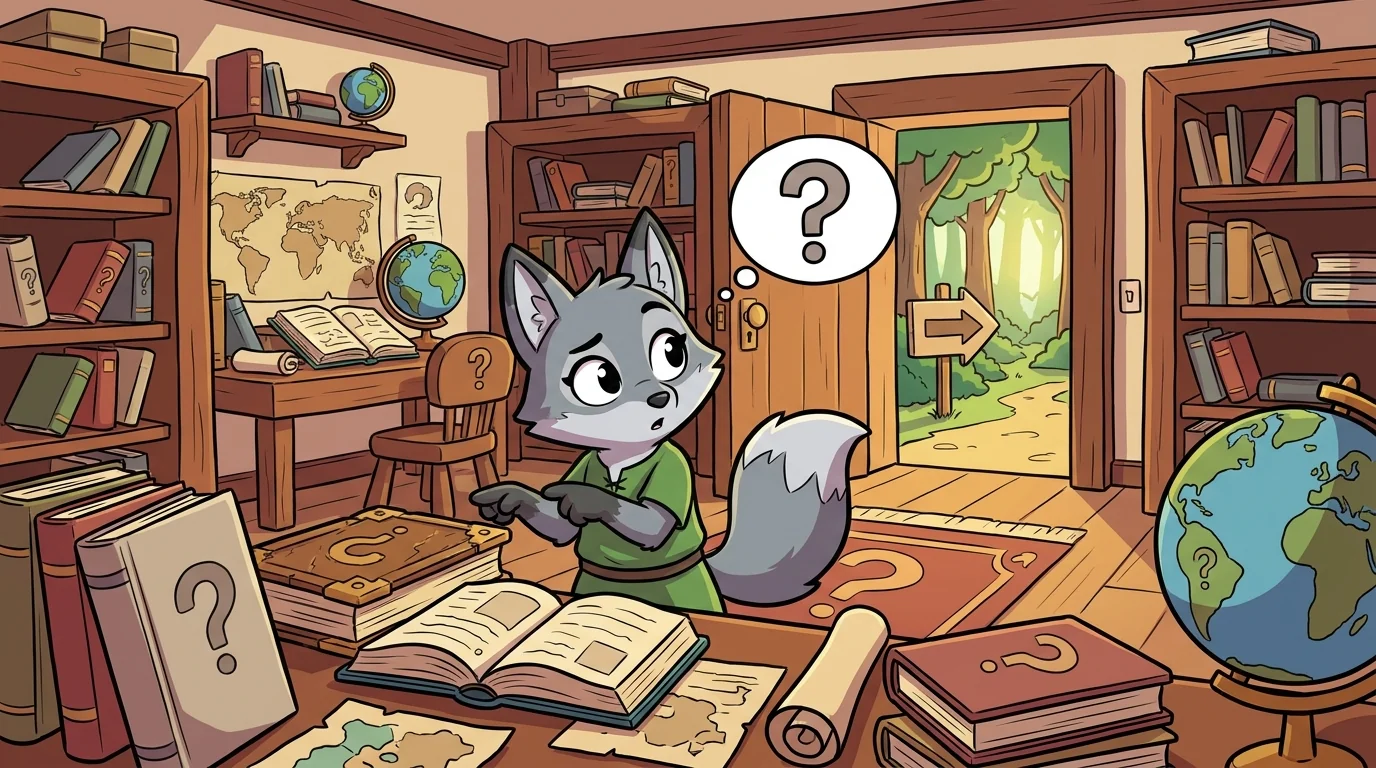
Aska was a grey fox with a curious tilt to her head and a favorite word: "Why?" She believed that learning starts not with an answer, but with a good QUESTION — and then with finding a source you can trust to answer it.
"A good question," Aska said, "opens a door. A good source walks you through it."
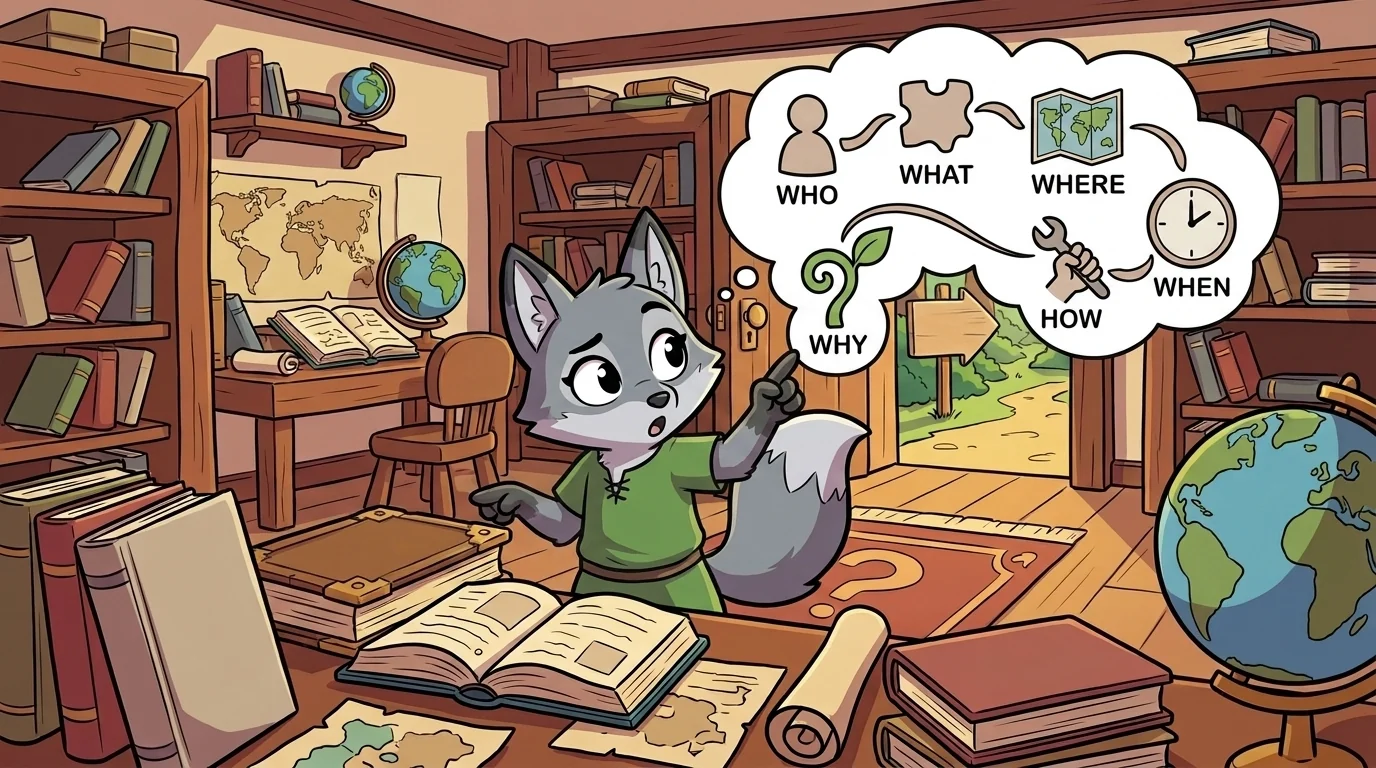
A young inquirer wondered about the pond in Maple Hollow. "Ask a good question first," said Aska. "Not 'yes or no' — open it up. WHAT lives in the pond? WHY does it dry up in summer?" The inquirer tried: "What animals live in our pond?" Aska's ears perked. "Now THAT's a door worth opening."
Good questions start with who, what, where, when, why, how.
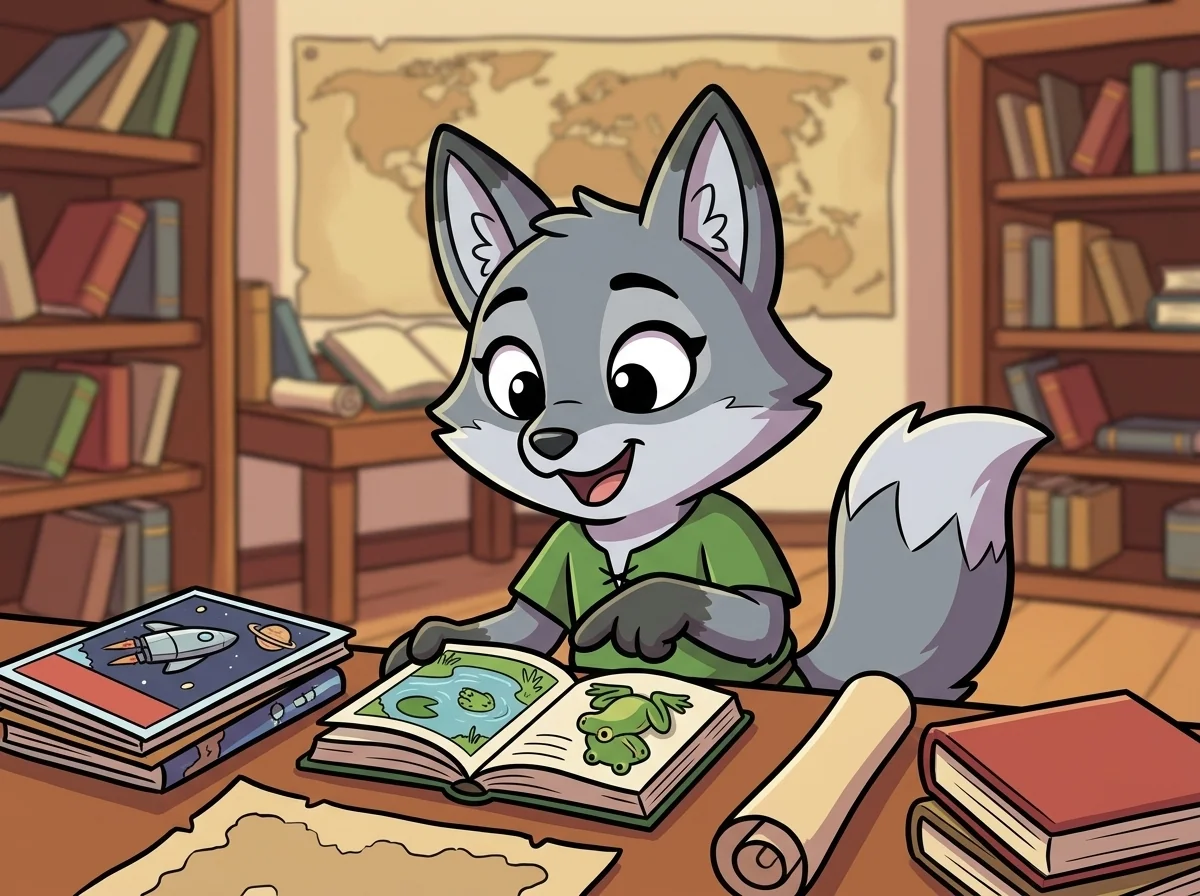
"Now — where would you look for the answer?" Aska laid out choices: a nature guide about the pond, a comic about space, a cookbook. The inquirer picked the nature guide. "Yes! Match the SOURCE to the question. A space comic won't tell you about pond frogs."
A source is only useful if it's ABOUT your question.
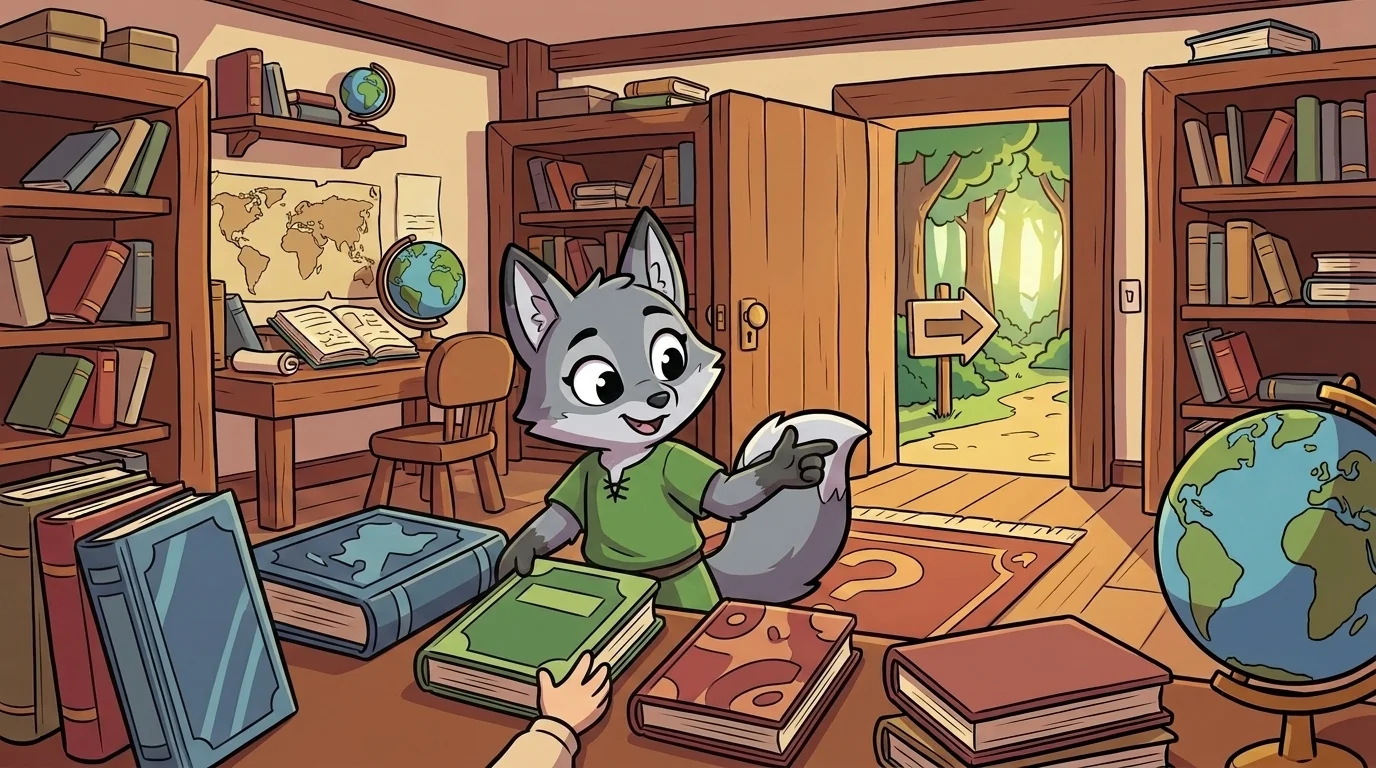
Aska also taught FACT vs OPINION. "'The pond has frogs' is a fact — you can check it. 'The pond is the prettiest place' is an opinion — it's what someone feels." A lab-mate wasn't sure which was which. Aska smiled. "Look for feeling words — 'best,' 'prettiest.' Those signal opinion. No shame in checking!"
Knowing fact from opinion is how you weigh what a source says.
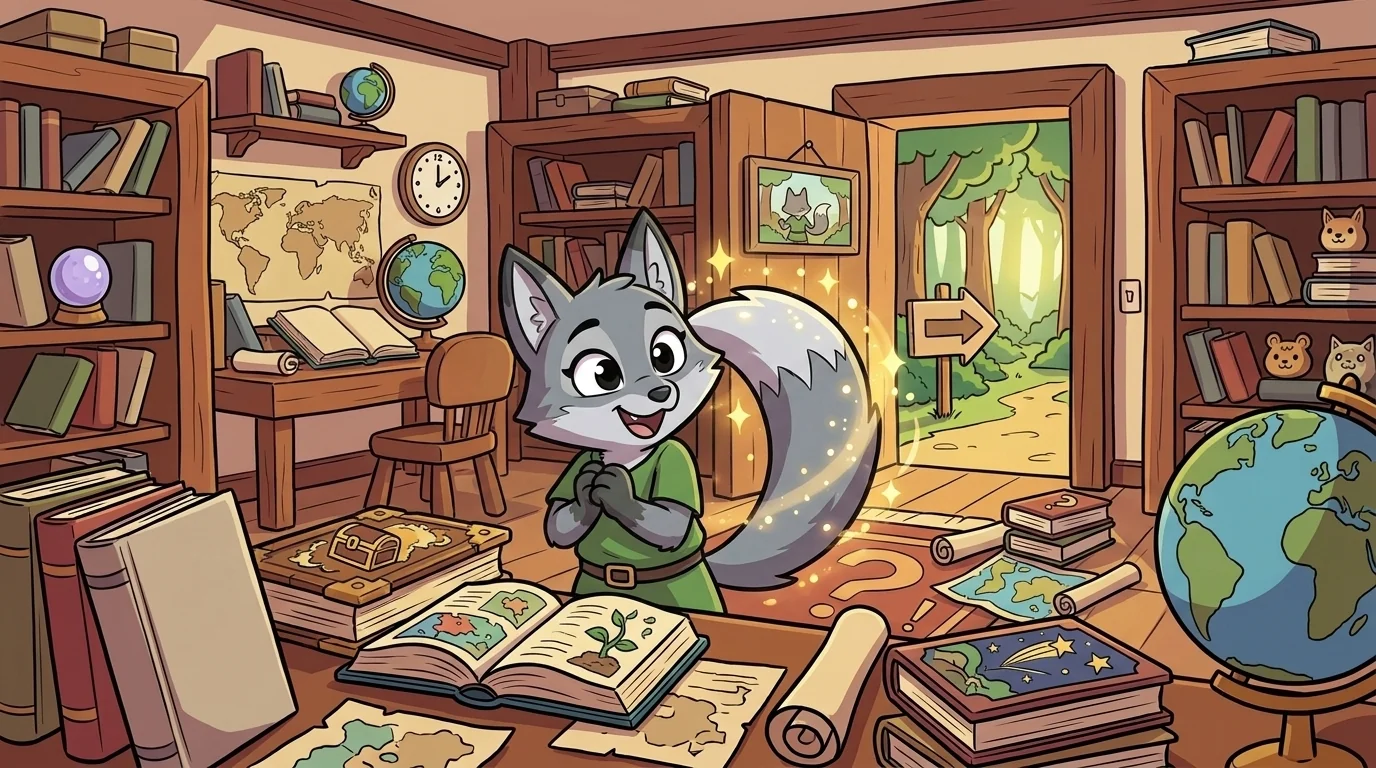
By the end, the inquirer had a good question, a trustworthy source, and a real answer.
"I found out for myself!" she said.
Aska's tail curled, warm with delight. Questions had once felt like admissions of not-knowing to her inquirers. But teaching them that a good question is the START of learning — and that a trusted source is how you answer it — turned curiosity into a superpower. And finding out for yourself, Aska knew, is the best kind of knowing.
Hear it as an audio drama
A short play starring Aska, from CompassQuest. Different voices, same idea. Listen any time after you read.
Loading audio…
Read the drama script
- Narrator: From Spark and Anvil and Compassquest — this is Aska, in chapter 1 of the Compassquest cast.
- Narrator: This drama uses an AI-generated voice. Voiced via Gemini 2.5.
- Narrator: Aska is a quick little fox who loves questions — and knows not to believe just anything she hears.
- Aska: Two things make you a good thinker: ask a good question, and CHECK who's telling you the answer.
- Narrator: A young rabbit heard a rumor that the river had turned purple.
- Rabbit: Somebody said the river's purple! Is it true?
- Aska: Good question to ask! Now — WHO said it? Did they see it themselves, or just hear it?
- Rabbit: They... heard it from someone else.
- Aska: Then let's check a better source — let's go LOOK at the river ourselves.
- Narrator: They went to the river. It was blue as ever.
- Rabbit: It's not purple at all!
- Aska: See? Ask your question, then check the source. Someone-said-so isn't proof. Seeing, or a source you trust, is.
- Narrator: The rabbit started asking "who says?" about everything.
- Aska: Ask a good question, check the source. That's what makes Aska, Aska.
- Narrator: You've been listening to a Spark and Anvil chapter, written by the Spark and Anvil writing team for ages 9 to 14.
- Narrator: Spark and Anvil is a 501(c)(3) public charity. Apps stay free forever.
- Narrator: Curriculum aligned to Common Core and Next Generation Science Standards.
- Narrator: Released under Creative Commons BY-NC-SA 4.0 for educational reuse. Visit Spark and Anvil for the full transcript.
Reading together with a grown-up? A card for the grown-up
For the grown-up: ask one question, then wait. When they answer, add one word to what they said. Tap the button when they have said something — that is one turn each, a circle. Nothing is recorded or kept.
Let them finish it
Say “Aska asks a good question first, then checks whether …” and stop. Let them finish it.
Now wait. Count slowly to five in your head. Their answer is worth the quiet.
Circles together: 0
The CompassQuest ensemble
Aska is one of the friends in CompassQuest. Each friend shows you one idea by how they act; meet them all and you have the whole subject.
-
Cardi
Geography / maps — a cardinal who reads the map and points the way (N/E/S/W); reading the map IS spatial reasoning
-
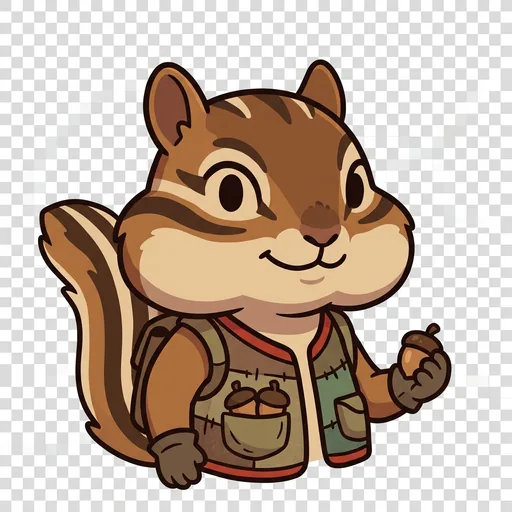
Traida
Economics — a chipmunk who trades acorns and chooses under scarcity; the trade-off IS economics
-
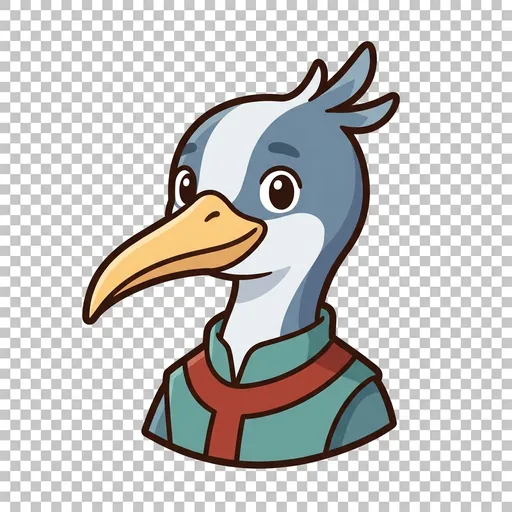
Justi
Civics — a heron who sets the fair rule and community roles; the fair rule IS civics
-
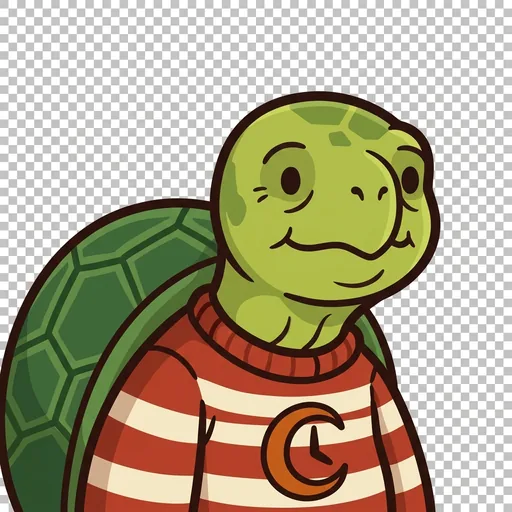
Chrona
History / chronology — a tortoise who lines up events oldest → newest; sequencing time IS chronology
-
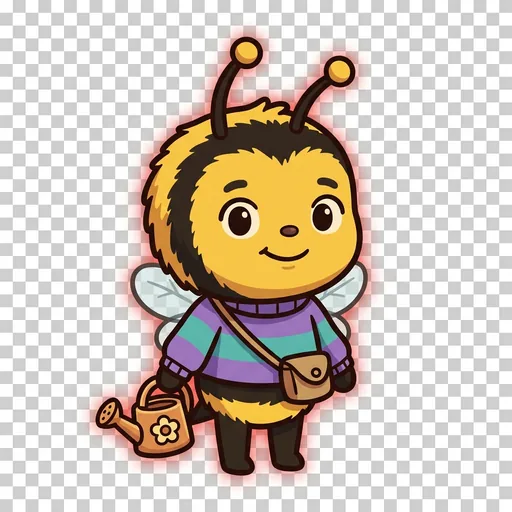
Acto
Informed action — a honeybee who turns what she learned into a helpful action for the hive; acting IS civic participation
-
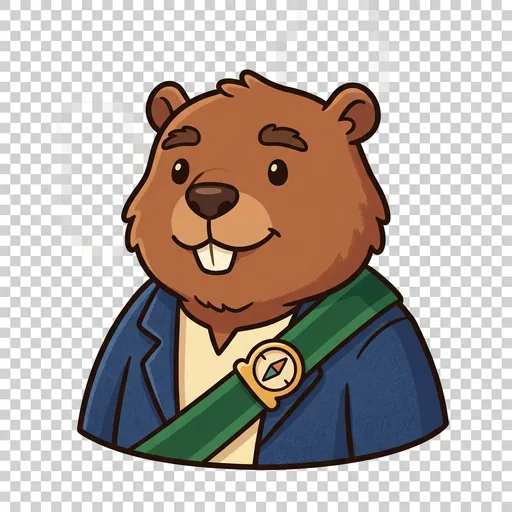
Mayor Cobb
The community-hall keeper — a steady beaver who frames each inquiry and never shames a wrong guess