Reeve
CROSS-REFERENCING / CORROBORATION
Loading audio…
Press play to listen along. The line being read lights up as you go.
Show full transcript
Loading transcript…
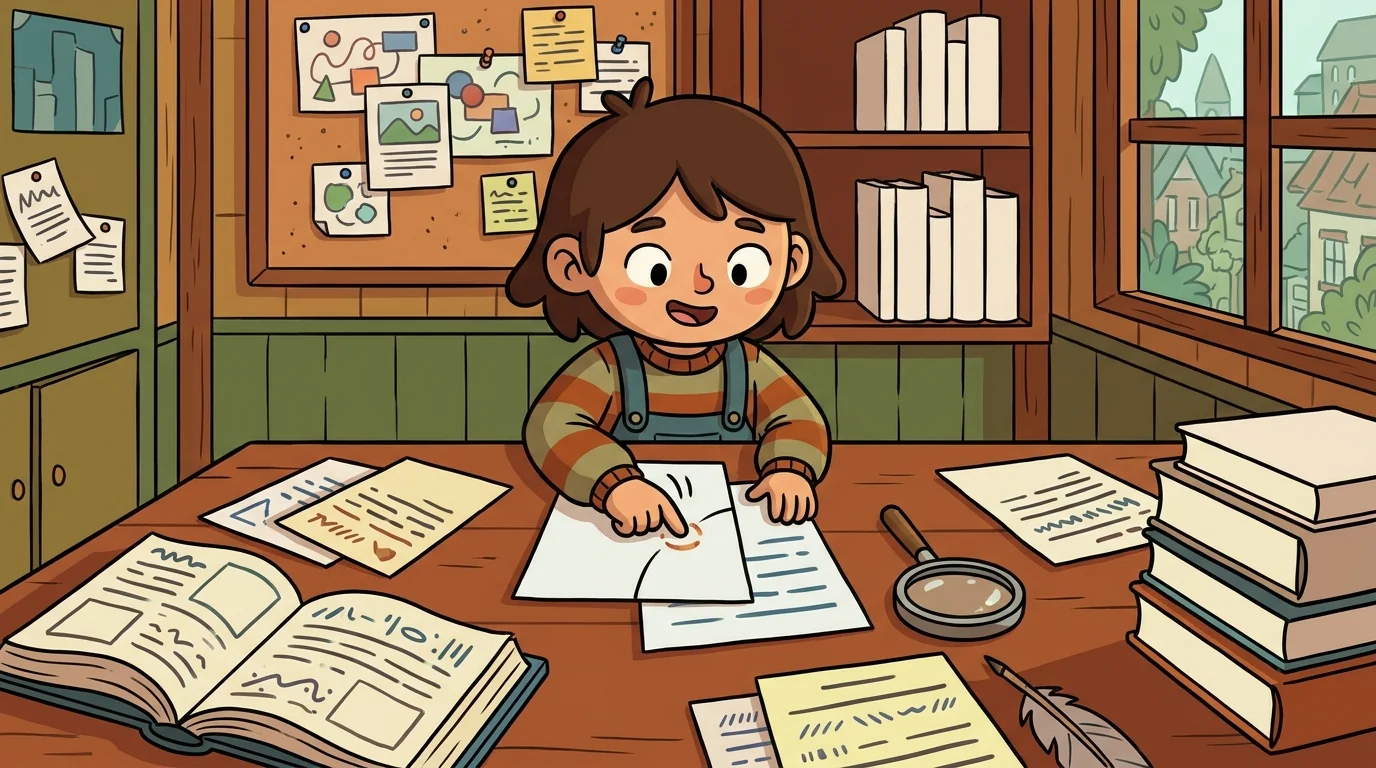
Reeve never believes anything the first time she hears it. She believes it the second time — but only if the second time comes from somewhere the first time never touched.
Her desk is covered in what looks like chaos: three, four, five different accounts of the same small event, laid out in a row. A note from one person. A logbook from another. A scrap someone else scribbled. She reads across them, left to right, like reading one sentence written in five different hands. "One story is just a story," she says, sliding two pages together where they overlap. "But two stories that never met, saying the same thing?" She taps the spot where they agree. "Now we're getting somewhere. And two stories that disagree —" she taps a mismatch and her eyes light up — "that's not a problem. That's the door."
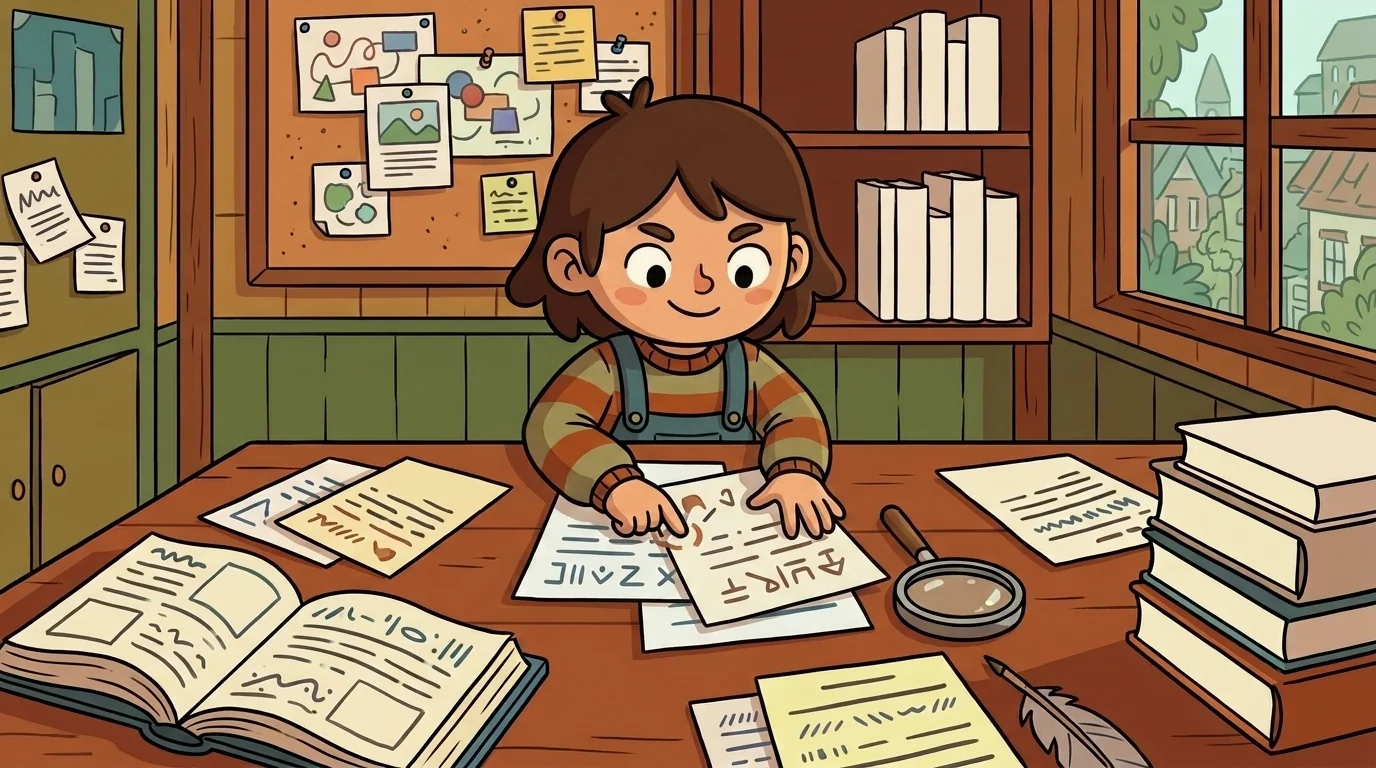
Reeve grew up as the middle child of a big family, which meant she spent her whole childhood being told five different versions of who started it. She learned fast that no single account was the truth — each person's story was shaped by where they were standing and what they wanted to be true. But she also learned something more useful: when two siblings who weren't on the same side happened to agree on one detail, that detail was almost always real. Nobody had a reason to invent it. It survived because it happened.
"A fact that only lives in one place is fragile," she says. "It could be a mistake, a lie, a bad memory — you can't tell. But a fact that shows up in two places that never coordinated?" She spreads her hands. "That fact had to earn its way into both. Agreement across sources that didn't talk to each other — that's about as close to solid as an outsider ever gets."
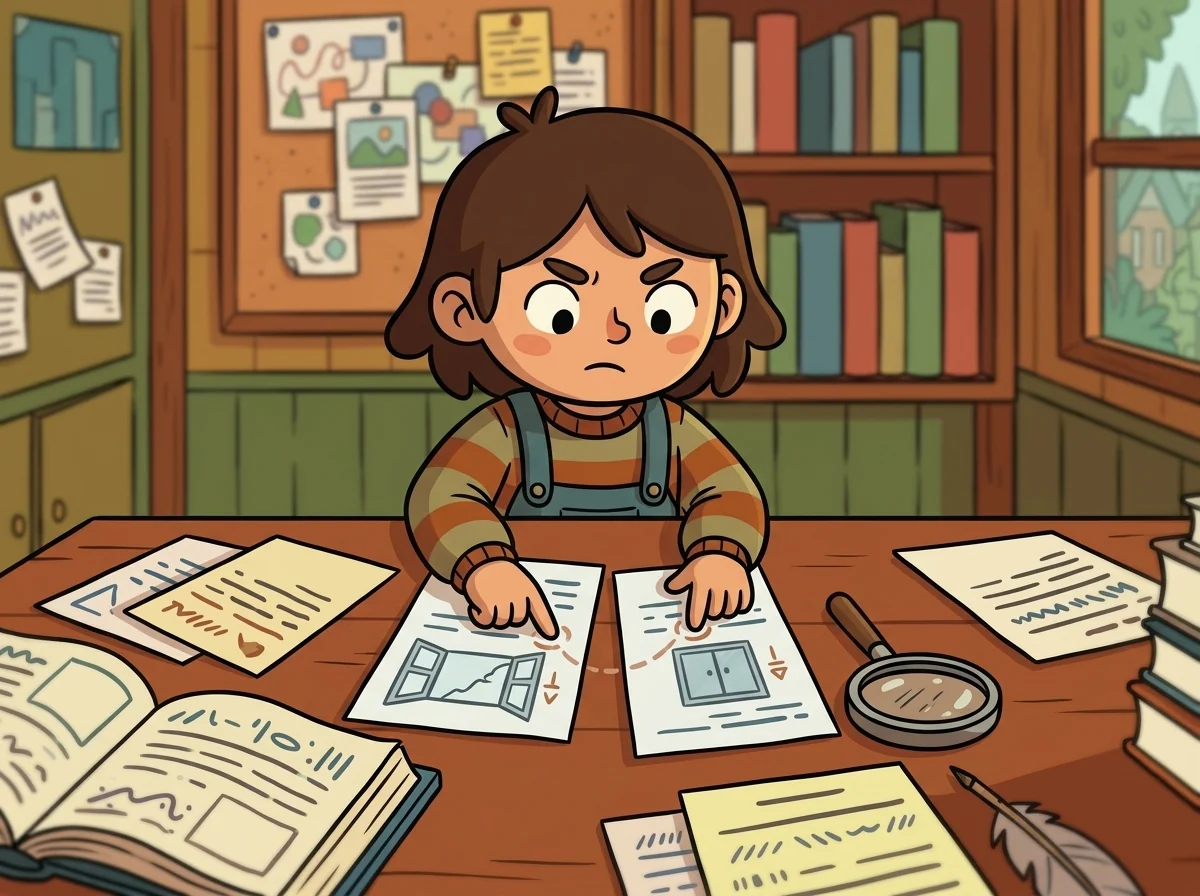
She came to the DeduceQuest academy after Deducia, the host, watched her settle a schoolyard dispute not by asking who was lying, but by finding the one detail three arguing kids had all mentioned without noticing. On her first day the head gave her a puzzle: two witness statements about a missing pastry, each internally sensible, and asked her which to believe. Reeve didn't pick one. She laid them side by side and drew a line down the middle. "This one says the window was open. This one says it was cold and the window was shut. They agree on everything else — the time, the room, the smell." She tapped the single disagreement. "So I don't need to know who's lying. I need to know about the window, because that's the only place their stories fork, which means the answer is hiding right there." The head, who had watched apprentices waste hours deciding which witness "seemed nicer," said quietly, "You didn't choose a story. You found the seam between them."
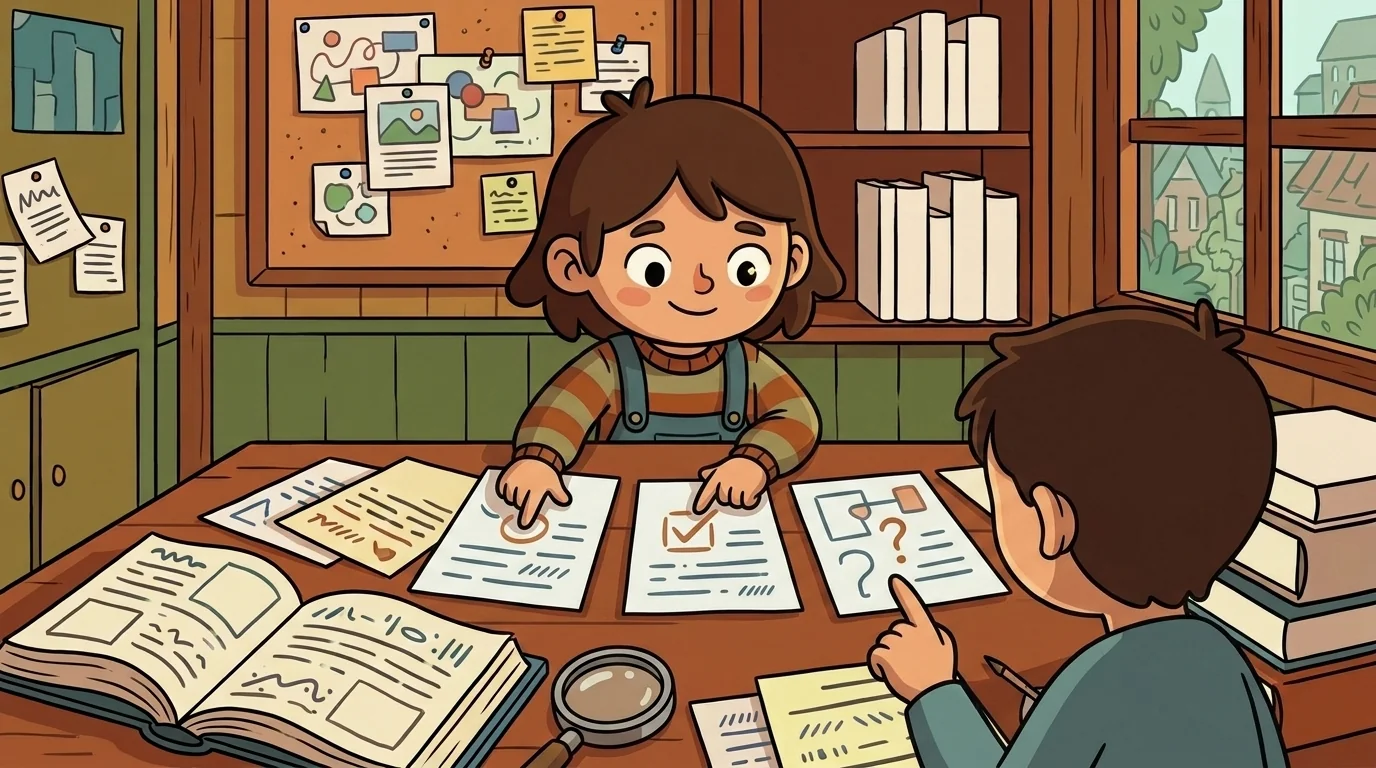
In her workshop she teaches students to stop trusting single sources. A boy came in frustrated: "I looked it up and got the answer, but it was wrong, and now I don't trust anything." Reeve nodded like he'd just described growing up. "Good," she said. "You shouldn't trust one lookup. One source is a rumor with good posture." She handed him the same question and three different references. "Now check all three. Where they agree, believe it. Where one disagrees with the other two —" "—that's where I look closer?" "That's where you live for a while," Reeve said. "The lonely disagreement is either the one source that's right when the others copied the same mistake, or the one that's wrong. Either way, it's the most interesting thing on the table. Boring facts agree quietly. It's the arguments between your sources that teach you something."
The boy compared the three, found that two agreed and one was an old outdated version, and — for the first time — felt like he'd earned the answer instead of just receiving it.
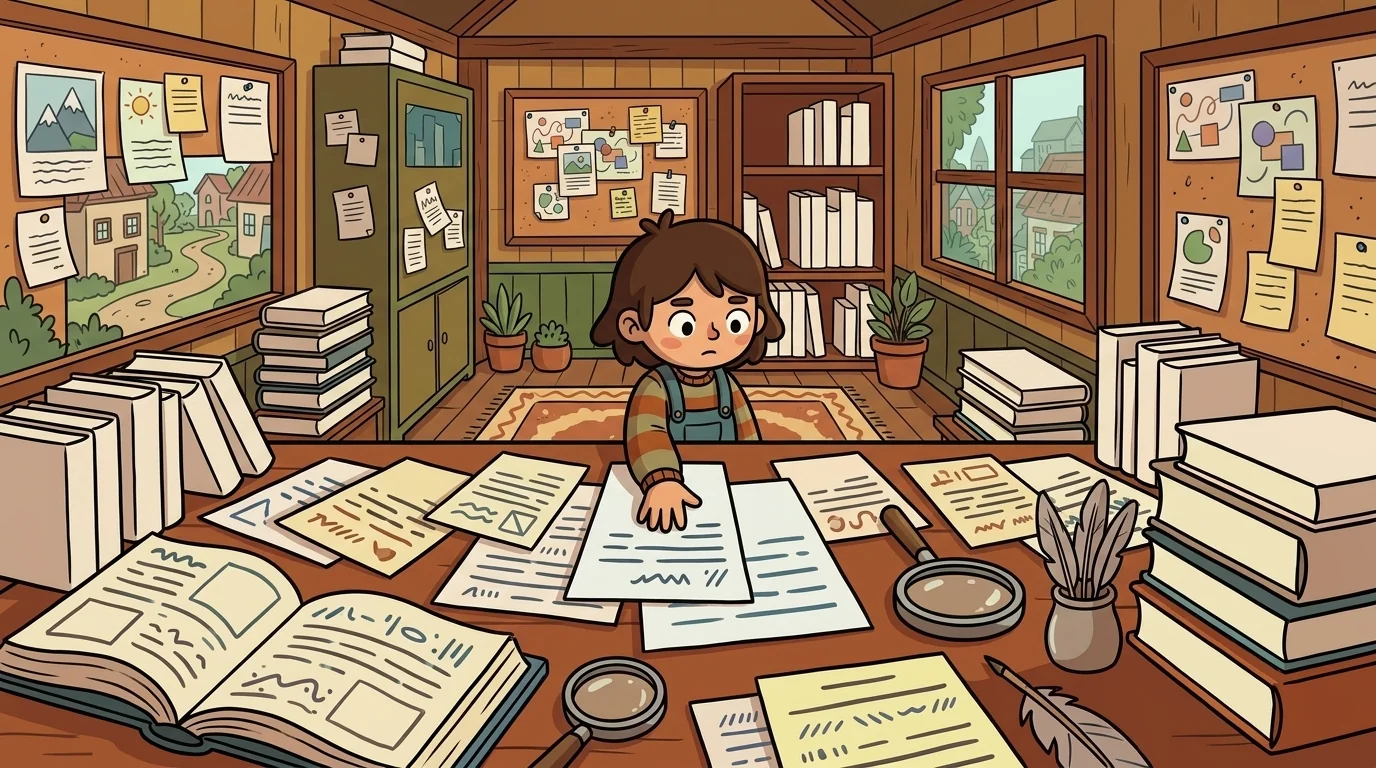
Later the boy asked the question. "But what if all my sources are wrong the same way? What if they agree because they all copied each other?"
Reeve went still, the way she did when someone asked the real question. "That," she said, "is the trap, and you just found it yourself. Agreement is only strong if the sources are independent — if they didn't get it from each other. Three websites that all copied the same original aren't three sources. They're one source wearing three coats." She tapped her desk. "So before I trust an agreement, I ask: did these two actually see it separately, or did one just repeat the other? A witness and a logbook that were written in different rooms by different people — that agreement is gold. Three kids repeating what the loudest kid said — that's not corroboration, that's an echo." She smiled. "The whole skill is telling a chorus of real voices apart from one voice in a hall of mirrors."
The boy went home and, that night, when his little brother and his best friend — who had never met — both independently mentioned the same odd detail about a story he'd doubted, he felt the specific, quiet click of a thing becoming true, and understood that he'd just watched two roads meet.
Hear it as an audio drama
A short play starring Reeve, from DeduceQuest. Different voices, same idea. Listen any time after you read.
Loading audio…
Read the drama script
- Narrator: From Spark and Anvil and Deducequest — this is Reeve, in chapter 1 of the Deducequest cast.
- Narrator: This drama uses an AI-generated voice. Voiced via Gemini 2.5.
- Narrator: Reeve is the academy's cross-referencer. When a puzzle gives you clues from many different places, Reeve is the one who lays them side by side.
- Reeve: One clue alone can lie, or just be mistaken. But clues from separate sources — a witness, a note, an old record — those you can lay next to each other. Where they agree, the truth gets strong. Where they disagree, that's where the real question is hiding.
- Narrator: Reeve almost never trusts a single source. Not out of suspicion — out of care.
- Reeve: If one map says the bridge is north and one traveler says north too, and they never spoke to each other — now I believe it. Two independent yeses is worth far more than one loud yes.
- Narrator: When Reeve was learning, he once solved a whole case on a single confident witness. He was so sure. And he was completely wrong.
- Reeve: The witness wasn't lying. She just remembered it wrong. One source, no crosscheck — I built a tower on one leg, and it fell. After that, I always ask: does anything ELSE say this too?
- Narrator: But the disagreements are what Reeve loves most.
- Reeve: When three sources agree and one contradicts them — don't just throw out the odd one. Ask why. Maybe it's wrong. Or maybe it knows something the other three don't. The contradiction is a door. Behind it is usually the answer.
- Narrator: A girl had two clue-cards that flatly disagreed and wanted to pick the one she liked.
- Reeve: Don't pick your favorite. Lay them both down. This card says the thief was tall. This one says short. Now — what does a THIRD source say? The footprints. Small. So the "tall" card is the one to question. You didn't guess. You let the sources vote.
- Narrator: The girl saw it — the answer had been sitting right at the spot where the clues crossed.
- Reeve: Never one source. Lay them side by side. Agreements make it strong; disagreements show you where to look. The truth lives at the crossing points.
- Narrator: You've been listening to a Spark and Anvil chapter, written by the Spark and Anvil writing team for ages 9 to 14.
- Narrator: Apps stay free forever.
- Narrator: Curriculum aligned to Common Core and Next Generation Science Standards.
- Narrator: Released under Creative Commons BY-NC-SA 4.0 for educational reuse. Visit Spark and Anvil for the full transcript.
The DeduceQuest ensemble
Reeve is one of the friends in DeduceQuest. Each friend shows you one idea by how they act; meet them all and you have the whole subject.
-
Cogent
Constructing explanations: telling deductive apart from inductive reasoning
-
Contra
Proof by contradiction: assume the opposite and watch it break
-
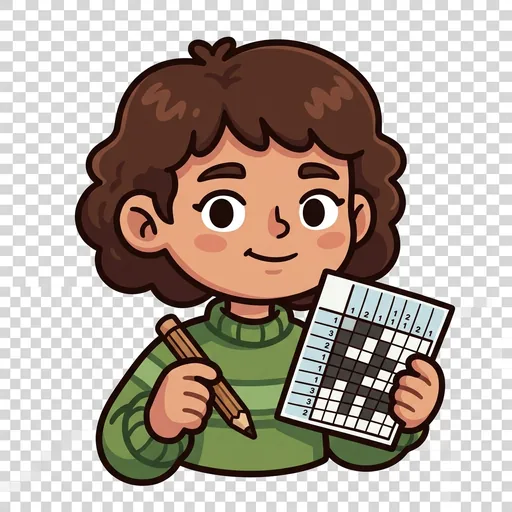
Nona
Nonograms: filling a hidden picture from number clues, cell by cell
-
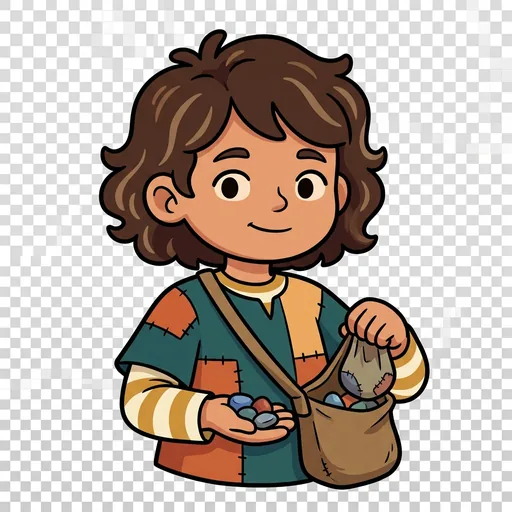
Odds
Probabilistic reasoning: choosing well when you cannot be certain
-
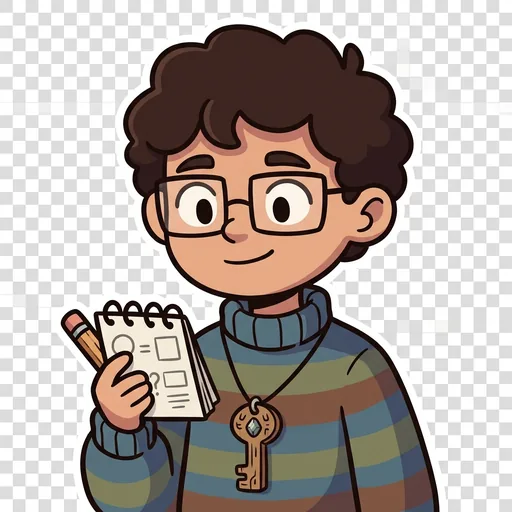
Rulewright
Guess-the-rule induction: form a hypothesis, then test it
-
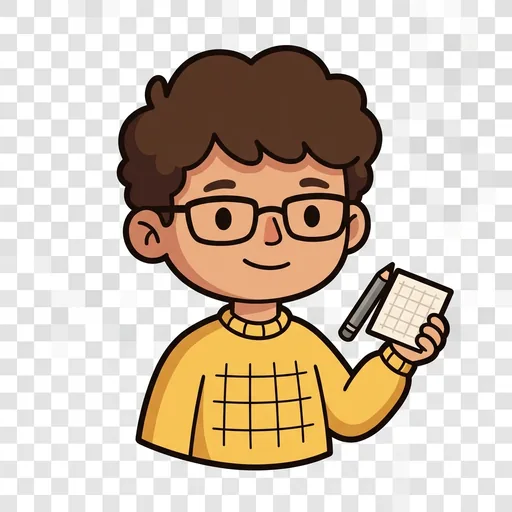
Tablo
Logic-grid deduction: eliminating possibilities in a grid
-

Vary
Controlling variables: changing one thing at a time
-
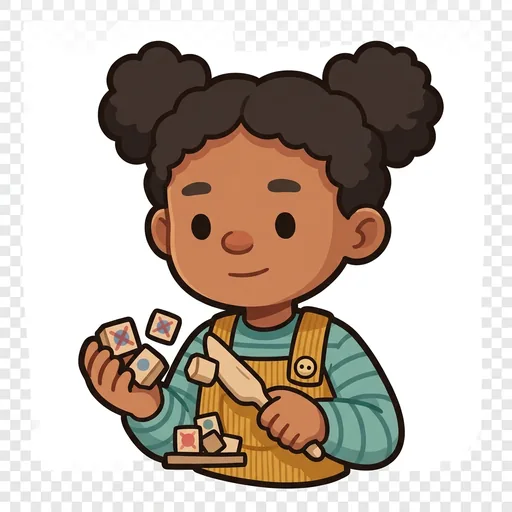
Whittle
Code-narrowing: you never hunt for the answer, you narrow toward it