The Case (Whittle · Tablo · Reeve)
THE DEDUCTION FAMILY
A story read by The Case (Whittle · Tablo · Reeve)
Loading audio…
Press play to listen along. The line being read lights up as you go.
Show full transcript
Loading transcript…
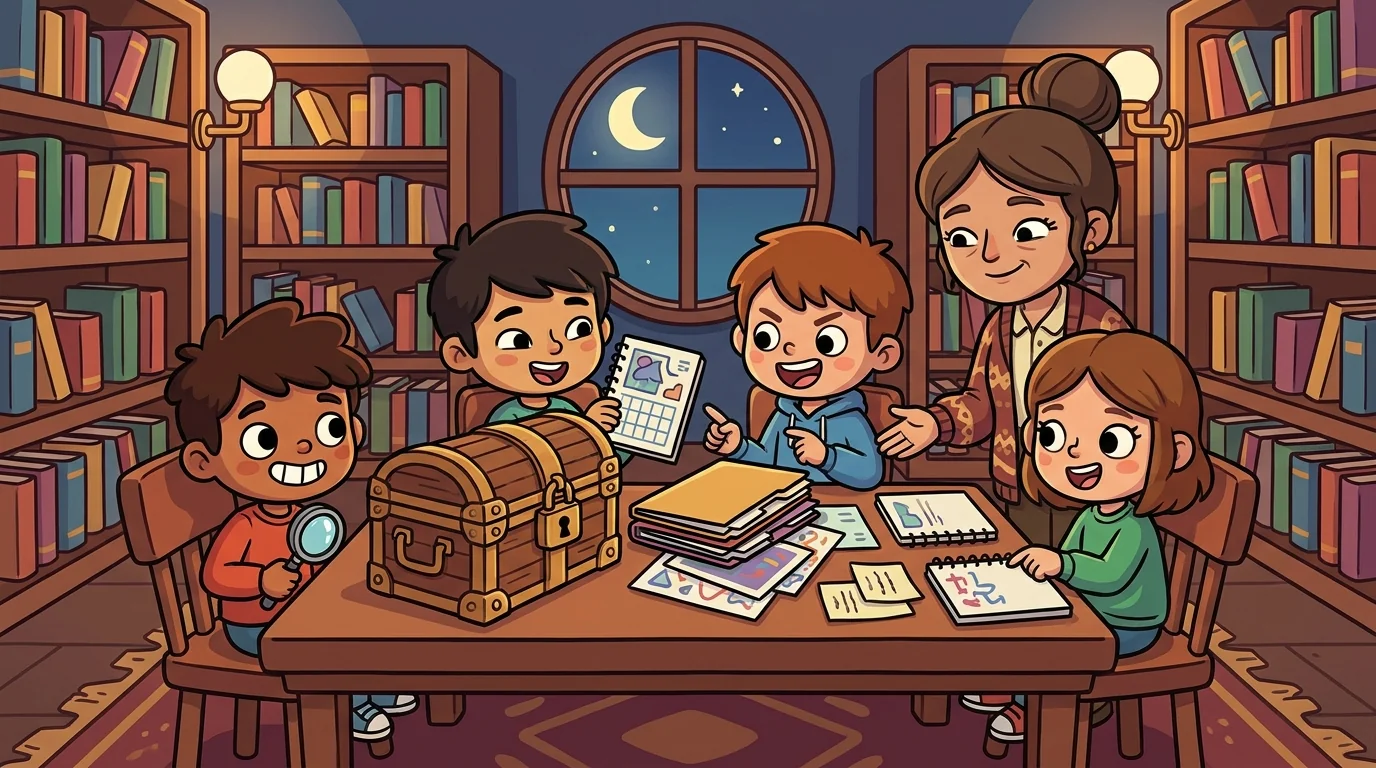
Deducia, the host, set a locked box on the table, and told three of her sharpest students that inside was the name of the person who'd been quietly rearranging the academy's library at night — and that none of them could open it alone.
"You each close in on truth a different way," she said. "Whittle, you narrow. Tablo, you eliminate. Reeve, you cross-check. This case has too many suspects for any one of you." She slid over a folder — a stack of clues, a smudged logbook, three witness notes, a list of nine suspects. "Nine names. One is our midnight librarian. Find them, together, and the box opens itself." The three of them looked at the folder, then at each other, with the particular gleam of people who love this exact kind of trouble.
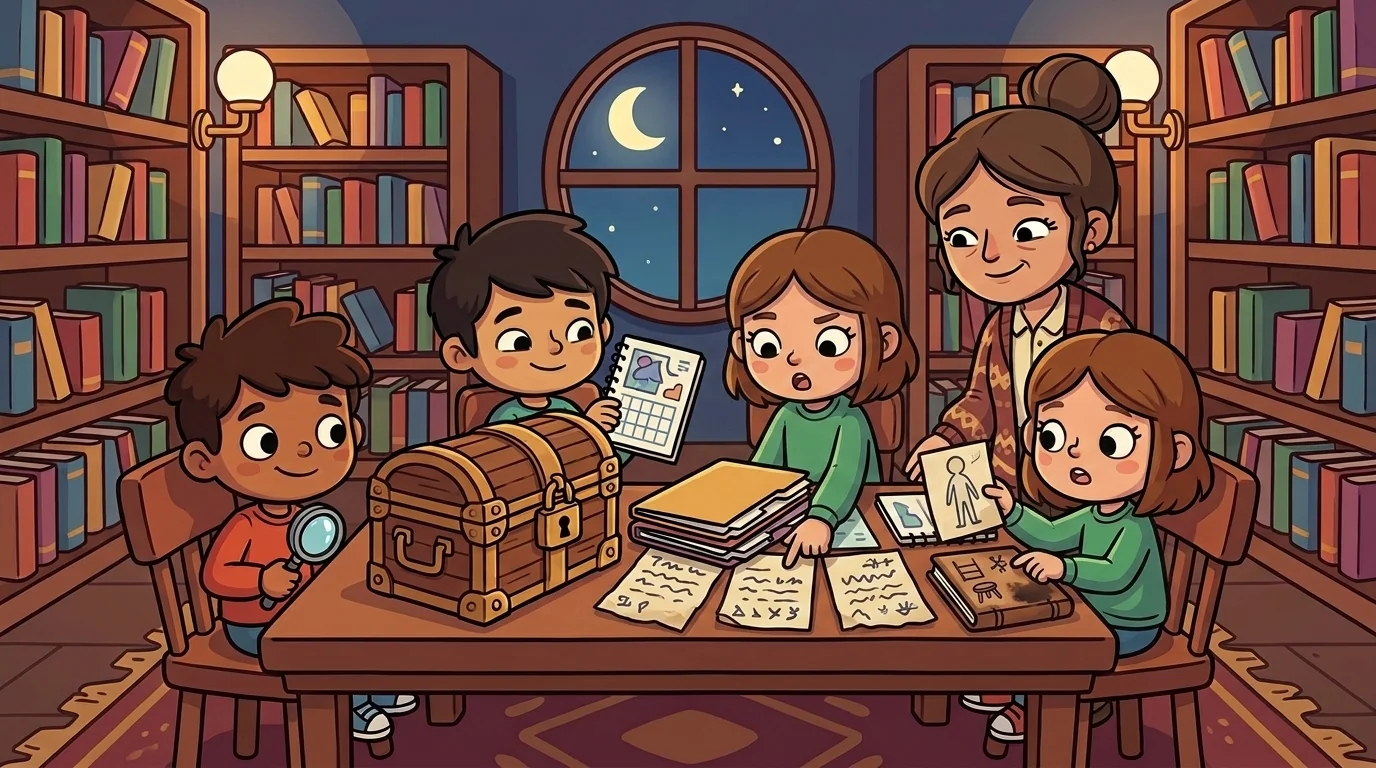
Reeve went first, because Reeve always started where the sources were. She spread the three witness notes and the logbook side by side and read across them. "Two witnesses never spoke to each other," she said, "and they both say the person moved quietly and knew exactly where things went. That agreement is real — our librarian works here or knows the library cold." She found a disagreement too: one note said "tall," the logbook implied "short enough to use the low shelves without a stool." She tapped the fork. "There. One of these is wrong, or 'tall' meant something else. Either way, height is where the sources argue — so height is a live question, not a settled fact." She'd turned a pile of accounts into two solid facts and one sharp question, and handed it to Tablo.
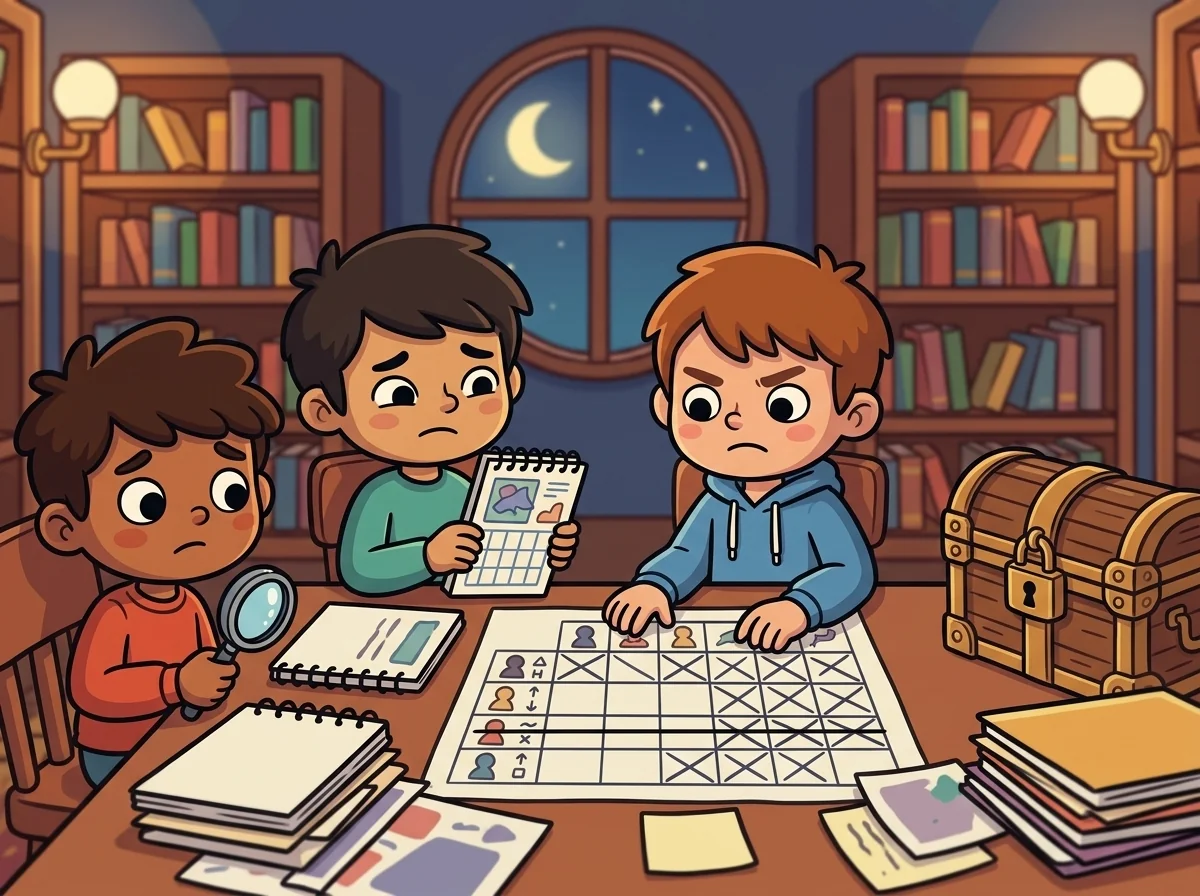
Tablo took Reeve's facts and built her grid. Nine suspects down the side; every trait across the top — works in the library, knows the shelves, height, on-site after dark. "Reeve says our person knows the library cold," she said, and drew a hard line through the four suspects who'd never set foot in it. "Gone." She crossed cells clue by clue, each elimination cascading into the next. "This one was away all week — gone. This one can't reach the low shelves or the high ones — gone." The nine became five, became three, the grid filling with crossed-off cells until — she stopped. Three suspects remained, and every remaining clue fit all three equally. "I'm stuck," she admitted. "I've eliminated everyone I can. These three are identical on every clue I have. The grid can't split them." She'd narrowed nine to three by pure elimination — and hit a wall the grid couldn't climb.
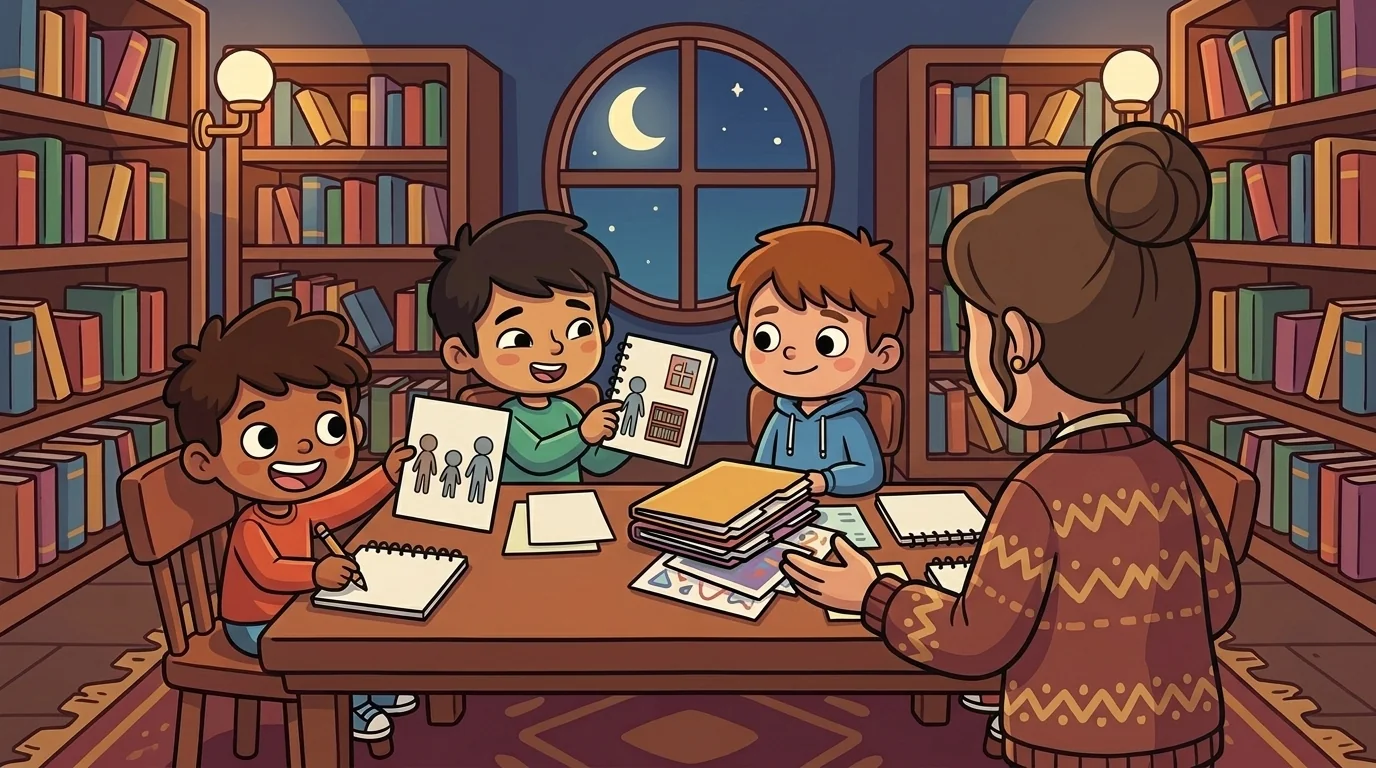
That was where it nearly stalled — and where Whittle grinned, because a wall of three indistinguishable suspects was his favorite thing in the world. "You can't tell them apart with the clues you have," he said. "So we get a new clue — and we design it to split them." He held up the height question Reeve had flagged. "Two of your three are about the same height. One is noticeably shorter. If I can find one fact about height, it doesn't just tell me about height — it cuts the three in half." He proposed a single sharp test: check which of the three could have reached the top shelf where a book had been reshelved without the stool, which was still locked away that night. "I don't need to know everything," he said. "I need one question whose answer eliminates the most suspects. One good cut beats ten random facts." They ran his single check. It cleared two suspects instantly. One name remained.
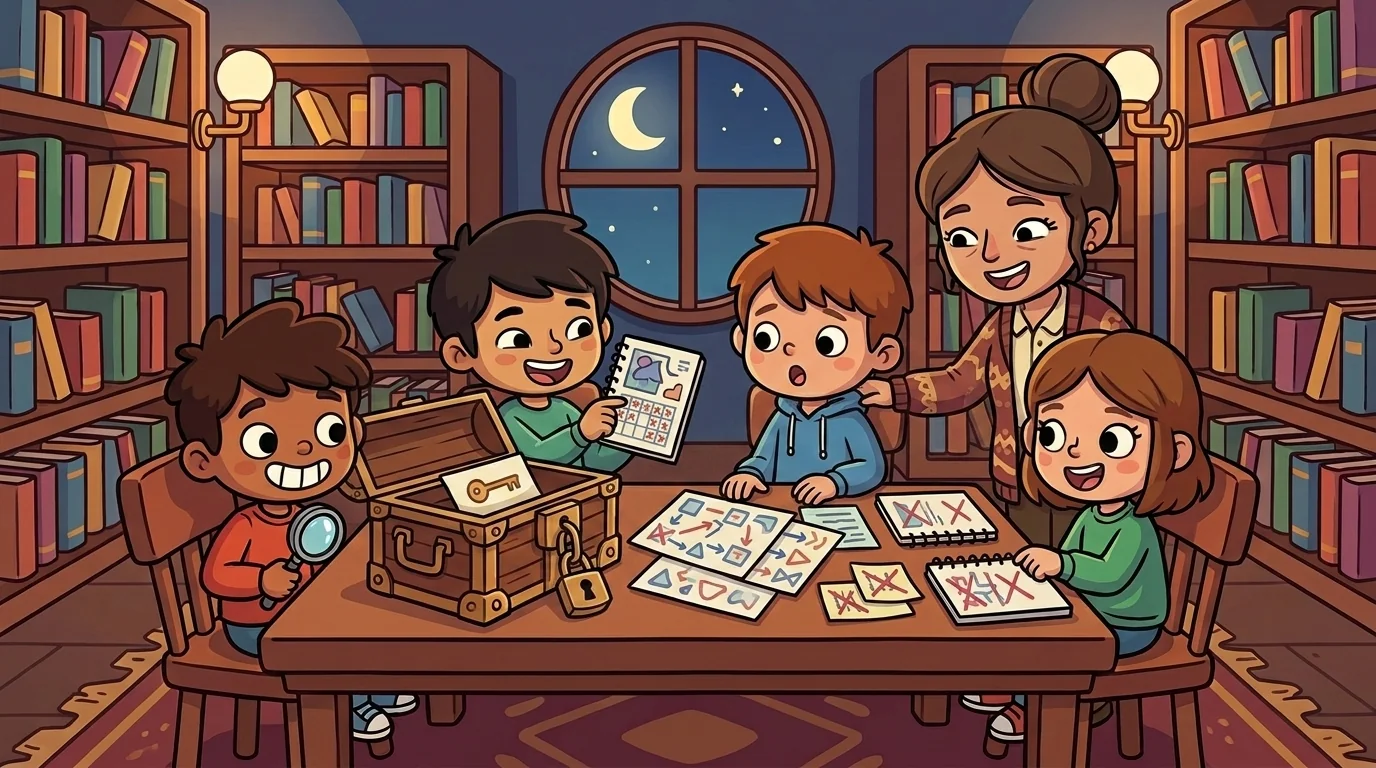
And here's the thing none of them said out loud but all three felt: no one of them could have gotten there. Reeve's cross-referencing turned a mess of accounts into solid facts but couldn't rank suspects. Tablo's grid eliminated six but stalled on the last three. Whittle's sharp cut split the final three but only worked because Reeve had flagged height and Tablo had narrowed the field to where one cut mattered. Narrow, eliminate, cross-check — each had done the part the others couldn't, and each had handed the next one a problem small enough to finish. When the last name stood alone on the grid, the locked box on the table gave a soft click and opened, and inside was a slip of paper with that exact name on it, and beneath it, in Deducia's hand: "You didn't guess me. You made it so I had nowhere left to hide."
The three of them looked at the single surviving name, then at the wreckage of crossed-off suspects and cross-referenced notes that had cornered it, and Reeve — who trusted almost nothing on one source — said, with a warmth that surprised even her, "I'd believe this one. Three of us, three ways, and it's the only name still standing." Tablo actually smiled. Whittle was already asking if they could do another.
Hear it as an audio drama
A short play starring The Case (Whittle · Tablo · Reeve), from DeduceQuest. Different voices, same idea. Listen any time after you read.
Loading audio…
Read the drama script
- Narrator: From Spark and Anvil and Deducequest — this is Whittle, in chapter 1 of the Deducequest cast.
- Narrator: This drama uses an AI-generated voice. Voiced via Gemini 2.5.
- Narrator: One evening a real puzzle landed at the academy — a locked-room case — and three of the deduction cast sat down together: Whittle, Tablo, and Reeve.
- Narrator: They reason differently. But tonight they discovered they all share one engine.
- Whittle: I'll start the way I always do — not by guessing who did it, but by ruling out who couldn't. We have four suspects. The window was latched from inside, so whoever it was had a key. Cross off anyone without one. That's two gone already.
- Tablo: Good. I'll grid the rest. Two suspects, two possible times, two rooms. Clue — the cook was in the kitchen at six. Check the cook-kitchen cell, cross off the cook everywhere else. One certainty, a whole column cleared.
- Reeve: And I'll lay the sources side by side. The butler's note says he was upstairs. The maid says she saw him downstairs. They disagree — so THAT is exactly where I look. A third source, the muddy footprints, says downstairs. Two independent yeses. The butler's note is the one to doubt.
- Narrator: Three different moves — narrowing, gridding, cross-referencing. But watch what they're really doing.
- Whittle: Wait. I'm removing codes it can't be.
- Tablo: I'm crossing off cells it can't be.
- Reeve: And I'm ruling out sources that can't be trusted. We're all... subtracting.
- Narrator: None of them was hunting for the answer. Each was clearing away everything the answer wasn't.
- Whittle: That's the shared engine! You don't find the truth by guessing it.
- Tablo: You find it by removing everything it CAN'T be —
- Reeve: — until only one possibility is left standing.
- Narrator: They looked at their three tools laid together, and the last suspect stood alone in every one of them.
- Deducia: That's the family secret. Whittle narrows, Tablo eliminates, Reeve corroborates — three doors into the same room. Whatever's left after you remove the impossible, however improbable, is the truth.
- Narrator: The case was closed. Not by a flash of genius — by three friends patiently clearing the board until only the answer remained.
- Narrator: You've been listening to a Spark and Anvil chapter, written by the Spark and Anvil writing team for ages 9 to 14.
- Narrator: Apps stay free forever.
- Narrator: Curriculum aligned to Common Core and Next Generation Science Standards.
- Narrator: Released under Creative Commons BY-NC-SA 4.0 for educational reuse. Visit Spark and Anvil for the full transcript.
The DeduceQuest ensemble
The Case (Whittle · Tablo · Reeve) is one of the friends in DeduceQuest. Each friend shows you one idea by how they act; meet them all and you have the whole subject.
-

Cogent
Constructing explanations: telling deductive apart from inductive reasoning
-

Contra
Proof by contradiction: assume the opposite and watch it break
-
Nona
Nonograms: filling a hidden picture from number clues, cell by cell
-

Odds
Probabilistic reasoning: choosing well when you cannot be certain
-

Reeve
Cross-referencing: corroborating clues against each other
-
Rulewright
Guess-the-rule induction: form a hypothesis, then test it
-

Tablo
Logic-grid deduction: eliminating possibilities in a grid
-

Vary
Controlling variables: changing one thing at a time
-
Whittle
Code-narrowing: you never hunt for the answer, you narrow toward it


