
Most popular
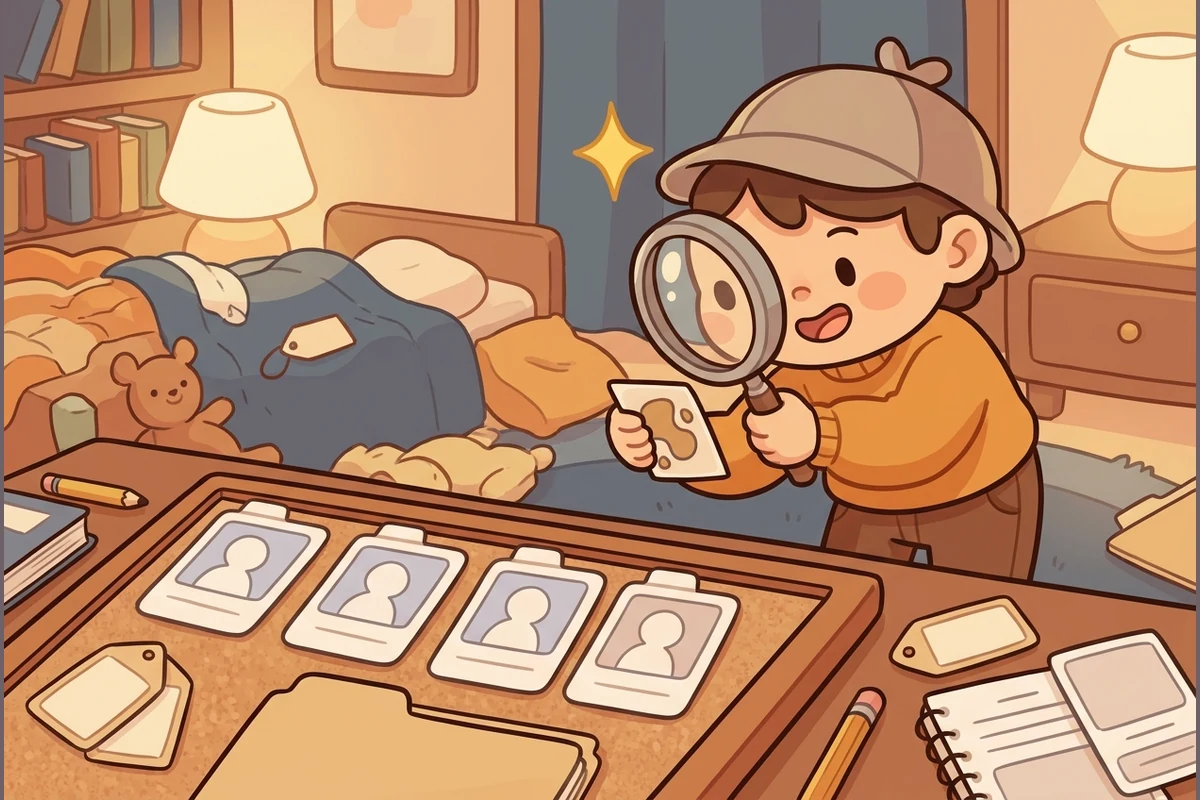 Case Files Search the scene, match each clue to a suspect, then make your accusation — 10 single-solution cases.
 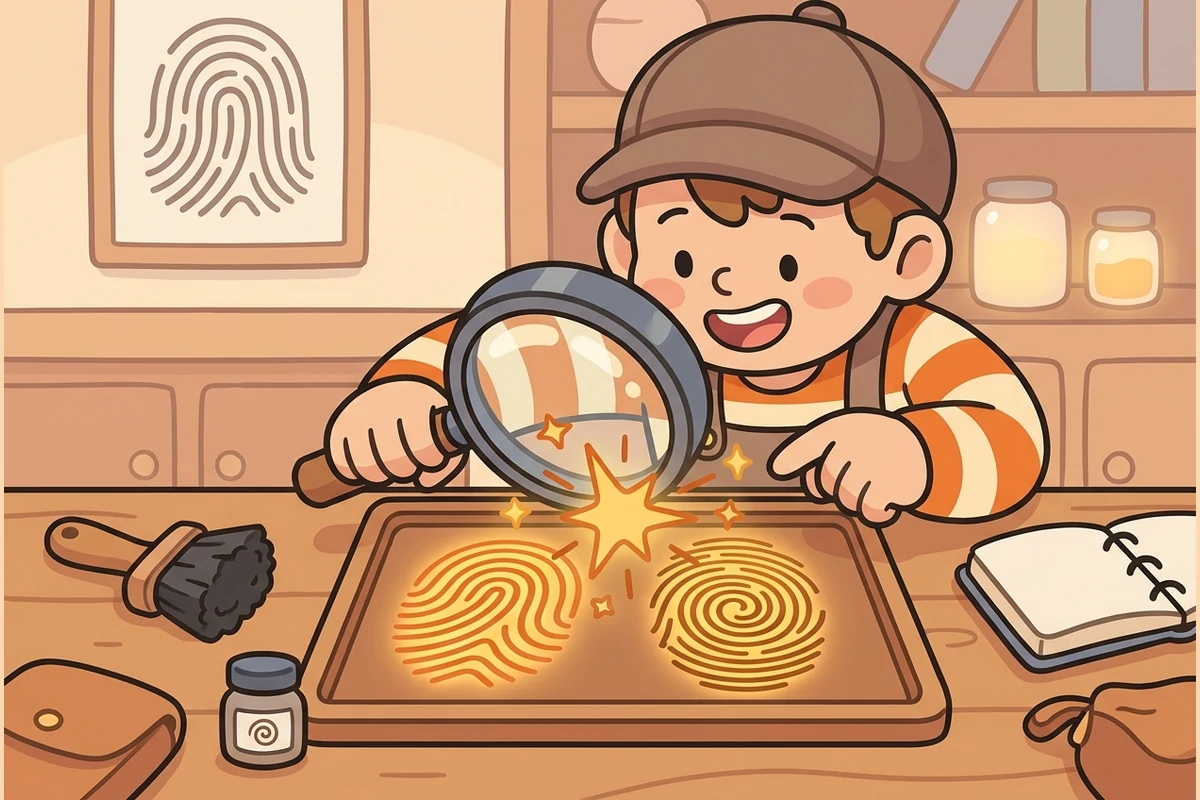 Fingerprint Lab Compare ridge patterns — loop, whorl, arch — and match the print to the right suspect.
 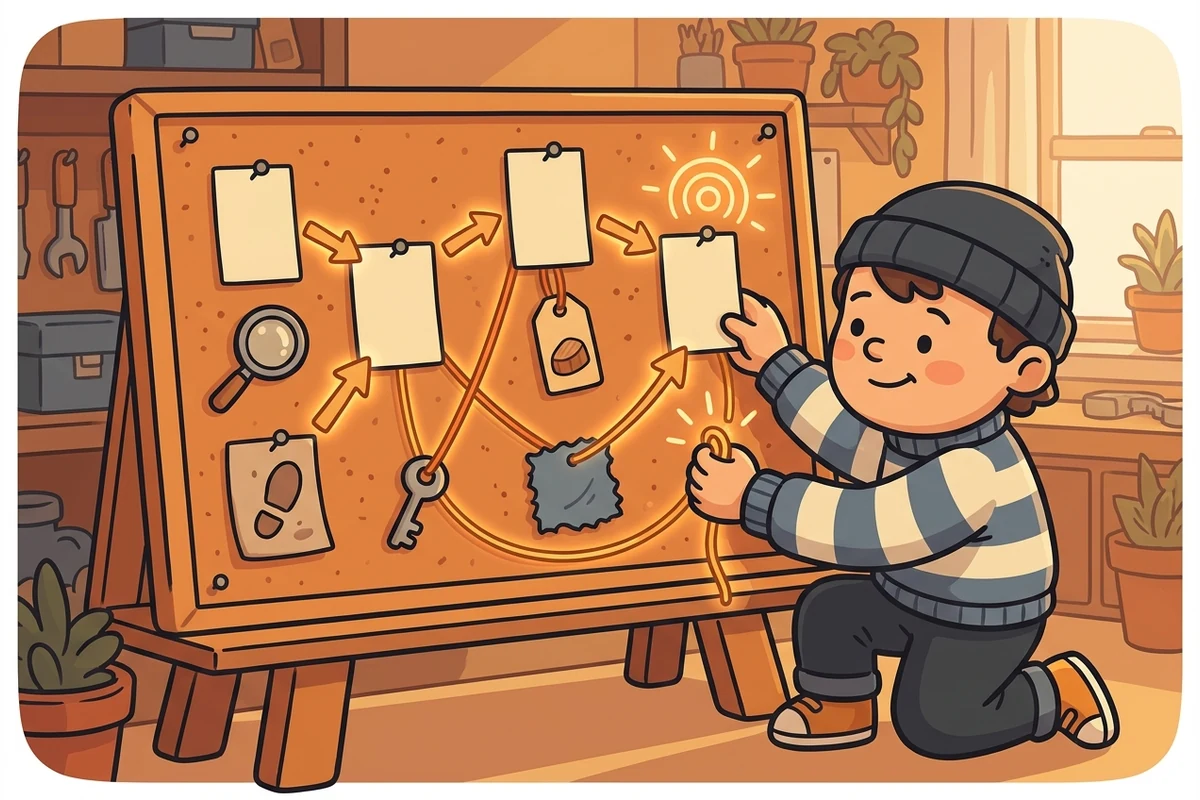 Build the Case Lay out the evidence in order — which fact leads to which, all the way to the culprit.
 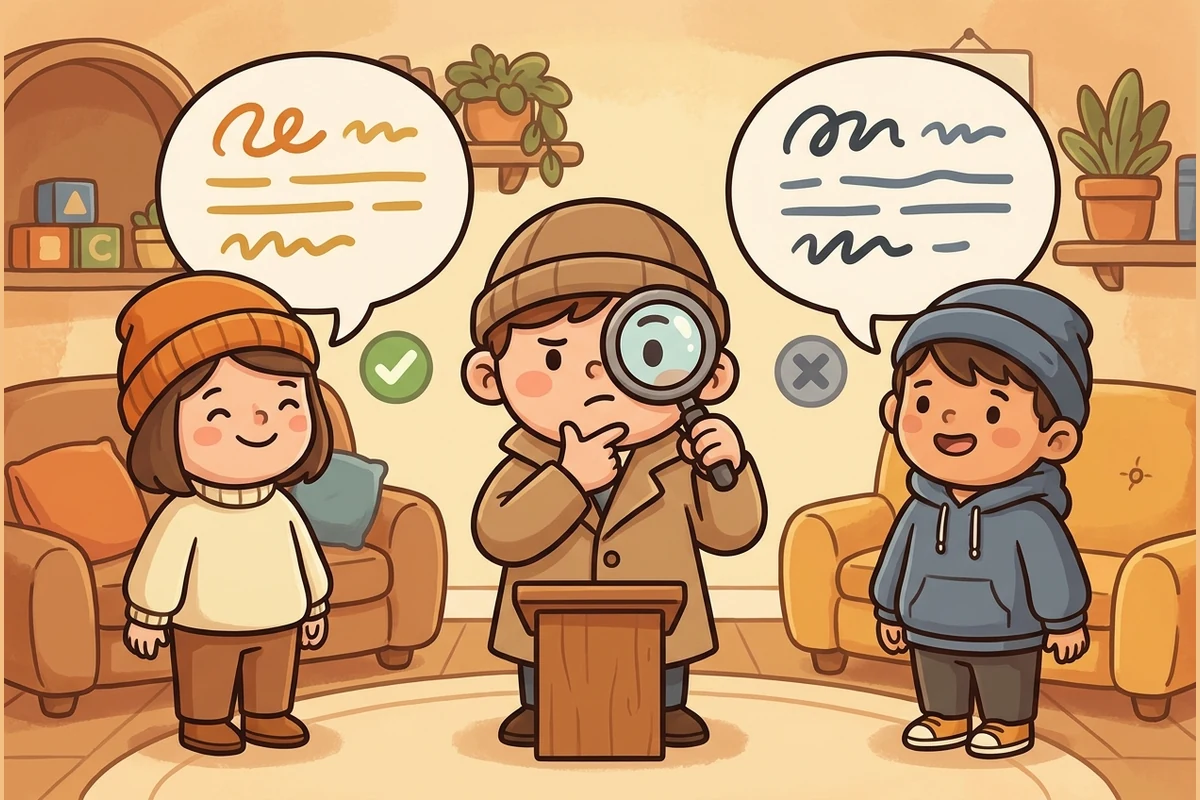 Witness Stand Weigh what each witness says — spot the contradiction the evidence exposes.
 All activities
Work the case
Case Files Search the scene for clues, match each one to a suspect in the lab, then accuse — every case has one right answer. Fingerprint Lab Compare ridge patterns — loop, whorl, arch — and match the crime-scene print to a suspect. Build the Case Chain the evidence in order — which fact forces the next — all the way to the culprit. Witness Stand Weigh what each witness says and spot the statement the physical evidence contradicts. The Deduction Grid A classic logic grid — read the clues, mark ✓/✗, watch a match cross out its row and column, and deduce the one right answer. No guessing, pure deduction.
Learn & practice
Mixed Practice A short round across the kits you have played — brought back to make it stick. SleuthLab Sprint Race your OWN best on what you already know. Timer optional, no penalty for a miss. Trick Questions Brain-teasers with a twist — spot why the obvious answer is a trap. Teach the Cast Teach a forensic method to a cast member still learning it — teaching makes it stick.
Play together
Concept Kits — 16 kits of forensic reasoning (400 questions)
Kit 1: Introduction to Forensic Science Forensic Basics · 4-5 · 25 questions Kit 2: Fingerprint Analysis Fingerprints · 4-5 · 25 questions Kit 3: Trace Evidence Trace Evidence · 5-6 · 25 questions Kit 4: Chemical Evidence Trace Evidence · 5-6 · 25 questions Kit 5: Document Analysis Document Analysis · 5-6 · 25 questions Kit 6: Biological Evidence Logical Deduction · 6-7 · 25 questions Kit 7: Digital Forensics Digital Forensics · 6-7 · 25 questions Kit 8: Case Analysis and Scientific Method Building a Case · 7-8 · 25 questions Kit 9: Observation Skills Observation & Inference · 4-8 · 25 questions Kit 10: Logical Deduction Logical Deduction · 4-8 · 25 questions Kit 11: Forensic Science Observation & Inference · 4-8 · 25 questions Kit 12: Mystery Narrative Observation & Inference · 4-8 · 25 questions Kit 13: Cross-Topic Connections Building a Case · 5-6 · 25 questions Kit 14: Real-World Applications Building a Case · 6-7 · 25 questions Kit 15: Misconceptions & Reasoning Logical Deduction · 6-7 · 25 questions Kit 16: Advanced Synthesis Building a Case · 7-8 · 25 questions
More ways to play
Same idea, another world
😄 Brain break
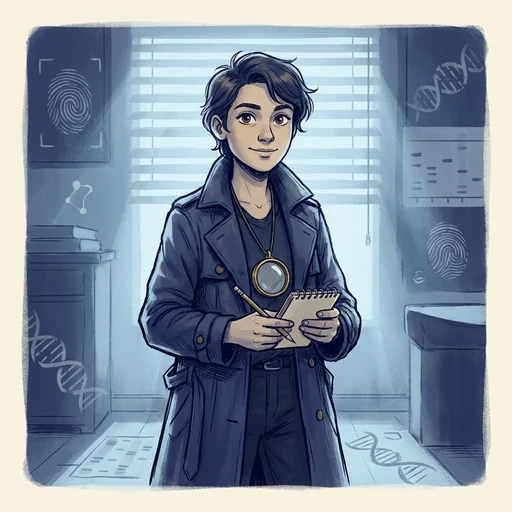
Meet the cast — the characters who teach this
-
 Loop Impression evidence — fingerprints, shoeprints, toolmarks (class vs individual evidence)
 -
 Fiber Trace evidence — fibers, hairs, paint, glass (Locard's exchange principle)
 -
 Drop Chemical evidence — chromatography, pH, spectroscopy (test-don't-guess)
 -
 Stroke Document analysis — handwriting, ink, paper (comparison methodology)
 -
 Witness Biological + digital evidence — DNA + digital footprints (statistical-match, not certainty)
 -
 Seal Chain of custody — bag it, label it, log every hand it passes through; a broken chain can't be trusted; otter with evidence bags + logbook
 -
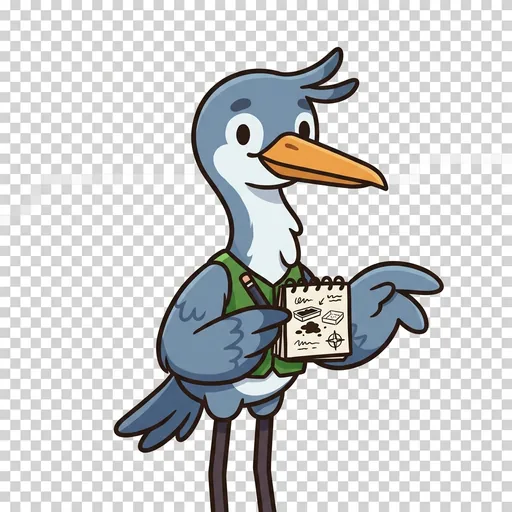 Sketch Scene documentation — record the scene before anyone touches it; the scene only tells its story once; heron with a measuring notebook
 -
 Tick Timeline reconstruction — put every event in order on the clock; the sequence is where the answer hides; mouse with a paper timeline
 -
 Branch Alternative explanations — ask 'what else could explain this?' and test each branch before choosing; squirrel with a whiteboard of possibilities
 -
 Account Testimony reliability — ask open questions and listen; memory is fragile and a confident witness isn't always correct; rabbit with a gentle notebook
Ensemble stories — the cast together
📚 Books for SleuthLab
- Storybook
- Storybook (advanced)
- Volume 1
- Volume 2
- Activity book
- Flash cards
- Joke book
- Poster
- Detective gamebook