Weigh
TAG BALANCE
Loading audio…
Press play to listen along. The line being read lights up as you go.
Show full transcript
Loading transcript…

Patter met Weigh in the meadow during a small spring picnic he had been invited to. The picnic had been attended by several creatures from the area — fox, badger, hare, owl, and one pangolin-tween with an unusual accessory. The pangolin had been wearing a small brass balance-scale on her right shoulder. The scale had been tilting visibly throughout the picnic. When one creature talked too much at lunch, the scale had tilted one way. When another creature stayed silent too long, the scale had tilted the other way. The scale had been responding to the rhythm of the conversation.
Patter had said: "Your scale is responding to talk."

The pangolin had said: "Yes. I am Weigh. My scale measures tag balance. Too many tags — the scale tilts heavy. Too few tags — the scale tilts light. Balanced tagging keeps the scale level."
Patter had been fascinated. He had not previously thought about dialogue tag balance as something physically measurable. But Weigh's scale was visibly tracking it. When a writer over-tagged dialogue ("he said." "she said." "he replied." "she asked." on every line) the scale tilted heavy — the dialogue dragged. When a writer under-tagged dialogue (just lines with no attribution for paragraphs at a time) the scale tilted light — the reader lost track of who was speaking. Weigh's scale showed the imbalance in real-time.
Patter had asked her to come to his pocket-workshop. She had agreed. She has been the workshop's tag-balance demonstrator for many years.
In Patter's introductory lesson on tag balance, he gestures at Weigh — who is, as always, wearing her brass shoulder-scale — and says: "This is Weigh. Her scale measures the rhythm of dialogue tags. Too many tags — the scale tilts heavy; the dialogue drags. Too few tags — the scale tilts light; the reader loses track. Balanced tagging keeps the scale level; the dialogue flows. Watch."

He reads aloud a dialogue draft with over-tagging:
"I'm fine," he said. "Are you sure?" she asked. "Yes," he replied. "Really?" she questioned. "Truly," he answered.
Weigh's scale tilts heavy. The students see it tilt. They feel the over-tagging.
Patter reads aloud the same draft with under-tagging:

"I'm fine." "Are you sure?" "Yes." "Really?" "Truly."
Weigh's scale tilts light. The students see it tilt the other way. They feel the under-tagging (and they realize they cannot easily tell who is speaking).
Patter reads aloud a balanced version:
"I'm fine." She studied his face. "Are you sure?" "Yes." A pause. "Truly."

Weigh's scale settles level. The students see it level. They feel the rhythm.
He explains: "Balance has a few moves. Use a tag when speaker-identification might be ambiguous. Use an action beat (a small action like she studied his face) instead of a tag when you want the rhythm but also some character-information. Drop the tag when the speaker is obvious from context. Vary between tag, action beat, and bare line. The scale will settle."
Weigh nods. Her scale stays level. She says — in her brisk pangolin-voice — "Balance the tags. Too many slows the dialogue. Too few loses the reader. Calibrate."
When students ask Patter whether tag balance is hard to learn, Patter says — quoting Weigh — "It is not hard. It is calibration. Read your dialogue aloud. Does it drag (too many tags)? Does the reader lose track (too few tags)? Adjust until the rhythm flows. Weigh's scale settles when you find it." And when it settles, Patter adds, the students always feel it in the same warm, relieved way — the dialogue stops fighting them and starts to breathe, easy and steady, like a talk between friends who trust each other.
Hear it as an audio drama
A short play starring Weigh, from DialogueQuest. Different voices, same idea. Listen any time after you read.
Loading audio…
Read the drama script
- Narrator: From Spark and Anvil and DialogueQuest — this is Weigh, in chapter 1 of the DialogueQuest cast.
- Narrator: This drama uses an AI-generated voice. Voiced via Gemini 2.5.
- Narrator: Weigh is a pangolin-tween. A small brass balance-scale rests on her right shoulder.
- Narrator: Its delicate pans tilt with the currents of conversation, a silent barometer for verbal give-and-take.
- Weigh: I am Weigh. This scale measures the idea of tag balance.
- Weigh: Too many dialogue tags — *he said, she asked* — and the scale tilts heavy. The dialogue drags.
- Weigh: Too few tags, and the scale tilts light. The reader is lost, adrift without guidance.
- Narrator: Patter first saw her at a picnic, watching the scale dip with a long story and rise with a long silence.
- Narrator: He saw a physical measure of an invisible dynamic, a silent critique of conversational rhythm.
- Narrator: He asked her to join his workshop, to demonstrate this principle for aspiring storytellers.
- Weigh: He said my scale could demonstrate the principle. I replied that it would be an efficient use of my talents.
- Narrator: And so she became the workshop's resident tag-balance demonstrator, a role she fulfills with quiet precision.
- Narrator: Balanced tagging keeps the scale level. It allows the conversation to flow smoothly, like a clear stream.
- Weigh: Balance the tags. Calibrate your choices with care until the rhythm flows naturally.
- Narrator: You've been listening to a Spark and Anvil chapter, written by the Spark and Anvil writing team for ages 9 to 14.
- Narrator: Apps stay free forever.
- Narrator: Curriculum aligned to Common Core English Language Arts.
- Narrator: Released under Creative Commons BY-NC-SA 4.0 for educational reuse. Visit Spark and Anvil for the full transcript.
More stories with Weigh
Another short audio story about Weigh. Open one when you are ready.
Balance scale
Loading audio…
Read the script
- Narrator: From Spark and Anvil and DialogueQuest — this is Patter, in chapter 1 of the DialogueQuest cast.
- Narrator: This drama uses an AI-generated voice. Voiced via Gemini 2.5.
- Narrator: Patter met Weigh in a meadow, during a small spring picnic he had been invited to. The picnic had been attended by several creatures from the area — a fox, a badger, a hare, an owl, and one pangolin tween. The pangolin had been wearing an unusual accessory. A small brass balance-scale, mounted on her right shoulder.
- Narrator: The scale had been tilting, visibly, throughout the picnic. When one creature talked too much at lunch, the scale tilted one way. When another creature stayed silent too long, the scale tilted the other way. The scale had been responding, somehow, to the rhythm of the conversation.
- Patter: Excuse me. Your scale is responding to talk.
- Weigh: Yes. I am Weigh. My scale measures tag balance. Too many tags — the scale tilts heavy. Too few tags — the scale tilts light. Balanced tagging keeps the scale level.
- Narrator: Patter had not previously thought about dialogue tag balance as something physically measurable. But Weigh's scale was visibly tracking it. He asked her to come to his pocket-workshop. She agreed. She has been the workshop's tag-balance demonstrator ever since.
- Narrator: In Patter's introductory lesson on tag balance, he stands at the front of his small workshop. The students sit on cushions, notebooks open. Weigh stands beside him, the brass shoulder-scale glinting in the light. Patter gestures at Weigh.
- Patter: This is Weigh. Her scale measures the rhythm of dialogue tags. Too many tags — the scale tilts heavy, the dialogue drags. Too few tags — the scale tilts light, the reader loses track. Balanced tagging keeps the scale level, the dialogue flows. Watch.
- Narrator: Patter reads aloud a dialogue draft with over-tagging.
- Patter: I am fine, he said. Are you sure, she asked. Yes, he replied. Really, she questioned. Truly, he answered.
- Narrator: Weigh's scale tilts heavy. The students see it tilt. They feel the over-tagging. Their faces wince, just slightly. The dialogue drags.
- Patter: Now the same draft. Under-tagged.
- Patter: I am fine. Are you sure. Yes. Really. Truly.
- Narrator: Weigh's scale tilts light. The students see it tilt the other way. They feel the under-tagging. Their faces look uncertain — who is speaking now? They cannot easily tell.
- Patter: And now. The balanced version.
- Patter: I am fine. She studied his face. Are you sure. Yes. A pause. Truly.
- Narrator: Weigh's scale settles level. The students see it level. They feel the rhythm. The dialogue moves. The speakers stay clear.
- Patter: Balance has a few moves. Use a tag when speaker-identification might be ambiguous. Use an action beat — a small action like she studied his face — instead of a tag when you want the rhythm but also some character information. Drop the tag when the speaker is obvious from context. Vary between tag, action beat, and bare line. The scale will settle.
- Narrator: A student raises her hand. A small hedgehog tween in a yellow scarf.
- Student: How do I know when to use which?
- Weigh: You listen. You read aloud. The scale tilts when the rhythm is off. Your ear will tell you the same thing the scale does. Read your dialogue out loud. Does it drag? Too many tags. Does it confuse? Too few tags. Does it move? You are balanced.
- Student: Out loud. Even when I am writing alone?
- Weigh: Especially when you are writing alone. The page does not speak. Your voice does. Read it out loud. The scale is in your ears.
- Narrator: The students nod. They open their notebooks. They begin to draft. As they draft, several of them — without being asked — begin to murmur their dialogue out loud, softly, testing the rhythm. Weigh's scale, on her shoulder, stays level. The workshop hums with quiet, balanced talk.
- Patter: Weigh's whole craft is this. Tag balance is not a rule. It is a rhythm. The scale tilts when the rhythm is off. Your job is to listen for the tilt — in the scale, or in your own ear — and adjust until the rhythm sits level.
- Weigh: Tag. Action beat. Bare line. Tag. Action beat. Bare line. The pattern varies. The variation is the rhythm. The rhythm is the dialogue.
- Narrator: A student looks up from her draft. She has been reading her own dialogue aloud, softly, to herself. The scale on Weigh's shoulder has not tilted once during the student's reading. The student notices.
- Student: My scale is level.
- Weigh: Your scale is level. You have heard the rhythm. The rhythm has heard you back.
- Narrator: Patter watches the workshop. Five students drafting. Five quiet murmurs. One brass balance-scale, level on Weigh's shoulder. The rhythm holds. The dialogue moves. The pages fill with talk that flows.
- Narrator: You've been listening to a Spark and Anvil chapter, written by the Spark and Anvil writing team for ages 9 to 14.
- Narrator: Apps stay free forever.
- Narrator: Curriculum aligned to Common Core English Language Arts.
- Narrator: Released under Creative Commons BY-NC-SA 4.0 for educational reuse. Visit Spark and Anvil for the full transcript.
The DialogueQuest ensemble
Weigh is one of the friends in DialogueQuest. Each friend shows you one idea by how they act; meet them all and you have the whole subject.
-

Sprig
Branch meaningfulness — every choice she makes really changes where the story goes
-

Glance
Subtext — says less than she means; the real feeling sits under the words
-

Brogue
Voice consistency — uses the same handful of signature words every time, so you'd know him anywhere
-

Rest
Rhythm + silence — treats a pause as a line of dialogue itself
-

Prop
Action beats — red-squirrel whose paws are always busy with a small acorn; the little actions between lines show feeling and set the rhythm of a talk
-

Spar
Conflict / friction — pine-marten whose speech bubbles push against the other speaker's; two characters wanting different things is the engine (the push stays kind)
-
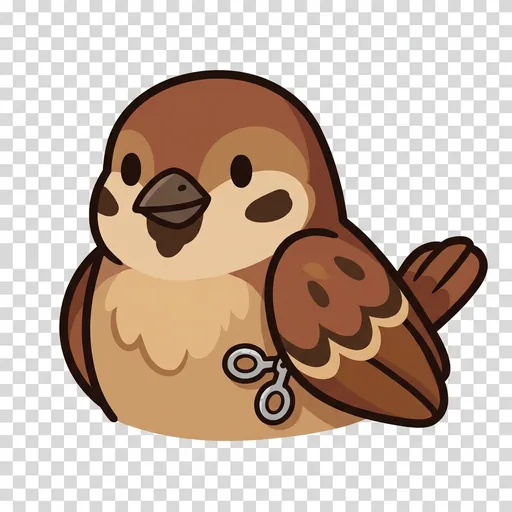
Clip
Economy — sparrow with tiny silver scissors who trims the filler ('hello, how are you, fine') and starts scenes late, right where they get interesting
-

Dash
Interruption / overlap — chipmunk who crashes into the ends of others' lines with a dash when feeling runs too high to wait (used on purpose, sparingly)
-

Aim
Line purpose — kestrel with arrow-shaped speech bubbles that point at what each line is really trying to DO (ask, dodge, persuade), not just say