
Keye and Matte
BUILDING A PLACE THAT ISN'T THERE (Advanced) — a believable impossible world is a COMPOSITE of two matched layers: Keye extracts a clean MATTE (erases one flat colour to punch a window with a crisp, spill-free edge), and Matte supplies the PLATE (the painted world that shows through). It becomes a *place* only when the two are matched at the seam — same light direction, same atmospheric perspective/haze, edge softened to agree — so the join between the real subject and the painted world simply cannot be found.
Loading audio…
Press play to listen along. The line being read lights up as you go.
Show full transcript
Loading transcript…
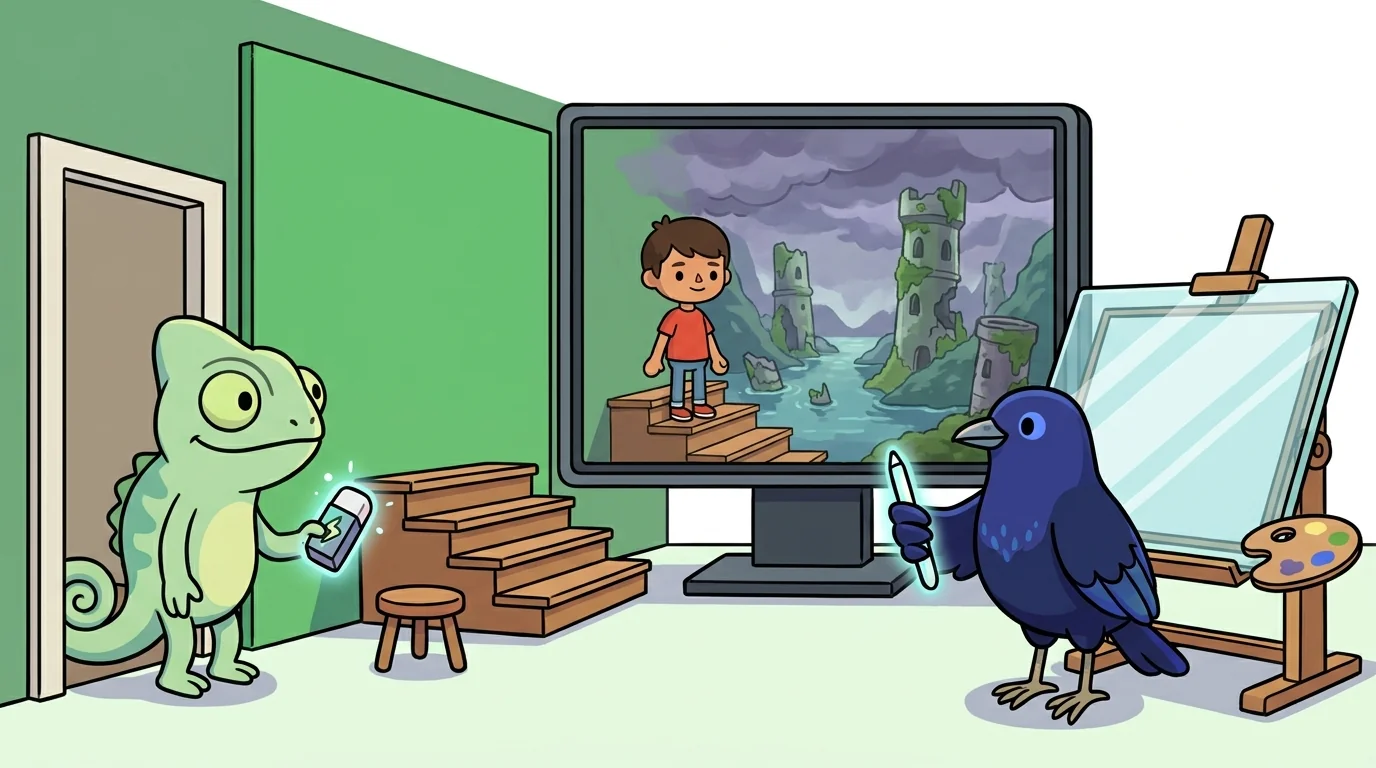
Keye the pale-green chameleon and Matte the satin bowerbird stood on either side of a plain studio corner — a real doorway, three real steps, a stool. Keye had a flat green wall; Matte had a huge tilted glass easel. Between them, on a screen, a kid stood in that same plain corner — except it opened onto a drowned valley of ruined towers under a bruised, storm-coloured sky. There was no valley. There was a green wall and a painting. And there was the thing they'd learned to build together — a composite: two matched layers that become a place that isn't there.
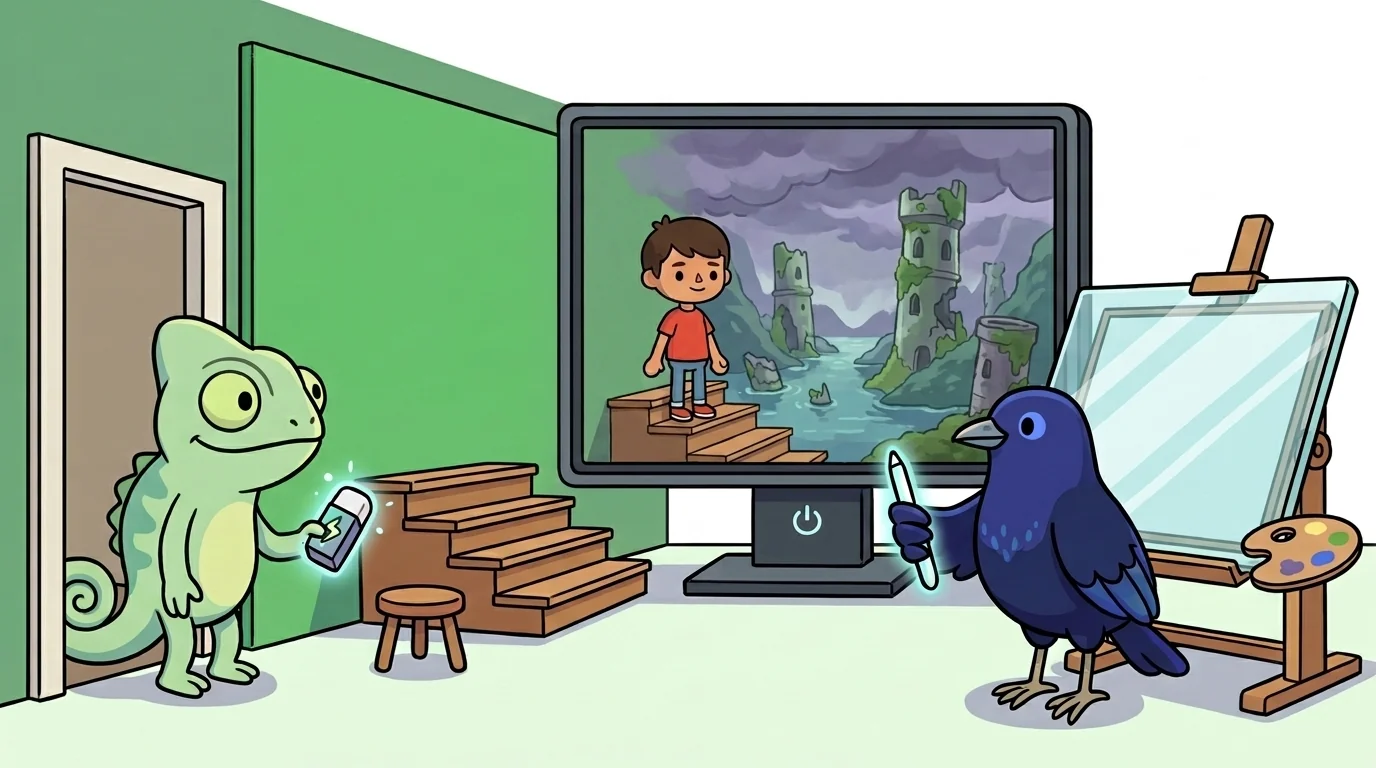
Keye went first, because her move makes the hole. "A composite starts with a clean matte — the cut-out that says keep this, drop that." She told the camera to hunt every bit of her flat green and turn it see-through, and where the wall had been there was now a window shaped exactly around the kid — clean-edged, because there's no green in a person to erase by accident. "That's my half: I punch a window by erasing one colour, and I make its edge cut-paper clean — even light on the wall so there's one colour to key, the kid a step off it so no green spill tints their shoulders, a despill to cool any green that clung to the edge. A crumbly, green-fringed matte and the whole trick dies." She held it up. "A perfect window — opening onto absolutely nothing. That's where Matte comes in."
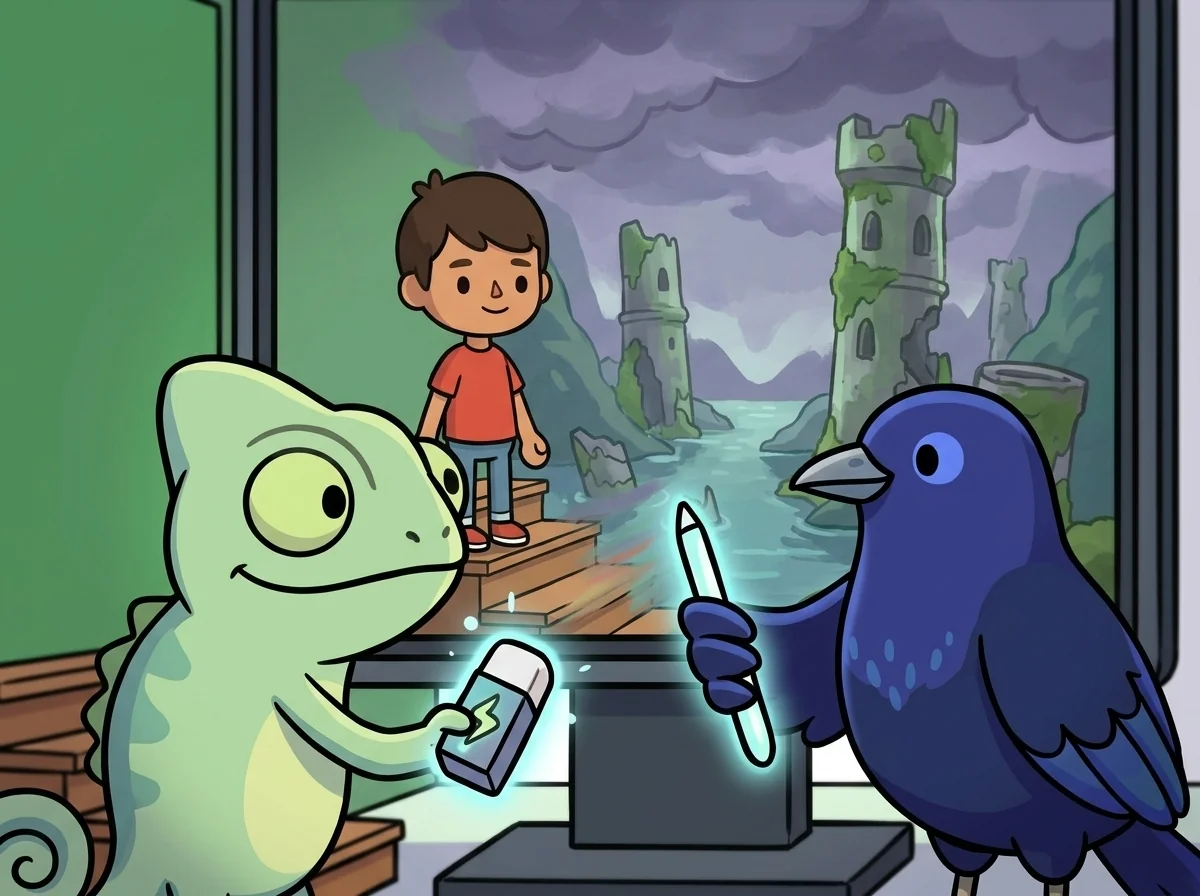
Matte filled the nothing with the plate. At her glass easel she'd painted the drowned valley — far towers soft and hazy-blue, near ledge sharp, storm-light raking from the left. "Keye hands me a window with nothing behind it. I paint the world that shows through — the plate." But painting the towers, she said, was the easy half; her real work was making the plate matchable: "If my painted valley and the kid don't share a light direction, an atmospheric haze, and a believable perspective, the composite reads as two stickers on one card." So she'd matched her painted shadows to fall the way the studio light fell on the kid, laid the same faint haze across the depth of the valley, and set the horizon and eyeline to agree with the camera. "My half is a plate built to be joined — right light, right distance-fade, right perspective — so it can sit behind the kid instead of pasted flat against them."
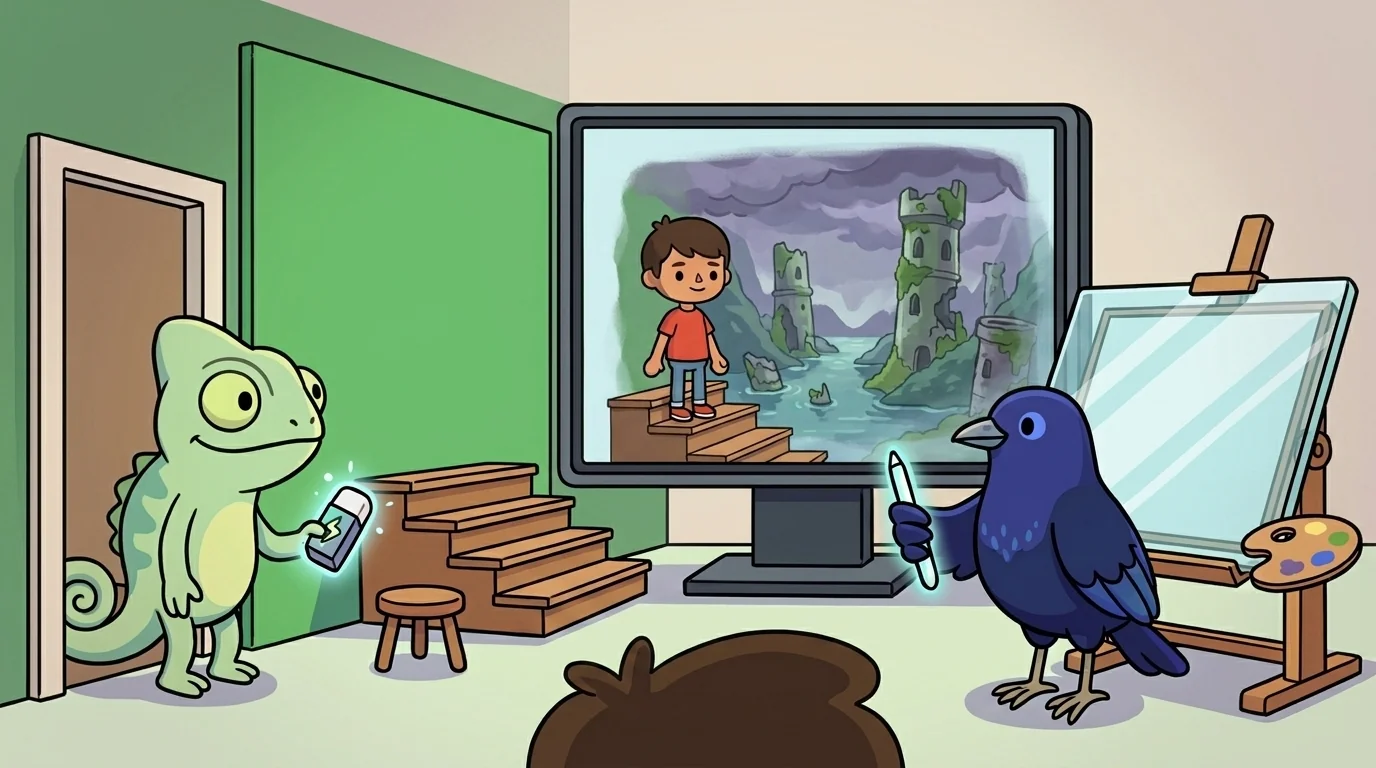
Then they did the move that is theirs — the one neither can do alone: the seam-match. Keye's clean matte went over Matte's plate, layer on layer, and the two leaned in together to hunt the join. Keye nudged her edge a hair softer where it kissed Matte's haze; Matte cooled a near tower so its colour sat behind the kid, not level with them; they matched the storm-light on the painted towers to the light on the kid's real face, and dropped a thread of Matte's haze across the matte's edge so the boundary dissolved into weather. Clean matte, matchable plate, light to light and haze to haze — and the seam, the last findable proof that any of it was made, quietly went away. "My matte alone is a hole in nothing," Keye said. "My plate alone is a painting on an easel," Matte said. "Composited — matched at the seam — it's a place." The kid on the screen stood at the edge of a drowned valley that had never, anywhere, existed.
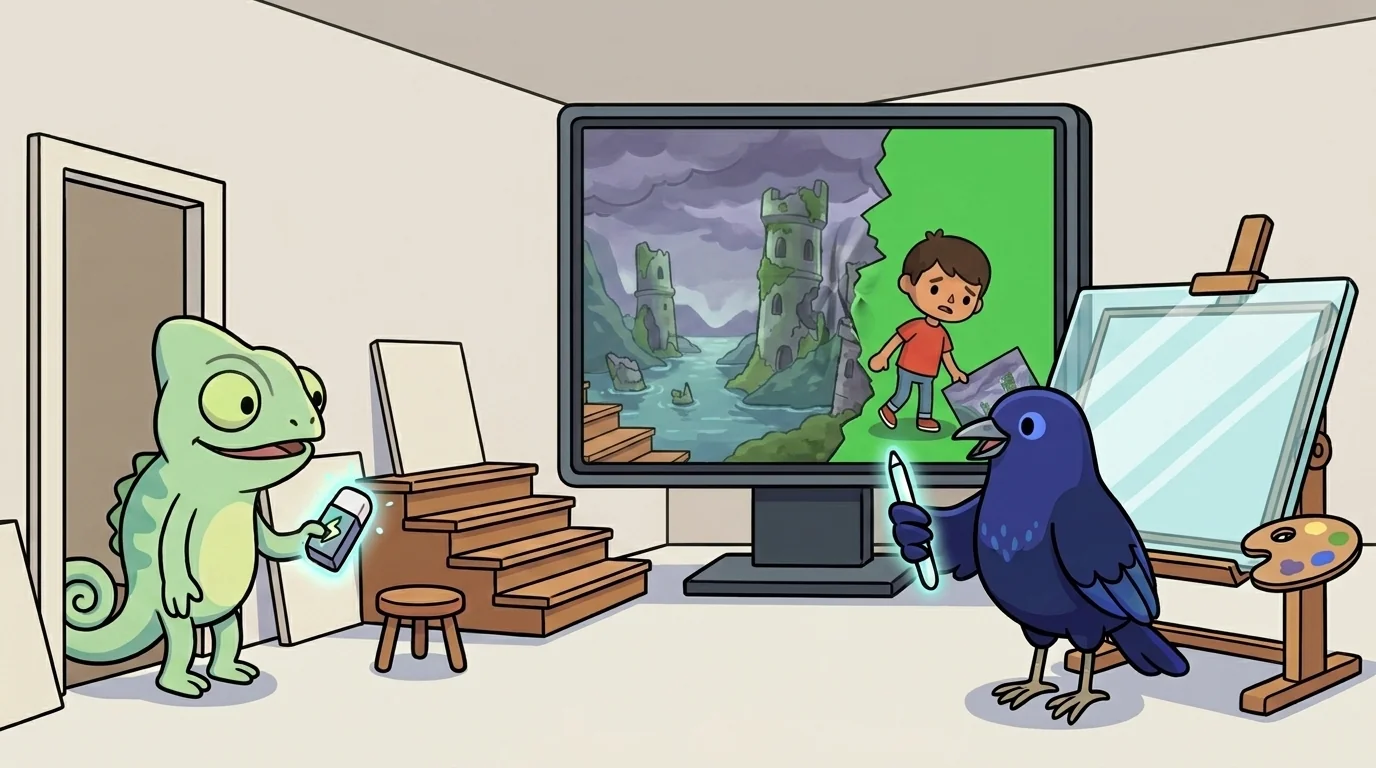
"So the window's real, the painting's real, but the place only happens when you composite them and match the seam?" a kid asked, squinting at the join and losing it. "The matte's just a hole. The plate's just a painting. The place is the two of us, matched," Keye said, and Matte nodded. The kid tried it — keyed their own green, dropped in Matte's valley — and left the light wrong and the edge showing, and for a second the pinched mine looks pasted-on knot pulled tight. But two friends leaned in at once: "Soften your matte's edge and despill it," said Keye; "cool that near colour and match my haze and light," said Matte — and as the kid fixed the matte-half and the plate-half together, the seam melted and the drowned valley opened up behind them for real. They felt it land — a wide, shared-wonder swoop of we built a whole world that isn't there, and neither piece could have done it alone — the bright gladness of a place made of two matched layers, and the quiet relief of a showing seam is just a join two of us haven't smoothed yet. That making-a-place-together swoop, plus the easy company of matching the seam side by side, was — to Keye and Matte both — the whole joy of the world that isn't there.
The EffectsForge ensemble
Keye and Matte is part of EffectsForge's distributed-narrative cast. Each character embodies a different curricular primitive; together they teach the full subject.
-

Crunch
Foley sound — practical sound effects from everyday objects
-

Trick
Forced perspective — the optical illusion that resizes worlds
-

Skin
Prosthetic makeup — craft + chemistry for character, never realistic injury
-

Step
Stop-motion animation — frame by frame, one decision at a time
-

Lamp
Lighting design — the silent author of mood
-

Fogg
Atmospherics — a moth who makes the air itself: fog, rain, wind, drifting haze, so a scene gains depth, mood, and light you can see
-
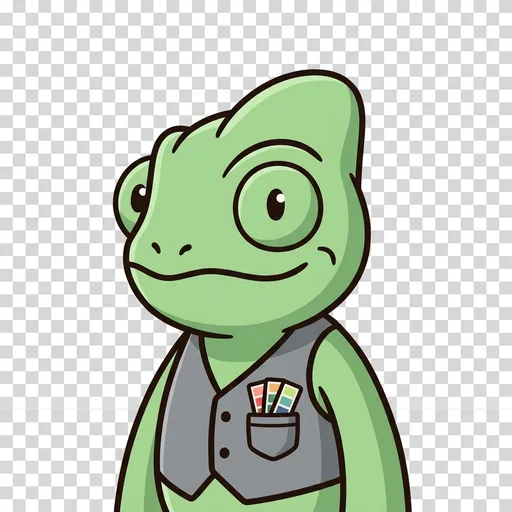
Keye
Chroma key — a chameleon who erases one flat color so a whole new world shows through the hole
-
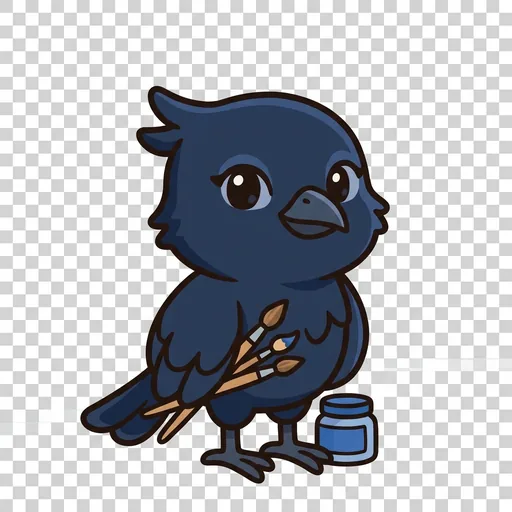
Matte
Matte painting — paints the part of the world too big to build and blends the seam so the eye can't find where the set ends
-

Servo
Animatronics — foam skin over a jointed frame driven by motors and cables, so a built creature breathes, blinks, and moves on cue
-
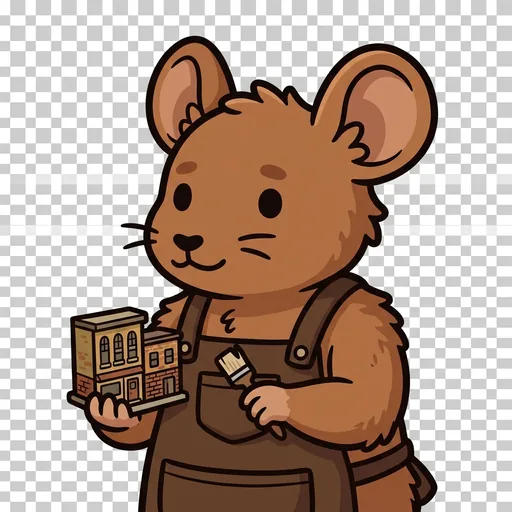
Titch
Miniatures — builds it small and perfect, shoots it right, and a thing held in two hands reads as enormous on screen