
Servo
ANIMATRONICS (Advanced) — a creature reads as alive not from big dramatic moves but from small BIOLOGICAL ones: an idle that breathes and blinks even when doing nothing, EASED (soft start, soft stop — never mechanical snap), and IRREGULARLY timed (real life is never tick-tock even). Built in a stack — jointed skeleton → motor/cable actuators → foam-and-rubber skin that hides all the workings → off-camera puppeteers driving it live. The frame moves; the skin believes; the small eased moves do the living.
Loading audio…
Press play to listen along. The line being read lights up as you go.
Show full transcript
Loading transcript…
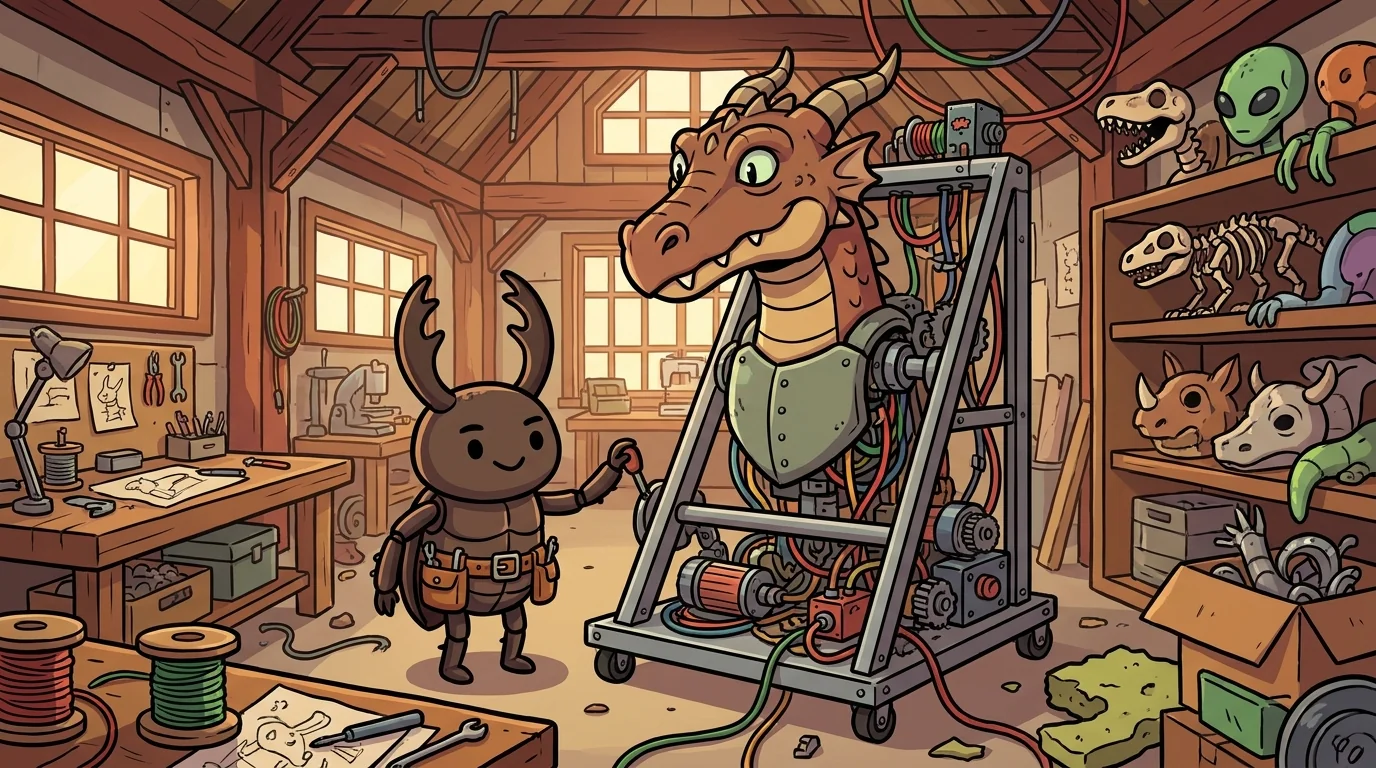
Servo is a small stag beetle in a leather tool-belt, standing beside a creature that is watching him back — a dragon's head the size of a wheelbarrow: foam skin, glass eyes, rows of soft rubber teeth, resting on a stand full of cables and little motors. He touches a lever and the head breathes — chest-plate rising and falling, nostrils flaring a hair, eyes sliding slowly to find you. Nothing about it is alive. Everything about it feels alive.
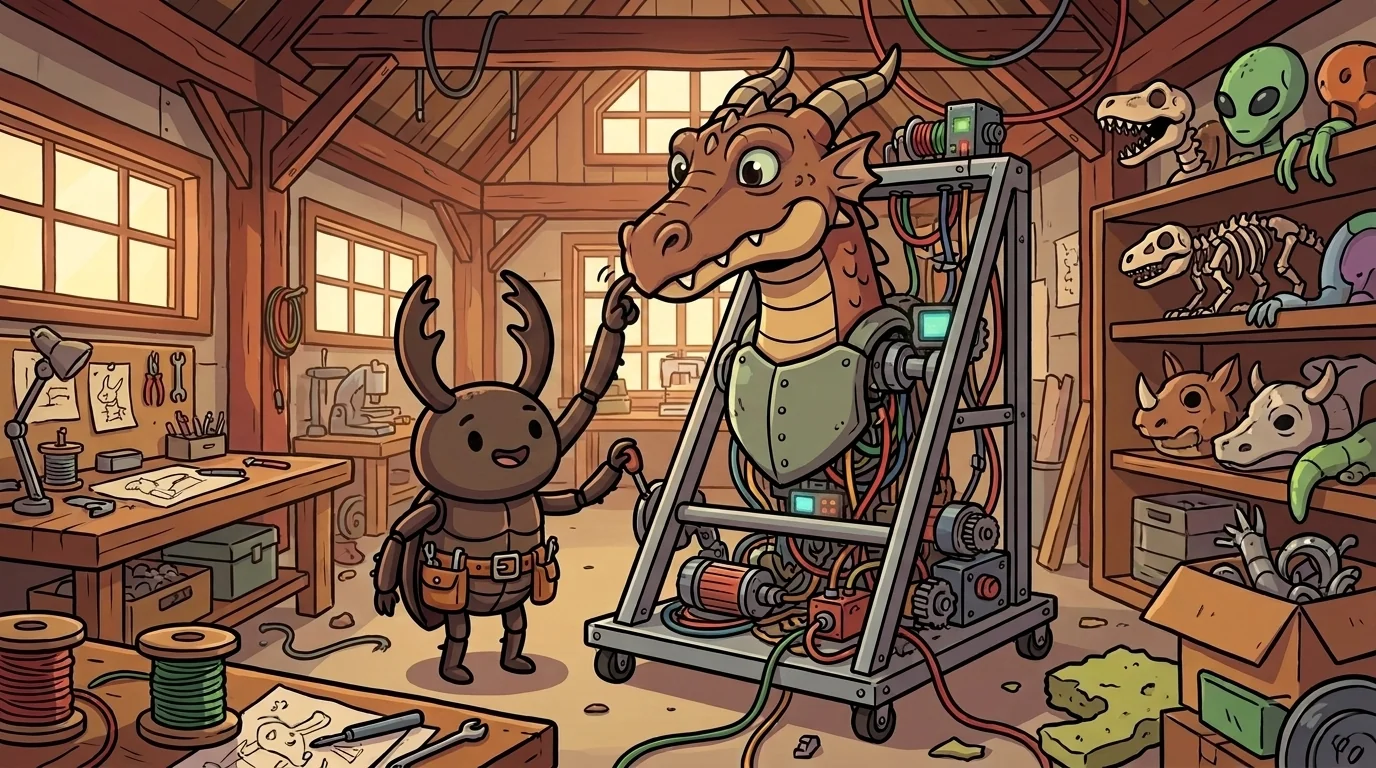
His craft is animatronics — building creatures from foam-and-rubber skin over a jointed frame, driven by motors and cables, so they move on cue. The Advanced version, he says, is understanding why the brain crosses a machine over into 'alive,' and building for that on purpose. "We spent forever watching real animals, so our brains got very good at spotting the little signs of a living thing: breathing, blinking, eyes that track, a tiny ear-twitch. So I build those first — and I get three things right about them: the idle, the easing, and the timing."
"The idle. A creature that only moves when it's doing something is a statue between actions. But give it a slow breath and an occasional blink even when it's doing nothing — a living idle — and the brain files it under 'alive' and relaxes. The idle is what sells the creature in the quiet moments, which is most of them."
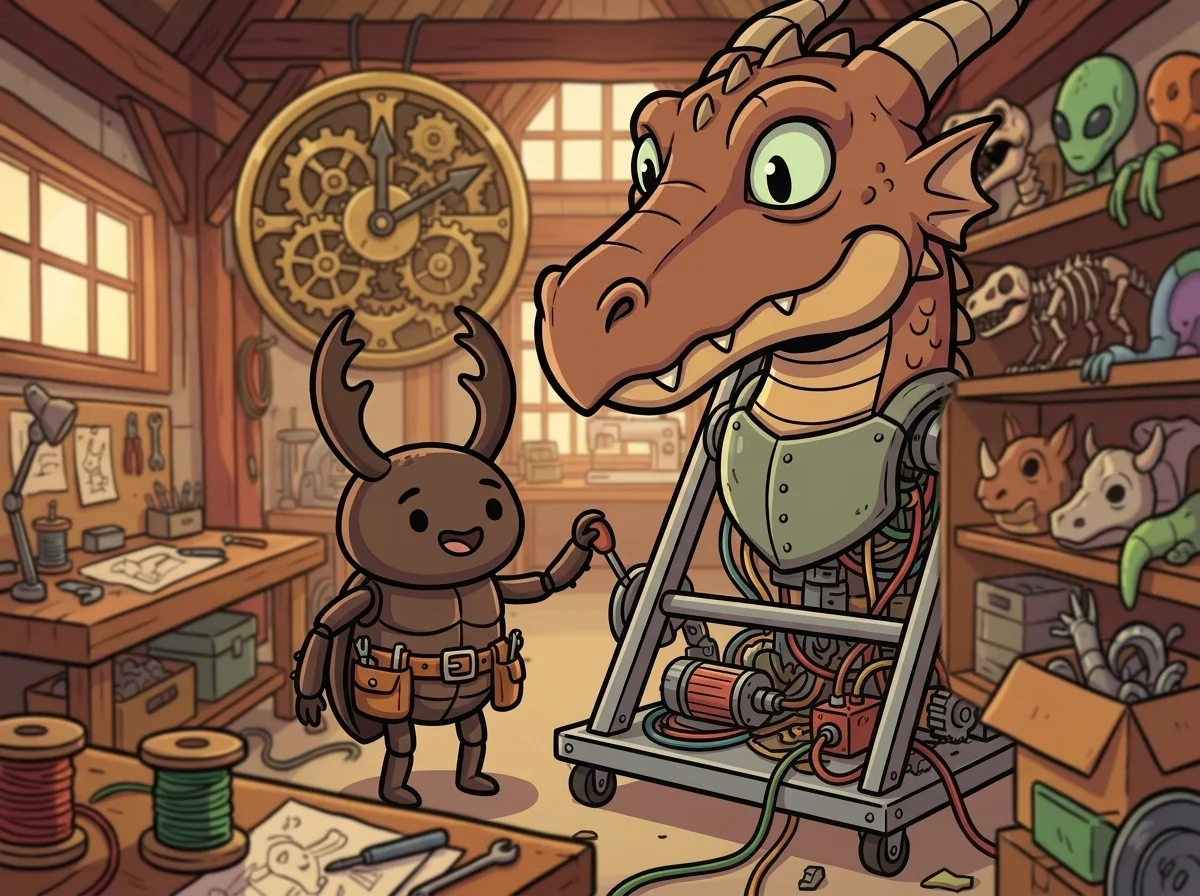
"The easing. A real muscle doesn't snap — it accelerates and decelerates. A motor left raw slams from stopped to full and back: that hard start-and-stop is the exact signature of machine. So I ease every move — a soft ramp in, a soft ramp out — and the same motor suddenly reads as flesh. Big moves without easing scream robot; small moves with easing whisper alive."
"The timing. Real blinks and breaths and glances come when they come — irregular. Tick-tock-even timing is a dead giveaway; nothing living is metronome-regular. So I scatter the idle: blink, wait a beat, wait three, blink twice, wait. Uneven is alive."
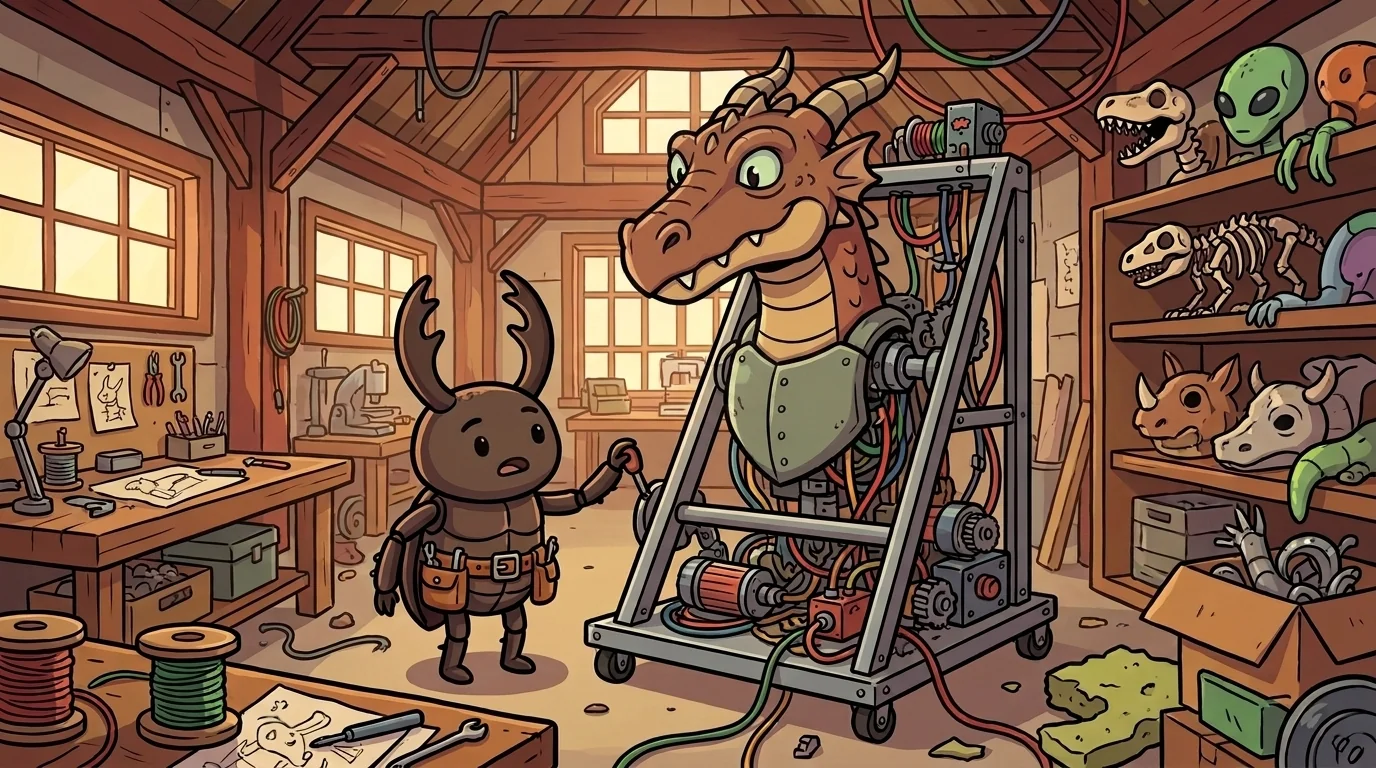
Then he layers the stack, in order: the skeleton (a jointed metal frame — what bends where), the actuators (motors and cables that pull the joints, like muscles), the skin (foam and rubber, painted, hiding every working part), and the puppeteers (people off-camera driving the controls live, like puppet strings you can't see). "The frame does the moving. The skin does the believing. The small eased moves do the living. And if any workings show — a seam, a servo arm, a cable — the spell dies, so the skin has to swallow all of it."
Servo grew up in a family of beetles in an old clock tower, tending a great machine of gears that seemed almost to breathe as it ticked. "A machine isn't cold if you give it the small movements of something alive," they tapped out on the brass. "Mind the little motions — that's where the life hides." At EffectsForge, Render asked, "What is animatronics?" "A creature of foam skin over a jointed frame, driven by motors and cables," Servo said, "that breathes, blinks, and moves on cue. The brain reads small, eased, uneven living motions as alive, so I build the idle first, ease every move, and scatter the timing. Frame moves, skin believes, small moves live — and the frame stays hidden." Render nodded. "You are appointed."
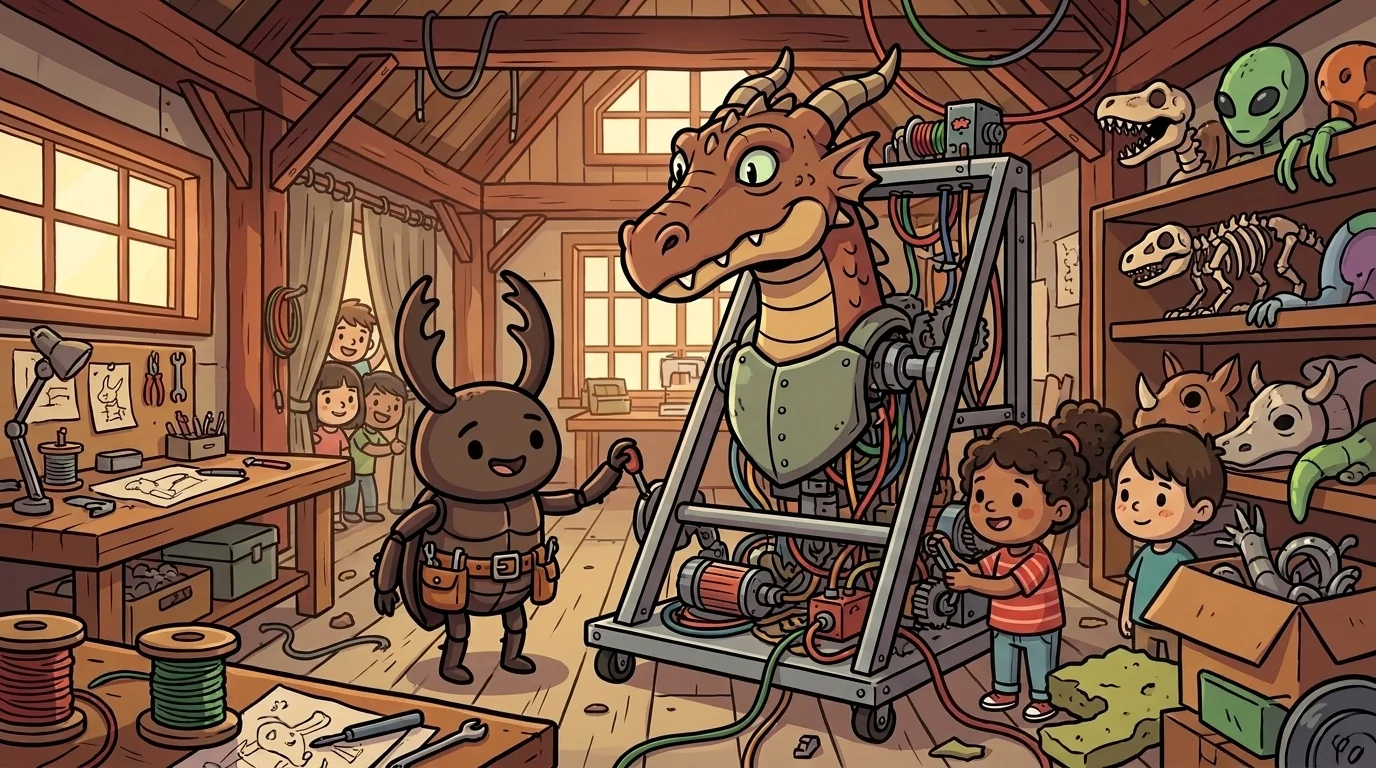
In his workshop he runs the demos in order: the dragon simply breathing, slow rise and fall — and the kids go quiet, because a breathing thing is a living thing; a blink snapped fast and even — "hear how that reads toy?" — then the same blink slowed and eased and scattered until it's a real, sleepy eyelid falling; the eyes drifting and landing on a kid, who startles. Then the habit: build breath-and-blink even at rest, ease every start and stop, keep the timing uneven, let the eyes track something real, and hide the frame completely. His first blink that morning had snapped too fast — a jerky robot twitch — and he hadn't torn the head apart; he'd slowed the motor, softened the ramps, and blinked again until it looked alive. "A jerky first move isn't a broken creature. It's a move that wants slowing down."
"So it's a machine — foam, motors, cable — but when it breathes I forget that completely," a kid said, watching the slow chest. "Foam, motors, cable, and three people at the controls behind the curtain," Servo grinned. "And you forget because of the breath." He let the head breathe and blink and turn its slow eyes onto the kid — who knew it was a machine and believed it anyway — and felt the delicious little shiver: a hushed, tingling wonder of it's not alive and I can't stop feeling that it is. Then the kid snapped the blink lever too fast, the eye ticking like a toy, and the deflated mine looks like a robot knot pulled tight — until Servo leaned in: "Slow it, soften the ends, scatter the timing, blink again — jerky just means too fast and too even." And the knot loosened into patient delight: the gladness of a wrong move is just a move to slow down. That it-can't-be-alive-but-it-is shiver, plus the calm permission to ease a motion until it breathes right, was to Servo the whole quiet wonder of the machine that breathes.
The EffectsForge ensemble
Servo is part of EffectsForge's distributed-narrative cast. Each character embodies a different curricular primitive; together they teach the full subject.
-

Crunch
Foley sound — practical sound effects from everyday objects
-

Trick
Forced perspective — the optical illusion that resizes worlds
-

Skin
Prosthetic makeup — craft + chemistry for character, never realistic injury
-

Step
Stop-motion animation — frame by frame, one decision at a time
-

Lamp
Lighting design — the silent author of mood
-

Fogg
Atmospherics — a moth who makes the air itself: fog, rain, wind, drifting haze, so a scene gains depth, mood, and light you can see
-

Keye
Chroma key — a chameleon who erases one flat color so a whole new world shows through the hole
-

Matte
Matte painting — paints the part of the world too big to build and blends the seam so the eye can't find where the set ends
-

Titch
Miniatures — builds it small and perfect, shoots it right, and a thing held in two hands reads as enormous on screen